
So, you're wondering how to stop intrusive thoughts? The first instinct is usually to fight them, to push them away with all your might. But that’s the single biggest mistake you can make.
The real answer—the first step toward getting your life back—is to do the opposite. You have to learn to acknowledge the thought without judgment, label it for what it is ("just a thought"), and gently guide your focus elsewhere.
This small shift is huge. It starts to change the relationship you have with your own mind and slowly strips those unwanted thoughts of their power. This is the beginning of the path to healing, and it's a journey you can absolutely complete.
Your First Step Toward Mental Freedom

Feeling trapped by relentless, distressing thoughts is completely exhausting. I get it. But this is a place of hope, and real change is possible. You can learn to live a life free from panic.
First things first, let’s be crystal clear about what intrusive thoughts are—and what they are not. They are not secret desires. They are not reflections of your character. And they are absolutely not predictions of the future.
They are simply mental noise. Think of them as misfiring signals from an overprotective brain that’s trying, and failing, to keep you safe.
Pushing them away is like trying to hold a beach ball underwater. You know what happens next, right? It just pops back up with even more force. The path to regaining control—and living a calm, joyful life—starts with a completely different approach.
What Are Intrusive Thoughts, Really?
At their core, intrusive thoughts are just unwanted mental pop-ups. They can be vivid, disturbing, and feel totally alien to who you are as a person.
The very fact that they upset you is the clearest sign that they don't represent your true intentions. Hold onto that. Understanding this is the foundation for healing.
They’re also incredibly common. Ever heard of the 'high place phenomenon'? It’s that sudden, bizarre urge to jump when you're somewhere high up, even if you have zero desire to harm yourself. It’s unsettling, but one study found this was reported by over 50% of U.S. college students who had no prior suicidal thoughts.
This just goes to show how easily the brain’s safety signals can get their wires crossed, creating a strange intrusive thought even in perfectly healthy people.
When an intrusive thought pops into your head, the goal is to shift your response from fighting it to observing it. Here are a few immediate, non-combative actions you can take the moment one appears.
Immediate Actions for Intrusive Thoughts
| Action | What It Means | Why It Works |
|---|---|---|
| Acknowledge | Notice the thought is there without reacting. Simply say, "Ah, there's that thought again." | It stops you from immediately spiraling and creates a tiny bit of space. |
| Label | Call it what it is: "an intrusive thought" or "mental noise." | This externalizes it and reminds you that the thought is separate from you. |
| Don't Engage | Avoid analyzing, debating, or trying to "solve" the thought. | Fighting with the thought gives it more importance and energy. Starve it of attention. |
| Let It Float By | Imagine the thought as a cloud passing in the sky or a leaf on a stream. | This visual metaphor reinforces the idea that thoughts are temporary and don't need to be grabbed onto. |
These actions aren’t about making the thought disappear forever. They're about changing your immediate reaction so the thought has less of a grip on you in that critical moment.
The goal isn't to eliminate every unwanted thought but to change your reaction to them. When you stop fighting and start observing, they lose their emotional fuel and begin to fade into the background. This is a skill, and like any skill, you can master it.
This guide will give you a clear path forward, teaching you how to acknowledge these thoughts without getting tangled up in them. This initial framework offers immediate relief by creating a small but powerful space between you and your thoughts.
From here, we can build deeper, lasting strategies for a life where anxiety no longer calls the shots. If you're not sure how much anxiety is impacting your life right now, taking a quick anxiety test can offer some valuable clarity.
Why Your Brain Creates Intrusive Thoughts
To really get a handle on intrusive thoughts, it helps to understand what’s going on under the hood. The first and most important thing to get is that these thoughts are not a personal failing. They aren't a reflection of your character.
They are a common psychological event—think of it as a glitch in the system, not a fatal flaw in who you are. This understanding is a hopeful step toward healing.
Imagine your brain has this ancient, built-in smoke detector. Its only job is to scan for danger. For our ancestors, this was a lifesaver, firing up the fight-or-flight response at the first sign of a predator. In our modern world, though, this system can get a little… twitchy.
When you're dealing with anxiety, stress, or just plain exhaustion, that smoke detector gets stuck on high alert. It starts flagging everything as a potential fire—even harmless mental sparks. An intrusive thought is basically a false alarm from this overactive threat-detection system.
Your Brain's Overprotective Alarm System
Think of it like this: your brain is trying so hard to protect you that it starts seeing threats that aren't actually there. It throws these bizarre, worst-case-scenario thoughts at you and practically screams, "What about this?! Is this dangerous?!"
This is exactly why the content of intrusive thoughts feels so extreme and out of character. They're designed to grab your attention. Your brain isn't whispering; it's shouting a fire alarm. The problem isn't the alarm itself, but the fact that it's going off when there's no real fire. This constant state of alert is a core part of the body's stress reaction, and you can learn more about how to manage this in our guide to the fight or flight response.
The intense distress you feel is actually proof that these thoughts are the exact opposite of who you are and what you value.
A key step to healing is to stop seeing these thoughts as a reflection of you and start seeing them as a symptom of an overstressed nervous system. They are mental noise, not your true voice.
Once you understand the "why" behind these mental alarms, you can start to look at them with a bit more scientific detachment. This shift in perspective is everything; it’s the first step in taking back your power and realizing you are not your thoughts. You are the one who observes them.
The Connection to Anxiety and OCD
Just about everyone has an odd, unwanted thought from time to time. But they can become persistent and totally debilitating when they get tangled up with an underlying anxiety condition.
In Generalized Anxiety Disorder (GAD), for instance, intrusive thoughts often show up as relentless "what if" scenarios about health, money, or family safety. For new mothers, postpartum anxiety can trigger terrifying thoughts about harm coming to their baby—which is so deeply distressing precisely because it's the opposite of their intense love and protective instincts.
These thoughts are also a central feature of Obsessive-Compulsive Disorder (OCD), a condition that affects an estimated 1% to 3% of people worldwide. With OCD, the brain gets stuck in a nasty loop: an intrusive thought (the obsession) causes intense anxiety, which the person tries to neutralize with a specific action or ritual (the compulsion). This cycle just reinforces the brain's original idea that the thought was dangerous.
Recognizing these patterns isn't about self-diagnosing. It's about normalizing your experience. It helps you see that you're not alone and that there are well-established paths toward feeling better. You can heal.
Here’s a quick look at how these conditions can turn up the volume on intrusive thoughts:
- Generalized Anxiety: Fuels a constant stream of worry-based thoughts about future catastrophes.
- Postpartum Anxiety: Creates hyper-vigilant thoughts focused on the baby's safety, often in graphic, terrifying detail.
- Obsessive-Compulsive Disorder: Produces sticky, repetitive thoughts that demand a compulsive action to relieve the anxiety they create.
Understanding this context helps strip away the shame and mystery that give intrusive thoughts so much power. Your brain isn't broken; it's just running an outdated protective program a little too aggressively. With the right tools and perspective, you can teach it to calm down, giving you back the peace and freedom you deserve.
Grounding Techniques for In-the-Moment Relief

When an intrusive thought crashes into your mind, the world can feel like it’s shrinking. Your heart pounds, your focus narrows, and suddenly you’re lost in a scary mental movie. In that moment, you need something that works right now.
This is where grounding techniques become your lifeline. They pull you out of the storm in your head and plant your feet firmly back in the present. The point isn’t to fight the thought—that just gives it more power. Instead, you gently redirect your attention, calming your nervous system's panic response.
Over time, you build a reflex of mindful response, not fearful reaction. You prove to yourself, again and again, that you have the power to find calm, even when your mind is loud. This is how you start building a panic-free life.
The 5-4-3-2-1 Sensory Method
One of the quickest ways to stop an anxiety spiral is to reconnect with the physical world. The 5-4-3-2-1 method is a simple but incredibly effective way to do this by engaging all five of your senses. It forces your brain to focus on the concrete details of your environment, leaving less mental space for the intrusive thought to run wild.
Here’s how it works:
- Acknowledge 5 things you can see. Look around you and name five objects. Don't just glance—really see them. Notice the way light hits your coffee cup, the specific texture of the wood on your desk, or the shadow a plant casts on the wall.
- Acknowledge 4 things you can feel. Tune into the physical sensations on your body. It could be the solid feeling of your feet flat on the floor, the softness of your sweater, or the cool, smooth surface of your phone in your hand.
- Acknowledge 3 things you can hear. Listen carefully. Can you identify three distinct sounds? Maybe it's the distant hum of traffic, the ticking of a clock, or even just the quiet sound of your own breathing.
- Acknowledge 2 things you can smell. This one might take a little more concentration. Is there a faint scent of coffee in the air? The soap on your hands? The fresh air coming through a window?
- Acknowledge 1 thing you can taste. What is the taste inside your mouth right now? It could be the lingering flavor of your morning tea, toothpaste, or simply the neutral taste of your own tongue.
This exercise acts as an anchor to the present moment. It reassures your brain that you are safe in your current reality, not in the scary scenario the intrusive thought has cooked up. For more exercises like this, check out our detailed guide to grounding techniques for anxiety.
Calm Your Nervous System with Box Breathing
When an intrusive thought triggers anxiety, your breathing often becomes shallow and rapid, which just signals more danger to your brain. You can break this cycle by intentionally slowing down your breath. Box breathing is a simple, rhythmic technique used by everyone from Navy SEALs to therapists to restore calm and regulate the nervous system.
Imagine drawing a box with your breath:
- Inhale slowly through your nose for a count of 4.
- Hold your breath for a count of 4.
- Exhale slowly through your mouth for a count of 4.
- Hold at the bottom of the exhale for a count of 4.
Repeat this cycle for a few minutes. The steady, predictable rhythm is a powerful signal to your nervous system that the threat is gone. It helps slow your heart rate and release the physical tension that often comes with intrusive thoughts.
Create Distance with Thought Labeling
Another key strategy is to create some mental space between you and the thought. This isn't about pushing it away, but rather observing it from a more detached perspective, like you’re watching a cloud pass in the sky.
By calmly naming a thought, you take away its urgency and power. You shift from being inside the scary movie to being the person watching it on a screen, knowing it isn't real.
When an upsetting thought pops up, just calmly label it in your mind. You could say to yourself, “Ah, there’s that ‘what if’ thought again,” or, “I’m noticing I’m having an intrusive thought about harming someone.”
This simple act of labeling does two powerful things. First, it reminds you that a thought is just a thought—a fleeting mental event, not a fact or an intention. Second, it reinforces the separation between you, the observer, and the thought itself. That little bit of space is where your power lies, allowing you to choose not to engage and instead bring your focus back to the present.
Strategies for Lasting Change

Grounding techniques are your first line of defense, but the real path to lasting peace means changing your relationship with your thoughts. This is where we build long-term resilience. It's about moving beyond in-the-moment fixes to create a mindset where intrusive thoughts finally lose their power over you.
This isn’t about fighting harder; it's about responding smarter. The good news is, there are proven, evidence-based principles from therapies like Cognitive Behavioral Therapy (CBT) and Acceptance and Commitment Therapy (ACT) that show us the way. A life free from the panic of intrusive thoughts isn't just a nice idea—it's completely achievable.
Learn to Defuse from Your Thoughts
One of the most powerful skills you can learn is cognitive defusion. It's an idea from ACT that teaches you how to separate yourself from your thoughts. Instead of being fused with a thought—believing it, living it, and reacting as if it’s an immediate truth—you learn to step back and just observe it.
Think of it this way: when you're fused with a thought, it’s like having your face pressed against a movie screen. It's overwhelming, loud, and feels like your only reality. Defusion is taking a few steps back. You can still see the movie, but you recognize it’s just a projection—not your actual life.
You can practice this by reframing your thoughts. Instead of thinking, "I am a bad person," try saying, "I am having the thought that I am a bad person." That small shift creates a world of difference. It turns the thought from a core identity into just a passing mental event, like a cloud moving through the sky.
Gently Challenge Distorted Thinking
Intrusive thoughts are masters of distortion. They grab a tiny sliver of possibility and blow it up into a catastrophic certainty. CBT teaches us to gently question these thoughts without getting into an argument we can't win. The goal is simply to see them for what they are: flawed logic from an anxious brain.
Let’s say an intrusive thought screams, "If I make a mistake at work, I'll be fired immediately!"
Instead of wrestling with it, you can ask a few clarifying questions:
- What's the evidence? Has this ever actually happened to me or anyone I know?
- Is there another way to look at this? Could a mistake also be a learning opportunity?
- What’s the most likely outcome? Is it more probable that I'll get some feedback and move on?
This isn't about proving the thought wrong, but about bringing some flexibility into your thinking. It helps you see that the thought is just one of many possible interpretations, and usually the least likely one. For a deeper dive, our guide on understanding CBT for anxiety is a fantastic resource.
The heart of this healing process is moving from fearful resistance to empowered observation. You learn to allow thoughts to come and go without judgment, which starves them of the fear and attention they need to survive.
A Gentle Introduction to Exposure and Response Prevention
For those whose intrusive thoughts are tied to compulsive behaviors, like we often see in OCD, Exposure and Response Prevention (ERP) is a gold-standard treatment. While it's best done with a therapist, just understanding the principle is empowering. ERP involves gradually and intentionally exposing yourself to the anxiety of an intrusive thought without performing the usual compulsive ritual.
For instance, if you have a thought about contamination and your compulsion is to wash your hands, ERP might involve touching a doorknob and then waiting a few minutes before washing. This breaks the brain's learned connection that the ritual is necessary to prevent disaster. You teach your brain that you can tolerate the anxiety and that it will eventually fade on its own.
About 1.2% of U.S. adults have experienced OCD in the past year, and therapies like ERP are highly effective. To build these new, healthier responses into your daily life, it's crucial to cultivate consistent routines. You can learn strategies for forming positive habits that stick and create a solid foundation for a life where you are in control, not your anxiety.
Building a Lifestyle That Quiets Anxiety

True, lasting freedom from intrusive thoughts goes way beyond just mental exercises. While cognitive strategies are powerful, the real game-changer is building a lifestyle that supports a calm mind from the ground up.
It’s about lowering your baseline vulnerability to anxiety. When you do that, your brain becomes a much less welcoming place for those sticky, unwanted thoughts to take hold.
Think of it like tending a garden. The mental techniques are like pulling weeds. But your lifestyle—your food, your sleep, your movement—is the quality of the soil, water, and sunlight. When you nurture that foundation, far fewer weeds can even sprout.
This is where you can reclaim a huge sense of control. Small, consistent changes build powerful resilience, reinforcing the truth that a life free from the grip of anxiety is absolutely within your reach.
Fuel Your Brain for Calmness
What you put into your body has a direct line to your brain chemistry and emotional stability. A balanced diet and mindful movement aren't just for physical health; they're your frontline defense against anxiety.
Regular physical activity, for instance, is a potent anxiety-buster. You don't have to run a marathon—even a brisk 20-minute walk can boost feel-good neurotransmitters like endorphins and serotonin, which help regulate mood and dial down stress. Find something you actually enjoy, whether it’s yoga, dancing, or just walking your dog.
What you eat matters just as much. A diet rich in whole foods—fruits, veggies, lean proteins—gives your brain the steady energy it needs to function well. On the flip side, highly processed foods and sugary snacks can send your blood sugar on a rollercoaster, which often mimics or worsens feelings of anxiety. You can dive deeper into this in our guide to lifestyle and diet adjustments for anxiety management.
Hope is not a passive wish; it is an active practice. Every healthy meal, every walk, every good night's sleep is an act of hope—a deliberate step toward building a life where you are in charge, not your anxiety.
Create Stability and Structure
An anxious brain loves predictability. When your days feel chaotic and unstructured, it can amplify that feeling of being out of control, creating the perfect environment for intrusive thoughts to thrive. Building a simple, consistent daily routine provides an external anchor of stability that can be incredibly calming.
This doesn't mean your schedule has to be rigid or complicated. It can be as simple as:
- Waking up and going to sleep around the same time each day. This helps regulate your body's internal clock.
- Eating meals at regular intervals to prevent blood sugar dips that can trigger anxious feelings.
- Carving out a few minutes of quiet time in the morning or evening to meditate, journal, or simply breathe without distractions.
Another key piece of this structure is managing stimulants. For many of us, caffeine is a non-negotiable morning ritual, but it can significantly heighten anxiety and make it much harder to dismiss intrusive thoughts. Try gradually cutting back or switching to a lower-caffeine option like green tea to see how your mind responds.
These small, consistent actions build on one another, creating a powerful buffer against stress. They are tangible proof that you have the power to influence your own well-being, paving the way for a more peaceful, centered life.
When to Seek Professional Support
While all the strategies in this guide are powerful tools, there’s immense strength in knowing when to call for backup. The journey to quiet intrusive thoughts doesn't have to be a solo mission. Healing is possible, and a professional can give you the roadmap to get there.
In fact, reaching out for professional guidance is one of the most proactive and courageous steps you can take. Think of it this way: if your car's engine started making a terrifying noise, you'd take it to a mechanic, right? Your brain is infinitely more complex. Sometimes it needs a trained specialist to help you understand its signals and fine-tune its wiring.
Seeking therapy isn't a sign of weakness. It's a sign of profound self-respect and a deep commitment to your own well-being. It is an act of hope.
Signs It's Time to Reach Out
So, how do you know when it’s time to make that call? There's no single right answer, but a few key signs suggest that professional support could be a game-changer. You don’t have to wait until you hit rock bottom to ask for help.
Consider seeking support if your intrusive thoughts are:
- Seriously getting in the way of your life: Are they making it hard to focus at work, connect with your family, or enjoy things you used to love?
- Causing extreme emotional distress: Does the anxiety, shame, or fear they trigger feel constant and just plain overwhelming?
- Leading to compulsive behaviors: Do you feel an intense urge to perform certain rituals or actions just to neutralize the thoughts?
- Damaging your relationships: Are you pulling away from people you care about or finding that your anxiety is causing friction?
Reaching out to a therapist is a hopeful, empowering step. It means you're ready to partner with an expert who can provide a clear roadmap and evidence-based tools to guide you back to a life free from panic.
Finding the Right Kind of Help
When you start looking for a therapist, it helps to know about a few highly effective approaches for tackling intrusive thoughts. Cognitive Behavioral Therapy (CBT) is a well-established method that teaches you how to identify and challenge the distorted thinking patterns that give intrusive thoughts their power.
A specialized type of CBT, called Exposure and Response Prevention (ERP), is considered the gold standard, especially for OCD. It involves gradually facing the anxiety of a thought without performing the usual compulsive behavior, which essentially retrains your brain over time.
When you're getting ready for your first session, just remember you don't need to have all the answers. Simply being open and honest is more than enough. A good therapist will create a safe, non-judgmental space for you to share what’s going on. This partnership is the cornerstone of healing—and a powerful reminder that you are not alone on this path.
Got Questions About Intrusive Thoughts? We’ve Got Answers.
As you start working on managing intrusive thoughts, it’s totally normal for questions and fears to bubble up. You’re not the first to have them, and you definitely won’t be the last.
Getting clear, straightforward answers is a huge part of the process. It helps cut through the noise and reminds you that a life without panic is absolutely possible. Let’s tackle some of the most common questions head-on.
Will These Thoughts Ever Go Away Completely?
Here’s the honest answer: the goal isn’t to erase every strange thought forever—nearly everyone has them. The real win is getting to a place where they no longer bother you.
Healing teaches you to see these thoughts for what they are: just background noise. Once you learn not to grab onto them, they lose their power and just float on by.
With consistent practice, you'll find they become so quiet and infrequent that you barely even notice them. This is what a panic-free life feels like.
Does Having Bad Thoughts Mean I’m a Bad Person?
Absolutely not. This is probably the most painful fear people have, but it’s completely off base. The content of intrusive thoughts is often the exact opposite of who you are and what you value.
Think of it this way: the very fact that these thoughts upset you so much is the clearest proof that they don't represent your true character. They’re a symptom of anxiety, not a reflection of your morals.
Can I Get Better Without Therapy?
Many people make incredible progress using self-help strategies like the ones in this guide. Mindfulness, cognitive reframing, and simple lifestyle changes can be game-changers.
But if your thoughts are seriously getting in the way of your daily life, or if they’re tied to compulsive behaviors (like with OCD), professional therapy is the way to go. A therapist specializing in CBT or ERP offers a level of personalized guidance that can make all the difference for long-term recovery. Remember, healing is the goal, and therapy is a proven path.
How Long Does It Take to See Improvement?
There’s no magic timeline, because everyone’s journey looks a little different. Some people feel a bit of relief within a few weeks, especially with grounding techniques. Deeper, more lasting change from practices like cognitive restructuring might take a few months.
The secret ingredient is consistency and self-compassion. Celebrate the small wins, like that one time you let a thought pass without reacting. Progress isn’t a straight line, but every single step you take to change your relationship with these thoughts is a step toward a calmer, more hopeful you.
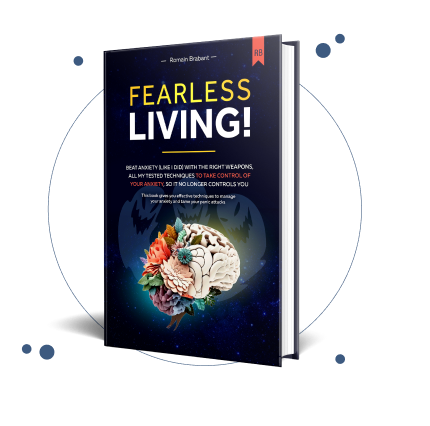
If you're ready to build a personalized toolkit for a life free from panic, The Anxiety Checklist offers a structured, actionable system to guide you. It combines a comprehensive eBook with interactive worksheets to help you put these strategies into practice, track your progress, and finally get back in the driver’s seat. Learn more and begin your journey to fearless living at https://anxietychecklist.com.