
Understand your anxiety and learn how to feel safe in your mind and body again
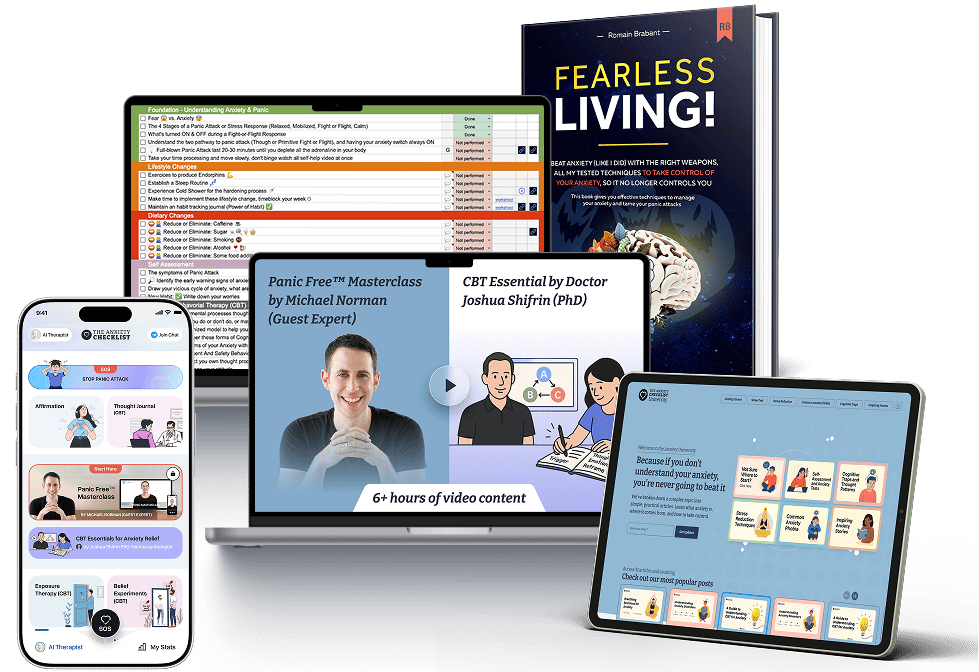
The Anxiety Toolkit is a set of science-based resources, expert guidance and practical tools for people who are tired of anxiety running their life. It will help you understand your mind and body and give you a clear path to feeling calmer and more in control
 Lifetime Access
- iOS & Android Mobile App
- More than 6 hours of video content
Trusted By 1900+ People
Taking control of their anxiety.



Hi, I’m Romain.
I’ve lived with severe anxiety. I know how frightening it can be
Hi, I’m Romain. I experienced severe anxiety for many years. Not the mild stress people casually talk about, but constant negative thinking, crippling worry, and full-blown panic attacks that made my body feel out of control.
What took me so long was not a lack of effort. I was doing everything I thought was right. Therapy. Journaling. Exercise programs. Diets. Fasting retreats. Self-help books. Hypnotherapy. Meditation.
The problem was not motivation.
The problem was direction.
I kept being given the wrong tools, or the right tools in the wrong order. That cost me time, confidence, and opportunities. At one point, anxiety had shrunk my life so much that leaving my home felt overwhelming.
Eventually, I made a decision. Anxiety was not going to define my entire life.
Through years of trial and error, I learned something critical. Real progress does not come from one miracle solution. It comes from a small, reliable set of science-based tools you can use when your mind and nervous system misfire, combined with the right understanding of what panic actually is.
The Anxiety Checklist Toolkit is the system I wish I had when anxiety first started for me.
It brings together the tools that actually helped, structured in a clear way, with guidance from experts who helped me understand panic in a way nothing else ever did.
My mission is simple.
To make sure you do not lose years searching for answers the way I did.
I hope this helps you understand your anxiety faster, feel less alone, and move toward a calmer, more stable, and happier life.

Creator of The Anxiety Checklist
But listen, I know it’s not easy. I know what it’s like to feel lost, scared and alone
Your inner voice makes life f**king hard
Suffering with anxiety is like walking around with one of those cartoon rain clouds following you. While everyone else is walking in the sunshine, your life is in a shadow. That negative voice in your head is constantly judging you, doubting you, and convincing you things will work out badly. Life just feels overwhelming.

Panic attacks feel like you’re going to die
Sometimes the fear overtakes you. Suddenly, your body reacts like you’re locked in a room with a bear. Your heart starts pounding hard. You can’t breathe. It’s like you’re drowning in water, only there is no water. While a tiny voice inside says you’ll be ok, the rest of your body is screaming for an ambulance.

Anxiety is stealing the life you deserve
Panic attacks are terrible. But the worst part is that anxiety is limiting your life. It stops you meeting new people, building better relationships, and trying new things. Anxiety holds you back in your business or your career. It stops you taking risks and gaining rewards. It stops you having fun. It’s time this changed, right?
It’s not your fault nothing has worked. Most people are shown the wrong path

You’ve never been shown how anxiety actually works
People who haven’t lived with severe anxiety often tell you to simply calm down or think positively. But anxiety isn’t a mindset issue, it’s a pattern in the body’s survival system. Without understanding it properly, everything you try feels temporary or ineffective.
You’ve been trying to fight fear with more fear
When the sensations rise, it is natural to push them away or escape the moment. The problem is that this teaches your brain something dangerous is happening. What feels protective in the short term quietly reinforces the fear loop over time.


You’ve been coping instead of recovering
Avoiding places, relying on safe routines, or seeking quick relief can help you get through a difficult day, but they also keep the anxiety alive. Coping gets you through the moment. It does not create the deeper change most people actually need.
You’ve been trying to fight fear with more fear
When the sensations rise, it is natural to push them away or escape the moment. The problem is that this teaches your brain something dangerous is happening. What feels protective in the short term quietly reinforces the fear loop over time.

Introducing the Anxiety Toolkit
Everything you need to understand your anxiety, so you feel safe, calm and in control of your life again
The Anxiety Toolkit is a set of practical tools and science-based methods for tackling anxiety from every angle. Whether you deal with full-blown panic attacks, or just a constant background of anxiety, you get the expert guidance you need to calm your mind and start living with confidence again.
Panic Masterclass with Michael Norman
A 4.5-hour video masterclass that explains how panic works and teaches you how to retrain your brain’s false-alarm system, so you learn to feel safe even in stressful moments.
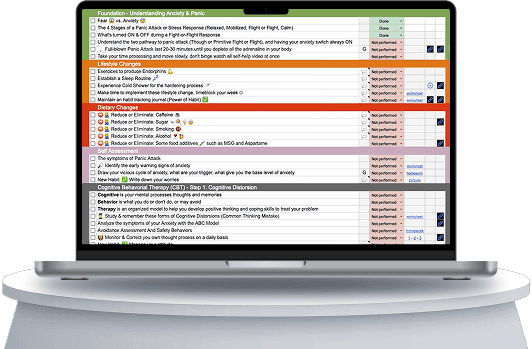
The Anxiety Checklist
A practical 90-point checklist of ideas, habits and techniques that helped me calm my anxiety. It gives you clear, simple actions to follow when you feel stuck, overwhelmed or unsure where to begin.
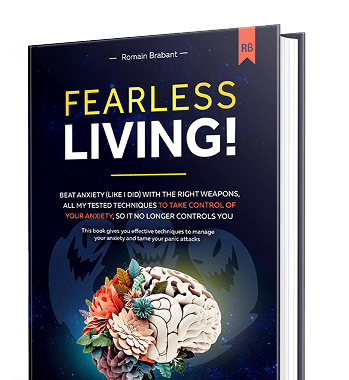
Fearless Living eBook
My honest guide to living with severe anxiety and slowly finding a way forward. It shares what helped me, what didn’t, and how I rebuilt a calmer and more confident life over time.
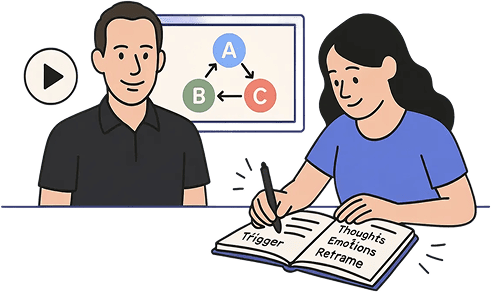
CBT Introduction with Dr Joshua Shifrin
A short, friendly introduction to CBT from a licensed neuropsychologist. It’ll give you the basics you need to understand this therapeutic technique, as well as help you understand CBT journaling.
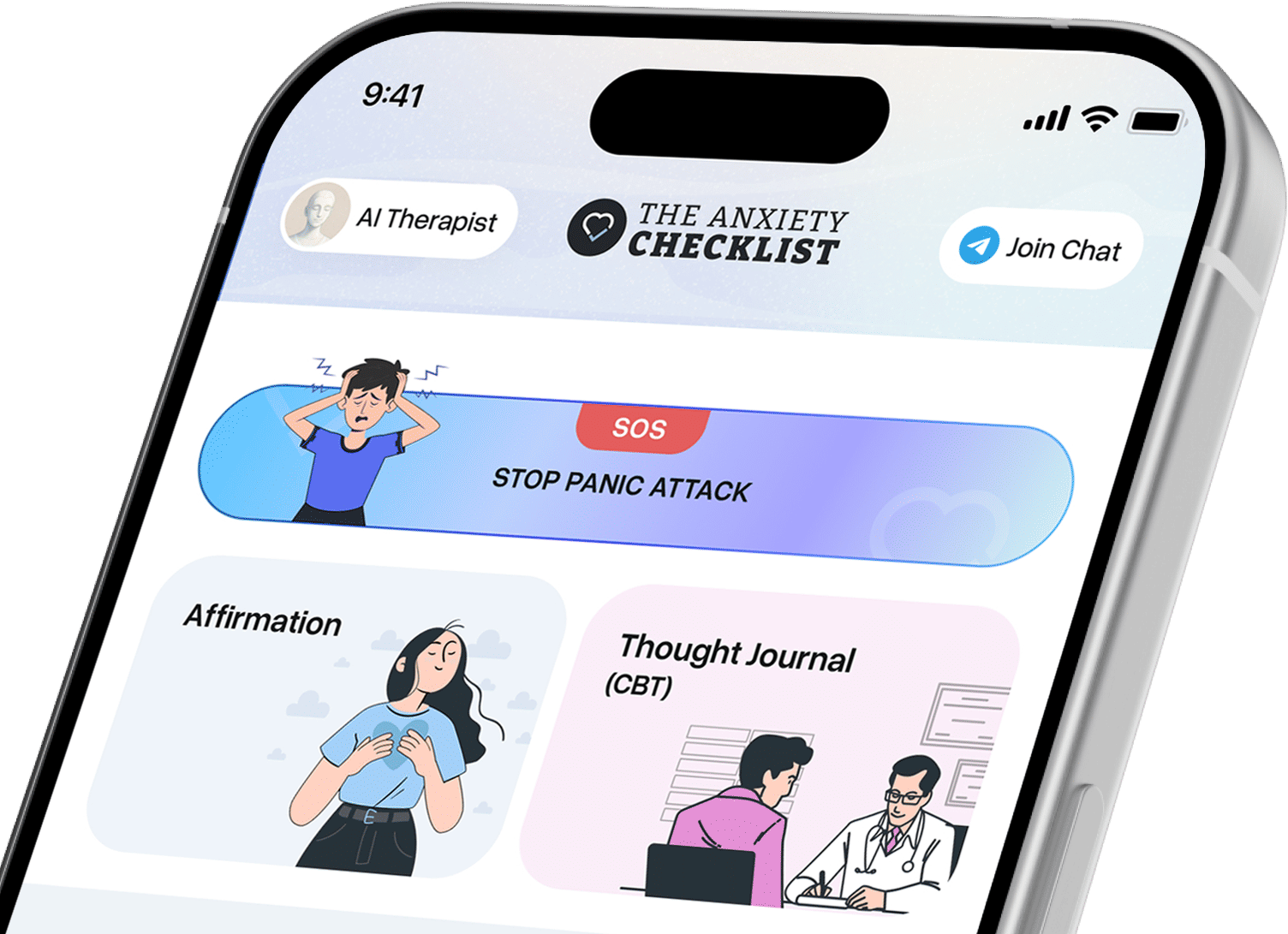
Download our Mobile App
A supportive mobile app with calming exercises, affirmations, hypnosis sessions, and Cognitive Behavioral Therapy tools. Includes guided journaling, belief experiments, and exposure exercises to help you practice and build confidence at your own pace.
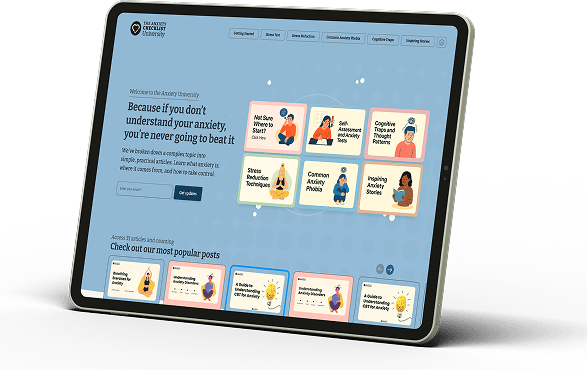
Anxiety University (Free Resource)
A free library of over 60 clear and reassuring articles that help you make sense of symptoms, fears and patterns. It’s the place to go whenever you need a calm and grounded explanation.
Praise for the Anxiety Toolkit
Every element of the toolkit is designed to help you make real and lasting change
So what’s inside Toolkit?
Panic Master- class with Michael Norman
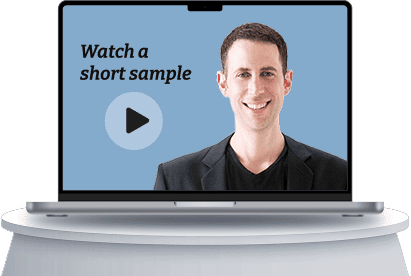
Retrain the system behind your “false alarms”
Taught by anxiety specialist Michael Norman, this 4.5-hour science-based masterclass shows you exactly how panic works, why the sensations feel so threatening, and how to retrain the automatic systems responsible for false alarms.
Built on decades of work in physiology, clinical psychology and fear-learning neuroscience, it draws directly from the research of Cannon, Nardone, Wegner, Watzlawick, Deacon, Schiller and others. Those ideas are translated into clear, practical steps you can work through at your own pace.
What’s inside?
How panic really works
Panic is not random and it is not a sign of danger. You’ll learn the false alarm model, how sensations, thoughts and fear loop together, and why the body can feel unsafe even when it is physically secure.
Why common fixes backfire
You see why familiar strategies like distraction, suppression, reassurance or breath control used as a crutch often strengthen panic rather than reduce it, and why these understandable attempts create long-term sensitivity instead of relief.
Reversing the panic response
The core of the programme. You’re guided through gentle, structured methods that retrain the alarm system itself, using emotional-learning principles and paradoxical techniques that help the brain reinterpret symptoms accurately.
Working with triggers and old fear responses
You learn how the brain misreads normal bodily sensations, how triggers form through conditioning, and how to dissolve those associations. This includes safe, controlled work with feared sensations and practical perspective shifts that break old patterns.
Spreading safety into everyday life
Once the core response begins to shift, you discover how to let that calmer learning spread into different places and situations. Short daily practises and small behavioural adjustments help solidify the “I’m safe” response across your day.
What you’ll learn
Why panic attacks feel life-threatening even when you’re physically safe.
The one-word technique that slows the catastrophic internal script that fuels panic.
How “touching the ghost” helps teach the brain to stand down when panic shows up.
The counterintuitive but well-researched way to break the fear of physical sensations.
Why some past attempts at recovery made things worse (and how to avoid them).
What you gain
You’ll gain a clearer understanding of the panic pattern.
You’ll have less fear of your own body sensations.
You’ll have evidence-based methods for retraining false alarms.
You’ll have a system that no longer mistakes normal sensations for danger.
Praise for the Panic Masterclass
I saw Michael for just 7 minutes, that was all it took to totally wipe out my very difficult and distressing problem. In all my years as a doctor I haven’t known any psychologist or medical professional who can create change of that magnitude so quickly, but the results speak for themselves: two years down the track the problem is still gone and it happened so automatically and easily.
• Dr. Walter
Introducing CBT with Dr Joshua Shifrin
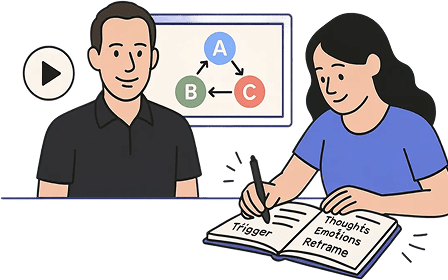
Understand the thinking patterns behind anxiety
This short video course is a clear introduction to Cognitive Behavioural Therapy, taught by Dr Joshua Shifrin, a licensed neuropsychologist with a PhD and years of clinical experience working with anxiety. It isn’t a masterclass, it’s a simple, accessible overview that helps you understand the thinking patterns, interpretations and habits that often sit underneath anxiety.
What it contains
A grounded introduction to the core principles of CBT.
Clear explanations of how thoughts, emotions and behaviours interact.
Practical examples that show why certain thinking styles fuel anxiety.
A useful foundation of techniques to help you apply CBT to your life.
How you use it
Start with this overview to make sense of how CBT is useful for managing anxious thoughts.
Use it to understand common cognitive distortions and how they shape your anxiety.
Return to key sections whenever you need reassurance or a more grounded view.
Apply the ideas alongside the other Toolkit elements to reinforce what you learn.
What you gain
A simple, rational explanation of how CBT helps with anxiety.
A better understanding of the thinking patterns that keep fear looping.
More confidence when using the journaling tools in the toolkit.
Praise for the CBT with Dr Joshua Shifrin
I didn’t know anything about cognitive behavioral therapy, so this was an excellent introduction. Really thorough and clear and has really encouraged me to explore this more to help me with my anxiety.
• David D.
Introducing the CBT Journaling app
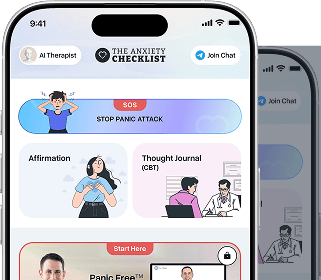
A guided way to steady your thoughts in the moment
When anxiety spikes, it’s hard to remember what you learned in a book or video. The CBT Journaling App gives you a simple, guided flow you can use on your phone to catch unhelpful thoughts, label the patterns behind them and see clearer, more balanced alternatives, all in a few minutes.
What it contains
A guided journaling flow based on core CBT principles.
Simple prompts to capture what’s on your mind right now.
Clear labels for common thinking traps like catastrophising, or all-or-nothing thinking.
Suggested reframes to help you see the situation in a more grounded way.
How you use it
Open the app the moment your thoughts start racing.
Follow the short steps to notice the thought, name the trap and reframe it.
Practice seeing situations without the “panic filter” in the way.
Build a running record that shows your fears are not always accurate.
What you gain
A quick, reliable way to interrupt spirals.
A calmer perspective when your thinking feels distorted.
A simple tool you can use anywhere, without relying on discipline or memory.
Praise for the CBT Journaling app
I’ve tried journaling my anxiety before but it was never really effective. The CBT journaling app is great because it helps you understand your worries and then think of them differently. After a while, you start to catch your negative thoughts and can reframe them yourself, without even needing to use the app.
• Tariq B
Introducing Hypnosis & Guided Calming Sessions
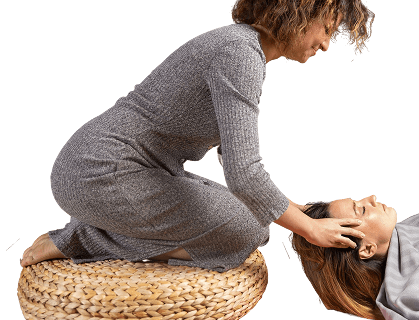
Audio tools to calm anxiety in the body and retrain your stress response
This section of the Anxiety Checklist app includes a collection of guided hypnosis and calming audio sessions designed to help you regulate anxiety at a physical and nervous-system level.
Some sessions use Progressive Muscle Relaxation, others use guided focus or gentle hypnotic pacing. All are practical, grounded, and designed to be used safely while remaining fully aware and in control.
These sessions are not about positive thinking or forcing relaxation. They give you direct ways to calm the body, reduce fear of sensations, and build a more resilient stress response over time.
What’s inside?
Deep Progressive Muscle Release
A slow, full-body relaxation session that helps release built-up tension and settle the nervous system. Ideal when anxiety feels chronic, heavy, or physically draining.
Fist-Clenching Rapid Calm
A short hypnosis-based calming session using controlled fist clenching and release to interrupt anxiety spikes and bring fast physical grounding.
Active Clench & Release Reset
A rhythmic, guided session combining muscle engagement with calming suggestions. Designed to reduce restlessness and stop anxiety from escalating.
Full Body Scan Relaxation
A passive, awareness-based hypnosis session that helps the body unwind without effort. You’re guided to notice sensations and allow tension to release naturally.
Anxiety Reconditioning Hypnosis
A longer session that uses gentle hypnotic pacing to help retrain how the brain responds to anxiety sensations. This session works at a deeper level to reduce fear of fear and restore a sense of safety in the body.
How you use these sessions
Choose a session based on how anxiety is showing up right now.
Use shorter sessions for spikes and restlessness, longer sessions for deeper calm.
Repeat sessions as often as needed. There is no limit and no dependency.
Combine them with journaling, CBT tools, or the Checklist for stronger results.
What you gain
Practical calming tools you can use anytime
Less fear of physical anxiety sensations
Faster recovery when anxiety appears
A calmer baseline nervous system
More confidence handling anxiety on your own
Introducing Hypnosis & Guided Calming Sessions

A structured way to face fears safely, step by step
Avoiding what scares you feels helpful in the moment, but over time it actually keeps anxiety alive. Exposure Therapy works by gently reversing that pattern.
Inside the Anxiety Checklist app, you’ll find a guided Exposure Therapy tool that helps you break a fear down into manageable steps and face it gradually, at your own pace. This approach is widely used in CBT and is one of the most effective ways to reduce phobias and anxiety-driven avoidance.
What is a fear ladder?
A fear ladder is a simple structure that turns one overwhelming fear into a series of small, achievable steps.
Instead of forcing yourself to face the scariest situation right away, you:
Start with easier steps
Build confidence gradually
Let your nervous system learn that you’re safe
Over time, your brain stops treating the situation as a threat.
What’s inside the Exposure Therapy tool?
Identify your fear
You start by clearly naming the fear you want to work on. This could be a specific phobia, a situation you avoid, or something that triggers anxiety.
Brainstorm manageable steps
You’re guided to break that fear into smaller actions, ranging from mildly uncomfortable to more challenging. Helpful examples are included so you’re never stuck wondering what counts as a “step”.
Build your fear ladder
Add up to six steps and rate how anxious each one feels on a scale from 0 to 10. The app automatically organizes them from least scary to most intense.
Face fears gradually and safely
You work through the ladder one step at a time, repeating each step until anxiety naturally settles before moving on.
How you use it
Choose one fear you want to work on.
Break it into small, realistic steps using the guided prompts.
Start with the lowest step and repeat it until anxiety reduces.
Move up the ladder only when you’re ready.
Track progress and rebuild ladders anytime.
What you gain
Less avoidance and fear-driven behaviour
Reduced anxiety around specific situations or phobias
More confidence handling uncomfortable sensations
Proof that anxiety decreases when you stop avoiding
A clear, structured plan instead of guessing what to do
Why this works
Exposure Therapy helps your brain learn through experience that the things you fear are not as dangerous as they feel, and that you can cope with anxiety when it shows up.
Instead of trying to calm anxiety away, you teach your nervous system that it doesn’t need to sound the alarm in the first place.
Introducing Belief Experiments (CBT)
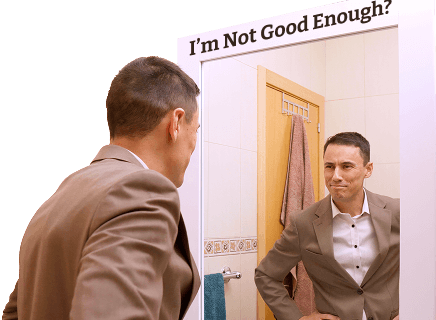
Test anxious predictions and learn from real experience
When anxiety is high, it often feels like your fears are facts. Your mind predicts that something bad will happen, and those predictions drive avoidance, safety behaviours, and constant worry.
Belief Experiments help you gently test those predictions in real life, so you can see what actually happens rather than relying on anxiety’s guesses.
Inside the Anxiety Checklist app, this tool guides you step by step through setting up, scheduling, and reflecting on small experiments designed to challenge anxious beliefs safely and realistically.
What is a belief experiment?
A belief experiment is a structured way to test an anxious prediction.
Instead of asking:
“Is this thought true?”
You ask:
“What happens if I test it?”
For example:
“If I speak up, people will judge me.”
“If I don’t check, something bad will happen.”
“If I feel anxious, I won’t cope.”
The experiment lets you find out what really happens and whether the outcome is as bad as you feared.
What’s inside the Belief Experiments tool?
Choose an area of life
You start by selecting where anxiety shows up most, such as daily life, work, school, social situations, relationships, or something else.
Define the experiment
You clearly describe the situation you’ll face and what you plan to do differently. The app helps you be specific and realistic, not extreme.
Make a prediction
You write down what you believe will happen and what you’re afraid of. This makes the belief visible instead of vague and overwhelming.
Schedule the experiment
Pick a date within the next few weeks. The app reminds you, so you don’t have to rely on motivation or memory.
Reflect on the outcome
Afterward, you record what actually happened and compare it with your original prediction. You note whether the outcome was as bad as expected, different, or manageable.
How you use it
Choose one belief or prediction you want to test.
Design a small, manageable experiment.
Carry it out without trying to force calm or reassurance.
Repeat with new experiments to weaken anxious patterns over time.
What you gain
Less belief in anxious predictions
More trust in your ability to cope
Reduced fear of making mistakes or feeling anxious
Evidence that anxiety exaggerates outcomes
Confidence from real-world learning, not reassurance
How this complements Exposure Therapy
Exposure Therapy helps your nervous system learn that feared situations are safe. Belief Experiments help your mind learn that anxious predictions are often inaccurate or survivable.
Together, they address both:
What you fear will happen
What actually happen
Introducing Affirmations & Guided Reframe
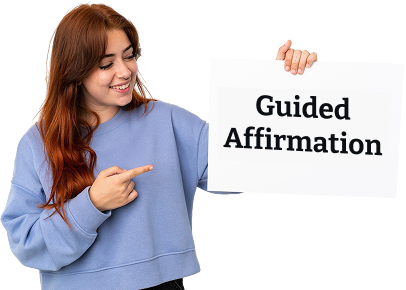
Calm, grounding audio to steady your mind and shift anxious thinking
Affirmations work best when they’re done properly. Not as forced positive thinking, but as calm, believable reminders that help your nervous system settle and your thoughts soften.
Inside the Anxiety Checklist app, the Affirmations section combines a longer guided reframe session with a large library of short, focused affirmations you can use anytime anxiety, doubt, or overthinking starts to creep in.
All affirmations are recorded with a calm, human voice designed to feel steady and reassuring, not artificial or overly upbeat.
What’s inside?
15-Minute Guided Reframe & Affirmations
A longer guided audio session that helps you slow down, ground yourself, and gently reframe anxious thoughts. This session is ideal when you feel emotionally overwhelmed, stuck in negative self-talk, or need help calming your mind before continuing your day.
The focus is not on “convincing” yourself of anything, but on creating enough calm and distance to see things more clearly.
100+ Short Affirmations
A large library of short, targeted affirmations you can listen to whenever you need support. These are designed to be used in real moments, not saved for later.
Each affirmation is short, grounded, and easy to absorb, making them useful even when anxiety is high.
Affirmation categories
The affirmations are organised into six clear categories so you can quickly find what you need:
Panic Attack Relief
Grounding and stabilising statements to help you feel safe and regain control when anxiety spikes.
Anxiety & Worry
Calming reminders that reduce uncertainty, quiet fear, and help your mind slow down.
Overthinking & Rumination
Gentle prompts to let go of mental loops and reduce the urge to analyse or control everything.
Self-Esteem
Supportive affirmations that address self-doubt, inner criticism, and feelings of inadequacy.
Self-Confidence
Empowering statements that help you trust yourself and act despite anxiety.
Self-Love
Compassion-focused affirmations for acceptance, kindness toward yourself, and emotional safety.
These sessions are designed to be supportive, not demanding.
How you use this section
Choose a category based on what you’re struggling with right now.
Listen to a single affirmation or let them play in sequence.
Use the guided reframe when you need deeper grounding or emotional reset.
Repeat as often as needed. There’s no right or wrong way to use them.
These sessions are designed to be supportive, not demanding.
What you gain
A calming voice to counter anxious self-talk
A calming voice to counter anxious self-talk
Less emotional reactivity during stressful moments
More self-compassion and steadiness over time
A simple tool you can use anywhere
Introducing the Community

A safe place to connect with people who truly understand
Anxiety can feel isolating, especially when the people around you don’t fully get what you’re going through. The Anxiety Checklist Community is a private, supportive space where you can connect with others who are walking a similar path.
This is not social media. There’s no pressure to perform, no judgement, and no expectation to “be positive.” Just real people, honest conversations, and shared understanding.
Hosted in a private Telegram group, the community is available whenever you need connection, reassurance, or a reminder that you’re not alone.
What’s inside?
General chat
Ask questions, share thoughts, or simply check in on difficult days.
Panic attack support
Read and share real experiences, small wins, setbacks, and progress over time.
Recovery stories
Read and share real experiences, small wins, setbacks, and progress over time.
Books & tools
Exchange helpful resources, recommendations, and practical ideas that have worked for others.
How you use it
Join when you want support.
Read quietly if you’re not ready to post.
Share when it feels helpful.
Leave and return anytime, with no pressure.
What you gain
A sense of connection instead of isolation.
Perspective from people who genuinely understand anxiety.
Reassurance during difficult moments.
Support at every stage of your recovery.
We are all at different stages of healing. There’s no pressure, no judgement, just support.
Introducing the Fearless Living eBook
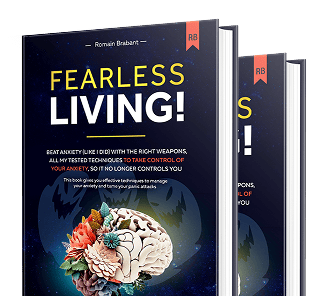
A grounded guide from someone who has lived it
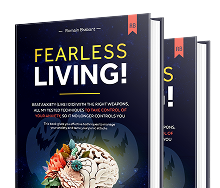
Fearless Living is a clear, honest ebook that brings together the most useful ways to understand and reduce anxiety. Drawn from my personal experience with severe anxiety and panic, it gives you a calm, rational framework for making sense of your symptoms, your triggers and your options, without promising miracles or offering vague advice.
What it contains
Nine chapters that explain how anxiety works day to day, how to change unhelpful thoughts, how to adjust lifestyle habits that influence anxiety, how to cope with triggers and panic episodes, how to build support around you, and how to maintain long-term progress. And it includes my personal story, what helped me, what didn’t, and how I slowly rebuilt a calmer life.
How you use it
Read it alongside the Toolkit for a clearer understanding of what you’re working on.
Use it to make sense of patterns, triggers and habits that shape your anxiety.
Return to key sections whenever you need reassurance or a more grounded view.
Pair it with the Checklist or Masterclass to connect ideas with action.
Why some past attempts at recovery made things worse (and how to avoid them).
What you gain
A rational, relatable explanation of anxiety in everyday life.
A clearer picture of what meaningful change actually looks like.
A sense of not being alone in your thoughts, fears or setbacks.
Praise for the Fearless Living eBook
The fearless book was really helpful for me to better understand my anxiety and my options for dealing with it. And thanks for sharing your personal story with anxiety in such an open and vulnerable way Romain.
• Elena T
Introducing the Anxiety Checklist
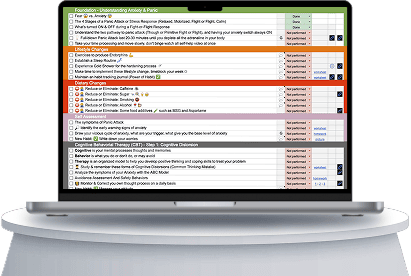
A calm, rational tool when you feel overwhelmed
The Anxiety Checklist is a structured spreadsheet that turns big, vague goals like “fix my anxiety” into small, practical actions you can actually follow. It distills years of my own trial and error into a simple, trackable system you can open whenever you need a calm, rational next step.
Anxiety makes everything feel big and urgent. The Checklist gives you a steady, practical place to turn when your thoughts start heading in the wrong direction.
What it contains
A structured list of 90+ practical anxiety-reducing actions across daily life.
Short notes beside each action so you know what it is and why it helps.
Curated links to trusted science-based resources for deeper guidance.
Easy-to-use worksheets for habits, sleep, planning, triggers and thinking patterns.
How you use it
Open it when you need a grounded next step during anxious moments.
Tick off small actions to build calm, consistent forward progress.
Track what helps, what doesn’t and what you want to revisit later.
Use the worksheets to bring structure back when your day feels scattered.
Why some past attempts at recovery made things worse (and how to avoid them).
What you gain
A calm reference point you can rely on.
A simple path forward when anxiety feels heavy.
A steady system that keeps you organised and on track.
Praise for the Anxiety Checklist
The Anxiety Checklist is brilliant. It’s a really useful list of tactics and approaches I use when trying to calm my racing mind. Instead of trying random things from the internet, I follow the checklist and it really helps me start to feel in control again.
• Zahra T.
Introducing the Anxiety University
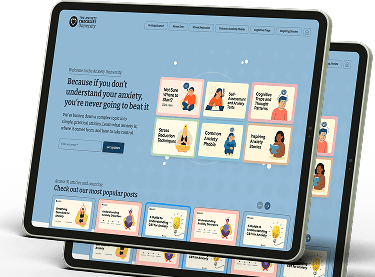
Your always-available library of clear, helpful articles
Anxiety University is a free, always-on library you can dip into whenever you want a calm explanation of a symptom, fear or thinking pattern. It’s not a core part of the Toolkit, just an extra resource that helps you make sense of anxiety in small, steady, and manageable pieces.
What it contains
Over 60 short articles on common fears, phobias and thought patterns.
Clear explanations that expand on ideas contained in the toolkit.
Real stories and practical insights from people who’ve been through similar experiences.
Readable, reassuring guidance you can open any time you need clarity.
Praise for the Anxiety University
I strongly believe that the key to beating anxiety is to educate yourself on why you’re having these responses and reactions. The Anxiety Uni is a library of in-depth articles and helpful guides to help you deal with your anxious thoughts and panic spirals, so is a great way to get this knowledge.
• Nikhil P.
Why the Anxiety Checklist Toolkit Works
Because anxiety shifts when you understand it clearly, interrupt it early, and build steady new patterns. The Toolkit supports all three phases.
Understanding reduces the fear behind your anxiety
When you know what your thoughts, sensations and triggers actually mean, they stop feeling mysterious or dangerous. Clear understanding lowers confusion and gives your brain fewer reasons to react with alarm.

Proven techniques shift the patterns that keep anxiety going
Avoidance, suppression and constant reassurance make anxiety stronger over time. Methods like CBT reframing, emotional learning and small behavioural experiments help replace those patterns with calmer, more stable responses.

Small consistent steps create lasting changes in daily life
Anxiety improves when tools are used in real moments, not in occasional breakthroughs. Simple actions like journaling, reframing or adjusting habits help you build a steadier baseline and regain confidence day by day.

This combination is what helped me rebuild my own relationship with anxiety. And it’s what helps thousands of people like you make steady, reliable progress.
What can you expect from the Anxiety Toolkit?
There are no wild promises of overnight fixes or miracle cures. Just the steady and realistic changes that happen when you understand your anxiety and work with it rather than against it.
Instead of feeling lost in your own thoughts… you can understand what’s happening and feel more in control.
Instead of reacting to every sensation with fear…you can recognise what’s normal and feel safe in your body again.
Instead of living around “what ifs”…you can do the things you care about without planning escape routes.
Instead of hoping spirals pass on their own…you can use tools that actually settle your mind in the moment.
Instead of staying in survival mode…you can have more steady days where anxiety isn’t running the show.
Instead of avoiding the life you want…you can get back to the places, people, and routines you’ve been missing.
Get free updates and lifetime access
This won’t be the final version of the Anxiety Toolkit, because my journey with anxiety is not yet complete. When I complete updates, I’ll automatically send you the updated versions of each item in the toolkit. So when you buy today, you get lifetime access, including all future updates.
Important: You’re not buying a magic bullet
An easy way to begin improving life without stretching your budget
Anxiety makes you play it safe, so it quietly limits what you earn. When you're anxious you avoid difficult situations and stay in your comfort zone, so you don’t go for that promotion, or ask for a payrise, or grow your business. And getting help can be expensive too. Here’s what common approaches typically cost for just one session:
Meditation or Breathing Class
Psychiatrist Session
Hypnotherapist Session
Psychologist Session
Anxiety Medication
These options can be very effective, but the costs add up fast. The Anxiety Toolkit gives you practical, science-based support for a single, one-off price, so you can begin improving without a large ongoing financial commitment.
“If you find me lying on the floor, call my family.”
That’s the note I used to carry in my pocket during the worst of my panic attacks. When an episode hit me in public, I couldn’t speak or explain what was happening. All I could do was hand that note to a stranger and hope they followed it.
It’s a hard thing to admit. But I’m sharing it because I want you to know I’ve been where you are - frightened, exhausted, and unsure how to get out of that cycle.
Slowly, with a lot of trial and error, I found a set of tools that helped me understand what was happening in my body and mind. Eventually, I was able to throw away that note and start living with more confidence, freedom and joy again. You can get there too.
Because you’re not stuck. You’re not broken. You just need the right help.

Gain control of your anxiety and gain control of your whole life
$249
OR CHOOSE PAYMENT PLAN
3 Payments of
$83
Unlock the Anxiety Toolkit & start to beat your anxiety
1900+
Satisfied customers
Helping over 1,900 people beat their anxiety
- PanicFree™ Masterclass by Michael Norman (Guest Expert)
- The Anxiety Checklist by Romain Brabant
- The Fearless Living eBook by Romain Brabant
- Introduction to CBT by Dr Joshua Shifrin
- iOS & Android Mobile App
What’s inside the free sample?
Because anxiety shifts when you understand it clearly, interrupt it early, and build steady new patterns. The Toolkit supports all three phases.
A free sample video from the Panic Masterclass
A limited access version of the Anxiety Checklist
One free chapter of the Fearless Living eBook
Some helpful emails to help you on your journey
How is the content delivered, and other common questions
If you are in a crisis or any other person may be in danger - don't use this site. These resources can provide you with immediate help.