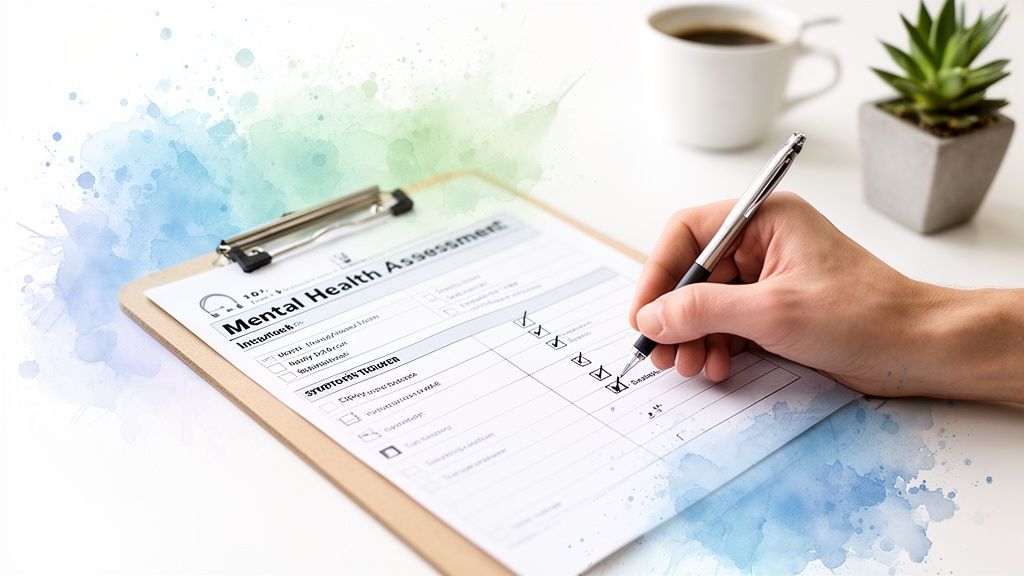
When you're overwhelmed by anxiety, it can feel like trying to navigate a dense fog without a map. But there is a clear path forward, and it starts with understanding. That's where mental health assessment templates come in. Think of them as your personal guide, turning those vague, swirling feelings of dread into clear, actionable insights that lead directly to healing and a panic-free life.
These aren't complicated clinical documents. They are simple, powerful tools like checklists and symptom trackers that help you identify patterns, recognize triggers, and finally see tangible proof of your progress on the road to recovery.
Finding Clarity in the Chaos with Assessment Templates
Living with anxiety can feel like wrestling with an invisible force, but it's a battle you can win. You might feel a constant sense of unease or a racing heart, but struggle to pinpoint exactly why. This is where the structure of a good template becomes a game-changer, illuminating the path toward a calmer life.
They are more than just forms; they are powerful tools for self-discovery and recovery.
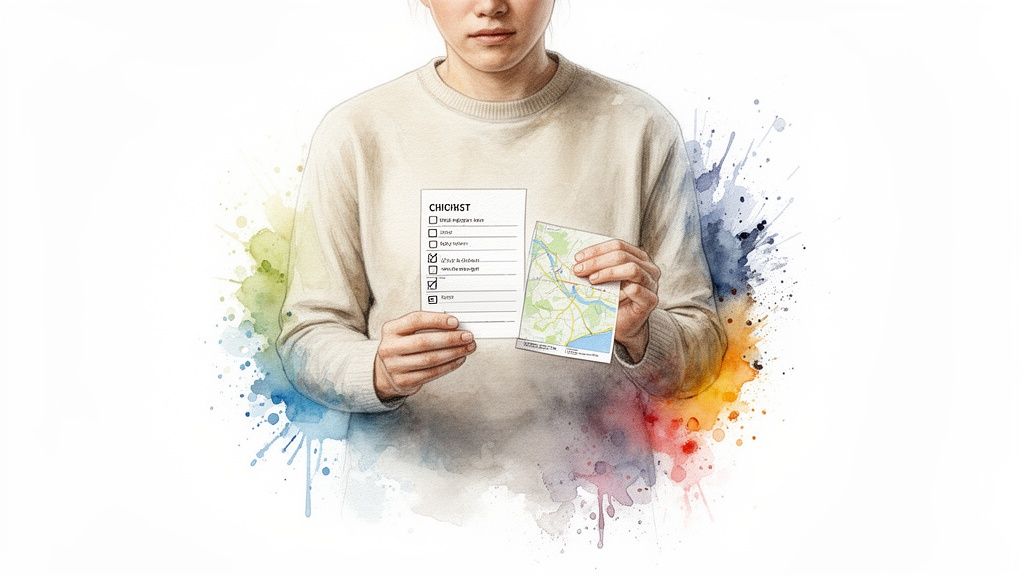
By using a simple checklist or tracker, you begin to turn the abstract nature of your anxiety into concrete data. This isn't just about logging information; it's about reclaiming a sense of control and building the unshakeable hope that you can, and will, heal.
Why Structured Self-Assessment Matters
The journey toward a calmer life starts with understanding. These templates give you a framework for that understanding, helping you document your experiences in a way that reveals trends and provides a clear roadmap for your healing.
- Spot Hidden Triggers: You might suddenly realize your anxiety peaks after that second cup of coffee, empowering you to make a simple change with a big impact.
- Recognize Thought Patterns: A template can help you catch negative thought cycles before they spiral, giving you the chance to choose a different, more peaceful response.
- Track Your Progress: Seeing your anxiety scores decrease over a few weeks provides powerful, tangible proof that your coping strategies are working and that you are actively healing.
This kind of accessible self-monitoring is more important than ever. By 2025, it's projected that over 1 billion people worldwide will be grappling with a mental health condition. The World Health Organization's latest reports show this affects more than one in every eight individuals, with anxiety disorders leading the charge. This reality has fueled the need for practical, hopeful tools like mental health assessment templates, empowering people to monitor their symptoms and take proactive steps toward recovery.
Turning Insight into Action
The real magic happens when these templates turn your insights into meaningful action and lasting change. A basic, widely-used tool like the GAD-7, which assesses generalized anxiety, can give you a clear snapshot of where you are right now, providing a starting point for your journey. You can check out our guide on the GAD-7 at https://anxietychecklist.com/anxiety-test/ to see how a simple questionnaire can offer profound clarity and hope.
This data isn't just for you, either. It can make conversations with a therapist far more focused and productive, accelerating your path to recovery.
Using an assessment template is like turning on the lights in a dark room. Suddenly, you can see the obstacles and navigate a clear path around them, moving confidently toward a life free from anxiety.
For clinicians, integrating these tools streamlines the intake process and helps build a comprehensive patient history much faster. For practices looking to take this a step further, exploring options for healthcare documentation automation can free up even more time for patient care.
Ultimately, these templates serve as a bridge, connecting the dots between your day-to-day experiences and your long-term goal of living a calmer, more peaceful, and panic-free life.
To give you a better idea of what's out there, here’s a quick breakdown of the most common types of templates and how they can help you on your journey to anxiety relief.
Types of Mental Health Assessment Templates for Anxiety Relief
| Template Type | Primary Purpose | Key Benefit for You |
|---|---|---|
| Symptom Tracker | Daily or weekly logging of specific anxiety symptoms (e.g., racing heart, intrusive thoughts). | Helps you identify patterns and see the direct, positive impact of lifestyle changes on your well-being. |
| Screening Form | A standardized questionnaire (like the GAD-7) to measure the severity of anxiety. | Gives you a clear, objective score to track progress and celebrate your healing milestones. |
| Intake Form | A comprehensive overview of your mental health history, symptoms, and goals. | Organizes your thoughts before speaking with a therapist, making your first session more effective and hopeful. |
| Daily Mood Log | A simple log to record your overall mood, energy levels, and any significant events. | Connects your emotional state to external factors, empowering you to create a more supportive environment. |
| Trigger Checklist | A list of common anxiety triggers (social situations, caffeine, deadlines) to check off. | Quickly pinpoints what's causing your anxiety to spike, empowering you to manage those situations with confidence. |
Each of these templates offers a unique lens through which to view your anxiety. Whether you start with a simple symptom tracker or a more formal screening tool, the goal is the same: to replace confusion with clarity and helplessness with the empowering knowledge that healing is within your reach.
Crafting Your Personalized Anxiety Management Toolkit
Your path to healing from anxiety is deeply personal, and your tools should be too. A life free from panic isn't about following generic advice; it's about understanding your own mind and body.
This is why building your own toolkit with personalized mental health assessment templates isn't just a task; it's a powerful act of taking back control and actively creating a more peaceful future for yourself.
The goal here isn't just to collect data. It's about creating a living, breathing resource that grows with you. It’s about building a compassionate understanding of your own mind, which gives you the clarity you need to move toward a panic-free life. You are the expert on your experience; these templates just give you a framework to organize that expertise.
Beyond Just Tracking Anxiety Levels
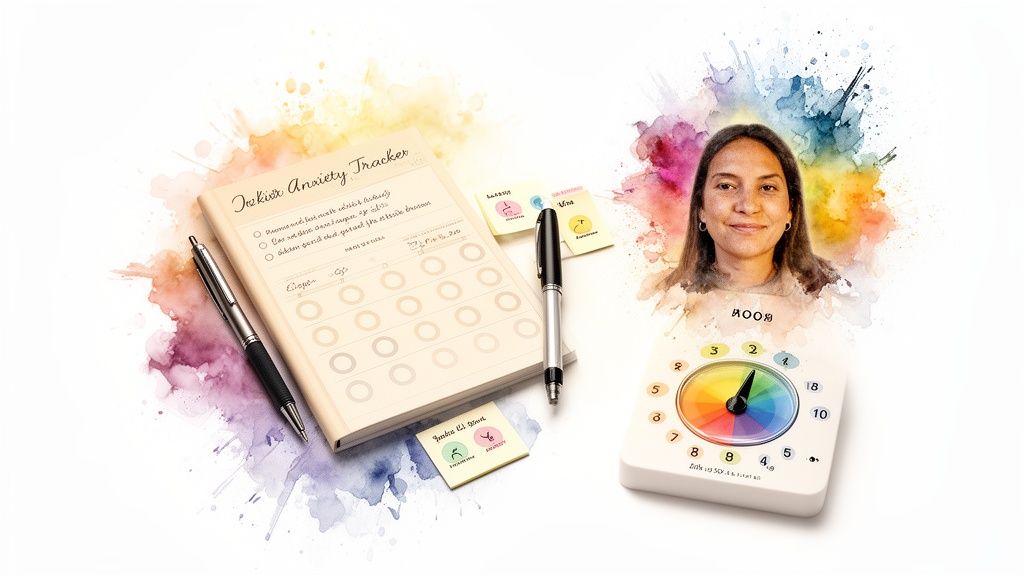
A genuinely useful symptom tracker does more than ask for a 1-10 anxiety rating. The real magic is in the details surrounding it. Seeing the whole picture helps you connect the dots between your mental state and your daily life, revealing patterns that point the way to healing.
Think about expanding your template to include these game-changing areas:
- Sleep Quality: Note how rested you felt when you woke up. Seeing the direct link between poor sleep and higher anxiety can be the motivation you need to prioritize restorative rest.
- Energy Levels: Track how anxiety physically drains you and, more importantly, when you have the most resources to implement positive coping strategies.
- Small Daily Wins: Actively look for and write down moments of peace, joy, or accomplishment. This practice literally retrains your brain to notice the good, building resilience and proving that moments of calm are possible, even now.
By tracking these related factors, you create a much richer, more honest picture of your well-being. You start to see how a bad night's sleep often leads to a high-anxiety day, or how a small win can create positive momentum. This is how you shift from just reacting to anxiety to proactively building a life with more peace.
Building a Cognitive Distortions Checklist
One of the most effective ways to quiet anxiety is to challenge the negative thought patterns that fuel it. A custom checklist shines a bright light on these automatic thoughts, known as cognitive distortions.
This template is less about numbers and more about awareness. It’s a tool for catching your thoughts in the act, before they can spiral into panic. This approach is a cornerstone of Cognitive Behavioral Therapy (CBT), a proven treatment for anxiety. For a deeper dive, you can explore more about understanding CBT for anxiety to see how it works to reframe your thinking toward hope and empowerment.
Your personalized assessment template is not a record of your struggles. It is a map of your strength, showing you exactly where to focus your energy to find relief and build a life free from panic.
Creating your checklist can be simple. Start by listing common distortions you recognize, then leave space to jot down when you catch them happening.
Here are a few examples to get you started:
- Catastrophizing: "I made a small mistake at work, and now I'm definitely going to get fired."
- All-or-Nothing Thinking: "If I'm not perfectly calm during my presentation, I'm a total failure."
- Mind Reading: "I just know they think my idea is stupid, even though they haven't said a word."
When you log an instance, you're not judging yourself—you're observing with compassion. This simple act creates a critical pause, robbing the thought of its power and giving you a chance to choose a more balanced, hopeful response.
Customizing Fields and Scales for Your Journey
The real power of these templates is that they're yours. You can and should tweak them to fit your specific needs, creating something that feels intuitive and directly tackles your biggest challenges.
Ask yourself: what information would give me the most hope?
- Daily Trigger Log: Create your own. Maybe your triggers are specific social situations, caffeine, or news headlines. Naming them is the first step to mastering them.
- Coping Mechanism Effectiveness: When you try a coping skill (like deep breathing or a quick walk), rate how well it worked on a 1-5 scale. This helps you build a reliable menu of strategies that you know bring you relief.
- Physical Sensation Tracker: List the physical symptoms that bother you most. Over time, you’ll start to see them as temporary sensations instead of signs of danger, which diminishes their power.
This process transforms you from someone who just has anxiety into an active architect of your own recovery. Every entry is a step toward understanding, and with understanding comes the unshakable hope that you can—and will—heal.
Using Your Templates to See Real Progress
A well-crafted mental health assessment template is more than just a document; it's a compass pointing toward healing. But a compass is only useful if you learn to read it and trust its direction. This is where you use your tools to foster real, lasting change and build a life you love.
The goal isn't perfection. It's about consistent, compassionate observation. This process transforms you from a passive recipient of anxiety into an active participant in your own recovery. Every entry you make is a small but powerful step toward understanding your mind and building a life where you are in control—not your anxiety.
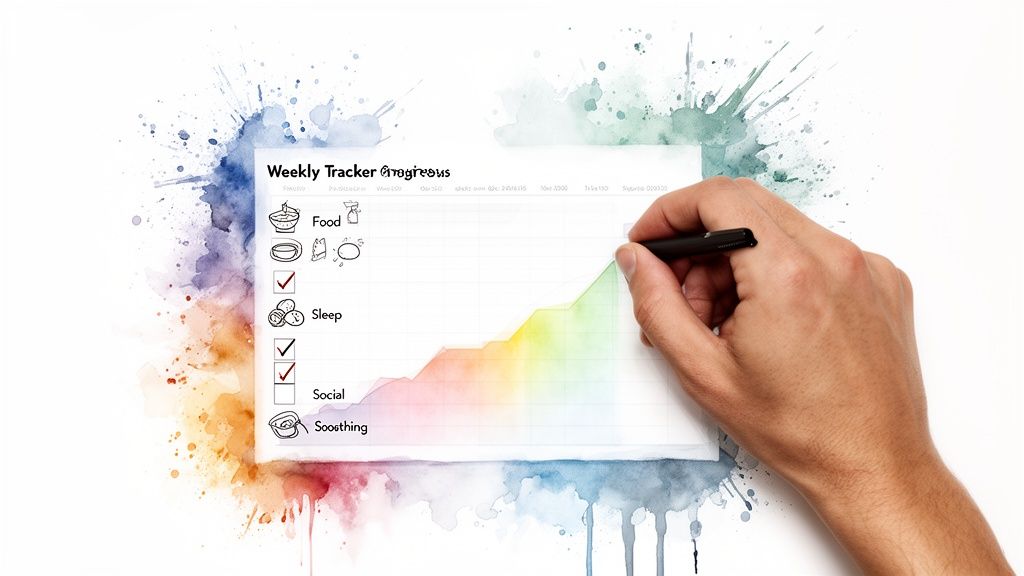
From Tracking to Transformation
The first step is making self-assessment a consistent habit. The key is to make it a low-stress, low-effort routine. Think of it as a simple, five-minute check-in with yourself each evening.
This daily habit isn't about scoring yourself or aiming for a perfect, anxiety-free day. It's about gathering clues and celebrating small victories. Soon, you'll start to see your data not as a report card but as compassionate feedback from your mind and body. This gentle approach removes the pressure and makes the process a form of self-care, not just another chore.
Uncovering Your Personal Anxiety Map
With just a few weeks of consistent data, you can begin to spot powerful trends. This is where hope truly begins to build, as vague feelings of dread transform into clear, solvable problems.
You might notice patterns like:
- Dietary Connections: Does your anxiety spike after a high-sugar breakfast? Seeing it written down makes the connection undeniable and empowers you to make a different choice tomorrow.
- Social Situations: Perhaps large group gatherings are a trigger, but one-on-one conversations actually lower your anxiety. This is valuable information for creating a more supportive social life.
- Sleep Impact: A week of data might clearly show that getting more sleep almost guarantees a better day. That's a direct, actionable step toward feeling better.
This knowledge is power. It allows you to make small, informed adjustments—like swapping your afternoon coffee for herbal tea—that have a massive impact. This is how you start taking concrete, evidence-based anxiety recovery steps that build on this self-awareness.
A Powerful Tool for Collaboration and Support
Your personal assessment templates are invaluable tools for making your support system—whether that’s a professional therapist or a trusted friend—more effective. Instead of just saying, "I had a bad week," you can provide specific, actionable information that leads to better help.
For example, you can show them, "I noticed my panic symptoms spiked on Tuesday and Thursday, both times after I skipped lunch." This level of detail allows a therapist to offer targeted strategies and helps loved ones understand your needs better.
Your template becomes a shared language, a bridge that connects your internal experience to the outside world. It turns abstract feelings into a concrete conversation, making your healing a collaborative and hopeful effort.
This structured approach is crucial. Anxiety disorders affect 301 million people worldwide. In the US alone, 22.8% of adults experienced mental illness in 2021. But these statistics don't define your future. Tools like mental health assessment templates, by transforming vague symptoms into actionable data, empower you to differentiate disordered anxiety from everyday stress and track your progress toward a full recovery.
By consistently using and interpreting your templates, you aren't just managing symptoms—you're actively building a foundation for a life with less fear and more freedom. Each insight you gain is a victory, a tangible piece of proof that you have the power to heal.
Ready-To-Use Templates to Start Your Journey Today
Taking that first step toward understanding your anxiety can feel enormous, but it starts with a single, simple action. The journey to a panic-free life begins now, and having the right tools makes all the difference.
To help you get started right away, here are a couple of practical, ready-to-use examples of effective mental health assessment templates.
Think of these not as rigid forms, but as a launchpad for your healing. They give you a solid, proven structure you can use right now to start gathering insights, feel more in control, and build real, tangible hope for your recovery.
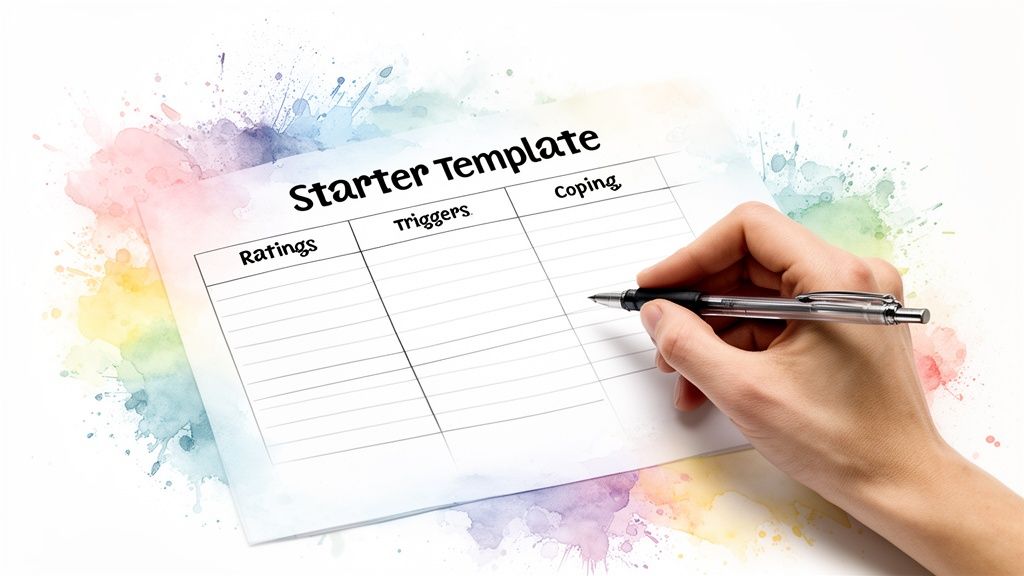
Your First Tool: The Daily Anxiety and Mood Tracker
One of the most powerful ways to demystify anxiety is to track it daily. A daily tracker breaks it down into understandable pieces, revealing that your anxiety levels actually ebb and flow.
This simple act of observation creates distance between you and the feeling, reminding you that you are not your anxiety. It’s a temporary state, and tracking it proves that relief is always possible.
You can recreate this starter template in a notebook or a notes app on your phone.
- Date:
- Morning Check-in (9 AM):
- Anxiety Level (1-10):
- Overall Mood (e.g., Calm, Irritable, Hopeful):
- Hours Slept Last Night:
- Afternoon Check-in (3 PM):
- Anxiety Level (1-10):
- Triggers Noticed (e.g., caffeine, work deadline):
- Physical Sensations (e.g., tight chest, racing heart):
- Evening Check-in (9 PM):
- Anxiety Level (1-10):
- Coping Skill Used (e.g., deep breathing, walk):
- Effectiveness of Coping Skill (1-5):
- One Small Win from Today:
Each field is designed to give you a specific, hopeful insight. Logging your coping skills and small wins actively builds evidence that you have the power to influence how you feel and that you are making progress every single day.
| Essential Fields for Your First Anxiety Tracker |
| :— | :— | :— |
| Tracking Field | What to Record | Why It Matters for Healing |
| Time/Date | The exact time you're logging your entry. | Establishes patterns and shows you that anxiety is not a constant, but a fluctuating state. |
| Anxiety Level (1-10) | Your subjective rating of anxiety intensity. | This quantifies the feeling, proving that anxiety isn't always at a level 10 and that relief is possible. |
| Triggers | What was happening right before you felt anxious? | Identifying triggers is the first step toward managing your response to them with confidence. |
| Physical Sensations | Note any bodily feelings like a racing heart or tight chest. | Helps you recognize the first warning signs, giving you a chance to intervene early with a coping skill. |
| Coping Skill Used | Did you try anything to feel better? | Builds a personal toolkit of what works for you. It proves you're not powerless against the feeling. |
| Effectiveness (1-5) | Rate how well your coping skill worked. | Helps you refine your strategy, focusing on the tools that bring you the most relief and hope. |
By consistently tracking these data points, you're not just observing your anxiety—you're actively gathering the intelligence needed to dismantle it and build a more peaceful life.
Demystifying Panic: The Weekly Panic Attack Log
For many, panic attacks are the most terrifying part of anxiety. A panic attack log is a courageous step toward taking away their power by understanding them. It proves that you can survive them and that they always end.
This template helps you see a panic attack not as a single, chaotic event, but as a process with a before, a during, and an after. This perspective is vital for recovery, as it reveals points where you can intervene and shows that the intense fear always, always passes.
Using a panic attack log transforms the experience from something that happens to you into something you can observe and learn from. This shift in perspective is the foundation of building a life where you no longer fear the fear.
Here’s a structure you can use to start making sense of these intense moments.
- Date & Time of Attack:
- Situation/Location: (Where were you? What were you doing?)
- Triggers (The "Before"): (Any specific thoughts or events right before it started?)
- Symptoms (The "During"): (Check all that apply: racing heart, shortness of breath, etc.)
- Peak Intensity (1-10):
- Duration: (How long did the most intense part last? You will see it is temporary.)
- Response (The "After"): (What did you do? What helped the feeling pass?)
- Post-Attack Reflection: (How did you feel an hour later? What did you learn from this experience?)
By filling this out after the fact—once you're feeling safe and calm again—you're analyzing the event from a distance. You might discover that your attacks are shorter than they feel, or that they often happen when you're dehydrated or haven't eaten.
This data empowers you to take preventative measures and build unshakable confidence in your ability to handle them. These mental health assessment templates are your first step toward proving to yourself that healing is not just possible—it's already happening.
Protecting Your Privacy on Your Healing Path
Embarking on a healing journey is a courageous and deeply personal act. The insights you gather using mental health assessment templates are sensitive, and keeping that information safe is essential for creating a space where you can be truly honest with yourself and foster hope.
Think of this digital and emotional safety as the foundation of your recovery. Your documented thoughts and feelings are for your eyes only, unless you decide otherwise. This allows you to explore the roots of your anxiety without fear, creating a secure container for your healing.
Practical Steps for Securing Your Templates
Whether you're using a digital spreadsheet or a dedicated app, taking a few simple steps can offer a lot of peace of mind. It’s like building a protective boundary around your healing work, ensuring your private reflections stay that way.
Here are a few practical ways to safeguard your information:
- Password-Protect Your Files: Most spreadsheet programs and document editors let you set a password. This is your first line of defense.
- Use Encrypted Apps: If you opt for a mental health app, look for one that explicitly mentions end-to-end encryption. This means only you can access your data.
- Be Smart About Cloud Storage: If you store your templates in the cloud, make sure your account has a strong, unique password and two-factor authentication turned on.
When you're looking at any online tools for your mental health, always put data security first. A great starting point is understanding privacy policies so you know what to look for. These small actions help you feel secure, allowing you to focus on what really matters: your path to wellness.
The Empowering Boundaries of Self-Assessment
It's also crucial to hold these tools with the right perspective. Your self-assessment templates are powerful instruments for personal insight, but they are not a substitute for a professional diagnosis. Their real strength is in illuminating your inner world, empowering your healing journey.
Your templates are not meant to give you a diagnosis; they are meant to give you clarity. They empower you to understand your own experience so you can advocate for yourself and take meaningful steps toward a full recovery.
The ultimate goal is to use the patterns and insights you uncover to have richer, more productive conversations with a professional. The data you collect can accelerate progress in therapy, helping you and your provider pinpoint core issues much faster.
For those exploring their options, learning about different approaches like psychotherapy for anxiety can provide context for how these templates support a formal treatment plan.
By respecting these boundaries, you use your templates as a launchpad for deeper healing, not as a final destination. This approach ensures your self-assessment work is always a constructive, hopeful, and safe part of your journey toward a calmer life.
Common Questions About Assessment Templates for Anxiety
Starting something new on your healing journey can feel a little uncertain. Using mental health assessment templates to manage anxiety is a powerful step, and it’s smart to want to understand exactly how it works. My goal here is to give you clear, hopeful answers to the questions I hear most often.
These tools are designed to serve you, and knowing how to use them effectively is the key to unlocking their potential. This knowledge reinforces the most important truth of all: you have the power to create meaningful, lasting change and live a life free from panic.
Can These Templates Really Help with Severe Panic Attacks?
This is a crucial question, and the answer is a resounding yes. While a template won’t stop a panic attack in its tracks, it is an incredibly powerful tool for demystifying them—which is the first step to reducing their frequency and intensity.
Panic attacks thrive on the unknown. A panic attack log helps you systematically dismantle that fear.
By documenting what happens before, during, and after an attack, you start to see patterns. You might notice they often occur when you’re dehydrated or sleep-deprived. This data transforms the experience from a terrifying, chaotic event into an understandable process you can influence. This insight alone reduces the anticipatory anxiety—the fear of the fear itself—and builds your confidence that you can handle these moments and that they will pass.
How Often Should I Fill Out My Templates to See Results?
Consistency is way more important than intensity. The most effective approach is to build a small, sustainable habit.
- For a daily tracker: Aim for a quick two-minute check-in two or three times a day. This gives you a clear picture of how your anxiety fluctuates and shows you that moments of peace exist every day.
- For a trigger or thought log: The goal is to fill it out as soon as you notice a trigger or a negative thought spiral, empowering you to respond differently in the moment.
- For a panic attack log: Fill this out after the attack has passed and you feel safe and calm. There is no pressure.
Most people start seeing meaningful, hope-building patterns within one to two weeks of consistent tracking. The key isn't perfection; it's showing up for yourself consistently, even for just a few minutes each day.
Is It Okay to Share My Completed Templates with My Therapist?
Absolutely, and I highly recommend it. Sharing your completed templates can make your therapy sessions significantly more effective and focused, accelerating your healing.
Instead of trying to recall how you felt, you can present clear, specific data. Imagine saying, "I had high anxiety on Tuesday and Thursday, and my tracker shows both days were preceded by poor sleep." This gives your therapist concrete information to work with, allowing them to provide more targeted advice. It turns your sessions into a true collaboration built on the foundation of your own self-awareness.
"A filled-out template is more than just data; it's a story. It's your story of resilience, observation, and the courageous steps you are taking to heal. Sharing it turns a monologue of suffering into a dialogue of hope."
It's also a powerful way to advocate for your own needs. You’re not just a passive patient; you’re an active, informed participant in your own recovery.
What If I Miss a Day or a Week of Tracking?
It’s completely okay. The purpose of these tools is to reduce your anxiety, not add to it. If you miss a day, or even a whole week, see it as a moment of rest, not a failure. Simply pick it back up when you're ready, without judgment.
Healing isn't a straight line. The goal is progress, not perfection. Every single entry you make is a win, and taking a break doesn't erase the insights you've already gained. Just return to the practice with gentle self-compassion.
For those just starting out, using a simple tool like an online anxiety test can provide a great baseline. Our own resource can give you a snapshot of your current symptoms to begin your tracking journey. This empowers you to move forward with a clearer understanding of where to focus your efforts.
Ultimately, these templates are a means to an end: a calmer, more peaceful life where you feel in control. Every question you ask and every entry you make is a step in that hopeful direction.
Ready to turn these insights into action? The Anxiety Checklist provides a complete, self-guided system to help you build your personalized toolkit. With our 93-point interactive checklist and comprehensive eBook, you'll get the structure and support you need to understand your anxiety, challenge negative thoughts, and build a life free from fear. Start your journey toward fearless living today at https://anxietychecklist.com.