
Living with anxiety can feel like being lost in a dense fog. Every direction looks the same, the path forward is a blur, and the sense of isolation can be overwhelming. But there is a clear path forward: you are not alone on this journey, and you can heal. Peer support is a powerful source of hope and healing, built on the simple truth that shared experience is a profound source of strength on the road to a panic-free life.
Finding Hope When You Feel Alone

When you're caught in the grip of anxiety, it’s easy to believe that no one could possibly understand what you’re going through. This sense of isolation can be one of the most painful parts of the struggle, making recovery feel like an impossible dream.
Peer support punches a hole right through that feeling. It connects you with people who have walked a similar path, creating a space where hearing the words "me too" brings an immediate wave of relief and validation. This isn't about getting clinical advice; it’s about finding genuine empathy from someone who gets it because they've been there themselves and found their way through.
The Power of Shared Experience
The real magic of peer support is in the unique connection forged through lived experience. It’s different from professional therapy, which offers essential clinical guidance. Peer connection provides a different kind of support—one that beautifully complements your journey to lasting healing.
This shared understanding can be the first step toward taking your life back from anxiety. Seeing others who have navigated similar struggles and are now thriving offers tangible proof that recovery is not just possible, it's expected. It can spark a sense of hope that feels just out of reach when you're facing it all by yourself. For many, this starts with tackling the deep-seated fear of being alone.
"Peer support is based on equality, shared understanding, and empowerment. It emphasizes hope, recovery, and self-determination, operating from the belief that people are experts in their own lives."
Building Confidence and Reducing Panic
Connecting with people who've been there helps demystify anxiety. You start picking up practical coping strategies, sharing what works for you, and building the confidence to face your triggers. This mutual exchange empowers you to take back control and move toward a panic-free life. A strong foundation of inner strength is crucial, and you can explore different approaches to building lasting resilience to support you along the way.
This sense of community provides three critical things:
- Validation: Knowing your feelings are real and understood.
- Hope: Witnessing the recovery of others and believing it's possible for you, too.
- Empowerment: Gaining tools and confidence to manage your own mental health.
Ultimately, peer support acts as a bridge from isolation to connection, reminding you that healing isn't just achievable—it's a journey you don't have to take by yourself.
What Exactly Is Peer Support for Mental Health?
Ever felt like you're trying to find your way through a thick, unfamiliar forest, completely lost? Peer support for mental health is like having someone show up who’s walked that exact path before. They know the terrain, they remember the fear, and they can point out the clearings you can’t see yet, assuring you there is a way out.
This isn't about getting a diagnosis or medical advice. It’s much simpler—and in many ways, more profound. It's a powerful connection built on the foundation of shared lived experience. The whole idea rests on the belief that you are the expert on your own life and that you already have what it takes to heal.
The Core Principles of Peer Connection
At its heart, peer support is about feeling seen and understood. It’s a space where you can talk about your struggles with anxiety without that nagging fear of judgment, because the person listening just gets it. This shared reality fosters genuine empathy and validation.
The entire relationship is built on a few key ideas:
- Mutual Respect: You’re equals. Both people bring valuable insights to the table, and no one is positioned as the "expert" over the other.
- Shared Experience: This is the magic ingredient. The connection comes from a deep, mutual understanding of what it’s like to live with anxiety or panic.
- Empowerment: The goal isn’t to be told what to do. It’s about helping you build confidence in yourself and discover your own strategies for getting well.
This kind of support is more critical than ever. Mental health conditions impact over one billion people worldwide, but there are huge gaps in care. The World Health Organization notes that one in four people will face a mental health disorder at some point, yet in many places, very few receive any care at all. You can find more details in this report on global mental health needs. Peer support helps bridge that gap with a message of hope.
Hope Through Lived Experience
Unlike a clinical relationship, which can sometimes feel a little top-down, peer support is based on equality. A peer specialist or group member isn't there to "fix" you. They're there to walk alongside you, offering hope just by being living proof that recovery is real.
Peer support specialists model that hope and recovery are attainable. Their own journey becomes a powerful source of inspiration, showing others that it's possible to navigate the challenges of anxiety and build a fulfilling life.
Hearing someone else describe a feeling you thought was yours alone can instantly dissolve the sense of isolation that anxiety thrives on. That validation is a huge step toward healing. It normalizes what you’re going through and quietly reinforces the belief that you have the strength to move forward.
This connection provides practical tools, too. You get to swap coping strategies that have actually worked in real-world situations, offering practical advice that fits perfectly alongside professional treatment. This exchange is a key part of the anxiety recovery steps that create lasting change.
Ultimately, peer support is a partnership. It’s a space to borrow some hope on the days you don't have your own and, eventually, to share your strength with others as you grow. It’s a constant reminder that healing from anxiety and living panic-free isn't just a distant dream—it's a real possibility, achieved one shared step at a time.
The Real Benefits of Peer Connection for Anxiety
When you're stuck in a cycle of worry, the world can feel like it's shrinking. Peer connection is what pushes back against that isolation, showing you there’s a way toward a calmer, more confident life.
The biggest, most immediate benefit? That profound sense of relief that washes over you when someone else truly gets it. When a person looks you in the eye and says, "I've felt that exact same way, and I got through it," it shatters the illusion that you're the only one going through this. That validation is a powerful antidote to the shame and secrecy anxiety loves to create.
Breaking the Cycle of Isolation and Fear
Anxiety is a master of isolation. It's that nagging voice convincing you that no one else could possibly understand the fear, the racing thoughts, or the physical panic. This feeling of being fundamentally different or "broken" just adds more fuel to the fire.
Peer support is how you dismantle that harmful belief.
Hearing someone else’s story—how they got through a panic attack at the grocery store or managed obsessive thoughts at work—makes your own experience feel normal. It’s like turning on a light in a dark room; suddenly, the scary shadows are revealed to be familiar objects. This normalization dials down the fear and reinforces the belief that recovery isn't just some vague hope, but a real, achievable goal.
The journey out of anxiety isn’t about finding a magic cure. It’s about collecting tools and moments of connection that build resilience. Peer support is a space where you can borrow hope on the days you don't have your own, knowing you’ll be able to lend yours out in the future.
Rebuilding Confidence and Hope
Anxiety has a nasty habit of chipping away at your self-esteem, making you doubt your own strength and abilities. Peer support for mental health helps you rebuild that confidence from the ground up. By sharing your wins, no matter how small they seem, you get to see your progress through the eyes of people who genuinely appreciate how much effort it took.
This shared journey becomes a constant source of inspiration. Seeing peers who were once overwhelmed by panic now living full lives offers living proof that a different reality is possible. It shifts your focus from what anxiety takes away to what you can reclaim, one brave step at a time. This model is so effective that its benefits are now being recognized across the entire healthcare system.
The impact isn't just anecdotal. Research compiled by Mental Health America shows that peer support significantly enhances quality of life, increases engagement with other services, and improves how people manage chronic conditions. Critically, it also leads to a notable decrease in hospitalizations, which helps reduce overall healthcare costs. You can read more about these positive outcomes and see the data for yourself.
Developing Practical Coping Skills
While a therapist provides clinical strategies, peer support offers a treasure trove of real-world, battle-tested coping skills. It’s a space where you can ask practical questions and get honest answers from people who've been there and healed.
You might learn:
- Grounding techniques that a peer actually uses during a panic attack.
- Ways to communicate your needs to family from someone who struggled with the exact same conversations.
- Tips for navigating social situations that trigger your anxiety.
This exchange isn't just about getting advice; it's about mutual empowerment. When you share a strategy that helped you, you reinforce your own skills and sense of agency. This process of giving and receiving is incredibly healing and is a cornerstone of sustainable, long-term recovery. It’s a vital piece of the puzzle, especially when you consider how widespread these struggles are, as shown by the latest anxiety statistics.
Exploring Different Types of Peer Support
Peer support isn't a one-size-fits-all solution. Think of it as a landscape of connection, with different paths you can take depending on what feels right for you. Finding the best fit comes down to your personal needs, your comfort level, and what you hope to achieve on your healing journey.
The real strength of peer support is its flexibility. Whether you feel most comfortable in a group, prefer a focused one-on-one chat, or need the safety of a screen, there's an option that can work for you. Each model has its own unique flavor, but they all share the same core ingredient: finding hope through shared experience.
This is how peer support helps build the foundations of recovery.
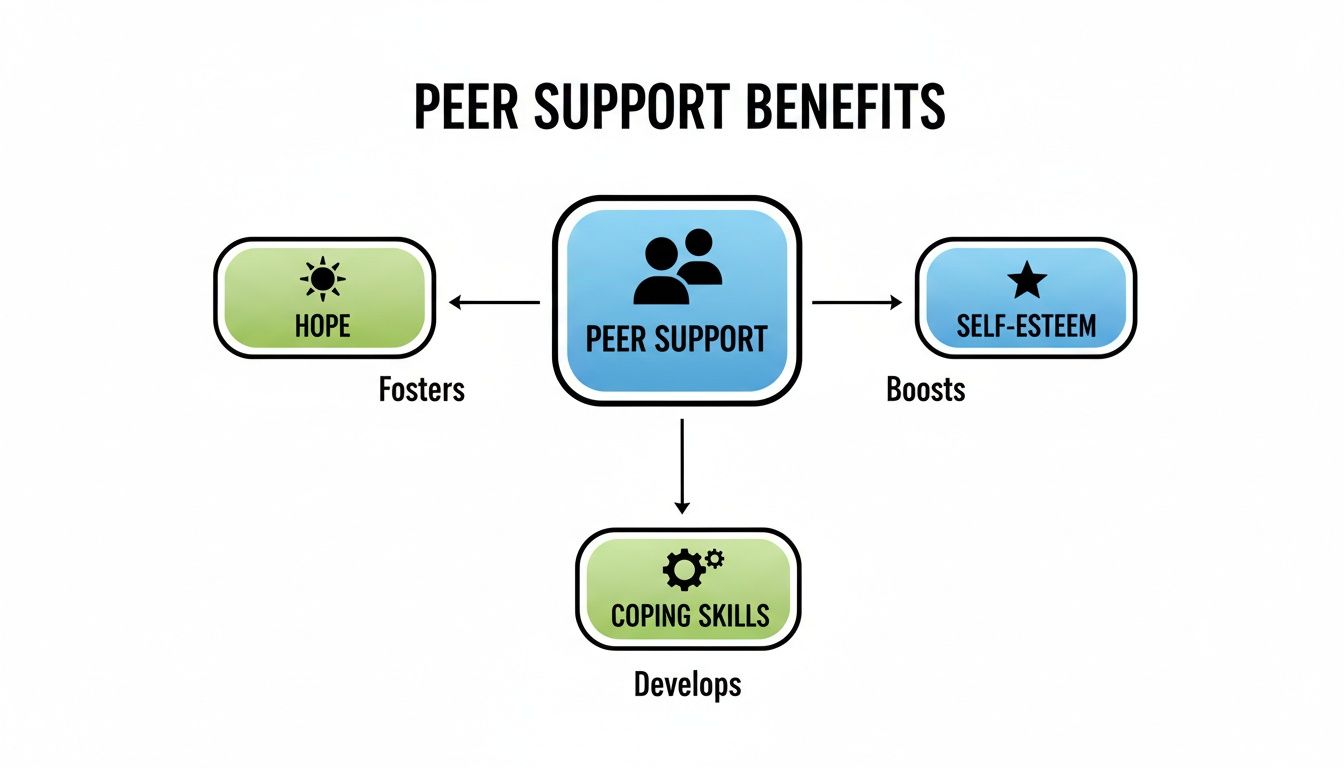
As you can see, these connections are designed to do more than just make you feel heard—they actively foster hope, help rebuild your self-esteem, and give you practical tools to manage your journey.
H3: Peer-Led Support Groups
When most people think of peer support for mental health, they picture a support group. These get-togethers, which happen both in-person and online, bring together people who are all navigating similar struggles with anxiety, panic, or other mental health conditions.
Usually, a trained facilitator—who also has their own lived experience—is there to guide the conversation. Their job is to keep the space safe, respectful, and focused on hope. The vibe is often informal, creating a space where people can share openly, encourage each other, and swap real-world coping strategies that actually work.
The biggest win here is the incredible sense of community. That moment when you realize you’re not the only one feeling this way can lift a massive weight off your shoulders. It’s a space where you can finally feel seen and understood, without any fear of judgment.
H3: One-on-One Peer Specialists
If you're looking for something more structured and personal, working with a Certified Peer Specialist could be a great fit. These are people who have gone through formal training and certification to use their own recovery journey as a tool to guide and support others.
This relationship works a bit like a mentorship. Your peer specialist partners with you to:
- Set meaningful recovery goals: They’ll help you figure out what a life free from panic looks like for you, then break it down into small, manageable steps.
- Navigate the healthcare maze: They can be an advocate for you, helping you communicate more effectively with your doctors and therapists.
- Build practical life skills: From creating healthy routines to learning how to speak up for your own needs, they provide hands-on support.
A peer specialist is living, breathing proof that getting better is possible. They don't just tell you there's hope—they are hope, offering a real, tangible picture of what life can look like on the other side of anxiety.
This kind of focused support is amazing for building confidence and creating a personalized toolkit for managing anxiety and building the panic-free life you deserve.
H3: Informal Online Communities
In today's world, peer support is also thriving in more casual spots like online forums, social media groups, and dedicated apps. These communities offer 24/7 access to connection, which can be an absolute lifeline during a late-night panic attack or a moment of intense worry.
The biggest advantages here are accessibility and anonymity. If you’re too anxious to walk into an in-person meeting or even turn on your camera for a video call, these text-based spaces offer a safe way to dip your toe in. You can just read and listen for a while, soaking up the collective wisdom until you feel ready to share.
This model's value is getting more and more recognition. In fact, a Duke University study found 171 active peer mental health programs at U.S. colleges—a 60% jump in the last decade. This surge shows a clear demand for support that’s easy to access and genuinely relatable. You can discover more about this trend in higher education and see how these programs are taking shape.
With so many different ways to connect, you can find the support that works for you, wherever you are in your journey. You really don’t have to do this alone.
How to Find Safe and Effective Peer Support Groups

Taking that first step to find peer support for mental health can feel huge, even a little intimidating. That's completely normal. The most important thing is finding a space where you feel safe and comfortable because not all groups are created equal.
Knowing what to look for is the key to finding a community that genuinely helps you heal. Think of it like finding the right walking partner—you want someone who matches your pace, offers encouragement when you need it, and knows when to just listen. The right group will empower you on your path to recovery.
Green Flags to Look For
Good peer support environments all share a few key qualities. These are the green flags that signal a group is well-run, safe, and focused on real recovery. They're the essential ingredients for a space where you can feel comfortable enough to be vulnerable and open.
Here are the positive signs to watch out for:
- Trained Facilitators: The group should be guided by someone with training in facilitation, who also has their own lived experience. Their job is to keep the conversation flowing, make sure everyone feels heard, and maintain a hopeful, respectful vibe.
- Clear Community Guidelines: A solid group has established rules about confidentiality, respect, and non-judgment. These rules should be shared openly and enforced consistently to protect every single member.
- Emphasis on Hope and Recovery: The overall tone should feel optimistic and empowering. Conversations should focus on coping skills, building resilience, and the real possibility of a life free from panic—not just venting or dwelling on hopelessness.
- Respect for Professional Care: The group should see itself as a partner to professional therapy, never a replacement for it. Members should be encouraged to work with therapists and doctors as part of their complete wellness plan.
A truly effective peer support group is built on a foundation of trust and mutual respect. Its primary function is to foster a sense of belonging and hope, reminding you that healing from anxiety is not only possible but is a journey you don't have to navigate alone.
Red Flags to Avoid
Just as important as knowing what to look for is knowing what to run from. Certain red flags can indicate that a group is unhealthy, unsafe, or could even set you back in your recovery. Always trust your gut—if a space feels off, it probably is.
Be cautious of groups that show these warning signs:
- Discouraging Professional Treatment: Any group suggesting you should stop therapy or medication is a massive red flag. Peer support for mental health should always complement, not contradict, clinical care.
- Lack of Structure or Moderation: Unmoderated groups can quickly devolve into chaos or get dominated by a few loud voices. Without a clear facilitator, conversations can veer into unhelpful or even triggering territory.
- Judgmental or Critical Atmosphere: If you feel judged, shamed, or pressured to share before you’re ready, that’s not a safe space. A healing environment is built on acceptance and empathy, period.
- Promises of a "Quick Fix": Recovery is a journey, not a destination with a shortcut. Be wary of any group that promises instant cures or one-size-fits-all solutions to anxiety.
Trusted Places to Start Your Search
Figuring out where to even start can feel overwhelming, but many trusted organizations offer excellent, well-vetted resources. These national nonprofits have local chapters and online communities that are known for being well-run and dedicated to providing safe support.
Consider starting your search with these organizations:
- NAMI (National Alliance on Mental Illness): NAMI offers a wide range of free, peer-led support groups across the country, both in-person and online.
- Mental Health America (MHA): MHA provides a directory of support groups and resources, including online communities and local affiliates.
- The Depression and Bipolar Support Alliance (DBSA): While focused on mood disorders, DBSA groups often welcome those with anxiety and provide a structured, supportive environment.
For more immediate assistance or to explore other avenues of help, you can always get help now through various crisis lines and mental health service locators. Taking the time to find the right fit is a powerful act of self-care that can make all the difference on your path to a panic-free life.
Making Peer Support Work with Professional Therapy
Thinking you have to choose between professional therapy and peer support for mental health is like believing you can only have a map or a compass to find your way out of a dense forest. Why not use both? When you have a therapist's clinical roadmap and a peer's compass of lived experience, your journey toward a panic-free life becomes infinitely easier and more certain.
They aren’t competitors. They’re partners in your recovery.
Your therapist provides the evidence-based strategies to help you understand the "why" behind your anxiety. Peer support, on the other hand, offers real-time validation and practical tips from someone who has navigated similar terrain. Together, they create a complete system that addresses both the clinical and the human side of healing.
Bridging the Gap Between Sessions
Therapy sessions are usually spaced a week or more apart, which can feel like an eternity when you’re facing triggers alone. This is where peer support really shines. It acts as a vital bridge, offering connection and encouragement right when you need it most, reminding you that healing is always possible.
This dual approach is incredibly effective. Studies have shown that when people add peer support to their routine, they often see better outcomes, like staying more engaged in their treatment and having lower hospital readmission rates. That consistent, real-world connection keeps you grounded in your recovery goals between appointments.
"Unlike clinical roles, which focus on diagnosis, treatment planning, and symptom management… peer support is based on equality, shared understanding, and empowerment. It emphasizes hope, recovery, and self-determination."
This combination empowers you to take a more active role in your own healing. When you can discuss what you learn in therapy with your peers, you start translating abstract clinical concepts into practical, everyday actions. That’s how real, lasting progress happens.
Using Tools to Connect Both Worlds
To make this partnership work seamlessly, you need a way to keep track of your experiences and share them effectively in both settings. This is where a tool like The Anxiety Checklist becomes so valuable. It helps you gather concrete data about your journey, creating a common language for both your therapist and your peer group.
Here’s how you can use the checklist:
- Track Triggers and Symptoms: Make a note of the specific situations, physical sensations, or thoughts that spike your anxiety. This kind of data is gold for your therapy sessions.
- Identify Patterns: Bring these specific data points to your therapist. Together, you can spot patterns and fine-tune your treatment plan.
- Share with Peers: Talk about the emotional side of these triggers with your peer group to get shared coping strategies and feel understood.
This simple, structured approach turns vague feelings into actionable insights.
For a deeper dive into how professional counseling works, our guide to psychotherapy for anxiety offers a great overview. And if you're exploring a more holistic approach, understanding the various art therapy benefits for mental health can also add another layer to your professional support system.
By weaving together professional therapy and peer support—and using smart tools to guide the process—you build a resilient, multi-layered defense against anxiety. You’re not just coping; you’re building a foundation for a calmer, more confident future.
Have Questions About Peer Support? You're Not Alone.
Taking that first step into any new support system can feel a little uncertain. That’s completely normal, especially when you’re already dealing with anxiety. Let's clear up some of the most common questions about peer support to help you feel confident and ready to connect.
The journey toward a calmer, panic-free life is real. Understanding how these communities work can make the path feel a lot clearer and way less intimidating.
Is Peer Support the Same Thing as Group Therapy?
Nope, but they work incredibly well together. Think of it this way: group therapy is led by a licensed clinician who uses specific, structured techniques to guide the session. It’s a form of clinical treatment.
Peer support, on the other hand, is all about shared experience. It’s guided by people who’ve been there themselves. The focus is on mutual understanding, swapping coping strategies that actually work, and building each other up with hope. It's a powerful addition to your mental health toolkit, not a replacement for professional therapy.
Do I Need an Official Diagnosis to Join a Group?
Almost never. Most peer support groups are built around shared struggles, not clinical labels. They welcome anyone wrestling with the challenges of anxiety, panic, or similar feelings, whether you have a formal diagnosis or not.
The real magic of these groups comes from connecting over the human experience of it all. That said, it's always smart to check the specific guidelines for any group you're interested in, just in case they have a particular focus.
"Peer support is based on equality, shared understanding, and empowerment. It emphasizes hope, recovery, and self-determination, operating from the belief that people are experts in their own lives."
This means the group is focused on your personal journey, not a diagnostic code. The goal is to meet you right where you are and walk alongside you as you find your way toward healing.
What If I’m Too Anxious to Actually Speak in a Group?
This is probably the most common fear out there, and it’s completely understandable. Any well-run peer support group will never pressure you to share before you’re ready. The facilitators and other members get it—just showing up and listening is a huge, courageous step.
Often, the most powerful part of the first few meetings is just hearing other people’s stories and having that "aha" moment where you realize you’re not the only one. Many people find that after a few sessions of just soaking it all in, they naturally start to feel comfortable enough to share. The space will be there for you when you're ready.
Is Everything I Share Kept Confidential?
Confidentiality is the absolute bedrock of a safe peer support group. Reputable groups have strict ground rules that require everyone to respect each other's privacy. Simply put: what’s shared in the group, stays in the group.
A good facilitator will usually go over these rules at the start of every meeting to reinforce just how important a trusting environment is. This commitment to privacy is what allows people to be vulnerable and open up—and that's where the real connection and healing happen. You deserve to feel secure, and any quality group will make that a top priority.
Navigating your journey to a calmer life is easier when you have the right tools in your corner. The Anxiety Checklist gives you a structured way to track your progress, pinpoint your triggers, and put practical, science-backed strategies into action. It’s designed to work hand-in-hand with both professional therapy and peer support, giving you a personalized toolkit to build a more fearless future. Take control of your anxiety today.