

Anticipatory grief is the heavy, quiet sorrow you feel for a loss that hasn't happened yet, but you know is coming. It’s a profoundly human response—not a disorder—that grows from the deep love and connection you have for someone or something that is about to change forever.
Getting a handle on this early grief is the first step toward managing its emotional weight, finding your footing in the present, and discovering a path to living without constant anxiety.
Understanding Grief Before a Loss Happens

Imagine feeling the first chill of winter while the autumn leaves are still blazing in shades of orange and yellow. That’s the heart of anticipatory grief—mourning a future loss while you're still living in the present moment. It's the emotional shadow cast by a change you know is just around the corner.
This feeling often surfaces when you're facing a loved one's terminal illness, an impending divorce, a major career shift, or even watching a beloved pet slowly decline. Unlike the sharp shock of sudden grief, this form of grief unfolds in slow motion. It can feel incredibly isolating because the world around you might not even realize your loss has already begun.
A Natural Response to an Unnatural Situation
It's so important to know that what you're feeling is valid and completely normal. You aren't just grieving the person or situation; you're also grieving the future you had mapped out in your head. You might mourn shared dreams that will never happen, the changing dynamics of a relationship, or the life you once knew.
This pain is real. It’s a testament to how deeply you love and how much you're connected.
Anticipatory grief is the heart’s way of preparing for a profound change. It doesn't mean you're giving up hope. It means you're brave enough to acknowledge reality while still cherishing the time you have left.
Trying to suppress these feelings usually just makes the anxiety and sense of being overwhelmed even worse. Instead, allowing yourself to feel the sadness, anger, or fear is the first step toward processing these emotions in a healthy way. This is where hope starts to find its way in—not by denying the pain, but by learning to navigate it with compassion for yourself. There is a way to heal and live without being controlled by panic.
The Impact on Caregivers
This kind of grief is especially common among family caregivers. For those looking after a loved one with a progressive illness, the emotional weight can feel crushing.
One study focusing on caregivers for advanced cancer patients found that anticipatory grief was powerfully linked to the uncertainty of the illness, the sheer burden of caregiving, and a lack of clear, supportive information. The constant state of alert, paired with the emotional toll of watching someone you love decline, creates a uniquely strenuous environment.
This really shines a light on how critical it is for caregivers to prioritize their own self-care and seek out support, as this is a key step toward finding relief from anxiety.
Finding a Path Forward with Hope
Simply putting a name to what you're feeling—anticipatory grief—can be incredibly empowering. It helps demystify the turbulent emotions and reduces their power over you. While the journey is undeniably tough, there is a way to find moments of peace and live a life that isn't driven by panic.
Simple practices, like journaling to untangle your feelings, can create a much-needed outlet for your sorrow and anxiety.
The goal isn't to get rid of the grief, but to learn how to coexist with it. By understanding its nature, you can start building resilience, finding meaning, and cherishing the present—all while knowing you have what it takes to navigate what lies ahead and find your way back to a panic-free life.
Recognizing the Signs of Anticipatory Grief
Anticipatory grief is sneaky. It doesn’t show up with a clear label; instead, it often disguises itself as stress, chronic anxiety, or just bone-deep exhaustion. It's a quiet, persistent hum of sorrow that can weave its way through your emotional, mental, and physical health.
Learning to spot its signs is the first, most powerful step toward finding your footing again. This isn't about diagnosing a problem—it's about validating your experience. When you see your own feelings reflected here, it’s a hopeful reminder that you aren’t alone and that what you’re going through is a real, deeply human response to a painful reality.
The Emotional Rollercoaster
The emotional landscape of anticipatory grief is messy and full of contradictions. You might find yourself swinging from one extreme to another in the same day—sometimes in the same hour. This turbulence is a classic sign that the grieving process has started, even before a loss is final.
Some common emotional signs include:
- Pervasive Sadness: A persistent sorrow that can creep up at the most unexpected times, even during moments that should be happy.
- Anger and Resentment: Frustration aimed at the illness, the unfairness of the situation, or even at yourself for not being able to "fix" it.
- Guilt: Feeling guilty for wishing the struggle was over, for moments of impatience, or for thoughts about what your life might look like after the loss.
- Anxiety and Fear: A constant hum of worry about the future, how you'll manage, and the suffering your loved one might be going through.
These feelings aren't a sign of weakness. They're a sign of deep love and connection. Understanding this is key, as it helps you shift from self-criticism to self-compassion—the very foundation of healing and moving towards a life free from panic.
Mental Fog and Cognitive Strain
Anticipatory grief puts a heavy load on your mind, too. The constant emotional stress can make it tough to think clearly, leading to what many describe as "mental fog" or "brain fog." This isn't just a feeling; it's a real cognitive side effect of prolonged emotional strain.
You might notice things like:
- Difficulty Concentrating: Trouble staying focused on work, conversations, or even simple, everyday tasks.
- Forgetfulness: Misplacing things more than usual or forgetting appointments and important details.
- Repetitive Thoughts: Getting stuck in loops of worry or replaying painful future scenarios over and over.
This mental exhaustion is why so many people start looking for help. It can feel like the most unmanageable part of the experience, but learning how to stop the cycle of overthinking and anxiety can bring back a sense of clarity and calm. With the right tools, you can regain a sense of control over your thoughts and find a path to a more peaceful state.
Anticipatory grief is the weight of holding two realities at once: the preciousness of the present moment and the sorrow for a future that is changing. Acknowledging both is the path to finding balance.
Physical Symptoms That Mimic Anxiety
Finally, the body always keeps score of our emotional pain. Anticipatory grief often shows up in physical ways that are easily mistaken for a standalone anxiety disorder. Your body is reacting to a real and perceived threat—the impending loss—and it can get stuck in a state of high alert.
Physical signs often include:
- Chronic Fatigue: A deep, weary exhaustion that no amount of sleep seems to fix.
- Changes in Appetite: Eating significantly more or much less than you normally would.
- Muscle Tension and Aches: Unexplained soreness, especially in the neck, shoulders, and back.
- Racing Heart or Tightness in Chest: Physical panic sensations that can feel genuinely alarming.
Recognizing these symptoms as part of your grief process is a game-changer. It lets you address the root cause—the emotional pain of an impending loss—instead of just chasing the physical symptoms. This is where hope begins, because it shows that healing is possible when you address the entire experience—mind and body—with gentle, practical strategies.
To make it easier to see how these signs might show up for you, here’s a quick breakdown:
Common Signs of Anticipatory Grief
A breakdown of common emotional, cognitive, and physical signs to help you identify and understand your experience.
| Symptom Category | Common Signs and Experiences |
|---|---|
| Emotional | Pervasive sadness, intense mood swings, anger at the situation, guilt over your thoughts or feelings, and a deep sense of anxiety or dread about the future. |
| Cognitive | Difficulty concentrating (brain fog), memory lapses or forgetfulness, obsessive or repetitive thoughts about the loss, and mental rehearsals of the death or life afterward. |
| Physical | Chronic fatigue or exhaustion that sleep doesn’t resolve, changes in appetite or sleep patterns, muscle tension (especially in the neck and shoulders), headaches, and physical symptoms of anxiety like a racing heart or digestive issues. |
Seeing these signs laid out can be a powerful validation. It’s not "all in your head"—it's a whole-body response to a profound emotional challenge. Recognizing this is the first step toward giving yourself the care and support you need to heal.
Distinguishing Anticipatory Grief from Anxiety
At first glance, anticipatory grief and anxiety can feel like two sides of the same coin. Both can leave you with a racing heart, a mind stuck on a loop of worst-case scenarios, and a heavy sense of dread about what’s to come. It's easy to get them tangled up.
But learning to tell them apart is the key to figuring out what you truly need to heal and live a life free from panic.
The real difference comes down to the source of the feeling. Anticipatory grief is a direct response to a specific, identifiable, and impending loss. The sorrow is anchored to something tangible—a person, a relationship, or a future you know is about to change forever. In contrast, general anxiety often feels like a free-floating fear, a sense of unease that doesn’t have a single, concrete cause you can point to.
Think of it this way: anxiety is like constantly scanning the horizon for a storm that might or might not come. Anticipatory grief is knowing the storm is on its way and already mourning the beautiful tree in your yard that you know it will take down.
Pinpointing the Root of Your Feelings
Figuring out what you're feeling isn't just about putting a label on it; it's about empowering yourself. When you can name the source of your pain, you can start using the right tools to address it. This clarity is the first step toward loosening the grip of constant worry and finding a hopeful path forward.
Take a look at the different signs below—they can help you map out what you’re experiencing.
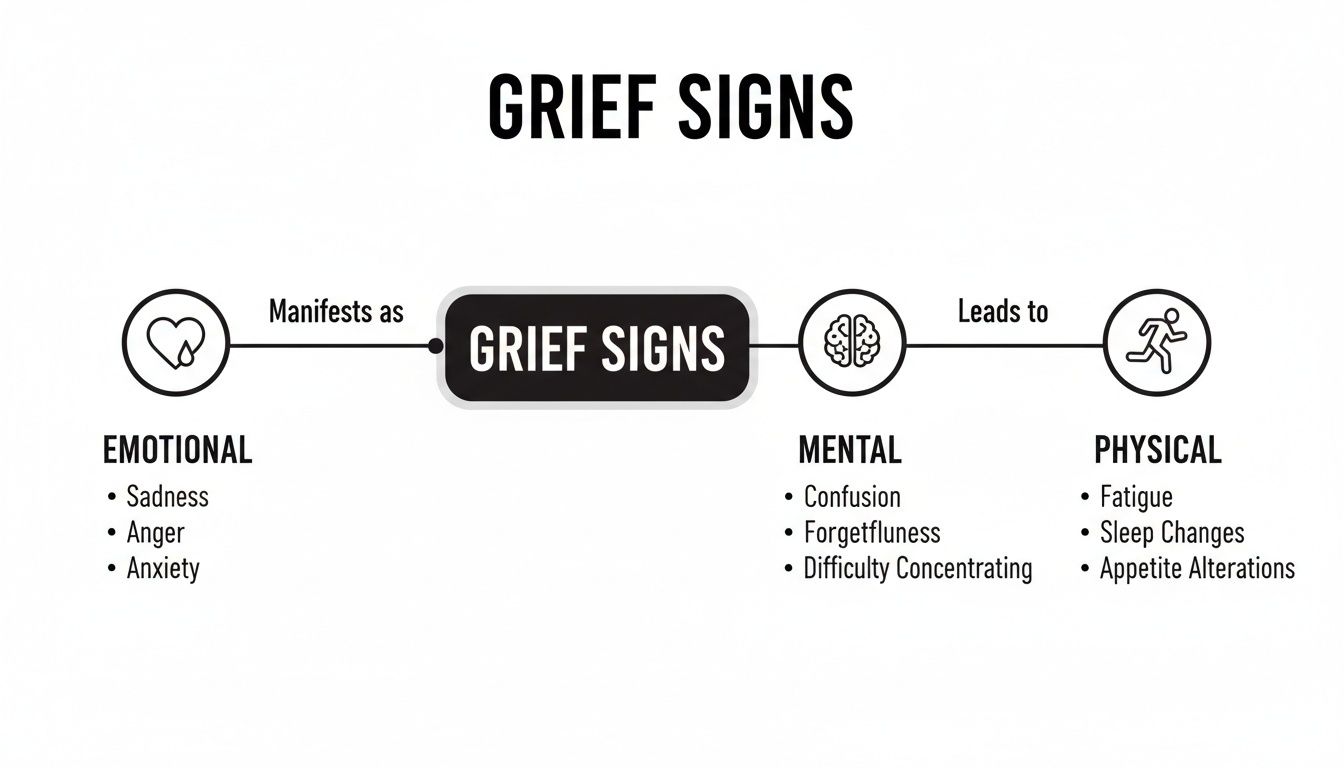
Whether it’s grief or anxiety, the emotional, mental, and physical symptoms are all connected. The trick is to trace them back to their origin.
Grief with a Cause vs. Fear Without a Focus
Let's break down the key differences. This isn't about deciding which feeling is more "valid"—it’s about directing your energy toward what will actually help you heal.
Focus of Fear: In anticipatory grief, the fear is specific. You're afraid of the final moment of loss, of watching a loved one suffer, or of how you'll manage life afterward. With general anxiety, the fear is often vague and diffuse—a persistent feeling that something bad might happen, without a clear "what" or "when."
Emotional Core: The heart of anticipatory grief is sadness and sorrow for what is being lost. For anxiety, the core emotion is usually fear and worry about a potential, uncertain threat that may never even materialize.
Path to Relief: Healing from anticipatory grief means making space to process the sadness, finding meaning in the present moments, and preparing for the change. Healing from anxiety often involves learning to manage uncertainty and calm the body's overactive alarm system. While some techniques overlap, the focus is different. You can learn more about the various types of anxiety in our guide to understanding anxiety disorders.
The journey to a panic-free life begins with understanding what you're truly up against. By distinguishing grief from anxiety, you can stop fighting a nameless fear and start healing a specific wound.
Knowing the difference gives you permission to offer yourself the right kind of compassion. If it's grief, you can allow yourself to mourn what’s coming. If it's anxiety, you can use grounding techniques to calm your nervous system. This insight is where real hope begins. It shows you that there is a way forward through these feelings and toward peace again.
Where You Might Run Into Anticipatory Grief
Anticipatory grief is far more common than you might think, showing up in places that go way beyond a terminal illness. It’s a deeply human response to the feeling that a future you counted on is slipping away. Seeing your own experience in these scenarios can be a powerful first step—a way to feel less alone and finally understood.
And that recognition is everything. It tells you the pain you feel for a loss that hasn't fully happened yet is real, valid, and a sign that you have a path to healing ahead of you.
When a Loved One Faces a Progressive Illness
This is the one most of us recognize: watching someone you love deal with a progressive or terminal illness. It could be a parent’s slide into dementia, a partner’s fight with cancer, or a child’s chronic condition. Each day can feel like a series of tiny goodbyes—saying farewell to shared memories, physical abilities, or the easy way you used to be together.
You find yourself grieving the person they were, all while fiercely loving the person they are right now. This constant state of mourning—for what’s already gone and what’s still to come—is the very heart of anticipatory grief.
In end-of-life care, this is an incredibly common experience. A U.S. study, for example, found that about 17% of hospitalized patients at the end of their lives were experiencing anticipatory grief. What's telling is how much the numbers changed based on the setting, jumping from just 1% in a gerontology unit to 23% in general medical wards. It just goes to show how the specific environment of an illness can shape this emotional journey. You can dig into the full study to see more of these impactful differences in patient care.
The Slow End of a Relationship
Anticipatory grief isn't just about physical health; it shows up in the slow, painful unraveling of a long-term relationship or marriage. When you know a breakup is coming but it hasn’t happened yet, you start mourning the future you thought you had. You grieve the loss of your partner, your shared home, and the identity you built as a couple, all while the relationship is technically still intact.
That limbo is emotionally exhausting. You’re caught between a past you’re losing and a future you haven’t even started to imagine, which is fertile ground for both profound sadness and anxiety. Yet, recognizing this is the first step toward navigating it with strength and hope.
Major Life Transitions and Personal Losses
Beyond health and relationships, this type of grief can surface in all sorts of life-altering moments. In every case, it’s about grieving a future that’s being rewritten right in front of you.
Here are a few other places it appears:
- An Impending Job Loss: Hearing that your company is downsizing or your role is on the chopping block can trigger grief for your financial stability, your professional identity, and the daily rhythm you had with colleagues.
- Moving Away from Home: Even when a move is for a great reason, it often brings a wave of anticipatory grief. You might mourn the loss of daily chats with family, the comfort of your community, and the familiar places that made you who you are.
- An Aging or Sick Pet: For so many of us, a pet is family. Watching them decline with age or illness means grieving the unconditional love and companionship you know you’re about to lose.
Realizing your feelings have a name—anticipatory grief—is the first step toward finding your footing. It lets you see your sorrow not as a weakness, but as a testament to your deep capacity to love and connect.
Seeing your own situation in these examples is a hopeful act. It proves your emotional response is normal and gives you a clear place to start finding strategies that can bring a sense of peace and control, even when the future feels anything but certain.
Hopeful Strategies to Find Peace and Presence

Trying to navigate anticipatory grief can feel like walking a straight line during an earthquake. The ground beneath you is unsteady, and the future is a massive, looming question mark. But even in that chaos, you can find moments of stillness and reclaim a sense of peace.
This is where your power lies—not in stopping the storm, but in learning how to anchor yourself until it passes. Hope isn't about ignoring the coming loss. It's about courageously choosing to live with presence and intention today. These strategies are practical, actionable, and designed to help you do just that on your journey to a panic-free life.
Anchor Yourself in the Present Moment
When your mind is drowning in worries about what’s to come, the strongest antidote is pulling your awareness back to the here and now. This practice, often called grounding, is a lifesaver for a spiked nervous system. It yanks you out of the chaotic spiral of "what ifs" and plants your feet firmly in the present.
Think of it as dropping an anchor in a stormy sea. The waves won't disappear, but it will keep your boat from being swept away. The goal is simple: reconnect with your physical self and your immediate surroundings.
Here are a few grounding techniques you can use absolutely anywhere:
- The 5-4-3-2-1 Method: This one forces your brain to switch tracks by engaging all your senses. Name 5 things you can see, 4 things you can physically feel, 3 things you can hear, 2 things you can smell, and 1 thing you can taste.
- Physical Sensations: Press your feet into the floor. Really feel the solid ground beneath you. Clench your fists tight, then release them, paying close attention to the shift from tension to relief.
- Temperature Shock: Grab a piece of ice or splash some cold water on your face. That sudden change in temperature can jolt your mind right out of an anxious loop.
These small actions make a huge difference in overwhelming moments. If you want to build up your personal toolkit, you can explore more grounding techniques for anxiety.
Express Your Feelings Without Judgment
The emotions that tag along with anticipatory grief—sadness, anger, guilt, fear—are messy and often contradictory. One of the most healing things you can do is give yourself permission to feel every single one of them without judgment. Pushing them down doesn't make them go away; it just forces them to pop up later as a headache, tense shoulders, or a panic attack.
Allowing yourself to grieve before a loss is not a sign of giving up hope. It is an act of profound self-compassion and a testament to the depth of your love.
Find a safe outlet to let it all out. Maybe that's talking to a friend who knows how to just listen without trying to "fix" anything. Or maybe it's journaling, where you can pour your rawest thoughts onto the page without worrying about what anyone thinks. Just the act of naming your feelings can shrink their power over you, paving the way for relief and healing.
Focus on What You Can Control
A huge source of the anxiety in anticipatory grief is that profound sense of powerlessness. You can't control the illness, the impending change, or the final outcome. That reality is crushing. But focusing on what you can influence is an incredibly empowering way to get back your sense of agency.
You can’t control the big picture, but you absolutely can control:
- How you spend your time now: You can choose to create moments of connection, share stories, or just sit quietly with your loved one.
- Your own self-care: You can make sure you’re getting enough rest, eating nourishing food, and taking small breaks to recharge.
- Your daily routines: Sticking to small, predictable routines creates a sense of stability when everything else feels like it’s spinning.
By shifting your focus from the uncontrollable to the controllable, you reclaim a piece of your life from the grip of grief. It’s a powerful step toward living meaningfully, even in the shadow of a future loss.
When and Where to Find Professional Support
While the self-help strategies we've covered can be incredible anchors, knowing when to bring in a professional is a sign of profound strength, not weakness.
Making that call is a courageous step—an active choice to put your well-being first and find a sustainable way to heal. It’s about building a team so you don't have to carry this immense weight all on your own, and it is a truly hopeful move towards living without panic.
Telltale Signs It’s Time for Support
Sometimes, the emotional load of anticipatory grief is just too heavy to manage alone. That’s okay. If your grief consistently gets in the way of your daily life, professional guidance can offer the structure and compassion you need to find your footing again.
It might be time to seek help if you notice:
- Overwhelming Hopelessness: A persistent, nagging feeling that things will never get better or that you’ll never feel joy again.
- Constant Intrusive Thoughts: Your mind is stuck on a loop of worst-case scenarios, and you just can’t seem to break free no matter how hard you try.
- Disrupted Daily Life: You're struggling to sleep, eat, work, or keep up with important relationships for an extended period.
- Increased Isolation: You’re pulling away from friends, family, and activities you once loved because it all feels like too much effort.
Think of these signs as your mind and body telling you the load is too great. Acknowledging them is a pivotal moment on your journey toward a calmer, panic-free life.
Finding the Right Kind of Help
There are many different avenues for support, and each one offers a unique kind of care. The goal is simply to find what feels right for you, knowing that any of these choices is a step toward feeling better.
For those navigating a serious illness, it can also be incredibly helpful to understand the different roles of services like palliative care and hospice care, which provide crucial emotional and practical assistance.
Here are a few key resources to consider:
- Grief Counselors and Therapists: These are trained professionals who can help you unpack the tangled emotions of anticipatory grief in a safe, confidential space. Exploring options like psychotherapy for anxiety can give you targeted tools to manage both the grief and its anxious symptoms.
- Support Groups: There is immense power in connecting with others who genuinely get what you're going through. It dissolves that feeling of being totally alone and reminds you that your experience is valid.
- Mental Health Hotlines: For those moments of acute crisis, hotlines provide immediate, free, and confidential support. They are a critical lifeline when you feel completely overwhelmed and don't know where else to turn.
Reaching out for help is not an admission of defeat; it is a declaration of hope. It is the brave decision to believe that a life with less anxiety and more peace is not only possible but deserved.
Frequently Asked Questions About Anticipatory Grief
When you’re navigating the complex territory of anticipatory grief, questions bubble up that can feel tough to even ask. This is a safe space for clear, compassionate answers. Your feelings are valid, and there is a way to find your footing, even when everything feels uncertain.
Can Anticipatory Grief Make the Actual Loss Easier?
While working through some of these emotions beforehand might soften the initial shock of a loss, it’s not a guarantee for an easier grieving period later. The real goal of managing anticipatory grief isn’t to erase future pain—it's to help you stay more present and resilient through the entire journey.
It’s really about preventing the fear of a future loss from robbing you of the meaningful time you have right now. This approach builds strength for whatever comes next and shows that you can cope with difficult emotions.
Is It Selfish to Grieve While My Loved One Is Still Here?
Absolutely not. This is one of the most common worries we hear, but your grief is a direct reflection of your deep love and connection. You’re mourning the future you imagined, the changes in your relationship, and the sheer emotional weight of the situation itself.
Acknowledging your own pain is a vital part of being a compassionate caregiver and human being. It allows you to care for yourself, which is essential for showing up for others. You cannot pour from an empty cup.
How Can I Best Support Someone Experiencing This?
Often, the most powerful thing you can do is just listen—without judgment. Create a safe space where they can share their hardest feelings—sadness, anger, fear, guilt—without you trying to fix anything or jump in with advice.
Instead of saying "be strong," try something like, "I'm here for you, and it's okay to not be okay." Practical help, like running an errand or dropping off a meal, can also lift a huge daily burden. If they're looking for outside help, finding reliable grief support groups can be an invaluable step, connecting them with others who truly get it. Your consistent, compassionate presence is the greatest gift you can offer.
At The Anxiety Checklist, we believe understanding your emotional landscape is the first step toward reclaiming your life from worry. Our Fearless Living system provides a structured, actionable path to manage anxiety and find peace. Download your toolkit today and start building a calmer, more present future.