Belief Experiments: CBT Behavioral Experiments for Anxiety
Anxiety predicts that things will go badly. But what if the prediction is wrong? Plan a small real-life test and find out.
- Guided in 3 steps: Choose Area, Setup Experiment, Select Date
- Reminders 3 days before and on the day
- Reflect on what really happened



Stop guessing. Start testing.
“When we’re anxious we tend to believe that things will turn out badly. But what if our predictions are wrong?”
Belief Experiments let you directly test whether your predictions about a specific situation are accurate. In CBT, this is called a behavioral experiment.
Instead of arguing with a worry in your head, you gather real evidence.
How it works
Step 1: Choose Area
Pick where the belief shows up: Daily Life, Work, School, Social, Relationship or Other.
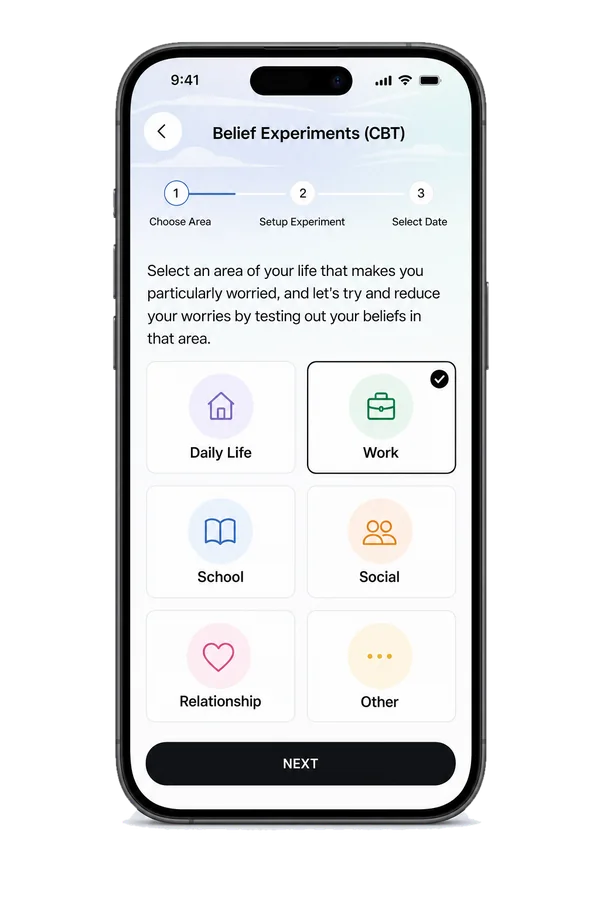
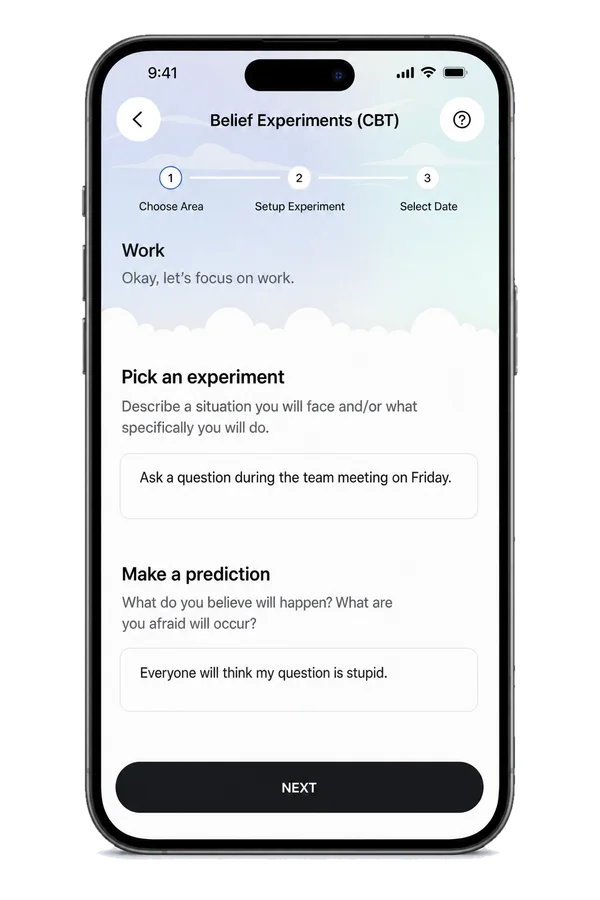
Step 2: Setup Experiment: “Pick an experiment”
“Describe a situation you will face and/or what specifically you will do.” For Work, ideas include submitting a report without over-checking, or asking a question during a meeting.
Step 3: Setup Experiment: “Make a prediction”
“What do you believe will happen? What are you afraid will occur?”
Step 4: Select Date
“Great 🥳 ! Let’s schedule a date to test this belief.” Pick a date within 28 days. The app reminds you 3 days before and on the day.
 Reminders 3 days before and on the day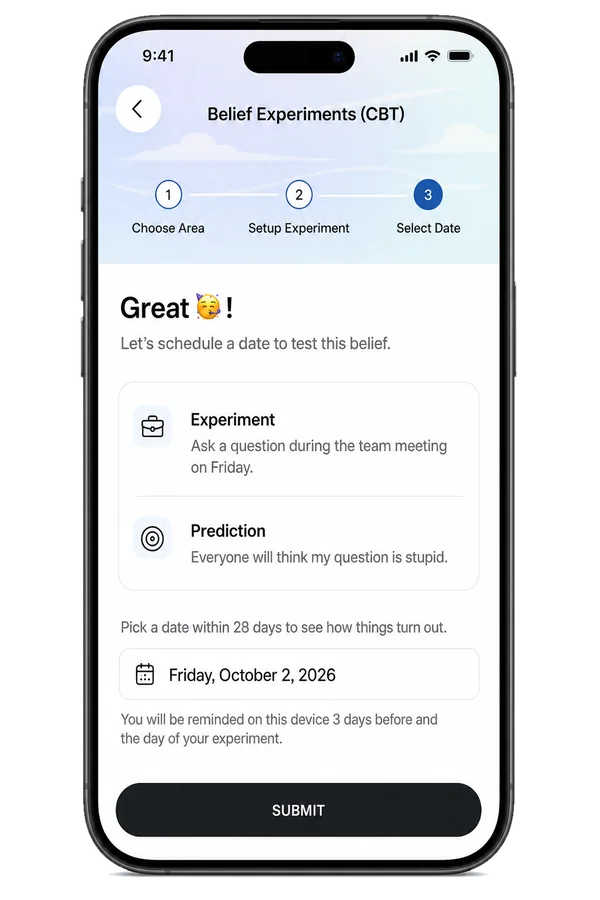
Step 5: I TRIED THIS
After you’ve done it, tap I TRIED THIS.
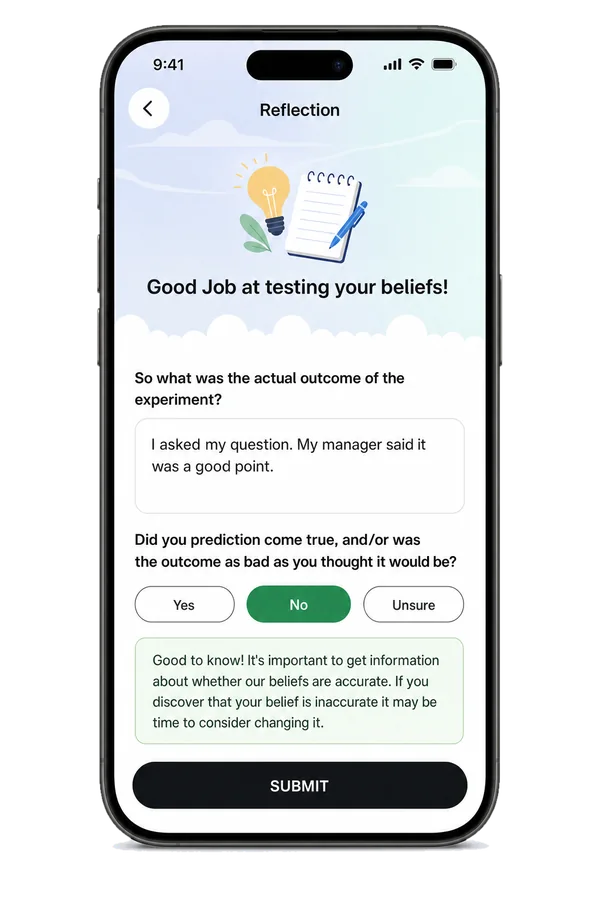
Step 6: Reflect
“So what was the actual outcome of the experiment?” Did your prediction come true, and was it as bad as you thought? Answer Yes, No or Unsure. Then reflect on what you learned and check in.
What an experiment can look like
An example, not a promise of how yours will go:

Area
Work
Experiment
Ask one question during Monday’s team meeting.
Prediction
“My voice will shake and everyone will think I don’t know what I’m doing.”
What happened
“My voice shook a little. Someone said it was a good question.”
What I learned
“People noticed the question more than my nerves.”
Read more about social anxiety.
What’s inside
A 3-step setup
Choose Area, Setup Experiment, Select Date.
6 life areas
With example experiments for each.
Scheduling within 28 days
Plus reminders 3 days before and on the day.
Guided reflection
Yes, No or Unsure, with guidance for each answer.
Before-and-after check-ins
See how you feel when you set it up and when you reflect.




Why testing beats worrying
Arguing with an anxious thought in your head can go round in circles. Real-life evidence is harder to argue with.
When you test a prediction, you often find the outcome was better than feared, or that you coped. Even when part of it comes true, you learn you can handle it. That’s the opposite of Fortune Telling.
As the app says: “If you discover that your belief is inaccurate it may be time to consider changing it.”
- Turns “what if” into “let’s find out”
- Gives you real evidence, not reassurance
- Builds confidence from experience
Check in. See what works for you.
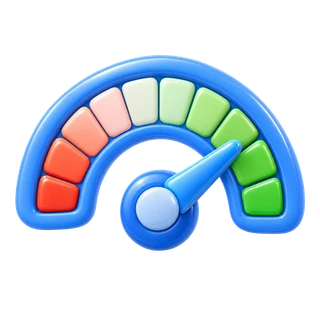
Rate how you feel from 1 (Panic) to 10 (Calm) before and after, and see what works for you.
Scale from 1, Panic, to 10, Calm. Higher is calmer.
Before we begin the exercise
How do you feel?
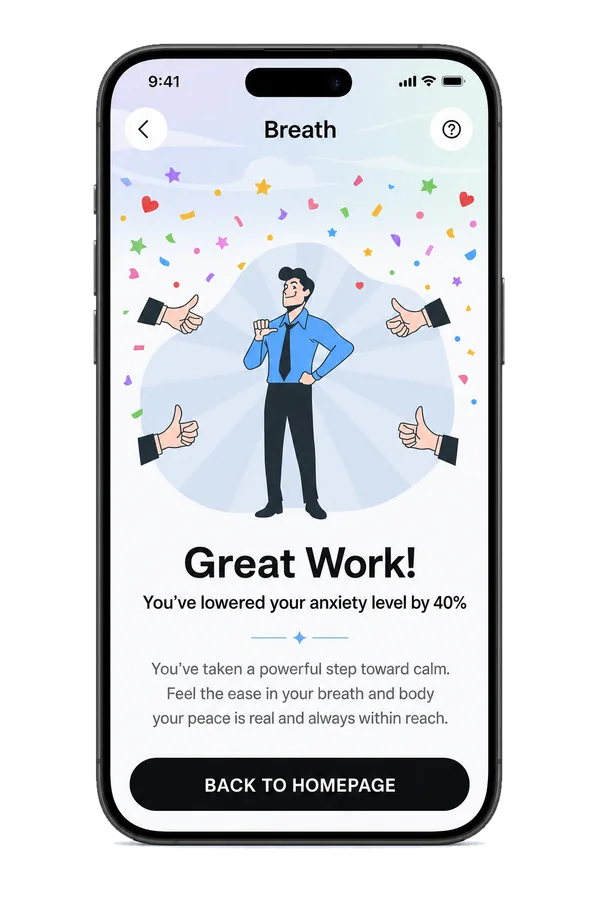
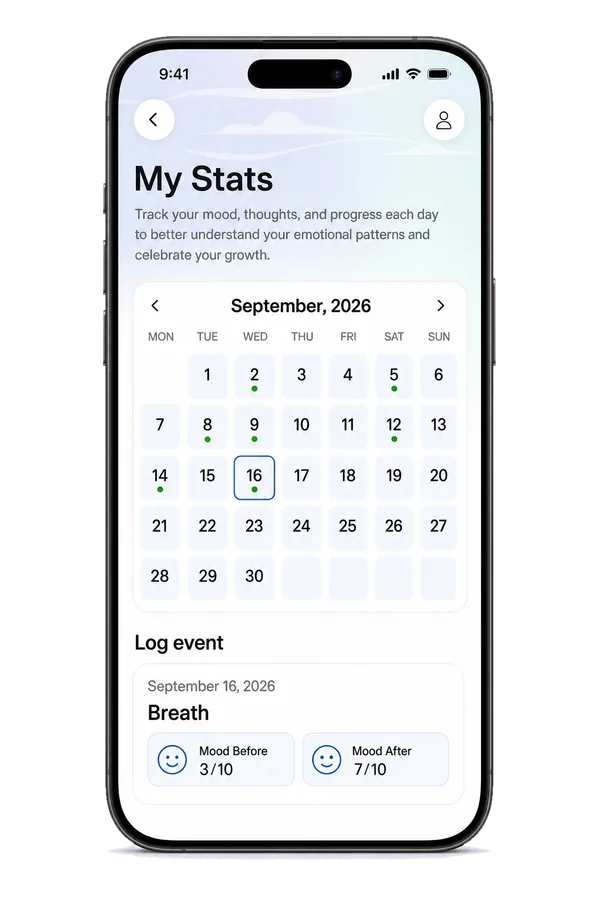
Your check-ins are saved in My Stats, which is free.

Keep it safe
Choose experiments that are safe and realistic. Start small. If an experiment feels overwhelming, plan it with a therapist.

Use it alongside therapy
Behavioral experiments are a common part of CBT. Design one with your therapist, carry it out between sessions, and talk through your reflection together.
More Feel more in Control tools



Questions about belief experiments
What is a behavioral experiment in CBT?
A planned real-life test of an anxious belief. You write down what you predict, do the thing, then compare the prediction with what happened.
How is it different from the Thought Journal?
The CBT Thought Journal helps you question a thought on paper. A belief experiment tests it in real life.
What if my prediction comes true?
That’s useful too. Notice how you coped and whether it was as bad as you feared. The app guides your reflection whatever the answer.
What are some examples?
At work: submit a report without over-checking, or ask a question in a meeting. You can choose from Daily Life, Work, School, Social, Relationship or Other.
Why do I have to pick a date?
A date turns an idea into a plan. You pick a day within 28 days, and the app reminds you 3 days before and on the day.
Are Belief Experiments free?
Belief Experiments are part of Premium, which starts with a free trial: 7 days on the monthly plan, 14 days on the yearly plan. Free forever in the app: SOS panic relief, the CBT Thought Journal and Anxiety University.
Can I do this with my therapist?
Yes. Behavioral experiments are often planned in therapy and carried out between sessions.
Put your anxious prediction to the test.
Belief Experiments are part of Premium. Start with a free trial.
Premium includes a free trial: 7 days on the monthly plan, 14 days on the yearly plan. Cancel anytime.