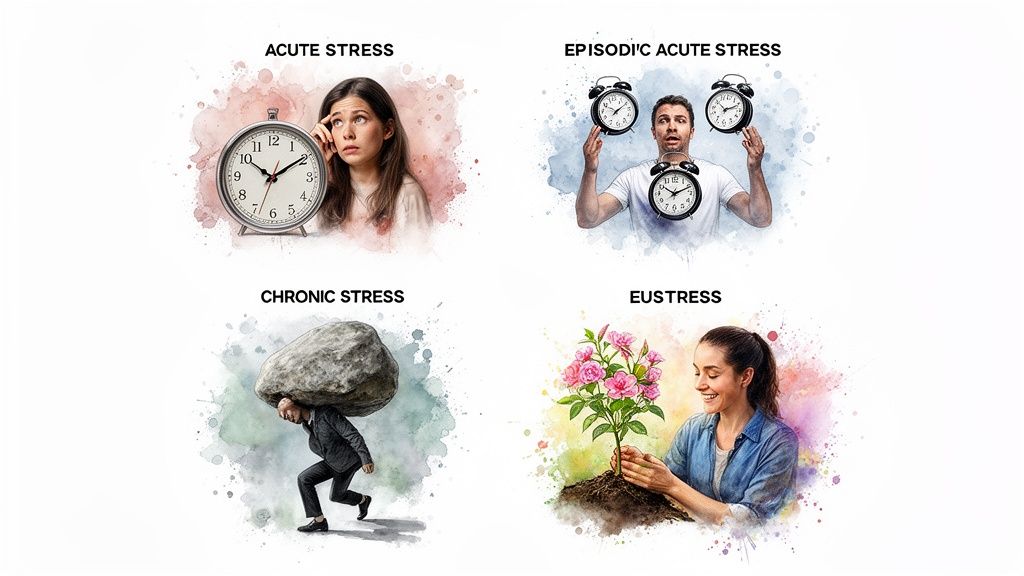
When you're living with anxiety, the word 'stress' can feel like a monolithic, overwhelming force that dictates your life. But what if the key to living panic-free wasn't about eliminating stress, but about understanding it? Hope begins with knowledge. Differentiating between the 4 types of stress, including acute, episodic acute, chronic, and even the "good" kind, eustress, is the first, most powerful step toward reclaiming control and healing.
This guide isn't just about definitions; it's a hopeful roadmap. By learning to identify what you're feeling and why, you can move from a state of constant reaction to one of empowered action. We'll break down each stress type with real-world examples and provide actionable strategies to show you that a life beyond constant worry and panic is not just possible—it's within your reach. Instead of being trapped by a vague feeling of being 'stressed,' you will learn to name it, which is the first step toward taming it for good.
1. Acute Stress
Acute stress is the most common and recognizable form of stress. Think of it as your body's immediate, short-term alarm system firing in response to a new or challenging situation. It’s the classic "fight-or-flight" response that floods your system with adrenaline and cortisol to help you handle a perceived threat. This reaction is a natural, healthy survival mechanism that occurs suddenly and fades once the stressor is gone, reminding you that your body is designed to recover.

For anyone on the path to healing from anxiety, understanding acute stress is empowering. Its symptoms, like a racing heart, shallow breathing, and tense muscles, can feel alarmingly similar to an anxiety or panic attack. The key difference lies in the trigger and duration. Acute stress is a direct reaction to a specific, external event and ends shortly after the event is over. Recognizing this distinction can stop the spiral of catastrophic thinking and provide profound reassurance that your body is having a normal reaction, not a medical emergency. This knowledge is a tool for calm.
Examples of Acute Stress
Acute stress often appears in everyday situations that demand a quick response or heightened focus.
- A car suddenly cutting you off in traffic.
- Giving an important presentation at work or school.
- Receiving unexpected critical feedback from a manager.
- A minor accident, like dropping and shattering a glass.
- Realizing you’re about to miss a critical deadline.
How to Manage Acute Stress in the Moment
When you feel the sudden rush of acute stress, you have the power to quickly regulate your nervous system and ground yourself in the present. This prevents the immediate reaction from escalating into prolonged anxiety and proves your ability to self-soothe.
Actionable Strategies:
- Practice the 5-4-3-2-1 Grounding Technique: Immediately name 5 things you can see, 4 things you can feel, 3 things you can hear, 2 things you can smell, and 1 thing you can taste. This pulls your focus away from internal panic and into your external environment, demonstrating your control.
- Use Box Breathing: Inhale for 4 seconds, hold for 4 seconds, exhale for 4 seconds, and hold for 4 seconds. This simple, powerful breathing pattern slows your heart rate and signals to your brain that you are safe.
- Burn Off Adrenaline: If possible, engage in brief, intense physical activity. Do a few jumping jacks, take a brisk walk, or shake out your limbs. This gives the stress hormones a productive outlet and shows you how to work with your body.
- Use a Differentiating Mantra: Remind yourself, "This is a normal stress response. It is temporary, and I can handle it." This cognitive reframing helps separate the experience from the fear of a panic attack, reinforcing your resilience.
By learning to identify and manage this common type of stress, you build the confidence to handle life's immediate challenges without letting them hijack your emotional state. It's a foundational step toward feeling more in control and living a life free from constant worry. Each time you manage it, you are one step closer to healing.
2. Chronic Stress
Chronic stress is the relentless, long-term pressure that can wear down your well-being. Unlike the short burst of acute stress, chronic stress can keep your body’s alarm system activated, maintaining elevated cortisol levels that challenge your physical and mental health. This constant state of high alert is a significant factor in anxiety, as it teaches your nervous system that the world is never truly safe. But here is the hopeful truth: recognizing this pattern is the first step to changing it.
For anyone seeking a panic-free life, understanding chronic stress is critical because it’s often the invisible engine driving your symptoms. It can erode your resilience, making you more susceptible to panic and worry. The exhaustion, irritability, and feeling of being perpetually overwhelmed are not character flaws; they are the direct result of a nervous system in need of rest and support. Recognizing chronic stress as the source empowers you to stop blaming yourself and start addressing the root causes, offering real, tangible hope for healing and living a life of peace.
Examples of Chronic Stress
Chronic stress stems from persistent life situations that feel inescapable or out of your control.
- Ongoing job instability or a toxic workplace environment.
- The immense responsibility of caregiving for a sick family member.
- Constant financial pressure from debt or unstable income.
- Enduring relationship conflicts or a difficult home life.
- Managing a long-term health condition.
- Living with persistent worry about your health or unexplained physical symptoms.
How to Manage Chronic Stress for Long-Term Relief
Managing chronic stress is a journey of building resilience and restoring your nervous system’s balance, and every step forward is a victory. The goal is to create sustainable, healing habits that counteract the daily wear and tear.
Actionable Strategies:
- Establish a Daily Decompression Ritual: Dedicate 15-30 minutes each day to a non-negotiable stress-reduction practice like meditation, journaling, or gentle exercise. This creates a sanctuary of calm in your day.
- Break Down Overwhelming Problems: Use a worksheet or planner to break down a large stressor (like debt) into small, manageable action steps. This shifts your mindset from helplessness to one of proactive control and hope.
- Implement Firm Boundaries: Clearly define and communicate your limits at work and in personal relationships. Saying "no" is a powerful act of self-care that protects your energy and prevents burnout.
- Challenge Catastrophic Thinking: When your mind spirals about an ongoing stressor, gently question the worst-case scenario. Ask yourself, "What is a more realistic, hopeful outcome?" This cognitive restructuring defuses the emotional intensity and builds optimism.
- Seek Professional Guidance: Reaching out for professional help is a sign of profound strength and commitment to your well-being. Therapists provide tools and support to navigate situations that feel impossible to solve alone. For those unsure if their symptoms warrant professional help, taking an anxiety screening test like the GAD-7 can be an informative first step.
By actively working to dismantle chronic stress, you are not just managing symptoms; you are rewiring your brain for peace and lovingly reclaiming your life from the grip of constant anxiety.
3. Episodic Acute Stress
Episodic acute stress occurs when acute stress isn't a rare event but a frequent, recurring part of your life. It feels like living in a constant state of crisis management, lurching from one urgent problem to the next. For many, this pattern of repeated stress becomes so normal that they don't recognize it as a distinct problem. This relentless cycle keeps your body's alarm system on a hair trigger, making it incredibly difficult to find lasting calm. But the very act of identifying this cycle is the key to breaking it.

This distinction is vital for anyone who feels stuck in a loop of anxiety. Episodic acute stress is often fueled by underlying habits, such as over-commitment, poor time management, or persistent worry. Recognizing this pattern is the first, most powerful step toward breaking free. It shifts the focus from just surviving each crisis to fundamentally changing the behaviors that create them, offering real hope that you can move from a reactive state to a life of proactive calm and feel panic-free.
Examples of Episodic Acute Stress
This type of stress is defined by its repetitive nature, where similar stressors appear again and again.
- A chaotic work environment with constant last-minute projects and "fire drills."
- A relationship stuck in a predictable cycle of conflict, resolution, and renewed conflict.
- Chronic procrastination that creates repeated, intense deadline pressure.
- An overscheduled lifestyle with back-to-back commitments and no downtime.
- Parenting challenges that lead to daily behavioral crises or meltdowns.
How to Manage Episodic Acute Stress
Managing this form of stress means moving beyond in-the-moment fixes and addressing the underlying patterns that sustain the cycle. The hopeful goal is to build systems that prevent crises before they start, giving you more peace.
Actionable Strategies:
- Identify the Pattern: Use a symptom tracker to log your stress episodes. Seeing the frequency and recurring triggers on paper is often the compassionate wake-up call needed to initiate change. This awareness empowers you to address the root cause.
- Implement Proactive Planning: Instead of reacting to emergencies, anticipate them. Use time-blocking or scheduling worksheets to plan your week. This puts you in control of your time, rather than letting your to-do list control you.
- Build Buffers into Your Schedule: Most crises are just normal problems without a buffer. Add 30% extra time to appointments and project deadlines. This space absorbs unexpected delays and prevents minor issues from becoming emergencies.
- Practice Saying 'No': Much of this stress is self-created through over-commitment. Learning to politely decline non-essential requests is a crucial skill for protecting your peace and breaking the cycle of being constantly overwhelmed.
- Establish a Weekly Ritual: Dedicate one hour each Sunday to review the upcoming week. Identify potential stressors, make a plan, and schedule non-negotiable time for rest. This simple habit shifts your mindset from reactive to strategic and calm.
By identifying the recurring nature of episodic acute stress, you can stop fighting individual fires and start redesigning the system that creates them. This approach builds resilience and provides a clear, hopeful path toward a more stable and peaceful life.
4. Eustress
Not all stress is harmful; in fact, some of it is essential for growth, joy, and healing. Eustress, or "good stress," is the positive, motivating force that energizes you to meet a challenge. It's the exciting, invigorating feeling you get when you’re pushing your boundaries in a way that feels purposeful and within your control. This type of stress enhances focus, improves performance, and leaves you with a sense of accomplishment.

For anyone living with anxiety, understanding eustress is a game-changer. It powerfully challenges the belief that all stress is a threat and that physical symptoms like a faster heartbeat are inherently bad. Recognizing that these sensations can be signs of positive excitement helps you reframe your relationship with your body's responses. This critical distinction can empower you to pursue life-enriching opportunities instead of avoiding them out of fear. It shows that a panic-free life isn't free from challenge, but full of meaningful, exciting pursuits.
Examples of Eustress
Eustress shows up when we engage in activities that are challenging, exciting, and aligned with our personal goals.
- Starting a new, desired job or receiving a promotion.
- Training for a marathon or working toward a new fitness goal.
- Planning a wedding or another major, happy life event.
- Learning a new skill, like an instrument or language.
- Working on a creative project you are passionate about.
- Preparing to give a presentation on a topic you love.
How to Cultivate and Manage Eustress
The goal isn't to eliminate stress but to increase your capacity for eustress, which builds resilience and a deep sense of fulfillment. Learning to harness this positive force is a beautiful part of healing.
Actionable Strategies:
- Reframe Your Physical Sensations: When you feel energized before a positive event, notice the sensations. Instead of labeling them as anxiety, tell yourself, "This is my body getting ready to perform. This is excitement." This cognitive shift turns a perceived threat into a resource.
- Gradually Expand Your Comfort Zone: Intentionally take on small, manageable challenges that feel exciting. Each success builds confidence in your ability to handle stress and shows you that you are capable and strong.
- Pursue Value-Aligned Goals: Actively seek out activities that align with what is most important to you. When stress is tied to a meaningful purpose, it feels more like a driving force than a burden.
- Use Grounding Techniques for Balance: If eustress feels overwhelming, use simple techniques to stay centered. Many find that controlled breathing can calm the nervous system just enough to keep the experience positive and productive.
- Use a Differentiating Mantra: Remind yourself, "This stress is helping me rise to a challenge I want to meet." This simple phrase reinforces that you are in control and that the stress is serving a positive purpose, a core step toward living a life where anxiety no longer calls the shots.
5. Traumatic Stress (Complex/Post-Traumatic Stress)
Traumatic stress is a profound response to an overwhelming event that short-circuits the nervous system's ability to cope. Unlike other types of stress that fade, traumatic stress can create lasting changes in the brain, altering how you perceive threats and safety long after the danger has passed. When left unresolved, it can develop into conditions like Post-Traumatic Stress Disorder (PTSD) or Complex PTSD (C-PTSD). The most important thing to know is that healing is absolutely possible.
For anyone struggling with anxiety, understanding trauma is critical because the two are often deeply intertwined. Persistent anxiety and panic can be symptoms of an underlying, unprocessed traumatic experience. Your nervous system may be stuck trying to protect you. Recognizing that your anxiety might be rooted in trauma is the first, most courageous step toward a path of true healing that addresses the real cause. It offers profound hope for lasting recovery. For those who have experienced profound psychological distress, understanding resources like trauma-informed care can be crucial.
Examples of Traumatic Stress
Traumatic stress stems from severe events that leave a lasting psychological imprint.
- Combat exposure or military service-related trauma.
- Childhood abuse or neglect.
- Assault or violent crime victimization.
- Serious accidents or a life-threatening medical diagnosis.
- Sudden, unexpected loss of a loved one.
- Surviving a natural disaster.
- Experiencing repeated emotional abuse or domestic violence.
How to Manage Traumatic Stress
Healing from traumatic stress is a deeper process than handling other stress types and almost always requires professional support. The hopeful goal is not just to "calm down" but to help your nervous system feel safe again and gently process the memories that have become stuck.
Actionable Strategies:
- Seek Trauma-Specialized Therapy: This is the most important and hopeful step. Look for therapists trained in modalities like EMDR, Somatic Experiencing, or Trauma-Focused CBT. These approaches are designed to help you process trauma safely and effectively.
- Prioritize Grounding and Safety: Before you can process trauma, your nervous system needs to feel safe in the present. Practice grounding techniques daily to anchor yourself in the now. Focus on creating a safe, predictable, and comforting environment in your home and life.
- Build a Strong Support Network: Isolation deepens the impact of trauma. Connecting with trusted friends, family, or support groups provides external safety and reminds you that you are not alone in your healing journey.
- Understand Your Body's Response with Compassion: Remember that trauma responses like hypervigilance are not signs of weakness. They are your nervous system's powerful attempts to protect you. This perspective shift can reduce shame and self-blame, opening the door to self-compassion. The legacy of these experiences can even be passed down; exploring the connection between generational trauma and anxiety can offer further insight.
Healing from trauma is a journey, but it is absolutely possible. By addressing the root cause with the right, compassionate support, you can teach your nervous system that the danger has passed and finally find the deep sense of peace and freedom you deserve.
Comparison of Five Stress Types
| Stress Type | 🔄 Management Complexity | ⚡ Resource Needs | 📊 Expected Outcomes | Ideal Use Cases | ⭐ Key Advantages / 💡 Tips |
|---|---|---|---|---|---|
| Acute Stress | Low — short‑term, situational | Low — self‑help (breathing, grounding) usually sufficient | Brief activation; resolves after stressor; temporary performance boost | Sudden threats or deadlines (public speaking, near‑miss driving) | Mobilizes energy and focus; 💡Use grounding and box breathing |
| Chronic Stress | High — long‑term, multifactorial | High — sustained lifestyle change, may need therapy/medical support | Persistent wear on body/brain; raises risk of anxiety/depression | Ongoing work pressure, caregiving, financial strain | Drives habit change and help‑seeking; 💡Track patterns and set boundaries |
| Episodic Acute Stress | Medium — recurring crisis cycles | Moderate — planning, tracking, behavioral change, possible coaching | Repeat activations → cumulative harm; can erode functioning over time | Overscheduling, repeated workplace crises, chronic procrastination | Builds crisis‑skills if managed; 💡Time‑blocking and buffers reduce recurrence |
| Eustress | Low — intentional, manageable challenge | Low — goal‑setting and habit tracking; self‑directed | Enhanced motivation, focus, growth; short duration | Pursuing goals, promotions, competitions, learning new skills | Promotes resilience and achievement; 💡Reframe arousal as positive |
| Traumatic Stress (Complex/PTSD) | Very high — neurobiological, often complex | Very high — trauma‑specialized therapy (EMDR, TF‑CBT), long‑term support | Lasting changes without treatment; recovery possible with evidence‑based care | Exposure to life‑threat, violence, repeated severe trauma | Enables profound healing with specialists; 💡Seek trauma‑informed professionals promptly |
Your Path to Fearless Living Starts with Understanding
Recognizing the different faces of stress is more than an intellectual exercise; it's an act of empowerment and hope. It’s the moment you stop seeing anxiety as a mysterious force and start seeing it as a series of understandable, manageable patterns. By exploring the 4 types of stress in detail, you have begun the vital work of decoding your body's signals and reclaiming your well-being.
You now possess the knowledge to distinguish between the sudden jolt of acute stress and the relentless drain of chronic stress. You can identify the cyclical nature of episodic acute stress and even learn to welcome the motivational push of eustress. This understanding is the foundation upon which you can build a resilient, panic-free life. It transforms you from a passive recipient of stress into an active, hopeful participant in your own healing.
Turning Knowledge into Actionable Change
The journey from overwhelming anxiety to fearless living is paved with these small but powerful realizations. The key is to move from simply knowing to consistently doing, with compassion for yourself along the way.
- Identify Your Primary Stress Type: Take a moment to reflect. Which of the stress profiles discussed feels most familiar? Naming it is the first step toward healing it.
- Choose One Coping Strategy: Don't try to change everything at once. If chronic stress is your main issue, perhaps your first gentle action is to schedule a 15-minute walk each day. If you're caught in an episodic acute stress loop, you might focus on setting one firm, kind boundary this week.
- Prioritize Foundational Health: Lasting change is built on a solid base. Since chronic stress and poor rest are deeply connected, learning how to improve sleep quality can be one of the most effective ways to restore your body’s natural resilience and peace.
Key Takeaway: You are not defined by your anxiety; you are equipped with the knowledge and inner strength to heal from it. Every small, intentional action you take weakens the hold of stress and strengthens your sense of calm and control.
Ultimately, this is not just about managing stress; it's about building a life where you feel safe, capable, and hopeful. It's about proving to yourself, one day at a time, that a future free from panic is not just possible—it is your birthright. Your hopeful future begins now, with the very next choice you make.
Ready to turn these insights into a structured, daily practice? The Anxiety Checklist provides the exact tools and worksheets you need to identify your specific stress triggers, implement effective coping mechanisms for all 4 types of stress, and build a life free from panic. Start your journey toward fearless living today with The Anxiety Checklist.