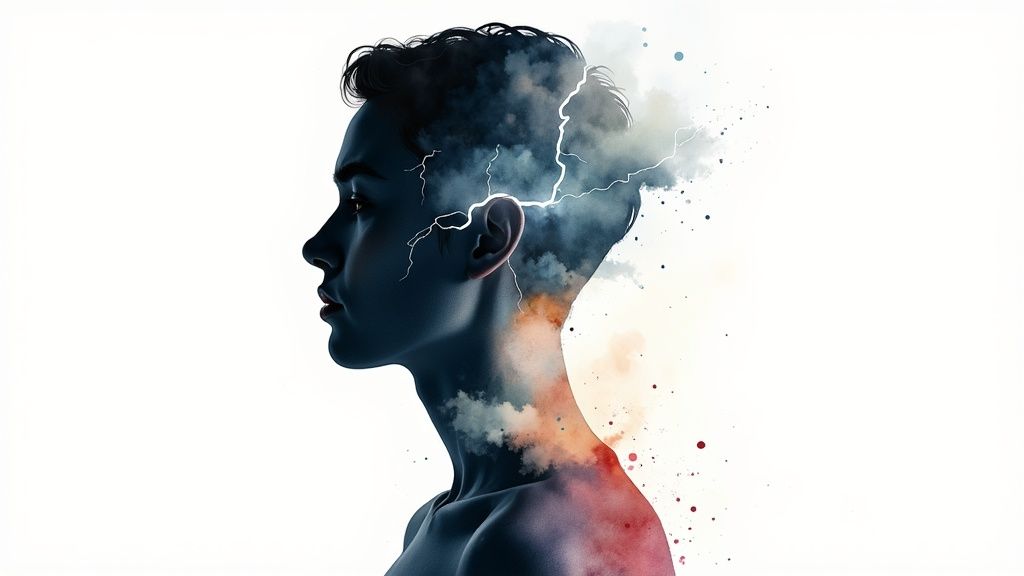
While a lot of people use the words interchangeably, stress and anxiety are not the same thing. Think of stress as your body’s short-term reaction to a clear, identifiable challenge. Anxiety, on the other hand, is a more persistent feeling of worry or dread that can stick around even when there’s no obvious trigger.
Getting this core difference is the first, and most powerful, step toward regaining a sense of control and finding your way back to calm. This knowledge is the start of a hopeful journey towards healing and a life free from the grip of panic.
The Journey from Overwhelm to Hope
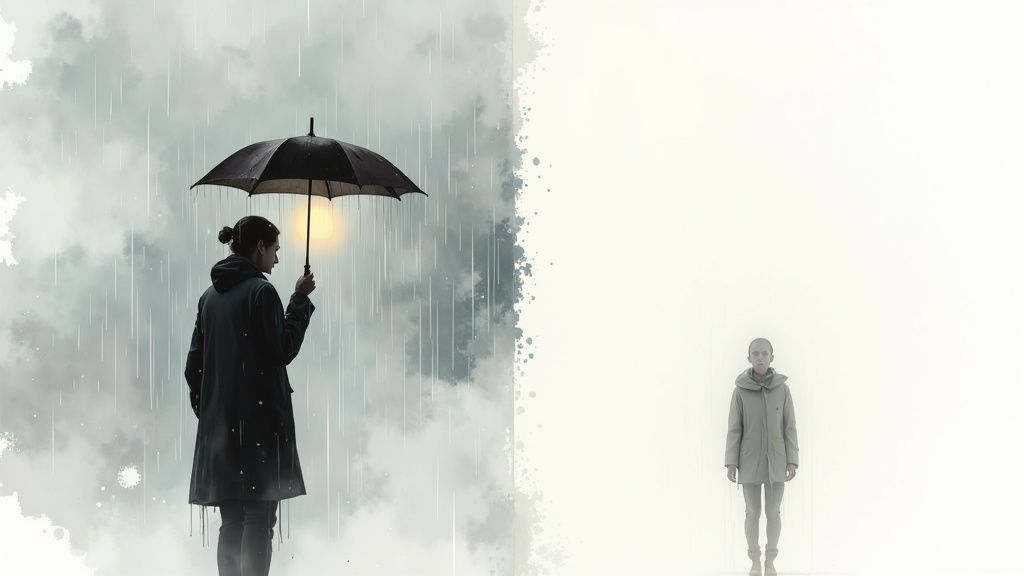
Feeling overwhelmed is a deeply human experience. But living in a constant state of unease doesn't have to be your default setting. The journey toward a panic-free life starts with a single, crucial insight: understanding exactly what you're up against.
When you can’t tell if you're feeling stressed or anxious, finding the right way to cope feels like trying to navigate a thick fog without a compass. This guide is designed to be that compass. It will help you distinguish between these two powerful emotions—not just with textbook definitions, but with a sense of genuine hope. Recognizing the unique signature of your feelings is the first step toward dismantling their power and realizing that healing is possible.
Stress: A Passing Storm
Think of stress as a sudden, intense thunderstorm. It rolls in because of a specific event—a looming deadline at work, a tough conversation you need to have, or an unexpected bill that lands in your inbox.
Your heart might pound, your muscles may tense up, and your mind feels laser-focused and on high alert. This is your body's natural "fight-or-flight" response kicking in, getting you ready to handle the immediate challenge.
But once the deadline passes, the conversation ends, or the bill gets paid, the storm breaks. The clouds part, and the sun comes out. You might feel drained, but the intense pressure is gone because the external trigger—the stressor—has been dealt with. The feeling is temporary and directly tied to a tangible cause.
Anxiety: A Lingering Fog
Anxiety, on the other hand, is less like a storm and more like a dense, persistent fog that settles in without warning. It can hang in the air long after a stressful event is over, or sometimes, it shows up for no clear reason at all.
This feeling is defined by a persistent sense of dread, worry, and apprehension about what might happen in the future.
The key distinction lies in the trigger. Stress is a reaction to a present threat, while anxiety is often a response to a potential future threat—one that may or may not ever happen.
This isn't just a matter of semantics; it’s a global health concern. The prevalence of anxiety disorders has been on the rise worldwide, impacting an estimated 301 million people as of 2019. This statistic is a powerful reminder that you are not alone on this journey. You can learn more about these global anxiety trends and their impact.
For a clearer picture, let's break down the core differences side-by-side.
Stress vs Anxiety at a Glance
This table offers a quick snapshot of how stress and anxiety typically show up in our lives, making it easier to spot the difference.
| Characteristic | Stress | Anxiety |
|---|---|---|
| Trigger | A specific, external event (deadline, argument). | Often internal, vague, or non-specific. |
| Duration | Lasts as long as the stressor is present. | Can persist long after a stressor is gone. |
| Focus | Reaction to a present, real threat. | Worry about a potential, future threat. |
| Emotional Response | Frustration, irritability, nervousness. | Apprehension, dread, persistent worry. |
Seeing the differences laid out like this can be the "aha" moment you need. It helps you label your feelings more accurately, which is the foundation for finding the right coping strategies. Understanding this distinction is your first step toward clearing the fog and finding your path forward to a calmer life.
How Your Body Responds to Stress and Anxiety
Ever feel your heart pounding before a big presentation? Or that weird knot in your stomach for no clear reason? You’re not broken—you’re experiencing a powerful, ancient survival mechanism.
Understanding what’s happening inside your body is a hopeful step toward managing these feelings. They aren't weaknesses; they're signals from a body that's trying to protect you. Once you learn to read those signals, you can start building a calmer, more controlled, and panic-free life.
At the heart of both stress and anxiety is the body's fight-or-flight response. This brilliant biological system is designed to keep you safe from anything it thinks is a threat. When it gets triggered, it floods your body with adrenaline and cortisol, prepping you to either confront the danger or run like hell.
Your Body in a Stressful Moment
Picture this: you’re driving, and a car suddenly swerves into your lane. Instantly, your fight-or-flight system kicks into high gear. This is stress in its purest form—a direct, temporary reaction to an immediate, external threat.
- Your heart rate skyrockets: It’s pumping more oxygenated blood to your muscles, getting them ready for action.
- Your breathing becomes rapid and shallow: This is all about maximizing oxygen intake, fast.
- Your muscles tense up: Your body is preparing you to move quickly, whether that means slamming on the brakes or yanking the wheel.
Once the car passes and the danger is gone, your body starts to stand down. Your heart rate returns to normal, your breathing deepens, and your muscles relax. The stress response did its job, and now it’s switching off. This is a perfectly healthy, adaptive survival instinct.
Your Body During Anxiety
So, what happens when that system gets stuck in the "on" position? This is where the physical experience of anxiety often begins.
With anxiety, your body can fire up the exact same fight-or-flight response, but without a clear and present danger. The trigger might be a persistent worry about the future, a vague sense of unease, or sometimes, nothing you can even name.
This prolonged state of hyper-alertness is the key physiological difference between the two. If stress is a temporary sprint, anxiety can feel like a marathon with no finish line. The very same mechanisms designed to save you can, when overactive, lead to chronic symptoms.
Understanding the fight-or-flight response is the first step toward reclaiming control. When you recognize that a racing heart is just your body's alarm system, you can learn to work with it instead of feeling overwhelmed by it. This knowledge is where healing begins.
Data paints a clear picture of this distinction. During the initial uncertainty of COVID-19, research showed stress prevalence jumped from 16.27% to 29.41% in just two months before dropping back down to 5.10% as people adapted. Anxiety levels, however, remained more consistent. This highlights stress as a transient reaction to a specific event, while anxiety is often more persistent.
This knowledge is incredibly empowering. These physical feelings aren't random; they are predictable patterns. Recognizing this helps demystify the sensations and transforms them from terrifying experiences into understandable signals. Check out our comprehensive fight-or-flight response guide to learn how you can begin to regulate this system and find lasting calm.
Recognizing Your Personal Symptoms and Triggers
Learning to spot your own symptoms and triggers is one of the most powerful things you can do on your path to healing. This isn't just about putting a label on your feelings. It's about building the kind of deep self-awareness that becomes the foundation for a calm, panic-free life.
When you start to understand what sets off your internal alarm and how your body and mind react, you stop being a passenger on a runaway train and start taking the driver's seat.
Think of yourself as a detective investigating your own life. Your mission is to connect the dots between what happens around you (triggers) and what happens inside you (symptoms). This knowledge is more than just data—it’s the key that unlocks the door to real, lasting change and a hopeful future.
Unpacking Your Emotional and Physical Responses
Even though stress and anxiety can feel incredibly similar, their symptoms often have a different "texture." Paying close attention to how you feel can help you learn to tell them apart.
Stress, for instance, often shows up as irritability or frustration that’s directly tied to a specific situation. You might get a tension headache after a brutal meeting at work or feel completely drained after a long day of juggling family responsibilities. The feelings are intense, but they usually ease up once the situation is over.
Anxiety, on the other hand, often plays by different rules. It might show up as a persistent, free-floating worry that isn't attached to any single problem. Instead of a temporary headache, you might have chronic muscle aches from being constantly clenched. You might struggle to sleep because your mind simply refuses to switch off. These symptoms tend to stick around, creating a low-level hum of unease.
This chart shows how both stress and anxiety can start from the same place—a response to a perceived threat—but then take different paths in our minds and bodies.
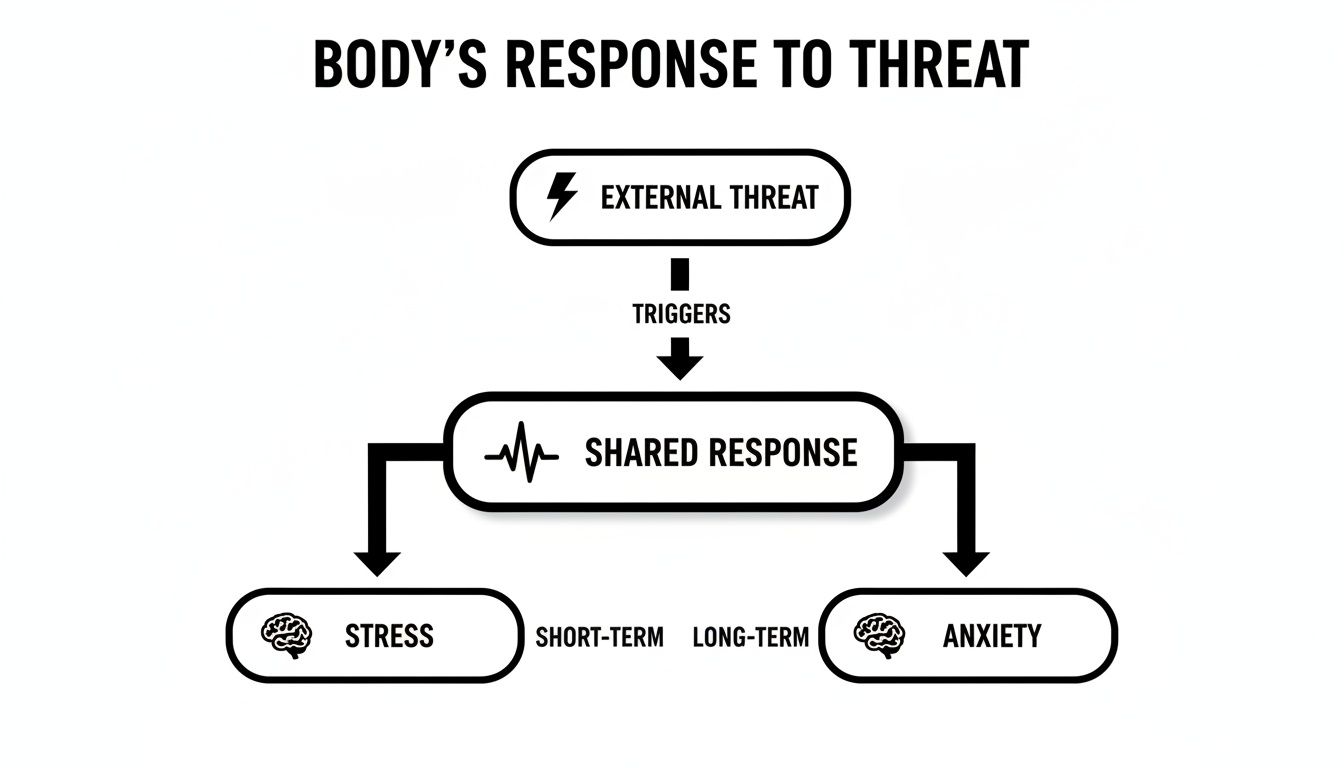
The biggest takeaway here is that while the initial spark might look the same, anxiety is what happens when that response overstays its welcome, often without a clear reason why.
Recognizing these patterns is a profound act of self-care. It transforms confusing physical sensations and overwhelming emotions into clear, manageable information. This is where hope begins—in the realization that what felt chaotic is actually a pattern you can learn and influence.
Once you start seeing these connections, you can begin to anticipate your body's reactions and respond with compassion instead of fear. This is a huge step toward breaking the cycle of panic and building a foundation of inner stability.
Common Symptoms of Stress and Anxiety
To help you start spotting your own patterns, here’s a breakdown of common signs. You'll notice some overlap, but the context and how long the symptoms last are often the biggest clues.
| Symptom Category | Common in Stress | Common in Anxiety |
|---|---|---|
| Physical | Headaches, muscle tension, fatigue, digestive upset. | Racing heart, shortness of breath, trembling, dizziness, chronic aches. |
| Emotional | Irritability, frustration, feeling overwhelmed, nervousness. | Persistent worry, a sense of dread, restlessness, feeling on-edge. |
| Behavioral | Snapping at others, changes in appetite, procrastination. | Avoidance of situations, trouble sleeping, difficulty concentrating. |
Seeing your own experiences listed here can be incredibly validating. It’s a reminder that you're not alone and that what you're feeling is real, understood, and most importantly, treatable.
Identifying Your Unique Triggers
Triggers are the specific situations, thoughts, or even physical sensations that kickstart your stress or anxiety response. Figuring them out is incredibly empowering because it shifts the problem from an internal "what's wrong with me?" to an external "what's happening to me?"
A stress trigger might be an upcoming performance review at work. In contrast, an anxiety trigger could be the vague thought of future failure, even if your job is perfectly secure. Spotting these specific cues is the first step toward regaining control.
To start this process, you can keep a simple journal. When you feel a spike in stress or anxiety, take a moment to note down a few things:
- What was I doing? (e.g., scrolling social media, driving in traffic)
- Who was I with? (e.g., a specific person, alone)
- What was I thinking about? (e.g., finances, a past mistake)
- How did my body feel? (e.g., tight chest, shaky hands)
This simple practice starts to build a map of your inner world. With this map, you are no longer lost. You can see the roads, understand the terrain, and begin to navigate with confidence toward a panic-free life. To go deeper, you can explore this guide to common anxiety triggers and learn more about what might be activating your body's alarm system.
When to Consider Professional Support
Everyone gets stressed or anxious. It’s a totally normal part of navigating life. But what happens when that temporary storm of stress turns into a constant fog of anxiety that just won’t lift?
Recognizing when these feelings cross a line into something more serious is the first, most courageous step you can take.
This isn’t about weakness or failure. It's about your body and mind sending you a clear signal that they need more support to recalibrate. Answering that call is a powerful act of self-care—and the first real move toward a panic-free life.
When Stress and Anxiety Impact Daily Life
The clearest sign it's time to get professional support is when stress or anxiety starts to consistently get in the way of your daily life. This isn't about having one bad day or a stressful week; it's about a persistent pattern that chips away at your ability to function and find joy.
This interference can show up in a few key areas:
- Your Work or School: You might find it impossible to focus, start missing deadlines, or feel so overwhelmed that you begin calling in sick just to cope.
- Your Relationships: Constant irritability and worry can create distance with the people you love. Maybe you snap at your partner or start avoiding social events you once enjoyed.
- Your Well-being: Hobbies, exercise, or time with friends—things that used to bring you happiness—now feel like a monumental effort.
If these scenarios feel uncomfortably familiar, it’s a strong sign that what you’re experiencing is more than just everyday stress. It could be an anxiety disorder, like Generalized Anxiety Disorder (GAD), which is marked by excessive, uncontrollable worry about everyday things.
Reaching a clinical level doesn't mean you've failed. It means you've been managing an incredible burden, and it's time to let a professional help you carry the load. This realization is where the journey to recovery truly begins.
Recognizing a Clinical Issue Is a Sign of Strength
Deciding to seek help isn't admitting defeat—it's choosing to fight for your own well-being. Chronic stress can leave your body in a constant state of high alert, and over time, this can evolve into a clinical anxiety disorder. These conditions are real, diagnosable, and most importantly, treatable.
Millions of people live with them. In fact, anxiety disorders are the most common mental illness in the U.S., affecting 40 million adults every single year. That statistic isn’t meant to scare you; it’s meant to reassure you. You are far from alone in this.
The message here is one of profound hope. Effective treatments are out there that can help you untangle the persistent worry and calm the physical symptoms. Therapy, lifestyle changes, and sometimes medication can work together to restore your sense of balance. If you’re wondering where to even start, you can find a curated list of professional resources to get help now and begin your journey toward lasting calm.
Recognizing you need support is the bravest step you can take. It’s the moment you stop just surviving and start moving toward a life where you are back in control—a life free from the grip of panic and filled with possibility. Healing isn't just possible; it's waiting for you.
Practical Steps to Heal and Find Lasting Calm
Knowing the difference between stress and anxiety is a huge leap forward. But understanding is just the first step. Now, it's time to move into action.
This is where things really start to change. It’s about taking small, deliberate steps that hand the control back to you. A calmer, panic-free life isn't some far-off dream—it's a reality you can start building right now.
Forget about overhauling your entire life overnight. That's a recipe for burnout. Instead, pick one or two new practices that feel manageable and start there. This way, you build momentum and create a personalized toolkit that actually works for you on your path to healing.
Start with Your Breath
When your heart is pounding and your thoughts are spiraling, the quickest way back to solid ground is through your breath. Think of it as a built-in emergency brake for your body's alarm system.
Deep, slow breathing flips the switch on your parasympathetic nervous system—your body’s natural relaxation response. It’s the polar opposite of the fight-or-flight mode that stress and anxiety kick you into. It's a physical reset button you can hit anytime, anywhere.
A simple but powerful technique is the 4-7-8 method:
- Inhale quietly through your nose for a count of 4. Let your belly expand.
- Hold your breath for a count of 7. This lets the oxygen really sink in.
- Exhale completely through your mouth for a count of 8, making a gentle whoosh sound.
Even doing this just three times can make a noticeable difference, slowing your heart rate and quieting that mental chatter. To go deeper, you can explore other powerful breathing exercises for anxiety for immediate relief.
Build Resilience with Lifestyle Adjustments
Breathing exercises are fantastic for putting out fires in the moment. But to prevent them from starting in the first place, you need to build long-term resilience. Think of these lifestyle habits as the foundation supporting your mental well-being and paving the way for a panic-free life.
Moving your body is non-negotiable. Regular physical activity, even a brisk 20-minute walk, prompts your brain to release endorphins, which are natural mood lifters. It also helps burn off the extra cortisol and adrenaline that stress leaves behind.
What you eat matters, too. Focusing on whole foods like fruits, vegetables, and lean proteins helps keep your blood sugar stable, preventing the energy dips that can make anxiety feel so much worse. And it might be worth watching your caffeine and alcohol intake, as both can easily trigger that fight-or-flight response.
Healing isn't about getting rid of stress and anxiety completely—that’s just not possible. It's about building the skills to navigate these feelings without letting them run the show. You have the power to create a life with more peace and less panic.
Challenge Your Anxious Thoughts
Anxiety loves to feed on a steady diet of negative "what-if" thoughts about the future. The good news is, you can learn to challenge these patterns and reframe them in a more balanced, realistic way. This is a cornerstone of Cognitive Behavioral Therapy (CBT), one of the most effective treatments for anxiety out there.
Next time you catch yourself in a worry spiral, just pause. Ask yourself a few simple questions:
- Is this thought 100% true? Most anxious thoughts are just assumptions, not hard facts.
- What is a more likely outcome? Try to brainstorm other, less dramatic possibilities.
- What can I actually control here? Shifting your focus back to what you can do restores a sense of agency.
This isn't about forcing "positive thinking." It's about gently poking holes in your anxious thoughts until they start to lose their grip. With practice, you can literally rewire your brain to respond with less fear and more calm logic.
If you're open to complementary practices, things like calming crystals for anxiety can serve as physical reminders to stay present and grounded throughout your day.
The most important thing to remember is that you are not powerless. By starting with your breath, making small tweaks to your lifestyle, and learning to question your thoughts, you can reclaim your peace. Every step you take is a win on your journey to healing.
How to Find the Right Professional Help for You
Deciding to get professional support isn't a sign of weakness—it's a profound act of hope. It's you, standing up and declaring that a calmer, panic-free future is something you absolutely deserve. The path to healing is real, and a good therapist is like an experienced guide helping you navigate the terrain.
Taking that first step can feel like a huge leap, but it doesn't have to be a mystery. The goal is to find a partner for your journey—someone who works with you to build the skills you need for lasting peace.
Understanding Your Therapy Options
When it comes to treating anxiety, one of the most effective and well-researched methods is Cognitive Behavioral Therapy (CBT). Think of it as a practical, hands-on approach to retraining your brain.
CBT helps you spot the unhelpful thought patterns that fuel your anxiety and swap them out for more balanced, realistic ones. Instead of just talking about your feelings, you learn concrete skills to manage them in the moment. This is incredibly empowering because it puts you back in the driver's seat.
You’re not just coping; you’re actively rewiring your response to triggers. This builds resilience that sticks with you for life.
Therapy isn't about "fixing" something that's broken. It's about learning a new set of skills to navigate your inner world with more confidence and less fear. It’s an investment in your long-term well-being and a testament to your commitment to a better, panic-free life.
Many people worry that therapy means dredging up the past, but modern approaches like CBT are often forward-looking. The focus is on giving you the tools to handle what you're facing right now. Of course, there are many different approaches to healing, and you can learn more about finding the right fit in this detailed guide on psychotherapy for anxiety.
Preparing for Your First Appointment
Your first session is just a conversation. It's a chance for you to see if the therapist is a good match and for them to understand what you're going through. You don't need to have all the answers.
To get the most out of it, it can help to jot down a few notes beforehand. Think about:
- What are your main symptoms? (e.g., racing heart, constant worry, trouble sleeping)
- When do they feel worst? (e.g., in social situations, at night, when a deadline looms)
- What do you hope to achieve? (e.g., feel calmer, stop avoiding things, finally get a good night's sleep)
Remember, this is your journey. Asking for help is a courageous and hopeful step toward reclaiming your life from anxiety's grip. Healing isn't some distant dream—it's an achievable reality, and you've already started the process.
Your Questions, Answered
It’s completely normal to have questions when you’re trying to untangle the feelings of stress and anxiety. Think of this as a quick reference to clarify the big ideas and support your journey toward a calmer, more controlled life.
Can Stress Turn into an Anxiety Disorder?
Yes, absolutely. Long-term, unmanaged stress is a major risk factor for developing an anxiety disorder. The hopeful news is that by learning to manage stress, you can actively reduce this risk and protect your long-term well-being.
Imagine your body's stress response system is like an alarm that’s constantly being triggered. If it never gets a chance to reset, it can become overly sensitive, starting to go off even when there's no real danger present. That's essentially what happens when chronic stress paves the way for persistent anxiety.
Can You Have Stress and Anxiety at the Same Time?
Definitely. They often show up together and can feed off each other in a frustrating loop.
For example, the constant "what-if" thinking from anxiety can make you feel physically and mentally stressed out. On the flip side, a genuinely stressful event—like a tight deadline at work—can pour fuel on any underlying anxiety you already have. Just knowing that both can be in play at once is a huge step toward managing them effectively and compassionately.
The most hopeful part of this journey is realizing you are not powerless. By understanding these feelings, you gain the ability to respond to them with intention and care, paving the way for lasting calm and resilience. Healing is not a distant dream; it is an achievable reality.
Are Treatment and Coping Strategies the Same for Both?
Not exactly, though there's quite a bit of overlap. The focus tends to be a little different.
- For stress, the goal is often to manage the external cause (like learning better time management) while using relaxation techniques for immediate relief.
- For anxiety, the work often goes deeper. Treatments like Cognitive Behavioral Therapy (CBT) aim to rewire the underlying thought patterns that keep the worry going, offering a path to lasting change.
Ultimately, the best approach is to build a personal toolkit with strategies that work for both. That’s how you build a life with less panic and more peace.
At The Anxiety Checklist, we believe a panic-free life is possible. Our self-help system provides the practical tools you need to understand your anxiety, challenge negative thoughts, and build lasting resilience. Start your journey to fearless living with The Anxiety Checklist.