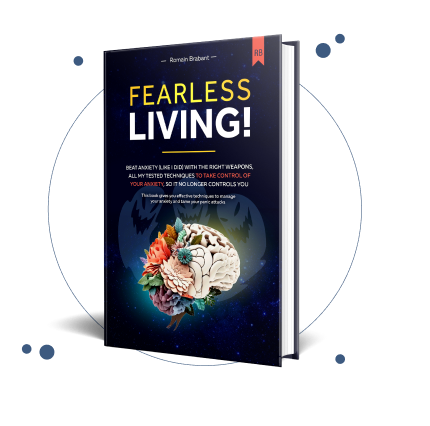

Yes, you can absolutely use a DIY Cognitive Behavioral Therapy approach to get a handle on anxiety from home. It's all about learning practical, proven techniques to spot, question, and ultimately change the negative thought patterns and behaviors that keep panic and fear running the show.
You Can Break Free from Anxiety—Starting Today
Feeling trapped by anxiety or stuck in that relentless cycle of panic is an incredibly isolating experience. It’s like your own mind has turned against you, making even the simplest daily situations feel like a major threat. But there’s a clear, structured, and hopeful path forward. This guide is built on the firm belief that you have the power to reclaim control, and it all starts with one key insight: anxiety follows predictable patterns.
And you can learn to interrupt those patterns.
My own 15-year journey from being a chronic anxiety sufferer to creating The Anxiety Checklist taught me a crucial lesson: healing isn’t about stumbling upon some magic cure. It's about systematically learning the skills to manage your own mind. That’s the entire foundation of DIY Cognitive Behavioral Therapy (CBT). It's not just a list of coping mechanisms; it’s a practical, hands-on process for rewiring the very thought processes that trigger your anxiety and lead you toward a life free from panic.
Shifting from Helpless to Empowered
The whole point here is to shift your mindset from feeling stuck and overwhelmed to feeling empowered with a concrete plan. Instead of being a helpless passenger on anxiety's rollercoaster, you're about to become the operator. This journey is all about turning knowledge into real-world action, leading you toward lasting healing.
The power of CBT lies in its proven track record. The demand for these techniques has skyrocketed, driven by a global rise in mental health challenges affecting nearly 970 million people worldwide. With success rates ranging from 50-87% for depression to over 80% for other disorders, the evidence makes it clear: accessible alternatives like DIY approaches are desperately needed. You can dig deeper into the effectiveness of CBT and its growing demand on Towards Healthcare.
This guide gives you a structured way forward, breaking down complex psychological ideas into simple, actionable steps. You'll learn to:
- Identify the specific thoughts that kickstart your anxiety.
- Challenge whether those thoughts are actually rational or helpful.
- Change your behaviors to prove to yourself that you are safe and capable.
This isn’t just about feeling a little better. It’s about fundamentally changing your relationship with anxiety. It's about building a life where fear no longer gets to make the decisions for you. You have the capacity to heal, and this guide will show you exactly how.
How CBT Interrupts the Cycle of Anxiety
To get a handle on anxiety, you have to understand how it works. Think of it like a runaway engine. It all starts with a single spark—one anxious thought—and before you know it, you're dealing with a roaring machine of panic, fear, and physical symptoms. It can leave you feeling completely powerless.
This "Anxiety Engine" is a powerful way to visualize what psychologists call the cognitive triangle, which is the heart of Cognitive Behavioral Therapy. It's the unbreakable link between your thoughts, your feelings (both emotions and physical sensations), and your behaviors.
An anxious thought like, "Why is my heart racing out of nowhere?" doesn't just hang around. It instantly triggers feelings of fear. Your body gets the message and responds with a shot of adrenaline, your muscles tense up, and your breathing gets shallow. That physical response then fuels a behavior, like avoiding whatever you were doing or desperately looking for an escape. This entire chain reaction locks you into a self-perpetuating loop where each part feeds the next.
Mapping the Anxiety Engine
Let's walk through a real-world scenario. Imagine you’re about to give a presentation at work.
- The Spark (Thought): "I'm going to stumble over my words, and everyone will think I'm incompetent." This is a prediction, not a fact, but it feels incredibly real in the moment.
- The Fuel (Feelings): Your stomach churns, your palms get sweaty, and your heart feels like it's about to pound out of your chest. A wave of intense dread washes over you.
- The Reaction (Behavior): You might call in sick to dodge the presentation entirely. Or maybe you rush through it so fast that you do stumble, which seems to "prove" your original fear was right all along.
This cycle is exactly why anxiety feels so relentless. It creates its own evidence. By avoiding the presentation, you never get the chance to learn that your fear was probably overblown. Instead, your brain logs it as a "win" for anxiety: "See? We avoided that, and we survived. That presentation must have been truly dangerous." This is how avoidance becomes a trap.
The image below shows how a DIY CBT approach empowers you to disrupt this very cycle, putting you back in control.
As you can see, applying CBT principles directly counters the anxiety storm, building a foundation of empowerment one skill at a time.
The Anxiety Cycle vs The CBT Solution
To break the cycle, you first have to see it clearly. The table below contrasts how anxiety keeps itself going versus how CBT gives you the tools to intervene at each stage.
| Stage | The Anxiety Engine (Automatic Cycle) | The CBT Intervention (Your Control) |
|---|---|---|
| The Spark | An automatic negative thought pops up and is accepted as fact. ("I'm going to fail.") | You Catch the Thought. You recognize it's just a thought, not reality. You ask, "Is this 100% true?" |
| The Fuel | Feelings of panic, dread, and physical symptoms (racing heart, sweaty palms) intensify. | You Reframe the Thought. You challenge the distortion and find a more balanced perspective. ("I'm nervous, but I'm prepared.") |
| The Reaction | You engage in avoidance or safety behaviors (calling in sick, escaping the situation). | You Choose a New Behavior. You face the situation with a plan, proving the original fear wrong. You gather new evidence. |
This isn't about ignoring anxiety; it's about systematically dismantling the machine that drives it. You're learning to become a mechanic for your own mind.
Your Toolkit for Intervention
The hopeful truth is that you can learn to step in at any point in this cycle. A DIY Cognitive Behavioral Therapy approach gives you the tools to shut down the engine before it redlines. You learn to spot that initial spark—the automatic negative thought—and challenge it before it ignites the whole system.
These unhelpful thought patterns are often called cognitive distortions, and learning to spot them is the first step toward freedom. You can learn more about these common thinking traps in our detailed guide on cognitive distortions and how to overcome them.
The core message of CBT is that you are not your thoughts. By learning to observe, question, and reframe your thinking, you can change your emotional and behavioral responses. This demystifies anxiety, turning it from a terrifying monster into a predictable—and manageable—pattern.
This isn't just theory; it's one of the most rigorously studied psychological treatments out there. CBT is considered the gold standard in psychotherapy, backed by over 375 clinical trials involving more than 32,000 patients. It consistently shows impressive response rates, reaching up to 82% for certain disorders and often outperforming other therapies.
By practicing these techniques, you're not just coping; you're actively rewiring your brain's response to fear. You are learning to shut down the anxiety engine and take back the driver's seat. A life with less panic isn't some distant dream—it's an achievable reality you can build, one challenged thought at a time.
Your Core Toolkit for Practicing CBT
Alright, this is where the theory ends and the real work begins. We've talked about how anxiety can feel like a runaway engine, but now it's time to get your hands on the actual tools to get it back under control. This section is all about the foundational techniques of DIY Cognitive Behavioral Therapy.
Think of these less as clinical exercises and more as practical, everyday skills for a calmer mind. My goal here is to show you that you absolutely have the power to do this.
Each tool in this kit is designed for a specific job: one for catching faulty thought patterns, another for testing your fears in the real world, and a third for gently facing situations you’ve been avoiding. These are the building blocks for a more peaceful, panic-free life. Let's break down what each technique is, why it works, and exactly how you can start using it today.
Unpacking Your Thoughts with Cognitive Restructuring
Cognitive Restructuring is the absolute cornerstone of CBT. It’s the process of catching your automatic negative thoughts (ANTs), putting them under a microscope, and swapping them out for more balanced, realistic ones. This isn't about slapping on a fake smile or "just thinking positive"; it's about becoming a detective of your own mind.
Anxious thoughts have a nasty habit of feeling like undeniable facts. When your heart is hammering and your brain screams, "I'm having a heart attack," it feels 100% true in that moment. Cognitive Restructuring gives you the framework to pause and ask, "Okay, but where's the evidence for that?"
The best way to get started is with a Thought Record. It’s a simple but powerful tool for logging and dissecting anxious thoughts, helping you clearly see the link between a situation, your thoughts about it, the feelings that follow, and how you react.
How to Use a Thought Record:
- Situation: Jot down the event that kicked off your anxiety. (e.g., "Received an email from my boss asking for a quick chat.")
- Automatic Thought: Write down the very first thing that popped into your head. (e.g., "I'm in trouble. I must have made a huge mistake.")
- Emotions & Intensity: Name the feelings and rate them from 0-100. (e.g., Anxiety 90%, Fear 80%.)
- Evidence For: What facts support your automatic thought? Be as objective as possible. (e.g., "The email was unscheduled.")
- Evidence Against: Now, what facts contradict your thought? This part is crucial. (e.g., "My last performance review was positive. My boss is generally supportive. Quick chats are common.")
- Alternative Thought: Based on all the evidence, craft a more balanced, realistic thought. (e.g., "It's possible this is about a new project, or maybe my boss just has a quick question. I don't have enough information to assume the worst.")
- Re-rate Emotions: Check in with your feelings now. Notice the shift? (e.g., Anxiety 40%, Curiosity 50%.)
A Thought Record isn't just a one-off exercise; it's how you retrain your brain. With consistent practice, you start to challenge these thoughts automatically, short-circuiting the panic cycle before it even gathers steam.
As you build out your CBT toolkit, you might find that adding in some practical emotion regulation worksheets can really complement this process.
Testing Your Fears with Behavioral Experiments
While a Thought Record helps you challenge thoughts on paper, a Behavioral Experiment takes it into the real world. This is your chance to play scientist, creating small, safe experiments to see if your anxious predictions actually hold water.
Anxiety is a master fortune-teller, always making predictions: "If I speak up in the meeting, everyone will think my idea is stupid." A behavioral experiment lets you gather cold, hard data to see if that's true. The results often surprise you.
Here’s how you can set one up:
- Identify the Fearful Prediction: "If I go to the grocery store alone, I'll have a panic attack and won't be able to handle it."
- Design the Experiment: "I will go to the store for just 10 minutes to buy one item during a non-peak time."
- What Do You Predict Will Happen? "I predict I'll feel overwhelming panic (9/10), my heart will race, and I'll have to run out of the store."
- Run the Experiment: Go to the store. Pay close attention to what actually happens.
- Analyze the Results: "My anxiety was high at first (7/10), but it came down. I felt uncomfortable but I was able to buy the item and leave calmly. The overwhelming panic I predicted didn't happen."
- What Did You Learn? "Being uncomfortable isn't the same as being in danger. I can handle more anxiety than I thought."
These little experiments give you powerful, firsthand evidence that flies in the face of your anxiety. You learn from your own experience that you are far more capable than you believe and that your worst fears rarely play out.
Facing Your Fears with Gradual Exposure
Avoidance is anxiety’s best friend. The more you sidestep something that makes you anxious, the bigger and scarier it becomes in your mind. Gradual Exposure is the process of gently and systematically re-introducing yourself to the situations, places, or sensations you’ve been avoiding.
The key word here is gradual. You don't just jump into the deep end. Instead, you build a fear ladder, which is just a list of feared situations ranked from least scary to most scary.
Example Fear Ladder for Driving on the Highway:
- Sit in the driver's seat of the car in the driveway for 5 minutes. (Fear rating: 2/10)
- Drive around the block in a quiet neighborhood. (Fear rating: 3/10)
- Drive on a main road with moderate traffic for 10 minutes. (Fear rating: 5/10)
- Drive to the highway on-ramp and then turn around. (Fear rating: 6/10)
- Drive on the highway for one exit during a low-traffic time. (Fear rating: 8/10)
- Drive on the highway for several exits during rush hour. (Fear rating: 10/10)
You start at the bottom rung and only move up when your anxiety on the current step has dropped significantly. This process is called habituation, and it's how you teach your brain that these situations aren't actually dangerous. For a deeper look at this powerful technique, check out our guide on exposure therapy for anxiety.
Each of these tools empowers you to get out of the passenger seat and take back the wheel. By consistently using your Thought Record, running behavioral experiments, and climbing your fear ladder, you aren't just coping—you are actively healing and building irrefutable proof that a life free from panic is within your reach.
A 4-Week Plan to Build Your CBT Skills
Trying something new can feel like a lot, especially when you're already wrestling with anxiety. That's why having a structured, week-by-week plan is so important. It breaks the DIY Cognitive Behavioral Therapy journey into manageable pieces, giving you a clear roadmap instead of a huge mountain to climb.
This program is designed to build your skills layer by layer, so you can create a solid foundation without feeling overwhelmed. Each week has a specific focus, guiding you from simple awareness to confident action. This isn't about finding a quick fix; it's about building a life-changing habit that can bring lasting freedom from panic.
To give you a bird's-eye view, here's how the next month will break down. This table is your quick reference guide to keep you on track.
Your 4-Week DIY CBT Action Plan
| Week | Weekly Focus | Key Activity (Example) | Goal |
|---|---|---|---|
| 1 | Building Awareness | Keep a simple thought log to track anxious moments. | To see your anxiety as a predictable pattern, not a random monster. |
| 2 | Challenging Thoughts | Use a Thought Record to question the validity of your worries. | To weaken the power of automatic negative thoughts by demanding evidence. |
| 3 | Taking Action | Run a small "behavioral experiment" to test an anxious prediction. | To gather real-world proof that your fears are often exaggerated. |
| 4 | Facing Fears | Create a "fear ladder" and take the first small step. | To start reclaiming your life from avoidance and build lasting confidence. |
Each week builds on the last, creating a steady momentum that turns these new skills into second nature. Let's dive into the specifics for each week.
Week 1: The Foundation of Awareness
This first week is all about becoming an observer of your own mind. It’s simple: you can't change what you don't see. Your only job is to start noticing your anxious thoughts, physical sensations, and behaviors without judging them.
Think of yourself as a detective gathering clues. When your heart starts to race, just note it: “My heart is beating fast.” When a worried thought pops up, observe it: “I’m having the thought that something bad is about to happen.”
- Key Activity: Keep a simple log or journal. Every day, jot down moments you feel anxious. Note the situation, the thought that came with it, and how your body felt.
- Weekly Goal: To start seeing your anxiety as a predictable pattern of thoughts and feelings. This simple act of observation creates distance and is the first real step toward taking back control.
By the end of this week, you’ll begin to see the connections—the specific triggers that set off your "anxiety engine." This awareness is the bedrock for everything that follows.
Week 2: Challenging Your Thoughts
Now that you’re more aware of your thought patterns, it's time to start questioning them. In Week 2, you'll put your thought log to work. This is where you shift from passively observing your thoughts to actively challenging their validity.
This isn't about getting into an argument with yourself. It’s about looking for objective evidence, like a friendly lawyer cross-examining a witness. If your automatic thought is, "Everyone at that meeting thinks I'm incompetent," your job this week is to ask, "Is that 100% true? What evidence do I have that contradicts this?"
Your anxious thoughts have been running unopposed for a long time. This week, you’re introducing a calm, rational voice to the conversation—a voice that demands facts, not just feelings.
This process shines a light on the cognitive distortions that have been fueling your fear. By consistently dissecting your thoughts, you weaken their power and start proving to yourself that feelings are not always facts.
Week 3: Taking Deliberate Action
Thought work is crucial, but lasting change really happens when you take action. Week 3 is all about integrating behavioral techniques into your routine. It's about proving your new, more balanced thoughts are true through real-world experience.
You’ll start with small, manageable behavioral experiments. If you fear people are judging you for being quiet, your experiment might be to ask just one question in a meeting. The goal isn't perfection; it's simply to collect data on what actually happens versus what your anxiety predicted would happen.
- Behavioral Experiments: Test one small, anxious prediction this week.
- Activity Scheduling: Intentionally schedule one enjoyable or meaningful activity, even if you don't feel like it. This directly counteracts the withdrawal that anxiety often causes.
This week is about showing your brain new evidence. You are actively demonstrating that you're capable and that the world is often much safer than your anxiety has led you to believe. This practical, hands-on experience is what solidifies your progress and builds genuine confidence.
Week 4: Facing Fears and Planning Ahead
In this final week, you'll begin the process of gradual exposure and create a plan for the future. You’ll build a "fear ladder" for one of your avoidance behaviors, starting with the smallest, least intimidating step imaginable.
If you avoid social events, the first rung on your ladder might be as simple as texting a friend to say hello. The key is to take a step that feels challenging but totally achievable. This is the heart of reclaiming your life from anxiety. For a deeper dive into how this works, our guide offers a detailed look into the principles of exposure therapy for anxiety.
By the end of this week, you won't be "cured"—that's not the goal. The goal is to have the skills, the confidence, and a sustainable plan to continue healing. You'll know how to observe your thoughts, challenge them, test them with action, and gently face your fears. This is the path to living a panic-free life, built one intentional week at a time.
Knowing When to Seek Professional Support
Embarking on a DIY Cognitive Behavioral Therapy journey is a huge act of self-empowerment. The tools and strategies you're learning can give you a powerful way to reclaim your life from anxiety.
But real strength isn’t just about doing the work yourself. It's also about knowing when it’s time to call for backup.
Reaching out for professional help is never a sign of failure. In fact, it’s a sign of profound self-awareness and courage. Think of it as adding a seasoned guide to your team. Sometimes, anxiety patterns are just too deeply entrenched, or life throws us curveballs that are too heavy to navigate on our own.
Seeing a therapist is a smart, strategic move in your healing journey. It means you are so committed to living a panic-free life that you’re willing to use every resource available to get there.
Red Flags That Signal It's Time for Support
While a self-guided plan is effective for many, there are definitely some signs that tell you it's time to bring in a licensed professional. If you find yourself nodding along to any of the points below, consider it a clear signal to seek help.
- Your symptoms are getting worse. Despite your best efforts with the techniques, your anxiety, panic, or low mood is intensifying or becoming more frequent.
- Daily life feels impossible. Anxiety is making it nearly impossible to go to work or school, keep up with relationships, or even manage basic self-care tasks like grocery shopping or hygiene.
- You feel a persistent sense of hopelessness. If you're stuck in a sense of despair that just won't lift, or feel like things will never get better, that's a serious sign that requires professional intervention.
- You're having thoughts of self-harm. If you are thinking about hurting yourself or that life isn't worth living, it is absolutely critical to reach out to a professional or a crisis line immediately. Your safety is always the number one priority.
How DIY and Professional Therapy Work Together
Here's the good news: choosing to see a therapist doesn't mean you have to ditch your DIY CBT work. The two can actually complement each other beautifully.
Your self-guided practice can make your therapy sessions even more productive. You’ll walk in with a solid foundation and a clearer understanding of your own thought patterns, ready to dive deeper.
Your DIY plan can also be an invaluable tool if you're on a waiting list for an appointment. It keeps you actively engaged in your own recovery, helping you build skills and maintain momentum so you don't feel like you're just treading water. Learning more about different approaches, like psychotherapy for anxiety, can also help you feel more prepared and confident in your decision.
While self-guided CBT gives you some incredible tools, knowing when to bring in professional support is key. For those looking into finding a professional CBT therapist, there are dedicated resources available to guide you through that important step.
Remember, the ultimate goal is to build a life where you feel safe, in control, and free from the grip of panic. Combining your personal efforts with expert guidance is often the most powerful way to make that a reality.
Common Questions About Self-Guided CBT
Starting down a new path always brings up questions, especially when it's as personal as DIY cognitive behavioral therapy. It's completely normal to feel a mix of excitement and a little bit of hesitation. Think of it this way: you're taking a brave step, and getting these common concerns out of the way will only build your confidence for the journey ahead.
The goal isn't to get rid of anxiety forever—that's not how our brains work. The real win is building the skills to manage it, so it's no longer in the driver's seat.
Can I Really Do This on My Own?
This is usually the first question people ask, and the answer is a confident yes. For mild to moderate anxiety, a structured, self-guided CBT program is a proven and effective approach. This guide is like a personal trainer for your mind—it gives you the exercises, the plan, and the encouragement, but you're the one in the gym building the strength.
You're not just throwing things at the wall to see what sticks. You're using a systematic, evidence-based method that has helped millions of people find relief.
The real power of self-guided CBT is that it demystifies anxiety. You start to see that your panic isn't some random monster—it's a predictable pattern of thoughts and behaviors that you can absolutely learn to interrupt. Every thought you challenge and every small fear you face is another piece of proof that you're more than capable of healing yourself.
How Long Until I See Results?
There's no magic switch, but you will start to notice small, meaningful shifts pretty quickly if you're consistent. It's not about waking up one day completely "cured." It's about progress, not perfection. Many people report feeling a much greater sense of awareness and control within the first 1-2 weeks, just from tracking their thoughts.
More tangible changes—like panic attacks feeling less intense or happening less often—tend to show up within 4-8 weeks of consistently using techniques like cognitive restructuring and behavioral experiments. Just remember, every small effort you make is a brick being laid for a much stronger foundation. For a deeper dive into the core principles you'll be using, our guide on understanding CBT for anxiety is a great place to start.
Here's a rough idea of what your progress might look like:
- Weeks 1-2: You'll become much more aware of your specific triggers and automatic thought patterns.
- Weeks 3-4: You'll start feeling more confident in your ability to challenge those unhelpful thoughts.
- Weeks 5-8: You'll likely notice a real drop in avoidance behaviors and your overall anxiety levels.
What Should I Do If I Feel Stuck?
Getting stuck is not a sign that you're failing. It's a sign that you're human. Think of it as an opportunity to get curious, not critical. When you hit a roadblock, it's just time to do a little troubleshooting.
First, go back to the basics. Are you really filling out your thought record consistently? Did you break down the steps on your fear ladder into small enough pieces? More often than not, the fix is just to simplify what you're doing.
If a specific thought feels too big and powerful to challenge, or an exposure step seems impossible, that's fine. Give yourself some grace and break it down even further. This is a marathon, not a sprint. Every single step, no matter how tiny it feels, is moving you toward a life where anxiety isn't calling the shots. You can heal, and there is a hopeful path to living panic-free.
The journey to fearless living starts with a single step. At The Anxiety Checklist, we've created a comprehensive system to guide you through every stage of this process, turning proven CBT techniques into a personalized toolkit for lasting change. Take control of your anxiety and start building your best life today. Learn more and get started at https://anxietychecklist.com.