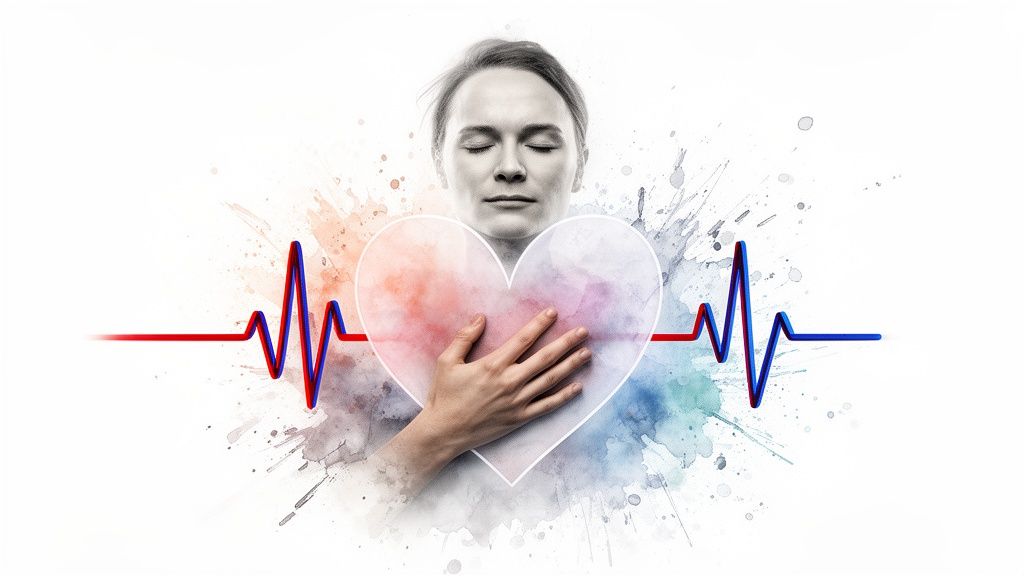
When a panic attack hits, one of the first and most terrifying sensations is your heart hammering against your ribs. It feels like it’s going to beat right out of your chest. This sudden surge often sends your heart rate soaring, sometimes well over 110 beats per minute (bpm).
It's a deeply alarming feeling, but here's the most important thing to know: this is a temporary, automatic response from your body's survival system. It's not a sign of a heart attack or cardiac failure. Understanding why it happens is the first real step toward taking back control and finding a path to living panic-free.
Why Your Heart Races During a Panic Attack

That sudden, terrifying feeling of your heart pounding out of control is a classic sign of panic. But where does it come from? The answer is wired deep into our biology—it’s an ancient survival instinct kicking into gear.
Think of it as your body's internal alarm system, one that's designed to protect you from immediate, real-world danger. But during a panic attack, this alarm gets triggered by mistake. Your body is reacting to a perceived threat, even when there isn't one.
The Adrenaline Surge Explained
This false alarm floods your body with adrenaline. Imagine your car suddenly revving from zero to 100 mph for a race you never intended to join—that’s what adrenaline does to your heart. It’s an urgent command for your heart to pump faster, pushing oxygen-rich blood to your major muscles.
This whole process is automatic. It’s your body preparing for intense physical action, priming you to either:
- Fight: By flooding your muscles with the fuel they need for a confrontation.
- Flee: By getting you ready to escape a perceived threat at a moment's notice.
This biological cascade is incredibly powerful, but it's also short-lived. To get a deeper look at what’s happening under the hood, check out our detailed fight-or-flight response guide. Just knowing this is a predictable, physiological process—not a malfunction—can start to drain the fear out of the experience.
Your racing heart isn't a sign that you're broken; it's a sign that your body's protective alarm system is working overtime. This shift in perspective is crucial for healing. It helps you see the sensation not as a threat, but as something you can understand and, ultimately, overcome.
Panic Attack Heart Rate vs Resting Heart Rate
This table shows the typical changes in heart rate (BPM) from a resting state to a panic state, helping you contextualize your own experience.
| State | Typical Heart Rate (BPM) | Primary Cause |
|---|---|---|
| Resting | 60-100 bpm | Normal bodily function, low physical/emotional stress |
| Panic Attack | 110-180+ bpm | Adrenaline surge from the fight-or-flight response |
As you can see, the jump is dramatic, but it's driven by a known biological process. Your heart is simply responding to the powerful signals sent by your brain.
It's a Common, Measured Reaction
That dramatic spike in your heart rate isn't just a feeling; it’s a measurable, physical event. Research has shown a direct link between how intense a panic attack feels and how high the heart rate actually climbs.
Studies that used ECG monitors to track self-reported panic attacks found that heart rates often leaped to levels completely out of sync with what someone was physically doing. For people who experience frequent attacks, it's quite common for their heart rate to shoot past 110 bpm, confirming just how powerful this physical response is.
This knowledge is your first tool on the path to freedom. Your heart is strong, and this reaction, while terrifying, is just your body trying to protect you. By learning to see it for what it is—a temporary, harmless, and manageable symptom—you can begin to live without the fear of the fear itself. This is where hope begins.
What a 'Normal' Heart Rate During a Panic Attack Looks Like
When your heart is pounding out of your chest and your mind is racing, it’s hard not to wonder, "Is this number dangerously high?" That fear—that your heart just can't handle the strain—is one of the most powerful triggers that fuels the panic cycle.
But what if you had a solid frame of reference? Understanding what a ‘normal’ heart rate during a panic attack actually looks like can rob that fear of its power and open the door to healing.
During a panic attack, it's completely typical for your heart rate to surge, often landing somewhere in the 100 to 160 beats per minute (BPM) range. For some people, it can climb even higher, especially right at the peak of the attack.
This number isn't a sign that something is about to go terribly wrong. Think of it like your body suddenly breaking into an all-out sprint. Your heart is an incredibly powerful muscle designed to handle brief, intense periods of high output. A panic attack is exactly that—a short, intense burst of activity.
Your Personal Panic Heart Rate
The exact BPM you see on your watch can vary widely from person to person, and even from one attack to another. A few factors can influence just how high your heart rate goes:
- Age: Our maximum heart rates naturally tend to decrease as we get older.
- Fitness Level: If you're physically fit, you likely have a lower resting heart rate, and the way your heart rate increases during panic might be different.
- Intensity of the Attack: A small wave of panic might only bump your heart rate up a little, while a full-blown attack can send it soaring.
The number you feel in your chest or see on a fitness tracker is just your body’s maximum effort in that single moment. It’s a temporary, manageable symptom—not a sign that your heart is failing.
Just knowing this is your first line of defense. It allows you to step back and observe the sensation without getting swept away by catastrophic thoughts like, "I'm having a heart attack." This is where hope begins—knowing that this is survivable and that you can find your way to a life free from panic.
The most powerful tool against panic is understanding. When you know that a high BPM is a normal, expected part of a panic attack, you can reframe it. It's no longer a sign of danger, but a signal that your body's alarm system is just temporarily overactive. This shift in perspective is the key to breaking the cycle of fear and starting to heal.
The Power of Perception
Sometimes, the feeling of a racing heart is so frightening that the perception itself becomes a trigger. The story your mind tells you about that physical sensation can create a vicious feedback loop, making the panic even worse.
This was thrown into sharp relief in a landmark case study. A patient was given false feedback that their heart rate had suddenly jumped by 50 BPM. That incorrect information, all on its own, was enough to provoke a full-blown panic attack. It's a powerful demonstration of how much our thoughts can steer our physical state. You can read more about this in the original case report.%20Panic%20attack%20associated%20with%20perceived%20heart%20rate%20acceleration_A%20case%20report.pdf).
This is exactly why putting the numbers into perspective is so critical. By understanding what’s really happening, you start to dismantle the fear. A high heart rate is just a symptom, and like all symptoms of panic, it will pass. You have the strength to ride it out, and with the right tools, you can build a life where panic no longer calls the shots.
Panic Attack or Heart Attack How to Tell the Difference
That intense, overwhelming moment when your heart skyrockets and chest pain hits is terrifying. The first question that floods your mind is almost always, “Am I having a panic attack or a heart attack?” This fear is so common that it sends countless people to the emergency room, just looking for reassurance.
While the symptoms can feel frighteningly similar, understanding the key differences can empower you to face the situation with more calm and hope. Knowing what to look for can help break the devastating cycle where the fear of a heart attack actually fuels the panic itself. This guide is here to give you practical knowledge—not a medical diagnosis—to help you feel more informed and in control.
Symptom Patterns and Onset
One of the most telling differences is how the symptoms start and progress. A panic attack often feels like it comes out of nowhere, building to a powerful crescendo in a very short time.
The symptoms of a panic attack typically peak in intensity within 10 minutes and then start to fade. In contrast, the symptoms of a heart attack usually stick around or even get worse over time. They don’t resolve on their own.
Think of a panic attack like a flash flood—intense, overwhelming, but relatively brief. A heart attack is more like a slow, rising tide that just doesn't recede. You can learn more about managing these overwhelming moments by exploring our guide on what to do during a panic attack.
This timeline is a crucial piece of the puzzle. If your most intense symptoms start to ease up after 10-20 minutes, it’s a hopeful sign that it’s much more likely to be panic.
The Nature of the Chest Pain
The type of chest pain you're feeling is another major clue. While both can cause discomfort in your chest, the sensation itself is often quite different.
- Panic Attack Chest Pain: People often describe this pain as sharp, stabbing, or located in one specific spot. It might feel like a knife-like pain that doesn't spread.
- Heart Attack Chest Pain: This is more commonly felt as intense pressure, squeezing, or a crushing weight on the center or left side of the chest. This pain often radiates outward to other areas like the arm (usually the left), jaw, neck, or back.
To help you get a clearer picture, here’s a quick side-by-side comparison of the symptoms.
Symptom Checker Panic Attack vs Heart Attack
| Symptom | Typical in Panic Attack | Typical in Heart Attack |
|---|---|---|
| Onset | Sudden, peaks within 10 minutes | Can be sudden or gradual, but persists and often worsens |
| Chest Pain | Sharp, stabbing, localized | Squeezing, pressure, fullness; can radiate to arm, jaw, or back |
| Heart Rate | Rapid, pounding (tachycardia) | Can be fast, slow, or irregular |
| Breathing | Shortness of breath, hyperventilation | Shortness of breath, difficulty breathing |
| Other Sensations | Tingling in hands/feet, derealization, fear of dying or losing control | Nausea, cold sweats, lightheadedness |
| Duration | Symptoms usually subside within 20-30 minutes | Symptoms do not go away on their own |
This table isn't for self-diagnosis, but it can give you a framework to better understand what your body might be telling you.
This flowchart offers a simple way to start thinking about your heart rate during one of these episodes.

This visual helps you categorize that initial sensation of a racing heart, guiding you to consider whether it's above or below the typical 100 BPM threshold often seen in panic attacks.
Learning these differences isn't about trying to diagnose yourself at home. It’s about building confidence and dialing down the health anxiety that can make panic so much worse. The most important rule remains: when in doubt, get it checked out. Never hesitate to seek immediate medical attention if you are at all concerned you might be having a heart attack.
Still, arming yourself with this knowledge is a powerful step toward healing. It gives you a framework to assess your body’s signals more calmly and provides hope that you can navigate these moments—and eventually live a life free from panic.
Immediate Steps to Lower Your Heart Rate During an Attack

When your heart is pounding and fear takes over, feeling powerless only makes things worse. But this is the exact moment you can reclaim a sense of control. You have an incredible, built-in ability to influence your body's automatic responses, and these are your in-the-moment tools for doing just that.
These simple, powerful techniques are designed to activate your body’s natural relaxation system—the parasympathetic nervous system. Think of it as the emergency brake for your fight-or-flight response. By consciously using these methods, you can slow your racing heart and prove to yourself that you are not helpless, building the hope that you can master this response.
Use Your Breath as an Anchor
When panic strikes, your breathing almost always becomes rapid and shallow, which just signals more danger to your brain. Intentionally slowing your breath is the fastest way to reverse this. It sends a clear message to your nervous system: “The threat has passed. You can stand down.”
Two of the most effective methods are easy to remember and use absolutely anywhere:
- Box Breathing: Inhale slowly for a count of four. Hold your breath for four. Exhale slowly for four. Hold again for four. Repeat this cycle until you feel your heart rate begin to settle.
- The 4-7-8 Technique: Breathe in quietly through your nose for four seconds. Hold your breath for a count of seven seconds. Exhale completely through your mouth, making a whoosh sound, for eight seconds.
These structured patterns interrupt the panic-driven hyperventilation and actively lower your heart rate during a panic attack. For more guidance on this, you might find our deep dive into breathing exercises for anxiety helpful.
Engage Your Senses to Ground Yourself
Another powerful way to interrupt the internal chaos is to pull your focus outward. Grounding techniques anchor you firmly in the present moment, shifting your attention away from the frightening physical sensations and anxious thoughts.
A simple yet incredibly effective method is the 5-4-3-2-1 technique. Wherever you are, just stop and silently name:
- Five things you can see around you.
- Four things you can physically feel.
- Three things you can hear.
- Two things you can smell.
- One thing you can taste.
This exercise forces your brain to focus on the external world, pulling it away from the internal feedback loop of fear.
You have the power to calm your own body. Each time you successfully use one of these techniques, you are rewriting your brain’s response to panic. You are building proof that you can navigate these moments and come out the other side, which is the foundation for living a truly panic-free life.
Another potent trick is to stimulate the mammalian diving reflex. Simply splashing your face with cold water or holding an ice pack to your temples can trigger an immediate physiological response that slows your heart rate.
These strategies aren't just tricks; they are real, evidence-backed tools that give you agency in the middle of an attack. Each one is a step toward not just surviving panic, but mastering it—giving you the hope and confidence to heal.
The Long-Term Connection Between Anxiety and Heart Health
It’s a question that often surfaces after the storm of a panic attack has passed: “Is this doing long-term damage to my heart?” While a single episode won’t harm a healthy heart, the real concern is what happens when these storms become a regular forecast.
Think of your body’s stress response like revving a car engine. A brief sprint to get on the highway is what it’s built for. But keeping the pedal floored for miles on end, pushing it into the red? That’s where you get wear and tear. Chronic anxiety can feel like that same relentless strain.
This constant state of high alert isn't just a feeling; it has real, physical consequences. Over time, it can contribute to issues like elevated blood pressure and throw your autonomic nervous system out of balance. This is why learning to manage anxiety is one of the most powerful and hopeful investments you can make in your long-term wellness.
More Than Just a Feeling
The link between a racing mind and a healthy heart isn't just theoretical—it's backed by some serious science. Researchers have found clear connections between frequent panic episodes and a higher risk for cardiovascular problems down the road.
One study, for example, found that even small day-to-day changes in resting heart rate could sometimes predict if a panic attack was more likely the next day. Another major piece of research followed thousands of women and discovered that those who experienced panic attacks had a significantly higher risk of a heart attack or stroke over a five-year period. You can dig into the full panic and cardiac risk study to see the data for yourself.
This isn't meant to scare you. It's meant to empower you. This research gives you a powerful "why"—a reason to move beyond just surviving attacks and start a journey toward true, holistic healing. Taking care of your anxiety is a profound act of self-care for your mind and your heart.
Investing in a Fearless Future
Seeing this bigger picture can transform how you approach your healing. Suddenly, every small step you take isn't just about feeling less scared in the moment—it's a deposit into your future health account.
Every deep breath you practice, every fearful thought you challenge, and every time you reach out for support becomes an act of protecting your heart for years to come.
You are not broken, and you are not doomed to a life of fear. A truly fearless and healthy life is entirely possible. By understanding the long-term stakes, you build the motivation to create lasting change, knowing that you are building a more resilient future, one calm breath at a time. This is where real hope lies.
Your Path to Living Panic-Free

Getting through your next panic attack is one thing. Building a life where they don’t call the shots is something else entirely—and it is completely achievable. It’s a journey from feeling like a passenger in a runaway car to grabbing the steering wheel yourself.
Let's circle back to what we've learned. A high heart rate during a panic attack is just your body’s alarm system doing its job. You have real, practical tools to help it stand down. And most importantly, even though it feels terrifying, it’s not a threat to a healthy heart. These aren't just facts; they are your foundation for taking back control and building a life of hope.
Building Your Resilient Life
Lasting freedom from panic attacks isn't a fantasy. It’s entirely possible. The secret is moving from just reacting to anxiety to proactively reshaping your relationship with it. With the right strategies, you can begin to rewire how your brain responds to fear, allowing you to live with confidence instead of dread.
A powerful first step is to become a detective of your own experience by tracking your symptoms and triggers. When you understand your personal patterns, you can start to dismantle them. Tools like the Anxiety Checklist app can give you a structured way to do this, helping you connect the dots and see your progress over time.
Healing from panic isn’t something that happens to you; it's something you do. Every time you use a coping skill or challenge an anxious thought, you’re casting a vote for a future where you’re in charge. This is how you reclaim your life, one step at a time.
Creating Sustainable Change
Beyond the in-the-moment coping tools, true resilience comes from addressing the bigger picture. Things like sleep quality play a huge role. When you’re exhausted, your nervous system is on a hair-trigger, making you more vulnerable to anxiety. Learning how to fix poor sleep quality isn't just about feeling less tired—it’s about strengthening your mind’s defenses.
Ultimately, this path is about building a life filled with small, supportive habits. It’s about making choices that nourish your mental and physical health, one day at a time. You have everything you need to build a life defined not by fear, but by freedom and hope.
Frequently Asked Questions
Let's tackle some of the most common questions about heart rate and panic attacks. Getting clear answers can go a long way in calming the fear and giving you hope that you can manage this.
Can a Panic Attack Cause My Heart Rate to Reach a Dangerous Level?
Seeing a heart rate of 160+ BPM on your fitness tracker is undeniably terrifying. But for a healthy heart, it’s not dangerous. Think of your heart as a powerful muscle built to handle short bursts of intense activity, like a full-out sprint. That spike is just your body’s adrenaline-fueled response doing its job.
The real danger isn't the number on the screen; it's the fear that number creates, which can easily lock you in a cycle of panic. Understanding that a high heart rate during a panic attack is temporary and not harmful is one of the most powerful steps you can take to rob it of its power and start on the path to healing.
How Long Does It Take for Heart Rate to Return to Normal After a Panic Attack?
Your heart rate will usually start to slow down as the panic attack passes its peak, which is typically within 10 to 20 minutes. However, it can take a bit longer—often another 30 to 60 minutes—for your nervous system to fully recalibrate and settle back into a true resting state.
During this "cooldown" period, it's completely normal to feel shaky, tired, or a little on edge. This is just your body processing the leftover adrenaline. Be gentle with yourself during this time; it’s part of the process of recovery. Using some breathing or grounding techniques can really help smooth this transition back to calm.
Should I Use a Heart Rate Monitor to Track My Panic Attacks?
This one is a real double-edged sword. For some people, data can feel incredibly empowering and hopeful. Watching your heart rate predictably go up and then come back down can be solid proof that you are safe and that the episode will always pass.
For others, however, constant monitoring can become an obsession that actually fuels more anxiety. The goal should be to observe without judgment, not to fixate on the numbers. Use it as a tool for understanding, but if it only ramps up your fear, it's much better to focus on your body's sensations and calming techniques instead.
Ultimately, knowledge is your greatest asset. With a better understanding of anxiety's mechanics and the right tools, you can build a more resilient and peaceful life. A life free from panic is possible.
If you're ready to move from just coping with anxiety to truly overcoming it, the The Anxiety Checklist provides a clear, action-oriented system to help you build a life defined by freedom, not fear. Learn how to regain control at https://anxietychecklist.com.