
Feeling trapped by anxiety is isolating enough. But when you add the stress of not having insurance, it can feel like you're completely out of options.
If you're wondering how to get mental health help without insurance, please know this: it is absolutely possible to find support and start your journey toward a panic-free life. Healing is not a privilege for the insured; it's a possibility for everyone willing to take that first step. This guide is your practical roadmap to affordable, effective help that’s within your reach.
Finding Hope and Healing Without Insurance

Living with anxiety can feel like you're constantly bracing for impact, and the financial barrier of no insurance often adds another layer of despair. It’s easy to believe that quality mental health care is a luxury you simply can't afford, and that a life without constant worry is just a dream.
But that belief, as powerful as it feels, is a misconception. There are strong, supportive, and effective pathways to healing that don't depend on an insurance card. A future where you are in control—not your anxiety—is entirely achievable.
Taking this first step—just searching for information—is a huge move toward regaining control. Hope isn’t just a feeling; it’s a strategy. And by exploring the options out there, you're actively building a foundation for a calmer, panic-free life.
You Are Not Alone in This Search
It’s so important to know how common this challenge is. Millions of people successfully find care without insurance every single year, discovering resources that fit their budgets and lead them to recovery. You’re part of a huge community of people finding their way back to peace.
This guide is built to connect you with those solutions. We’ll explore a variety of avenues so you have a full toolkit to draw from:
- Immediate crisis support for when things feel urgent.
- Community clinics that offer care based on what you can actually afford.
- University training programs that provide high-quality, low-cost services.
- Digital tools and apps that can offer support right from your home.
The path to a panic-free life exists, even without insurance. It just requires a bit of resourcefulness and the belief that you deserve to heal. Every step you take, no matter how small, is a victory.
A Roadmap to a Calmer Future
This guide isn't just a list of phone numbers or websites. It's a structured approach designed to empower you. We'll start with immediate options for acute situations and then shift to building a long-term, sustainable plan for managing anxiety and creating lasting freedom from panic.
To really sustain your well-being, it's also worth developing personal practices, like exploring life-changing self-care rituals that can make a significant difference along the way.
Each section will give you actionable steps, from what to say when you call a clinic to how to evaluate a low-cost therapy app. We'll equip you with the knowledge to make smart decisions for your mental health.
This journey is about more than just finding help. It’s about discovering that you have the strength to build a life where anxiety no longer calls the shots. You can learn more about what that looks like by reviewing these essential anxiety recovery steps which outline a clear path forward. You can find your way to a more peaceful place.
Immediate Support In A Moment Of Crisis

When anxiety spirals into a full-blown crisis, waiting for an appointment simply isn't an option. In those moments when everything feels overwhelming, your only priority is immediate safety.
The good news? There's free, confidential, and instant support available 24/7, created to help you get through these exact moments. Reaching out is a sign of incredible strength, and it's the first step toward reclaiming your calm.
These services aren’t just for suicidal thoughts. They're for anyone drowning in intense emotional distress. Whether you're in the grip of a panic attack, consumed by overwhelming fear, or just feel like you can't cope for another minute, people are ready to help you find your footing again. This is your action plan for right now.
Your First Call For Help
The most direct line to immediate, free support is the 988 Suicide & Crisis Lifeline. By simply dialing or texting 988, you're connected to a nationwide network of over 200 local crisis centers.
It’s a huge misconception that 988 is only for suicide. In reality, people call for all sorts of reasons, like:
- Intense anxiety or a full-blown panic attack
- Overwhelming depression or sadness
- Worries about substance use
- Any painful emotion that just feels too heavy to carry alone
When you call, you’ll speak with someone trained to listen without judgment. Their goal isn't to "fix" you, but to hold space, help you process what you’re feeling, and work with you to find a way to feel calmer and more in control. It's a lifeline to remind you that healing is possible.
Different Ways to Get Immediate Support
Let's be real—making a phone call during a high-anxiety moment can feel impossible. Fortunately, support comes in different forms to meet you where you are.
Crisis Text Line
If you’d rather type than talk, text HOME to 741741 from anywhere in the U.S. This will connect you with a volunteer Crisis Counselor. It’s also free, confidential, and available around the clock.
Warmlines
Sometimes you're not in a crisis, but you desperately need a compassionate ear. Warmlines are staffed by trained peers who have their own lived experience with mental health challenges. They offer a space for connection and support before things escalate—perfect for when you feel lonely, anxious, and just need to talk to someone who truly gets it.
Finding immediate support is about creating a moment of safety so you can breathe. It's the first crucial step that makes all other steps toward healing possible. It proves that even in the darkest moments, help is available and you don't have to face it alone.
What To Expect and What Comes Next
Reaching out can feel intimidating, but knowing what happens next helps. A crisis call usually involves the counselor listening, validating how you feel, and exploring coping strategies with you. They might ask questions to understand your situation, but you're always in the driver's seat.
After the call, you might feel a bit calmer and more stable. This is the perfect time to think about ongoing support. You could look into local walk-in crisis centers, which offer in-person help without an appointment. Our guide on how to get help now takes a deeper dive into these next-level resources.
Your immediate safety is the number one priority. Using these free, accessible lifelines gives you the space you need to heal and build a life free from panic.
Your Guide To Affordable In-Person Therapy
While immediate crisis support is crucial for getting you to safety, consistent therapy is the engine for long-term healing. It’s where you actually build the skills to understand your anxiety, challenge panic, and start reclaiming your life. I know the idea of affording in-person sessions without insurance can feel totally impossible, but there are systems in place designed to bridge this exact gap, opening the door to a life lived with confidence and peace.
This is your roadmap to finding those reliable, low-cost mental health services right in your own community. It takes a little detective work, but finding the right fit can change everything. You just need to know where to look.
Tapping Into Community Health Centers
One of the most powerful—and often overlooked—resources are Federally Qualified Health Centers (FQHCs) and other community clinics. These centers are partially funded by the government with a very clear mission: provide comprehensive care, including mental health services, to everyone, regardless of their ability to pay.
This is the cornerstone of affordable care. When you don't have insurance, it can feel like every door is closed. These centers exist to open them, offering a real path to a panic-free life.
In fact, data from 2022 showed that only 11% of uninsured adults received any mental health counseling, a huge difference from the 25% of insured adults who did. This gap highlights a massive need, and it's precisely what FQHCs are designed to address.
And let's be clear: these clinics aren't "lesser than" private practices. They're staffed by licensed professionals—psychologists, social workers, and counselors—who are deeply committed to community well-being.
To find one near you, the Health Resources and Services Administration (HRSA) has a simple online locator tool. Just plug in your address, and it will pull up a map of nearby centers.
Understanding Sliding-Scale Fees
The key that unlocks affordability at these centers is the sliding-scale fee. This isn't just some vague discount; it's a structured model where the cost of your therapy session is directly tied to your income and household size.
The process is pretty straightforward:
- Application: You'll fill out a form detailing your income.
- Proof of Income: You'll need to provide documentation, usually a recent pay stub, tax return, or a letter if you're unemployed.
- Determination: The clinic uses this info to place you on their fee scale, landing on a session cost you can realistically manage.
This can take the cost of a session from over $150 down to as low as $10-$20—or sometimes even free, depending on your situation. It makes consistent care, the kind you need for lasting change, truly accessible.
Don't let the application process intimidate you. The staff at these clinics are there to help you navigate the paperwork because their primary goal is to get you the care you need to heal.
A Hidden Gem: University Training Clinics
Another fantastic option for high-quality, low-cost care is a university psychology or counseling training clinic. These are clinics run by universities that have graduate programs in psychology, counseling, or social work.
Here’s how they work: therapy is provided by graduate students in the final stages of their training. Every single session and every part of your care is closely supervised by a licensed, experienced faculty member. You essentially get two minds working on your case for a fraction of the usual price.
Because they are training facilities, their fees are often extremely low, sometimes as little as $5 per session. These clinics are also frequently on the cutting edge of evidence-based practices like Cognitive Behavioral Therapy (CBT), a highly effective form of psychotherapy for anxiety that has helped millions find freedom from panic.
Your Checklist Before You Call
Once you've identified a few potential clinics, being prepared with the right questions will help you find the best fit quickly and confidently. After deciding that in-person therapy is the right move, you'll need to learn how to find a therapist who meets your specific needs.
Use this checklist when you make that first call:
- Eligibility: "What are your eligibility requirements for new patients without insurance?"
- Services: "Do you offer individual therapy for anxiety and panic disorders?"
- Cost: "Could you explain how your sliding-scale fee works and what documentation I need to apply?"
- Waitlist: "Is there a waitlist for new therapy clients, and if so, about how long is it?"
- Providers: "Are your therapists students, interns, or licensed professionals?" (This is an especially good question for university clinics.)
Taking these proactive steps shifts you from feeling helpless to feeling empowered. Securing affordable, in-person therapy is a major victory on your journey toward a life where anxiety doesn't call the shots.
Exploring Low-Cost Digital Mental Health Options
https://www.youtube.com/embed/PzpK9Pn243w
Technology has completely changed the game for mental health support, bringing help right to your screen. This shift means you can now find incredible tools and connect with licensed professionals from the privacy of your own home—often for a fraction of what traditional therapy costs.
For many people, the idea of healing from anxiety feels out of reach. But these digital options make getting consistent support more achievable than ever. They offer a tangible, accessible first step you can take today toward building a life free from panic.
Low-Cost Teletherapy Platforms
Several online platforms are built from the ground up to offer therapy that's actually affordable. They usually run on a subscription model, which can be a game-changer compared to paying for individual sessions, especially if you need regular check-ins to stay on track.
These services connect you with licensed therapists through text, audio, or video calls. A lot of them also offer financial aid or sliding-scale fees if you can show a financial need. This makes professional guidance a realistic option, even when insurance isn't in the picture.
My advice? Look for platforms that give you different levels of service. A messaging-only plan, for instance, can be an extremely budget-friendly way to get professional advice and feel supported throughout the week without the higher price tag of live video sessions.
Mental Health Apps as Powerful Allies
Beyond talking directly to a therapist, the world of mental health apps offers some seriously powerful tools for managing your own well-being. The key is to know the difference between a simple "wellness" app and one that's actually grounded in proven therapeutic techniques that can lead to lasting freedom from anxiety.
Many of the best apps are built on the principles of Cognitive Behavioral Therapy (CBT), which is one of the most effective methods out there for managing anxiety and panic. These tools can walk you through exercises that help you identify, challenge, and reframe the negative thought patterns that fuel your anxiety.
This infographic breaks down some of the key pathways to finding affordable mental health care.
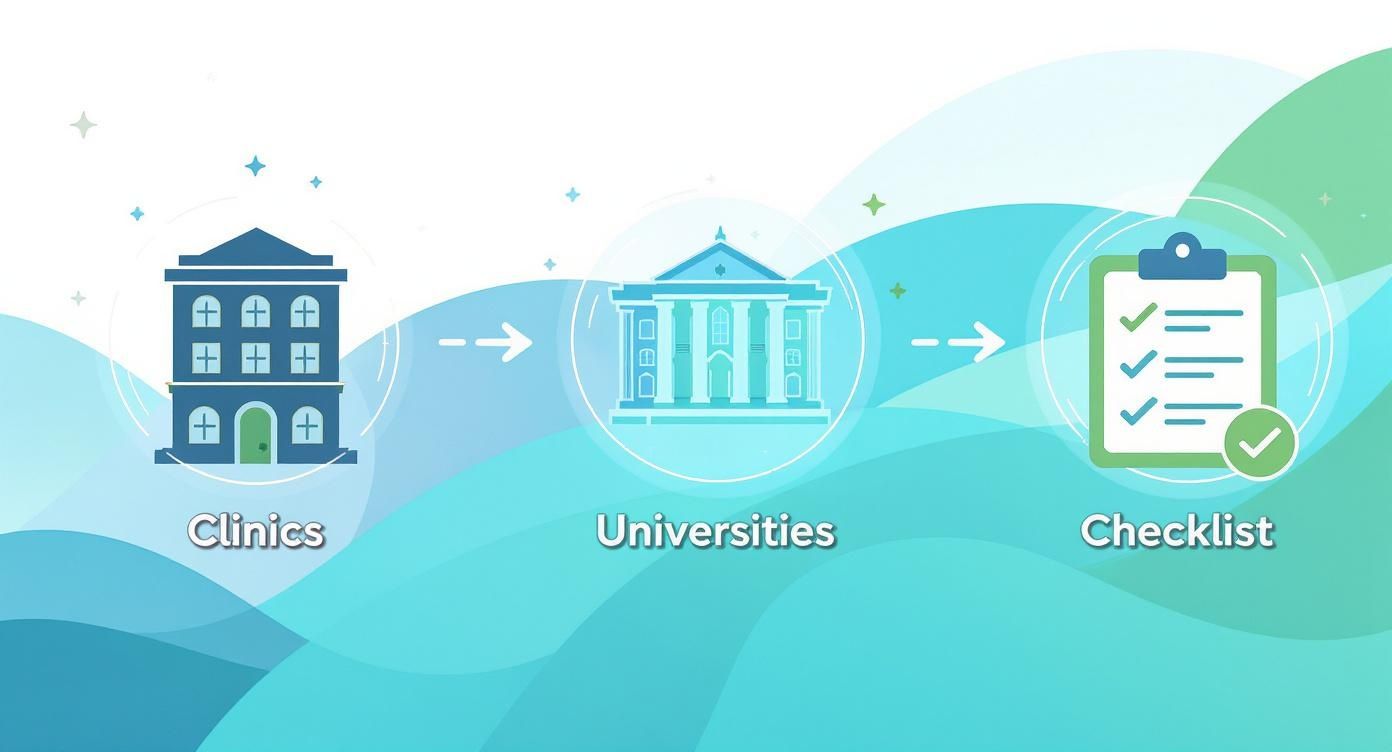
As you can see, different resources—from community clinics to specialized checklists—can work together to create a solid support system.
How to Choose the Right Digital Tool
With so many options popping up, picking the right one can feel a little overwhelming. But having a clear framework helps you cut through the noise and find a service that will genuinely support your healing journey.
When you're looking at a platform or an app, keep these key things in mind:
- Clinician Credentials: For any teletherapy platform, make sure the therapists are licensed professionals in their field (like LPC, LCSW, PhD, etc.). This info should be easy to find on their profiles.
- Privacy Policy: Your mental health data is incredibly sensitive. A trustworthy service will have a clear, easy-to-understand privacy policy that explains exactly how your information is stored and protected.
- Focus and Methods: Does the app or service actually specialize in anxiety? Does it use evidence-based methods like CBT? Taking a moment to learn more about understanding CBT for anxiety can help you spot the quality programs.
- User Reviews: Don't just look at the star rating. Read reviews from people who have similar goals to yours. Their real-world experiences can give you invaluable insight into how effective the tool actually is.
Using a digital tool isn’t a lesser form of help; it’s a modern, accessible strategy for taking control of your mental well-being. It empowers you to learn coping skills and build resilience on your own terms, proving that a path to a panic-free life is always within reach.
By carefully picking a digital resource, you’re not just finding a temporary fix. You're investing in a sustainable system for long-term healing. These tools can be a vital part of your toolkit as you learn how to get mental health help without insurance and move toward a calmer, more confident future.
The Healing Power Of Peer And Community Support

While professional therapy gives you essential tools and strategies, there’s a unique kind of strength you find when connecting with someone who truly gets it. The feeling of isolation that anxiety creates can be absolutely crushing. But hearing someone else describe your exact fears and struggles can instantly dissolve that loneliness.
This is the whole point of peer and community support. It’s a space where you don’t have to explain yourself because the people around you have already walked a similar path. Finding that kind of validation can be a massive step toward believing that a panic-free life is not just possible, but actually achievable for you, too.
Finding Your Community
Trusted national organizations are fantastic starting points for finding free, structured support groups. They offer safe, moderated environments where you can share what you're going through without fear of judgment.
Two of the most well-respected are:
- National Alliance on Mental Illness (NAMI): They offer NAMI Connection, which is a free, peer-led support group for adults with mental health conditions. You can find local chapters—both in-person and online—all over the country.
- Depression and Bipolar Support Alliance (DBSA): This group provides peer-run support groups for a range of mood disorders, including anxiety. Their focus on mutual aid and proven wellness tools creates a really empowering atmosphere.
Think of these groups not as a replacement for therapy, but as a powerful complement to it. They offer a sense of belonging that is vital for healing.
Support Groups vs. Group Therapy
It’s important to know the difference between a peer support group and group therapy, as they serve very distinct purposes.
| Feature | Peer Support Group | Group Therapy |
|---|---|---|
| Leader | Led by a trained peer with lived experience. | Facilitated by a licensed mental health professional. |
| Focus | Mutual support, shared experiences, and validation. | Therapeutic intervention, skill-building, and processing. |
| Cost | Almost always free. | Typically has a fee, though sliding-scale options exist. |
A peer group gives you community; group therapy provides clinical treatment. Both can be incredibly valuable parts of your toolkit as you figure out how to get mental health help without insurance.
Let's be real: accessing mental health care without insurance is a massive global challenge. In fact, the global median for government spending on mental health is a mere 2% of total health budgets, leaving many people to rely on public clinics and self-help groups. You can learn more about these global mental health findings from the World Health Organization. This reality makes community-based options like peer support even more critical.
Hearing someone else say, "I've been there, and I got through it," can be more powerful than any clinical advice. It transforms hope from an abstract idea into a tangible reality.
Finding the right group is about finding a place where you feel safe and understood. Don't get discouraged if the first one you try isn't a perfect fit. The goal is to find a constructive, supportive environment that empowers you on your journey. Tapping into the strength of community can provide the resilience you need to face anxiety head-on and build a calmer future.
Got Questions About Affordable Mental Health Care? Let's Clear Things Up.
Stepping into the world of mental health support without insurance can feel uncertain. It's totally normal to have questions or feel a little hesitant. Let's tackle some of the most common concerns head-on so you can move forward with confidence and hope.
Does "Affordable" Mean Lower-Quality Care?
It’s a huge myth that affordable care equals bad care. I get it—it’s easy to assume that if something is free or low-cost, it must be cutting corners. But that’s just not the case here.
Community health centers, university training programs, and sliding-scale clinics all operate under strict professional and ethical standards. Therapists must be licensed. If you’re seeing a trainee or an intern (which is common at university clinics), they are always working under the direct supervision of a seasoned, licensed professional.
Honestly, you’ll often find some of the most passionate and dedicated clinicians in these settings. They’re there because they believe in community health and making a real difference. You're not getting a "lesser" service; you're getting effective care that can truly help you heal and live panic-free.
What if I Get Turned Away?
Hearing "no" when you're already feeling vulnerable is tough. It can feel like a dead end, but I promise you, it's not. It is simply a detour, not a final destination.
If one clinic can't see you right away, don't just hang up. Ask them for a referral. They are connected to the local network and are usually happy to point you toward another organization that might have openings or be a better fit.
You can also connect with a patient advocate or your local NAMI chapter for extra guidance. More often than not, a "no" is about a full waitlist or a mismatch in the specific services they offer—it is never a reflection of whether you deserve help. Think of it as one closed door on a hallway full of others. Just keep knocking.
Your privacy is a right, not a privilege tied to how much you pay. Federal laws like HIPAA are in place to protect your health information, no matter where you get care or how you pay for it.
This means your conversations are confidential. You should feel secure knowing that what you share with a therapist stays between you and them. That security is non-negotiable, especially when you're already dealing with the stress of money worries. For more strategies on this front, check out our guide on finding financial anxiety relief.
At The Anxiety Checklist, we believe everyone deserves a path to a life without fear. The tools and strategies in our system are designed to help you build that path, one step at a time. Take control of your journey today at https://anxietychecklist.com.