
Knowing how to cope with anxiety is all about having the right tool for the right moment. When you're in the thick of it, you need to calm your nervous system, fast. This is where techniques like controlled breathing and grounding exercises come in. They’re your emergency brake—pulling you out of a panic spiral and back into the present moment. But more than that, every time you use one, you're sending a powerful message to yourself: "I can handle this." This is the first step toward building a life where you are in control.
Your First Steps to Immediate Relief
When anxiety surges, it can feel like a tidal wave. In those moments, you don't need complex theories; you need a lifeline. The first step to believing you can heal from anxiety and live panic-free is proving to yourself that you can get through its most intense moments. Every time you do, you're building a foundation of confidence for a calmer life.
Living with chronic worry is a reality for millions. Anxiety disorders are actually the most common mental health condition on the planet, affecting nearly 359 million people as of 2021. But here's the hopeful truth: these conditions are highly treatable, and simple, practical techniques are incredibly effective. A 2022 study even found that just 10 minutes of daily mindfulness can slash anxiety by 30% in only eight weeks. Healing is not just possible; it's probable.

Reclaim Your Calm With the 4-7-8 Breathing Technique
One of the most powerful things you can do is consciously change your breathing. It's a direct line to your parasympathetic nervous system—your body's built-in "rest and digest" mode. The 4-7-8 breathing technique is a deceptively simple tool for activating it and proving you have control.
Here's the breakdown:
- Exhale completely through your mouth with a whooshing sound.
- Close your mouth and inhale quietly through your nose for a count of four.
- Hold your breath for a count of seven.
- Exhale completely through your mouth (whoosh!) for a count of eight.
Do this cycle three or four times. The deliberate pace forces your heart rate to slow down and tells your body the danger has passed. If you want to explore this further, we have a complete guide on breathing exercises for anxiety you can check out.
Anchor Yourself With the 5-4-3-2-1 Grounding Exercise
When your mind is racing, grounding exercises pull you out of the storm of "what ifs" and back into the physical world. The 5-4-3-2-1 method is fantastic because it engages all your senses, making it almost impossible for your brain to stay fixated on worry.
This isn't about ignoring your anxiety. It’s about shifting your attention to something more tangible and telling your brain, "I am safe, right here, right now." This simple act of redirecting your focus is a skill that leads to lasting peace.
Look around and silently name:
- 5 things you can see: The texture of your desk, a light switch on the wall, the color of your socks.
- 4 things you can feel: Your feet flat on the floor, the fabric of your chair, the cool surface of a glass.
- 3 things you can hear: The hum of the refrigerator, a bird outside, your own steady breath.
- 2 things you can smell: The faint scent of coffee, a nearby plant, or just the air in the room.
- 1 thing you can taste: Take a sip of water or just notice the lingering taste in your mouth.
Mastering these two techniques gives you a powerful, immediate answer when you feel overwhelmed. It builds the confidence that you are in control, even when anxiety tries to tell you otherwise. This is the foundation of living a panic-free life.
For a quick overview of these in-the-moment strategies, this table breaks down how and when to use them.
Immediate Anxiety Relief Techniques
| Technique | How It Works | When to Use |
|---|---|---|
| 4-7-8 Breathing | Activates the parasympathetic nervous system to slow heart rate and promote calm. | At the first sign of rising panic, during a full-blown panic attack, or before a stressful event. |
| 5-4-3-2-1 Grounding | Engages all five senses to pull focus away from anxious thoughts and into the present moment. | When you feel detached or your mind is racing with "what if" scenarios. |
| Controlled Inhale/Exhale | Simply slowing and deepening your breath signals safety to your brain. | Anytime you feel a baseline of stress or nervousness creeping in. |
| Sensory Focus | Concentrating on a single sensory input (e.g., the feeling of a smooth stone, the scent of an essential oil). | During moments of sensory overload or when you need a quick, discreet anchor. |
Having these tools ready means you're prepared to face anxiety head-on, giving you a sense of agency and hope right when you need it most.
Learning to manage anxiety in the moment is a critical skill, but the real, hopeful goal is to build a life where anxiety has less power over you in the first place. This isn't just about reacting—it's about proactively creating a foundation of resilience that can stand up to stress.
Making small, intentional tweaks to your daily routines can dramatically lower your baseline anxiety levels. It’s about giving yourself proof that a life with less panic isn't just a nice idea, but something you can actually build, one choice at a time. It all starts with the powerful tools you already have: exercise, nutrition, and sleep.

Move Your Body to Calm Your Mind
Exercise is hands-down one of the most effective non-prescription tools we have for managing anxiety. When you get moving, your brain releases endorphins and serotonin—the chemicals that boost your mood and act as natural painkillers. It’s like hitting a reset button for a mind stuck on a worry loop.
You don't need to become a marathon runner overnight. The real magic is in consistency. A simple 20-minute brisk walk every day is often enough to significantly disrupt the cycle of anxious thoughts and prove that a better-feeling day is just one walk away.
The science here is incredibly encouraging. Studies have shown that regular physical activity can slash anxiety symptoms by 25-30% across trials involving more than 10,000 participants. One major 2020 meta-analysis found that just 150 minutes of moderate aerobic exercise a week—think brisk walking or cycling—cut the severity of Generalized Anxiety Disorder for 75% of people in only 12 weeks.
Fuel Your Brain for Stability
The connection between your gut and your brain is not just some wellness trend; it's a hard fact. What you eat directly impacts your mood, your energy, and your ability to cope with life's curveballs. Some foods stabilize your blood sugar and support healthy brain chemistry, while others can be hidden anxiety triggers.
To build a more resilient mind, start thinking about your diet strategically:
- Complex Carbohydrates: Foods like oatmeal, quinoa, and whole-grain bread are fantastic for regulating serotonin levels, which helps promote a feeling of calm.
- Omega-3 Fatty Acids: You'll find these in fatty fish like salmon, plus walnuts and flaxseeds. They're linked to reduced inflammation and lower levels of anxiety.
- Magnesium-Rich Foods: Leafy greens (like spinach), almonds, and avocados are packed with magnesium, a mineral known for its calming effect on the nervous system.
At the same time, pay attention to the usual suspects. Highly processed foods, loads of sugar, and too much caffeine can cause energy spikes and crashes that feel almost identical to the physical symptoms of anxiety. You can dive deeper into making impactful lifestyle and diet changes for anxiety management in our detailed guide.
The Non-Negotiable Role of Sleep
Think of sleep as your brain's nightly repair crew. When you don't get enough of it, emotional regulation is one of the first systems to go offline. A sleep-deprived brain is wired to perceive neutral situations as threatening, which is why one bad night can leave you feeling on edge all the next day.
Improving your sleep hygiene isn't a luxury; it's a foundational pillar of mental wellness. Prioritizing rest is one of the most profound acts of self-care you can practice to handle anxiety and build a more peaceful life.
Here are a few practical places to start:
- Create a Wind-Down Routine: An hour before bed, kill the screens. Dim the lights. Do something that signals to your body it's time to chill, like reading a book or taking a warm bath.
- Stick to a Schedule: Try to go to bed and wake up around the same time every single day—yes, even on weekends. This helps regulate your body's internal clock, or circadian rhythm.
- Optimize Your Environment: Your bedroom should be a cave: cool, dark, and quiet. This is a powerful signal to your brain that it's time for deep, restorative sleep.
Building a lifestyle that resists anxiety isn't just about diet and exercise. It's also about building mental fortitude. By combining these physical habits with skills like mastering mental toughness and resilience, you create a powerful, holistic defense system against anxiety.
Changing Your Relationship with Anxious Thoughts
If you've ever felt like your own mind is your worst enemy, you get it. The engine of anxiety often runs on a relentless loop of negative thoughts, creating a powerful story that you're in danger even when you're perfectly safe.
Here's the thing: learning to handle anxiety isn't just about managing the physical symptoms. It’s about fundamentally changing your relationship with the thoughts that fuel them. And this is where you can find incredible hope—you don't have to believe everything you think.
The good news? Your brain is adaptable. By learning to observe, question, and reframe your anxious thoughts, you can dial down their power and carve out a more peaceful inner world. This isn't about forcing yourself to "be positive." It’s about becoming a detective of your own mind, separating fact from fear, and building a more compassionate inner dialogue. This process is how true healing happens.

Identifying Your Cognitive Distortions
Before you can challenge anxious thoughts, you have to be able to spot them in the wild. Cognitive distortions are irrational, exaggerated thought patterns that anxiety uses to maintain its grip.
Think of them like trick mirrors in your mind, twisting reality into something much more frightening than it actually is.
For example, have you ever made a small mistake at work and immediately thought, "I'm going to get fired"? That’s a classic cognitive distortion called catastrophizing—jumping straight to the absolute worst-case scenario.
Or maybe you got tons of praise on a project but couldn't stop fixating on one tiny piece of criticism. That’s mental filtering, where you zero in on the negative and ignore all the positives. These thought patterns are common, but they are not accurate reflections of reality. Becoming aware of them is the first step toward freedom.
Common Anxiety-Fueled Thought Patterns
Here are a few more cognitive distortions to watch out for. See if any of these sound familiar:
- All-or-Nothing Thinking: You see things in black-and-white. If your performance falls short of perfect, you see yourself as a total failure. There’s no room for nuance or a middle ground.
- Overgeneralization: You take a single negative event and blow it up into a never-ending pattern of defeat. One bad date turns into, "I'll be alone forever."
- "Should" Statements: You have a rigid set of internal rules about how you and others "should" behave. When reality doesn't line up, you're left feeling guilty, angry, or frustrated.
Just recognizing these patterns is a huge win. It creates distance between you and your thoughts, helping you see them as mental habits, not undeniable truths. These concepts are foundational to many therapeutic approaches, and you can learn more by understanding CBT for anxiety and how it helps restructure these very patterns.
Learning to Question Your Thoughts
Once you’ve spotted a distorted thought, the next move is to gently question it. This isn't an aggressive cross-examination; it's more like a curious and compassionate inquiry. Your goal is to find a more balanced, realistic perspective.
Imagine your anxious thought is on trial. As the detective, your job is to gather the evidence.
Ask yourself these questions:
- What's the evidence this thought is true? And what's the evidence it's not true?
- Am I confusing a feeling with a fact? Just because I feel like a failure doesn't mean I am one.
- What's a more balanced or compassionate way to see this? What would I say to a friend in this exact situation?
- Even if the worst-case scenario happens, could I cope? We often underestimate our own resilience.
The goal is not to eliminate anxious thoughts entirely—that's impossible. The goal is to see them for what they are—just thoughts—and choose not to let them run the show. This is how you reclaim your power.
Let’s put this into practice. Suppose your anxious thought is: "I'm so awkward; everyone at this party thinks I'm weird."
- Evidence against: "Sarah came over to talk to me. John smiled when I walked in. I had a nice three-minute chat with someone by the snacks."
- More balanced thought: "I feel a little awkward because I don’t know many people here, but some people have been friendly. It’s okay to feel this way in a new situation."
This simple shift changes everything. You aren't forcing positivity; you're anchoring yourself in reality. Over time, this practice actually rewires your brain, making balanced thinking your new default. This is how you reclaim your mind from anxiety, one thought at a time, and build a truly panic-free life.
Finding Strength in Your Support System
One of the biggest lies anxiety tells you is that you're completely alone. It's an expert at isolation, making the world feel like a threat and your own mind like an enemy. It whispers that no one could possibly understand what you're going through.
But here’s the truth: connection is one of the most powerful remedies for anxiety. Healing doesn't happen in a vacuum. It happens when we let people in.
Building a support system is a radical act of self-care and a critical part of living a panic-free life. It’s about giving yourself permission to be seen in your struggle and letting others offer the strength you might not feel on your own. This isn't weakness—it's your most strategic move toward getting well.
Opening Up to Friends and Family
Taking that first step to tell someone you're struggling can feel terrifying. What if they judge you? What if they don't get it? Or worse, what if you become a burden? These fears are completely normal, but they're often just another trick anxiety uses to keep you locked away.
The key is to start small and be direct. You don't need some big, perfectly rehearsed speech.
Sometimes, the simplest approach cuts through the noise. You could try saying something like:
- "I've been dealing with a lot of anxiety lately, and I just wanted you to know. I'm not looking for you to fix it, but knowing you're in my corner would mean a lot."
- "Could we talk for a bit? I’ve been having a tough time with panic, and it would help just to have someone listen."
Most people who care about you want to help; they just have no idea how. By giving them a clear, simple way to support you—like just listening—you open the door to real connection and take a huge weight off your shoulders.
The Power of Peer Support
Talking to loved ones is vital, but there’s a unique kind of magic that happens when you connect with people who truly get it. This is where peer support groups, whether online or in person, come in. They provide a space where you don't have to explain the unexplainable.
In these groups, you’ll find people who know the frustration of a racing heart that comes out of nowhere, the bone-deep exhaustion from constant worry, and the quiet victory of just making it through the day. That shared experience creates an instant bond and shatters the wall of isolation. Hearing someone else describe your exact feelings can be one of the most healing moments you'll have.
Believing you can heal becomes so much easier when you're surrounded by people who have done it, or who are walking the path right alongside you. Their progress becomes tangible proof of what's possible for you, too.
When to Seek Professional Help
Friends, family, and peers are your emotional bedrock. But a mental health professional offers something different: specialized tools, proven strategies, and a structured roadmap to healing. Making the decision to see a therapist isn't giving up—it's gearing up. It's a powerful and hopeful step towards taking your life back.
It might be time to bring in a professional if:
- Your anxiety is consistently getting in the way of your daily life—your job, your relationships, or just getting out of bed.
- The coping strategies you've tried on your own just aren't cutting it anymore.
- You're having frequent or intense panic attacks.
- You feel stuck, hopeless, or believe you can't get better on your own.
Finding the right therapist is a bit like dating—it’s all about the right fit. Therapists use different approaches, like Cognitive Behavioral Therapy (CBT) or Acceptance and Commitment Therapy (ACT). It's perfectly okay to "shop around" and have a few initial consultations to find someone you connect with. If you're not sure where to start, our guide on how to get help for anxiety now offers practical steps for finding the right support.
Think of your support system as your personal team. By combining the love of friends and family, the understanding of peers, and the expert guidance of a professional, you create a powerful safety net. This makes healing not just possible, but probable. You don't have to do this alone.
How to Track Your Progress and Stay Hopeful
Let's be honest: recovery from anxiety isn't a straight line. Some days you'll feel like you're on top of the world, and others might feel like you’ve taken a huge step backward. This up-and-down is completely normal.
But on those tough days, it's easy to forget how far you've come. That’s why tracking your progress is more than just a task—it’s your secret weapon for staying hopeful.
When you have tangible proof of your growth, you build a powerful case against that anxious voice whispering you're not getting better. This record becomes your personal evidence of resilience. It reinforces the truth that a calmer future isn’t just possible; it’s something you’re actively building, day by day.
Uncover Your Patterns With an Anxiety Journal
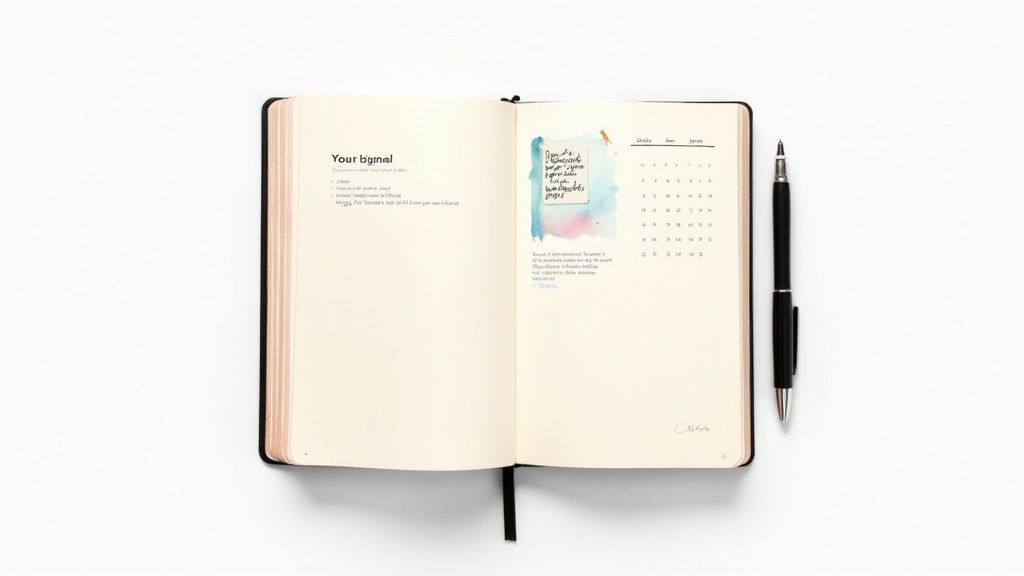
One of the most powerful things you can do is start an anxiety journal. This isn't about writing pages of deep thoughts; think of it more like being a detective in your own life.
A simple, structured journal helps you connect the dots. You'll start to see what triggers your anxiety, which coping strategies actually work for you, and the subtle patterns you’d otherwise miss. All you need is a notebook or even a notes app on your phone.
Try this simple format at the end of each day:
- Anxiety Level: Rate your overall anxiety on a scale of 1-10.
- Key Moments: Note any specific times your anxiety spiked. What were you doing? Who was around?
- Strategies Used: Did you try a breathing exercise? Go for a walk? Challenge a negative thought? Jot down what you did to cope.
- Small Wins: Did you handle a stressful call better than usual? Make it through a crowded grocery store? Acknowledge every victory, no matter how small.
Over time, you’ll have invaluable data. You might notice your anxiety spikes after that second cup of coffee or that a 10-minute walk in the morning really does set a calmer tone for the rest of your day. This insight is pure power.
Build Consistency With a Habit Checklist
Trying to add new habits like meditation, exercise, or journaling all at once can feel like another thing to be anxious about. A simple checklist breaks it all down into small, manageable actions.
Instead of a vague goal like "be less anxious," you get a concrete game plan.
Recovery is built on small, consistent actions, not grand, overwhelming gestures. A checklist turns your intentions into a simple, repeatable game plan, making progress feel achievable every single day.
Your checklist could look something like this:
- [ ] 10 minutes of morning mindfulness
- [ ] 20-minute walk at lunchtime
- [ ] Wrote in my anxiety journal
- [ ] Practiced 4-7-8 breathing
- [ ] Went to bed by 10 PM
There’s a unique satisfaction in ticking off those boxes. It creates positive momentum and proves you’re taking active steps to reclaim your well-being. On days when you feel discouraged, those completed checklists are a powerful visual reminder of your commitment and effort.
To help you get started, here’s a simple template you can adapt. Just jot it down in a notebook or create a simple spreadsheet to track your progress week by week.
Weekly Anxiety & Habit Tracker
| Day | Anxiety Level (1-10) | Potential Triggers | Coping Strategy Used | Notes/Wins |
|---|---|---|---|---|
| Mon | ||||
| Tue | ||||
| Wed | ||||
| Thu | ||||
| Fri | ||||
| Sat | ||||
| Sun |
Using a tracker like this gives you a bird's-eye view of your week. It helps you see the connection between your actions and your feelings, empowering you to make small adjustments that lead to big changes.
This journey is deeply personal, but it's important to remember you're not alone. If you're interested in the broader context, you can find detailed anxiety statistics that show just how common these challenges are. Seeing the numbers can help normalize your feelings and reinforce the fact that millions are on a similar path. Every small step you track is a step toward a life defined not by fear, but by freedom.
Common Questions About Handling Anxiety
Starting the journey to heal from anxiety often brings a mix of hope and a whole lot of questions. You’re learning new tools and building resilience, which is fantastic, but it's totally normal to wonder what the road ahead actually looks like.
Knowing what to expect can strengthen your resolve. It reinforces the belief that a life where panic isn't in the driver's seat isn't just a dream—it's an achievable reality.
Let's tackle some of the most common questions that pop up when you commit to figuring this all out. My goal here is to give you clear, straight-up answers that offer both clarity and confidence.
Can I Ever Be Completely Free From Anxiety?
This is usually the first and biggest question on everyone's mind. And the honest answer? A life completely free from the feeling of anxiety isn't possible, and frankly, it wouldn't be a good thing. Anxiety is a normal human emotion. Think of it as your brain's alarm system, designed to get your attention when there’s a potential threat.
But here’s the crucial part: you can absolutely be free from disordered anxiety.
The goal isn't to silence the feeling entirely but to fundamentally change your relationship with it. It’s about getting to a place where anxiety no longer dictates your choices, shrinks your world, or sends you spiraling into panic. Healing means anxiety becomes a signal you can manage, not an overwhelming state of being you're trapped in.
The ultimate freedom isn't the absence of anxiety. It's knowing, deep in your bones, that you have the tools to handle it whenever it shows up. You can live a full, joyful life where you are in control.
How Long Will It Take for These Strategies to Start Working?
Some strategies give you a win almost immediately. Things like 4-7-8 breathing or the 5-4-3-2-1 grounding technique are built for in-the-moment relief. They can calm a racing heart and a spinning mind within minutes, which is incredibly empowering. It's quick, tangible proof that you have real agency over how your body feels.
For the deeper, more lasting changes—like rewiring thought patterns with CBT or lowering your baseline stress with lifestyle shifts—consistency is everything. You'll likely notice small but meaningful shifts within a few weeks of dedicated practice.
But true, automatic change is a longer game, often taking several months. Remember, you're literally rewiring your brain's pathways. Every time you choose a new coping skill over an old anxious habit, you're carving out a new, healthier groove. Be patient and kind to yourself through the process. Each small step is a huge victory.
When Is It Time to Consider Medication?
Thinking about medication is a deeply personal choice, and it's one best made with a qualified healthcare professional, like a psychiatrist or your primary care doctor. For many people, the combination of therapy, lifestyle changes, and cognitive tools is more than enough to get them where they want to be.
However, medication can be an incredibly valuable tool in your recovery toolkit. It's often worth considering when:
- Anxiety is so severe that it's preventing you from doing daily activities or even trying the therapeutic strategies that could help.
- You've been putting in the work consistently with a therapist but are still struggling to function.
- You're dealing with frequent, debilitating panic attacks that feel completely unmanageable.
Try to think of medication not as a "fix," but as a support system. It can lower the volume on your symptoms enough for you to effectively do the therapeutic work of healing. It can provide the stability you need to build the skills that will serve you for the rest of your life.
At The Anxiety Checklist, we believe everyone deserves to live a fearless life. Our comprehensive system, combining a detailed eBook with a 93-point interactive checklist, provides a clear and actionable path to managing anxiety and panic attacks. Take the first step toward lasting freedom today by exploring our tools at https://anxietychecklist.com.