
That terrifying moment when your heart starts hammering against your ribs, the room spins, and you can’t catch your breath—it’s natural to think the worst. Am I having a heart attack? Is this something serious?
Let’s be clear: that fear is completely valid. The physical alarms anxiety sets off feel incredibly real and dangerous, often mimicking the symptoms of serious medical conditions.
Finding Hope When Asking: Is It Anxiety or Something Else?

This guide isn't about adding another layer of worry. It's about giving you clarity, control, and most importantly, hope. By learning how your body's internal alarm system works, you can start to understand its signals with confidence instead of being swept away by panic, paving the way for a life where you feel calm and in control.
It’s a huge problem. In 2021, an estimated 359 million people worldwide had an anxiety disorder, making it the most common mental health condition on the planet. But here's a crucial point: not everyone with anxiety-like symptoms has a primary anxiety disorder. Those feelings can be triggered by underlying medical issues, medications, or other psychiatric conditions that need a different kind of attention.
A Path to Empowerment and Clarity
This guide is your roadmap out of confusion and toward a panic-free future. We’re going to show you a clear path forward—one that helps you understand what you’re feeling, find the right support, and start reclaiming your life from the grip of uncertainty. You are not alone in this, and healing is entirely possible.
Figuring out what's really going on is the first, most critical step. For instance, it's vital to understand the difference between anxiety and OCD, since both can feel similar but require very different therapeutic approaches.
The most powerful step you can take is moving from a state of fearful questioning to one of informed action. This guide provides the tools to help you do just that, transforming uncertainty into the confidence you need to heal.
This isn’t just about spotting symptoms. It’s about arming yourself with the knowledge to have meaningful conversations with doctors and to make decisions about your health that you can feel good about. A structured approach can make all the difference; starting with a comprehensive anxiety test can give you a solid baseline for what you're experiencing.
Here’s what your path forward looks like:
- Understanding Your Body: Learning why anxiety packs such a powerful physical punch.
- Identifying Red Flags: Knowing when your symptoms are pointing toward something that needs a closer medical look.
- Seeking Support: Feeling empowered to get the right kind of help without hesitation.
- Embracing Healing: Discovering that a life free from constant panic is not just a dream—it’s an achievable goal.
Why Anxiety Feels So Physical
Have you ever wondered how a simple thought—a distant worry—can kick off such an intense, overwhelming storm in your body? You're not alone. The connection between mind and body is incredibly powerful, and really getting it is the first step toward reclaiming your sense of control and starting your healing journey.
Think of your body’s stress response as an ancient, highly sophisticated fire alarm. Its only job is to protect you. When your brain senses a threat, whether it’s a real physical danger or just a stressful thought about an upcoming presentation, it yanks that alarm.
Here’s the thing: this alarm system can't tell the difference between a tiger in the bushes and the "tiger" of a panic-inducing thought. The response is identical. It floods your body with adrenaline and cortisol, the powerful stress hormones that fuel the fight-or-flight response. This is a brilliant survival mechanism designed to get you ready to either confront a threat or run from it. If you want to dive deeper, our fight or flight response guide breaks down exactly how this reaction works.
The Science Behind the Sensations
This hormonal surge is precisely why anxiety feels so intensely physical. Your body isn't "making it up" or overreacting; it’s running a primal survival program with stunning efficiency. Every single physical symptom you feel is a direct result of your body gearing up for battle.
Let's break down some of the most common—and frankly, terrifying—physical symptoms and see what’s really going on behind the scenes.
-
Racing Heart and Chest Pain: Adrenaline is telling your heart to pump faster, sending more oxygen-rich blood to your big muscles to prep them for action. This can feel like your heart is pounding out of your chest. At the same time, the muscles in your chest wall can tense up, causing a sharp or aching pain that is so often mistaken for a heart attack.
-
Shortness of Breath and Dizziness: Your breathing speeds up to pull in more oxygen. Sometimes, this tips over into hyperventilation (breathing too fast), which messes with the carbon dioxide balance in your blood. This imbalance is what triggers dizziness, lightheadedness, and even that bizarre feeling of being disconnected from yourself.
-
Tingling and Numbness: That same hyperventilation constricts blood vessels, especially in your hands, feet, and face. This reduces blood flow and leads to those terrifying sensations of tingling or numbness that make people worry they’re having a stroke.
-
Trembling and Shaking: Your muscles are literally buzzing with energy, primed for explosive action. With all that adrenaline coursing through you, your limbs might start to tremble and shake as they try to burn off the excess fuel.
-
Digestive Upset: During fight-or-flight, your body isn't worried about digesting lunch. It diverts blood away from non-essential systems like digestion and sends it to your arms and legs. This is what causes that nausea, stomach cramping, or the classic "butterflies" in your stomach.
Reframing the Alarm System
Understanding this chain of events is incredibly empowering. When you feel these sensations flare up, you can start to see them not as proof of imminent doom, but as evidence that your body’s protective system is working exactly as designed. The problem isn't that the alarm is broken; it's just become overly sensitive, going off when there's no real fire.
The physical symptoms of anxiety are not the danger itself; they are the shadow of a perceived danger. By learning to recognize the shadow, you can stop running from it and start to understand what is casting it.
This knowledge gives you a whole new lens. Instead of panicking and asking, "Is it anxiety or something else?" you can start to recognize the familiar pattern. This shift in perspective is the foundation of healing. It allows you to respond with understanding instead of more fear, paving the way for a life where you feel in control of your body once again.
When It’s Time to Ask, “Is It Anxiety or Something Else?”
The mind-body connection with anxiety is incredibly powerful. But responsible self-care means knowing when to pause and check if your symptoms might be pointing to something else. This isn’t about fueling more fear. Think of it as becoming a calm, curious detective for your own body—empowering yourself to rule out other possibilities and find true peace of mind.
This simple shift in mindset turns you from a passive worrier into an active partner in your own health. The goal is to gather clear observations so you can walk into a doctor's office and have a productive, confident conversation that leads to answers you can trust. It’s a hopeful step, one that clears the path so you can focus on the right solution for a panic-free life.
The chart below shows the typical journey of physical anxiety, from a trigger thought all the way through to the physical symptoms that follow.
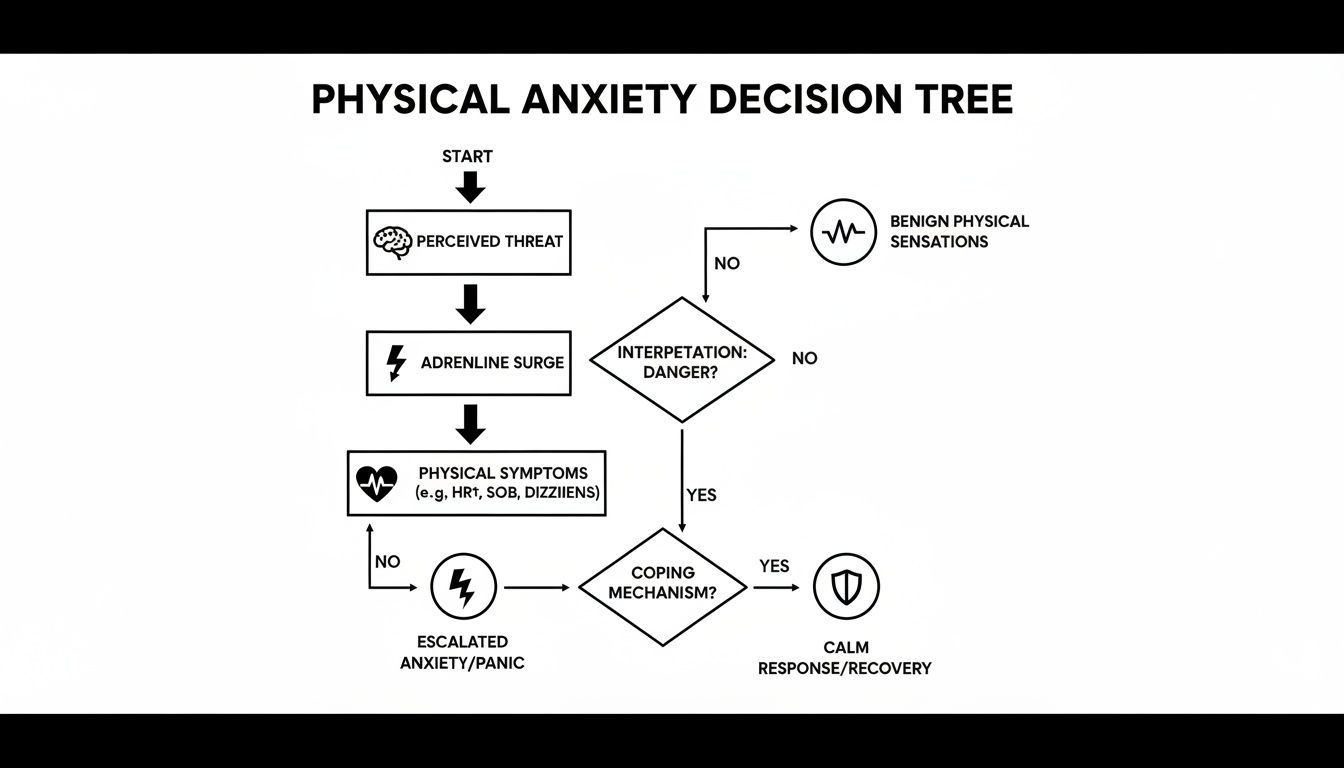
This flowchart makes it clear how a single thought can set off a real, physical cascade of events, proving that anxiety symptoms are never "just in your head."
Becoming Your Own Symptom Detective
To figure out if it's anxiety or something else, context is everything. Think about the patterns. When do your symptoms show up? Keeping a simple log can reveal clues that are incredibly helpful for both you and your doctor.
Start by asking yourself a few key questions:
- What’s the trigger? Does your heart pound only when you walk up a flight of stairs, or does it start racing after a stressful thought while you're sitting in traffic? Symptoms tied directly to physical effort might be worth a closer look.
- When did they start? Did your symptoms pop up out of the blue after starting a new medication or supplement? Sometimes, what feels like anxiety is actually a side effect.
- What else is going on? Are the symptoms showing up with other changes, like a persistent low-grade fever, night sweats, or unexplained weight loss? These are critical details to share with a professional.
Answering these questions gives you solid data. You move from a vague, overwhelming fear of the unknown into a place of clarity and control.
Key Red Flags to Discuss with a Doctor
Certain signs are less typical of a primary anxiety disorder and really should prompt a conversation with your doctor. Things like abnormal vital signs, a sudden onset of symptoms after starting medications like stimulants or corticosteroids, or a first-ever episode of severe anxiety later in life are all important signals. These situations often call for targeted testing to make sure nothing is being missed.
For example, physical symptoms that feel just like anxiety—a racing heart, shortness of breath, or constant agitation—can sometimes point to an underlying issue like a thyroid imbalance. Getting a better handle on understanding your thyroid health can be a crucial piece of the puzzle.
Ruling out other conditions isn’t a sign of failure in managing anxiety. It’s an act of profound self-care and a foundational step toward true, lasting healing.
Getting a medical check-up gives you a solid baseline. Once potential physical causes are off the table, you can dive into anxiety management strategies with total confidence, knowing you’re on the right track. This process silences the nagging "what if" questions that fuel the cycle of worry. For instance, understanding the nuances of a panic attack becomes much simpler when you're certain it isn't another medical event.
This certainty is the bedrock of recovery. It’s what allows you to finally build a future free from panic.
Navigating a Doctor's Visit Without Fear
For a lot of us, just the idea of a doctor's visit is enough to send anxiety through the roof. It feels like a high-stakes exam where you’re desperate for answers but terrified of what you might hear. That fear can be so paralyzing that it stops you from getting the one thing that will actually bring relief: clarity.
But what if you could look at it differently? Instead of a terrifying ordeal, think of it as an empowering first step—a collaboration. You're not there to hunt for bad news. You're there to calmly and systematically rule things out until you get to the truth. This visit is your chance to team up with a professional who can help you solve the puzzle of "is it anxiety or something else?"
Understanding the Doctor's Process
When you walk into that office, your doctor begins a logical process called a differential diagnosis. Think of them as a detective methodically following a set of clues. They aren't just guessing; they're using a structured approach to narrow down the potential causes of your symptoms, starting with the most common and working their way down the list.
The whole point of this process is to be thorough, which should actually feel reassuring. They'll listen to your story, ask very specific questions, and maybe suggest a few routine tests. This isn't because they suspect something awful; it's because they need to build a complete picture of your health to see what's really going on.
For instance, some common first steps might include:
- Basic Blood Work: This can flag things like thyroid hormone imbalances, vitamin deficiencies (like B12 or Vitamin D), or anemia—all of which can churn out symptoms that look and feel a lot like anxiety.
- An Electrocardiogram (EKG): This is a quick, painless test that checks your heart's electrical activity. It’s a super effective way to rule out many cardiac issues and can give you powerful peace of mind that your heart is structurally doing just fine.
Taking Charge of Your Appointment
Remember, this visit is a two-way street. You aren't just a patient passively receiving information; you're an active participant in your own care. To make sure you feel heard and involved, go in with a few key questions prepared. This single move transforms the dynamic from a scary appointment into a partnership focused on your well-being.
The goal of a doctor's visit is not to receive a verdict, but to start a dialogue. By arriving with information and questions, you turn a moment of fear into an act of empowerment and the first step toward a panic-free life.
Taking a proactive role is especially important when you consider how often anxiety goes untreated. System-level figures show that only around 43% of U.S. adults with generalized anxiety disorder get any kind of treatment. That means a huge number of people are struggling without clear answers, increasing the odds that other medical causes get missed. You can dig deeper into these anxiety statistics and treatment gaps to see why speaking up for yourself is so critical.
Try asking questions like these:
- Based on my symptoms, what other possibilities are on your radar besides anxiety?
- What specific tests would you recommend to rule those out, and why are you choosing them?
- Is it possible any of my current medications or supplements could be causing these feelings?
- What are the next steps if all the tests come back normal?
When you ask these questions, you gain a sense of control over the process and build a stronger, more trusting relationship with your doctor. This initial evaluation is the foundation. Once you’ve confidently ruled out other medical causes, you can zero in on anxiety-specific strategies with total certainty. That’s when tools like a GAD-7 anxiety screening become even more powerful, helping you and your provider measure symptoms and track your progress toward feeling better.
Your Path Forward to a Panic-Free Life
Once you have some clarity—once you’ve thoughtfully considered and ruled out other medical possibilities—your healing can really begin. This moment is huge. The constant, draining question of "is it anxiety or something else?" finally makes way for a much more empowering one: "What's next on my path to feeling better?"
That shift is everything. It moves you out of a state of passive fear and into a position of active recovery. A calm, panic-free life isn't just a fantasy; it's a real and achievable goal, built one step at a time with the right tools and a commitment to yourself.
Embracing Proven Strategies for Lasting Relief
Learning to manage anxiety is a skill, a lot like learning an instrument or a new language. It takes practice, patience, and good instruction, but you can absolutely make progress. Decades of research have pointed to a few therapeutic approaches that are incredibly effective at breaking the cycle of panic and worry.
One of the most powerful and well-studied methods is Cognitive Behavioral Therapy (CBT). At its core, CBT works on a simple principle: our thoughts, feelings, and behaviors are all tangled up together. By learning to spot and challenge the distorted, fear-based thoughts that set off your anxiety, you can fundamentally change how you react, both emotionally and physically.
Think of it this way: an anxious thought is like a faulty smoke alarm that keeps blaring. CBT doesn't just teach you to ignore the noise. It shows you how to check the wiring, realize it’s a false alarm, and calmly reset the system. You learn to reframe catastrophic thoughts—like "My racing heart means I'm in danger"—into something more realistic, like, "My heart is racing because of adrenaline, and I know this feeling will pass."
Grounding Yourself in the Present Moment
Another cornerstone of anxiety recovery is mindfulness. When you're anxious, your mind is usually jumping ahead to future "what ifs" or getting stuck replaying the past. Mindfulness is the simple, gentle practice of pulling your attention back to right here, right now, without judgment.
This doesn't have to be complicated. It can be as simple as pausing to focus on your breath for sixty seconds. Or just paying close attention to the feeling of warm water on your hands while you do the dishes. These small acts of grounding interrupt the runaway train of anxious thinking.
A panic-free life isn't about never feeling anxiety again. It's about having the confidence and skills to meet those feelings without being overwhelmed, knowing that you are in control and the wave of panic will pass.
By practicing these techniques consistently, you're actually building new neural pathways in your brain. You are, quite literally, retraining your mind to default to calm instead of alarm. This journey is a process, and you can learn more about the specific anxiety recovery steps that guide you from understanding to lasting relief.
Your First Steps Toward Feeling More in Control
You can start making small, powerful changes today that build a strong foundation for recovery. These simple adjustments help regulate your nervous system and make you more resilient to stress.
Try incorporating these practices into your daily life:
- Prioritize Sleep: Aim for 7-9 hours of consistent, quality sleep. A well-rested brain is far less likely to get stuck in anxious thought loops.
- Move Your Body: Regular, moderate exercise is one of the best natural anxiety relievers out there. Even a brisk 20-minute walk can release endorphins and dial down stress hormones.
- Limit Stimulants: Be mindful of how much caffeine and alcohol you're consuming. They might offer a temporary lift or release, but they often mess with sleep and can ramp up feelings of anxiety in the long run.
These actions empower you to take an active role in your own healing. Every positive choice is a step away from fear and a step toward the peaceful, fulfilling life you deserve.
A Few Common Questions
When you're trying to figure out what's going on with your body and mind, a lot of questions can come up. Let's tackle some of the most common ones that people have when they're stuck wondering, "is it anxiety or something else?" The goal here is to give you clear, straightforward answers that cut through the confusion.
Can Anxiety Cause Real Physical Pain?
Yes, absolutely. One of the biggest myths about anxiety is that it's "all in your head." The truth is, your emotional world and your physical body are deeply intertwined.
When your brain perceives a threat—real or imagined—it triggers the fight-or-flight response. This isn't just a feeling; it's a powerful physiological event that floods your body with stress hormones like adrenaline and cortisol. These hormones are designed to prepare you for action, and they cause very real physical changes.
Your muscles tense up, ready for a fight that never comes. When this happens day after day, that chronic tension leads to genuine physical pain.
This is why anxiety so often shows up as:
- Tension Headaches: A tight, persistent band of pain around your head, often stemming from tension in your neck and shoulders.
- Chest Tightness: The muscles in your chest can clench up so tightly that it feels like a sharp, stabbing pain, easily mistaken for a heart issue.
- Stomach Cramps: Stress hormones pull blood away from your digestive system, leading to cramps, nausea, and that familiar "butterflies in your stomach" feeling, only much worse.
- Widespread Muscle Aches: Chronic tension can leave you feeling sore and achy all over, almost like you've just had a strenuous workout.
Just knowing this connection is a huge step. It helps you see these sensations for what they are—a predictable part of the anxiety response, not necessarily a sign of some other hidden danger. That understanding alone can dial down the fear that makes the pain feel even more intense.
How Long Does It Take to Recover From Anxiety?
This is a question everyone asks, and the honest answer is that it’s different for everyone. Recovering from anxiety isn't like getting over the flu, where you can circle a date on the calendar. It’s more like learning a new skill—the timeline depends on your starting point, your commitment, and the tools you use.
It helps to shift your thinking from "recovery" as a final destination to a process of building mastery. The goal isn't to eliminate anxiety forever (that's impossible—it's a normal human emotion!), but to get to a place where it no longer runs your life.
Many people start to feel a real shift within a few weeks or months of starting treatments like Cognitive Behavioral Therapy (CBT) or consistently using mindfulness tools. The secret ingredient is consistency.
Recovery isn't about finding an instant 'cure,' but about the empowering process of building skills, one day at a time. Every small step you take to understand and manage your anxiety builds lasting strength and a profound sense of hope for a panic-free life.
Remember, the goal is progress, not perfection. You’ll have good days and you’ll have tough days. The real win is knowing you have what it takes to get through those tough days without being swept away by them.
What Is the First Step if I Think I Have Anxiety?
When you’re stuck in a confusing storm of symptoms, just figuring out where to begin can feel paralyzing. The single most powerful and reassuring first step you can take is to schedule an appointment with your primary care doctor.
This one action is crucial for two big reasons:
- It Quiets the "What Ifs": A doctor can run basic tests to rule out any underlying medical conditions that might be mimicking or worsening your symptoms. Getting that clean bill of health is incredibly liberating. It shuts down that nagging voice of doubt and lets you focus your energy on tackling the anxiety itself.
- It Opens the Door to the Right Care: If your doctor agrees that anxiety is the likely culprit, they become your best ally. They can give you a referral to a qualified mental health professional—like a therapist or psychiatrist—who has the specialized tools to help you.
Making that appointment moves you from being a passive worrier to an active problem-solver. It’s a brave, hopeful step that puts the entire healing process into motion and signals to yourself that you’re ready to reclaim your peace of mind.
At The Anxiety Checklist, we believe a structured plan is the fastest way to get your life back from anxiety. Our Fearless Living system was built by an anxiety survivor to give you the practical, no-fluff tools you need to understand your symptoms, challenge anxious thoughts, and build a truly resilient mind. Start your journey toward a panic-free life by exploring our resources today.