
The moments after a panic attack can feel like the world has gone quiet, but your mind is still screaming. Your body is heavy, drained from the adrenaline. Your thoughts are a tangled mess of fear and exhaustion. You might feel fragile, exposed, and deeply alone.
If you’re reading this, you know that hollowed-out feeling all too well. It’s often called a “panic hangover,” and it can be just as debilitating as the attack itself.
But I want you to hear this, and really let it sink in: You are not broken. A life where you're not constantly looking over your shoulder for the next wave of panic is absolutely possible. This guide is your first step toward that future.
You Can and Will Heal From Anxiety Attacks
That sense of hopelessness that settles in after an attack? It's a common trick anxiety plays on you, but it’s not your reality. Hope isn't just a fluffy concept here; it's a physiological fact. Your body is hardwired to return to a state of balance, and you can learn to guide it there with confidence.
Don't just take my word for it. A massive 2013 meta-analysis, which looked at 173 different studies and over 15,250 people, found that anxiety disorders can improve significantly—sometimes even without any formal treatment. Your body's fight-or-flight system is designed to switch off. It wants to recalibrate. You have an incredible, innate capacity to heal.
Think of the process below as your immediate first-aid plan. It’s simple, gentle, and designed to help your system find its way back to calm.
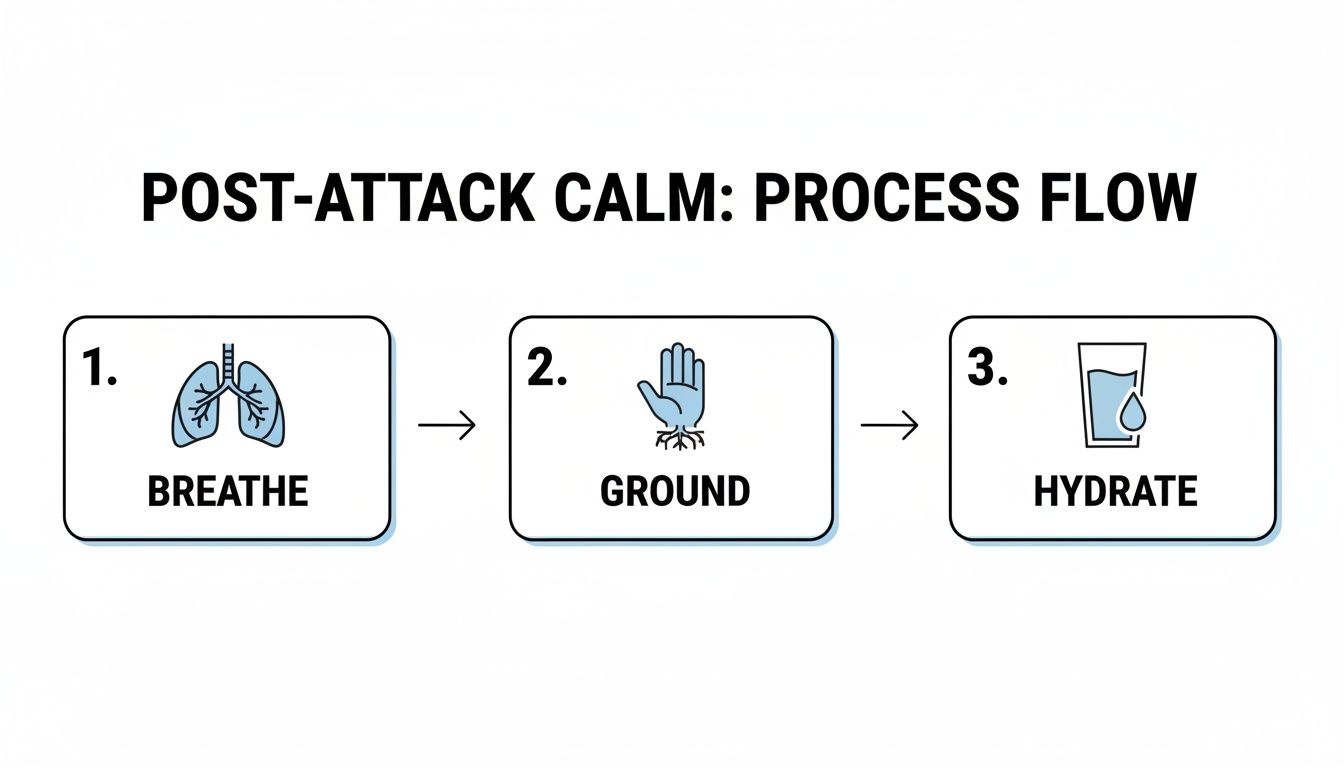
This isn’t about deep psychological work. Not yet. This is about tending to your body first, giving it the signals of safety it desperately needs to begin the healing process.
From Survivor To Thriver
Recovering from an anxiety attack isn't about pretending it never happened. It's about learning from it and building an arsenal of tools to manage your body’s powerful alarm system. You're shifting from being a victim of your anxiety to becoming an active, empowered participant in your own healing journey.
Here's an analogy I use with my clients: an anxiety attack is your body's fire alarm blaring at full volume. It's loud, jarring, and terrifying. Your job in that moment isn't to figure out why it went off or to start rewiring the entire building.
Your only job is to acknowledge the noise and gently, patiently, guide your body back to peace. This happens through small, intentional actions that, over time, build a profound sense of inner security.
These first steps are your emotional first-aid kit. They don't require a ton of energy, just a willingness to be kind to yourself. The following table breaks down a simple, immediate action plan you can use to find your footing in those first few minutes and hours.
Immediate Post-Attack Action Plan
| Action | Purpose | Example |
|---|---|---|
| Breathe with Intention | Activates the parasympathetic nervous system (your body's "rest and digest" mode). | Inhale for 4 counts, hold for 1, and exhale slowly for 6 counts. Focus on the feeling of your belly rising and falling. |
| Ground Yourself Physically | Pulls your awareness out of racing thoughts and back into the present, physical world. | Press your feet firmly into the floor. Name 5 things you can see, 4 you can touch, 3 you can hear, 2 you can smell, and 1 you can taste. |
| Hydrate and Nourish | Replenishes your body after the intense physical stress of an adrenaline surge. | Sip on a glass of cool water. If you can, have a small, simple snack like a banana or a handful of nuts. |
| Offer Self-Compassion | Counters the self-blame and criticism that often follow an attack. | Place a hand on your heart and say to yourself, "That was incredibly hard, and you made it through. It's okay to rest now." |
| Find a Safe Space | Creates an environment where your nervous system can feel secure enough to down-regulate. | Move to a quiet room, wrap yourself in a heavy blanket, or sit in a comfortable chair away from noise and stimulation. |
This plan isn't about fixing anything; it's about creating safety. By consistently taking these small, caring actions, you're not just recovering from one attack—you're building a foundation of resilience and proving to yourself that you know how to find your way back to calm.
Let’s dig into a few of these key actions a bit more.
Breathe with Intention: Don't just take deep breaths; focus on making your exhale just a little bit longer than your inhale. This subtle shift is a powerful signal to your vagus nerve, which acts as a brake for your body's stress response, slowing your heart rate and calming your entire system.
Ground Yourself Physically: The goal is to get out of your head and into your body. Anxiety lives in the future, in the "what ifs." Grounding pulls you back to the solid, predictable reality of the present moment. For a deeper dive, check out our complete guide to grounding techniques for anxiety.
Offer Yourself Compassion: It’s so easy to fall into the trap of self-criticism: "Why is this happening again?" "I should be stronger than this." Instead, try talking to yourself the way you would to a friend who is hurting. A simple, "That was terrifying, and you got through it. Now it's time to rest," can change everything.
The path to a panic-free life begins not with fighting your anxiety, but with a gentle, consistent practice of self-compassion and care in the moments after an attack. It's in this safe space that true healing takes root.
When you start to see each post-attack period this way, it stops being a moment of defeat and becomes an opportunity. You are actively teaching your nervous system that it knows how to return to calm. With every gentle breath and every kind thought, you're reinforcing that you are safe, you are in control, and you will be okay.
Making Sense of Your Anxiety Attack
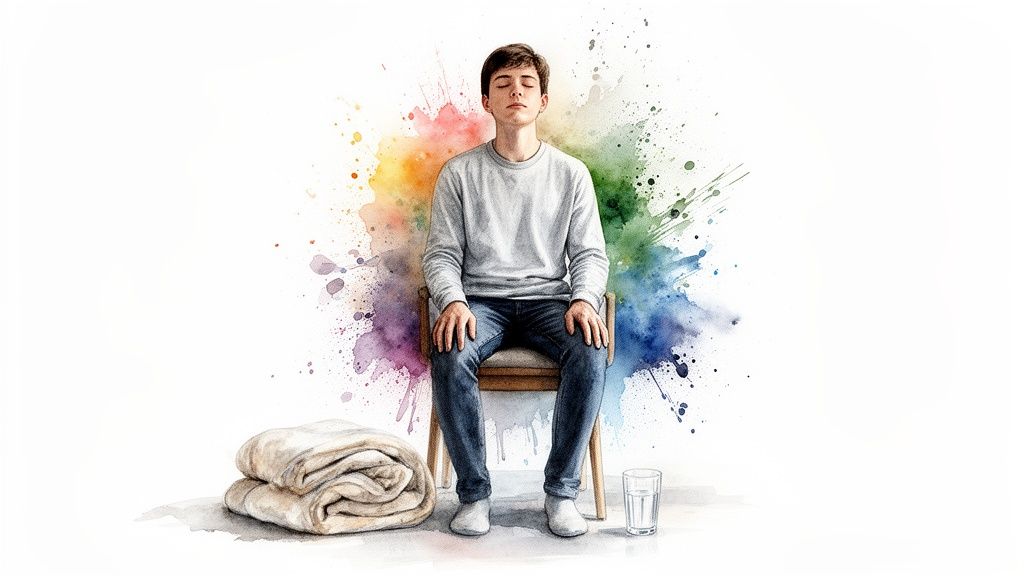
Once the initial storm of an anxiety attack passes, you’re often left in a quiet, confusing aftermath. Your mind might be racing, trying to piece together what just happened. This is a critical moment—not for judgment, but for understanding. Gaining some clarity on what’s happening in your body is the first step toward reclaiming your power.
What you just went through wasn’t a sign of weakness or a personal failure. It was your body’s fight-or-flight response kicking into overdrive. This ancient survival mechanism, hardwired to protect you from legitimate threats, mistakenly identified a false alarm. Your brain perceived danger, and your body flooded your system with adrenaline and cortisol, the very hormones that would help you escape a real predator.
This physiological cascade is responsible for all those terrifying symptoms—the racing heart, the shortness of breath, the overwhelming sense of doom. Your body was doing exactly what it's designed to do, just at the wrong time. Knowing this helps demystify the experience. It wasn't you "losing control"; it was a biological process running its course.
Shifting Your Perspective from Fear to Understanding
The real healing begins after the physical symptoms fade. It's about breaking that loop of catastrophic thoughts that can keep you trapped in a cycle of fear. Your mind might start churning out things like, "I'm going crazy," or "What if that happens again in public?" These thoughts feel incredibly powerful, but they are not facts.
The key to recovering from an anxiety attack is learning to reframe this internal narrative. Instead of seeing the attack as a terrifying, random event, you can start to view it as a powerful signal from your body. It's a message that something in your life—whether it’s stress, lack of sleep, or unresolved emotions—needs your attention.
Think of it like the check engine light in your car. When it flicks on, you don't panic and abandon the vehicle on the side of the road. You get curious. You investigate what needs to be addressed to get the car running smoothly again. Your anxiety is that check engine light, signaling an opportunity for care and adjustment.
Reframing Common Catastrophic Thoughts
Let's break down some common post-attack thoughts and how to gently transform them into more compassionate and realistic self-talk. This isn't about ignoring your feelings; it's about challenging the scary stories your anxious mind creates.
Instead of: "I'm losing my mind."
- Try: "My body just had a massive adrenaline rush. These intense feelings are a normal biological reaction, and they will pass as my system calms down."
Instead of: "I'll never be able to go to that place again."
- Try: "That experience was overwhelming, and it's okay to feel hesitant. I can take small steps to feel comfortable there again when I'm ready. My body is capable of feeling safe."
Instead of: "There's something seriously wrong with me."
- Try: "My body's alarm system is just a bit sensitive right now. It's a sign that I need to focus on self-care and stress management, not that I am fundamentally broken."
This shift in thinking is so much more than a mental trick. It's a profound change in your relationship with anxiety, moving you from a position of fear to one of empowerment. For a more detailed look at what happens during this biological event, you might find it helpful to learn more about the fight-or-flight response in our guide.
Viewing your anxiety attack as a message, not a malfunction, is the turning point in recovery. It transforms you from a victim of your symptoms into an active participant in your healing, empowering you to listen to your body with compassion and respond with confidence.
Embracing this perspective allows you to see that healing isn't about eliminating anxiety—a normal human emotion—but about learning to manage your body's responses without dread. With each attack, you have a new opportunity to practice understanding and self-compassion. This is how you build the resilience needed to live a life that isn't defined by fear. You are on the right path, and there is immense hope for a calmer future.
Building a Long-Term Resilience Plan
Getting through a panic attack is one thing. Building a life where they no longer have power over you is another. Lasting recovery isn't just about damage control in the moment. It’s about building a foundation of resilience that makes future storms less likely—and a lot less severe when they do hit.
This isn't some radical, overnight transformation. It's about weaving small, consistent, and surprisingly powerful habits into your daily life to create a calmer, more predictable inner world.
Think of your nervous system like a bucket. Everyday stressors—work deadlines, traffic, a poor night's sleep—slowly fill it up. A panic attack is what happens when that bucket finally overflows. A long-term resilience plan is your strategy for keeping the water level low, giving you more capacity to handle life's challenges.
It all starts with becoming a bit of a detective in your own life. By gently paying attention to the patterns that show up before your anxiety spikes, you turn confusing feelings into actionable data. This is where you start to reclaim your power.
Identifying Your Unique Triggers and Patterns
Anxiety rarely just appears out of nowhere. It usually has subtle triggers and tends to build in predictable ways. Your first job is to start connecting the dots between how you feel on the inside and what's happening on the outside. You're not looking for things to avoid forever, but for information that empowers you.
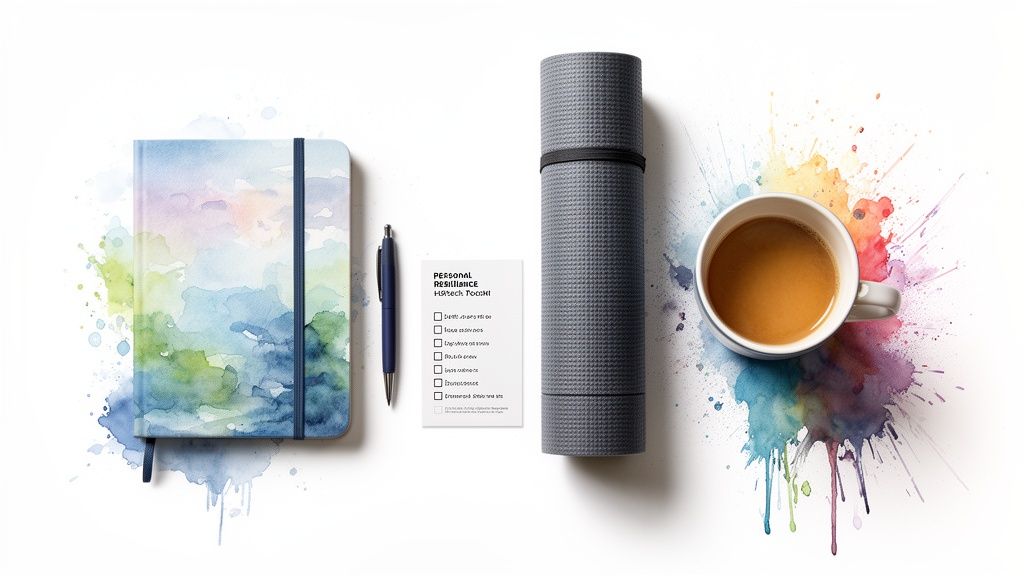
Try keeping a simple journal or even just a note on your phone. At the end of each day, or right after a moment of high anxiety, jot down a few things:
- Physical State: Were you tired? Hungry? Had you chugged a bunch of coffee?
- Environmental Factors: Were you in a crowded space? Facing a stressful deadline at work? Navigating a difficult social interaction?
- Emotional Context: Were you feeling overwhelmed, sad, or maybe even angry right before the anxiety spiked?
- Thought Patterns: What stories was your mind telling you? Were you worrying about something in the future or replaying an event from the past?
After a week or two, you'll start to see themes emerge. Maybe you'll notice your anxiety is always higher on days you skip breakfast or get less than six hours of sleep. This isn't about blaming yourself; it's about gaining insight. This information is the blueprint for your personal resilience plan.
Foundational Lifestyle Adjustments for a Calmer Baseline
With these new insights, you can start making small but incredibly impactful adjustments to your daily routines. These foundational habits act as a buffer, lowering your baseline anxiety and giving your nervous system the support it needs to stay regulated.
An essential piece of this puzzle is learning how to reduce cortisol levels naturally, as this directly impacts your body's stress response and overall sense of well-being.
Start by focusing on these key areas:
- Prioritize Sleep: Seriously. Aim for 7-9 hours of consistent sleep per night. Poor sleep is a massive contributor to a sensitized nervous system, making you far more susceptible to anxiety.
- Balance Your Blood Sugar: Avoid huge spikes and crashes by eating regular, balanced meals with protein, healthy fats, and complex carbs. This helps prevent physical sensations like shakiness or a racing heart that can mimic—and trigger—anxiety.
- Incorporate Gentle Movement: You don't need to run a marathon. A daily 20-minute walk, some gentle stretching, or a yoga session can do wonders for processing excess stress hormones like adrenaline and boosting mood-stabilizing endorphins.
Lasting recovery is built on the boring, consistent choices you make every single day. It’s the decision to go for a walk instead of scrolling, to drink a glass of water, or to go to bed 30 minutes earlier. These small acts of self-care are the real building blocks of a panic-free life.
Creating a Nurturing Self-Care Routine
Self-care isn't just a buzzword; it’s a non-negotiable practice for managing anxiety. It's about intentionally choosing activities that replenish your physical and emotional energy, not just draining them. A good self-care routine is personal, realistic, and something you can actually stick with.
This proactive approach is what makes all the difference. While recovery timelines can vary, research shows that actively managing your anxiety pays off. Data from a Dutch mental health survey revealed that while the median duration of an anxiety episode was 7.5 months, over 61% of people recovered within a year. Factors like unemployment and other health issues could extend this, which just highlights how important it is to build a supportive toolkit to speed up your own healing.
A huge part of this is learning to challenge the thought patterns that fuel anxiety in the first place—a core principle of Cognitive Behavioral Therapy (CBT). You can start exploring this powerful method in our guide to understanding CBT for anxiety. By learning to identify and reframe anxious thoughts, you can fundamentally change your response to them over time, soothing your nervous system before it ever gets close to the boiling point.
How to Handle Setbacks and Prevent Relapse
The road to recovery from anxiety is almost never a straight line. You'll have good days, maybe even great weeks, and then—out of nowhere—you might feel that familiar tightness creep back into your chest. This isn't a failure. It's a completely normal, expected part of healing.
Think of a setback as a signal. It's just your nervous system telling you it needs a little more support right now. The fear of having another attack can be intense, but you can learn to meet these moments with confidence instead of dread.
The real goal isn't to erase anxiety from your life forever. That’s an impossible standard. It's about building an unshakeable belief in your ability to handle it when it shows up. You're learning to navigate the waves, not trying to stop the ocean. This is where real, lasting hope comes from—knowing you have the tools to face whatever comes your way.
Recognizing Early Warning Signs
Panic rarely strikes from a dead calm. It usually builds, often starting with subtle physical or mental cues that we’ve all learned to ignore or just power through. The key to preventing a full-blown relapse is catching these early whispers before they become a roar.
Learning to tune into your body's initial signals is a complete game-changer. These are your personal early-warning signs, and they can be different for everyone.
Some of the most common early signs include:
- A sudden, unexplained feeling of restlessness or being "on edge."
- Shallow breathing or just a slight tightness in your chest.
- A recurring, nagging worry you can't seem to shake.
- Physical sensations like a churning stomach or tingling in your hands.
When you notice one of these signs, don't spiral. Just acknowledge it with curiosity: "Okay, my chest feels a little tight. That's interesting. What might my body need right now?" That small pause is your moment of power. It's the space where you can step in with a coping skill before the anxiety gets a chance to escalate.
Creating Your Personalized Panic Plan
A Panic Plan is your pre-written, dead-simple guide for what to do when you feel that first wave of anxiety rising. When you're in a moment of high stress, your logical thinking brain tends to go offline, making it hard to remember all those great strategies you learned. A plan removes the guesswork.
Your plan should be incredibly simple and actionable. Keep it on your phone or a small card in your wallet—somewhere you can always access it.
Here’s a template you can make your own:
- Acknowledge and Name It: "This is anxiety. It's a surge of adrenaline. It feels scary, but it is not dangerous, and it will pass."
- Focus on My Breath: "I'm going to do box breathing for 2 minutes: Inhale for 4, hold for 4, exhale for 4, hold for 4."
- Ground Myself Now: "I will press my feet into the floor and name 3 blue things I can see around me."
- Offer a Kind Word: "I am safe. I can handle this feeling. I've gotten through this before."
This isn't just a to-do list; it's a script that gives you comfort and structure when you feel completely lost. It reminds your panicked brain that there's a clear path back to calm.
Reframing a setback not as a sign of failure but as an opportunity for practice is the most compassionate and effective thing you can do for your long-term recovery. Each time you navigate a challenging moment, you are reinforcing new neural pathways and building real, lasting resilience.
Viewing Setbacks as Learning Opportunities
So, what happens if, despite your best efforts, you have another anxiety attack? First, treat yourself with immense kindness. You just went through something incredibly difficult. The goal now is to look back with a gentle, analytical eye—not a critical one.
Once you feel settled, ask yourself a few questions:
- What was happening in the hours or days leading up to the attack?
- Did I notice any early warning signs that I might have missed?
- Which part of my Panic Plan worked well? What could I adjust for next time?
Each setback provides invaluable data. Maybe you realize you need a more potent grounding technique, or that you need to be more mindful of your caffeine intake on stressful days. This is how you sharpen your toolkit. For some, confronting avoided situations in small, manageable steps is a powerful strategy, which you can learn more about by exploring the fear ladder anxiety tool in our detailed article. This approach turns fear into a series of achievable victories.
This journey is about progress, not perfection. Every step you take—even the ones that feel like they go backward—is part of building a stronger, more resilient you. You are learning to live panic-free, armed with the profound hope that comes from knowing you can always find your way back to safety.
Knowing When to Seek Professional Support
While your own self-help toolkit is a powerful first line of defense after an anxiety attack, there are times when bringing in a professional can make all the difference. Reaching out isn't a sign that you've failed. It's an act of strength—a strategic move to reclaim your life from fear.
Deciding to talk to someone is deeply personal, but there are some clear signs it might be the right next step. If anxiety is consistently getting in the way of your daily life—messing with your work, your relationships, or your ability to just enjoy things—it’s worth looking at your options.
Clear Signs It Might Be Time to Talk
Recognizing when you need a bit more support is a key part of the healing process. Your own strategies are essential, but you don't have to walk this path alone.
Consider professional help if you find yourself:
- Avoiding Things You Love: You start sidestepping places, situations, or activities you once enjoyed because you're afraid of triggering another attack. This could be as specific as avoiding a certain grocery store or as broad as dodging all social gatherings.
- Constantly Fearing the Next Attack: The fear of another panic attack becomes a dominant, persistent thought. It starts dictating your choices and draining your mental battery.
- Feeling Stuck: Your go-to self-help tools just aren't making a dent anymore. You feel like you're stuck in a frustrating cycle of anxiety and exhaustion.
- Struggling with Daily Life: Your ability to concentrate at work, connect with loved ones, or even manage basic chores feels significantly impaired.
If any of this sounds familiar, please know that effective, evidence-based help is out there, ready to guide you toward a calmer life.
Effective Therapeutic Approaches for Anxiety
When it comes to treating panic and anxiety, certain therapies have an excellent track record. These approaches aren't about endlessly analyzing your past; they're practical, skills-based, and focused on giving you tangible tools for today and tomorrow.
One of the most effective is Cognitive Behavioral Therapy (CBT). It's specifically designed to help you identify, challenge, and reframe the fearful thought patterns that fuel anxiety attacks. A therapist acts as your guide, helping you see the connection between your thoughts, feelings, and behaviors so you can finally break the cycle.
Seeking professional help is like hiring an expert guide for a challenging hike. You’re still doing the walking, but now you have someone with a map and experience to help you find the safest and most direct path to the summit.
Finding the Right Mental Health Professional
Taking the leap to find a therapist can feel like a huge task, but it’s more manageable than it seems. The "right" person is someone you click with, who has real experience with anxiety disorders, and whose approach makes sense for your goals.
Here are a few practical tips to get you started:
- Look for Specialists: Search for therapists, psychologists, or counselors who specifically list anxiety, panic disorder, or CBT as their expertise on their websites or professional profiles.
- Use Reputable Directories: Websites like the Anxiety & Depression Association of America (ADAA) or Psychology Today have great, searchable databases of licensed professionals in your area.
- Schedule a "Meet and Greet": Most therapists offer a free, brief phone or video consultation. This is your chance to ask questions and just get a feel for their personality. Trust your gut—a good therapeutic relationship is one of the biggest predictors of success.
Your first few sessions will likely involve sharing your story and what you've been going through. The therapist will listen without judgment and work with you to create a plan. This is the beginning of a partnership dedicated to helping you live a calmer, freer life.
If you're trying to figure out the differences between therapists and other specialists, our guide on when to see a psychiatrist for anxiety can help clarify your options.
Common Questions About Anxiety Attack Recovery
Navigating the aftermath of a panic attack can feel confusing, and it’s completely normal to have questions swirling in your mind. Getting clear, compassionate answers can be incredibly grounding. More than that, it reinforces the one thing you need to hold onto: a calm, panic-free life isn't just possible, it's achievable.
Let's walk through some of the most common questions that come up during recovery.
How Long Until I Feel Normal Again?
There’s no magic number here—everyone’s recovery rhythm is a bit different. Physically, the most intense symptoms like a racing heart or dizziness usually wind down within about 30 minutes. But the emotional and physical exhaustion that follows—what many call a "panic hangover"—can stick around.
This aftermath can leave you feeling drained, mentally foggy, and emotionally sensitive for hours, sometimes even a full day. It’s simply your body recovering from a massive adrenaline surge. It did its job, just based on a false alarm.
The key is to be incredibly patient with yourself during this time. As you get more consistent with grounding techniques and prioritize rest, you'll notice this recovery window starts to shrink. Bouncing back faster is one of the clearest signs that you're building real resilience.
The most important thing to remember is that a full recovery is not just possible—it's the expected outcome for countless people. You can and will live a full, joyful, and unrestricted life.
Can I Fully Recover and Live a Normal Life?
Yes. Absolutely. Let this be the core belief you hold onto, especially on tough days.
Full recovery doesn’t mean you’ll never feel the emotion of anxiety again—that’s just part of being human. What it does mean is that you will no longer be controlled by the fear of panic itself.
True recovery is about building a toolkit of skills that allow you to manage anxiety before it has a chance to escalate. You'll learn to spot the early warning signs, use your strategies to self-soothe, and most importantly, trust that your body knows how to return to a state of calm. A life free from the grip of panic is entirely within reach.
What Is the Most Important First Step?
The single most critical step to take immediately after an anxiety attack is to respond with self-compassion, not self-criticism. It’s so easy to get caught in a spiral of frustration or blame, asking, "Why is this happening to me again?"
Instead, try to make a conscious shift. Acknowledge what just happened without judgment. Your first move should always be one of gentle self-care. Find a quiet spot, bring your focus to your breath, and anchor your senses in the here and now.
This simple act of kindness is more powerful than you think. It signals to your brain that you're safe and that you're in control. This positive foundation makes every other recovery step more effective, helping you move from a state of fear into one of empowerment.
How Can I Explain This to My Family?
Trying to put a panic attack into words for someone who's never experienced one is tough. Analogies can be a game-changer here.
You could try explaining it like this:
- "Imagine the fire alarm in my body is going off at full blast, but there's no actual fire. All the physical feelings of danger are 100% real, even if the threat isn't."
- "It's like my body's fight-or-flight system got a false signal and flooded me with adrenaline. My job right now is to calmly convince my body that everything is okay."
Being specific about what you need from them is also incredibly helpful. Instead of just saying you feel anxious, give them clear, actionable things they can do.
For example: "When I feel this way, it would help so much if you could just sit with me quietly, remind me that I'm safe, and maybe guide me to take some slow breaths. I don't need you to fix it, just to be a calm presence." Sharing resources like this article can also give them the insight they need to be the supportive ally you deserve.
At The Anxiety Checklist, we believe that everyone deserves to live a life free from the control of panic. Our Fearless Living: Beat Anxiety and Live Your Best Life system is a practical, action-oriented toolkit designed to give you the strategies you need to build lasting resilience. Move from surviving to thriving by exploring our comprehensive program at https://anxietychecklist.com.