


In short
A fear ladder helps you face anxiety by arranging feared situations from least to most intense, then approaching them gradually. Start with a step that feels challenging but doable, practise it repeatedly until it feels manageable, and only then move upwards; tracking reactions before, during and after each attempt can show progress and patterns.
Key takeaways
- Define the exact situation that causes fear rather than using a vague label.
- Rate each step from 1 to 10 and order it from least to most frightening.
- Repeat one manageable step until anxiety reduces before moving to the next.
- Avoid escaping early, distracting yourself or seeking reassurance during practice.
- Record how you felt before, during and after each attempt.
What is a Fear Ladder?
A fear ladder is also known as an exposure hierarchy. It’s a tool used in cognitive behavioral therapy (CBT) to help you face fears in a gradual, controlled way.
Rather than confronting your biggest fear all at once, you break it down into smaller, manageable steps. Each step builds on the one before it, allowing your confidence to grow naturally over time.
The idea comes from exposure therapy, which shows that repeated, safe exposure to fearful situations can weaken your emotional reaction over time. When your brain learns that nothing bad happens, fear slowly loses its power.
In fact, a recent study shows that exposure therapy effectively treats 80-90% of people who complete it.
Unlike general goal-setting, a fear ladder focuses specifically on emotional reactions. It doesn’t push you to achieve a specific outcome. Instead, it helps you move forward in a structured and supportive way that respects your comfort level.
How Does the Fear Ladder Work?
In behavioral psychology, a phobia grows when you avoid it. The fear ladder works by gently reversing that pattern using exposure-based treatments. This means helping your nervous system get used to fear in small doses.
Every fear has different intensity levels. Some situations feel mildly uncomfortable, while others may trigger intense anxiety. A fear ladder organizes these experiences from the lowest to the highest intensity. This makes fear easier to confront and manage.
For instance, if you sit in a cold pool long enough, your body eventually adjusts to the temperature. Similarly, when you repeatedly expose yourself to a trigger, your anxiety finally reduces.
Over time, your brain learns that fear is uncomfortable, but not dangerous. Each step you complete sends a clear message to your nervous system that you are safe.
What are the Benefits of a Fear Ladder?
A fear ladder helps you face anxiety disorders and panic attacks in a calm, structured, and healthy way. It gives you a sense of clarity, direction, and control throughout the process.
Let’s take a look at some of its benefits:

- Reduces Fear and Anxiety: Facing fear step by step teaches your brain that it can handle discomfort. Situations that once felt overwhelming start feeling safe and manageable.
- Builds Self-Confidence Gradually: As you move up the exposure hierarchy, you will start trusting yourself more. Every small win will prove that you can handle discomfort and instill more confidence.
- Creates a Clear and Structured Plan: A fear ladder gives you a clear, practical path to follow. You always know what step comes next, which removes confusion and stress.
- Reduces Avoidance: Safety behaviors, such as escaping or avoiding situations, fuel fear. An exposure hierarchy helps you face your fears without forcing measures and remain consistent until they fade.
- Encourages Long-Term Behavior Change: Unlike short-term coping strategies, a fear ladder uses behavior therapy to rewire your response over time. This results in long-lasting confidence and emotional resilience.
Common Situations Where a Fear Ladder Is Useful
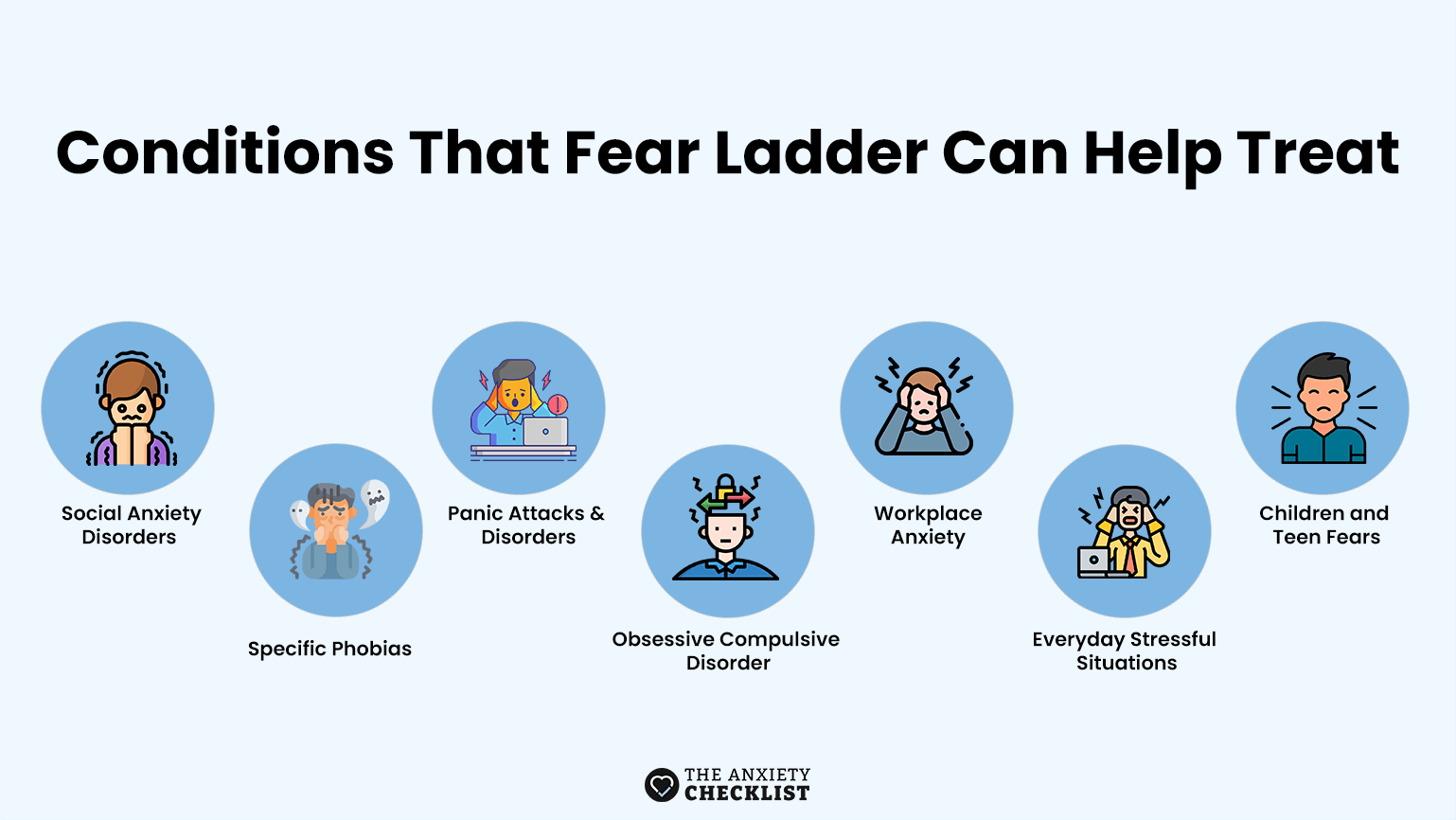
A fear ladder can help with many types of real-life situations where fear holds you back. Whether you struggle with anxiety issues, phobias, or related disorders, this tool can help you face them step by step.
Social Anxiety Disorders
Social anxiety often shows up in simple moments like speaking up in meetings, starting conversations, or making phone calls. You may be afraid of saying the wrong thing, being judged, or embarrassing yourself.
Over time, avoidance can grow and shrink your comfort zone. A fear ladder helps you deal with social anxiety by breaking it into small, manageable steps.
You might start by making eye contact with a stranger, then move on to short conversations, and later speak in group settings. This gradual approach reduces fear by showing your brain that social situations are not dangerous.
Specific Phobias
Phobias are fears related to specific things or situations. Many people have phobias related to heights, driving, animals, flying, or crowded public spaces. In fact, around 19 million people in the US have at least one phobia, ranging from mild to serious.
A fear ladder lets you approach these fears slowly instead of forcing yourself into the scariest moment.
For example, if you are afraid of flying, you may start by watching planes, then visiting an airport, and later sitting on a plane without taking off. Each step weakens the fear through repeated exposure therapy.
Panic Attacks and Disorders
If you experience panic attacks and disorders, you may start avoiding places or activities that trigger them. A fear ladder helps you return to those places and face panic symptoms rather than escape them.
You gradually expose yourself to sensations or situations that trigger panic, while learning that they pass on their own. This behavioral practice reduces fear of fear itself and gives you back control.
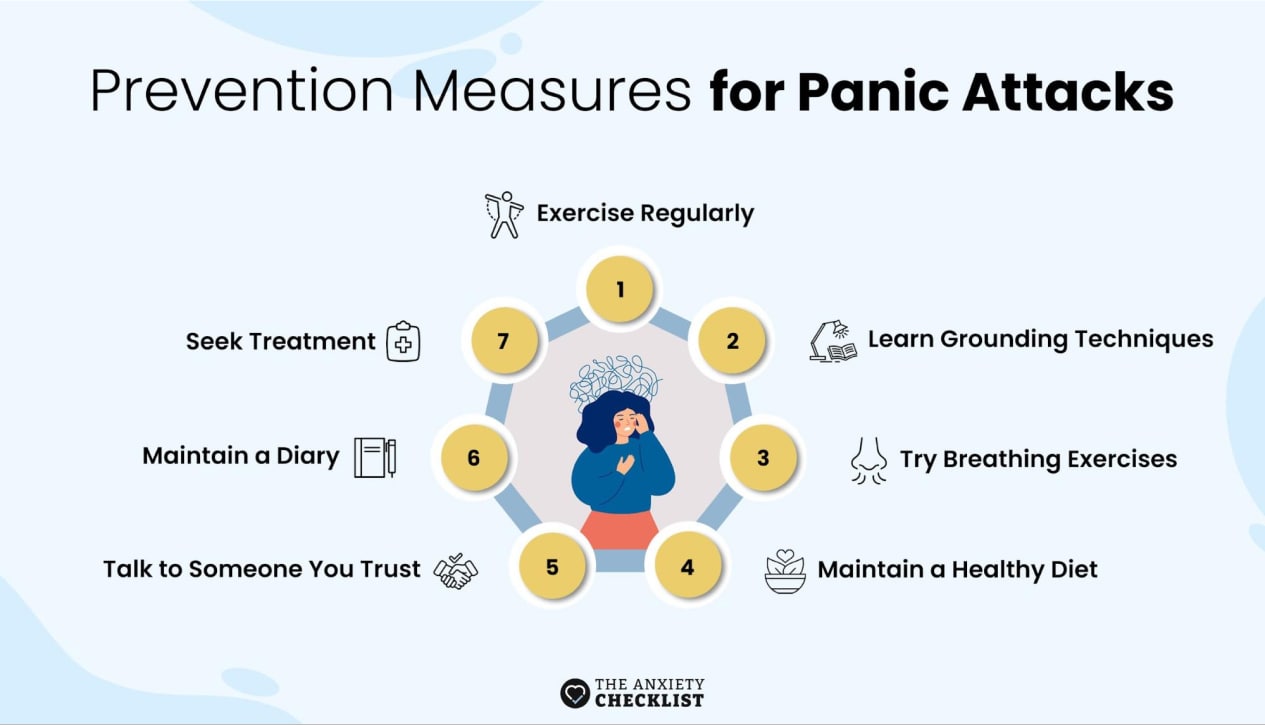
Here are some other things you can do for panic attacks:
Obsessive Compulsive Disorder
People with obsessive-compulsive disorder (OCD) often experience intrusive thoughts that lead to strong urges to perform rituals or behaviors. These behaviors, known as safety behaviors, may reduce anxiety disorders momentarily but keep the cycle going in the long term.
A fear ladder helps by progressively reducing these compulsions. You face the feared thought or situation without performing the usual ritual. At first, this will feel uncomfortable, but with time, your anxiety will reduce.
Workplace Fears
Work environments can bring many hidden fears that lead you to stay quiet or avoid growth opportunities. Some of these fears include:
- Giving presentations
- Asking for feedback
- Stepping into leadership roles
- Speaking up in meetings
A fear ladder provides small, manageable actions you can take to overcome big fears. You might start by sharing an idea with one person, then a small group, and eventually a large audience. This builds confidence through consistent behavioral practice.
Everyday Anxiety Triggers
Many people feel anxious about everyday tasks like making appointments, setting boundaries, or making decisions. These moments may seem small, but they can add up and affect your daily life.
Using a fear ladder helps you face these anxiety triggers in a controlled way. You slowly increase your comfort level instead of avoiding situations altogether. This steady exposure builds resilience and emotional strength.
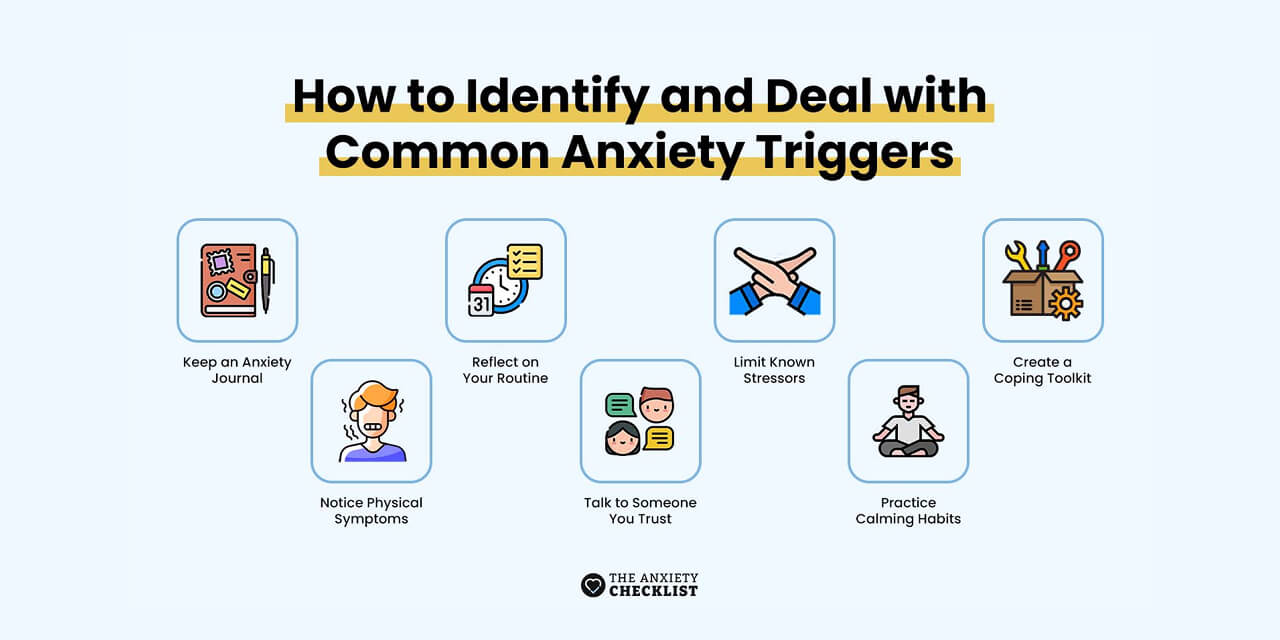
Here are some other ways to deal with common anxiety triggers:
Children and Teens Fears
An exposure hierarchy is also ideal for children and teens facing new or stressful situations. This could be school changes, social pressure, or performance anxiety.
A fear ladder gives them a gentle and supportive way to face challenges without pressure.
By breaking fears into small steps, kids learn that they can handle discomfort and grow from it. This builds confidence early and supports healthy emotional development. It also gives caregivers a clear structure to guide and encourage progress.
How to Create a Fear Ladder Step by Step
Building an exposure hierarchy gives you a clear plan to face your fears without pushing yourself too hard. It requires you to be honest, self-aware, and patient.
Below is a step-by-step guide to help you create and use your own fear ladder:
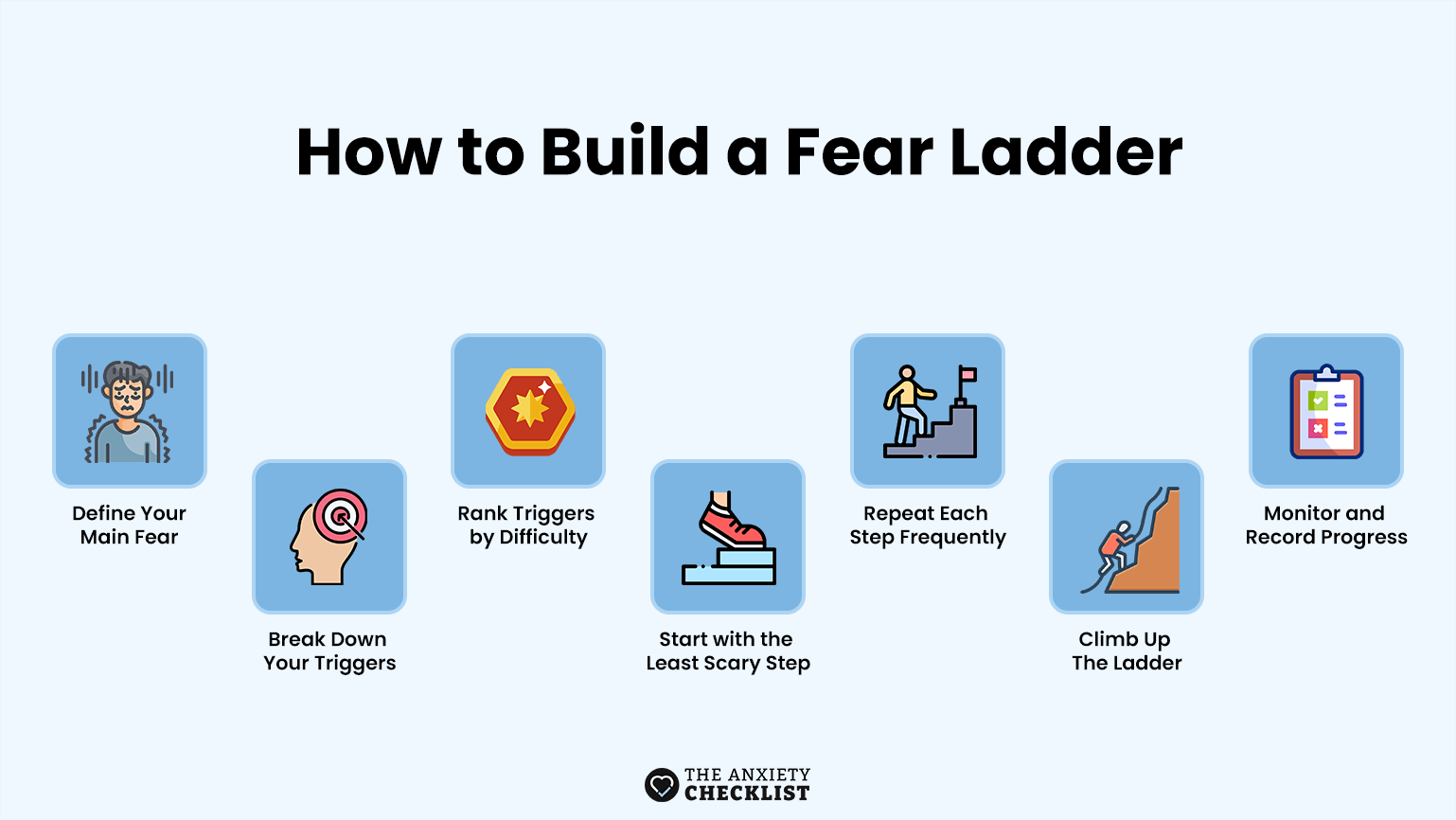
1. Identify your Main Fear
Start by getting very clear about what you are afraid of. Vague fears like “I’m anxious” don’t help much. You want to name the exact situation that causes anxiety. This could be talking on the phone, driving on highways, or speaking in meetings.
If you have an obsessive-compulsive disorder, identify the exact thought or situation that triggers safety behaviors. Imagine the moment when urges show up. What are you doing? Who is there? What thoughts run through your mind?
The clearer you get, the easier the treatment becomes.
2. Break Down Your Triggers
Next, think about all the small situations related to your main fear. Imagine the scenario from start to finish and write down every step that makes you uncomfortable.
For example, if you are afraid of talking in groups, here are some smaller steps that make you uncomfortable.
- Thinking about speaking
- Writing down what you might say
- Practicing your speech
By breaking your triggers, you can deal with smaller fears instead of one big fear.
3. Rate Each Step by Fear Level
Now, rate each step based on how afraid it makes you feel. You can use a scale from 1 to 10, where 1 feels slightly uncomfortable, and 10 feels overwhelming.
This helps you organize your fear ladder from least scary to most scary, as shown by the image below.
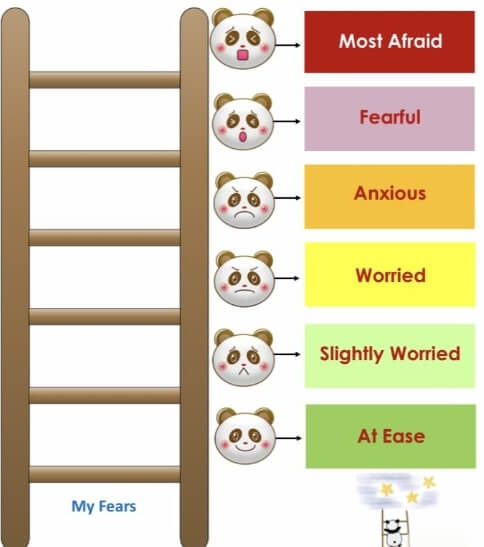
It also stops you from jumping too fast into situations your nervous system cannot handle yet.
4. Start With the Least Scary Step
Pick the item at the bottom of your ladder that feels challenging but doable. Exposure therapy helps you recover from anxiety disorders when you start small and move slowly.
It enables your brain to learn safety and build trust in yourself. When you prove that you can handle mild fear, you will gain confidence in handling more uncomfortable situations.
5. Practice Every Step Repeatedly
One attempt is not enough to recover from phobias, anxiety, and related disorders. Consistency is the key to successful treatment. You need to face the same small fear several times until it no longer bothers you.
During this stage, try to refrain from safety behaviors like escaping early, distracting yourself, or seeking reassurance from a loved one. These behavioral practices may be helpful in the short term, but they slow your progress over time.
6. Move Gradually Up the Ladder
Once a step feels manageable, move to the next one. Don’t rush. Going too fast can increase fear and make you feel discouraged.
Each step comes with greater discomfort levels. But feeling afraid doesn’t mean you are failing. It means the process is working.
Exposure therapy works through repetition, not force. Even if progress feels slow, every step forward is central to effective treatment.
7. Track and Document Your Progress
As you climb up the fear ladder, write down how you felt before, during, and after each therapy session. The best way to record these moments is through proper journaling.
It shows you how far you’ve come, especially on days when things feel tough. This behavioral practice also helps you notice patterns, wins, and areas that need more time.
Over time, this reflection will strengthen your confidence and motivate you to move forward.
Practical Example of a Fear Ladder
Seeing a real example makes the fear ladder easier to understand and use. Here is a practical illustration of how a fear ladder works, using a common fear many people face.
Example Scenario: Fear of Public Speaking
You may feel afraid of being judged, making mistakes, or freezing during a talk or presentation. Here’s how a fear ladder helps you face this fear step by step.
| Step | Activity | Fear Rating (1-10) |
|---|---|---|
| 1 | Think about giving a presentation | 1 |
| 2 | Watch others speak or present | 2 |
| 3 | Speak out loud when you’re alone | 2 |
| 4 | Practice in front of a trusted friend | 4 |
| 5 | Join a small group conversation | 6 |
| 6 | Give a short presentation to a small audience | 7 |
| 7 | Speak to a larger audience | 10 |
Each step on the fear ladder increases exposure slightly, helping you to build confidence naturally. With time, it helps you overcome your fear of public speaking by facing it safely.
Tips for Successfully Using a Fear Ladder
The exposure hierarchy is more effective when you treat it as a learning process, rather than a test you must pass. The goal is not to overcome your fear right away, but to help you face it in a steady, healthy way.
Here are some proven tips to help you get the most out of your fear ladder:
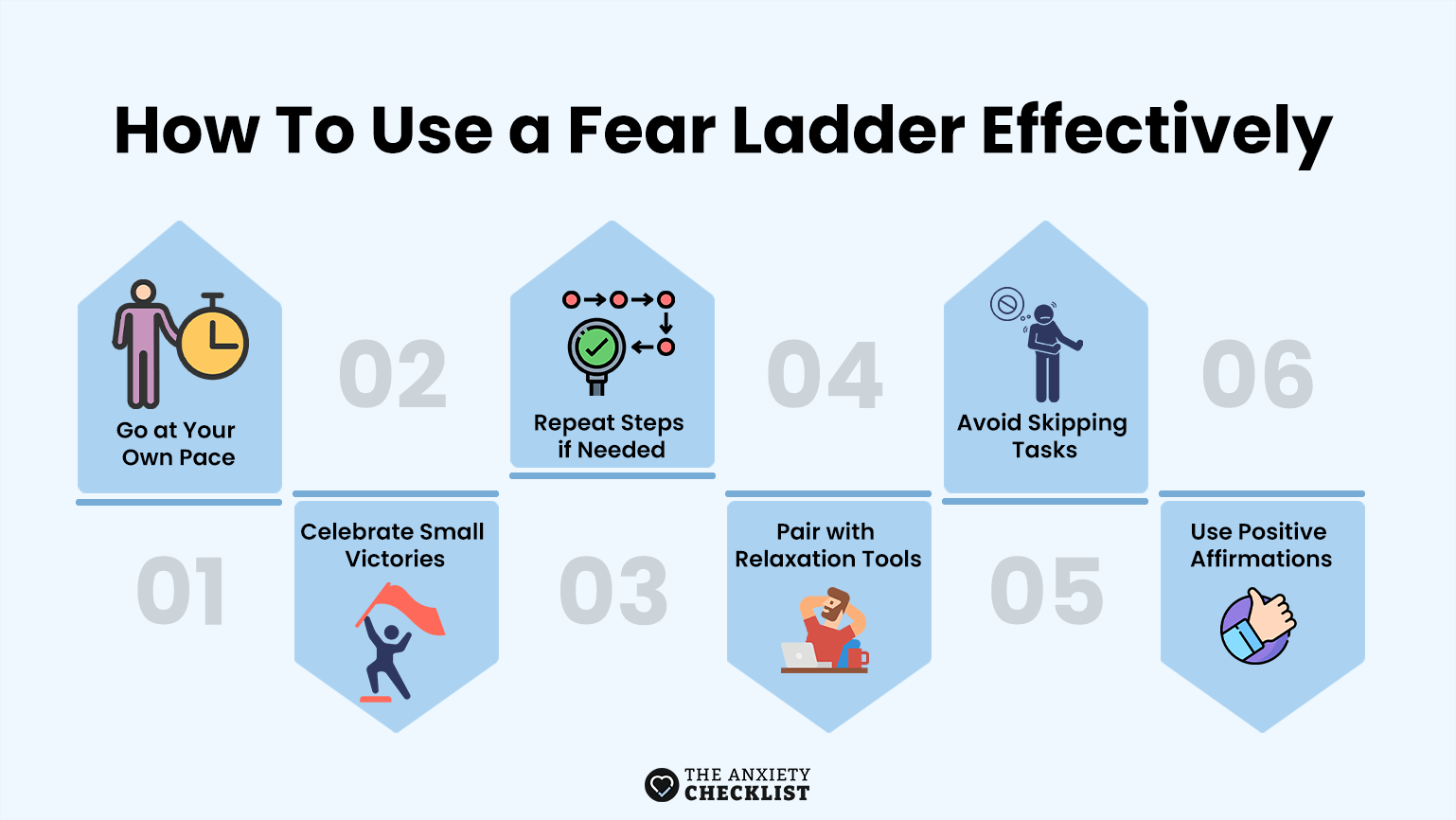
- Move at Your Own Pace: There is no “right” speed when it comes to exposure therapy. What feels manageable for someone else may feel overwhelming for you. So, choose a pace that feels uncomfortable but safe.
- Celebrate Small Wins: When you complete a challenging step, take a moment to celebrate that victory. Recognizing these achievements will motivate you to keep going, even when some steps feel difficult.
- Repeat Steps if Anxiety Increases: Some days, a step that felt easy before may cause anxiety. When this happens, you can repeat the step several times until the fear reduces.
- Use Relaxation Techniques: Pairing a fear ladder with relaxation tools helps you stay calm while facing anxiety. You can try slow breathing, gentle meditation, or grounding exercises to stay present and focused.
- Avoid Skipping Steps: It may feel tempting to jump ahead, especially when motivation is high. This can make fear stronger and reduce your confidence. Completing one step builds the strength you need for the next one.
- Speak to Yourself Kindly: Harsh self-criticism increases anxiety and makes each step feel harder. Instead, use kind, positive affirmations like “I’m learning,” “I can handle this,” or “It’s okay to feel nervous.”
When to Seek Professional Support
While a fear ladder can help you handle many fears, some may be too strong to face on your own. In this case, working with a professional trained in psychotherapy is ideal for more effective treatment.
You may consider professional therapy if you notice any of the following signs.
- Fear or anxiety interferes with work, school, or relationships
- You avoid many places or situations to feel safe
- Panic attacks happen often unpredictably
- Fear causes physical symptoms like dizziness, chest tightness, or nausea
- Anxiety feels overwhelming or constant
- You feel stuck and make no progress despite trying on your own
Guided exposure therapy offers steady support, accountability, and reassurance. Therapists help you build a custom exposure hierarchy and face fear at the right pace.
They help you identify triggers, rate fear levels, and build a clear plan. They can also spot patterns you might miss, making your journey much smoother.
Frequently Asked Questions
A fear ladder:
Here’s how you can create an exposure hierarchy:
Some of the habits that increase anxiety include:
The most common fears include:
Final Thoughts
Anxiety University
Explore the Anxiety University
Free guides to help you understand anxiety, one topic at a time.
- Getting StartedThe basics of anxiety and how it works
- Self-Assessments & Anxiety TestsCheck in on your symptoms with free tests
- Cognitive Traps & Thought PatternsSpot the thinking habits that fuel anxiety
- Stress ReductionPractical ways to calm your body and mind
- Common Anxiety PhobiasUnderstand specific fears and how they are treated
- Inspiring StoriesReal stories and words that remind you you are not alone