


In short
Shadow work is a reflective practice for noticing, naming and welcoming parts of yourself you usually push away, such as shame, anger or fear. It can involve timed journalling, trigger maps, dream logs and small behavioural experiments, ideally approached with curiosity, grounding and clear limits. Stop and seek support if it causes overwhelming feelings or brings up trauma symptoms.
Key takeaways
- Keep sessions brief, choose a calm space and finish with a grounding activity.
- Record triggers, immediate thoughts, feelings and bodily sensations to identify recurring patterns.
- Use prompts alongside uncensored free writing, then examine one surprising sentence more closely.
- Therapy can provide support when shadow work raises past wounds or intense emotions.
- Exploring deep wounds alone can cause retraumatisation or increase self-blame.
What Is Shadow Work?
- Shadow work is a way of meeting the parts of yourself that you usually push away. These parts can be shame, anger, fear, or a side you think is “not you.” We do shadow work to notice, name, and welcome those parts so they stop running the show.
A Brief History of Shadow Work
Carl Jung coined “the shadow self” to talk about the hidden side of the mind. He believed meeting that side helps people grow. Jung saw it as no worse than a part of the house that needs light. He said the shadow self is normal and everyone has one.
Over the 20th century, therapists used Jung’s idea to help people notice patterns and heal wounds .
In recent decades, writers and coaches turned Jung’s theory into simple tools you can use at home, such as shadow work prompts, dream work, and role-play. Social media and journals have made these tools popular, but they vary in depth.
How Shadow Work is Used Now
Today, people use shadow work in a few common ways. Here are the main ones we see people try:
- Journaling with prompts to notice hidden feelings and patterns
- Guided therapy or coaching that looks at past hurts and triggers.
- Dream work and creative practices like drawing or free writing.
- Workbooks and tools that give a structure to reflect.
These methods can help you learn about your triggers and practice small changes safely.
To summarize, this section introduced shadow work, shared the history behind the idea, and showed how today’s methods turn the concept into practical exercises. Hopefully, this will bring you closer to answering “What is shadow work?”
Why Should You Practice Shadow Work?
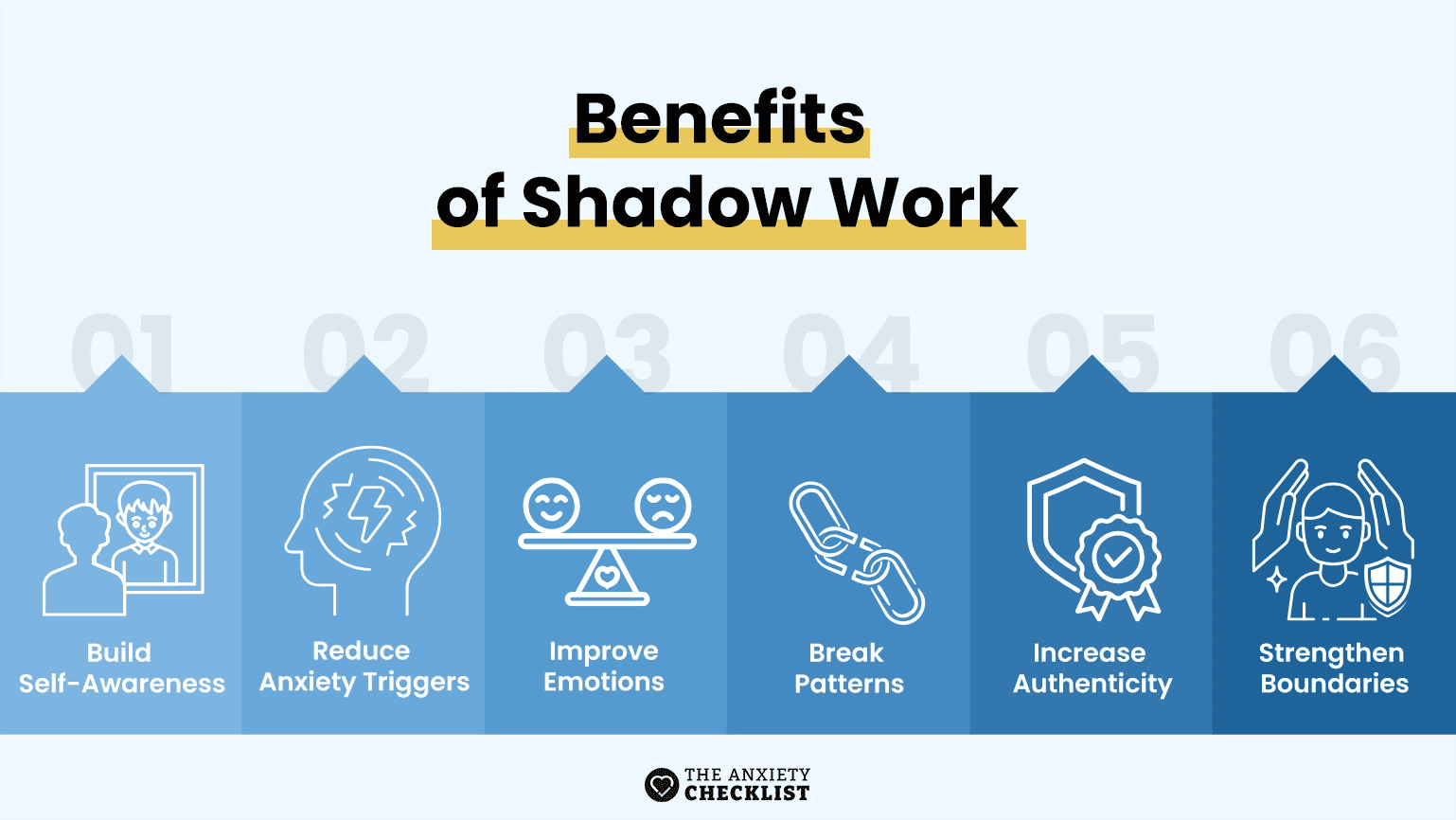
Shadow work is about bringing your hidden parts to life. Talking to your subconscious parts and facing them in reality makes you stronger and gives you the ability to deal with the problems that cause anxiety, fear or panic.
We do this so old reactions stop running the show. It’s about small, steady steps that help you identify hidden beliefs, test new behaviors, and build better habits.
Here are some of the key reasons you should begin shadow work.
Build Self-Awareness
When you do shadow work, you start to notice the quiet beliefs that steer your life. Instead of blaming events, you see the inner script that played first. That insight helps you make different choices and feel less stuck.
Reduce Triggers
When we study our anxiety triggers, they stop surprising us. You learn the common situations, words, or memories that flip a switch inside you. That knowledge gives you a pause, a small gap to breathe before reacting. Over time, the strong spikes calm down.
Improve Emotion Regulation
Noticing and naming feelings helps them move through you faster. Shadow work teaches you to say, “I feel angry” or “I feel small” without judgment. That simple naming lowers the alarm in your body and opens space for soothing actions.
Break Repeated Patterns in Relationships
Many relationship problems come from old stories we replay. Shadow work uncovers those scripts and helps in healing your old wounds . Once you see a pattern, you can test a new choice. For example, you can choose to speak instead of withdrawing. Small experiments change the script bit by bit.
Increase Authenticity and Creativity
Parts we hide use up energy. When you welcome them, that energy frees up. You may feel braver to try new things or speak your truth. Creativity often blooms when we stop pushing parts of ourselves away
Strengthen Boundaries and Well-Being
As you get to know yourself better, you can set clearer limits. Shadow work helps you say no from a calm place, not from fear. That makes your day feel safer and your relationships steadier.
Overall, shadow work can make you more self-aware, help you avoid triggers, and help you be more in control of your emotions. Over time, it will help you break old patterns and become a more creative person.
How to Practice Shadow Work: Tips and Best Practices
If you’re wondering “What is shadow work?”, think of it as small, steady practices to get to know different parts of yourself. We want these practices to be safe and simple. So we’ll give tips you can try in minutes and come back to when it feels right.
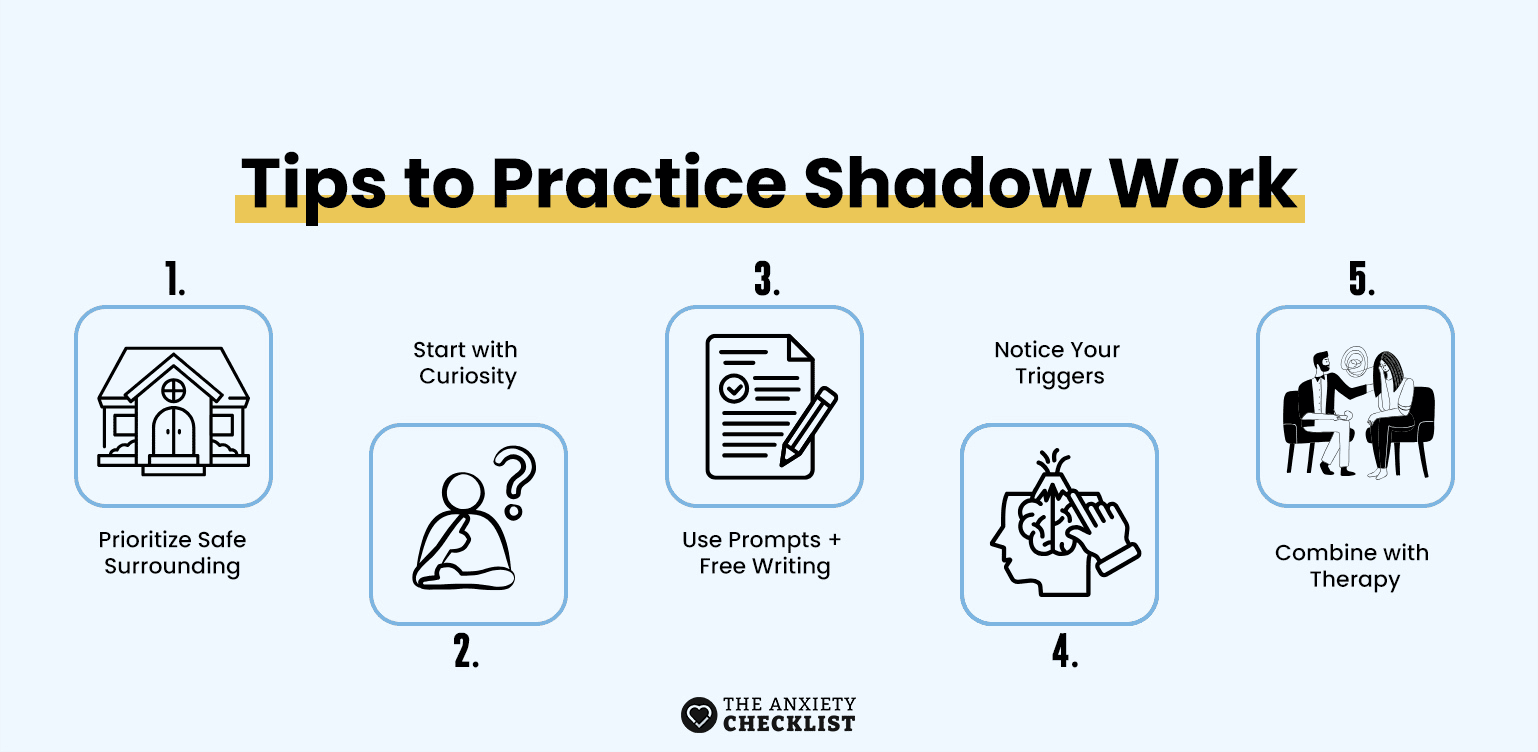
1. Prioritize Safety: Ground and Limit Sessions
Looking at your “shadow” can unlock emotions that were sitting quietly in the background. Shadow work often touches tender places. You may feel strong emotions that could be a result of past emotional wounds, trauma, or anything else.
This is exactly why safety matters — you want support in place before the feelings show up.
Here are some grounding techniques you can use.
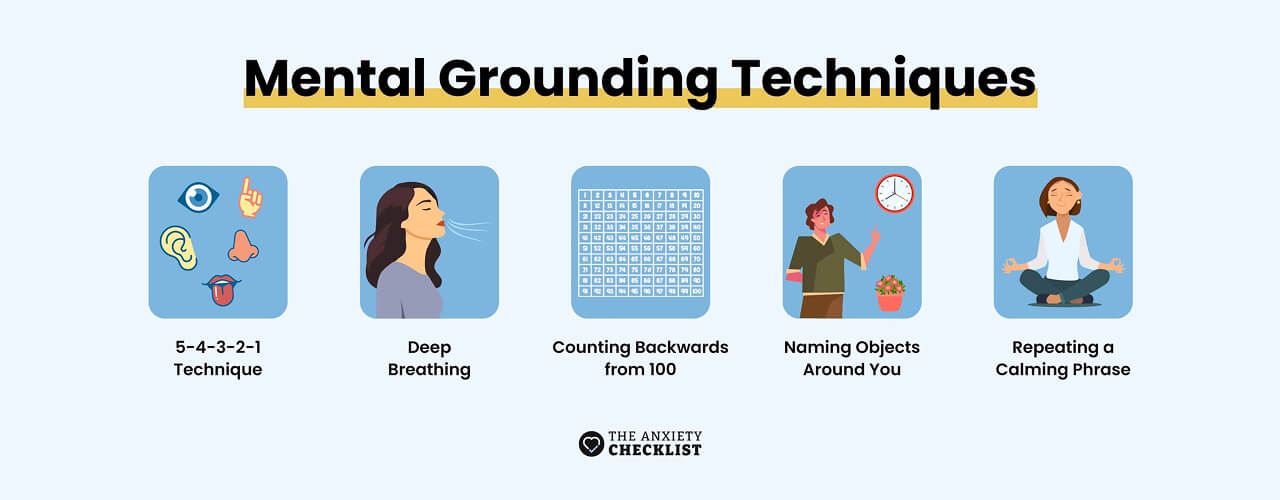
If anything feels too strong, give yourself full permission to stop. You can talk to a professional about unwelcome thoughts that may arise as part of shadow work.
Shadow work works best when you feel steady. Along with shadow work, practicing mindfulness and meditation also helps.
2. Start with Curiosity, Not Judgment
We get more from shadow work when we are curious. Judgment shuts things down, while curiosity helps you open up.
Begin a session by naming one observation, such as “I noticed I bristled when they said that.” Then, ask questions to gain a deeper understanding. Let your thoughts come, and write the answers without editing.
You can also say aloud, “Help me understand you.” This small invitation often changes how the part responds. It moves you from reacting to listening and helps in your emotional healing management that you can try.
Curiosity keeps the practice gentle. It helps you learn, not punish, and makes shadow work feel safe to try again.
3. Use a Mix of Prompts and Free Writing
We find the best insight comes from pairing specific prompts with free writing.
While prompts add some structure to the process, free writing gives you space to explore deeper. Together, they help you move from thinking to feeling to understanding.
Begin with a prompt, then write non-stop for 8-12 minutes. Don’t correct spelling or censor, and let the first words flow.
When you finish, underline one surprising line and ask, “What does this mean?” or any other follow-up question. This will help you dig deeper.
Here are some starter shadow work prompts you can use.
Pro Tip: If things get too heavy, use a grounding technique or practice meditation to bring yourself back. You can also talk to a professional and seek expert help.
4. Notice Your Triggers
Noticing triggers is a key part of shadow work. A trigger is anything that evokes a long-forgotten feeling.
When a trigger shows up, don’t fight it. Instead, try to understand what that reminded you of and what it made you feel.
Name the feeling and rate its intensity. Record this over time, and you’ll start noticing patterns and common triggers. You’ll find places or people that set you off.
Once you know your triggers, you can start working towards avoiding them or changing your reactions to them.
5. Combine with Therapy When Needed
It’s actually smart to combine shadow work with therapy for anxiety. Many of us do both.
Therapy gives a safety net: a trained person who can hold difficult feelings and offer tools when things feel overwhelming.
If shadow work stirs up past wounds or emotional trauma, discuss it in a session with a trained therapist. They can help you make sense of patterns and try new responses to triggers.
To summarize, practicing shadow work in a safe and non-judgmental way will help you get the best results. Using a structured but open approach will help you identify your triggers and become more self-aware over time.
Quick Start: 5 Exercises You Can Do Today
In this section, you’ll find five short, hands-on exercises to try shadow work in minutes. These quick routines answer the practical question “what is shadow work?” by turning it into doable steps.
Short exercises keep things safe, give immediate feedback, and help you build new habits slowly. So, let’s get right to it.
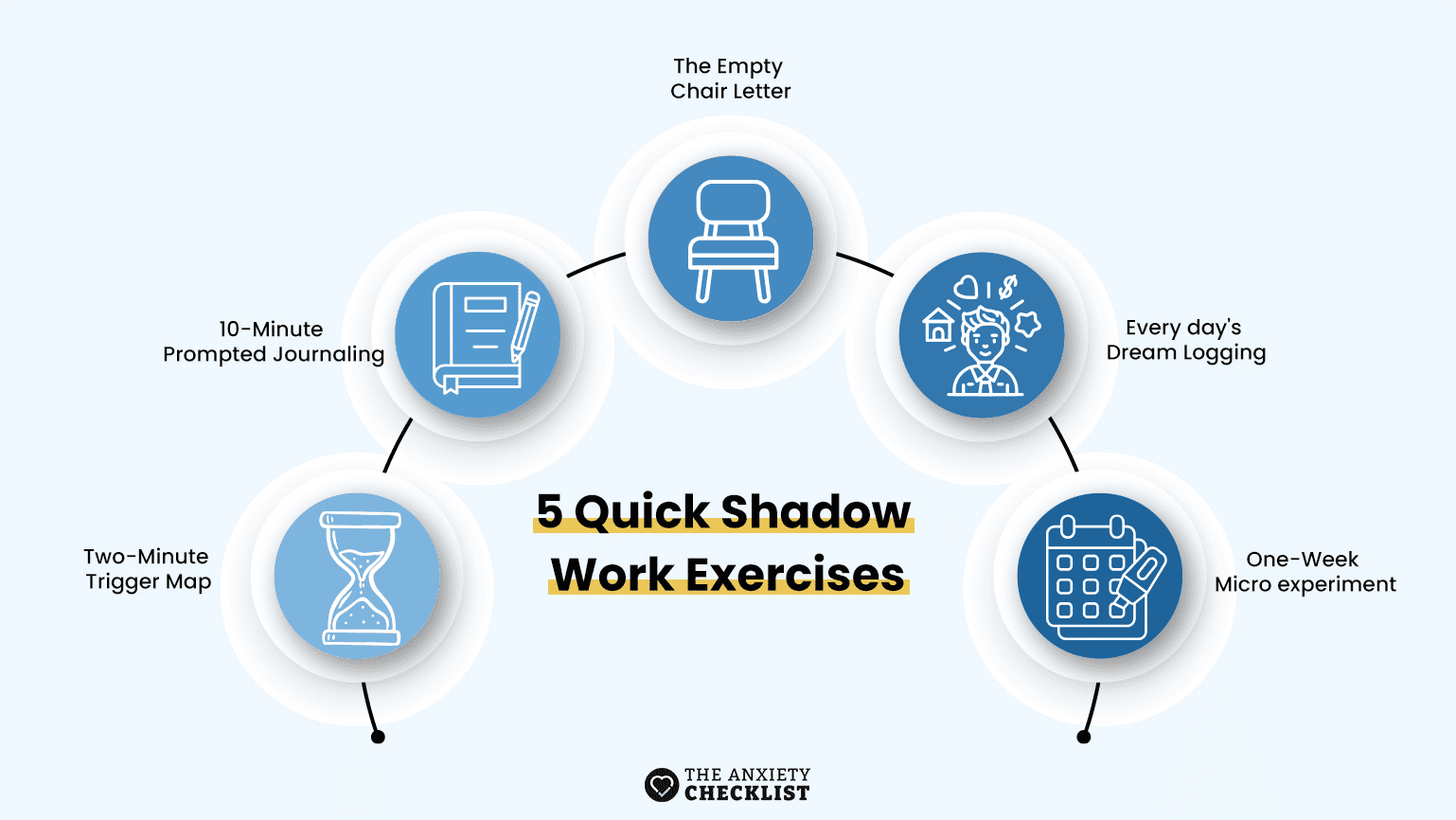
Exercise 1: Two-Minute Trigger Map
Use a single page or app note. Each time you’re triggered, in two minutes write: situation, immediate thought, feeling word, and bodily location.
Limit each entry to one line. After several entries, identify the top 2-3 triggers. This mapping method is a fast way to turn reactivity into data.
Exercise 2: 10-Minute Prompted Journaling
Select one shadow work prompt and write for 10 minutes, without editing.
After writing, highlight one sentence that stands out and ask, “Why did this matter?” Short, timed writing extracts raw material from the unconscious into view, which is a core shadow-work move.
Exercise 3: The Empty-Chair Letter
Sit with a notebook and imagine a chair opposite you. Write a letter from you to a hidden part (or a person) for 10-15 minutes. Then switch and write a reply from that part.
This two-way method makes inner conflicts concrete and gives the shadow a voice to be heard. Do a short grounding practice or breathing exercise after.
Here’s a guided breathing exercise you can use.
Also, combine shadow work with other techniques for anxiety recovery .
Exercise 4: Dream Logging for Beginners
This involves keeping logs of your dreams.
Keep dream notes brief: one line of description and one possible feeling word. Ask, “What does this image want me to notice?”
A simple daily log can reveal repeating images tied to your waking triggers.
Exercise 5: A One-Week Micro-Experiment
Translate an insight into a testable action. Choose one small change and log daily: action, context, result.
Micro-experiments show whether awareness creates real-world shifts — and they’re doable without high risk.
This section gave you a practical toolkit of five timed exercises designed to help you explore your shadow gently and build real-world awareness through daily habits. Use these to start practicing shadow work today.
Who Should and Should Not Use the Shadow Work Technique
Shadow work can be effective for many, yet it is important to be careful. It might not be what you’re ready for at this point in time, so be prudent.
Here’s a quick summary of who should and shouldn’t use shadow work.
Who Should Use Shadow Work
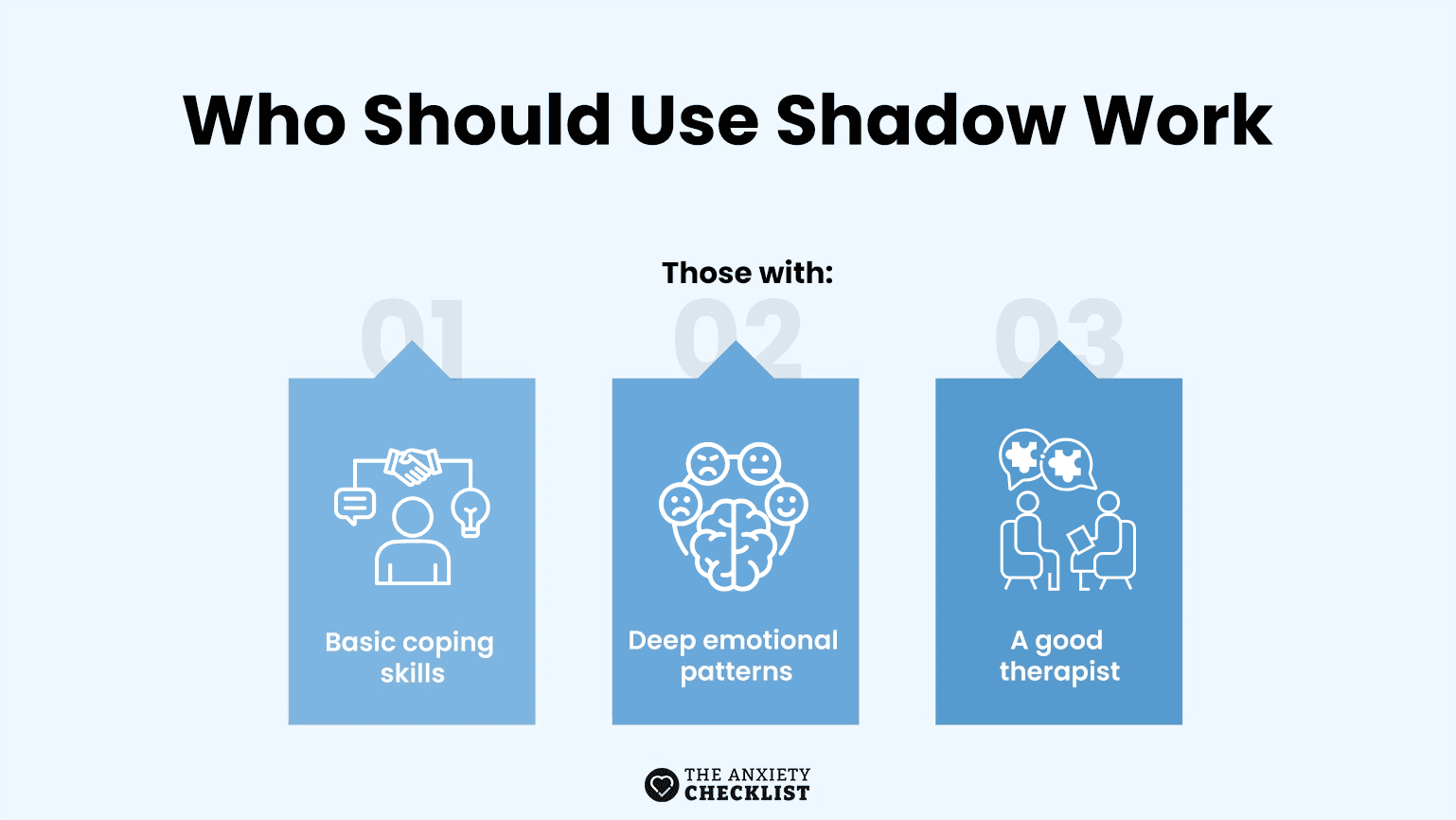
Anyone who:
- Has a stable daily routine and basic coping skills like grounding and breath work.
- Struggles with recurring emotional patterns and wants to convert insight into small behavior changes.
- Is already in therapy and can bring discoveries safely into clinical sessions.
Who Should Be Careful or Avoid Shadow Work
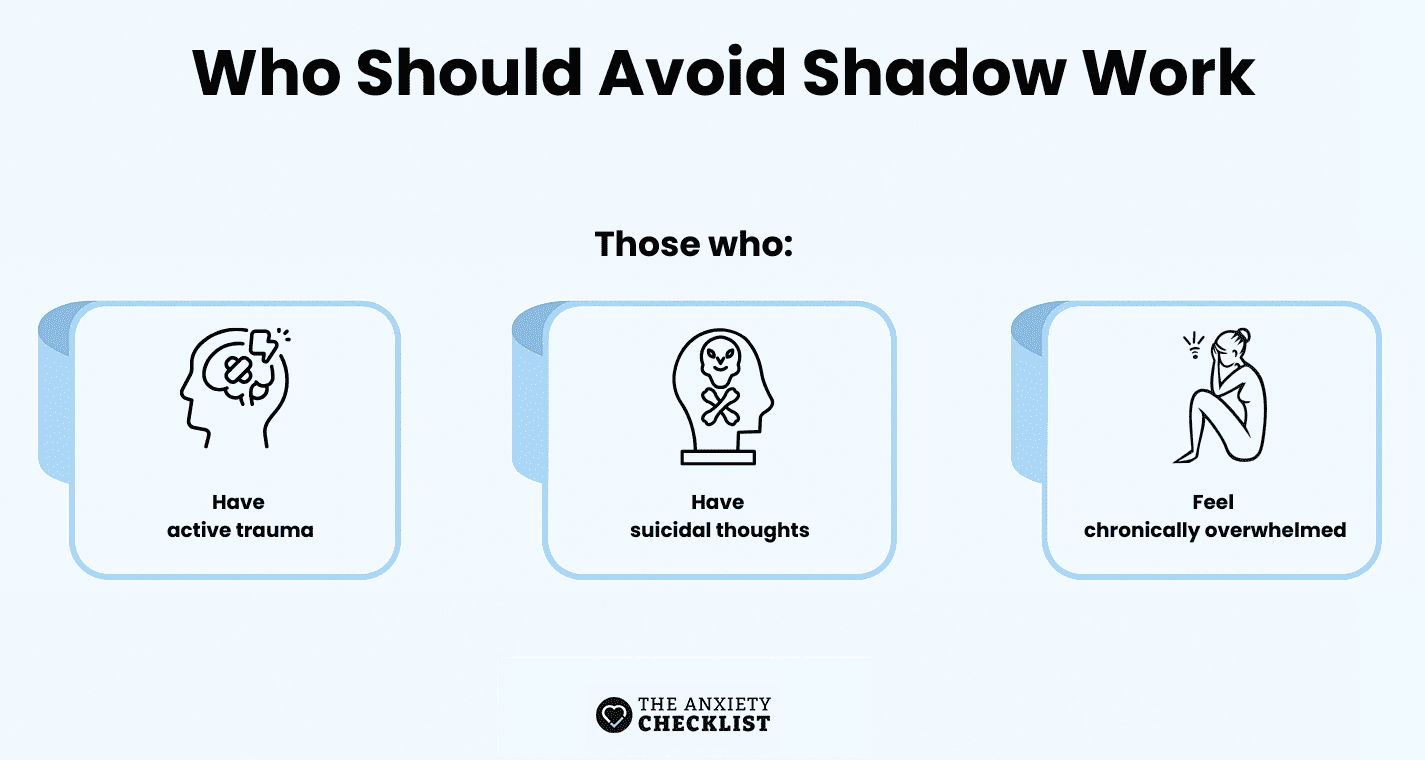
Anyone who:
- Witnesses trauma symptoms, such as flashbacks and nightmares, currently.
- Experiences disassociation, anxiety attacks , panic attacks, or suicidal thoughts.
- Feels chronically overwhelmed after doing introspective exercises or lacks a support system.
To conclude, shadow work can help when you’re steady and curious, but pause and get support if past trauma still feels raw.
Frequently Asked Questions
Try One Shadow Work Prompt Today
Anxiety University
Explore the Anxiety University
Free guides to help you understand anxiety, one topic at a time.
- Getting StartedThe basics of anxiety and how it works
- Self-Assessments & Anxiety TestsCheck in on your symptoms with free tests
- Cognitive Traps & Thought PatternsSpot the thinking habits that fuel anxiety
- Stress ReductionPractical ways to calm your body and mind
- Common Anxiety PhobiasUnderstand specific fears and how they are treated
- Inspiring StoriesReal stories and words that remind you you are not alone