
If you've found yourself searching for "signs I have anxiety," you're already taking a crucial step toward understanding yourself better. It’s easy to dismiss persistent worry, unexplained physical tension, or that constant feeling of being on-edge as just 'stress.' But what if it's more than that? Recognizing the specific ways anxiety can manifest, both physically and mentally, is the key to unlocking a life free from its persistent grip.
This article is designed to be a clear and direct roadmap to that understanding, offering a sense of hope and a path forward. We are not just listing symptoms; we are providing clarity. You will learn to identify eight of the most common, and sometimes subtle, signs that what you're experiencing might be anxiety. We will also help you distinguish between normal, everyday worry and a more significant issue that deserves attention.
Most importantly, this guide is built on the firm belief that healing is not only possible but achievable. You don't have to live with the constant hum of fear or the sudden jolts of panic. Within this article, you will discover actionable steps you can take today to begin managing these feelings. You’ll also learn how structured tools like The Anxiety Checklist can provide a clear, organized path toward a calmer, more empowered life. Let's begin this journey from uncertainty to clarity.
1. Persistent Worry, Racing Thoughts, and Cognitive Fog
One of the most defining cognitive signs I have anxiety is a mind that won't turn off. This isn't the same as normal, productive thinking; it's a cycle of persistent, uncontrollable worry about potential negative outcomes, often disproportionate to the actual situation. Your brain feels stuck in a loop, replaying "what-if" scenarios about work, health, or relationships, even when you know, logically, that everything is probably fine.
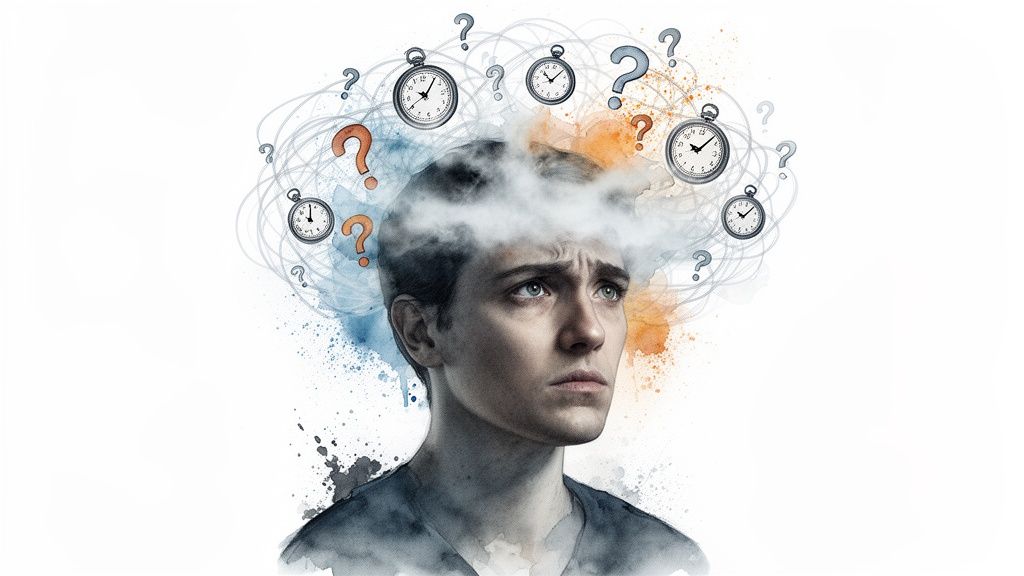
This mental overdrive often leads to racing thoughts, where your mind jumps rapidly from one concern to the next without resolution. This constant threat-scanning mode also impacts your ability to concentrate, leading to what many describe as "cognitive fog." Simple tasks may feel overwhelming, your memory might seem unreliable, and productivity can decline despite your best efforts.
How to Recognize It
- Excessive Planning: You worry about a presentation weeks in advance, despite being fully prepared.
- Mental Ping-Pong: Your thoughts jump from a work deadline to a strange physical sensation to a financial bill, all within minutes.
- Nighttime Spirals: You lie awake exhausted, your mind cycling through worst-case scenarios instead of resting.
- Focus Breakdown: You find yourself reading the same sentence over and over, unable to absorb the information.
Actionable Steps to Regain Clarity
While this cognitive storm can feel overwhelming, you have the power to calm the winds. It starts with learning to manage your thoughts instead of letting them manage you. These strategies, grounded in cognitive-behavioral principles, can help you regain control and find mental peace.
- Set a "Worry Time": Designate 15 minutes each day to consciously think about your worries. When a worry pops up outside this time, jot it down and tell yourself you'll address it during your scheduled slot.
- Challenge Your Thoughts: When a racing thought appears, ask: "Is this thought based on fact or fear?" This simple question, a core concept in cognitive therapy, separates anxious speculation from reality.
- Use the 5-4-3-2-1 Grounding Method: When your mind accelerates, pause. Name 5 things you can see, 4 things you can feel, 3 things you can hear, 2 things you can smell, and 1 thing you can taste. This pulls your focus from internal chaos to the present moment.
- Break Down Tasks: A large project can trigger anxiety and cognitive fog. Break it into small, manageable chunks to reduce overwhelm and build momentum.
For a deeper dive into breaking these cognitive cycles, you can learn more about how to manage overthinking and anxiety on anxietychecklist.com.
2. Physical Tension and Muscle Rigidity
One of the most persistent physical signs I have anxiety is a body that feels constantly braced for impact. This isn't the temporary soreness you feel after a workout; it's a chronic, deep-seated muscle tension driven by your body's fight-or-flight response. Your nervous system keeps your muscles in a state of high alert, causing rigidity in areas like the neck, shoulders, jaw, and lower back, even when you're trying to relax.
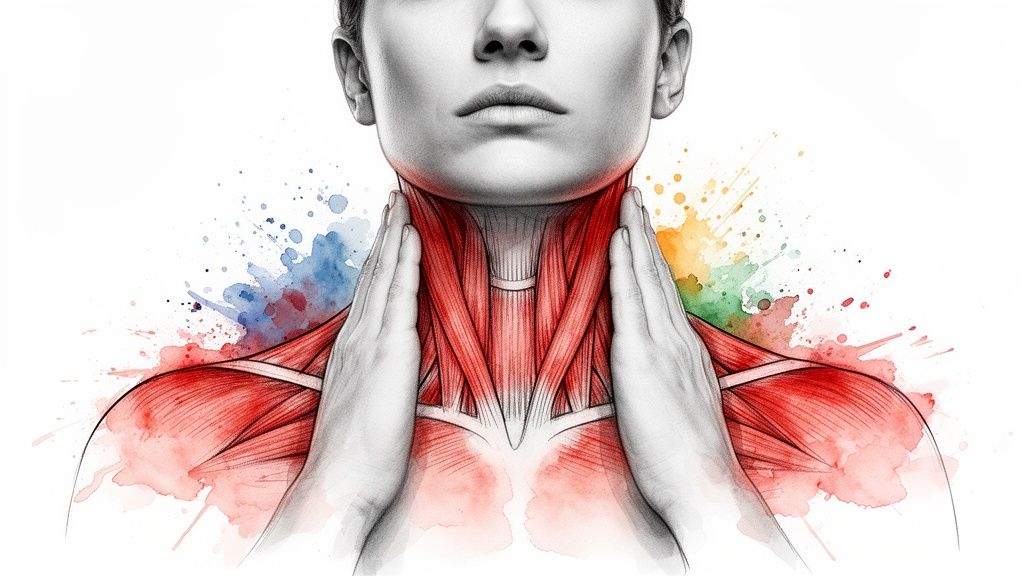
This sustained physical guarding is your body’s reaction to a mind that perceives constant threats. Over time, this unresolved tension can lead to headaches, TMJ problems, and chronic pain conditions. Recognizing this physical symptom as a direct message from your anxious mind is the first step toward finding relief and breaking the cycle of pain.
How to Recognize It
- Chronic Soreness: You wake up with a stiff neck or sore shoulders, despite not having exerted yourself physically.
- Jaw Clenching: You catch yourself grinding your teeth during the day or are told you do it at night, leading to jaw pain or headaches.
- Unconscious Guarding: You frequently find your shoulders hunched up towards your ears, especially when concentrating or stressed.
- Pain Peaks: You notice your back or neck pain intensifies during high-stress periods at work or in your personal life.
Actionable Steps to Regain Clarity
While this physical tightness can feel inescapable, you have the power to teach your body to release its grip. It starts with intentionally breaking the connection between your anxious thoughts and your muscle response. These strategies can help you release tension, reduce pain, and restore a sense of calm to your body.
- Practice Progressive Muscle Relaxation (PMR): Systematically tense and then release different muscle groups, from your toes to your forehead. This technique, developed by Edmund Jacobson, directly teaches your body the difference between tension and relaxation.
- Set Body-Scan Reminders: Use an hourly alarm on your phone to pause and check in with your body. Are your shoulders hunched? Is your jaw tight? Consciously drop your shoulders and relax your jaw.
- Incorporate Gentle Movement: A daily 20-minute walk or gentle stretching session can significantly reduce muscle rigidity by increasing blood flow and releasing endorphins.
- Use Heat Therapy: Applying a warm compress or taking a warm bath can soothe tight, aching muscles and signal to your nervous system that it's safe to relax.
For a guided approach to mastering these physical release techniques, you can explore structured exercises on how to use progressive muscle relaxation for anxiety.
3. Heart Palpitations and Chest Discomfort
One of the most frightening physical signs I have anxiety is the sensation that something is wrong with your heart. This often manifests as heart palpitations: a sudden feeling of your heart pounding, fluttering, or beating irregularly. It’s a direct result of the fight-or-flight response, where your autonomic nervous system floods your body with adrenaline, accelerating your heart rate to prepare for a perceived threat.
This cardiac response is often accompanied by chest tightness, pressure, or sharp pains. The terrifying nature of these symptoms can create a vicious cycle: the physical sensation triggers intense fear of a heart attack, which in turn fuels more anxiety and adrenaline, making the symptoms even stronger. This loop can escalate quickly into a full-blown panic attack, leaving you feeling helpless and convinced of a medical emergency.
How to Recognize It
- Situational Spikes: You notice your heart starts pounding during a high-stakes work presentation or a difficult conversation, even if you feel mentally prepared.
- The "Am I Dying?" Fear: You experience sudden chest pressure and immediately jump to the worst-case conclusion, such as a heart attack, despite having no other risk factors.
- Predictable Patterns: Your palpitations consistently appear during high-stress periods, like the end of a work week, but noticeably improve or disappear during vacations or downtime.
- Nighttime Jolts: You are jolted awake by a racing heart for no apparent reason, which then makes it impossible to fall back asleep due to fear.
Actionable Steps to Regain Calm
Understanding that these sensations are a function of anxiety, not a sign of cardiac failure, is the first step toward breaking the cycle. Once a doctor has ruled out any underlying heart conditions, you can use these strategies to manage the physical symptoms and reclaim a sense of safety in your own body. There is immense hope for living panic-free when you learn to respond differently to these signals.
- Get Medical Clearance First: Your first and most important step is to see a doctor. Ruling out genuine cardiac issues provides the peace of mind necessary to treat these sensations as anxiety symptoms.
- Practice Box Breathing: When your heart races, use the 4-4-4-4 method. Inhale for 4 seconds, hold for 4, exhale for 4, and hold for 4. This technique directly stimulates the vagus nerve, which helps regulate your heart rate.
- Build Cardiovascular Fitness: Regular aerobic exercise (like brisk walking, jogging, or cycling) strengthens your heart and helps regulate its response to stress, making it less reactive to adrenaline surges over time.
- Accept, Don't Fight: Pioneered by Dr. Claire Weekes, the practice of acceptance involves acknowledging the sensation without resisting it. Instead of tensing up, tell yourself, "This is just anxiety. It's uncomfortable, but it's not dangerous." This paradoxically reduces the intensity and duration of the episode.
For a structured approach to identifying the specific triggers behind these physical responses, you can track your symptoms and their contexts on anxietychecklist.com.
4. Sleep Disruption and Insomnia
One of the most physically and mentally draining signs I have anxiety is the profound disruption it causes to sleep. This isn't just a restless night before a big event; it's a chronic pattern where the mind's alarm system refuses to power down. Anxiety fuels a self-perpetuating cycle: racing thoughts prevent you from falling asleep, frequent awakenings jolt you awake with a surge of adrenaline, and early morning waking leaves you staring at the ceiling, dreading the day ahead.
This vicious loop is particularly cruel because the very thing you need to cope with anxiety, restorative sleep, is what anxiety steals from you. Sleep deprivation amplifies emotional reactivity and impairs judgment, making it even harder to manage anxious feelings the next day. This constant exhaustion can make healing feel impossible, but breaking the cycle is a critical and achievable step toward regaining control.
How to Recognize It
- Bedtime Dread: You feel exhausted all day but become wide awake and anxious as soon as your head hits the pillow.
- The 3 AM Wake-Up Call: You wake up suddenly in the middle of the night, your heart pounding with anxious thoughts about your health, family, or work, and find it impossible to fall back asleep.
- Non-Restorative Sleep: You technically sleep for seven or eight hours but wake up feeling just as tired and on-edge as when you went to bed.
- Anxiety-Fueled Nightmares: Your dreams are frequently vivid, stressful, or centered on your biggest fears.
Actionable Steps to Reclaim Your Rest
While anxiety can feel like an unwelcome bedtime companion, you can implement strategies to create a sanctuary for sleep and teach your nervous system to wind down. These powerful techniques, often rooted in cognitive-behavioral therapy for insomnia (CBT-I), can help you find the peaceful rest you deserve.
- Create a Worry Cutoff Time: Designate a time at least two hours before bed to stop engaging with stressful content or planning. If a worry arises after this time, write it down to address the next day.
- Practice the 4-7-8 Breathing Technique: To activate your body's relaxation response, inhale through your nose for 4 counts, hold your breath for 7 counts, and exhale slowly through your mouth for 8 counts. Repeat this several times.
- Establish a Tech-Free Bedroom: Remove phones, laptops, and TVs from your bedroom. These devices emit blue light that disrupts melatonin production and can serve as a portal to anxiety-inducing news or emails.
- Introduce a Calming Pre-Sleep Ritual: Consistent, calming activities signal to your body that it's time to sleep. If anxiety frequently disrupts your sleep, exploring practices like using a sauna to improve sleep might offer a path towards more restful nights.
For more structured guidance on calming a racing mind before bed, you can find powerful techniques in our guide to meditation for anxiety.
5. Panic Attacks and Acute Fear Episodes
A panic attack is one of the most terrifying signs I have anxiety, feeling like a sudden, overwhelming tsunami of fear that floods your body and mind. This intense episode of acute fear is accompanied by powerful physical symptoms, such as a racing heart, shortness of breath, dizziness, and sweating, all of which peak within minutes. It's common to misinterpret these sensations as a life-threatening medical emergency, like a heart attack or stroke, creating a profound sense of doom.

While panic attacks are not medically dangerous, their sheer intensity and unpredictability can be life-altering. The fear of having another attack often leads to avoidance behaviors, causing you to shrink your world to feel safe. This cycle can be broken, and it is entirely possible to live a panic-free life by understanding what's happening and learning how to respond differently.
How to Recognize It
- Sudden Onset: The feeling of intense fear comes out of the blue, often without an obvious trigger.
- Physical Overload: You experience a pounding heart, chest pain, trembling, and a choking sensation.
- Fear of Losing Control: You have a catastrophic belief that you are dying, going crazy, or about to faint.
- Avoidance Behavior: After having a panic attack in a grocery store, you start avoiding all public spaces.
Actionable Steps to Regain Control
Panic feels uncontrollable, but you can learn to navigate these episodes and dismantle their power over you. The key is to stop fighting the sensations and instead teach your brain that they are not dangerous. These strategies are designed to help you ride the wave of panic until it inevitably passes.
- Practice Slow Breathing: Counteract hyperventilation by breathing in for a slow count of 4 and out for a slow count of 6. This activates your body's relaxation response.
- Use the 5-4-3-2-1 Grounding Method: When panic strikes, anchor yourself in the present. Name 5 things you can see, 4 things you can feel, 3 you can hear, 2 you can smell, and 1 you can taste.
- Remember the Panic Arc: Remind yourself that a panic attack is temporary. It will peak and then naturally subside on its own. Your only job is to cope until it passes.
- Develop a "Panic Toolkit": Keep a small kit with grounding objects (like a smooth stone), reassurance cards with helpful phrases, and a reminder of your breathing exercises.
Understanding the mechanics of a panic attack is the first step toward freedom. For a comprehensive guide on what causes these episodes and how to stop them, you can learn more about how to handle panic attacks on anxietychecklist.com.
6. Avoidance Behaviors and Social Withdrawal
Another powerful behavioral sign I have anxiety is the instinct to avoid people, places, or situations that trigger fear. This avoidance provides a temporary sense of relief, but it’s a deceptive comfort. By steering clear of what scares you, your brain never gets the chance to learn that you can, in fact, handle the situation, which only strengthens the anxiety over time.
This pattern often leads to social withdrawal. You might start declining invitations, skipping meetings, or ignoring phone calls, not because you want to, but because the mental and physical toll of socializing feels overwhelming. This creates a painful cycle: anxiety pushes you away from people, and the resulting loneliness and isolation can make the anxiety even worse, shrinking your world one "no" at a time.
How to Recognize It
- Career Stagnation: You turn down a promotion or a new job opportunity because it involves public speaking or more social interaction.
- Social Ghosting: You find yourself making excuses to get out of social events you previously enjoyed, like parties or family gatherings.
- Restricted Routines: You only shop at certain times to avoid crowds or take longer routes to avoid highways, gradually limiting where you feel safe.
- Parental Impact: As a parent, you might avoid school events or limit your child's activities to manage your own social anxiety, inadvertently affecting their life.
Actionable Steps to Reclaim Your World
Breaking free from avoidance is about courageously re-engaging with life, one small step at a time. It's not about eliminating fear but about learning to act despite it, proving to yourself that you are more capable than your anxiety tells you. These strategies, inspired by principles from Acceptance and Commitment Therapy and behavioral science, can help you stop retreating and start living again.
- Create a Values-Based Goal List: What do you want your life to be about? Write down what truly matters to you (e.g., "connecting with family," "advancing my career"). Use this list as powerful motivation to face situations you've been avoiding.
- Build an Exposure Ladder: List the situations you avoid, ranking them from least scary to most terrifying. Start by tackling the easiest one. If driving is a fear, your first step might be just sitting in the driver's seat for five minutes without starting the car.
- Challenge Avoidant Thoughts: When the urge to avoid arises, identify the thought driving it (e.g., "I'll make a fool of myself"). Ask yourself, "What would I do if this thought wasn't in charge?" This separates you from the anxiety and gives you back control.
- Track Your Wins: Keep a log of every time you choose to "approach" instead of "avoid." Celebrating these small victories, no matter how minor they seem, builds the self-efficacy and momentum needed to reclaim your freedom.
For a structured approach to identifying and overcoming your specific avoidance patterns, the 93-point Anxiety Checklist can provide a clear roadmap to a bigger, braver life.
7. Hypervigilance and Constant Threat Scanning
Another powerful indicator that makes you wonder, "do signs I have anxiety apply to me?" is a constant state of high alert. This is known as hypervigilance, where your brain relentlessly scans the environment for potential threats, even in perfectly safe situations. Your nervous system gets stuck in its "on" position, making it impossible to truly relax or feel at ease.
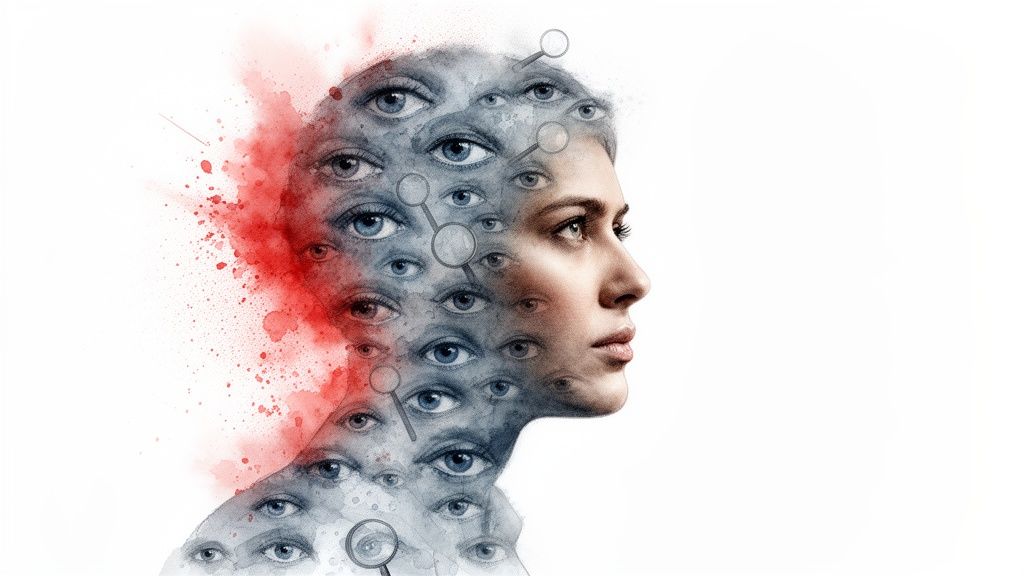
This state keeps you hyper-attuned to subtle shifts in your surroundings, from a change in someone's tone of voice to a sudden noise. You might also turn this scrutiny inward, obsessively monitoring your own bodily sensations for any sign of illness or panic. This exhausting cognitive state is a direct result of an overactive threat-detection system, keeping you in a perpetual state of readiness for a danger that rarely materializes.
How to Recognize It
- Social Scanning: You constantly watch others' facial expressions in a meeting, trying to gauge if they are upset with you.
- Body Monitoring: You interpret a slight increase in your heart rate as a sign of an impending cardiac emergency, leading to more panic.
- Environmental Over-analysis: As a parent, you can't enjoy your child's playtime at the park because you are constantly scanning for every potential hazard.
- Information Seeking: You compulsively check the news or social media for updates on potential disasters or negative events.
Actionable Steps to Regain Safety
Living in a constant state of high alert is draining, but it is possible to teach your nervous system to stand down and feel safe again. By consciously choosing to observe instead of react, you can break the cycle of threat-scanning and reclaim your sense of peace. These steps can help you retrain your brain to relax.
- Practice Mindful Observation: When you notice yourself scanning for threats, simply acknowledge it without judgment. Say to yourself, "My mind is threat-scanning," and gently bring your attention back to the present moment.
- Build an Evidence Log: Keep a journal of perceived threats and their actual outcomes. Noting how many "false alarms" your anxiety creates provides concrete evidence that you are safer than you feel.
- Schedule "Deliberate Relaxation": Actively schedule 15-20 minutes of relaxation into your day in a safe environment. Use this time for deep breathing or meditation to show your nervous system it's okay to power down.
- Ground Yourself in the Present: When your mind starts scanning, use grounding techniques like holding a cool object or pressing your feet firmly into the floor. This reinforces the physical reality of your current safety.
This hypervigilant state is a core component of the body's alarm system. To understand more about why this happens, you can explore our guide to the fight-or-flight response and learn how to manage it.
8. Irritability and Emotional Dysregulation
While many people associate anxiety with fear and worry, one of the more surprising signs I have anxiety is a persistent feeling of irritability. If you find yourself with a short fuse, snapping at loved ones, or overreacting to minor frustrations, it may not be a character flaw; it's often a direct result of an overtaxed nervous system. Chronic anxiety depletes your emotional and physical reserves, leaving you with little capacity to manage everyday stressors, making emotional outbursts more likely.
This state is known as emotional dysregulation. Your brain's threat-detection system (the amygdala) is in a constant state of high alert, making you perceive minor inconveniences as significant threats. This constant internal battle makes it difficult to maintain composure, leading to emotional volatility that can feel confusing and disproportionate to the situation, damaging relationships and self-esteem.
How to Recognize It
- Disproportionate Reactions: You have a full-blown emotional outburst because someone loaded the dishwasher incorrectly.
- Constant Snapping: A normally patient parent finds themselves repeatedly snapping at their children for small infractions.
- Post-Anxiety Relief: You notice your infamous "short temper" almost disappears when your underlying anxiety is effectively managed.
- Feeling "On Edge": You feel a constant, low-level anger or frustration simmering just below the surface, ready to boil over.
Actionable Steps to Regain Emotional Balance
Recognizing that irritability is a symptom, not your identity, is the first step toward healing. You can learn to regulate your emotions and respond with intention rather than reacting from a place of stress. These strategies help you build emotional resilience and restore a sense of calm.
- Pause and Question: When you feel a surge of anger, take a deep breath and pause. Ask yourself, "Is my reaction proportionate to this situation, or is my anxiety driving this?" This moment of reflection can prevent an outburst.
- Communicate Your State: Explain to your loved ones that your irritability is a symptom of your anxiety, not a reflection of your feelings for them. A simple, "I'm feeling very anxious today, so I might be a bit on edge," can foster understanding.
- Schedule Recovery Time: Your emotional reserves aren't infinite. Use daily scheduling worksheets to build in "recovery time" between stressful activities. This could be 15 minutes of quiet reading, listening to music, or simply sitting without distractions.
- Practice Quick Repair: When you do snap, apologize and repair the connection quickly. Explain that your reaction was driven by anxiety. As relationship expert Harriet Lerner suggests, a sincere apology can mend relational strain and reinforce that you are working on managing your symptoms.
By understanding the link between anxiety and irritability, you can begin to address the root cause and find your way back to a more peaceful, regulated state. Tools like The Anxiety Checklist can help you track these symptoms and implement targeted strategies for lasting change.
8-Point Comparison: Signs of Anxiety
| Symptom / Indicator | Implementation complexity 🔄 | Resource requirements ⚡ | Expected outcomes ⭐📊 | Ideal use cases 💡 | Key advantages ⭐ |
|---|---|---|---|---|---|
| Persistent Worry, Racing Thoughts, and Cognitive Fog | Moderate 🔄🔄 — CBT + mindfulness practice | Moderate ⚡⚡ — regular practice, worksheets, possible therapy | Good ⭐⭐⭐ — measurable cognitive gains; improved focus/productivity (📊) | When intrusive thoughts impair work/study or daily function | Rapid cognitive improvement with targeted techniques |
| Physical Tension and Muscle Rigidity | Low 🔄 — PMR, stretching, exercise | Low–Moderate ⚡⚡ — short daily routines, PT or massage if needed | Good ⭐⭐ — fast symptom relief; lowers pain risk (📊) | Somatic complaints (neck, jaw, shoulders), tension headaches | Tangible, observable relief via multiple low-cost methods |
| Heart Palpitations and Chest Discomfort | Moderate–High 🔄🔄🔄 — medical rule-out + breathing/fitness work | Moderate–High ⚡⚡⚡ — medical evaluation, cardio exercise, skills practice | Variable ⭐⭐ — significant relief after clearance; reduces health anxiety (📊) | Acute cardiac-like sensations or frequent alarming palpitations | Clear physiological marker; trackable with wearables and medical reassurance |
| Sleep Disruption and Insomnia | Moderate 🔄🔄 — CBT-I and sleep-hygiene routines | Moderate ⚡⚡ — behavioral changes, possible therapy or coaching | High ⭐⭐⭐ — improved sleep often reduces other symptoms (📊) | Anxiety with chronic sleep problems; foundational treatment priority | Strong downstream benefits across cognition, mood, and energy |
| Panic Attacks and Acute Fear Episodes | Moderate 🔄🔄 — exposure, breathing, panic protocols | Moderate ⚡⚡ — skills practice, possible guided therapy | High ⭐⭐⭐ — episodes decrease markedly with training (📊) | Recurrent sudden intense anxiety or fear episodes | Highly treatable; clear, actionable protocols with measurable outcomes |
| Avoidance Behaviors and Social Withdrawal | High 🔄🔄🔄 — graded exposure and behavioral change | High ⚡⚡⚡ — therapy, support, sustained exposures | High ⭐⭐⭐ — major life functioning gains when addressed (📊) | Functional impairment, missed opportunities, progressive life restriction | Direct restoration of activities, confidence, and quality of life |
| Hypervigilance and Constant Threat Scanning | High 🔄🔄🔄 — neural/nervous system retraining, mindfulness | High ⚡⚡⚡ — sustained practice, somatic or trauma-informed therapy | Moderate–High ⭐⭐📊 — reduces baseline anxiety with consistent work | Chronic threat-scanning, trauma-related vigilance, pervasive fatigue | Lowers constant alertness and reduces mental exhaustion over time |
| Irritability and Emotional Dysregulation | Moderate 🔄🔄 — emotion-regulation skills, communication work | Moderate ⚡⚡ — skills training, rest, supportive routines | Good ⭐⭐ — relationships and mood improve as anxiety is managed (📊) | Relationship strain, unexpected outbursts, morale problems | Socially observable gains; improvements often noticed early by others |
From Awareness to Action: Your Next Step Towards a Panic-Free Life
Reading through a list of potential anxiety symptoms can be an overwhelming experience. You might feel a pang of recognition with the descriptions of persistent worry, a jolt of understanding when reading about heart palpitations, or a sense of validation seeing avoidance behaviors laid out in plain text. If you saw yourself in the signs discussed in this article, it's crucial to understand one thing above all else: this is not a final diagnosis, but a starting point. It is a powerful, courageous first step on a journey toward healing and reclaiming your peace of mind.
The most important takeaway is that recognizing these signs I have anxiety is not a reason for despair; it is a reason for hope. Anxiety is not a permanent part of your identity. It is a treatable condition, a pattern of responses that your brain and body have learned, often as a way to protect you. The fantastic news is that what has been learned can be unlearned, and new, healthier responses can be built in its place. The path to a calmer, more present life is not a mystery; it is paved with practical, evidence-based strategies that empower you to take back control.
Translating Awareness into Meaningful Action
Awareness is the flashlight that illuminates the problem, but action is the tool that fixes it. Passively experiencing anxiety-driven thoughts and physical sensations keeps you stuck in a reactive cycle. The shift toward a panic-free life begins when you move from simply enduring your anxiety to actively managing it. This doesn't require a massive, intimidating leap. It starts with small, deliberate steps.
- Acknowledge Without Judgment: When you feel a wave of anxiety, instead of fighting it or criticizing yourself, try simply naming it. "This is anxiety. My heart is racing because of adrenaline. This feeling will pass." This small act of mindfulness separates you from the symptom, giving you a crucial moment of perspective.
- Focus on Your Breath: The connection between your breath and your nervous system is your built-in emergency brake. When you notice signs of anxiety, intentionally slow down your exhale so it's longer than your inhale. This simple physiological trick sends a direct signal to your brain that the danger has passed, helping to deactivate the fight-or-flight response.
- Question Your Thoughts: Anxious thoughts often present themselves as facts ("Something terrible is going to happen"). Begin to gently challenge them. Ask yourself: "What is the evidence for this thought? Is there another, more balanced way to look at this situation?" You don't have to believe every thought that pops into your head.
Mastering these small but consistent actions is valuable because it rewires your relationship with anxiety. Instead of being a terrifying, unpredictable force, it becomes a manageable signal that you have the tools to address. This builds self-efficacy and confidence, proving to yourself, one moment at a time, that you are more powerful than your anxious feelings. For a more holistic approach to managing your anxiety and fostering mental resilience, exploring broader wellness resources can be incredibly beneficial in supporting these foundational practices.
Your Journey to Recovery Starts Now
The journey out of chronic anxiety is not about becoming fearless; it's about learning to act bravely even when you feel fear. It's about building a life that is so rich and meaningful that anxiety no longer takes center stage. You have already started by seeking information and building awareness. The hope for a life free from the constraints of panic and worry is real and attainable. You possess the strength and resilience to take the next step.
Ready to turn your awareness of the "signs I have anxiety" into a structured plan for recovery? The Anxiety Checklist provides a comprehensive, step-by-step system with a 93-point interactive checklist and practical worksheets to help you systematically dismantle anxiety's hold on your life. Start your journey from understanding your symptoms to actively building a panic-free future today at The Anxiety Checklist.