

In short
Progressive muscle relaxation is a technique that involves briefly tensing and releasing muscle groups to reduce physical tension and promote calm. Practise it while sitting or lying comfortably, moving steadily from the feet to the face or in reverse, and noticing the contrast between tension and release. It can help manage anxiety, improve sleep and lower heart rate, although regular practice takes time and patience.
Key takeaways
- Take five slow breaths before beginning in a comfortable position.
- You can work through the whole body or target particularly tense muscles.
- Regular practice brings longer-term benefits, though some people feel calmer within minutes.
- PMR may be difficult during severe panic or in noisy settings.
- Tensing muscles may increase soreness for people with existing pain, injuries or medical conditions.
What Is Progressive Muscle Relaxation?
Progressive muscle relaxation (PMR) is a tension-reducing therapy that focuses on relaxing muscle groups. You tense these muscles, holding the tension briefly, then release it, repeatedly.
Here’s a quick video showing how to use PMR to manage anxiety disorders and get better sleep.
The goal is to cultivate stronger mind-body awareness, enabling you to recognize and release uncomfortable tension more easily.
A clinical study was conducted in 2020 on 67 COVID-19 patients to ascertain the effectiveness of PMR against anxiety. The patients were split into two groups. One group was subjected to progressive muscle relaxation twice a day for 5 days; the other was not.
The results showed that the group that used PMR had lower levels of anxiety compared to others. They even registered better sleep quality.
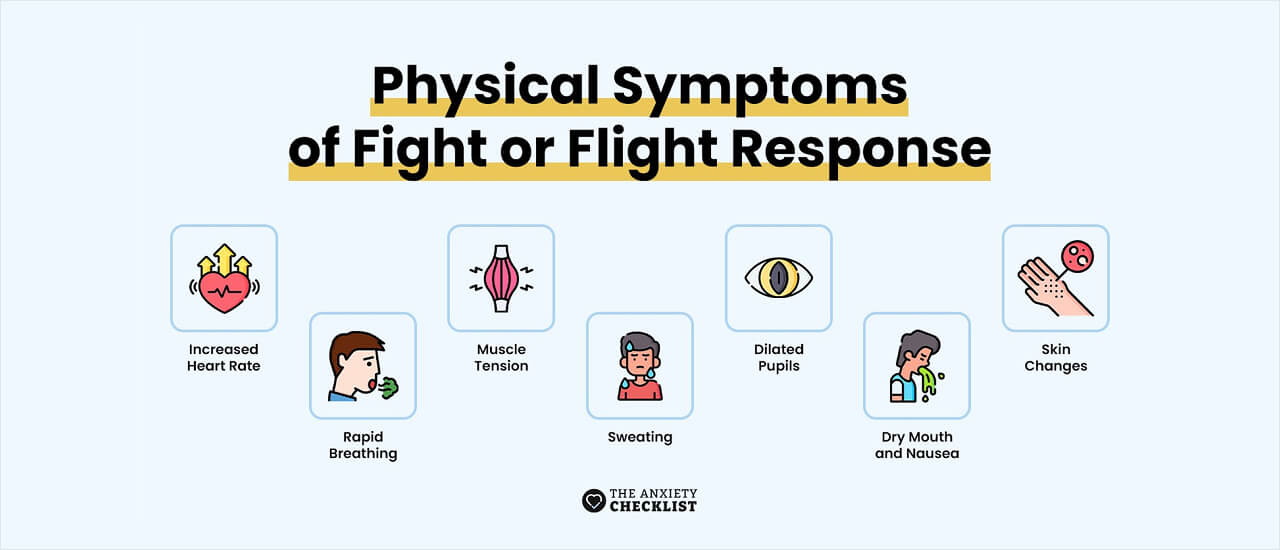
This shows that progressive muscle relaxation techniques go beyond loosening stiff muscles. The tensing and releasing sends signals to your nervous system that you don’t always have to be in a “fight-or-flight” mode all the time.
Below is an illustration of common symptoms of the “fight or flight” response, which includes muscle tension.
PMR trains your body to rest and relax. With time, you get a good understanding of your triggers and how to anticipate them.
What are the Benefits of Progressive Muscle Relaxation?
As we have already seen, progressive muscle relaxation helps make you calm and less anxious. But how effective is it, and what do you get out of it? Here are some top benefits of adopting PMR.
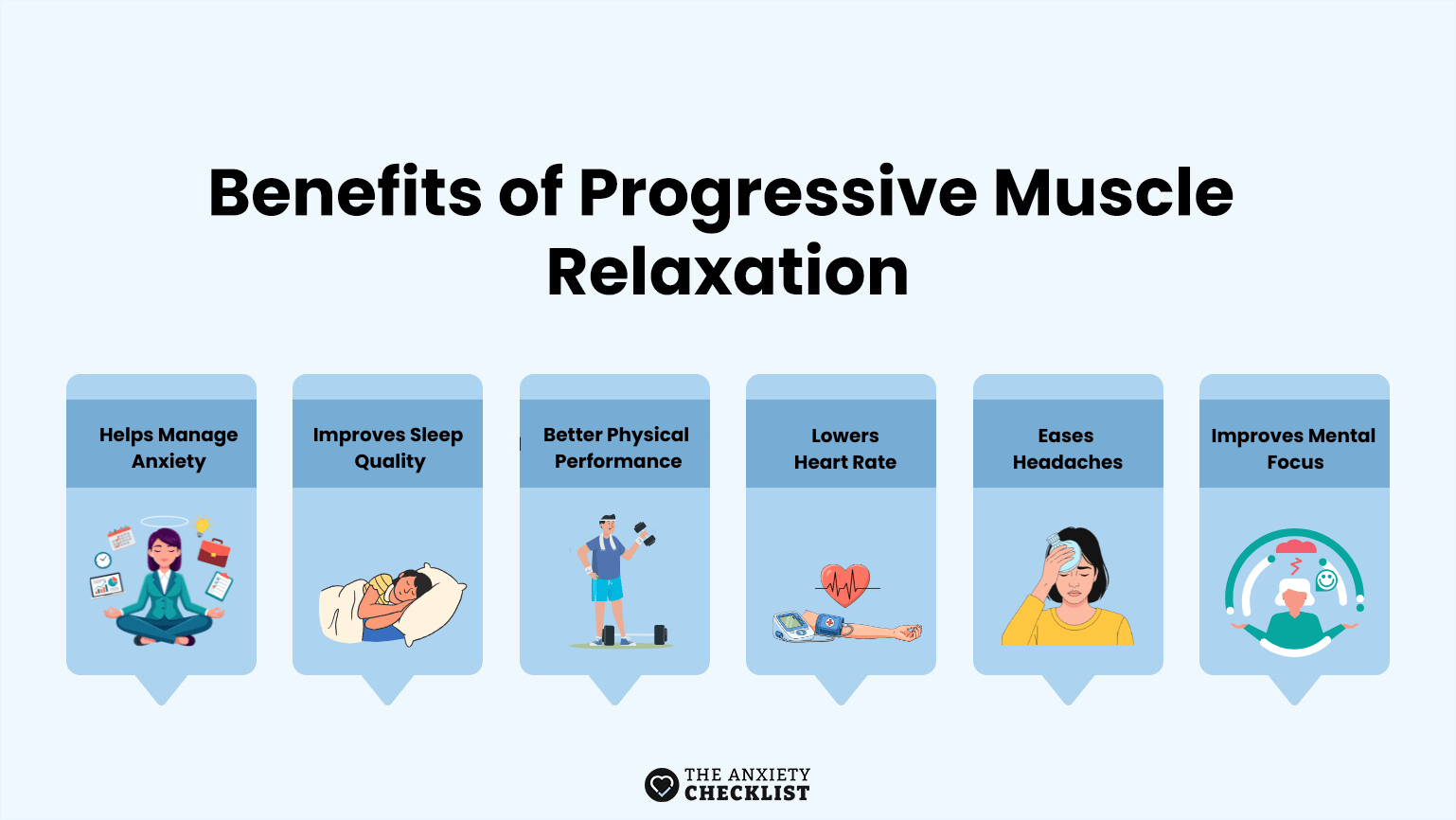
1. Helps Manage Anxiety
Progressive muscle relaxation moderates anxiety disorders by releasing the physical tension that builds whenever anxious thoughts take over. This is because anxiety tends to manifest itself in the body first.
Anxiety shows in the form of tight shoulders, clenched jaws, or a stiff back. Tensing and releasing your muscles through PMR interrupts this cycle of stiffness. It gives your body the space to relax.
Additionally, your heart rate and deep breathing settle when your muscle tension drops. This simple shift helps your brain register that the threat has passed.
2. Improves Sleep Quality
Mental and physical tension are common contributors to insomnia. It’s hard to sleep when your muscles are too tight or you have a lot on your mind. The body reads all this as a sign to stay alert.
Progressive muscle relaxation makes sleeping easier by reducing muscle tightness. This, in turn, leads to a calm body and mind, which reduces stress. That steady focus quiets mental noise and slows the racing thoughts that keep you awake.
3. Enhances Physical Performance
Tense muscles can impede proper movement and coordination. They cause you to react more slowly and limit your range of motion, which affects form, strength, and endurance.
If you’re an athlete, using progressive muscle relaxation is necessary before participating in competitive activities. When you release that tension intentionally, your body moves with less resistance and greater control.
This practice also sharpens your awareness of how your muscles respond under pressure. As you tense and release the next muscle group, you learn to notice early signs of strain during training or daily activity.
4. Lowers Heart Rate
PMR can lower heart rate by calming the nervous system through reducing tension in the body. Tension strains the heart, increasing the rate as though the body is dealing with a threat. A high heart rate carries the following risks.

When you relax your muscles, the heart rate reverts to its normal state. Additionally, a normal heart rate is also linked to better breathing, which has an all-around positive effect on your physical and mental being.
5. Eases Headaches and Migraines
Progressive muscle relaxation can help ease headaches and migraines by reducing muscle tension in the head, neck, and shoulders.
When muscles in the mentioned areas remain tight for extended periods, they compress surrounding tissues and restrict blood flow. This can create a sensation of pressure or throbbing pain in the head.
Progressive muscle relaxation encourages blood vessels to relax and helps muscles remain loose. This prevents or lessens headache symptoms.
6. Improves Mental Focus
Progressive muscle relaxation can improve mental focus by reducing physical tension that often distracts the mind. Tense muscles distract the brain from focusing on other things, as you would constantly be overthinking about the pain you’re feeling.
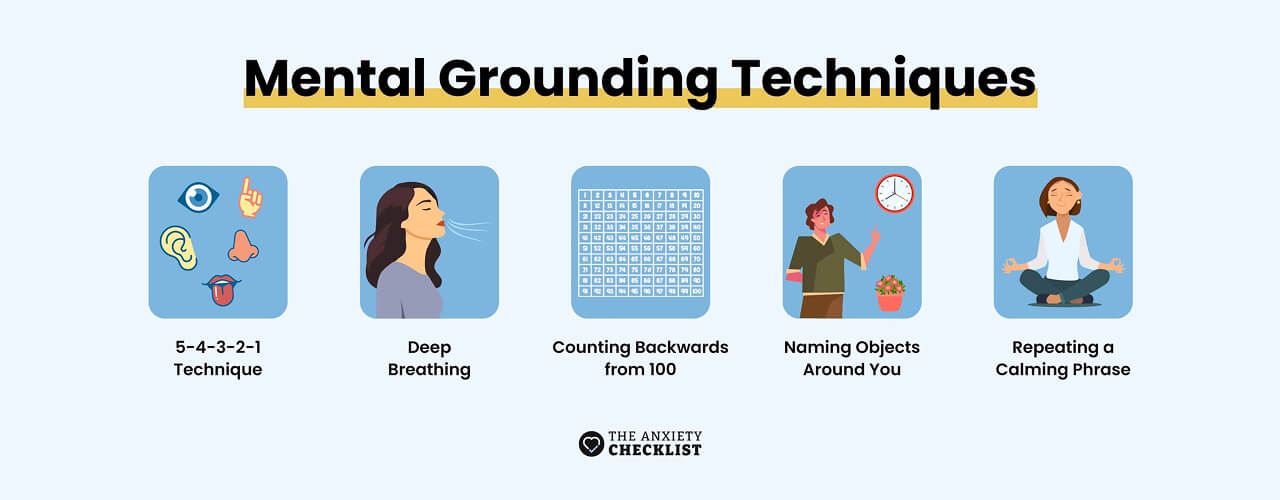
PMR clears that clutter to support attention and concentration through different solutions like mental grounding techniques.
This technique also trains the brain to recognize the difference between tension and relaxation. You increase body awareness and develop control over stress responses. This heightened awareness helps the mind stay anchored to the present moment.
This heightened awareness helps the mind stay anchored to the present moment.
How to Practice Progressive Muscle Relaxation
There is no set way of practicing progressive muscle relaxation. You can choose to relax a few muscle groups or go from top to bottom or vice versa.
You can even combine PMR with meditation exercises or grounding techniques to get even better results.
In general, you can follow these steps.
Basically, move from top to bottom or vice versa, and tighten and relax muscles as you go.
Challenges and Limitations of Using Progressive Muscle Relaxation
Progressive muscle relaxation is effective, but it has some limitations. Let’s discuss some of these.
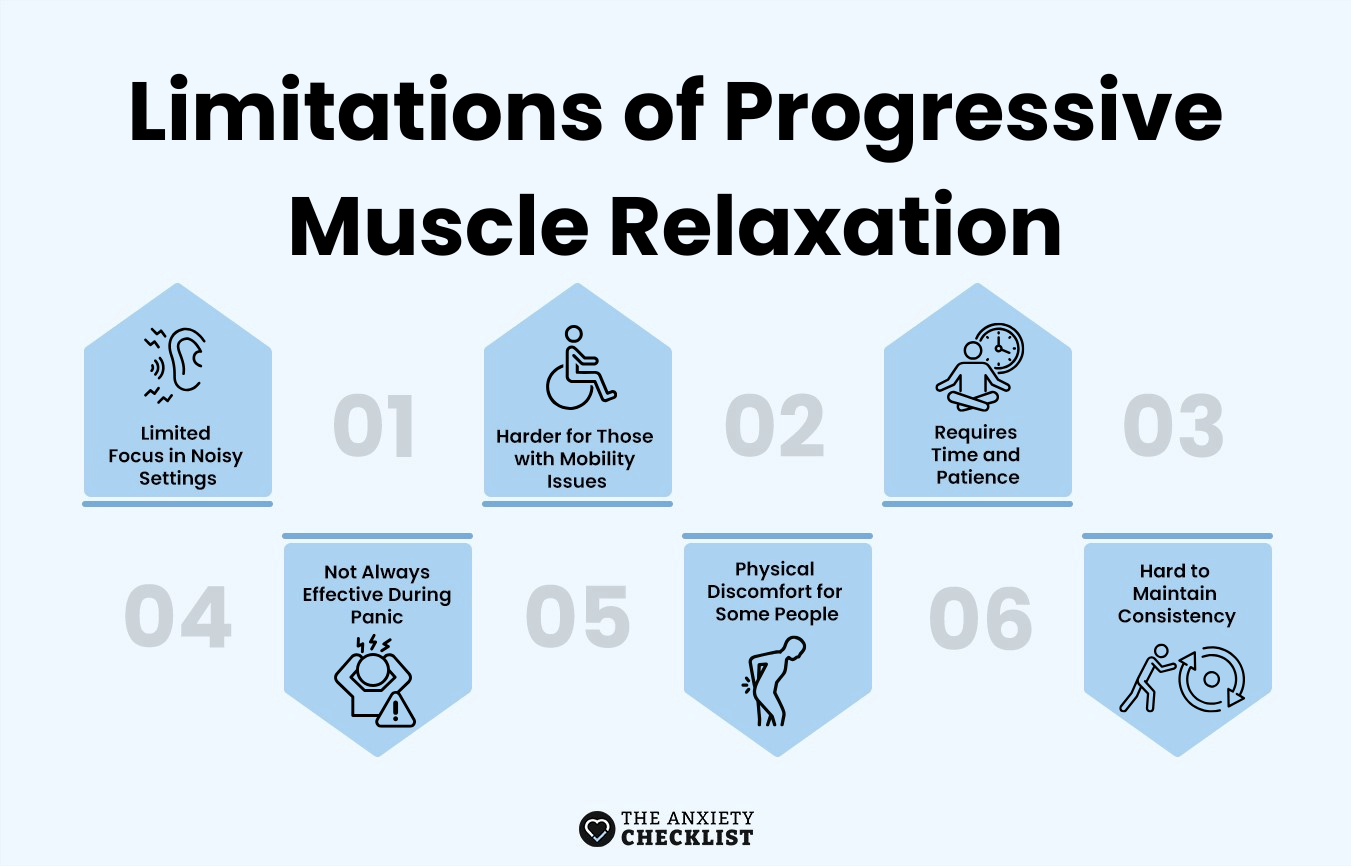
Limited Focus in Noisy Settings
Progressive muscle relaxation needs steady attention and a quiet space similar to meditation. Loud surroundings can pull the mind away from the steps. This interrupts the rhythm of tensing and releasing. You may find yourself starting over or losing the calming effect.
Harder for Those with Mobility Issues
Some movements in progressive muscle relaxation require bending or tightening one muscle group. This might be uncomfortable for people with limited mobility. The routines could end up causing frustration instead of calm.
It may also force someone to skip parts of the sequence that are harder. This changes the experience.
Requires Time and Patience
Like most therapeutic methods, progressive muscle relaxation isn’t a quick process. It takes steady practice for the body to learn to respond on cue.
If you’re in a rush to get quick results, you may end up feeling discouraged, especially if it doesn’t bring relief during the first few sessions.
Not Always Effective During Panic
Progressive muscle relaxation needs steady focus. This becomes hard when you’re dealing with severe panic attacks, with sharp breathing and scattered thoughts.
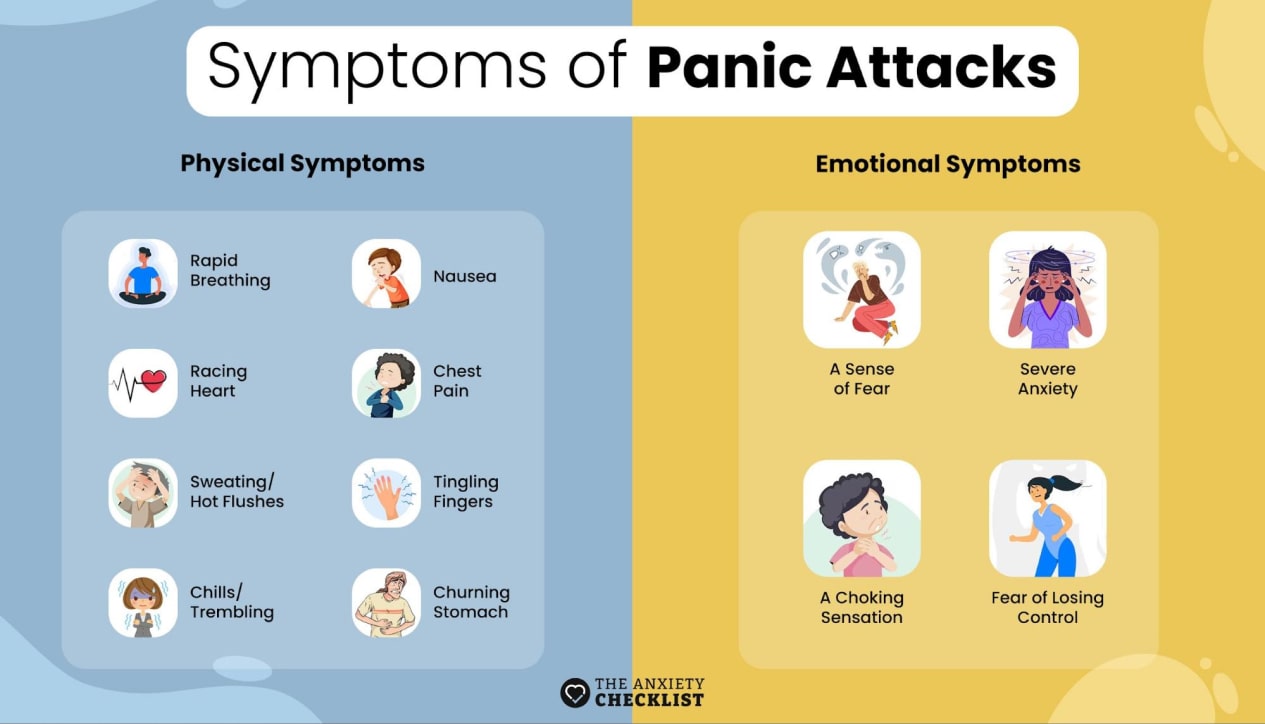
Some panic attack symptoms, like chills, crippling phobias, or anxiety, as illustrated above, can inhibit your ability to follow each PMR step in that state. Ultimately, the technique may not calm you as quickly as you may hope.
Physical Discomfort for Some People
Tensing muscles can feel uncomfortable for people with pre-existing pain. This includes people with injuries or medical conditions.
PMR may increase soreness if you push too hard. This can create worry about making the discomfort worse, which causes more anxiety instead of calming your mind.
Hard to Maintain Consistency
Progressive muscle relaxation works best with regular practice, but staying consistent can be tough. People may forget sessions or skip them when their schedule feels full. This makes it harder to build the habit and see steady progress.
Frequently Asked Questions
Conclusion
Anxiety University
Explore the Anxiety University
Free guides to help you understand anxiety, one topic at a time.
- Getting StartedThe basics of anxiety and how it works
- Self-Assessments & Anxiety TestsCheck in on your symptoms with free tests
- Cognitive Traps & Thought PatternsSpot the thinking habits that fuel anxiety
- Stress ReductionPractical ways to calm your body and mind
- Common Anxiety PhobiasUnderstand specific fears and how they are treated
- Inspiring StoriesReal stories and words that remind you you are not alone