


In short
SMART goals can make anxiety management more manageable by turning broad intentions into actions that are specific, measurable, achievable, relevant and time-bound. Start with one small focus, choose an action that fits your current energy and circumstances, and set a clear measure and timeframe. Write it down, track your effort and adjust it if it feels too demanding.
Key takeaways
- Clear goals reduce guesswork by stating exactly what to do and when.
- Track minutes, frequency or completed days in a notebook or app.
- Goals should match your current time, energy and emotional capacity.
- Choose actions relevant to specific difficulties, such as sleep, worry or social situations.
- Missing a goal is a chance to adjust it, not proof of failure.
What Are SMART Goals for Anxiety?
SMART goals offer an easy, workable framework for managing anxiety. Let’s break down what each letter in SMART represents:
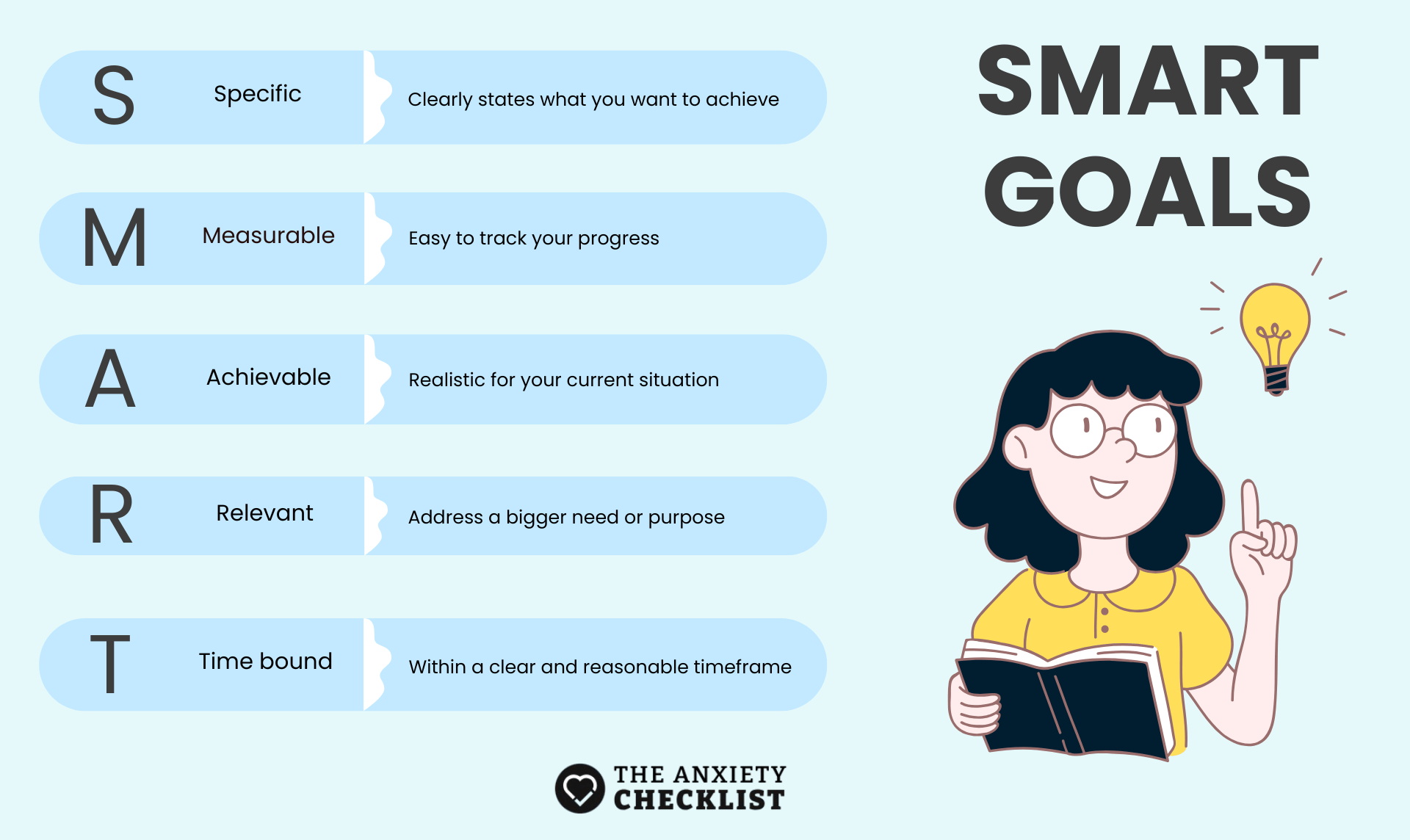
By following the SMART framework, you turn big, abstract ideas into clear, actionable steps. You don’t have to feel lost or overwhelmed by anxiety when you have a plan that’s easy to follow and track.
You can start with one small SMART goal. Once you complete this, it’ll get easier to set more in the future. Even a goal as simple as keeping a gratitude journal does wonders for helping you manage anxiety and improve your mental health.
What Are the Benefits of SMART Goals for Anxiety?
Living with anxiety often means dealing with racing thoughts, fear of the unknown, and a sense of losing control. When goals are unclear or too big, they can add more stress instead of helping.
SMART goals offer a structured way to move forward. They focus on small, clear actions that support progress without pressure. Below are some of the key benefits of using SMART goals for anxiety.
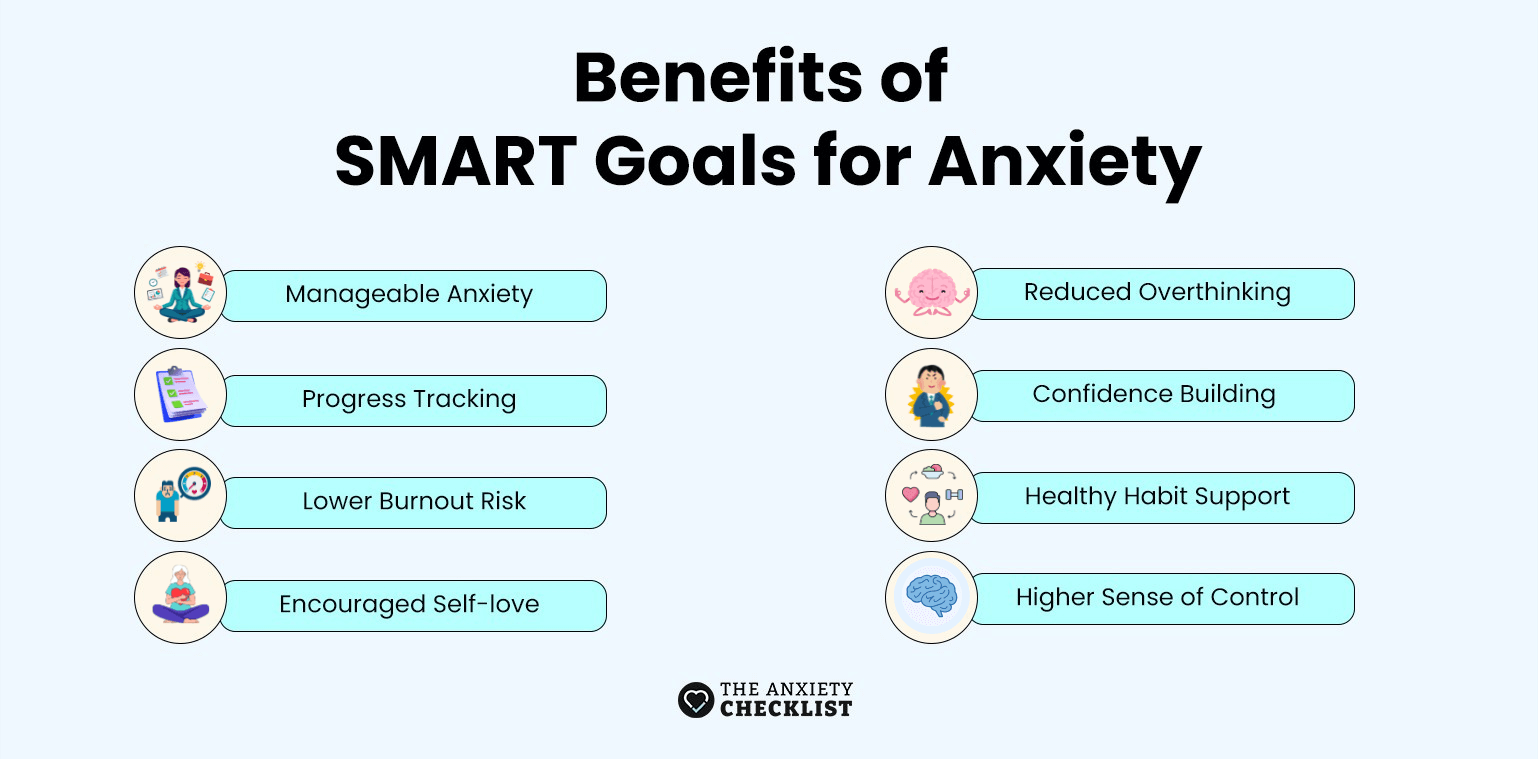
Make Anxiety Feel More Manageable
When left unchecked, anxiety can make even simple tasks feel overwhelming. SMART goals for anxiety help by breaking larger challenges into smaller steps.
Instead of trying to “fix” anxiety all at once, you focus on one clear action at a time. For example, setting a goal to practice saying positive affirmations at the start of each day feels more doable than aiming to “stay calm all day.”
Reduce Overthinking and Uncertainty
When anxiety is high, overthinking happens. The mind jumps from one worry to another. SMART goals for anxiety reduce this mental load by providing clear direction. You know what you need to do, when to do it, and for how long.
This structure helps calm the mind and limit second-guessing. With fewer decisions to make, your energy can go toward the action itself rather than worrying about what to do next.
Help You Track Real Progress
Anxiety can make you feel like you’re not making progress. Even when you’re improving, you may not feel that way. What makes SMART goals for anxiety great is that they’re measurable. This means you can monitor the actions you’ve taken.
You can write down small wins, such as remembering to do power poses or practicing progressive muscle relaxation in the morning to ease anxiety symptoms. This helps you visualize your efforts.
Over time, these small actions add up and show that change is happening. This can help you realize your progress, even on hard days.
Build Confidence Over Time
Each time you meet a SMART goal, you build trust in yourself. This is important for anxiety recovery, which often comes with self-doubt. Achievable goals help you succeed without pushing too hard. When you see that you can follow through, your confidence grows. This confidence can slowly reduce fear and make it easier to try new coping strategies in the future.
Lower the Risk of Burnout
Many people with anxiety, especially those with “high-functioning” anxiety, push themselves too hard. They hope for quick relief, but instead could be met with burnout and frustration.
SMART goals for anxiety help prevent these negative effects by encouraging realistic limits. You don’t have to make drastic lifestyle changes to manage anxiety. You can design goals that fit your energy level and daily life.
If something feels too hard, it can be adjusted. This flexible approach supports steady progress without emotional exhaustion.
Support Healthy Habits
SMART goals for anxiety help you build habits that support mental health. These habits may include regular physical exercise, a healthy sleep routine, mindfulness, or journaling.
Once you set clear time frames and actions, these habits become a part of your daily life. For example, a goal like “stretch for five minutes before bed for two weeks” is simple and easy to repeat. Over time, these habits can help reduce anxiety symptoms.
Encourage Self-Compassion
SMART goals for anxiety leave room for kindness toward yourself. If a goal feels too hard, you can just adjust it as per your ease and. This helps shift the mindset from self-criticism to self-support.
Instead of seeing setbacks as failures, you see them as chances to adjust and learn. Having this mindset helps you recover from anxiety.
Create a Sense of Control
Anxiety can often leave you feeling helpless. SMART goals for anxiety give you back a sense of control by helping you focus on actions you can take.
You may not be able to control every anxious thought, but you can control small daily steps. This reduces fear and helps you feel more grounded. When you feel like you can control your thoughts and actions, you feel more confident and are ready to change.
Overall, SMART goals offer a clear and supportive way to manage anxiety. They turn vague intentions into practical actions. When you focus on small, meaningful steps, you can feel more in control. In turn, this can help you build confidence and reduce stress.
How to Write SMART Goals for Anxiety Management
To write effective SMART goals for anxiety management, focus on what supports you, not pressures you. Anxiety triggers can take a toll on your mind and body, so your goals should feel steady but kind.
In this section, we’ll walk you through a step-by-step guide for writing SMART goals for anxiety. We’ll also provide real-life examples you can adapt to your own needs.
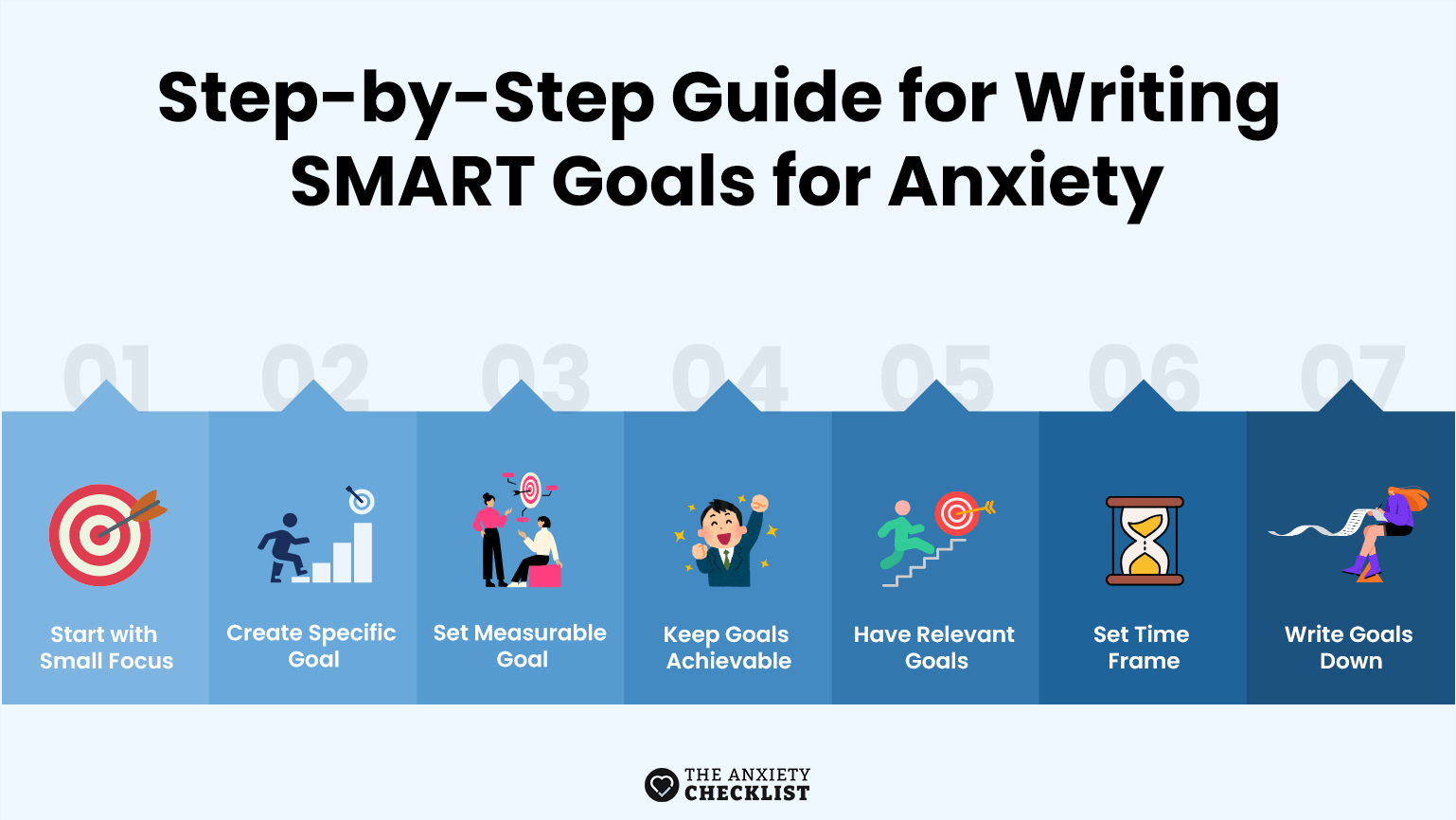
1. Start with a Small Focus
Before writing SMART goals for anxiety, decide on a small area you want to work on. Anxiety can show up in many ways, such as racing thoughts, poor sleep, tension, or avoidance. Trying to fix everything at once can feel overwhelming.
Ask yourself one simple question: What is one thing that would make my days feel a little easier right now?
This could be sleeping better, calming your body, moving more, or reducing worry to mitigate anxiety causes. Once you pick a focus, it becomes much easier to write a clear goal.
2. Create a Specific Goal
SMART goals for anxiety should specifically explain what you need to do. Vague goals can increase anxiety because they leave too much room for doubt.
Instead of setting a broad goal like “I want to feel less anxious,” you can say something like, “I will practice meditation for five minutes in the morning.”
Clear, actionable goals are easier to begin. They remove guesswork and help your brain feel more settled.
3. Choose a Measurable Action
Measurable goals help you see progress, even when anxiety tells you that nothing is changing. You don’t need complex tracking tools. Simple measures work best.
You can measure the minutes spent on an activity, frequency per week, and the number of days you’ve completed. Write it down in a logbook or use an app to keep track.
For example, if you want to practice grounding techniques to reduce anxiety symptoms, you can set a measurable goal like, “I will do deep breathing for five minutes in the morning before I start my day.”
If you experience frequent panic attacks, one of the best SMART goals for anxiety is to use coping cards.
4. Keep the Goal Achievable
To remain achievable, goals should match your current energy, time, and emotional capacity. For example, when practicing exposure therapy, you shouldn’t expose yourself to the strongest anxiety triggers right away.
Anxiety can drain your energy, so you should consider this when setting SMART goals. If a goal feels heavy or stressful, it may not be right for you right now. This doesn’t mean that you’re failing; you just need to create a smaller goal and then move on to creating bigger goals.
Small goals are easier to keep. Moreover, these small habits compound into bigger changes over time.
5. Ensure That the Goal Is Relevant to Your Anxiety
Relevant SMART goals for anxiety connect directly to what you’re experiencing. This makes the effort feel meaningful.
For example, if anxiety affects your sleep, a relevant goal could be, “I will turn off my phone 30 minutes before bed for the next week.” If social situations increase anxiety, a relevant goal might be, “I will practice grounding exercises before one social event this week.”
When a goal matches your real struggles, it feels worth the effort and easier to maintain.
6. Add a Clear Time Frame
Time-bound goals give structure. Without a time limit, goals can feel neverending and this can unconsciously increase anxiety. When you build a clear time frame, you know:
For example, your goal could look something like this: “I will go for a 20-minute walk three times a week for the next two weeks.” This clearly shows the duration of the activity, when you’ll start, and for how long you’ll try it.
Once the time frame ends, you can review how it felt. You may continue, adjust, or try something new. This flexibility keeps goals supportive instead of demanding, helping you heal your inner child wounds that could be causing you to feel anxious.
7. Write Goals Down and Keep Them Visible
This step in creating SMART goals for anxiety is crucial because visualizing your goal helps you grasp that it’s real. You can place it in a notebook, on your phone, or on a sticky note where you’ll see it often.
What are the benefits of seeing your goal regularly? It can:
When writing down your SMART goals for anxiety, remember to use simple and kind words. Avoid harsh language, and leave room for flexibility. You don’t have to pressure yourself into doing the task; you can adjust your goal based on how you feel.
SMART goals for anxiety work best when you focus on effort rather than perfect results. Some days, you may complete your goal; other days, you may not. When it comes to managing anxiety disorders, what matters is consistency over time, not doing everything right.
Examples of SMART Goals for Different Types of Anxiety
SMART goals can be adapted to different types of anxiety disorders. Each condition comes with its own set of challenges, so goals should focus on small, manageable steps that support progress without overwhelming you.
Below are examples of SMART goals for several anxiety disorders, along with brief explanations as to what makes each goal effective.
Generalized Anxiety Disorder (GAD)
People with GAD worry excessively about daily situations, even when there’s little to no reason for concern.
For GAD, a SMART goal could be:
“When I feel anxious or overwhelmed, I will practice saying positive affirmations for five minutes for the next two weeks.”
This goal checks off every attribute of SMART goals for anxiety. It also fits into your daily routine, so it’s sustainable and easy to do. It’s relevant because positive affirmations help reduce constant worry.
Another example would be:
“I will write down my top three worries each day and one realistic response for each for the next week.”
This goal helps you become more aware of your anxious thoughts and brings you back to reality with realistic responses. In a structured way, this helps reduce negative thoughts.
Social Anxiety Disorder
Social anxiety disorder involves intense fear of being judged, embarrassed, or rejected in social situations.
For this type of anxiety, a SMART goal could be:
“I will make eye contact and say hello to one person each day for the next five days.”
This goal is specific and focused on one small action so that you don’t feel overwhelmed. It’s achievable because it doesn’t force you to hold long conversations. This SMART goal gently builds confidence in individuals with social anxiety.
Another example could be:
“I will attend one social activity this month and stay for at least 30 minutes.”
This goal encourages gradual exposure without forcing prolonged interaction.
Panic Disorder
Individuals with panic disorder struggle with recurring panic attacks. They may also have an ongoing fear of having another attack, which could make symptoms worse.
A good example of a SMART goal for panic disorder could be:
“I will practice slow breathing for 5 minutes when I notice early signs of panic for the next week.”
This goal is specific and focused on early intervention. It’s also relevant because breathing techniques help reduce panic symptoms. If, after one week of trying this, you don’t see an improvement, you can try another method.
Another goal could be:
“I will use my coping cards during a panic episode and rate my anxiety before and after for the next two weeks.”
This goal helps track progress and reinforces the use of coping tools.
These examples show how SMART goals for anxiety can help you recover in gentle, realistic ways. The most effective goals are doable, clear, and flexible.
Frequently Asked Questions
Final Thoughts
Anxiety University
Explore the Anxiety University
Free guides to help you understand anxiety, one topic at a time.
- Getting StartedThe basics of anxiety and how it works
- Self-Assessments & Anxiety TestsCheck in on your symptoms with free tests
- Cognitive Traps & Thought PatternsSpot the thinking habits that fuel anxiety
- Stress ReductionPractical ways to calm your body and mind
- Common Anxiety PhobiasUnderstand specific fears and how they are treated
- Inspiring StoriesReal stories and words that remind you you are not alone