Waking up in a state of sheer terror is a deeply unsettling experience, but it’s a shared one that you can absolutely overcome.
If your heart has ever pounded in your chest, jolting you from a deep sleep, you know the profound confusion and fear that follows. It's natural to feel like something is terribly wrong. But what’s actually happening?
Nocturnal panic attacks are usually a perfect storm of a few key ingredients: unprocessed daytime stress, natural physiological shifts during sleep, and a brain that misinterprets these normal changes as a threat.
Think of it as your nervous system acting like an overly sensitive smoke alarm. Already on high alert from the day's worries, it mistakes a harmless signal—like a subtle change in your breathing as you shift between sleep stages—for a raging fire.
The experience is terrifying, but it is not dangerous. This knowledge is the first and most powerful step toward regaining control and reclaiming your right to peaceful, uninterrupted sleep.
This biological misfire triggers your body's "fight-or-flight" response, flooding you with adrenaline. That's what causes the intense physical symptoms that feel so life-threatening in the dead of night.
Primary Causes of Panic Attacks During Sleep
Let's break down the main culprits behind these nighttime episodes. Grasping what's happening under the surface is key to taking away their power. This table gives you a quick overview of the key factors that can trigger panic while you're asleep, giving you an immediate, clear understanding.
| Causal Factor | How It Contributes |
|---|---|
| Daytime Stress | Unresolved worries and tension don't just vanish when you fall asleep. They keep your nervous system on a low simmer, making it much easier to boil over into a panic response. |
| Physiological Shifts | As you move between sleep stages, your heart rate, breathing, and body temperature naturally fluctuate. A hypervigilant brain can misinterpret these normal changes as a sign of danger. |
| Hypervigilance | If you've had a panic attack before, your brain might be on constant lookout for the next one. This heightened awareness makes you more sensitive to benign physical sensations, creating a self-fulfilling prophecy. |
| Hormonal Changes | Fluctuations in hormones like cortisol (the stress hormone) can disrupt sleep and prime your body for a fight-or-flight response, even when there's no real threat. |
Understanding these triggers isn't just academic; it's the beginning of your strategy to fight back. When you know why it's happening, you can start to address the root causes, not just the terrifying symptoms.
From Fear to Understanding
The first goal is to replace fear with knowledge. When you understand the mechanics behind these episodes, you start to strip them of their power.
The fear of the attack itself often creates a vicious cycle. You become anxious about falling asleep, which in turn makes your nervous system even more vigilant. Breaking this cycle starts with one core belief: you are safe, and you can get better.
- It’s Not a Medical Emergency. While the symptoms feel alarming, they are the result of an overactive anxiety response, not a physical crisis like a heart attack.
- You Are Not Alone. Millions of people experience this. It's a recognized and, more importantly, a treatable condition.
- Healing is Possible. This is not a life sentence. With the right tools and understanding, you can teach your brain to stop sounding false alarms, allowing you to sleep peacefully through the night.
You’re not just reacting in the dark anymore; you’re shining a light on the process. This shift in perspective is everything. This guide will walk you through exactly what causes these attacks and provide a clear path forward. Your journey toward living panic-free starts right now.
How Your Brain Triggers Panic During Sleep
Waking up from what should be a peaceful sleep into a full-blown state of terror feels completely wrong, almost like a betrayal by your own body. But what’s happening is often a biological misunderstanding.
Think of your brain's threat detection system as a well-meaning but incredibly jumpy night watchman. During the day, it might be on high alert from stress, but at night, it’s supposed to dial things way down. Sometimes, though, it mistakes perfectly normal, harmless bodily signals for a major security breach.
As you drift between sleep stages—especially in the lighter phases of non-REM sleep—your body naturally goes through subtle shifts. Your breathing pattern changes, your heart rate fluctuates, and the carbon dioxide levels in your blood adjust. These are all normal parts of the sleep process.
But for a nervous system already wound tight from daytime stress, these safe signals get misinterpreted as a sign of imminent danger.
This misinterpretation is what yanks the emergency brake, triggering your body’s fight-or-flight response. Your brain essentially screams "DANGER!" when there is none, flooding your system with adrenaline. Suddenly, you're ripped from sleep—heart pounding, gasping for air, and trapped in the grip of a panic attack.
The Science of a False Alarm
This heightened sensitivity to what’s happening inside your body has a name: interoceptive awareness. It means your mind is a little too tuned in to your internal functions. A minor flutter in your chest isn't just a flutter; it's perceived as a heart attack. A slight shift in your breathing isn't just a natural part of sleep; it feels like suffocation.
This mechanism is particularly active during the transition from wakefulness to sleep and between different sleep stages. These transitions are vulnerable moments when your body is most susceptible to these neurological misfires. Getting a handle on the sleep cycle, including understanding REM sleep, can help make sense of why these moments are so pivotal.
The crucial takeaway here is that nocturnal panic is not a sign of impending doom or a physical health crisis. It is a biological misfire—an alarm system that has become too sensitive. Understanding this simple fact is the first step in stripping these episodes of their terrifying power.
This infographic breaks down the core components that come together to create these nighttime false alarms.
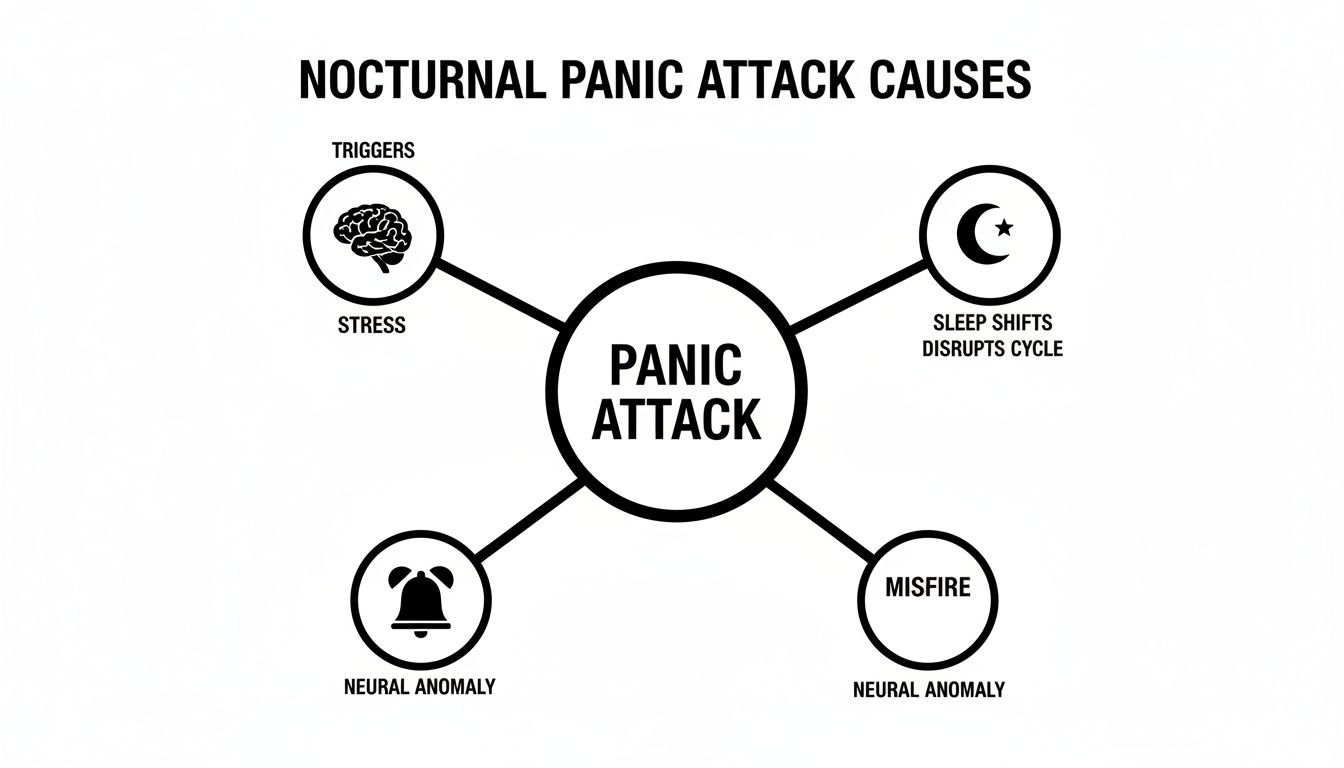
As you can see, the combination of stress, normal sleep shifts, and a misfiring alarm system creates the perfect storm for a panic attack to erupt out of nowhere.
Breathing, Sleep Stages, and the Panic Trigger
Research shows just how common this experience really is. It turns out that respiratory sensitivities during specific sleep stages are key physiological triggers. In fact, one study found that a staggering 47.9% of people with panic disorder experience these nighttime attacks, with most happening in the early hours of light, non-REM sleep.
For many, sensations of choking or suffocation are particularly potent triggers. A normal shift in breathing gets amplified into what feels like a life-or-death event.
This isn't a sign of weakness; it’s a physiological response that can be managed and retrained. The sensations are absolutely real, but the danger they seem to signal is not. You can teach your brain the difference.
Recognizing these attacks for what they are—a powerful but ultimately harmless biological glitch—is your greatest weapon. It allows you to respond with understanding instead of more fear. This shift in perspective is what stops you from feeding the anxiety cycle and starts the journey toward healing. Peaceful, uninterrupted sleep isn't a distant dream; it is an achievable reality. You can learn to calm that overzealous watchman and restore a sense of safety to your nights.
The Link Between Daytime Stress and Nighttime Panic
That terrifying panic attack that jolts you awake at 2 a.m. rarely starts in the dark. More often than not, its seeds were planted in broad daylight, watered by the constant worries and pressures of your waking life.
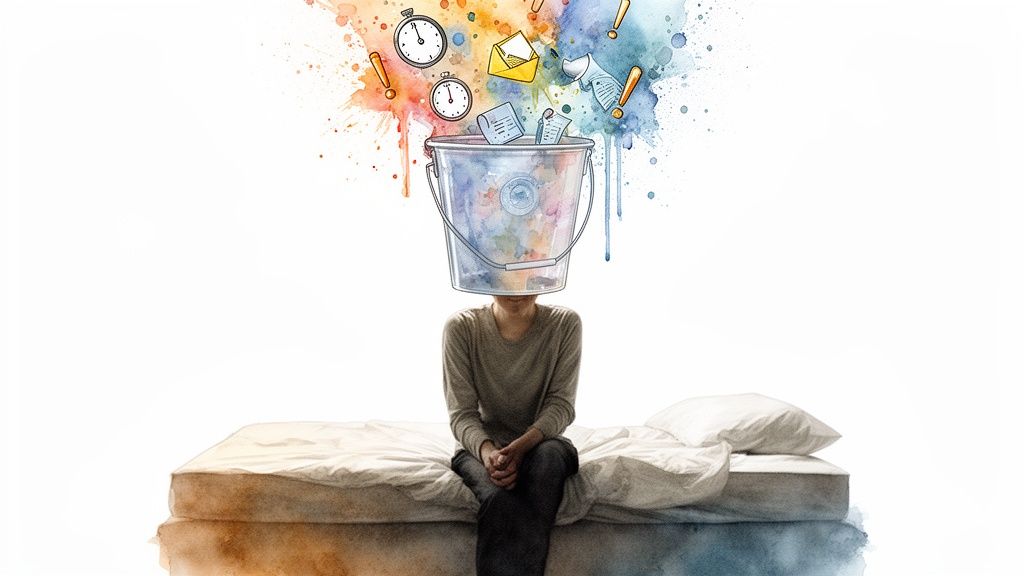
Think of your ability to handle stress like a bucket. Every deadline, frustrating commute, or unresolved argument adds a little water. During the day, you're busy, distracted, and actively juggling everything, so you might not even notice how full your bucket is getting.
But when you finally fall asleep, your conscious mind clocks out. The distractions fade, and the mental defenses you rely on all day are lowered. That's when the bucket, filled to the brim with stress, finally overflows—spilling out as a tidal wave of panic.
How Cortisol Creates a Perfect Storm for Panic
This isn't just a metaphor; the connection between daytime stress and nighttime panic is wired into your body's chemistry. When you're stressed, your body pumps out more cortisol, our primary stress hormone. High cortisol levels keep your nervous system in a state of high alert, constantly scanning for danger.
Normally, cortisol levels should hit their lowest point in the middle of the night, which is what allows your body to sink into deep, restorative sleep. But if chronic daytime stress keeps your cortisol elevated, your body never truly gets the signal to power down. You’re essentially going to bed with your internal alarm system already armed.
This creates the perfect storm. Even a tiny physiological shift during sleep—a slight change in your heart rate or a deeper breath—can be misinterpreted by your wired brain as a major threat. This biological false alarm is one of the most common culprits behind nocturnal panic attacks.
The path to peaceful nights often begins with small, intentional actions during the day. This isn't about adding more to your plate; it's about learning to gently empty your stress bucket, one drop at a time, before it has a chance to overflow.
Daytime Management Is Nighttime Prevention
Here’s the most empowering truth about nocturnal panic: managing your daytime anxiety is one of the most effective ways to prevent it. By getting to the root cause—that accumulated stress—you can dramatically lower your risk of these nighttime episodes.
This doesn't mean you need to overhaul your entire life. It starts with building a little more awareness and weaving small, consistent practices into your daily routine.
- Mindful Check-Ins: Pause a few times throughout the day and just notice how you feel. Are your shoulders creeping up toward your ears? Is your jaw clenched? Simply acknowledging the stress is the first step toward releasing it.
- Targeted Relaxation: When you notice that tension building, use a quick technique to de-escalate. A simple breathing exercise—inhaling for four counts and exhaling for six—can send a powerful calming signal to your nervous system.
- Problem-Solving Time: Set aside a specific, limited window during the day to actively think about your worries and brainstorm solutions. Giving your anxieties a designated "worry appointment" can keep them from festering and following you to bed.
By learning to identify the common anxiety triggers in your daily life, you can start to deal with them proactively. This approach shifts you from being a passive victim of nighttime panic to an active participant in your own well-being.
Every small step you take to manage stress during the day is a direct investment in a peaceful night's sleep. It's a hopeful, achievable path forward that proves you have the power to reclaim your nights.
But What If It’s Not Just Anxiety?
While daytime stress and a nervous system stuck on high alert are the usual suspects, they aren't the only things that can pave the way for a terrifying nighttime awakening. Sometimes, what feels like a panic attack is actually being triggered—or even mimicked—by other medical issues or lifestyle choices.
Think of your nervous system as a sensitive alarm. Anxiety definitely sets that alarm to a hair-trigger, but other conditions can sneak in and trip the wire, too. This is why looking at the whole picture is so important for getting lasting relief.
This isn’t about adding new things to your worry list. It's about empowerment. By exploring and ruling out these other potential contributors, you can build a smarter recovery plan and have much more productive conversations with your doctor.
When Your Body Sends a False Alarm
Certain medical conditions can create intense physical sensations that your brain, especially when you’re half-asleep, can easily misinterpret as a life-threatening event. Your body jolts you awake in a state of alert, and your mind quickly fills in the blanks with panic.
Here are a few key conditions to be aware of:
- Sleep Apnea: This is a big one. With sleep apnea, you actually stop breathing for brief moments during sleep. Your brain, sensing a dangerous drop in oxygen, shocks you awake with a gasp. The adrenaline surge, racing heart, and feeling of suffocation are almost identical to a classic nocturnal panic attack.
- Acid Reflux (GERD): When you're lying down, gastroesophageal reflux disease can cause stomach acid to creep back up into your esophagus. This can trigger sharp chest pain, a choking sensation, or sudden shortness of breath—all feelings that can instantly launch you into a panic response the moment you wake up.
- Thyroid Imbalances: An overactive thyroid (hyperthyroidism) can throw your entire system into overdrive, 24/7. It can cause a rapid heartbeat, sweating, and a constant feeling of jittery nervousness that doesn't just switch off at bedtime, making you much more vulnerable to panic-like symptoms at night.
Knowing about these possibilities gives you a clear, actionable checklist to bring to your doctor. Ruling out an underlying medical issue is one of the most powerful and reassuring first steps you can take.
How Your Daily Habits Affect Your Nights
Beyond specific medical conditions, simple choices you make during the day and evening can have a huge impact on your sleep quality and your nervous system's stability. These factors can either pour fuel on the fire of anxiety or help to gently put it out.
Take a look at how these common habits might be playing a role:
- Caffeine: As a stimulant, caffeine can hang around in your system for up to 10 hours. It elevates your heart rate and can amplify feelings of anxiety, making it incredibly difficult for your body to fully relax and sink into deep, restorative sleep.
- Alcohol: It might feel like a relaxant at first, but alcohol is notorious for wrecking your sleep later in the night. As your body metabolizes it, your sleep becomes lighter and more fragmented. This can lead to a "rebound effect" where your heart rate spikes and you wake up suddenly, creating the perfect storm for a panic attack.
- Certain Medications: Some over-the-counter and prescription medications—including certain decongestants, steroids, or even some antidepressants—can have stimulating side effects that mess with your sleep and heighten anxiety.
It can be tough to figure out if your symptoms are from a simple habit or something more serious. This table can help you tell the difference and decide what to do next.
Lifestyle Triggers vs. Potential Medical Conditions
| Factor Type | What It Is | Your Next Step |
|---|---|---|
| Lifestyle | Things you consume or do, like drinking coffee late, having a nightcap, or taking certain OTC meds. These are often within your control to change. | Try eliminating the suspected trigger for a week or two. For example, cut out caffeine after noon and see if your nights improve. |
| Medical | Underlying health issues like sleep apnea, GERD, or thyroid problems that create physical symptoms mimicking panic. These require a professional diagnosis. | Don't self-diagnose. Schedule an appointment with your primary care doctor to discuss your symptoms and get a proper evaluation. |
Recognizing the difference empowers you to take the right action. You can confidently experiment with lifestyle tweaks on your own, but suspected medical issues should always be discussed with a healthcare professional.
Healing from nocturnal panic isn't about blaming yourself; it's about empowerment through knowledge. Recognizing that a simple adjustment—like changing when you have your last coffee—could lead to more peaceful nights is a profoundly hopeful realization. It proves that you have more control than you think.
Your Action Plan for Achieving Peaceful Sleep
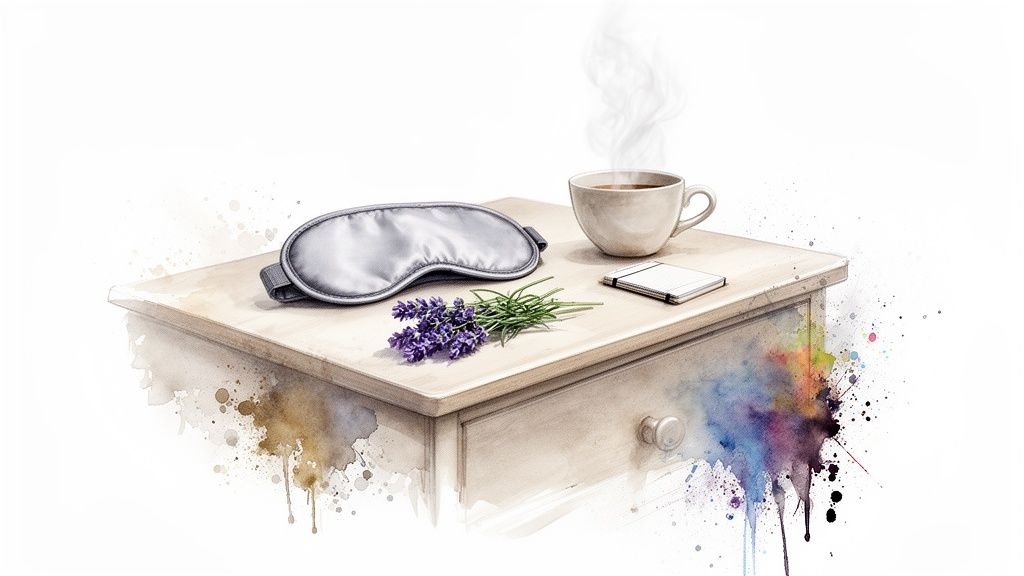
Understanding why you have nocturnal panic attacks is the first step. But this is where the real work begins—turning that knowledge into healing. Waking up in a state of terror can leave you feeling completely powerless, but you have far more control than you might think.
This is your journey back to peaceful, uninterrupted sleep. It starts with a practical toolkit designed to calm your nervous system in the moment and, more importantly, retrain it for the long term.
This isn't just about getting through the nights; it's about building a life where panic doesn't hold you hostage anymore. It’s about empowerment. It’s about learning to trust your body and your bed again, transforming your bedroom back into the sanctuary it’s meant to be.
Immediate Grounding When Panic Strikes
When you’re jolted awake with a racing heart and a thick fog of dread, your only job is to send a clear, simple message to your brain: "You are safe." The first few moments are overwhelming, but having a couple of go-to techniques can short-circuit the fear response before it spirals.
One of the most powerful tools is the physiological sigh. This isn't just deep breathing; it's a specific pattern that directly hacks your nervous system. Take two quick, sharp inhales through your nose, then follow with one long, slow exhale through your mouth. That’s it. This simple action helps offload excess carbon dioxide and has been shown to rapidly dial down the body's fight-or-flight alarm.
Next, get your mind engaged with the here and now.
- Verbal Reminders: Repeat a calming phrase to yourself, either out loud or in your head. Try something like, "This is a surge of adrenaline. It feels awful, but it's not dangerous. It will pass."
- Sensory Focus: Pull your attention out of the internal storm. Name three things you can see in the room, two things you can feel (the softness of your blanket, the cool floor under your feet), and one thing you can hear. This forces your brain into the present, neutral reality.
These are your first responders. They interrupt the panic cycle and remind your overactive alarm system that there's no real threat. For a deeper dive, you can explore other breathing exercises for anxiety that build on these core principles.
Proactive Strategies for Long-Term Prevention
True freedom from nocturnal panic comes from being proactive. It's about gently lowering your baseline anxiety so your nervous system isn't on a hair-trigger when you lie down to sleep. This is how you reclaim your nights—by taking small, consistent actions during the day and evening.
Start with your environment. Your bedroom should be a sanctuary for rest, not a multi-purpose room for work, worry, and doom-scrolling. Optimizing this space sends a powerful signal to your brain that it's time to switch off.
The goal is to create an environment so calming and predictable that your mind and body learn to associate your bed with safety and relaxation, not fear. This simple environmental shift is a cornerstone of building lasting sleep confidence.
Consider these small but mighty adjustments:
- Cool, Dark, and Quiet: Keep your room cool, ideally around 65°F (18°C). Use blackout curtains to eliminate all light and consider a white noise machine or earplugs to muffle disruptive sounds.
- No Screens in Bed: This is non-negotiable. The blue light from phones and tablets messes with melatonin, the hormone that signals sleep time. Make a hard rule: all screens off at least an hour before bed.
- Comfort Is Key: A lumpy mattress or a flat pillow can be a subtle physical stressor that contributes to fragmented, anxious sleep. Invest in comfort.
Creating Your Wind-Down Ritual
Just as important as where you sleep is how you get there. A consistent wind-down ritual trains your brain to anticipate rest, making the transition from a busy day to a quiet night much smoother.
Think of it as a buffer zone—a screen-free period of 30-60 minutes dedicated to calm.
- Dim the Lights: An hour before bed, lower the lights around your home. This helps kickstart natural melatonin production.
- Find Your Calm: This is personal. It could be reading a physical book (not on a screen!), listening to calm music, doing some gentle stretches, or taking a warm bath with Epsom salts.
- Do a "Brain Dump": If your mind races at night, spend ten minutes writing down everything that's bothering you. Getting the worries out of your head and onto paper means you don't have to carry them to bed with you.
By creating this space between the day's stress and the night's quiet, you give your nervous system a chance to power down gracefully. For even more ideas on building a solid sleep foundation, you might want to explore these proven techniques for natural and restful sleep.
Combining these immediate coping skills with long-term, proactive habits is your pathway forward—a way to finally look forward to getting into bed, confident that you can sleep peacefully through the night.
When to Seek Professional Support
Waking up in a state of terror can feel incredibly isolating, like you're the only person in the world going through this. But if these nighttime episodes are happening to you, you are far from alone.
Taking the step to get help isn't a sign of weakness. It's an act of courage and the single most powerful thing you can do to reclaim your nights and your life. Nocturnal panic attacks aren't something you just have to "live with." They are a treatable condition, and reaching out is the bridge between understanding your anxiety and finally overcoming it.
Signs It's Time to Talk to Someone
While self-help strategies can be powerful, there are clear signals that it's time to bring a professional onto your team. If you find yourself nodding along with any of these, it’s a strong sign that professional guidance could make a huge difference.
- You're starting to fear sleep: Bedtime is becoming something you dread. Your bed, which should be a place of rest, now feels associated with fear. This avoidance often leads to insomnia and exhaustion, trapping you in a draining cycle.
- It's disrupting your daily life: The fatigue and anxiety from your sleepless nights are spilling into your day. It’s affecting your work, your relationships, and your overall sense of well-being.
- The attacks are getting worse: They might be happening more often, or the physical and emotional symptoms feel more severe and harder to bounce back from.
- You feel hopeless or overwhelmed: You've tried different things on your own but feel stuck, like peaceful sleep is completely out of reach.
If any of this sounds familiar, please remember that help is available. You don’t have to figure this out by yourself.
You Are Not Alone in This
It’s so important to understand just how common this is, especially for people already dealing with anxiety. Nocturnal panic attacks affect a huge portion of those with panic disorder.
In fact, studies show that these nighttime assaults can impact anywhere from 18% to 71% of individuals with the condition. One detailed study found that 47.9% of panic disorder patients suffered from them, with women making up a staggering 84.3% of that group. You can read more about these findings to see just how prevalent this is.
These numbers aren't meant to be cold, clinical statistics. They're a powerful reminder that you are part of a vast community. Your experience is valid, it's real, and it’s shared by so many others.
Therapists, counselors, and doctors are trained to help you untangle the roots of your anxiety and give you proven tools to calm your nervous system. Through methods like Cognitive Behavioral Therapy (CBT), they can guide you in reframing the fearful thoughts that fuel the panic. You can learn more about psychotherapy for anxiety and see how it can be tailored to address these specific nighttime fears.
Seeking support is the ultimate act of taking back control. It's a declaration that you are ready to reclaim your nights and build a future where you can actually look forward to getting into bed, confident that you can sleep soundly and peacefully.
Got Questions About Nocturnal Panic Attacks?
When you’re dealing with something as scary as being jolted awake by panic, it’s only natural to have a million questions running through your mind. Getting straight, reassuring answers is one of the best ways to turn that fear back into a sense of control.
Think of this as a final dose of clarity and confidence. We’re going to tackle the most common worries head-on, so you can move forward knowing that peaceful sleep isn't just a dream—it's your destination.
Can a Nocturnal Panic Attack Actually Hurt Me?
This is the big one, isn't it? It feels so incredibly dangerous, like your body is about to give out. But here’s the honest truth: a nocturnal panic attack cannot physically harm you.
What you're feeling is an extreme, out-of-the-blue activation of your body's "fight-or-flight" response. Your system gets flooded with adrenaline, and that's why your heart pounds and your breathing goes haywire. It's your body's alarm system malfunctioning, not a sign of a real medical emergency. Truly understanding this distinction is a massive step toward dialing down the fear of the attack itself, which is key to breaking the cycle.
Is It Really Possible to Sleep Normally Again?
Yes. Absolutely, 100% yes. This is probably the most important question on your mind, and the answer is a definite yes. Full recovery isn't just a possibility; it's the most likely outcome when you use the right strategies and get the right support.
Hope isn't just a fluffy feeling; it’s a strategy. By figuring out your triggers, consistently using calming techniques, and making small, supportive lifestyle changes, you can literally retrain your nervous system. Countless people who once dreaded bedtime now enjoy deep, uninterrupted sleep.
How Is This Different From a Nightmare?
It’s easy to get these two mixed up, but the difference is pretty clear once you know what to look for.
A nightmare is a bad dream. It has a story, a narrative—even if it's bizarre—that you often remember bits and pieces of when you wake up. The fear you feel is a direct reaction to what’s happening in the dream.
A nocturnal panic attack is a whole different beast. It usually rips you out of a non-dreaming state of sleep and throws you straight into pure, physical panic. The terror isn't about a story; it's about the terrifying bodily sensations themselves—the feeling that you can't breathe, the pounding heart, the sense of immediate doom.
Your journey to a calmer mind and peaceful nights is well within your grasp. The Anxiety Checklist offers a structured, no-nonsense system to help you understand what's going on, manage your symptoms, and build a life where fear isn't calling the shots. To start your path toward lasting freedom, explore the tools available at AnxietyChecklist.com.