
Panic disorder is a treatable anxiety condition, but it's more than just feeling stressed. It’s defined by unexpected, recurrent panic attacks and a persistent, nagging fear of having another one. This creates a cycle of intense fear that can seriously disrupt your daily life—but it's a cycle you can absolutely break. Living a life free from panic is not just a possibility; it's an achievable goal.
From Fear to Hope: Understanding Panic Disorder
If you've ever felt the sudden, white-knuckled terror of a panic attack, you know how your world can shrink in an instant. Your heart pounds, you can't catch your breath, and a chilling sense of doom takes over. When these attacks start happening out of the blue and you begin to live in constant dread of the next one, you might be dealing with panic disorder.
Think of it like having a highly sensitive but miscalibrated "internal alarm system." This system is your body's emergency response, designed to protect you from real danger. With panic disorder, however, this alarm goes off at the wrong times, flooding your body with intense physical and emotional sensations even when there’s no threat. This isn't a sign of weakness—it's a biological response that has gone into overdrive, and one that you can learn to manage and ultimately heal.
Recalibrating Your Internal Alarm
The real core of panic disorder isn't just the attacks themselves; it's the fear of the fear. This anxiety can lead you to avoid places or situations where you worry an attack might happen. While this avoidance makes perfect sense, it only makes the alarm system even more sensitive over time.
But here’s the most important thing to know: you can learn to recalibrate this system. Healing isn't about getting rid of anxiety entirely. It's about teaching your brain and body that these false alarms, while terrifying, are not actually dangerous. With the right tools and understanding, you can get back in the driver's seat and live a life guided by your choices, not by fear.
This journey of healing involves a few key steps:
- Demystifying the sensations: Learning that the physical feelings of a panic attack are harmless, even though they feel awful.
- Understanding the triggers: Recognizing the subtle patterns that set off your body's alarm.
- Building coping skills: Developing practical techniques to manage the symptoms and regain a sense of control.
This shift from fear to empowerment is the foundation of recovery. It’s about realizing that while the feelings are real, the danger is not. A life free from the constant dread of the next attack is not just a distant hope; it is an achievable reality.
The biological engine behind this alarm is your body's innate survival instinct. To get a better handle on what’s happening physically during these moments, it helps to learn more about the fight or flight response and how it fuels anxiety. Grasping this concept is a powerful first step in taking the mystery out of the experience and reclaiming your life from panic.
Is It a Panic Attack or Panic Disorder?
Lots of people use "panic attack" and "panic disorder" interchangeably, but they're not the same thing at all. Getting clear on the difference is the first, most important step toward getting the right help and finding your way back to a sense of calm and freedom.
Think of it like this: an isolated panic attack is a single, terrifying episode of fear. It’s your body’s alarm system blaring in a moment of extreme stress. Frightening? Absolutely. But it's often a one-off event tied to a specific situation.
Panic disorder, on the other hand, is when the alarm system itself becomes the problem. It’s not just about the attacks—it’s about the constant, draining fear of when the next one might hit. But even this is a pattern that can be unlearned and healed.
The Defining Line: Fear of the Fear
The real difference shows up in the space between the attacks. Someone who has a single panic attack might feel rattled for a bit, but they eventually get back to their normal life.
For someone with panic disorder, life changes. They start living under a constant shadow of anxiety, changing their daily routines and avoiding anything they think might trigger another attack.
This "fear of the fear" becomes the central issue. The worry itself creates a state of hypervigilance, making you even more susceptible to future attacks. It’s a cruel feedback loop where fearing panic actually creates more panic. But the hopeful truth is that this loop can be broken.
Panic disorder is characterized by recurrent, unexpected panic attacks. These are sudden surges of intense fear that peak within minutes, often with terrifying physical symptoms like a racing heart or a feeling of doom. According to the National Institute of Mental Health (NIMH), about 2.7% of U.S. adults have dealt with panic disorder in the past year, and 4.7% will experience it at some point in their lives. You're far from alone in this, and many have walked this path and found their way to recovery.
The true hallmark of panic disorder is not the panic attack itself, but the consuming fear of having another one. This anticipatory anxiety is what disrupts life, but with the right support and strategies, you can dismantle this fear and rebuild a life of confidence.
It's also worth noting that withdrawal from certain anxiety medications can sometimes mimic or trigger panic-like symptoms. For instance, understanding Xanax withdrawal symptoms is important for anyone discontinuing the medication, as the physiological effects can be intense and confusing.
To help you get a clearer picture of where you might stand, here’s a simple table breaking down the key differences between an isolated panic attack and the ongoing condition of panic disorder.
Panic Attack vs Panic Disorder Key Differences
| Characteristic | Isolated Panic Attack | Panic Disorder |
|---|---|---|
| Frequency | A single event, or a few scattered episodes with a clear cause. | Recurrent attacks, often happening unexpectedly. |
| Main Fear | Fear is focused on the immediate situation or perceived threat. | The primary fear is having another panic attack. |
| Impact | Temporary distress, but daily life usually returns to normal afterward. | Persistent worry that leads to significant changes in behavior. |
| Duration of Worry | Worry fades after the event passes. | Worry about future attacks and their consequences lasts for at least a month. |
| Behavioral Change | Minimal to no long-term changes in daily routines. | Actively avoiding places, people, or situations to prevent another attack. |
Seeing these characteristics side-by-side can make it easier to recognize your own patterns. An isolated attack is a moment in time; a disorder is a persistent pattern that reshapes your life—a pattern that you have the power to change.
A Simple Diagnostic Checklist
Let's put the official diagnostic criteria into plain English. See if any of this sounds familiar.
Do you have recurrent panic attacks that seem to come out of the blue, with no obvious trigger? The keyword here is unexpected.
After at least one of these attacks, have you spent a month or more dealing with either of the following?
- Persistent Worry: You’re constantly on edge, worrying about having another panic attack. You might also fixate on what could happen during one, like losing control, having a heart attack, or "going crazy."
- Maladaptive Behavior Changes: You've made significant changes to your life to avoid another attack. This could mean skipping your workouts, avoiding crowded places, or refusing to go anywhere you've had an attack before.
If you found yourself nodding "yes" to these points, your experience sounds a lot more like panic disorder. This isn’t a formal diagnosis, but it’s a powerful starting point for understanding what's going on. It gives you the language you need to have a confident, informed talk with a professional who can guide you on the path to healing.
To learn more about the symptoms themselves, our detailed guide on what a panic attack feels like can offer more insight. Recognizing your own patterns is the first real step toward breaking the cycle and realizing that a life without constant panic is possible.
So, What's Really Behind Panic?
If you're dealing with panic, one of the first questions you might ask is, why me? It’s a natural question, but the answer isn’t a simple one. Panic disorder rarely boils down to a single cause. Instead, it’s more like a 'perfect storm' where a few key things line up just right: your biological wiring, your life story, and even the way you think.
This isn't about blaming your past or feeling like your genes have sealed your fate. It’s the exact opposite. When you start to see what’s fueling the fire, you learn exactly where to aim the fire hose. It gives you a roadmap for taking back control and healing.
Your Biological Blueprint
Some of us are just wired to be more sensitive. Think of it like a smoke detector that’s set a little too high—it goes off more easily, even when there's no real fire. That’s not a character flaw; it’s just how your internal alarm system is built, and it's something you can learn to work with.
- Genetics: If panic disorder runs in your close family, you might be more susceptible. This suggests there's a genetic piece that can make your "fight-or-flight" response a bit trigger-happy.
- Brain Chemistry: Sometimes, the brain's chemical messengers (neurotransmitters) are out of balance, which can dial up anxiety. This is a physiological thing, not a personal failing, and it can be addressed.
- A Sensitive Nervous System: Some people are simply born with a more reactive nervous system. Their internal alarm is just naturally louder, making them more prone to the intense physical storm of a panic attack.
Having this blueprint doesn't mean panic is inevitable. It just means you might need to be more deliberate about learning the skills to manage your body’s powerful, built-in responses. This is entirely possible.
The Power of Your Mind and Past
Your mind is an incredibly powerful storyteller, and sometimes it tells stories that create the perfect conditions for panic. Your past experiences and the mental habits you've formed can play a huge role here, but these habits can be changed.
A history of trauma or a period of intense stress, for instance, can leave your nervous system stuck in "high alert" mode, constantly scanning for the next threat. When you’re already on edge, it takes a lot less to push you into a full-blown panic attack because your brain is already primed for danger.
Another massive piece of the puzzle is a thinking pattern called catastrophic thinking. This is when your mind immediately leaps to the absolute worst-case scenario. A flutter in your chest isn't just a weird sensation—it’s a heart attack. A moment of dizziness isn't just a dizzy spell—it’s proof you’re about to lose your mind. It's this habit of interpreting normal bodily sensations as signs of imminent danger that really fuels the panic cycle—and it's a habit you can unlearn. If you want to go deeper, you can learn more about the common causes of anxiety and see how they shape these thought patterns.
How Your World and Habits Play a Part
The environment you live in and your daily routines also feed into this perfect storm. Chronic stress from your job, relationships, or money troubles can slowly chip away at your resilience, leaving you more vulnerable when things get tough.
Big life changes—even good ones, like having a baby or starting a new career—can be surprisingly stressful and act as a trigger. On top of that, things like caffeine, nicotine, or even withdrawing from certain substances can create physical feelings that mimic anxiety, tricking your brain into kicking off a panic attack.
It's also helpful to know who seems to be most at risk. The data shows that women and younger adults are more often affected. In the U.S., the past-year prevalence of panic disorder is 3.8% for women compared to just 1.6% for men. The highest rates are seen in adults aged 30-44. These numbers aren't meant to scare you, but to show you you're not alone and that there are clear, well-trodden paths to recovery.
Think of it this way: understanding your unique mix of risk factors is like being handed a personalized map. It shows you the specific terrain you need to navigate on your path to feeling better, letting you build a plan that truly works for you and leads to lasting healing.
Your Toolkit for Healing Panic Disorder
Figuring out what makes panic tick is a huge step, but knowledge alone won't stop the next attack. The truly empowering part is realizing you can build a toolkit of strategies to calm your internal alarm system and get your life back. Healing from panic disorder isn’t a passive waiting game; it's an active skill you can learn, practice, and master.
The goal here is to put together a personalized set of tools that actually work for you. Some are evidence-based therapies guided by a professional, designed to rewire how your brain responds to fear. Others are practical, self-managed techniques you can use anytime, anywhere. This combination is your path to freedom from panic, building both resilience and confidence along the way.
The Gold Standard Professional Treatments
When it comes to treating panic disorder, a few therapeutic approaches have proven to be incredibly effective. These aren't just about talking things out; they are structured methods designed to change the very thought and behavior patterns that keep the panic cycle spinning. This is where real, lasting change happens.
Cognitive Behavioral Therapy (CBT) is widely seen as the most effective treatment out there for panic disorder. At its heart, CBT works on a simple principle: your thoughts, feelings, and behaviors are all tangled up together. If you can change your distorted thoughts, you can change how you feel and what you do.
With CBT, you learn to:
- Identify Catastrophic Thoughts: You'll start to catch those automatic, worst-case-scenario thoughts that ambush you when you feel an odd physical sensation (e.g., "My heart is racing, I must be having a heart attack").
- Challenge and Reframe: Next, you'll practice looking at the evidence for and against these scary thoughts. Over time, you'll learn to replace them with more realistic, balanced ones (e.g., "My heart is racing because of adrenaline. It's uncomfortable but not dangerous").
- Modify Your Behavior: Once your thoughts shift, it becomes easier to stop avoiding things. This, in turn, teaches your brain there was nothing to fear in the first place, breaking the cycle for good.
For many people, learning these skills is the key to lasting freedom from panic. To get a better feel for how CBT stacks up against other methods, exploring different types of psychotherapy for anxiety can give you a clearer picture of your options.
CBT essentially teaches you to become a detective of your own mind. You learn to question the "false evidence" panic throws at you, disarming the fear before it has a chance to escalate. This is how you reclaim your power.
Exposure Therapy is another powerhouse tool, often used within a CBT framework. It sounds scary, but it's actually a very gentle and gradual process. The whole idea is to slowly and safely expose yourself to the physical sensations or situations you fear, helping your brain unlearn the idea that they're dangerous.
For instance, if a racing heart is a major trigger for you, a therapist might have you run in place for 30 seconds to intentionally get your heart rate up in a controlled environment. By doing this repeatedly, you get used to the feeling, and the fear linked to it starts to fade away. It systematically dismantles the connection between a physical sensation and a panicked reaction, freeing you from its grip.
When Medication Can Help
For some people, medication can be an incredibly helpful part of the treatment plan, especially when panic attacks are severe or happening all the time. Think of it as scaffolding that gives you stability while you do the deeper work in therapy, making the path to healing smoother and more accessible.
The most commonly prescribed medications include:
- SSRIs (Selective Serotonin Reuptake Inhibitors): These are usually the first choice. They work by adjusting serotonin levels in the brain, which helps reduce the frequency and intensity of panic attacks over time.
- SNRIs (Serotonin-Norepinephrine Reuptake Inhibitors): Similar to SSRIs, these also work on brain chemistry to help regulate mood and anxiety.
- Benzodiazepines: These are fast-acting sedatives that can stop a panic attack in its tracks. Because of the risk of dependence, they are typically used for short-term, as-needed relief.
Deciding to use medication is a personal choice, and it's one best made with a doctor or psychiatrist. For many, the sweet spot is a combination of therapy and medication—the meds provide enough relief to let them fully engage with and get the most out of their therapy sessions. For anyone looking for professional guidance, finding professional mental health support is a crucial step toward getting a plan tailored just for you.
Your Daily Self-Managed Toolkit
Beyond clinical treatments, there are powerful techniques you can practice every single day to manage your body's stress response. These skills put the power to cope right back in your own hands, empowering you on your healing journey.
- Diaphragmatic (Belly) Breathing: When you panic, your breathing gets shallow and fast, which just makes the physical symptoms worse. Deep belly breathing flips the switch on your parasympathetic nervous system—your body's "rest and digest" mode. Try this: Inhale slowly through your nose for a count of four, feeling your belly expand, and then exhale slowly through your mouth for a count of six.
- Progressive Muscle Relaxation (PMR): This is a simple practice of tensing and then relaxing different muscle groups all over your body. It sounds basic, but it makes you keenly aware of the difference between tension and relaxation, giving you a direct way to let go of physical stress.
- Mindfulness and Grounding: Mindfulness helps you observe your thoughts and feelings without getting swept away by them. Grounding techniques, like the 5-4-3-2-1 method (naming 5 things you can see, 4 you can feel, 3 you can hear, 2 you can smell, and 1 you can taste), yank you out of your spiraling thoughts and plant you firmly in the present moment. It's an anchor when you feel a panic attack starting.
Recovery from panic disorder isn't about finding a magic bullet. It’s about patiently building your personal toolkit, figuring out which strategies work best for you, and celebrating every small step forward. With these tools, a life free from the grip of panic isn't just possible—it's completely within your reach.
How to Manage a Panic Attack in the Moment
When a panic attack hits, it feels like a tidal wave of terror. Your first instinct is probably to fight it, but trying to suppress those overwhelming sensations usually just makes them stronger. The real key, and the path to empowerment, is learning how to "ride the wave"—to accept the feelings without letting them spiral into all-out fear.
This is a powerful mental shift. Instead of seeing the attack as a catastrophe, you start to recognize it for what it is: a sudden, intense, but temporary blast of physical and emotional energy. With the right tools, you can navigate this wave until it passes, dramatically reducing its power and your fear of the next one. This is how you prove to yourself that you are stronger than the panic.
Ground Yourself in the Present
Panic attacks have a nasty habit of dragging your mind into a vortex of "what if" scenarios and terrifying physical sensations. Grounding techniques are your anchor. They pull you out of the chaos in your head and back into the present moment, where you're actually safe.
The 5-4-3-2-1 method is a classic for a reason—it’s simple and it works.
- 5: Look around and acknowledge five things you can see. It could be the color of a book, the light from a lamp, or the pattern on the floor.
- 4: Now, identify four things you can physically feel. Notice the texture of your shirt, the solid feel of the chair beneath you, or the cool surface of a table.
- 3: Listen for three things you can hear. Maybe it's the low hum of a computer, the sound of traffic outside, or just the sound of your own breath.
- 2: Name two things you can smell. It might be the faint scent of coffee in the air or the soap on your hands.
- 1: Finally, identify one thing you can taste. Maybe it’s the lingering taste of your last meal or just the simple taste inside your mouth.
This exercise forces your brain to switch gears, moving from abstract fear to concrete sensory details. It’s a powerful way to interrupt the panic cycle and remind yourself that you are in control.
Take Control of Your Breathing
During a panic attack, your breathing often becomes shallow and rapid—a process called hyperventilation. This is what can cause that dizziness and tingling, which only feeds the fear. The good news is that you can actively counteract this by slowing your breath down.
A straightforward technique is diaphragmatic breathing. Place one hand on your chest and the other on your belly. Breathe in slowly through your nose for a count of four, feeling your belly expand more than your chest. Then, breathe out even more slowly through your mouth for a count of six. If you want to explore other methods, you can check out these breathing exercises for anxiety.
By consciously controlling your breath, you send a direct signal to your nervous system that the danger has passed. It's one of the fastest ways to tell your body that it's safe to stand down from high alert, and it's a skill you can master.
Healing from panic often involves a mix of tools and support. It's a combination of professional therapy, these in-the-moment techniques, and for some people, medication.
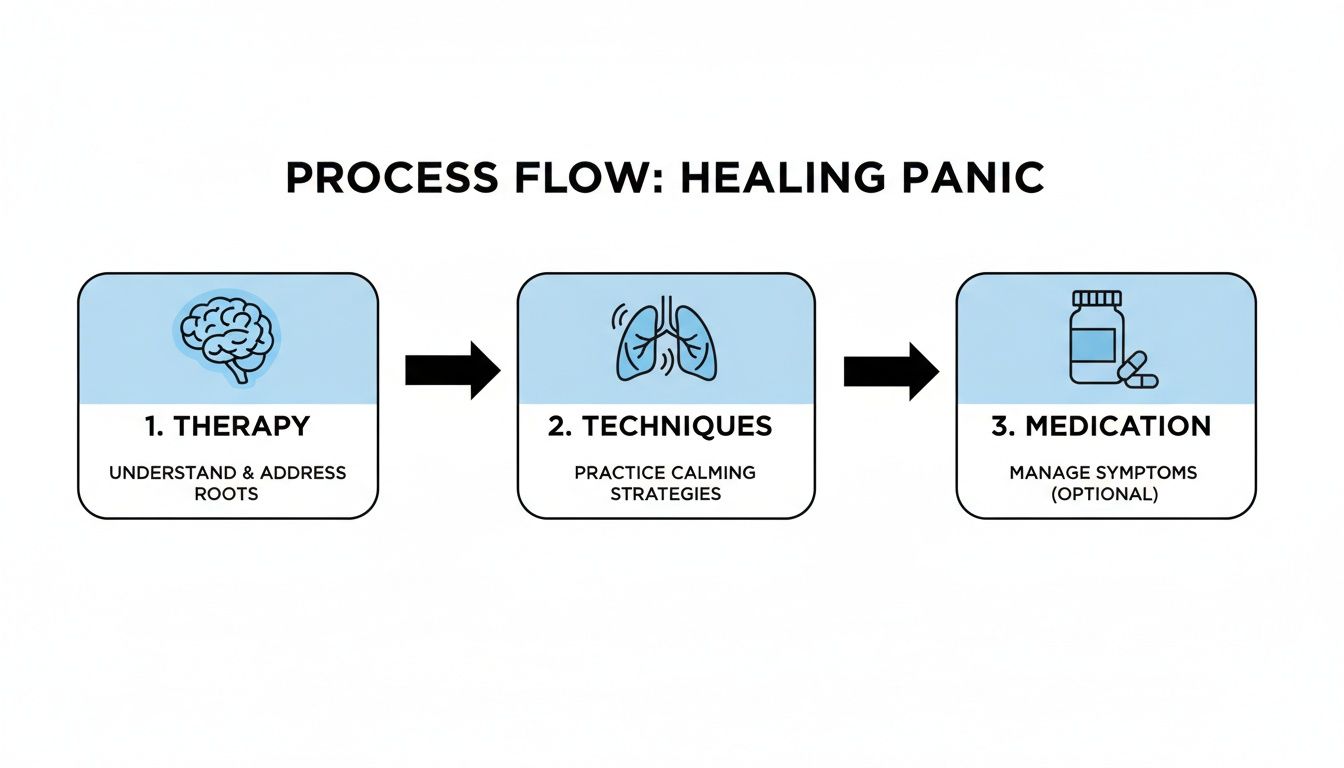
As this process shows, recovery isn’t about finding one magic bullet. It’s about building a comprehensive plan that works for you, combining different strategies to create a solid foundation for wellness and a panic-free life.
Speak to Yourself with Kindness
The thoughts racing through your head during a panic attack can either pour gasoline on the fire or help put it out. It's so important to have a few reassuring phrases ready to go. This isn't about denying how you feel; it's about reminding your panicked brain of the truth and offering yourself compassion.
Try repeating mantras like:
- "This feeling is uncomfortable, but it is not dangerous."
- "I have survived this before, and I will survive it now."
- "This is just a surge of adrenaline, and it will pass."
These phrases act like a lifeline, directly challenging the catastrophic stories your mind is spinning. By practicing these strategies in the moment, you build the confidence that you can handle these sensations. And that confidence is the most powerful tool you have for reclaiming your life from panic.
Building a Life Beyond Panic
While grounding techniques are a lifeline during an attack, true healing is about building a life where panic has less power in the first place. It's about designing a lifestyle that builds resilience from the ground up, so you're not just coping, but thriving.
This journey is about creating sustainable habits that soothe your nervous system and strengthen your mind. It isn’t about being perfect. It’s about making small, consistent choices that tip the scales back in your favor, proving to yourself, day by day, that a full, vibrant life isn't just possible—it's waiting for you.
Fortifying Your Body and Mind
Your physical health is deeply connected to your mental resilience. Think of it this way: simple lifestyle adjustments can have a profound physiological impact, making your internal alarm system less sensitive and prone to false alarms.
-
Embrace Movement: Regular physical activity is one of the most powerful tools for managing anxiety. Exercise helps burn off excess cortisol (the stress hormone) and releases endorphins, which are basically natural mood lifters. You don’t need to run a marathon; a brisk walk, a dance class, or a bike ride can make a world of difference.
-
Nourish Your System: What you eat directly affects your mood and anxiety levels. Try to focus on a balanced diet rich in whole foods, and be mindful of stimulants like caffeine. Caffeine can mimic the physical sensations of panic and leave you feeling jittery, which is the last thing you need.
-
Prioritize Sleep: Quality sleep is non-negotiable for a calm nervous system. When you're sleep-deprived, you’re on edge and far more vulnerable to anxiety. Creating a relaxing bedtime routine helps signal to your body that it's time to rest and repair.
Becoming the Expert on You
One of the most empowering steps you can take is to become a detective of your own experiences. When you start monitoring yourself, you begin to identify personal patterns, triggers, and the subtle warning signs that come before a panic attack. This awareness puts you back in the driver's seat.
Keep a simple journal to track your anxiety levels, diet, sleep, and life stressors. It might seem tedious at first, but over time, you’ll start to see connections you never noticed before. This is how you learn to head off panic before it even has a chance to build.
By understanding your unique triggers and patterns, you shift from reacting to panic to proactively managing your well-being. You learn to read your body’s signals and respond with care, not fear. This is a journey of self-discovery that leads to lasting healing.
Building Your Support System
Here’s the thing: you don't have to navigate this journey alone. In fact, you shouldn't. Creating a strong support system is crucial for long-term healing and reinforces the hope that you can, and will, overcome this.
While friends and family are vital, sometimes professional help is the key that unlocks lasting change. If panic is getting in the way of your daily life, work, or relationships, that's a clear sign to seek guidance from a therapist or counselor who specializes in anxiety disorders. They can give you evidence-based tools and a personalized roadmap for your recovery.
And you’re certainly not alone in needing that support. Anxiety disorders are the most common mental health issue worldwide, affecting 359 million people in 2021. This highlights a huge, underserved need for practical, accessible support. You can find more details on these global trends in recent studies about the epidemiologic burden of panic disorder. Taking the step to build your support network is a brave and powerful move toward designing a life where you are in control—not your anxiety.
Got Questions About Panic Disorder? We've Got Answers.
When you're trying to understand something as personal as panic disorder, a lot of questions come up. Let's tackle some of the most common ones with a message of hope, because clarity is the first step toward feeling in control again.
Can Panic Disorder Be Cured Completely?
While "cure" can be a tricky word in mental health, it is absolutely possible to manage panic disorder so effectively that it no longer runs your life. The real goal here is remission—getting to a place where panic attacks stop and that constant, nagging fear of the next one finally quiets down.
Countless people go on to live full, vibrant lives after committing to therapies like CBT and making supportive lifestyle changes. Think of it less as a cure and more like recalibrating your body's alarm system. You're not broken; your wiring just needs a tune-up. You can learn the skills to regain that feeling of safety and live a life free from panic.
How Can I Support a Loved One with Panic Disorder?
Watching someone you care about go through this is tough, and your support can make a world of difference. It all starts with patience, education, and a whole lot of compassion. First things first: learn a bit about what they’re going through. It helps to remember that this isn't a choice or a sign of weakness.
During an attack, your calm presence is everything. Avoid saying things like "just calm down," which can feel dismissive. Instead, ask what they need or gently guide them through a grounding exercise. Most importantly, encourage them to seek professional help without adding any pressure. Offering to help find a therapist or drive them to an appointment shows you’re on their team and that you believe in their recovery.
Are Medication and Therapy Both Necessary?
Not always. The right treatment plan is incredibly personal, and what works for one person might not be the best fit for another. For many, therapy alone—especially Cognitive Behavioral Therapy (CBT)—is a game-changer. It gives you long-lasting tools to manage your mind and body.
For others, a combination of medication and therapy delivers the best results. Sometimes, medication can dial down the intensity of the symptoms just enough to make the deep, meaningful work of therapy feel more manageable. The best way forward is to talk with a mental health professional who can help map out a recovery plan that’s built just for you, empowering you on your unique path to healing.
At The Anxiety Checklist, we believe you deserve a life that isn't dictated by fear. Our Fearless Living system is a practical, step-by-step roadmap designed to help you understand your anxiety, challenge intrusive thoughts, and build a toolkit for lasting well-being. Ready to take the first step? Explore The Anxiety Checklist and start reclaiming your life today.