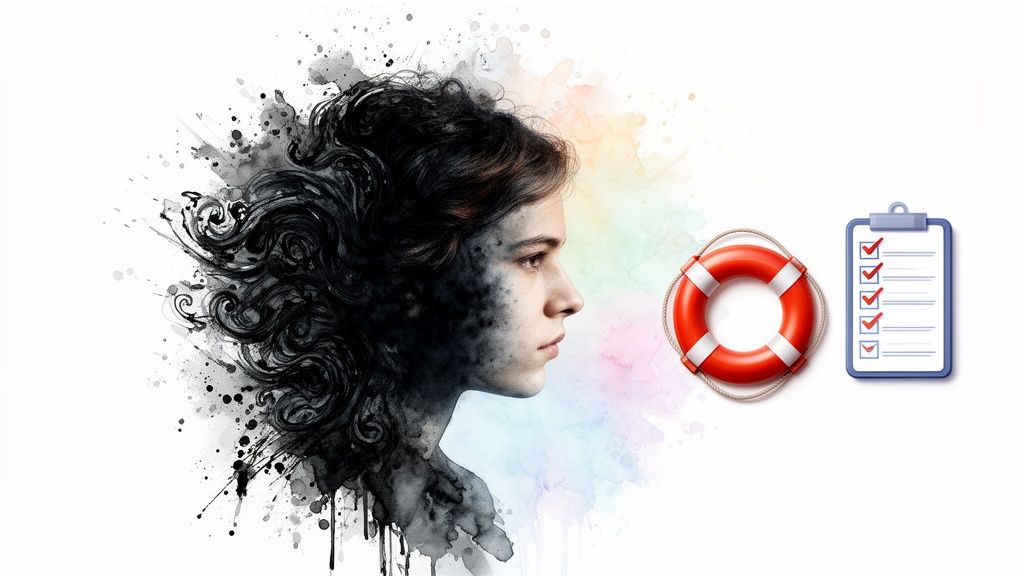
It's time to seek help for anxiety when it consistently gets in the way of your daily life, relationships, or work. If worry feels like it's running the show, causing real physical distress, or making you back away from things you used to love, those are clear signals that professional support can change everything. This isn't about weakness; it's about being strong enough to take the first, most powerful step toward reclaiming your peace and living a life free from panic.
Recognizing When Anxiety Crosses The Line
Anxiety is a totally normal human response. Think of it as your body's built-in alarm system, designed to get you ready for danger. That tight feeling in your chest before a big presentation? The nerves that kick in on a first date? That's just your system keeping you sharp.
But what happens when that alarm gets stuck in the "on" position? When it's ringing constantly, even when there's no real threat in sight?
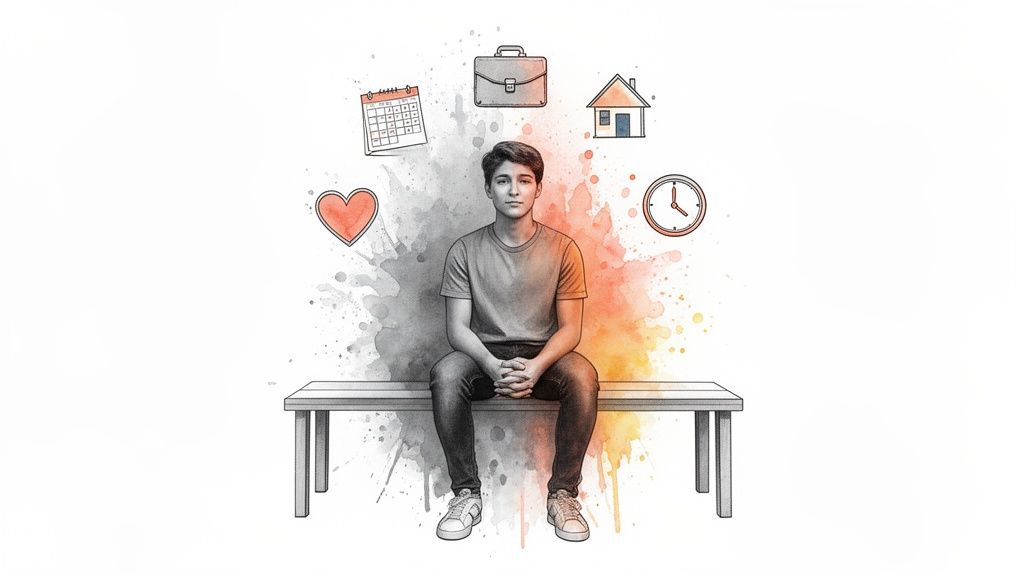
This is the huge difference between everyday worry and a treatable anxiety disorder. The first one is temporary and tied to something specific. The second feels like a constant, unwelcome roommate who casts a shadow over your entire life. Learning to spot that difference is the first hopeful step toward knowing it’s time to get help and heal.
Normal Worry vs. Disordered Anxiety Key Differences
It can be tough to tell if what you're feeling is "normal" or something more. This table breaks down the key distinctions between situational worry and the kind of anxiety that sticks around but can be overcome with the right support.
| Indicator | Normal Worry (Temporary & Situational) | Disordered Anxiety (Persistent & Treatable) |
|---|---|---|
| Intensity & Duration | Proportional to the stressor; fades when the event is over. | Feels excessive and out of proportion; can last for months. |
| Focus of Worry | Tied to a specific, realistic concern (e.g., a job interview). | Often vague, hard to pin down, or fixated on worst-case scenarios. |
| Impact on Life | Doesn't stop you from living your life, though it might be uncomfortable. | Interferes with work, school, relationships, and daily routines. |
| Physical Symptoms | Mild and temporary (e.g., butterflies in the stomach). | Frequent and distressing (e.g., racing heart, insomnia, stomach issues). |
| Sense of Control | You generally feel like you can manage or reason with the worry. | The worry feels uncontrollable, like you can't turn it off. |
Seeing your experience reflected in the "Disordered Anxiety" column can feel unsettling, but it's also the first empowering step toward finding the right support and starting your journey to healing.
Five Clear Signals It’s Time for Support
Still not sure if your anxiety is "bad enough" for help? Look out for these five definitive signs. If they sound familiar, it’s a strong indication that anxiety has started to take over, and getting professional guidance can bring massive, life-changing relief.
- Daily Life Disruption: Simple things feel hard. You struggle to focus at work, keep up with friends, or even manage basic household tasks because anxiety is always in the background.
- Persistent Physical Distress: Your body is calling out for help. You're regularly dealing with a racing heart, stomach problems, headaches, or sleepless nights that have no other medical explanation.
- Avoidance Behavior: Your world is getting smaller. You start dodging places, people, or activities that might trigger your anxiety, even if you used to enjoy them.
- Feeling Uncontrollable: You’ve tried everything, but the worry just won't shut off. It feels like an unstoppable force you're powerless against.
- It Has Lasted for Months: This isn't a passing phase. The intense anxiety has been your constant companion for six months or longer, sticking around long after any specific stressful event has passed.
Recognizing your struggle is not admitting defeat—it is the moment you begin to fight back. Hope is not just a feeling; it's a strategy, and seeking help is your first move toward a life where you are in control, not your anxiety.
You Are Not Alone In This Fight
If you feel overwhelmed, know this: you are in very good company. In the United States alone, Generalized Anxiety Disorder (GAD) impacts 6.8 million adults every year, and women are twice as likely to be diagnosed.
Even with numbers that high, a shocking 43.2% of people with the condition actually get treatment. This is why it’s so critical to understand the different types of anxiety disorders and what they look like. For too many, the gap between feeling the first symptoms and finally reaching out for help is over a decade. That’s ten years of letting anxiety dig its heels in. But your story can be different. Healing can start now.
The Undeniable Red Flags You Cannot Ignore
When anxiety stops being a temporary visitor and starts feeling like a permanent resident in your mind, its presence can become deafening. It’s no longer just a feeling of unease; it has a voice, a physical grip, and the power to reshape your world.
So, how do you know when it’s time to get help? It comes down to recognizing the undeniable red flags—the clear, treatable signals that self-help might not be enough anymore.

Recognizing these signs isn’t about diagnosing yourself. It’s about validating your struggle and realizing that what you're experiencing is real, common, and—most importantly—something you don’t have to go through alone. Think of this as your cue to seek support, not from a place of fear, but from a position of strength and hope.
The Alarming Physical Signals
Sometimes, the most terrifying red flags aren't in your head at all; they're in your body. When your internal alarm system is stuck in the "on" position, it can feel like you're in the middle of a medical emergency, even when you're perfectly safe. This constant "fight or flight" response takes a serious physical toll.
These symptoms aren't imaginary. They are the direct result of stress hormones like adrenaline flooding your system. A sudden, intense wave of these feelings can be a panic attack—a deeply frightening experience that often sends people to the emergency room, convinced they are having a heart attack.
These physical alarms are a sign that your nervous system needs a reset, something professional help is designed to provide, leading you back to a state of calm.
Common physical red flags include:
- Sudden Heart Palpitations: Your heart pounds, flutters, or feels like it's skipping a beat for no apparent reason.
- Chronic Shortness of Breath: A persistent feeling that you can't get a full, satisfying breath, even when resting.
- Dizziness or Lightheadedness: Feeling unsteady or like the room is spinning, which can happen out of the blue.
- Persistent Stomach Issues: Constant nausea, cramps, or digestive distress that isn't tied to any specific food or illness.
The Cognitive Traps You Can't Escape
Beyond the physical sensations, anxiety wages a war inside your mind. It creates thought patterns that feel impossible to break, trapping you in a cycle of worry and fear. These cognitive red flags are more than just negative thinking; they are relentless, intrusive, and exhausting.
Your mind becomes a movie theater playing your worst fears on a constant loop, and you feel like you've lost the remote control. This is a clear signal it's time to seek help to rewrite the script and create a future filled with hope.
This kind of thinking isn't just a bad mood; it fundamentally changes how you perceive the world. You might start seeing threats everywhere and lose the ability to feel safe or optimistic. It’s a sign that your thought patterns need expert guidance to change, and with help, they can.
The Invisible Fence Shrinking Your World
Perhaps the most telling red flag is behavioral. Anxiety has a clever way of building an invisible fence around you, and with every decision you make based on fear, that fence closes in a little tighter. This is the avoidance trap.
It starts small. You skip a social gathering because you're worried you'll say the wrong thing. Then you start avoiding the grocery store during peak hours. Before you know it, your world has shrunk to a small, "safe" zone that no longer feels comfortable or fulfilling—it just feels like a cage.
Each act of avoidance offers a moment of relief but strengthens the anxiety in the long run. It teaches your brain that the only way to feel safe is to hide. Breaking free from this pattern is incredibly difficult alone but entirely possible with the right support, leading to a wider, more vibrant life.
These red flags are not life sentences. They are road signs pointing you toward the path of healing.
How to Measure Your Anxiety and Prepare for Help
Living with constant anxiety can feel like being lost in a fog. Your feelings are vague, overwhelming, and impossible to pin down. But gaining clarity is the first step toward finding your way out, and it gives you back a sense of control you may have thought was lost forever.
Empowerment begins with understanding.
Instead of just "feeling anxious," you can become a detective in your own life. By proactively tracking your symptoms, you start to translate those chaotic feelings into concrete, understandable data. This isn't about self-diagnosis; it's about gathering valuable intelligence for your healing journey.
Tools like The Anxiety Checklist can help you see your experience clearly, often for the first time. The screenshot above shows how a structured system can turn abstract fears into something you can measure and manage. It’s like creating a personal map of your anxiety, revealing its patterns, triggers, and hiding spots.
This process itself is a powerful act of hope. It shows you that anxiety is a pattern that can be understood and, therefore, changed.
Turning Vague Feelings into Clear Data
So, what should you actually track? Think of it like preparing a clear, concise briefing for a future therapist. The goal is to walk into your first session with organized information, which can put you on the fastest path to effective support and relief.
This simple act of observation can be incredibly revealing. You might discover your panic attacks are more frequent on days you skip breakfast or that your physical symptoms flare up after talking with a certain person. These insights are pure gold.
Start by paying attention to a few key areas:
- Frequency: How often do you experience intense anxiety or panic attacks? Is it daily, weekly, or tied to specific events?
- Intensity: On a scale of 1 to 10, how severe are your symptoms when they appear? A 3 might be a low hum of worry, while a 9 is a full-blown panic attack.
- Triggers: What was happening right before the anxiety spiked? Note the environment, the people you were with, the time of day, and what you were thinking about.
- Physical Symptoms: Don't just write "I felt anxious." List the specific sensations—racing heart, dizziness, tight chest, nausea. This detail is crucial.
Preparing for Your First Conversation
Gathering this information does more than just help a professional understand you; it helps you understand you. It validates your experience and proves that what you're feeling is real and follows a pattern. This data transforms you from a passive victim of anxiety into an active participant in your own healing.
You are not just your anxiety. By tracking it, you create a separation between who you are and what you experience. This is a profound shift that puts you back in the driver's seat of your life.
This preparation makes seeking help far less intimidating. Instead of struggling to find the words to describe months or years of distress, you can present clear examples. A great starting point is to use a clinically recognized tool to get a baseline score. For instance, you can take a widely used assessment like the GAD-7 test for anxiety to see a snapshot of your current severity.
When you finally decide it's time to seek help, you'll be armed with knowledge, confidence, and the proof that a life free from panic isn't just a dream—it's an achievable goal you're already working toward.
Navigating Your Options for Lasting Anxiety Relief
Deciding it's time to get help for your anxiety is a huge act of hope. It’s the moment you stop just trying to survive and start carving a path back to a life of freedom and peace. But once you make that brave choice, the next question can feel just as overwhelming: where do you actually turn for support?
The good news is that the path to a life free from panic is well-traveled. You aren’t stepping into an unknown wilderness all by yourself. There are proven, effective strategies and dedicated professionals ready to guide you. Think of your recovery less like finding a single magic bullet and more like building a personalized toolkit for healing.
Your toolkit might include different tools at different times, and that’s perfectly normal. The goal is to find the combination that empowers you to reclaim your life from anxiety, one step at a time. Lasting relief isn’t just possible—it’s within your reach.
Professional Therapy: The Gold Standard
For most people, therapy is the cornerstone of anxiety recovery. It gives you a safe, confidential space to unpack the roots of your anxiety and learn powerful skills to manage it. One of the most effective approaches out there is Cognitive Behavioral Therapy (CBT), a practical, goal-oriented method that helps you identify and change the negative thought patterns and behaviors that fuel your anxiety.
Imagine your anxious thoughts are a deeply worn path in a forest—your brain follows it automatically without even thinking. CBT helps you carve out a new, healthier path. It teaches you to challenge those catastrophic "what if" thoughts, test your fears in a safe way, and prove to yourself that you can handle situations you once avoided. You can explore different types of psychotherapy for anxiety to see which approach feels like the right fit for you.
The decision tree below maps out a simple process to get you started, focusing on tracking your symptoms, identifying your needs, and getting ready to ask for help.
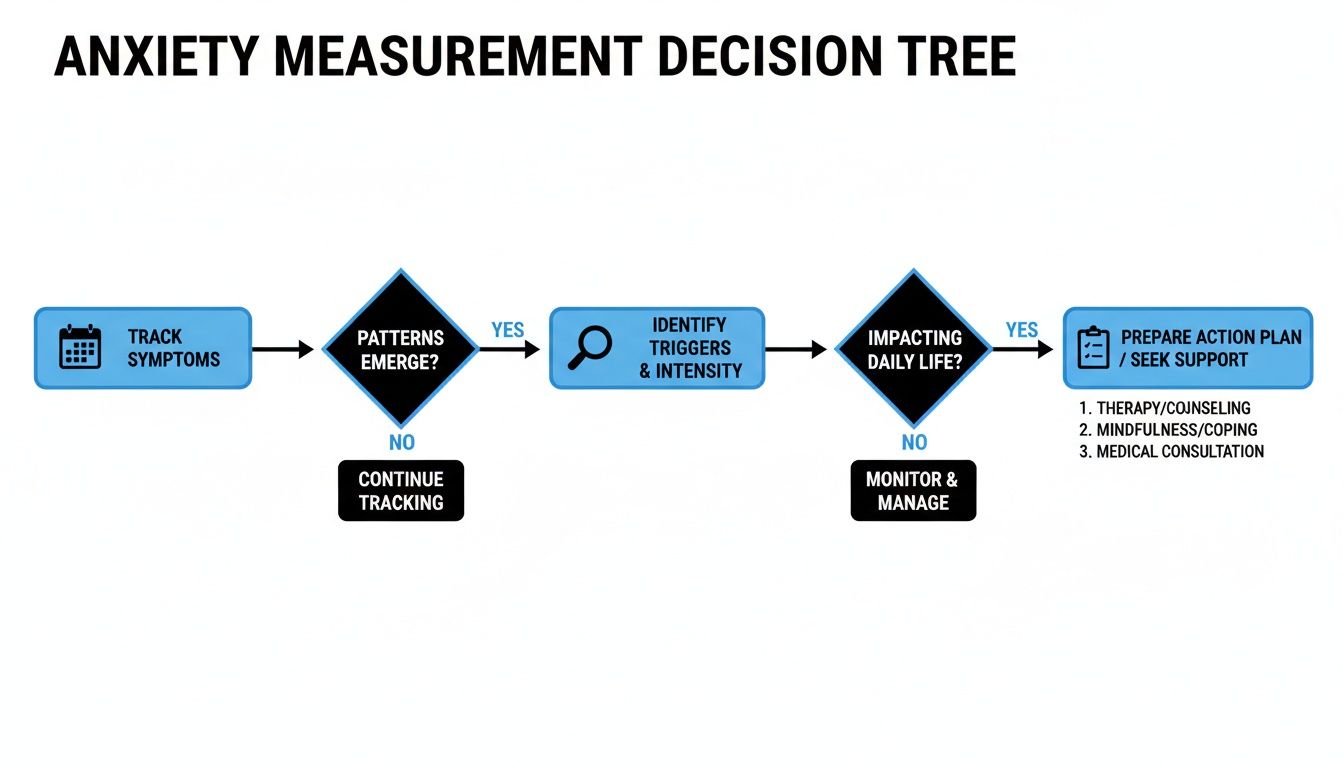
This visual guide shows that getting help is a clear, manageable process, not a confusing maze. It's a hopeful path forward.
Understanding the Role of Medication
Medication is another powerful tool in the anxiety toolkit, but it's often misunderstood. It’s not a "happy pill" or an instant cure. Instead, think of it like scaffolding on a building under construction; it provides stability and support so the real work of therapy can happen more effectively.
For some people, anxiety is so overwhelming that just showing up to therapy feels impossible. In these cases, medication can dial down the intensity of the physical and mental symptoms, clearing the fog just enough for you to learn and apply the skills you gain in CBT. A psychiatrist or your doctor can help you figure out if this is a good option for you.
"Recovery is not about becoming a person who never feels anxiety. It's about becoming a person who knows how to respond to it with confidence and grace, refusing to let it be the master of your life."
Self-Help and Structured Programs
While professional help is invaluable, you hold a tremendous amount of power in your own recovery. Structured self-help programs and practical coping strategies can be an excellent first step or a powerful supplement to therapy. These resources teach you essential skills you can practice every single day.
Globally, a staggering 359 million people are dealing with anxiety disorders, but only 27.6% receive any kind of treatment. That means millions are suffering in silence, often because they don't know that effective help is out there. Studies show that early intervention with methods like CBT can reduce symptoms by 50-60% in just a few months, which shows why taking action is so important.
Beyond the more traditional treatments, practical self-help approaches can make a huge difference. You might find relief by exploring calming art therapy exercises for anxiety or by starting a consistent mindfulness practice.
Choosing Your Path to Anxiety Relief
Deciding on the right path forward is a personal choice. The table below breaks down the most common treatment options to help you figure out the best starting point for your unique situation.
| Support Option | Best For | What to Expect | Potential Cost |
|---|---|---|---|
| Professional Therapy (e.g., CBT) | Moderate to severe anxiety, specific phobias, or when anxiety is getting in the way of your daily life. | Weekly sessions with a licensed therapist where you'll learn and practice new coping skills. | $$ – $$$ per session (insurance may cover a portion) |
| Medication Management | Severe anxiety or panic disorder, or when symptoms are too intense to fully engage in therapy. | Regular appointments with a psychiatrist or doctor to find the right medication and dosage for you. | $$ – $$$ for appointments and prescriptions |
| Structured Self-Help Programs | Mild to moderate anxiety, or as a supplement to professional care for building everyday skills. | Following a guided program with tools, worksheets, and educational content at your own pace. | $ – $$ (often a one-time cost or a low subscription fee) |
No matter which door you open first, remember that they all lead toward the same destination: a life where you are in control, full of hope, and free from the grip of panic.
How to Take That First Brave Step
Deciding you need help is one thing. Actually making the call? That’s something else entirely. It can feel like the hardest part of the whole journey—a huge, overwhelming mountain you have to climb all at once.
But reaching out isn’t an admission of defeat. It’s an act of profound courage and the single most important move you can make toward getting your life back.

This section is your roadmap. It’s here to break the process down into small, manageable actions that feel genuinely doable. You can do this. A life free from the grip of panic is waiting for you.
Finding the Right Guide for Your Journey
Finding a therapist who just gets you is crucial. You're not just looking for a professional; you're looking for a partner in your healing. So, it’s worth taking the time to find someone you feel truly comfortable with.
Here are three common places to start your search:
- Online Directories: Websites like Psychology Today or GoodTherapy are a great first stop. They let you filter therapists by location, specialty (like anxiety or panic disorders), the insurance they accept, and the type of therapy they practice.
- Your Doctor's Referral: Your primary care physician can be an incredible resource. They often have a trusted network of mental health professionals and can point you toward someone who’s a good fit for what you're going through.
- Insurance Provider List: A practical first step is to check your health insurance company's website or give them a call. They can provide a list of in-network therapists, which helps you manage costs right from the start.
Questions to Ask a Potential Therapist
Once you have a few names, the next step is usually a brief consultation call. Think of this as your chance to interview them—to see if their vibe matches yours. Don't be afraid to ask direct questions. After all, you’re hiring them for a very important job.
For example, if you want to overcome specific anxieties like gym anxiety, you could ask a potential therapist if they have experience with exposure therapy for those kinds of situations.
Here are a few essential questions to have ready:
- What’s your experience working with people who have anxiety and panic attacks?
- What’s your therapeutic approach? (Do you use CBT, ACT, or something else?)
- What would our first few sessions look like?
- How do you track progress with your clients?
"The journey of a thousand miles begins with a single step." This old saying has never been more true. Making that first call is your single step, and it holds the power of a thousand miles of healing.
Simple Scripts for That First Call
Sometimes, just knowing what to say can take away so much of the fear. You don’t need a perfect speech; you just need to start the conversation. Remember, the person on the other end is trained to help guide you.
Try one of these simple conversation starters:
- "Hi, I'm calling to ask about becoming a new client. I've been struggling with anxiety and wanted to learn more about your practice."
- "Hello, my doctor suggested I look into therapy for panic attacks. I was wondering if you’re currently accepting new patients?"
- "Hi, I found your profile online and saw you specialize in anxiety. I've been feeling pretty overwhelmed and would like to schedule a consultation."
Every word you speak is a step toward freedom. If you need a bit more guidance on what comes next, our dedicated resource on how to get help for anxiety now offers more detailed support.
This is the moment your new life begins.
Your Journey Starts With a Single Step
You’ve learned to spot the signs when anxiety crosses the line from a helpful nudge to a constant companion. You can now recognize the red flags that tell you it’s time to listen closer and measure your symptoms to get a clearer picture of what’s going on.
This knowledge is more than just information—it’s the first step back to yourself.
A life where you’re in the driver’s seat, not your anxiety, isn't some far-off dream. It's real, it's possible, and it starts today with one small, concrete action. You are capable of feeling better, you’re not fighting this alone, and a life with more calm is waiting for you.
Choosing Hope Over Fear
Getting better isn't about one giant leap; it's a series of small, courageous choices. It’s choosing to believe in your own resilience, even when you feel shaky. It’s choosing hope, even when fear is yelling the loudest. You now have the insight to start making those choices.
Globally, anxiety often takes root in adolescence. In 2021 alone, there were 16.7 million new cases among young people aged 10-24, but getting help is often tragically delayed. Find out more in the full research on youth anxiety and treatment gaps.
Don't wait. If anxiety is leading to panic attacks, making you avoid parts of your life, or bringing up thoughts of self-harm, it's time to reach out. Tools like The Anxiety Checklist can help you track what you’re feeling, but they’re most powerful when used alongside professional care—especially if anxiety is getting in the way of your daily life.
Healing isn’t a destination you arrive at one day. It’s the path you create with every small, brave step you take—starting with the one you take today.
Take one action right now. It doesn’t have to feel huge to be meaningful.
- Explore one resource mentioned in this guide.
- Look up one therapist in your area.
- Share this article with a friend or family member you trust.
This single act is a powerful declaration that you are ready to reclaim your life. You are choosing to move forward, and that is where all healing begins. Welcome to your new beginning.
Got Questions About Anxiety? Let's Clear Things Up.
Deciding to get help for anxiety is a big step, and it's totally normal for a bunch of practical questions to pop up. Think of this as a straightforward chat where we tackle some of the most common concerns. The goal is to clear away any final hurdles so you can move forward with hope.
How Do I Know If It’s Anxiety or Just a Lot of Stress?
This is a big one. Think of it like this: stress is your body's reaction to a specific, external thing, like a looming deadline at work. It's usually temporary and tends to disappear once the situation is handled.
Anxiety, on the other hand, is more of an inside job. It can hang around long after a stressful moment has passed, or sometimes it shows up for no clear reason at all. It's more persistent and vague.
The real difference comes down to duration and impact. If that feeling of worry is constant, feels out of your control, and has been messing with your daily life for six months or more, it’s likely crossed the line from stress into an anxiety disorder. That shift is a clear signal that it's time to reach out for support and start feeling better.
Is It Possible to Get Better Without Medication?
Absolutely. For a lot of people, therapy is incredibly effective on its own—especially approaches like Cognitive Behavioral Therapy (CBT). Structured self-help programs can also make a huge difference. Medication is just one tool in the box, not a requirement for getting your life back.
Medication is usually brought into the conversation when anxiety is so intense it gets in the way of actually doing the work in therapy. A mental health professional can help you figure out a plan that feels right for you, whether that includes medication or focuses completely on building your own coping skills.
The most important part of your recovery isn’t the specific tool you use—it's your commitment to taking that first step. Hope is a strategy, and every path forward begins with the belief that healing is possible.
What If I Can’t Afford Therapy Right Now?
Cost is a real and valid worry, but you don't have to put your healing on hold. There are more affordable options out there than you might think. Many community mental health clinics offer services on a sliding scale, meaning the price is based on your income.
Another great place to look is universities with psychology departments. They often have clinics where you can get sessions at a reduced rate with graduate students who are supervised by licensed professionals. Plus, online therapy platforms and structured self-help programs can be a powerful and cost-effective way to start building essential skills while you explore other options.
Is Asking for Help a Sign of Weakness?
Not a chance. In fact, it's the exact opposite. Recognizing you need support and then actually doing something about it is one of the bravest, strongest things a person can do.
It’s an act of standing up for yourself and making a powerful commitment to your own well-being. Millions of people get help for anxiety every year and go on to live fuller, richer lives because they took that courageous first step. You deserve that same shot at peace.
Ready to turn understanding into action? The Anxiety Checklist gives you a clear, structured way to track your symptoms, pinpoint your triggers, and build a personalized toolkit for healing. Start your journey to a fearless, panic-free life today by visiting https://anxietychecklist.com.