
Waking up in a state of panic feels like a sudden, unprovoked ambush. You’re jolted awake not by a nightmare, but by a racing heart and a rush of dread that seems to come from nowhere. It's not a personal failing—it's your body's natural "wake-up" signal overshooting its mark, and it is something you can absolutely learn to manage and overcome.
Your Body's False Fire Alarm
Imagine your home’s smoke detector is so sensitive that it triggers the fire sprinklers every single time you make toast. Instead of a gentle beep, you wake up to a drenching flood. All because of a false alarm.
That’s a pretty good picture of what’s happening in your body.
You have a natural, healthy system called the Cortisol Awakening Response (CAR). Cortisol gets a bad rap as the "stress hormone," but its morning job is to act like a shot of espresso—it wakes you up and gets you ready for the day.
But for those of us who deal with morning anxiety, this system kicks into overdrive. It releases a massive, unnecessary surge of cortisol, triggering a powerful physical panic before your conscious mind even has time to find a specific worry.
This isn’t about your character or strength; it's a biological process. Your nervous system is simply misinterpreting the signal to wake up as a signal for imminent danger. This flips the switch on your body’s emergency alert system, a topic we cover in our detailed guide to the fight-or-flight response.
Understanding this mechanism is the first step toward showing your body there is no fire. It’s the beginning of your journey toward healing.
You Are Not Alone in This
If this experience makes you feel isolated, I want you to know you're part of a huge community. Waking up with a racing heart and a knot in your stomach is incredibly common, especially with the global rise in anxiety disorders.
The years following the COVID-19 pandemic saw a dramatic spike. In the UK, 37.1% of women and 29.9% of men reported high anxiety levels in recent surveys. Meanwhile, in the US, 23.4% of adults experienced an anxiety disorder in the past year. You can read the full research about these global trends here.
The key takeaway is this: Waking up anxious is a physiological event, not a psychological weakness. It’s your body’s alarm system working too well, and just like any system, it can be recalibrated.
This guide is built on that hope. Once you recognize this "false fire alarm," you can start to gently retrain your body's response. The goal isn't to fight the anxiety head-on but to understand its source and teach your nervous system that your bedroom is a safe place, not a danger zone.
With the right tools and consistent practice, you can transform these panicked mornings into peaceful ones. Healing isn’t just possible—it’s achievable.
Let's start by breaking down the most common reasons why this happens.
This table gives you a quick snapshot of the usual suspects behind that jarring morning jolt.
Quick Guide to Morning Anxiety Triggers
| Trigger Category | Common Causes | How It Feels |
|---|---|---|
| Biological | Cortisol Awakening Response (CAR), low blood sugar, dehydration, poor sleep quality. | A sudden, physical rush of panic; racing heart, shortness of breath, dizziness before any worry forms. |
| Psychological | Lingering stress from the day before, unresolved conflicts, anticipatory anxiety about the upcoming day. | Waking up with a mind already racing, replaying conversations, or pre-worrying about your to-do list. |
| Lifestyle | Evening alcohol or caffeine, high-sugar snacks before bed, inconsistent sleep schedule, screen time before sleep. | Feeling groggy but wired, restless, on-edge, and physically unsettled. |
Recognizing which of these might be at play for you is the first step in knowing where to focus your efforts.
Understanding the Science of Morning Panic
To truly get a handle on morning anxiety, you first have to understand what's happening inside your body. That jarring sense of dread you feel when you wake up isn't a personal failing; it's more like a biological mix-up. Once you see the mechanics behind the curtain, you’ll realize these feelings aren't permanent. They're just systems that can be gently guided back into balance.
Think of your brain's fear center, the amygdala, as an overly sensitive smoke detector. In a well-regulated system, it’s a lifesaver, alerting you to real threats. But when chronic stress cranks up its sensitivity, it starts treating neutral signals—like the simple act of waking up—as a five-alarm fire. This false alarm triggers the famous "fight-or-flight" response, flooding your system with adrenaline before you’ve even opened your eyes.
This is the very heart of why you wake up anxious. It's an automated, physiological response that kicks in without your permission. But just knowing this is the first step toward teaching your body there’s no real fire to fight.
The Cortisol and Blood Sugar Connection
Two key players in this morning drama are cortisol and blood sugar. Your body naturally releases a burst of cortisol within the first hour of waking up to get you going for the day—this is the Cortisol Awakening Response we mentioned. But for someone struggling with anxiety, this release can feel less like a gentle nudge and more like a shove into high alert.
At the same time, your blood sugar is at its lowest after fasting all night. This dip can trigger its own release of stress hormones as your body tries to stabilize its energy. When you combine that with a massive cortisol spike, you have the perfect storm for anxiety, creating physical sensations like a racing heart and shakiness. These are some of the most common anxiety causes people experience without ever realizing their biological roots.
This simple concept map shows the powerful chain reaction that leads to that morning panic.
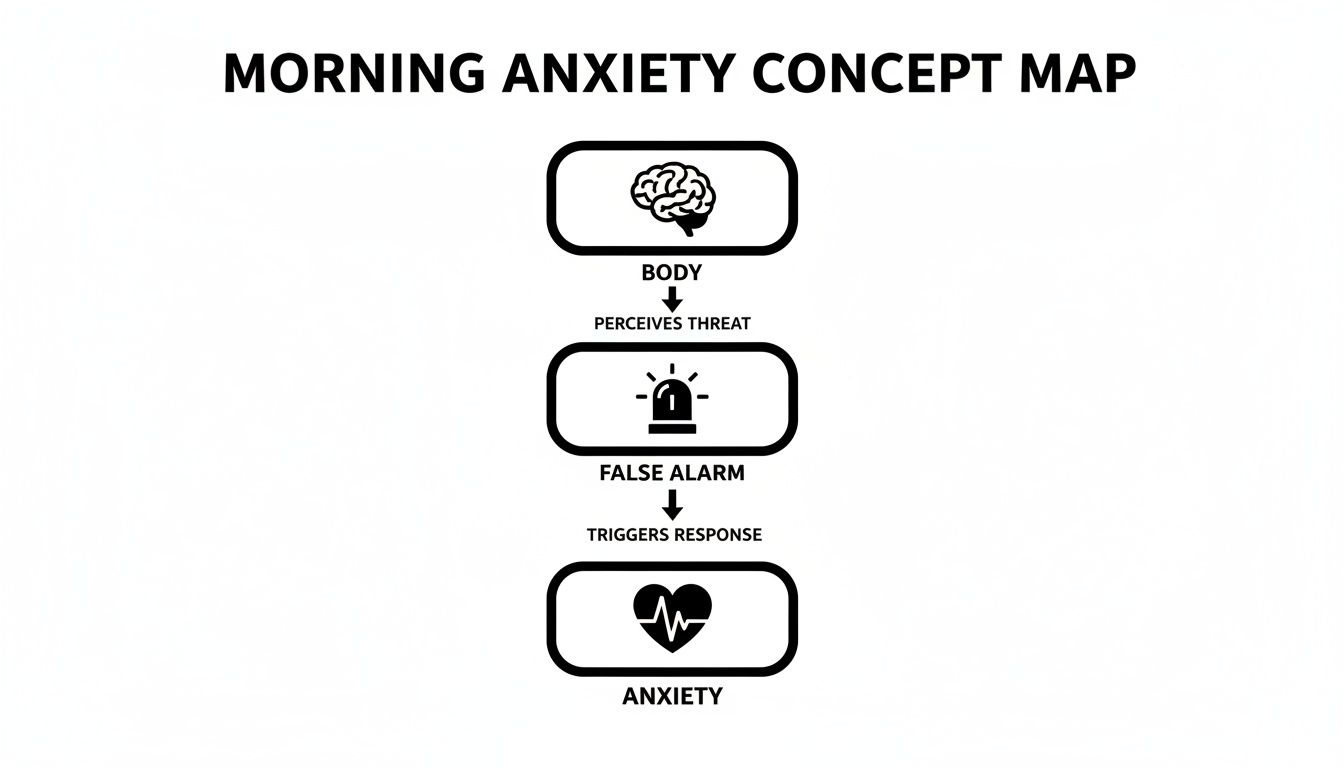
As you can see, the process starts with your body interpreting a threat—even an imagined one—which sets off a false alarm and triggers the physical symptoms of anxiety.
The Role of Your Sleep Cycle
Sleep isn’t just downtime; it’s when your brain gets to work processing emotions. During REM sleep, in particular, your mind sorts through the day's events. The problem is, chronic stress and anxiety often lead to fragmented, poor-quality sleep, constantly interrupting these crucial REM cycles.
When this happens, you accumulate an "emotional backlog." Unprocessed worries and fears from the previous day don't get filed away. Instead, they’re left sitting on your mental desktop, waiting for you the moment you wake up and contributing to that immediate sense of overwhelm.
Hope is a crucial part of this equation. Knowing that these are physiological processes—a sensitive amygdala, hormonal spikes, and sleep debt—means you can address them. These are not character flaws; they are systems that can be soothed, regulated, and retrained for calm.
This isn't your forever. You can learn to work with your body to create new patterns, proving that panic-free mornings are not just a dream but an achievable reality.
Your First Five Minutes of Calm

When you wake up to a wave of panic, your body’s alarm system is screaming that you’re in danger. The key isn't to fight the feeling or try to shove it down—it's to gently show your nervous system that you are safe, right here and now. This is where you reclaim your power.
The first five minutes after you open your eyes are everything. Before you even think about your to-do list or reach for your phone, there's a critical window to stop the anxiety spiral in its tracks. These simple techniques are designed to be done before your feet even touch the floor.
Think of these not just as coping skills, but as active tools for retraining your brain. With practice, you can start to replace that conditioned jolt of panic with a new, intentional response of calm. It's the first step in teaching your body that waking up can feel gentle again.
Interrupt the Panic with Grounding Techniques
Your mind might be racing a million miles a minute, but your body is right here, in the present. Grounding techniques use your physical senses to pull your focus away from the internal chaos and back into the safety of your immediate surroundings.
Just start by noticing. Feel the weight of the blanket on your legs. The texture of the sheets against your skin. The coolness of the pillow under your head. These small, simple acts send powerful signals of safety straight to your nervous system.
Key Insight: You can't be in a state of panic and a state of grounded presence at the same time. By intentionally focusing on your physical senses, you actively choose to shift out of the anxiety spiral.
This simple reconnection reminds your brain that whatever "threats" it's imagining, they aren't happening in this room, in this bed, in this moment.
Regulate Your Nervous System with Your Breath
One of the most powerful tools you own is your own breath. When you're anxious, your breathing gets shallow and fast, which just amps up the panic signal. But here's the good news: by deliberately slowing your breath down, you can manually flip the switch from "fight-or-flight" to "rest-and-digest."
A simple yet profound method is the 4-7-8 breathing technique. It works by stimulating the vagus nerve, which helps regulate your heart rate and dial down the stress response.
- Inhale Quietly: Close your mouth and breathe in quietly through your nose for a count of four.
- Hold Your Breath: Hold that breath for a count of seven.
- Exhale Completely: Breathe out completely through your mouth, making a whoosh sound, for a count of eight.
Repeat this cycle three or four times. It might feel a little unnatural at first, but its effect on your body is direct and almost immediate. You can explore more guided breathing exercises for anxiety to find a rhythm that feels right for you.
Shift Your Focus with Gratitude
Once your breathing has slowed and you feel more connected to your body, it's time for a simple mental shift. Anxiety absolutely thrives on future worries and "what-if" scenarios. The perfect antidote? Pulling your focus back to what's good in the present.
Before you get out of bed, think of just one simple thing you're grateful for. It doesn't have to be some grand, life-changing thing. It could be the warmth of your bed, the sound of birds outside, or just the fact that you have a fresh day ahead of you.
This small act gently nudges your brain's focus away from perceived threats and toward a sense of appreciation and safety. You're proving to yourself that even when anxiety is present, so is goodness. This is how you begin building a new morning reality, one breath at a time. A key part of calming your nervous system is controlling your breath, and mastering rhythmic breathing techniques is a skill that contributes to your overall sense of calm.
Transform Your Nights to Reclaim Your Mornings

A peaceful morning doesn't just happen by accident. It's almost always the direct result of a peaceful night. To stop waking up with that familiar knot of anxiety, we need to shift our focus from just getting more sleep to creating an evening routine that actively settles your nervous system.
This isn’t about adding more chores to your day. It’s about intentionally building a runway to restorative rest.
Think of your brain like a bustling office at closing time. If you just flip the lights off and lock the door, all the unfinished paperwork, open files, and blinking screens are still there, waiting to create chaos in the morning. A proper wind-down routine is your chance to mindfully tidy up, shut down the systems, and leave everything in order for a fresh start.
This is where you can truly start to take back control. By making small, consistent changes in the evening, you build a powerful foundation for calmer mornings, proving to yourself that you have the power to influence how you wake up.
Create a Worry Offload Ritual
One of the biggest culprits behind a restless night is a mind that just won't quit. Anxious thoughts love the quiet darkness, where they can replay worries and rehearse future fears on an endless loop. The "worry offload" is a dead-simple journaling technique designed to park these thoughts before they hijack your sleep.
About an hour before bed, grab a notebook and spend just five to ten minutes writing down everything that’s on your mind. Get it all out: the to-do list for tomorrow, that lingering worry from a conversation, that vague sense of dread. Don't edit or judge it. Just empty your brain onto the page.
This simple act externalizes your anxieties, signaling to your brain that these thoughts are captured and can be dealt with tomorrow. You’re giving yourself permission to let go for the night, creating the mental space you need for truly deep rest.
Be Mindful of Nighttime Stimulants
What you consume in the hours before bed has a direct and profound impact on your sleep quality—and, by extension, your morning anxiety levels. We often underestimate the subtle effects of these common culprits:
- Caffeine: This well-known stimulant can linger in your system for up to 10 hours. That afternoon coffee could easily be disrupting your sleep architecture later that night, robbing you of restorative rest.
- Sugar: A sugary snack before bed can cause your blood sugar to spike and then crash while you're asleep. This crash can trigger the release of stress hormones like cortisol and adrenaline to rebalance your system, jolting you awake with a racing heart.
- Alcohol: While a glass of wine might make you feel drowsy at first, it severely disrupts REM sleep—the crucial stage for emotional processing. This interruption contributes to that "emotional backlog" we talked about, leaving you feeling more on-edge and anxious the next day.
For a deeper dive into how your daily intake affects your mental state, our guide on lifestyle and diet changes for anxiety management offers practical, science-backed advice.
Waking up anxious is often a symptom of nighttime disruption. By creating an evening sanctuary of calm, you are not just hoping for a better morning—you are actively building one. This is the path to living panic-free.
A crucial piece of this puzzle is genuinely improving your rest. For comprehensive guidance, explore resources dedicated to understanding and enhancing sleep quality.
Evening Routine for a Calmer Morning
Building a better morning starts the night before. It's about swapping out habits that secretly fuel anxiety for ones that actively soothe your nervous system. Here’s a look at some simple but powerful swaps you can make.
| Habit to Avoid (Disrupts Calm) | Habit to Adopt (Promotes Calm) | Why It Works |
|---|---|---|
| Mindlessly scrolling social media or news feeds before bed. | Reading a physical book (fiction works wonders) or listening to a calm podcast. | Reduces exposure to blue light and stimulating content, allowing the brain to power down. |
| Having a sugary snack or alcoholic nightcap. | Sipping on caffeine-free herbal tea like chamomile or lavender. | Avoids blood sugar spikes and sleep-disrupting substances, promoting natural relaxation. |
| Leaving a cluttered and bright bedroom environment. | Dimming the lights and tidying up for 5 minutes. | A calm, dark, and organized space sends a powerful signal to your brain that it's time for rest. |
| Rehashing the day's worries in your head while trying to fall asleep. | Doing a "worry offload" in a journal an hour before bed. | Externalizes anxious thoughts, giving your mind permission to let go and rest. |
These small adjustments aren't about perfection. They're about intention. By consciously choosing calm, you're setting the stage for a much more peaceful awakening.
Release Physical Tension Before Bed
Anxiety doesn't just live in the mind; it gets stored in the body. You know the feeling—tight shoulders, a clenched jaw, or a knotted stomach. This physical tension can keep your nervous system in a low-grade state of "on-alert," making it nearly impossible to fully relax.
Carving out just a few minutes for gentle stretching or a simple yoga routine can work wonders. Focus on slow, mindful movements that release the day's stress from common hotspots like your neck, shoulders, and hips.
This practice does more than just ease physical discomfort. It sends a powerful, undeniable message to your brain that it's safe to unwind and let go, paving the way for a more peaceful night and a significantly calmer morning.
Knowing When It's Time to Ask for Help
The tools and strategies in this guide can be incredibly powerful for taking back your mornings. They're all about giving you active, hopeful ways to manage the anxiety yourself. But it’s just as important to recognize when it’s time to call in for reinforcements.
Reaching out for professional help isn't a sign of failure—it's an act of courage and strength.
Sometimes, the weight of anxiety is just too heavy to carry on your own, and that’s completely okay. If you find that morning anxiety is consistently derailing your day, getting in the way of your job or relationships, or just leaving you feeling hopeless, it might be time to bring in an expert.
Think of it like this: you can learn to patch a leaky pipe, but if the foundation has a crack, you call a professional. Seeking support is simply acknowledging that you deserve a specialist's care to build a solid, lasting recovery.
Telltale Signs You Need More Support
Knowing when to make that call can feel confusing, especially when you're already feeling overwhelmed. But certain patterns can serve as clear signals that it’s time to get a professional opinion.
- Frequency and Intensity: Your morning anxiety is happening almost every single day, and the self-help techniques you’ve tried just aren't making a dent.
- Impact on Daily Life: The fear of waking up anxious is now causing you to avoid activities, miss work, or pull away from friends and family.
- Persistent Hopelessness: You feel completely trapped in the cycle, and the belief that you can ever feel better is starting to fade.
- Concerning Physical Symptoms: You’re worried about the physical toll the anxiety is taking, like ongoing chest tightness, stomach issues, or dizziness.
Recognizing these signs is the first step toward getting the targeted help that can truly make all the difference.
Therapeutic Paths to Calmer Mornings
Here's the great news: anxiety disorders are highly treatable. Therapies like Cognitive Behavioral Therapy (CBT) are especially effective because they don't just treat the symptoms; they teach you how to change the anxious thought patterns that fuel the panic cycle in the first place.
CBT gives you a practical, hands-on toolkit to change your relationship with anxiety from the inside out. To get a better sense of what might be right for you, you can explore the different types of psychotherapy for anxiety and find an approach that clicks.
The most hopeful message is this: you do not have to live this way forever. Healing is not just a possibility; it's an achievable reality with the right support. Reaching out is the first, bravest step on your path to reclaiming your life from anxiety.
It’s also crucial to see a doctor to rule out any underlying physical issues that could be contributing to your symptoms. This ensures you’re treating the right problem. Deciding to get help is a profound act of self-care—and the ultimate expression of hope for a future filled with calm, peaceful mornings.
Your Path to Panic-Free Mornings Starts Now
Waking up with a jolt of anxiety can feel like you’ve been handed a life sentence you never asked for. It’s an exhausting, seemingly unbreakable cycle. But I want you to hold onto this one powerful truth: this is not your forever.
Those panicked mornings aren't a personal failing. They’re the result of a biological system—your own internal alarm—that has become a little too sensitive.
And just like any system, it can be retrained.
You’ve learned that morning panic is often a biological false alarm, your body’s cortisol response simply overshooting its mark. You've seen how things like poor sleep, lingering stress, and even your blood sugar can create the perfect storm for that dreaded morning jolt. This understanding is your first real tool—it demystifies the anxiety, turning it from a monster under the bed into a solvable problem.
You are not powerless here. By putting the strategies we’ve covered into practice, you’re actively changing your relationship with anxiety. This isn't just about managing symptoms; you are fundamentally rewiring your nervous system for safety and calm.
Your Roadmap to a Calm Awakening
Healing is a journey of small, consistent steps, not one giant leap. It’s about building a new reality, one peaceful morning at a time. Your path forward is clear and actionable, built on three core pillars:
- Understand the "Why": Recognize that morning anxiety is a physiological response, not a reflection of your character or strength. This knowledge alone strips the panic of its power and transforms fear into curiosity.
- Practice Immediate Relief: Use those first five minutes awake to ground yourself. Your breath is your anchor, and your senses are your direct line to the present moment, proving to your body that you are safe right now.
- Build a Preventative Foundation: Your evenings are where the real magic happens. A mindful wind-down routine that includes a "worry offload" and avoids stimulants isn't just about better sleep—it’s about setting the stage for a peaceful awakening.
You hold the power to change how you feel. Every time you choose a grounding breath over a racing thought, or a gentle evening routine over late-night scrolling, you are casting a vote for a panic-free life. These small actions accumulate, creating unstoppable momentum.
This journey is about progress, not perfection. Some mornings will be harder than others, and that’s perfectly okay. The goal is just to keep showing up for yourself, armed with the knowledge that you have practical, effective tools to interrupt the anxiety spiral and guide your body back to a state of calm.
Your First Step Starts Today
The most important step is always the next one. Don't get overwhelmed by trying to do everything at once. Just pick one single strategy from this guide and commit to it for one week.
Maybe it's the 4-7-8 breathing technique before your feet even hit the floor. Perhaps it's spending five minutes journaling before bed to get worries out of your head. Or maybe it’s as simple as swapping that evening sugary snack for a calming herbal tea.
Choose one small, achievable action today.
This single choice is your first step on the path to reclaiming your mornings. You are learning to work with your body instead of fighting against it. This is how you prove to yourself, day by day, that a life free from morning panic is not just a distant hope—it is your achievable future.
Still Have Questions About Morning Anxiety?
Waking up with a racing heart can leave you with a lot of questions. It's completely normal to want to understand what's happening inside your own body. Here are some straightforward, reassuring answers to the questions we hear most often from people figuring this out.
Can What I Eat Really Affect My Anxiety in the Morning?
It absolutely can. Think of food as information for your body. What you eat and drink, especially before bed, sends direct signals that influence your blood sugar, hormones, and sleep. This isn't about chasing a "perfect" diet; it’s about making the connection between your fuel and your feelings.
For example, reaching for caffeine or sugary snacks late at night can set you up for a rollercoaster of blood sugar spikes and crashes. When your blood sugar plummets overnight, your body hits the panic button, releasing stress hormones like cortisol and adrenaline to fix it. That jolt is often what wakes you up feeling panicked. Alcohol is another culprit—it might make you feel sleepy at first, but it fractures the deep, restorative REM sleep you need, leaving you on edge the next day.
Making thoughtful choices about your evening meals is a powerful act of self-care. It’s one of the most direct ways to pave the way for calmer nights and more peaceful mornings.
Is It Normal for My Morning Anxiety to Feel Completely Physical?
Yes, it's incredibly common, and it’s one of the main reasons morning anxiety feels so terrifying and confusing. You aren't imagining it. The racing heart, the tight chest, the churning stomach—these are real, physical responses driven by biological events like the Cortisol Awakening Response (CAR).
Your nervous system’s fight-or-flight response can switch on the second you wake up, often before your conscious mind has even had a chance to latch onto a worry. Over time, your brain can start to associate the simple act of waking up with these feelings of panic, turning it into a conditioned response. This is precisely why body-based grounding techniques work so well. They speak directly to that physical alarm system, reassuring it that there’s no immediate danger to fight or flee from.
How Long Until These Techniques Actually Start Working?
There’s no magic timeline, but the key to all of this is consistency. You’re gently retraining a nervous system that’s been on high alert, and that process requires patience.
You might feel a bit of relief the very first time you try a grounding technique like deep breathing. That’s a win—a sign that you can influence how you feel. For more lasting change, many people start to notice a real shift in the intensity and frequency of their morning anxiety within a few weeks of consistently using an evening wind-down routine and a morning grounding toolkit.
The goal here is progress, not perfection. Every single morning you wake up feeling even a little bit calmer is proof that you’re on the right track. You are actively building a new reality for yourself—one where waking up peacefully is your new normal.
At The Anxiety Checklist, we're focused on giving you practical, actionable tools for this journey. Our entire system is built to help you understand what's happening, use strategies that work, and create a personalized toolkit for lasting relief. Take the first step toward reclaiming your mornings by visiting The Anxiety Checklist and discover how to start living a more fearless life.