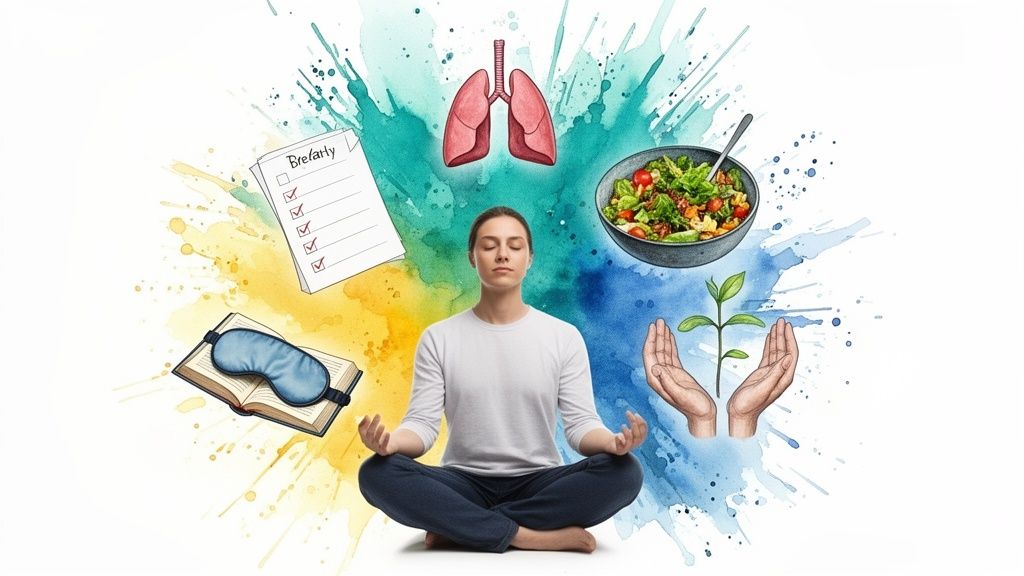
Anxiety can feel like a relentless storm, trapping you in a cycle of worry, physical discomfort, and pervasive fear. It often whispers a convincing lie: that this state of unease is your permanent reality. But what if there was a clear, actionable path leading out of the storm and into lasting calm? This guide is designed to be that path. It’s not just another list of generic tips; it is a comprehensive, hope-filled roundup of evidence-based anxiety coping strategies meticulously chosen to empower you on your journey toward healing.
We will explore 10 distinct, practical methods that serve as the fundamental building blocks for a resilient, panic-free life. You will learn to implement immediate grounding techniques that can halt a panic attack in its tracks, as well as long-term cognitive and lifestyle shifts designed to fundamentally rewire your brain for peace. This article provides the specific tools you need to build your personal anxiety management toolkit, proving you can move from a state of merely surviving to truly thriving.
Healing is not a distant, abstract concept; it is an achievable outcome built on consistent, intentional action. Each strategy presented here represents a concrete step toward reclaiming control over your mind and body. This is about more than just managing symptoms. It's about proving to yourself, one small victory at a time, that you can live a full, confident life defined not by anxiety, but by your own strength and resilience. Let's begin building your pathway to a panic-free future.
1. Cognitive Behavioral Therapy (CBT) Techniques
Cognitive Behavioral Therapy (CBT) is a powerful, evidence-based approach that offers a structured path to not just manage, but heal from anxiety. It operates on a core principle: our thoughts, feelings, and behaviors are deeply interconnected. By learning to identify and change unhelpful thought patterns, you can directly influence your emotional state and behaviors, providing a real sense of control over anxiety. This method isn't about ignoring negative feelings; it's about understanding their roots and reshaping your response to them, paving the way for a panic-free life.
How CBT Works for Anxiety
CBT equips you with practical tools to dismantle anxious thought cycles. Instead of being swept away by fear, you learn to step back, observe your thoughts, and question their validity. This methodical process helps you build more balanced, realistic perspectives, which in turn reduces the physical and emotional symptoms of anxiety, creating space for lasting calm.
A cornerstone of this approach is recognizing "cognitive distortions" or common thinking traps. These include patterns like catastrophizing (assuming the worst-case scenario) or black-and-white thinking (seeing things in extremes). By identifying these distortions, you can begin to challenge and replace them, breaking the cycle for good.
CBT teaches you to become a detective of your own mind, gathering evidence for and against your anxious thoughts until you find the truth: you are in control.
Actionable CBT Exercises to Try
- Thought Record: Create a simple log with columns for: the situation, your automatic anxious thought, the emotion you felt, evidence that supports the thought, evidence that contradicts it, and a new, more balanced thought. This exercise makes abstract fears concrete and manageable.
- Behavioral Experiments: If you fear a specific social situation will end in disaster, design a small, safe experiment to test that belief. For example, ask a stranger for the time to test the prediction that you'll be judged or rejected. Each success proves your anxious thoughts wrong.
- Graded Exposure: For phobias or specific triggers, create a "fear ladder." Start by exposing yourself to a very low-anxiety version of your fear and gradually work your way up as you build confidence and tolerance.
This process is gradual but cumulative, empowering you with skills that last a lifetime. For a deeper dive into how these methods work, you can learn more about understanding CBT for anxiety and begin your journey toward lasting relief.
2. Progressive Muscle Relaxation (PMR)
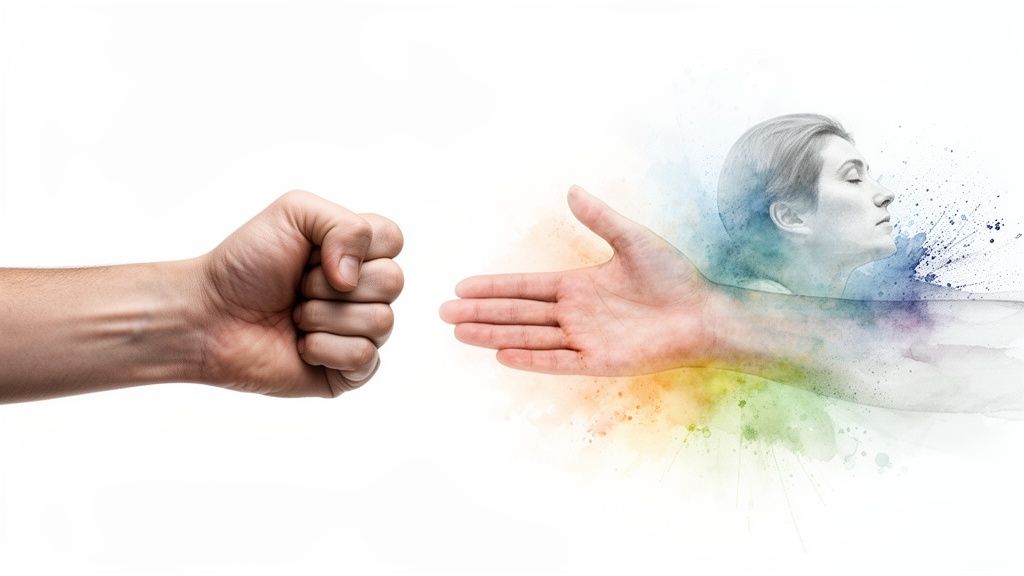
Progressive Muscle Relaxation (PMR) is a deeply grounding, body-based technique designed to release the physical tension that fuels the anxiety cycle. Developed by Dr. Edmund Jacobson, it operates on a simple but powerful premise: you cannot be physically relaxed and mentally anxious at the same time. By systematically tensing and then releasing specific muscle groups, you teach your body the profound difference between stress and calm, giving you direct, physical control over your anxiety response and paving the way for a more peaceful, panic-free existence.
How PMR Works for Anxiety
PMR directly counteracts the "fight-or-flight" response by activating the parasympathetic nervous system, your body's natural relaxation mechanism. When you're anxious, your muscles tighten, often without your awareness. This technique brings conscious attention to that tension, allowing you to intentionally let it go, which sends a powerful signal to your brain that the perceived threat has passed and it's safe to be calm.
This practice is especially effective for the physical symptoms of anxiety like jaw clenching, shoulder tightness, and general muscle aches. By learning the language of your body, you can stop the physical escalation of anxiety before it spirals into a full-blown panic attack, making it one of the most effective physical anxiety coping strategies available.
PMR empowers you to consciously release the physical grip of anxiety, proving that you have the ability to calm your own body and mind.
Actionable PMR Exercises to Try
- Targeted Muscle Groups: Start with your hands. Clench both fists tightly for 5-10 seconds, noticing the tension in your hands and forearms. Then, release completely, paying close attention to the feeling of warmth and looseness that follows.
- Full Body Scan: Lie down comfortably and move systematically through your body. Tense and release your toes, then your calves, thighs, abdomen, chest, arms, shoulders, and finally the muscles in your face. This is incredibly effective during moments of high anxiety or before sleep.
- Morning Baseline Practice: Dedicate five minutes each morning to a quick PMR session. This helps lower your baseline anxiety level for the day, making you less reactive to stressors.
With consistent practice, your body develops a "muscle memory" for relaxation, making it easier and faster to achieve a calm state. To master this technique, you can learn more about implementing Progressive Muscle Relaxation for anxiety and add this physical tool to your healing journey.
3. Mindfulness and Meditation
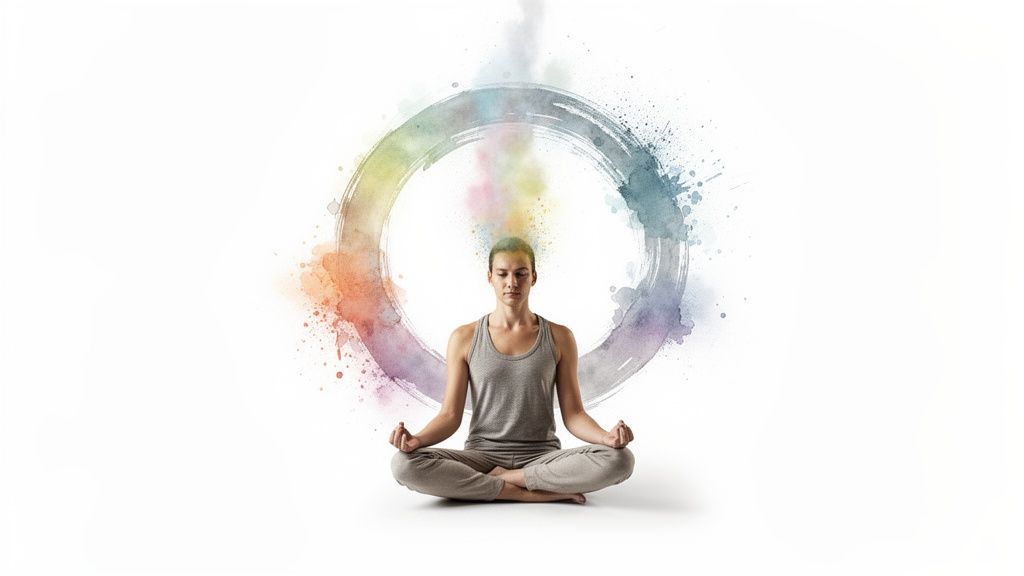
Mindfulness is the practice of paying attention to the present moment on purpose, without judgment, while meditation offers a structured way to train that attention. These powerful anxiety coping strategies work by gently pulling your focus away from worrying about the future or ruminating on the past, anchoring you firmly in the here and now. Regular practice can fundamentally change your brain's relationship with anxiety, rewiring neural pathways to promote calm and emotional regulation, offering a sustainable path toward a more peaceful, panic-free life.
How Mindfulness Works for Anxiety
Mindfulness helps you create a space between an anxious trigger and your reaction to it. Instead of being automatically hijacked by anxious thoughts, you learn to observe them as temporary mental events, like clouds passing in the sky. This practice diminishes their power over you, reducing the intensity of both physical and emotional anxiety symptoms and showing you that you are not your thoughts.
At its core, mindfulness and meditation train the brain to disengage from its "default mode network," the part often responsible for generating anxious, looping thoughts. By repeatedly redirecting your attention to a neutral anchor, like your breath or bodily sensations, you strengthen your ability to remain grounded even when feelings of panic arise.
Mindfulness doesn't eliminate life's stressors, but it changes your relationship with them, giving you the inner stability to navigate challenges and live with confidence.
Actionable Mindfulness Exercises to Try
- Five-Minute Breath Meditation: Start your day by sitting quietly and focusing entirely on the sensation of your breath entering and leaving your body. When your mind wanders, gently guide it back. This builds a baseline of calm for the day ahead.
- Body Scan Meditation: When you feel a panic attack coming on, lie down and bring your attention to each part of your body, from your toes to your head, simply noticing any sensations without judgment. This redirects your focus away from the panic itself.
- The 5-4-3-2-1 Grounding Technique: During a spike of anxiety, pause and name: 5 things you can see, 4 things you can feel, 3 things you can hear, 2 things you can smell, and 1 thing you can taste. This technique powerfully pulls your awareness back to the safety of the present moment.
These practices are skills that develop over time, empowering you with a profound sense of self-control. To discover how these techniques can be integrated into your daily routine, you can explore the benefits of meditation for anxiety and begin building your resilience.
4. Deep Breathing and Breathwork
Deep breathing and breathwork techniques are among the most immediate and powerful anxiety coping strategies available. They operate on a direct physiological level, tapping into your body's innate ability to calm itself. The core principle is simple: controlled breathing activates the parasympathetic nervous system, which acts as a brake on the "fight-or-flight" response. By consciously changing your breathing pattern, you can lower your heart rate, reduce blood pressure, and send a signal to your brain that the danger has passed, offering a rapid path back to a calm, panic-free state.
How Breathwork Works for Anxiety
When you feel anxious, your breathing often becomes shallow and rapid, a state that perpetuates the physical sensations of panic. Breathwork reverses this process by emphasizing slow, deliberate inhales and, most importantly, extended exhales. This simple act of prolonging the exhale directly stimulates the vagus nerve, which is the main pathway of the parasympathetic (rest and digest) system.
This isn't just about relaxation; it's about reclaiming command over your body’s automatic stress reactions. Instead of being a passenger in a runaway vehicle of panic, you become the driver, using your breath to apply the brakes. Popularized by figures like Wim Hof and validated by neuroscience researchers like Andrew Huberman, these methods are proven tools for immediate regulation.
Your breath is an anchor to the present moment, a tool you can use anytime, anywhere, to interrupt the cycle of anxiety and return to calm.
Actionable Breathwork Exercises to Try
- Box Breathing (4-4-4-4): Ideal for moments of high stress or panic. Inhale for a count of four, hold your breath for four, exhale for four, and hold again for four. This rhythmic pattern provides a focus point and restores balance to the nervous system.
- The 4-7-8 Technique: A powerful sedative for the nervous system, perfect before a stressful event or to aid sleep. Inhale quietly through your nose for four seconds, hold your breath for seven seconds, and exhale audibly through your mouth for eight seconds.
- Diaphragmatic Breathing: Place one hand on your chest and the other on your belly. Inhale slowly through your nose, ensuring your belly rises more than your chest. This deep "belly breathing" engages the diaphragm fully for maximum calming effect.
Practicing these techniques consistently builds a reliable skill for managing anxiety when it arises. To explore these methods in greater detail, you can learn more about specific breathing exercises for anxiety and start building your toolkit for lasting calm.
5. Graded Exposure and Systematic Desensitization
Graded exposure is a structured and highly effective approach that empowers you to confront your fears systematically, rather than letting them control your life. This technique is built on the principle of habituation: by gradually and repeatedly facing situations that trigger anxiety, you teach your brain that these triggers are not truly dangerous. It's a method that directly dismantles the avoidance cycles that maintain phobias and panic disorder, offering a clear path toward reclaiming your freedom and living a full life without constant fear.
How Graded Exposure Works for Anxiety
This strategy involves creating a "fear ladder," a hierarchy of situations ranked by how much anxiety they provoke. You start at the bottom rung with a mildly challenging task and only move up once you feel your anxiety naturally decrease in that situation. This incremental process prevents you from feeling overwhelmed and builds confidence with each step, proving that you can handle the feelings you once thought were unbearable.
The goal isn't to eliminate anxiety instantly but to learn to tolerate it until it subsides on its own. Through this repeated, controlled exposure, the connection between a specific trigger (like public speaking or driving on a highway) and the panic response weakens, eventually breaking the cycle for good.
Graded exposure allows you to become the director of your own recovery, choosing the pace and proving to yourself, step by step, that you are stronger than your anxiety.
Actionable Exposure Exercises to Try
- Create a Fear Ladder: Identify a feared situation and break it down into 10-15 smaller, manageable steps. Rate each step on a 0-100 anxiety scale. For social anxiety, step one might be making eye contact with a cashier (rated 20/100), while a later step could be speaking up in a meeting (rated 70/100).
- Stay With the Feeling: When you practice an exposure exercise, commit to staying in the situation until your anxiety level reduces by about half. This typically takes 20-45 minutes and is crucial for your brain to learn it's safe. Leaving too soon can reinforce the fear.
- Challenge Your Predictions: Before each exposure, write down what you predict will happen (e.g., "I will stumble over my words and everyone will laugh"). Afterward, record the actual outcome. This helps you replace catastrophic thinking with real-world evidence of your success.
This powerful anxiety coping strategy provides a tangible way to face your fears and win. You can discover more about how to build your own fear ladder and begin this journey by learning about exposure therapy for anxiety in more detail.
6. Lifestyle Changes: Exercise, Physical Activity, and Substance Moderation
Optimizing your lifestyle through regular physical activity and mindful substance use is one of the most powerful and sustainable anxiety coping strategies available. This approach works by directly influencing your body's chemistry, reducing stress hormones like cortisol while promoting the release of mood-stabilizing endorphins. By combining the benefits of movement with the removal of anxiety-amplifying substances like caffeine and alcohol, you create a stable physiological foundation that makes you more resilient to stress, paving the way for a panic-free life.
How Lifestyle Changes Work for Anxiety
Physical exercise acts as a natural anxiolytic, or anxiety-reducer. It improves sleep quality, boosts self-esteem, and provides a healthy outlet for pent-up tension and nervous energy. Simultaneously, moderating substances like caffeine, alcohol, and nicotine prevents the artificial stimulation of your central nervous system, which can mimic or trigger the physical symptoms of a panic attack.
This dual approach helps reset your body’s baseline level of arousal, lowering it from a constant state of high alert to one of calm readiness. Over time, these consistent habits fundamentally change your brain and body’s response to stress, providing a profound sense of control and empowerment on your path to healing.
Building a lifestyle that supports your mental health isn't about perfection; it's about making conscious choices that consistently build your resilience to anxiety.
Actionable Lifestyle Adjustments to Try
- Integrate Enjoyable Movement: Start with 20-30 minutes of an activity you genuinely like, such as brisk walking, yoga, or cycling, 3-4 times a week. The key is sustainability. Engaging in physical activity like running can significantly reduce anxiety. For those interested in building both physical endurance and mental fortitude, these 8 essential long-distance running tips can help you get started.
- Systematic Caffeine Reduction: Instead of quitting cold turkey, gradually reduce your intake. If you drink three cups of coffee daily, cut back to two for a week, then one. Track your anxiety levels as you decrease your consumption to see the direct correlation.
- Mindful Alcohol Choices: Treat alcohol as an occasional indulgence rather than a regular coping mechanism. Try swapping your nightly glass of wine for a calming herbal tea like chamomile or passionflower and notice the impact on your sleep quality and next-day anxiety.
These lifestyle adjustments are not a quick fix but a long-term investment in your mental well-being, offering cumulative benefits that strengthen all your other anxiety management efforts.
7. Sleep Optimization and Sleep Hygiene
Sleep and anxiety are locked in a vicious cycle; poor sleep amplifies anxiety, and high anxiety disrupts sleep. Optimizing your sleep hygiene is one of the most powerful anxiety coping strategies because it directly lowers your baseline stress levels and restores your brain's capacity for emotional regulation. This approach is about creating a consistent, sleep-promoting routine and environment, allowing your mind and body to get the deep, restorative rest needed to heal and build resilience. This isn't just about avoiding tiredness; it's about fundamentally strengthening your ability to live a more peaceful, panic-free life.
How Sleep Hygiene Works for Anxiety
Quality sleep is essential for the prefrontal cortex, the part of your brain responsible for logical reasoning and impulse control, to effectively manage the amygdala, your brain’s fear center. When you're sleep-deprived, the amygdala becomes overactive, making you more susceptible to anxious thoughts and emotional reactivity.
By establishing strong sleep hygiene, you create predictable cues for your body and mind that it's time to wind down. This process calms the nervous system, reduces the production of the stress hormone cortisol, and makes it easier to fall asleep and stay asleep. Consistent, high-quality rest allows your brain to process emotions properly, making you less vulnerable to anxiety triggers and more capable of handling life's challenges.
A well-rested mind is a resilient mind. Prioritizing sleep is not a luxury; it is a foundational pillar of building a life free from anxiety.
Actionable Sleep Hygiene Exercises to Try
- Establish a Consistent Schedule: Go to bed and wake up at the same time every day, even on weekends. Aim for a consistent 11 PM bedtime and 7 AM wake-up time to regulate your body's internal clock, or circadian rhythm.
- Create a Wind-Down Ritual: Dedicate the 30-60 minutes before bed to calming, screen-free activities. Dim the lights, sip herbal tea, read a physical book, or practice a brief body scan meditation. This signals to your brain that it’s time to prepare for sleep.
- Optimize Your Bedroom Environment: Transform your bedroom into a sanctuary for rest. Use blackout curtains, a white noise machine, and set the temperature to a cool 60-67°F (15-19°C). Reserve the bed for sleep and intimacy only to strengthen the mental association between your bed and rest. For actionable advice on improving your rest, integrate these 4 essential sleep hygiene tips into your nightly routine.
8. Journaling and Thought Recording
Externalizing your anxious thoughts by writing them down is one of the most effective anxiety coping strategies for gaining clarity and control. Journaling creates cognitive distance, allowing you to observe your worries from a new perspective rather than being consumed by them. It transforms a chaotic internal monologue into tangible, manageable information. This process isn't about dwelling on negativity; it's about untangling the roots of your anxiety to build a more peaceful and resilient mindset, creating a clear path toward a panic-free life.
How Journaling Works for Anxiety
Journaling provides a private, judgment-free space to process emotions and identify recurring patterns. When you feel overwhelmed, writing serves as a release valve, preventing anxious thoughts from endlessly circling in your mind. By documenting these moments, you create a valuable log of your unique anxiety triggers, symptoms, and the coping mechanisms that work best for you.
A structured approach, like a thought record, is particularly powerful. This method, often used in CBT, guides you to systematically challenge the validity of your anxious beliefs. Instead of accepting a fearful thought as fact, you learn to question it, find evidence against it, and formulate a more balanced, realistic conclusion. This practice proves that your thoughts don't have to control you.
Journaling helps you move from being a passenger in your anxiety to being the driver of your own thoughts, steering toward calmer destinations.
Actionable Journaling Exercises to Try
- 10-Minute Thought Record: When you feel anxious, take 10 minutes to document the situation, your automatic thought, and the emotions it triggered. Then, actively write down evidence that contradicts the thought and craft a more rational alternative belief.
- Panic Attack Documentation: After a panic attack subsides, log the triggers, symptoms, duration, and what you did that helped. This record becomes a powerful tool for understanding future episodes and recognizing your own strength in getting through them.
- Wins and Gratitude Log: Dedicate a few minutes each day to writing down three things that went well or that you are grateful for. This practice actively shifts your focus away from what-ifs and anxieties toward positive, concrete realities.
This habit of reflection and documentation empowers you with self-awareness, providing a clear roadmap of your progress and proof that you are capable of healing.
9. Social Support and Connection Networks
Social support is a powerful, protective buffer against the isolating nature of anxiety, offering emotional validation, diverse perspectives, and a vital sense of belonging. Building and nurturing meaningful connections reminds you that you are not alone in your struggle, which is a message of profound hope. This strategy directly counters the loneliness and shame that often accompany anxiety, creating a safe space to share experiences and reinforce your commitment to healing, laying a foundation for a more connected, panic-free life.
How Social Support Works for Anxiety
Engaging with a supportive network provides a reality check when anxious thoughts become overwhelming. Trusted friends, family, or group members can offer external perspectives that challenge catastrophic thinking and reduce feelings of isolation. The simple act of vocalizing your fears to a compassionate listener can diminish their power, while shared experiences in support groups validate your feelings and provide practical, lived-in advice for your healing journey.
This strategy is not just about receiving help; it's about the reciprocal nature of connection. Offering support to others can build self-esteem and provide a sense of purpose, shifting your focus outward. Meaningful relationships create accountability, encouraging you to stick with other anxiety coping strategies when motivation wanes.
A strong support system acts as an anchor, keeping you grounded in hope and reality when the storm of anxiety tries to pull you away.
Actionable Ways to Build Your Network
- Schedule Regular Check-ins: Plan a weekly coffee meeting or phone call with a trusted friend where you can openly discuss your anxiety. Having a designated time removes the pressure of bringing it up spontaneously.
- Explore Online Communities: Platforms like Reddit’s r/Anxiety forum or dedicated support services like 7 Cups offer anonymous, accessible peer support from people who understand what you're going through.
- Join a Formal Support Group: Organizations like the National Alliance on Mental Illness (NAMI) host local and virtual support groups. These structured meetings provide a safe, professionally-guided environment to share and learn.
- Find an Accountability Partner: Ask a friend or family member to partner with you on a specific coping goal, such as completing a daily anxiety checklist or practicing a new breathing technique.
This intentional effort to connect transforms anxiety from a solitary battle into a shared journey, empowering you with the strength and validation needed for lasting recovery.
10. Professional Help: Therapy and Medication Considerations
While self-help strategies are powerful, professional mental health treatment is a cornerstone of effective, long-term anxiety recovery. Engaging with a therapist or psychiatrist provides a structured, evidence-based framework for healing, especially when anxiety significantly impairs daily life or self-directed efforts aren't enough. This path combines expert guidance with scientifically proven methods, offering a clear and supportive route to reclaiming control and living a life free from panic.
How Professional Help Works for Anxiety
Professional treatment provides a personalized roadmap tailored to your specific anxiety triggers and symptoms. Therapies like Cognitive Behavioral Therapy (CBT) and Exposure and Response Prevention (ERP) for OCD-related anxiety are delivered by licensed clinicians who guide you through the process of healing. They help you identify deep-rooted patterns, build advanced coping skills, and provide accountability.
In some cases, medication such as SSRIs (e.g., sertraline) may be prescribed by a psychiatrist to help regulate brain chemistry, which can make therapeutic work more effective and your journey to a panic-free life smoother. This combination of therapy and medication is often considered the gold standard for treating moderate-to-severe anxiety, addressing both the psychological and biological components of the condition.
Seeking professional help is a proactive, courageous step toward recovery, not a sign of weakness. It’s about arming yourself with the best possible tools for your healing journey.
Actionable Steps to Get Started
- Identify When to Seek Help: If anxiety consistently interferes with your work, relationships, or ability to function, it's time to reach out. Don't wait until you are in a crisis; taking this step is an act of hope.
- Find the Right Professional: Look for a licensed therapist (LCSW, LPC, PhD, PsyD) who specializes in anxiety. Verify their credentials and ask specifically about their experience with evidence-based approaches like CBT. Platforms like Talkspace or BetterHelp can be a good starting point.
- Prepare for Your First Sessions: Give the therapeutic relationship time to develop; plan for at least 4-6 sessions to evaluate the fit. Work with your therapist to establish clear, measurable treatment goals.
- Complement Your Treatment: Use self-help tools and anxiety coping strategies to reinforce what you learn in therapy. Professional guidance and personal effort work hand-in-hand to accelerate your progress toward a panic-free life.
Top 10 Anxiety Coping Strategies Comparison
| Strategy | Implementation Complexity 🔄 | Resources & Effort ⚡ | Expected Outcomes ⭐📊 | Ideal Use Cases 💡 | Key Advantages ⭐ |
|---|---|---|---|---|---|
| Cognitive Behavioral Therapy (CBT) Techniques | Moderate — structured protocols; therapist-guided or self-directed | Moderate time commitment (weeks), worksheets, possible therapy cost | High long-term symptom reduction; measurable gains over weeks–months | Chronic anxiety, panic disorder, persistent cognitive distortions | Strong evidence base; teaches durable skills and relapse prevention |
| Progressive Muscle Relaxation (PMR) | Low — simple sequential practice | Low equipment; 15–20 min sessions; quiet space preferred | Immediate somatic relief; best as short-term reduction with regular practice | Somatic tension, acute stress, panic-related muscle tightness | Fast physical relaxation; easy to learn and apply anywhere |
| Mindfulness and Meditation | Low–Moderate — learning curve for beginners | Minimal equipment; short daily sessions (5–20 min); apps helpful | Moderate–high long-term reductions in rumination; gradual neural change | Chronic worry, rumination, emotion regulation, resilience building | Broad emotional resilience; cost-free and adaptable to daily life |
| Deep Breathing and Breathwork | Low — simple techniques but require practice under stress | Very low cost; portable; minutes per use; practice when calm advised | Immediate physiological calming within minutes; temporary relief | Acute panic attacks, situational anxiety, pre-performance nerves | Fastest-acting method; discreet and universally accessible |
| Graded Exposure & Systematic Desensitization | High — requires hierarchy, repetition, and often guidance | High time and emotional effort; may need therapist support or VR tools | Very high long-term reduction of conditioned fear; durable change | Phobias, social anxiety, avoidance behaviors, panic disorder | Targets root conditioned responses; one of the most effective treatments |
| Lifestyle Changes (Exercise, Substance Moderation) | Moderate — habit change and sustained motivation required | Variable time commitment; low–moderate cost; planning for substance reduction | Moderate long-term improvement; enhances baseline stability and other strategies | General anxiety baseline, stimulant-related anxiety, sleep-impaired individuals | Multiple physical/mental health benefits; cost-effective and sustainable |
| Sleep Optimization & Hygiene | Low–Moderate — routine and environmental adjustments | Low cost; consistent schedule and environment changes needed | Moderate long-term reduction in anxiety vulnerability; cumulative benefits | Insomnia-related anxiety, poor sleep hygiene, impaired emotional regulation | Foundational intervention that amplifies effectiveness of other strategies |
| Journaling & Thought Recording | Low — straightforward but benefits from structure | Low time (10–20 min); minimal cost; templates increase utility | Moderate improvement in insight and pattern recognition; supports CBT | Self-reflection, tracking triggers, CBT homework and progress tracking | Clarifies thoughts, documents progress, integrates with other therapies |
| Social Support & Connection Networks | Low–Moderate — requires vulnerability and maintenance | Low cost; time to build/attend groups or sustain relationships | Moderate–high protective effect; reduces isolation and shame | Loneliness-driven anxiety, need for accountability, peer validation | Emotional validation, accountability, diverse coping perspectives |
| Professional Help: Therapy & Medication | High — requires finding providers and coordinated care | Higher financial/time cost; sessions, assessments, possible meds | High efficacy for moderate–severe cases; faster stabilization with combined care | Severe, complex, treatment-resistant anxiety, functional impairment | Personalized plans, access to evidence-based therapies and pharmacology |
Building Your Personalized Anxiety Toolkit: Your Path to Fearless Living
You have just navigated a comprehensive map of powerful, evidence-based anxiety coping strategies. We've journeyed through the immediate relief offered by Deep Breathing, the mind-rewiring potential of Cognitive Behavioral Therapy, and the foundational stability provided by healthy lifestyle changes. Each of the ten strategies detailed in this article represents a vital tool—a distinct instrument you can use to dismantle the architecture of anxiety and build a life of peace.
The sheer volume of information can feel overwhelming, but the most important takeaway is not to master everything at once. True healing and lasting change come from a different approach: personalization and consistent practice. Your path to a calmer, more controlled life isn't about finding a single "magic bullet" cure. It's about becoming a skilled artisan, carefully selecting the right tools for the right moment and building a personalized anxiety toolkit that is uniquely yours.
From Knowledge to Action: Your First Steps
The journey from understanding these concepts to living them begins with small, deliberate actions. Think of it less as a monumental overhaul and more as a series of small, manageable experiments that build hope with every success. What feels most accessible to you right now?
- For Acute Panic: Perhaps you start by mastering just one grounding technique, like the 5-4-3-2-1 method, and one breathing exercise, like 4-7-8 breathing. Practice them when you are calm, so they become second nature when panic starts to rise.
- For Chronic Worry: Maybe your first step is committing to a thought record journal for ten minutes each evening. The simple act of externalizing anxious thoughts can strip them of their power.
- For Foundational Support: You might decide the most impactful change is a lifestyle tweak. This could be as simple as a 15-minute walk after dinner each night or setting a non-negotiable "no screens" rule for the hour before bed.
The key is to start small, build momentum, and track your progress. You are not just passively coping; you are actively gathering data on what works for your specific nervous system. This is how you transform generic advice into a deeply personal and effective system for healing.
A Future Defined by Freedom, Not Fear
Living with chronic anxiety can feel like being trapped in a constant state of alert, always waiting for the next wave of fear. It can shrink your world, making you avoid places, people, and opportunities that you once loved. The strategies outlined here are your roadmap out of that confinement. They are designed not just to help you survive anxiety, but to help you thrive despite it, and ultimately, to live free from it.
Key Insight: Mastering these anxiety coping strategies is about more than just feeling calm. It is about reclaiming your life, rebuilding your confidence, and proving to yourself that you are more powerful than your fear. You have the capacity to build a life defined not by limitations, but by resilience, freedom, and deep, authentic joy.
This process requires patience, self-compassion, and commitment. There will be good days and difficult days. But with each strategy you practice, you are reinforcing new, hopeful neural pathways in your brain. You are teaching your mind and body a new way to respond to stress. You are not broken; you are learning. Your panic-free future is not a distant dream—it is a destination you can reach one conscious, courageous step at a time.
Ready to turn these strategies into a structured, actionable plan? The Anxiety Checklist provides the interactive worksheets, habit trackers, and guided exercises you need to systematically apply these methods and measure your progress. Start building your personalized toolkit and take confident control of your healing journey today at The Anxiety Checklist.