
That terrifying wave of dizziness that hits during a panic attack isn't just in your head—it's a very real, very physical reaction happening in your body. But here’s the most important thing to grasp right away: it’s a predictable, physiological response, not a sign that you’re in any real danger.
Simply understanding why this happens is the first powerful step toward feeling grounded, back in control, and on the path to a panic-free life.
Understanding the Panic and Dizziness Connection
When a panic attack starts to build, that dizzy, lightheaded feeling can easily become the scariest part. It’s disorienting. It makes you feel like you’re about to faint or, even worse, having a serious medical emergency.
But there’s a logical reason for this unsettling sensation, and it all comes back to your body’s ancient survival programming. Once you see the mechanics, you can start to dismantle the fear.
Think of your brain’s fear center as an overly sensitive smoke alarm. A harmless trigger—maybe a stray thought, a weird physical sensation, or a memory—can set it off, launching your body into the fight-or-flight response. This is your internal alarm system, designed to prepare you for immediate danger, even when there’s no actual threat.
How Fight-or-Flight Triggers Dizziness
The moment fight-or-flight kicks in, a cascade of physical changes happens to get you ready for action. One of the first things to change is your breathing. Almost instantly, you start breathing much faster and more shallowly. This is known as hyperventilation.
Even though it feels like you can't get enough air, you're actually taking in too much oxygen and getting rid of too much carbon dioxide. This quick drop in CO2 levels in your blood causes the blood vessels leading to your brain to temporarily tighten up. Less blood flow to the brain means… you guessed it. Dizziness and lightheadedness.
It’s a direct, mechanical process, as you can see below.
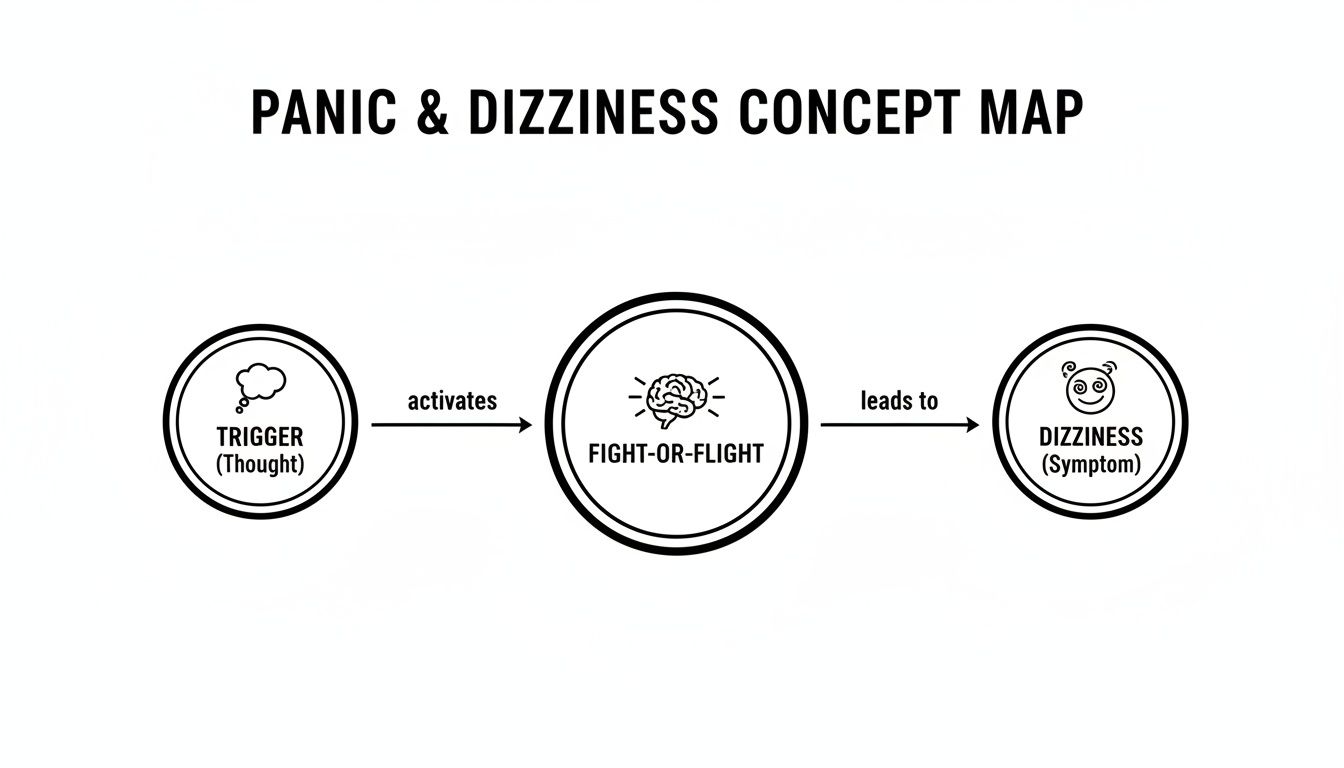
This map shows the straight line from a simple trigger to that powerful physiological chain reaction, ending in the dizzying sensation you know all too well.
The Strong Link Between Dizziness and Panic
This connection is so tight that many people end up at the doctor’s office complaining of dizziness, only to find out that panic is the real culprit. Research shows that among patients seeking help for dizziness, the rates of panic disorder are 5 to 15 times higher than in the general population.
In the U.S. alone, about 2.7% of adults experience panic disorder each year, with women being affected more often than men. It’s a common, well-understood phenomenon, and most importantly, it's treatable.
The dizziness you feel during a panic attack is not a sign of imminent collapse. It's the natural, temporary result of your body's defense system working overtime. Recognizing this connection is a foundational step toward taking back control and healing.
This cycle of dizziness and panic attacks feels like a runaway train, but it’s a trackable one. Your body isn't broken; it’s just sounding a false alarm. By learning to recognize the signs and understanding the mechanics of the fight-or-flight response, you can start to demystify these scary sensations.
And that knowledge isn’t just power—it's the beginning of your path to living a calmer, more grounded life.
The Vestibular Anxiety Feedback Loop
To truly understand why dizziness and panic attacks feel so tangled together, and more importantly, how to untangle them, it helps to picture it as a frantic conversation happening inside your body. This isn't just panic causing dizziness. It's a vicious cycle where each sensation screams at the other, keeping you trapped.
This cycle is often called the vestibular-anxiety feedback loop, and it’s a direct line between your brain’s fear center and your inner ear’s balance system. Think of your inner ear—your vestibular system—as a super-sensitive carpenter's level. Its whole job is to tell your brain where your body is in space, whether you’re still, moving, or tilting.
Sometimes, a tiny, harmless hiccup can throw this system off. Maybe it’s a bit of inner ear inflammation or just turning your head too fast. For a calm brain, this is a minor blip that’s instantly dismissed. But for a brain already scanning for danger? It’s a five-alarm fire.
How a Small Sensation Ignites Panic
An anxious brain doesn't just register a flicker of dizziness as a weird feeling. It shouts, "Something is terribly wrong!" This perceived threat flips the fight-or-flight switch, pumping your system full of adrenaline and making you hyperventilate.
And as we've already covered, hyperventilating constricts blood flow to the brain and messes with your vestibular system even more. The result? That tiny, initial dizzy spell suddenly becomes intense, terrifying vertigo. This intense physical feeling then becomes the "proof" your brain needed all along, confirming its worst fears and creating a brutal self-fulfilling prophecy.
This powerful cycle unfolds in three lightning-fast steps:
- Initial Trigger: A small, often barely noticeable, feeling of imbalance or lightheadedness occurs.
- Anxious Interpretation: Your brain misreads this harmless signal as a sign of imminent danger, like fainting or having a stroke.
- Panic Amplification: The panic attack that follows makes the dizziness dramatically worse, which cements the brain's original fear and wires the loop even tighter for next time.
The Role of Catastrophic Thinking
The fuel for this entire cycle is a thought pattern called catastrophizing. This is the mental habit of leaping to the absolute worst-possible conclusion from the smallest piece of information. When dizziness hits, an anxious mind doesn't just feel it; it builds a horror story around it.
That fleeting moment of lightheadedness is no longer just a sensation. It becomes a narrative:
- "This dizziness means I'm having a stroke."
- "I’m going to lose control and faint right here in public."
- "This feeling won't stop; something inside me is permanently broken."
This feedback loop is a learned response. Your brain has been trained to link dizziness with danger. But here’s the most hopeful news: what has been learned can be unlearned. You have the power to teach your brain a new, calmer way to respond.
Understanding this mechanism is incredibly empowering. It shows that what you’re experiencing isn't random or a sign that you’re broken. It's a predictable—though deeply unpleasant—biological process. Realizing these are learned patterns is the first, most critical step toward breaking the cycle for good and reclaiming your peace.
How to Stop Dizziness During a Panic Attack
When the world starts to spin, your first instinct is probably to brace for the worst. That feeling is terrifying. But even when the dizziness feels completely overwhelming, you have more power than you realize to find your footing again.
There are simple, immediate things you can do to hit the brakes on the panic cycle, calm your racing nervous system, and get your feet back on solid ground—figuratively and literally. Think of these techniques as your first line of defense, empowering you to manage the moment instead of letting it manage you.

If this has happened to you, you’re in good company. Dizziness is a hallmark symptom of panic attacks, sending millions into a terrifying cycle of worry. In the United States alone, an estimated 2.7% of adults—that’s roughly 6 million people—experienced panic disorder in the past year.
Even with effective strategies out there, a lot of people feel lost and don’t get the help they need. But actionable, self-help tools can bridge that gap, helping you build real resilience against these dizzying episodes. Healing is possible, and these tools are the first step.
Ground Yourself in the Present Moment
The secret to stopping the spin is to pull your focus away from the frightening feelings inside and anchor it to the stable, physical world right in front of you. This is called grounding, and it’s a surprisingly powerful way to signal to your brain that you're safe and that the danger is not real.
One of the most effective and easiest-to-remember grounding techniques is the 5-4-3-2-1 Method. It forces your brain to switch gears and engage with your environment:
- 5: Name FIVE things you can see around you. It could be anything—a lamp, a crack in the wall, the color of your shoes.
- 4: Acknowledge FOUR things you can physically touch. Notice the texture of your jeans, the cool surface of a table, the feeling of your own hands.
- 3: Acknowledge THREE things you can hear. Tune into the hum of the fridge, distant traffic, or even the sound of your own breath.
- 2: Acknowledge TWO things you can smell. Maybe it's the faint scent of coffee, a nearby plant, or your laundry detergent.
- 1: Acknowledge ONE thing you can taste. This could be the mint from your toothpaste, or simply the neutral sensation of your tongue in your mouth.
Regulate Your Breathing to Restore Balance
That dizzy, lightheaded feeling during a panic attack is almost always tied to hyperventilation. When you consciously slow your breathing, you can actually reverse this physiological process and restore your body’s chemical balance. This one simple action can bring profound relief.
The goal isn’t to take huge, gulping breaths—that can sometimes make hyperventilation worse. Instead, the real magic happens when you focus on slowing down your exhale. This sends a powerful "all clear" signal to your nervous system.
A simple yet profound method for this is the 4-7-8 Breathing Technique. Here’s how it works:
- Find a comfortable spot to sit or lie down.
- Gently breathe in through your nose for a count of four.
- Hold that breath for a count of seven.
- Exhale completely through your mouth, making a soft whooshing sound, for a count of eight.
- Repeat this cycle three or four times.
This technique acts like a natural tranquilizer for the nervous system. As you practice it, you'll find it becomes an incredibly reliable tool for calming the storm. For more tips, you can explore our in-depth guide to breathing exercises for anxiety.
Mastering these simple skills is a monumental step toward a panic-free life, proving that you absolutely can navigate these moments with confidence and come out stronger on the other side.
Building Long-Term Resilience to Panic and Dizziness
While knowing what to do in the middle of a dizzy spell is crucial, the real goal is to build a life where panic and dizziness don't call the shots. This isn't just about surviving attacks; it's about creating such a strong foundation of calm that they become a rare and much quieter event.
This isn't some far-off dream. It's an achievable journey made of small, powerful steps you can start taking today.
Think of it like getting physically stronger. You wouldn’t walk into a gym and immediately try to lift the heaviest weight. Instead, you start with manageable exercises that, over time, build your strength. We’re going to do the same for your nervous system, building your resilience day by day.
Rewiring Your Thoughts with CBT Principles
At the very heart of panic is a set of automatic, lightning-fast thoughts that keep the fear cycle spinning. The secret to lasting change is to slow them down. A core idea from Cognitive Behavioral Therapy (CBT) teaches us to become a gentle detective, calmly examining these thoughts instead of taking them as gospel.
A simple way to practice this is with a 'thought record.' The next time dizziness hits and your brain screams, "I'm going to faint!"—just pause. Ask yourself:
- What's the evidence for this? Have I ever actually fainted during a panic attack before? (The answer is almost always no.)
- Is there another way to see this? "This feels scary, but I know it's just a harmless panic symptom. It will pass, just like it always does."
- What would I tell a friend? "Your body is just having a false alarm. It's trying to keep you safe, even though there’s no danger. Be kind to it. You are safe."
This simple act of questioning yanks the emergency brake on the automatic fear response. It creates just enough space for a calmer, more rational part of your brain to come online.
Healing from anxiety isn't about never feeling fear again. It's about learning that you can feel the fear, the dizziness, and the panic, and still know—deep down—that you are fundamentally safe and capable of handling it. This is true freedom.
Lifestyle Habits That Build a Calmer You
The small choices you make every single day have a massive impact on your nervous system's stability. Think of these habits as building a buffer against panic. When your baseline is calm, it takes a lot more to push you into a state of high alert.
To manage dizziness and build mental fortitude, you might consider incorporating practices like these mindfulness exercises to cope with stress.
Here are a few key areas to focus on:
- Stabilize Your Blood Sugar: Big swings in blood sugar can mimic or trigger anxiety symptoms. Eating balanced meals with protein, fiber, and healthy fats keeps you on an even keel.
- Hydrate, Hydrate, Hydrate: It sounds too simple to be true, but even mild dehydration is a common—and completely overlooked—trigger for dizziness.
- Move Your Body Gently: You don't need intense workouts. Activities like walking, stretching, or yoga help your nervous system regulate itself without kicking it into overdrive.
Living with an anxiety disorder can feel incredibly isolating, but you are far from alone. Anxiety disorders impact over 19.1% of U.S. adults annually, yet many don't receive the help that could change their lives. Taking the step to learn and arm yourself with these tools is an act of courage and the start of a new chapter.
Every small change you make is a vote for a calmer future. Every balanced meal, every challenged thought, is a step toward reclaiming your life from anxiety. For those who want a clear roadmap, exploring different types of psychotherapy for anxiety can provide structured, personalized support for your journey to freedom.
A Structured Plan for Your Path Forward
Understanding your symptoms and learning a few in-the-moment coping skills are huge victories. Don’t ever discount that.
But turning those wins into lasting freedom from panic requires something more: a roadmap. Lasting progress rarely happens by accident; it’s built on a clear framework that turns vague hope into confident, structured action.
This is where having a dedicated system can change everything. Instead of guessing what to do next or feeling lost, you get a clear, step-by-step plan that bridges the gap between knowing what to do and actually doing it.
From Chaos to Clarity with a System
Imagine trying to build a house without a blueprint. You might have all the right materials—the wood, the nails, the tools—but without a plan, the whole process would be chaotic, frustrating, and probably fall apart.
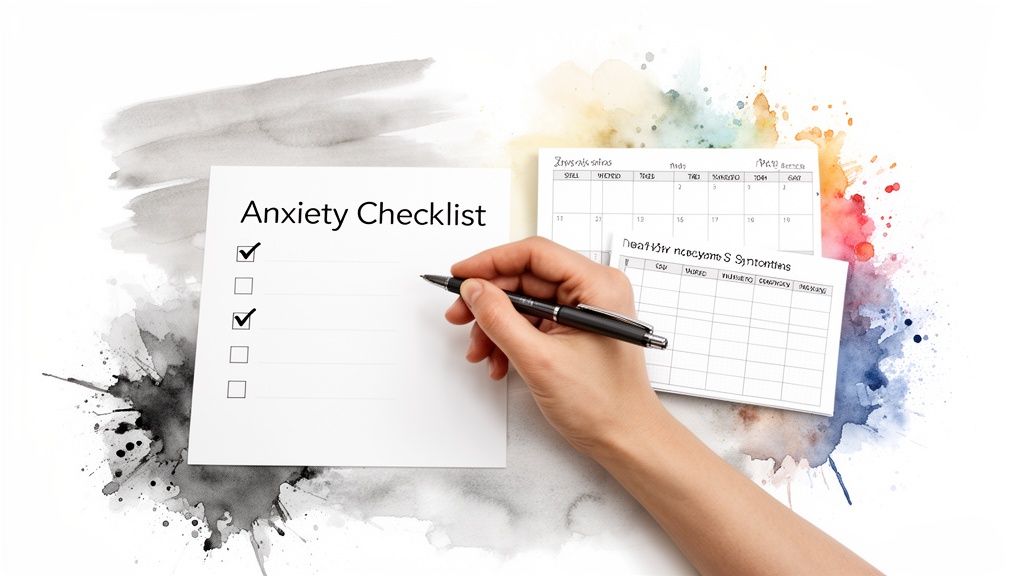
A recovery system like The Anxiety Checklist acts as your blueprint for rebuilding a life free from the constant fear of dizziness and panic attacks.
It breaks down the overwhelming goal of "beating anxiety" into small, manageable steps. For example, our 93-point interactive checklist helps you systematically identify and tackle every facet of your anxiety, leaving no stone unturned. This approach takes the guesswork out of recovery and shows you exactly where to focus your energy for the biggest impact.
Putting Knowledge into Practice
A good system doesn’t just throw information at you; it gives you the tools to apply it. The journey to a panic-free life is built on small, consistent actions that retrain your brain and calm your nervous system.
This is where practical, customizable worksheets become your best allies:
- Symptom Monitoring: Finally pinpoint your unique dizziness triggers by tracking patterns over time, so you can see what’s really setting things off.
- Cognitive Exercises: Use guided worksheets to practice challenging and reframing the anxious thoughts that fuel the panic cycle.
- Habit Trackers: Support the lifestyle changes that build resilience—everything from hydration and nutrition to gentle movement.
This methodical approach turns your recovery from a battle against an unknown enemy into an achievable project. You’re no longer fighting in the dark; you have a clear, rational toolkit to guide you, step by step, toward the life you deserve.
This process builds momentum and, just as importantly, self-trust. Each small step you take, guided by a clear plan, proves that you are capable and in control. If you want to dive deeper into setting effective, achievable milestones, our guide on using SMART goals for anxiety offers a helpful framework.
For anyone looking for professional support to build long-term resilience, exploring dedicated panic attacks therapy can provide tailored strategies and guidance. The path forward is real, and it starts with taking that first, structured step.
You Can and Will Overcome This
Even when you understand why you feel dizzy during a panic attack, some nagging questions can keep the fear alive. That’s perfectly normal. Tackling these worries directly is one of the best ways to strip the panic of its power and build real hope for a dizzy-free life.
Let’s dig into some of the most common concerns people have about dizziness and panic attacks.
Can Dizziness From Panic Actually Make Me Faint?
This is the big one, the fear that keeps so many people stuck. But the answer is a resounding no. Here’s why: the fight-or-flight response that triggers your dizziness also jacks up your heart rate and blood pressure to keep you hyper-alert. Fainting, however, is caused by a sudden drop in blood pressure.
You might feel weak, wobbly, or lightheaded, but the very physiological state that a panic attack creates makes it almost impossible for you to actually lose consciousness.
Your body is in a state of high alert, not shutdown. The sensation of being about to faint is just that—a sensation. It’s a powerful trick your anxious mind plays on you, but it’s not a physical reality. You are safe.
Will This Dizzy Feeling Ever Go Away for Good?
Yes, it absolutely will. It’s so important to remember that dizziness is just a symptom, not the root of the problem. It’s a direct byproduct of your body’s panic response. As you learn to manage and dial down the frequency and intensity of your panic attacks, the dizziness will naturally fade away with them.
Recovery isn’t about fighting the dizziness itself; it’s about calming the underlying anxiety that sets it off. Every time you use the strategies we've talked about—from grounding techniques to long-term cognitive shifts—you're getting closer to that goal.
What if My Dizziness Is Caused by Something Else?
While the vast, vast majority of dizziness during a panic attack is benign, it's always smart to rule out other medical causes if you have lingering concerns. If your dizziness shows up often outside of a panic attack or comes with other specific symptoms (like hearing loss or changes in your vision), a trip to the doctor can give you valuable peace of mind.
Once a medical cause is ruled out, however, you can confidently treat the dizziness as a symptom of anxiety. This is a huge step because it allows you to stop the exhausting cycle of health-related worry and focus your energy on proven strategies for managing panic. If you're stuck in that cycle and aren't sure what to do next, you can get help for your anxiety now.
Healing isn’t some far-off dream; it's an achievable reality. Every time you ride out a wave of dizziness without letting it spiral into full-blown panic, you are actively retraining your brain. You’re teaching it a new story: that you are safe, you are in control, and this feeling will pass. You are on your way.