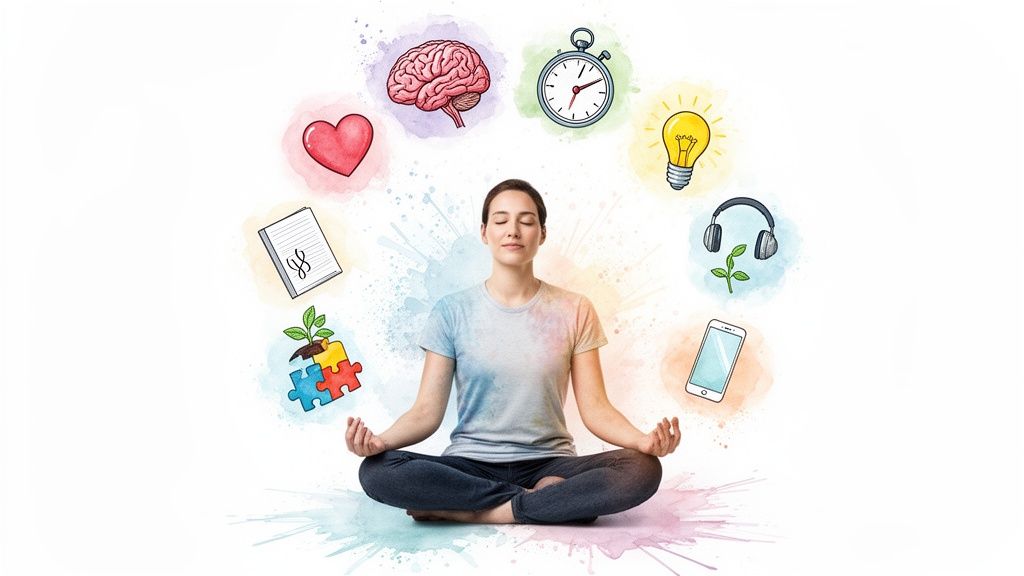
If you're grappling with chronic anxiety or panic attacks, it can feel like you're trapped in a relentless cycle with no escape. The constant worry, the racing heart, the fear of the next wave of panic—it can shrink your world and steal your joy. But there is a clear, actionable path forward, a hopeful way to heal from anxiety and move from feeling constantly on edge to a state of calm and control. This isn't about simply ‘calming down’ or ‘thinking positive’; it's about building a robust toolkit of proven emotional regulation strategies for adults that puts you back in the driver's seat of your own life.
The journey to living a life less defined by panic is not a myth. It is a real, achievable process built on learning and consistently applying the right skills. This comprehensive guide is your first step on that path, offering ten powerful, evidence-based techniques designed to dismantle the very architecture of anxiety and build a foundation of lasting peace.
Each strategy you are about to explore provides more than just temporary relief; it lays the groundwork for profound and lasting change. We will move beyond theory and dive directly into practical application, covering not just what to do, but exactly how and why it works. You will learn specific, actionable methods to manage overwhelming emotions, interrupt panic cycles before they start, and cultivate a deeper sense of inner peace. Your future doesn't have to be dictated by anxiety; it can be defined by the courage you show in taking this next step toward healing and reclaiming your life.
1. Cognitive Reframing
Cognitive reframing is a powerful, evidence-based technique for managing intense emotions. It involves consciously identifying, challenging, and changing the unhelpful thought patterns that often fuel anxiety and distress. This strategy is a core component of Cognitive Behavioral Therapy (CBT), a highly effective treatment that has helped countless people heal from anxiety disorders.
By learning to reframe your thoughts, you can interrupt the cycle of anxiety before it spirals. You shift your perspective from an automatic, often negative, interpretation to a more balanced and realistic one. This doesn't mean ignoring threats or pretending everything is fine; it means examining the evidence and choosing a viewpoint that serves your well-being. Mastering this skill is a crucial step toward living a life free from panic and constant worry, offering hope that you can change your relationship with your thoughts.
How to Practice Cognitive Reframing
Identify the Triggering Thought: The moment you feel a surge of anxiety, pause and ask yourself, "What thought just went through my mind?" For example, your chest tightens, and the automatic thought is, "I'm having a heart attack."
Challenge the Thought: Question the validity of that initial thought. Is it 100% true? What evidence do you have for and against it?
- Evidence Against: "My doctor said my heart is healthy. This feels exactly like past panic attacks. I just had a stressful meeting."
- Evidence For: "My chest feels tight."
Create a Balanced Reframe: Formulate a new, more realistic thought based on the evidence.
- Reframe: "This tightness in my chest is a familiar symptom of anxiety, not a heart attack. My body is having a stress response, and it will pass."
Quick Tip: Keep a thought record on your phone or in a notebook. Systematically writing down your automatic thoughts and their reframes strengthens this mental muscle over time, making it one of the most effective emotional regulation strategies for adults.
Why It Works
Cognitive reframing works by changing your relationship with your thoughts. It helps you recognize that thoughts are not facts. This is especially helpful for those dealing with common cognitive distortions like catastrophizing ("This presentation will be a disaster, and I'll get fired") or mind-reading ("Everyone at this party thinks I'm awkward"). By challenging these patterns, you reduce their emotional impact and regain a sense of control, proving that healing is possible.
To become more adept at spotting these thought traps, you can learn more about common cognitive distortions here. Practicing this skill consistently, even when you're not anxious, builds the resilience needed to manage difficult emotions effectively and live a calmer life.
2. Progressive Muscle Relaxation (PMR)
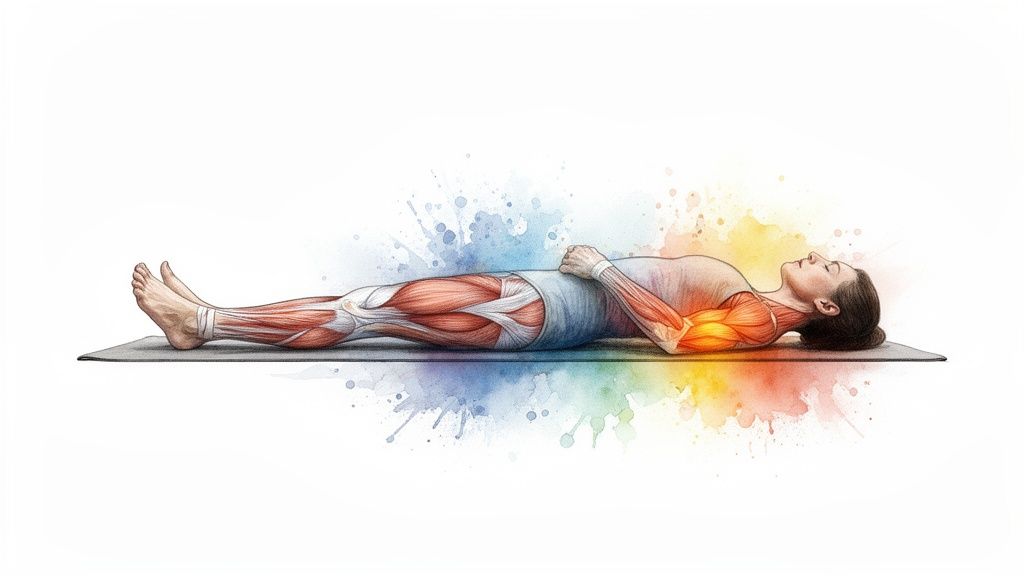
Progressive Muscle Relaxation (PMR) is a somatic, body-focused technique for releasing physical tension. It involves systematically tensing specific muscle groups and then releasing them, which helps you become more aware of the physical sensations of stress and relaxation. This strategy is highly effective for anxiety because it directly addresses the body's fight-or-flight response.
By consciously engaging and then relaxing your muscles, you send a powerful signal to your nervous system that the perceived threat has passed. This practice interrupts the physical feedback loop where tension fuels worry, and worry fuels tension. For adults learning to manage chronic anxiety, PMR is an invaluable tool for regaining a sense of physical calm and proving that you have the power to soothe your own body—a critical step toward living a life free from constant fear.
How to Practice Progressive Muscle Relaxation
Get Comfortable: Find a quiet place where you can sit or lie down without being disturbed. Close your eyes and take a few slow, deep breaths to begin.
Tense and Release: Begin with your feet. Tense the muscles by curling your toes for 5-10 seconds, focusing on the feeling of tightness. Then, abruptly release the tension and notice the difference for 15-20 seconds.
- Example Sequence: Move upward through the body: feet, lower legs, thighs, hands, arms, stomach, chest, shoulders, and finally, the muscles in your face.
Notice the Contrast: The key is to pay close attention to the sensation of deep relaxation that follows the release. This contrast teaches your brain to recognize and let go of involuntary tension.
Quick Tip: Use a guided PMR audio recording when you're first starting. Having someone's voice walk you through the steps makes it easier to focus on the sensations in your body without having to remember the sequence.
Why It Works
Progressive Muscle Relaxation works by leveraging the mind-body connection. When you're anxious, your muscles tighten automatically. PMR reverses this process by inducing physical relaxation, which in turn calms the mind. This physical release can lower your heart rate, slow your breathing, and reduce blood pressure.
Developed by Dr. Edmund Jacobson, this technique is one of the most direct emotional regulation strategies for adults because it tackles the physiological symptoms head-on. Regular practice increases your body awareness, making you better at noticing and releasing tension before it escalates into a full-blown panic attack. It gives you a tangible way to regain control and restore a sense of safety in your own body, lighting the path toward a panic-free life.
3. Mindfulness and Acceptance-Based Practices
Mindfulness and acceptance-based practices offer a transformative approach to managing difficult emotions. Instead of fighting or suppressing anxiety, this strategy teaches you to observe your thoughts, feelings, and bodily sensations with non-judgmental awareness. This approach is a cornerstone of therapies like Acceptance and Commitment Therapy (ACT), which has proven highly effective for helping people heal from anxiety.
By cultivating acceptance, you can dramatically reduce the secondary struggle that often makes anxiety so debilitating. You learn that discomfort is not a signal that something is wrong, but simply a part of the human experience. This shift allows you to coexist with anxious feelings, paradoxically robbing them of their power and freeing you to focus on what truly matters in your life. This is a profound step toward living with, and ultimately beyond, anxiety.
How to Practice Mindfulness and Acceptance
Observe Without Judgment: When a wave of anxiety hits, shift into an observer role. Notice the physical sensations (e.g., racing heart, tight chest) and the thoughts ("I can't handle this") as if you were watching clouds pass in the sky. Label them gently: "There is a feeling of tightness," or "There is the thought that I can't handle this."
Make Room for the Feeling: Instead of pushing the anxiety away, consciously allow it to be there. Imagine creating space around the feeling in your body. You might say to yourself, "I can make room for this feeling. It is uncomfortable, but it is not dangerous."
Gently Redirect Attention: Once you have acknowledged the anxiety, gently guide your focus back to the present moment. This could be your breath, the feeling of your feet on the floor, or the task at hand. If a person with social anxiety feels a surge of panic at a party, they might notice it, allow it, and then gently redirect their attention to the conversation they are in.
Quick Tip: Start with just five minutes of a guided body scan meditation each day. This simple practice builds the foundational skill of paying attention to the present moment without judgment, making it one of the most powerful emotional regulation strategies for adults.
Why It Works
This approach works by breaking the cycle of emotional resistance. When we fight anxiety, we often amplify it, creating a stressful internal battle. Acceptance-based practices teach you that you can feel anxious and still function, which builds immense confidence and resilience. You learn that thoughts are just mental events, not commands, and that feelings are temporary visitors.
This practice helps you detach from the content of your anxious thoughts and stop treating them as urgent threats. Consistently applying these principles can help you feel more grounded and in control, even when discomfort arises, showing that a peaceful life is entirely within reach. To explore how meditation can specifically target anxiety, you can find guided practices and further insights here.
4. Diaphragmatic (Deep) Breathing
Diaphragmatic breathing, also known as belly breathing, is a fundamental physiological technique that directly calms your body’s stress response. It works by activating the parasympathetic nervous system, which acts as your body's natural brake during moments of high stress. By shifting from shallow chest breathing to slow, deep breaths, you can quickly interrupt the anxiety cycle and reduce physical symptoms like a racing heart or dizziness.
This strategy is especially powerful for managing acute anxiety and panic attacks, offering immediate relief when you feel overwhelmed. Mastering this skill provides a reliable anchor, giving you hope and a sense of control over your body's reactions. It's an essential first-line technique in any toolkit of emotional regulation strategies for adults, empowering you to find calm from within and proving there's a way to heal.
How to Practice Diaphragmatic Breathing
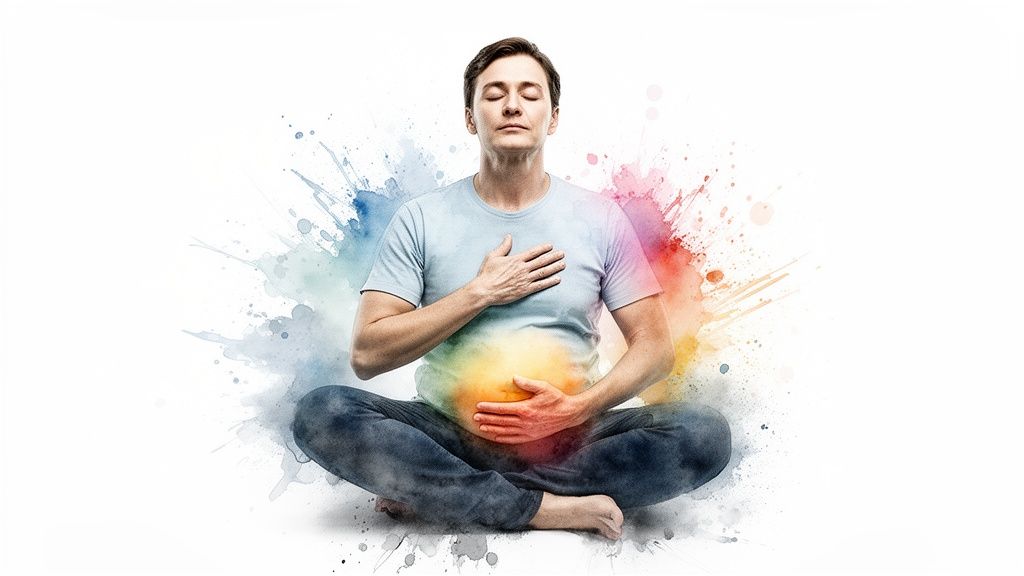
Get Comfortable: Sit or lie down in a comfortable position. Place one hand on your upper chest and the other on your belly, just below your rib cage.
Breathe In Deeply: Inhale slowly through your nose for a count of four. As you inhale, focus on allowing your belly to expand and push your hand out. The hand on your chest should remain relatively still.
Hold and Exhale: Hold your breath for a brief moment, then exhale slowly through your mouth for a count of six to eight. Feel your belly fall as you release the air. Repeat this cycle for 3 to 5 minutes.
Quick Tip: To ensure you're breathing from your diaphragm, the hand on your belly should move significantly more than the hand on your chest. Practice this daily when you are calm to build the muscle memory, so it becomes second nature during moments of anxiety.
Why It Works
Shallow chest breathing is a hallmark of the body's "fight or flight" response. Diaphragmatic breathing counteracts this by stimulating the vagus nerve, which sends a signal to your brain to slow down and relax. This physiological shift lowers your heart rate, reduces blood pressure, and decreases the level of stress hormones like cortisol in your body.
For immediate relief and to calm your nervous system, exploring these effective breathing exercises for anxiety relief can provide a powerful path to tranquility. By consciously controlling your breath, you regain command over your body's panic response, proving that you can manage anxiety and live a calmer, more peaceful life. For more structured exercises, you can explore various breathing techniques here.
5. Behavioral Activation
Behavioral activation is a highly structured approach to emotion regulation where you deliberately engage in meaningful activities, even when anxiety or low motivation urges you to withdraw. Instead of waiting to feel better before acting, this strategy is based on the principle that purposeful action can directly improve your mood and reduce anxiety. It is a powerful tool for breaking the vicious cycle of avoidance that often maintains and intensifies anxiety disorders.
By taking action that aligns with your values, you actively challenge the helplessness that often accompanies anxiety and depression. This strategy puts you back in the driver's seat, demonstrating that your behaviors can influence your emotions, not just the other way around. For many, this realization is a profound and hopeful step toward rebuilding confidence and living a full life not dictated by fear.
How to Practice Behavioral Activation
Identify Your Values: First, clarify what is most important to you in life. This could include categories like relationships, creativity, health, or community. For example, a core value might be "Maintaining strong connections with family."
Schedule Value-Driven Activities: Brainstorm specific, small activities that align with your values. If your value is family connection, an activity could be scheduling a 10-minute phone call with a sibling. Schedule this activity into your calendar as a non-negotiable appointment.
Act Despite Discomfort: The key is to follow through with the scheduled activity regardless of your emotional state. You might feel anxious or unmotivated, but the goal is to act anyway. For instance, you go for a planned walk even if your anxiety tells you to stay inside.
Quick Tip: Start with very small, manageable actions to build momentum. The goal isn't to eliminate anxiety overnight but to prove to yourself that you can take meaningful steps even when it's present. Track your mood before and after to see the positive impact of your actions.
Why It Works
Behavioral activation works by directly countering the avoidance and withdrawal that feed anxiety and depression. When you avoid situations due to fear, you inadvertently reinforce the belief that you cannot handle them, which strengthens the anxiety. By engaging in positive or necessary activities, you create new experiences that provide a sense of accomplishment and pleasure, which naturally improves mood and builds self-efficacy.
This approach is closely related to exposure therapy, as it involves methodically facing discomfort to reduce its power. By re-engaging with your life, you weaken anxiety's control and reclaim your sense of purpose, showing that healing is an active, achievable process. You can learn more about facing fears with exposure therapy here. Practicing behavioral activation consistently is one of the most effective emotional regulation strategies for adults seeking lasting change.
6. Grounding Techniques (5-4-3-2-1 Method and Body Scanning)
Grounding techniques are powerful, in-the-moment tools designed to anchor you to the present when your mind is overwhelmed by anxiety, panic, or dissociation. These strategies use your five senses to pull your focus away from distressing internal thoughts and emotions and back to the immediate, tangible world around you. This conscious shift can halt an escalating panic attack in its tracks and restore a sense of safety and hope.
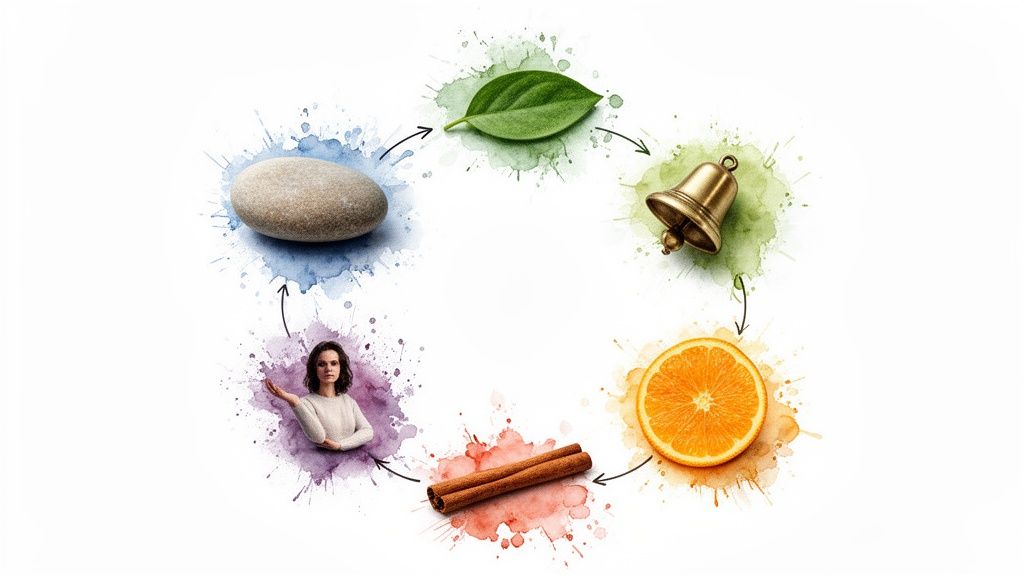
By engaging directly with your physical environment, you send a signal to your nervous system that you are safe in the here and now, not in the imagined future catastrophe your anxiety is predicting. For anyone who has felt disconnected from their body or reality during intense anxiety (a state known as depersonalization or derealization), grounding is an essential skill for reclaiming control and finding stability.
How to Practice Grounding Techniques
The 5-4-3-2-1 Method: This is a simple yet highly effective technique to practice anywhere. When you feel panic rising, calmly and deliberately go through the following steps:
- 5 Things You Can SEE: Name five distinct objects in your immediate vicinity. Notice their color, shape, and texture. Example: a blue pen, the wood grain on the desk, a crack in the ceiling.
- 4 Things You Can FEEL: Bring your attention to four physical sensations. Example: the texture of your jeans, the smoothness of your phone, the breeze from a vent, your feet flat on the floor.
- 3 Things You Can HEAR: Listen for three distinct sounds. It could be the hum of a computer, birds chirping outside, or the sound of your own breathing.
- 2 Things You Can SMELL: Identify two different scents. This might be your coffee, a scented candle, or the faint smell of rain on the pavement.
- 1 Thing You Can TASTE: Focus on one taste. It could be the lingering taste of your last meal, or you can pop a mint or take a sip of water to create a new taste.
Quick Tip: Practice the 5-4-3-2-1 method when you are calm. Building this into a routine makes it a fast, automatic reflex you can deploy instantly during moments of high anxiety, making it one of the most reliable emotional regulation strategies for adults.
Why It Works
Grounding techniques work by interrupting the feedback loop between your anxious thoughts and your body's physical stress response. When you are panicking, your mind is typically racing with "what if" scenarios. Forcing your brain to focus on concrete sensory information (like the color of a rug or the sound of a fan) redirects cognitive resources away from the anxiety-fueling thoughts.
This process, a core concept in Dialectical Behavior Therapy (DBT), effectively breaks the spiral of panic. It reconnects you with your body and the present moment, which is a place of relative safety compared to the catastrophic future your anxiety has created. Consistent practice builds your capacity to stay present and manage even the most intense waves of emotion, proving that you have the power to find calm within yourself and live panic-free.
7. Social Connection and Support Networks
Building and maintaining meaningful social connections is a fundamental strategy for managing emotions. It involves intentionally cultivating relationships with friends, family, support groups, or therapists to create a network that offers validation, perspective, and a sense of belonging. This approach directly counteracts the isolating effects of chronic anxiety, which often compels individuals to withdraw when they need support the most.
Leveraging a support network provides a powerful buffer against emotional distress. Sharing your experiences with trusted individuals can demystify and normalize what you are feeling, reducing the shame and fear that anxiety often brings. This external support system can offer practical advice, emotional comfort, and the crucial reminder that you are not alone on your healing journey. For many, this sense of community is a cornerstone of building the resilience needed to live a life not dictated by anxiety.
How to Practice Social Connection
Identify Your Core Support: Make a list of 2-3 trusted individuals you feel comfortable reaching out to when you feel overwhelmed. This could be a partner, a close friend, or a family member.
Be Specific About Your Needs: When you reach out, clearly communicate what you need. People want to help but often don't know how.
- Example: Instead of just saying "I'm anxious," you could say, "I'm feeling really anxious right now. Could you just listen for a few minutes while I talk it out? I don't need advice, just a friendly ear."
Schedule and Nurture Connections: Don't wait for a crisis to connect. Schedule regular activities, like a weekly call with a friend or a monthly coffee date, to maintain and strengthen these bonds proactively.
Quick Tip: Join a support group, either online or in person, specifically for anxiety. Hearing from others who share similar experiences can be incredibly validating and provides a dedicated space to practice social skills and learn new coping mechanisms.
Why It Works
Social connection works by activating biological and psychological systems that regulate stress. Positive social interactions can release oxytocin, a hormone that promotes feelings of trust and reduces fear responses in the brain. It addresses the core human need for belonging, which is often eroded by the isolating nature of chronic anxiety.
By sharing your experiences, you engage in "co-regulation," where another person's calm and validating presence helps stabilize your own emotional state. This is especially effective for those dealing with the belief that their anxiety is a unique or shameful burden. Learning that your feelings are a shared human experience breaks down isolation and builds a powerful foundation of hope for recovery.
8. Sleep Hygiene and Circadian Rhythm Management
Sleep hygiene and circadian rhythm management are foundational physiological strategies for emotional regulation. The relationship between sleep and emotion is deeply intertwined; poor sleep intensifies anxiety and emotional reactivity, while anxiety disrupts sleep, creating a draining, vicious cycle. By prioritizing consistent, high-quality sleep, you can stabilize your nervous system and significantly lower your baseline anxiety.
This strategy involves creating a set of habits and a bedroom environment conducive to restful sleep. It works by aligning your body's internal clock (circadian rhythm) with the natural light-dark cycle, which governs everything from hormone release to mood. For anyone struggling with chronic worry or panic, mastering sleep is not just a nice-to-have; it's a non-negotiable step toward building the emotional resilience needed to heal and live a calmer life.
How to Practice Sleep Hygiene
- Establish a Consistent Schedule: Go to bed and wake up at the same time every day, even on weekends. This is the single most important factor in stabilizing your circadian rhythm.
- Create a Relaxing Wind-Down Routine: An hour before bed, dim the lights and disengage from stimulating activities like work emails or watching the news. Instead, read a book, listen to calming music, or take a warm bath. To enhance your routine, consider consulting an ultimate guide to tea for bedtime, which explores herbal blends that can help you unwind.
- Optimize Your Sleep Environment: Your bedroom should be a sanctuary for sleep. Keep it dark, quiet, and cool (around 65-68°F or 18-20°C). Use blackout curtains, earplugs, or a white noise machine if needed.
- Be Mindful of Light Exposure: Get at least 10-15 minutes of bright, natural light exposure shortly after waking up to signal to your brain that it's daytime. In the evening, avoid bright screens and use blue light filters on your devices.
Quick Tip: If you find yourself unable to fall asleep after 20 minutes, get out of bed. Go to another room and do something quiet and relaxing in dim light, like reading, until you feel sleepy again. This prevents your brain from associating your bed with anxious wakefulness.
Why It Works
Quality sleep is essential for the prefrontal cortex, the part of your brain responsible for executive functions like impulse control and emotional regulation. When you are sleep-deprived, the amygdala, your brain's emotional threat-detection center, becomes hyperactive, making you more prone to anxiety, irritability, and catastrophizing.
By restoring healthy sleep patterns, you give your brain the resources it needs to process emotions effectively. This physiological reset reduces the intensity of emotional responses and improves your ability to use other cognitive strategies. Implementing good sleep hygiene is one of the most powerful emotional regulation strategies for adults because it tackles anxiety at its biological roots, making recovery and a panic-free life feel achievable.
9. Physical Exercise and Movement
Physical exercise is a foundational, evidence-based strategy for managing emotions, with neurochemical effects that rival those of medication. Regular movement directly counters the body's stress response by reducing cortisol levels and boosting mood-elevating endorphins. This makes it one of the most powerful emotional regulation strategies for adults experiencing anxiety.
By incorporating movement into your routine, you can gain both immediate relief and long-term resilience. This physiological approach addresses the physical symptoms of anxiety head-on, such as a racing heart or muscle tension, while promoting neuroplasticity that supports a calmer mind. For many, a consistent exercise habit becomes a non-negotiable part of living a life free from the grip of chronic worry and full of hope for a healthier future.
How to Practice Physical Exercise for Emotional Regulation
Choose an Enjoyable Activity: The best exercise is one you'll actually do. This could be anything from brisk walking or dancing to yoga or strength training. The key is to find movement that feels good to you.
Start Small and Build Gradually: You don't need to run a marathon. Begin with a manageable goal, like a 15-minute walk three times a week. Once that feels comfortable, you can gradually increase the duration or intensity. This approach prevents overwhelm and builds momentum.
Schedule and Track Your Movement: Treat your exercise time like any other important appointment. Schedule it in your calendar and track your progress. Noting how you feel before and after can powerfully reinforce the connection between movement and improved mood.
Quick Tip: Pair your exercise with exposure to nature, like walking in a park, for an enhanced calming effect. This combination, known as "green exercise," has been shown to amplify the mental health benefits of physical activity.
Why It Works
Exercise works by fundamentally altering your brain and body chemistry. Aerobic activities increase heart rate, which stimulates the production of anti-anxiety neurochemicals like serotonin, GABA, and brain-derived neurotrophic factor (BDNF). This process helps calm the body's "fight or flight" system.
This strategy is particularly effective for those dealing with the physical manifestations of anxiety, like restlessness or panic symptoms. For instance, a person with panic disorder might notice that daily walking reduces the frequency and intensity of their attacks. Movement provides a healthy outlet for nervous energy, interrupting the cycle of anxiety and restoring a sense of control over your body, proving that healing is an active process.
10. Lifestyle Modifications: Nutrition, Caffeine Reduction, and Substance Use Awareness
Effective emotion regulation extends beyond purely psychological techniques; it involves addressing the physiological factors that influence your nervous system. Lifestyle modifications are foundational strategies that stabilize your body's chemistry, making it easier to manage anxiety. This approach recognizes that what you consume directly impacts your mood, energy, and resilience to stress.
By making conscious choices about nutrition, caffeine intake, and substance use, you can lower your baseline level of anxiety. This creates a more stable internal environment, enhancing the effectiveness of other coping skills. For many, addressing these physical inputs is a critical step toward reclaiming a sense of calm and control, proving that a path to a life with less panic is achievable through holistic, daily habits.
How to Practice Lifestyle Modifications
Assess Your Current Habits: For one week, honestly track your intake of caffeine, alcohol, sugary foods, and water. Note how you feel emotionally and physically an hour or two after consumption. For example, you might notice that a 400mg caffeine day leads to heart palpitations and racing thoughts by the afternoon.
Identify One Small Change: Don't try to overhaul everything at once. Choose one specific, manageable goal. For instance, if you drink four cups of coffee, your goal could be to reduce it to three for the next week.
Implement and Observe: Make the change and continue to track your mood and physical symptoms. Someone who stops using alcohol to manage social anxiety might initially feel more nervous but can then implement behavioral strategies, ultimately reducing long-term anxiety that the alcohol was fueling.
Quick Tip: Keep a simple food-and-mood journal on your phone or in a notebook. Tracking these connections provides powerful, personalized data, making it one of the most insightful emotional regulation strategies for adults.
Why It Works
Your brain and nervous system rely on a delicate balance of nutrients and chemicals to function optimally. High doses of stimulants like caffeine can mimic or worsen the physical symptoms of anxiety (e.g., rapid heart rate, jitters), while alcohol, a depressant, disrupts sleep and can cause rebound anxiety as it wears off.
Stabilizing your blood sugar with balanced meals containing protein, healthy fats, and complex carbs prevents energy crashes that can trigger irritability and anxiety. By creating physiological stability, you reduce the "noise" in your system, which provides more mental and emotional capacity to handle life's stressors without feeling overwhelmed. This approach empowers you to build a foundation of well-being from the inside out, paving the way for lasting healing.
To create a personalized plan, you can learn more about targeted lifestyle and diet changes for anxiety management here. Consistently supporting your body's needs is a profound act of self-regulation that builds lasting resilience.
10-Strategy Comparison: Emotional Regulation for Adults
| Technique | 🔄 Implementation Complexity | ⚡ Resource Requirements | ⭐ Expected Outcomes | 📊 Ideal Use Cases | 💡 Key Advantages |
|---|---|---|---|---|---|
| Cognitive Reframing | Moderate — needs practice and guided learning | Low — time, worksheets or brief therapy | Reduces distorted thinking; durable anxiety reduction | Social anxiety, anticipatory worry, intrusive thoughts | Addresses root causes; portable; evidence-based |
| Progressive Muscle Relaxation (PMR) | Low — simple sequence but needs practice | Low — 15–20 min, quiet space, optional audio | Rapid physical relaxation; lowers physiological arousal | Pre-sleep, acute stress, chronic tension | Somatic grounding; improves sleep; easy to combine |
| Mindfulness & Acceptance-Based Practices | Moderate–High — requires consistent practice | Low — time, apps or group classes helpful | Improved distress tolerance; long-term resilience | Rumination, anxiety-about-anxiety, chronic worry | Reduces secondary anxiety; increases psychological flexibility |
| Diaphragmatic (Deep) Breathing | Low — quick to learn, regular practice improves skill | Minimal — can be done anytime, anywhere | Fast physiological calming; immediate symptom relief | Panic attacks, acute anxiety, performance nerves | Fast-acting; discreet; no equipment |
| Behavioral Activation | Moderate — planning, values work, gradual exposure | Low–Medium — scheduling tools, time, tracking | Increases engagement and mood; reduces avoidance | Avoidance behaviors, low motivation, depression-anxiety mix | Breaks avoidance cycle; builds momentum and mastery |
| Grounding Techniques (5-4-3-2-1, Body Scan) | Low — easy to learn, immediate steps | Minimal — sensory objects optional | Quickly shifts attention; reduces dissociation/panic | Panic, depersonalization, acute anxiety in public | Portable; immediate redirect; pairs well with breathing |
| Social Connection & Support Networks | Moderate — requires relationship-building and trust | Medium — time, access to groups or therapy | Reduces isolation; increases validation and coping | Chronic anxiety, loneliness, need for accountability | Emotional validation; practical support; therapy access |
| Sleep Hygiene & Circadian Management | Moderate — lifestyle changes and consistency | Low — environment adjustments, routine time | Stabilizes baseline anxiety; improves cognition and regulation | Insomnia-related anxiety, chronic baseline anxiety | Foundational strategy that boosts other techniques |
| Physical Exercise & Movement | Moderate — planning and consistent routine | Low–Medium — time, access to activities | Immediate mood lift; long-term neurochemical benefits | Generalized anxiety, mood regulation, sleep issues | Comparable benefits to meds (mild–moderate); improves health |
| Lifestyle Modifications (Nutrition, Caffeine, Substance Awareness) | Moderate — habit change and monitoring | Low — dietary changes, education, tracking | Reduces physiological triggers; lowers baseline anxiety | Caffeine-sensitive individuals; substance-related anxiety | Direct physiological impact; empowers through tangible control |
Build Your Personalized Toolkit for a Fearless Life
Navigating the landscape of your own emotions can feel like an overwhelming task, especially when anxiety or panic seems to hold the map. Throughout this guide, we've explored a comprehensive collection of powerful, evidence-informed emotional regulation strategies for adults. From the mental shifts of Cognitive Reframing to the physical calm of Progressive Muscle Relaxation, each technique represents a distinct tool you can use to regain control and find your center.
You've learned how to anchor yourself in the present with Grounding Techniques, harness the power of your breath with Diaphragmatic Breathing, and mindfully observe your thoughts without judgment. We’ve covered how fundamental lifestyle pillars like sleep hygiene, physical exercise, and nutrition create a stable foundation for emotional resilience. We also highlighted the irreplaceable value of social connection and the simple, profound impact of re-engaging with life through Behavioral Activation.
The journey to managing anxiety is not about finding a single, magical cure. Instead, it is a process of discovery and assembly. It's about systematically building a personalized toolkit, selecting the strategies that resonate most deeply with you and your unique nervous system, and holding onto the hope that a panic-free life is possible.
Key Takeaway: True emotional mastery comes not from eliminating difficult feelings, but from developing the confidence and skill to navigate them effectively when they arise. You are not broken; you are simply learning a new set of skills.
Turning Knowledge into Actionable Habit
The true power of these emotional regulation strategies is unlocked through consistent practice. Reading about them is the first step; integrating them into the fabric of your daily life is where transformation happens. This is how you move from a life dictated by fear to one guided by intention and self-awareness.
To begin this process, consider these actionable next steps:
- Start Small: Don't try to implement all ten strategies at once. Choose just one or two that feel most accessible to you right now. Perhaps it’s a five-minute deep breathing exercise each morning or a short walk after dinner.
- Track Your Progress: Keep a simple journal or use a notes app to log when you use a strategy and how you feel afterward. This creates a powerful feedback loop, helping you identify what works best for your specific triggers and patterns.
- Practice Proactively: Don't wait for a moment of crisis. Practice these skills when you are calm. Rehearsing Progressive Muscle Relaxation on a quiet evening, for example, makes it much easier to access that skill during a moment of high stress.
- Be Patient and Compassionate: Learning emotional regulation is like building muscle. It takes time, repetition, and kindness toward yourself. There will be days when it feels easy and others when it feels challenging. This is a normal part of the process.
The goal is to build a life where you feel equipped, not overwhelmed. It is about proving to yourself, through small, consistent actions, that you have the capacity to handle whatever emotions come your way. This is the foundation of a truly fearless, panic-free life. Hope is not a passive wish; it is an active choice you make every time you practice one of these techniques. You are resilient, you are capable, and a life of profound calm and freedom is not just possible, it is waiting for you.
Ready to transform these strategies into a structured, personalized plan? The Anxiety Checklist provides a 93-point interactive system designed to help you identify your unique anxiety patterns and consistently apply the most effective emotional regulation strategies for adults. Take the guesswork out of your healing journey and start building your toolkit with a clear, actionable framework at The Anxiety Checklist.