
Feeling overwhelmed by anxiety is a heavy burden, but I want you to know that genuine healing is not only possible—it’s within your reach. This guide is built on that hope, offering practical, natural ways to soothe your nervous system and reclaim your peace, starting today. You are not broken, and a life free from the grip of panic is absolutely achievable. There are concrete actions you can take right now.
Finding Hope And Calm You Can Start Today
If you're reading this, chances are you know the feeling all too well—the racing heart, the tight chest, the spiral of what-if thoughts that hijack your mind. It can feel incredibly isolating, but you are far from alone in this. Healing is possible, and your journey begins with the powerful decision to seek a better way.
Anxiety disorders are the most common mental health challenge in the world, and their numbers have been climbing. Between 1990 and 2021, global anxiety rates rose from 3.7% to 4.4% of the population, affecting an estimated 359 million people.
What’s even more concerning is that only about 27.6% of those who need support actually receive it. This statistic highlights just how critical it is to have accessible, effective ways to manage anxiety. This guide is designed to bridge that gap. Think of it as a message of hope and a practical toolkit rolled into one, showing you that a calmer, panic-free life is absolutely possible.
Your Path To A Panic-Free Life
The journey out of anxiety isn't about flipping a switch; it's about learning a new way to relate to your mind and body. It’s about understanding that the intense sensations of panic are just signals from a nervous system trying to protect you—not proof that you're in real danger.
When you learn to work with your body instead of fighting against it, you can start to regain a powerful sense of control and truly begin to heal.
The goal is not to eliminate anxiety—a natural human emotion—but to stop it from controlling your life. You can learn to turn down the volume on fear and turn up the dial on peace, one small, actionable step at a time. A panic-free life is waiting for you.
This decision tree offers a simple path to follow when you feel those familiar waves of anxiety begin to build.
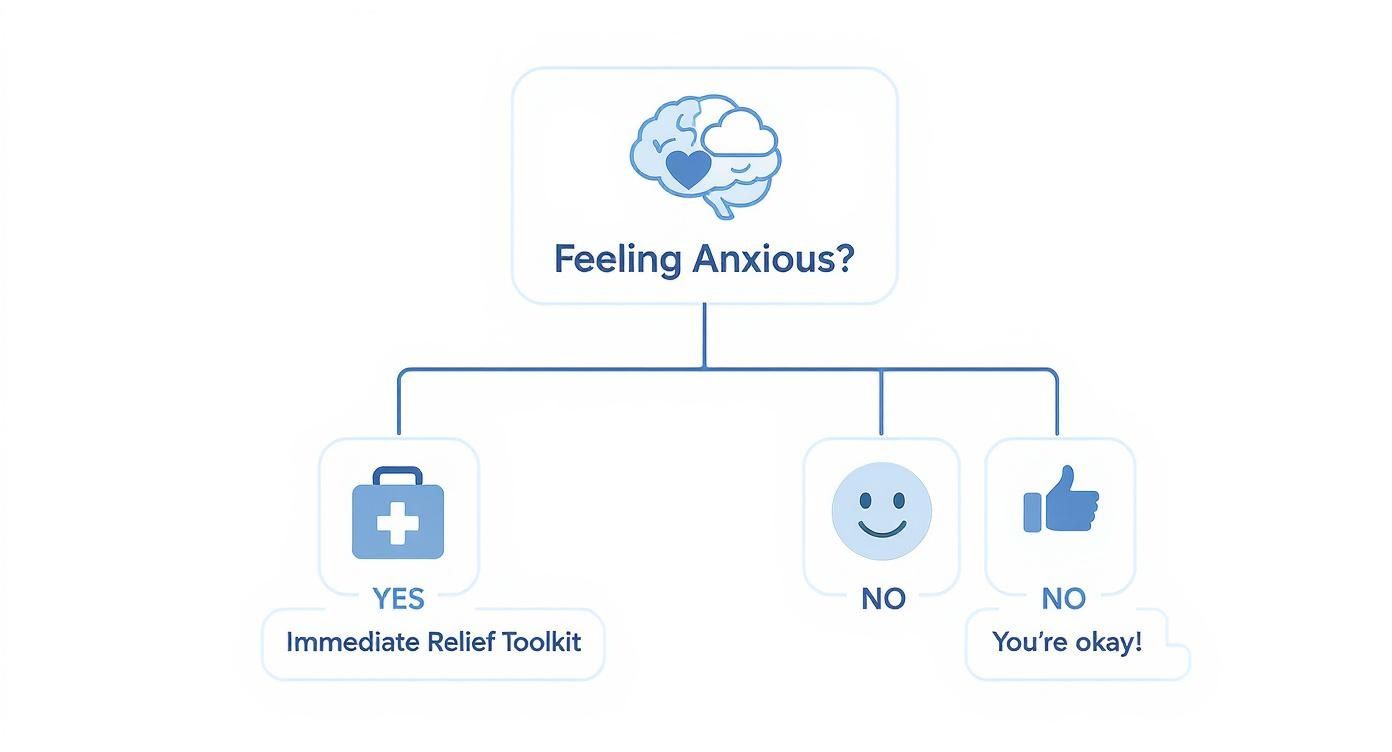
This flowchart visualizes a core principle of recovery: acknowledge your feelings and respond with a concrete plan, rather than reacting with more fear. It's a simple but profound shift toward healing.
Building Your Immediate Relief Toolkit
When anxiety peaks, you need simple, powerful tools that work fast. That's exactly what this guide will give you. We'll explore grounding techniques that pull you back to the present moment and breathing exercises that send a direct message of safety to your brain. For a more comprehensive overview, you can explore the key anxiety recovery steps in our detailed guide.
Below is a quick-start table with three techniques you can use the moment you feel anxiety rising.
Your Immediate Anxiety Relief Toolkit
Three simple, natural techniques you can use right now to reduce acute anxiety symptoms and ground yourself in the present moment.
| Technique | How It Works | When to Use |
|---|---|---|
| Box Breathing | Inhale for 4, hold for 4, exhale for 4, hold for 4. This pattern regulates your autonomic nervous system, signaling your body to calm down. | When your thoughts are racing or you feel short of breath. It’s discreet enough to do anywhere. |
| 5-4-3-2-1 Grounding | Name 5 things you see, 4 things you can touch, 3 things you hear, 2 things you smell, and 1 thing you can taste. This pulls your focus out of your head and into your immediate environment. | When you feel disconnected, unreal, or stuck in a spiral of "what if" thoughts. |
| Cold Water Splash | Splashing your face with cold water or holding an ice cube triggers the mammalian dive reflex, which slows your heart rate and redirects blood flow to the brain. | During a sudden spike of panic or when you feel emotionally overwhelmed and need a quick reset. |
These aren't just temporary fixes; they are foundational skills for building long-term resilience and a life where you are in control. For a deeper dive into these and other powerful methods, this guide on how to calm anxiety naturally provides even more insights.
Let's begin.
Using Your Breath to Calm Your Mind
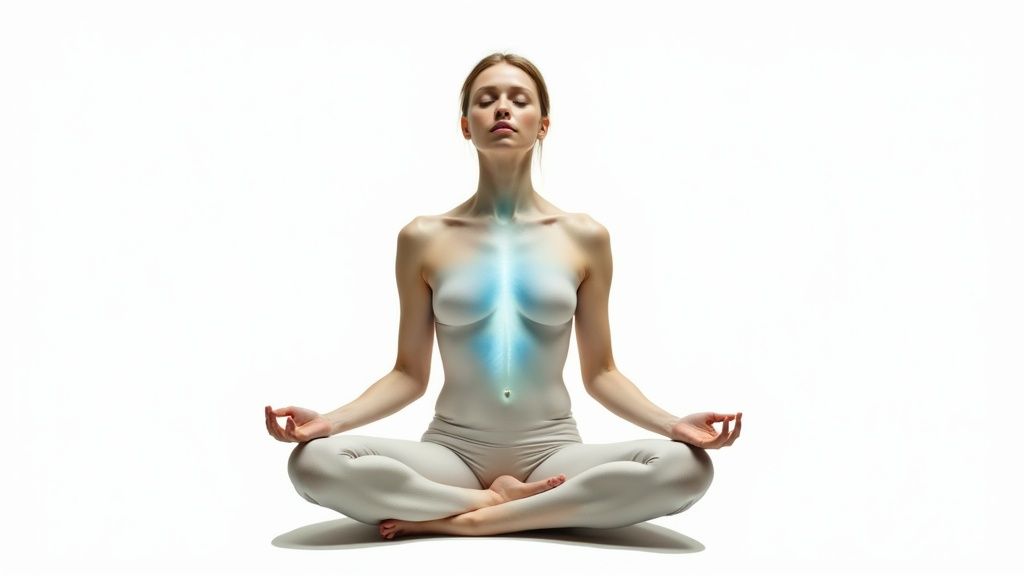
When panic strikes, your breath is the first thing to betray you. It gets shallow, fast, and tightens in your chest, sending a frantic signal to your brain: Danger! This primal reaction, designed for fight or flight, is the engine that drives the entire anxiety cycle.
But here’s a profound truth that offers immense hope: the very system that can escalate panic can also be used to dismantle it. Your breath is your most powerful, portable, and immediate tool for calming anxiety naturally. It’s a direct line to your nervous system, a key to unlock your body's innate ability to heal.
By consciously changing how you breathe, you can actively tell your brain, “I am safe.” This isn't just wishful thinking; it’s physiology. Slow, deliberate breathing activates the parasympathetic nervous system—your body’s built-in relaxation response—which works to lower your heart rate, ease muscle tension, and bring a sense of calm.
Why Your Breath Is a Superpower
Think of your nervous system as having two modes. The sympathetic nervous system is the gas pedal, revving you up for action. The parasympathetic nervous system is the brake, slowing you down to rest and recover. Anxiety has its foot slammed on the gas.
Intentional breathing exercises force you to lift your foot off the gas and gently apply the brake. It’s a way of manually overriding your body's automated panic response. This is an incredibly empowering realization because it means you are never truly helpless against anxiety. You always have your breath, and with it, the power to heal.
Your breath is the anchor that can hold you steady in the stormiest of emotional seas. Learning to control it is not just a coping mechanism; it's a foundational skill for building a life free from the grip of panic.
For those looking to deepen their practice, there's a wide array of specialized breathing exercises for anxiety that can be tailored to different situations.
Practical Breathing Techniques for Real-Life Anxiety
Let's move beyond the simple advice to "take a deep breath" and get into structured techniques that are proven to work. The key isn't just depth, but rhythm and control.
The 4-7-8 Breathing Technique
Sometimes called the "relaxing breath," this one is especially effective for quieting a racing mind before sleep or during a moment of intense worry. It forces a longer exhale, which is a powerful signal for the nervous system to chill out.
- Get Ready: Sit or lie down comfortably. Place the tip of your tongue against the ridge of tissue just behind your upper front teeth.
- Exhale Fully: Breathe out completely through your mouth, making a whoosh sound.
- Inhale: Close your mouth and inhale quietly through your nose for a mental count of four.
- Hold: Hold your breath for a count of seven.
- Exhale: Breathe out completely through your mouth, making that whoosh sound again, for a count of eight.
That completes one cycle. Repeat the process three more times. The numbers themselves are less important than the 4:7:8 ratio. That long exhale is the most critical part.
Box Breathing for Focus and Calm
Also known as four-square breathing, this technique is excellent for moments when you need to stay calm and focused under pressure—like right before a big presentation, during a turbulent flight, or navigating a difficult conversation.
- Inhale slowly through your nose for a count of four.
- Hold your breath for a count of four.
- Exhale slowly through your mouth for a count of four.
- Hold at the bottom of the exhale for a count of four.
Imagine drawing a box in your mind, with each side representing one of the four-second steps. Repeat this cycle for a few minutes until you feel your heart rate slow and your focus return.
Integrating these practices into your day builds resilience. You might even consider a practical mindful breathing tool to serve as a physical reminder to pause, regulate your breath, and recenter your nervous system. These small, consistent actions are the building blocks of a calmer, panic-free life.
Grounding Yourself When Your World Spins
Anxiety has a way of feeling like a powerful current, yanking you out of the present and into a turbulent sea of what-ifs and worst-case scenarios. You might even feel strangely disconnected from your own body or surroundings—a sensation called dissociation—like you're watching your life play out from a distance.
That’s your nervous system hitting the panic button. But you can learn how to switch it off. This is not just possible; it's a skill you can master.
This is where grounding techniques become your anchor. They are simple, sensory-based exercises designed to interrupt that anxious spiral and pull you back into the physical world. The goal isn't to fight the anxiety, but to shift your focus from the chaos in your mind to the solid ground beneath your feet.
Grounding is a direct line back to reality when anxiety is trying to sell you a story of catastrophe. It reminds your body that you are safe, right here, right now. It’s not just a distraction; it's an act of reclaiming your presence and proving to yourself that healing is possible.
What's great about these methods is how practical they are. Most can be done subtly, anywhere, without anyone around you even knowing. You can use them in a crowded meeting, during a tense family dinner, or right in the middle of a grocery store aisle when that familiar sense of panic starts to creep in.
The 5-4-3-2-1 Method: A Full Sensory Reset
One of the most effective and well-known grounding exercises is the 5-4-3-2-1 method. It works by deliberately engaging each of your five senses, which forces your brain to pay attention to your tangible environment instead of abstract fears. Think of it as a step-by-step manual for returning to the present moment.
Here’s how it works. Pause, take a breath, and slowly identify:
- 5 things you can see: Look around and name five objects. Don't just glance; really see them. Notice the grain of wood on a table, the exact shade of blue on a book cover, the way light hits a window.
- 4 things you can feel: Bring your awareness to physical sensations. It could be the texture of your jeans, the cool smoothness of your phone, the solid support of your chair, or the gentle hum of the air conditioning on your skin.
- 3 things you can hear: Listen closely. Tune into the sounds you usually filter out. Can you hear the distant drone of traffic? The ticking of a clock? The soft sound of your own breathing?
- 2 things you can smell: This one sometimes takes a bit more effort. Maybe you can catch the faint scent of coffee, the soap on your hands, or the pages of a nearby book. If you can't smell anything, just imagine two of your favorite smells, like fresh-cut grass or baking cookies.
- 1 thing you can taste: What’s the last taste in your mouth? Maybe it’s the lingering mint from your toothpaste or a sip of water. You can also pop a mint or take a drink of something to complete this step.
This structured process is a powerful way to break the cycle of anxious thoughts. You’re giving your brain a simple, concrete task that is completely incompatible with worrying.
Physical Anchors to Find Solid Ground
Sometimes, the quickest way to get grounded is by focusing on physical sensations. While your mind might be lost in the future, your body is always in the present moment. Using it as an anchor can be incredibly effective when you feel like you're spinning out.
Try one of these physical techniques:
- Press Your Feet Firmly into the Floor: Whether you're sitting or standing, push your feet flat against the ground. Feel the solid connection. Imagine roots growing from the soles of your feet, anchoring you deeply to the earth.
- Hold Something Cold: The jolt of a cold sensation is a powerful pattern interrupt. Grab an ice cube, a cold can, or just splash some cold water on your face and wrists. The shock brings your attention right back to your body.
- Clench and Release: Make a tight fist, squeezing as hard as you can for five seconds, and really notice the tension. Then, release it completely and pay attention to the feeling of relaxation spreading through your hand. You can do this with your hands, shoulders, or even by curling your toes.
For a deeper dive into these methods, our complete guide to grounding techniques for anxiety offers a whole toolbox of options. Finding a few that work for you can be a total game-changer, giving you the confidence that you can handle those moments of panic and find your way back to calm. This is how you build a panic-free life.
Gently Reshaping Anxious Thoughts
Anxious thoughts are convincing storytellers, aren't they? They spin vivid, catastrophic tales that make your heart pound and your palms sweat, convincing you that the absolute worst-case scenario is just around the corner. This internal narrative is the engine that drives the whole cycle of panic.
But this is where you can start to take your power back. A panic-free life is possible when you learn to change your relationship with these thoughts.
You can learn to gently question and reshape these thoughts. This isn't about forcing yourself into some fake "positive thinking" or pretending your fears don't exist. It's about developing a more balanced, compassionate inner dialogue and learning to challenge the stories your anxiety tells you.
The goal is to become a curious observer of your thoughts, not their captive. When you create a little space between you and the anxious thought, you dial down its emotional volume and stop the spiral before it really takes hold. It's a skill, and like any skill, it gets stronger the more you practice. This is a hopeful path forward.
Becoming a Thought Detective
One of the most powerful ways to start is by putting your anxious thoughts on trial. When an anxious belief pops up, instead of just accepting it as fact, you treat it like a claim that needs to be proven. You become a detective, looking for hard evidence that either supports it or refutes it.
Let's imagine you have a big presentation coming up at work. Your anxious thought might scream: "I'm going to freeze up, everyone will think I'm an idiot, and my career is over."
Instead of letting that story run the show, put it on the stand:
- Evidence For: "I felt really nervous during my last presentation. I remember my hands were shaking."
- Evidence Against: "I've given plenty of successful presentations before. I actually know this material inside and out. My colleagues are usually pretty supportive. And even if I am nervous, it's pretty unlikely my entire career will be ruined by one shaky moment."
This simple act of weighing the evidence immediately exposes the wild exaggeration that most anxious thoughts rely on. You're not denying your nervousness; you're just challenging the catastrophic conclusion.
Recognizing Common Thinking Traps
Anxiety loves to use the same old tricks over and over again. It relies on predictable patterns of distorted thinking. Learning to spot these "cognitive distortions" is like seeing the trick behind a magic show—once you see it, it loses its power.
Cognitive distortions are like funhouse mirrors for your mind; they reflect a version of reality that is twisted and exaggerated. Identifying them is the first step toward seeing things more clearly and compassionately, and it's a key part of healing.
Here are a few common traps you might recognize:
- Black-and-White Thinking: You see things in absolute, all-or-nothing terms. If you're not a complete, unqualified success, you're a total failure. There’s no gray area.
- Catastrophizing: You automatically jump to the worst possible conclusion. A small mistake at work instantly becomes, "I'm definitely getting fired."
- Mind Reading: You're convinced you know what other people are thinking, and it's usually something negative about you. "I just know they thought my comment in the meeting was stupid."
Just recognizing these patterns in your own thinking is a massive step forward. For a deeper dive, you can explore this detailed guide on the most common cognitive distortions that fuel anxiety. Understanding these traps helps you dismantle them piece by piece, building a more balanced and realistic perspective over time. This is how you begin to change your relationship with your own mind and heal.
Building a Lifestyle That Supports Calm
While breathing and grounding techniques are your first responders in a moment of high anxiety, the path to a genuinely calmer life is paved with the small, consistent choices you make every day. Lasting relief from anxiety isn’t just about managing a crisis; it’s about intentionally building a life that fosters resilience from the ground up.
And this is where the real hope lies. You have the power to create an environment—both inside and outside your body—that makes it harder for anxiety to take root in the first place. You can build a panic-free future.
By focusing on four foundational pillars, you can create a powerful buffer against stress. These aren’t drastic, overnight overhauls. They’re gentle, sustainable shifts that work together to soothe your nervous system and cultivate a lasting sense of peace.
Nurturing Your Body With Mindful Movement
When you feel anxious, your body is flooded with stress hormones like adrenaline and cortisol, gearing you up for a fight that never actually happens. Gentle, consistent movement is one of the best ways to process these chemicals and release all that pent-up physical tension.
You don’t need to run a marathon to feel the benefits. In fact, intense exercise can sometimes mimic the physical sensations of anxiety (like a pounding heart), so starting gently is often the smartest move.
Think about activities that connect your mind and body:
- A daily walk: Just 20-30 minutes of walking can significantly lower cortisol levels. Make it a grounding practice by paying attention to your surroundings—the feeling of the breeze, the sounds of nature.
- Restorative yoga: This form of yoga uses props to support the body in gentle poses, which helps activate the parasympathetic nervous system (your body's "rest and digest" mode).
- Stretching: Simply taking five minutes to stretch your neck, shoulders, and back can release the physical armor that anxiety often builds around you.
The key here is consistency, not intensity. Movement sends a powerful, non-verbal signal to your nervous system that the "threat" has passed and it's safe to relax.
Fueling Calm With Supportive Nutrition
The connection between your gut and your brain is profound. What you eat directly impacts your mood and your body's ability to cope with stress. Blood sugar spikes and crashes or a lack of key nutrients can seriously amplify anxious feelings.
One of the most effective strategies is to focus on stabilizing your blood sugar. When your blood sugar drops, your body releases stress hormones to compensate, which can feel identical to a wave of panic.
Here’s how you can create a more supportive eating pattern:
- Prioritize protein and healthy fats with every meal. Think eggs, avocado, nuts, or grilled chicken. These slow down digestion and keep your blood sugar levels nice and steady.
- Limit caffeine and processed sugars. Caffeine is a direct stimulant to your nervous system, while sugar sends you on an energetic rollercoaster that can easily end in an anxiety crash.
- Stay hydrated. Even mild dehydration can ramp up cortisol levels. Keep a water bottle handy and sip throughout the day.
For a deeper dive, our guide on lifestyle and diet changes for anxiety management offers even more practical tips. Making small, mindful tweaks to your diet is a form of self-care that builds a stable foundation for your emotional well-being.
Creating a Sanctuary for Restorative Sleep
Sleep is when your brain and body repair and reset. Skimping on quality sleep leaves your nervous system frayed and on high alert, making you far more vulnerable to anxiety the next day. Creating a "sleep sanctuary" is one of the most powerful things you can do for your mental health.
Your bedroom should signal one thing to your brain: rest. When you create a consistent, calming routine, you are training your body to wind down, making deep sleep more accessible and anxiety less powerful. This is a fundamental step toward healing.
This means crafting both an environment and a routine that actively promote relaxation:
- Set a consistent sleep schedule, even on weekends, to regulate your body's internal clock.
- Dim the lights an hour before bed and put away the screens. The blue light from phones and TVs suppresses melatonin, the hormone that cues your body for sleep.
- Make your room cool, dark, and quiet. Blackout curtains, an eye mask, or a white noise machine can make a huge difference.
- Craft a calming pre-sleep ritual, like reading a physical book, sipping herbal tea, or listening to quiet music.
Prioritizing sleep is non-negotiable for calming anxiety naturally. It provides the biological foundation that all your other efforts are built upon.
The Science of Connection as an Antidote
As humans, we are wired for connection. A sense of belonging and social support isn't just a nice-to-have; it's a biological necessity that helps regulate our nervous system. When we feel safe and understood by others, our bodies produce oxytocin—a hormone that counteracts cortisol and promotes feelings of calm and trust.
Loneliness, on the other hand, can keep our nervous system stuck in a state of chronic threat. Nurturing your relationships is a powerful, evidence-based strategy for building resilience against anxiety.
This doesn't mean you need a huge social circle. Quality is far more important than quantity. Focus on connecting with people who make you feel seen and supported. Schedule a regular phone call with a friend, plan a weekly coffee date, or just give a loved one a hug. These small acts of connection are potent medicine.
Making these lifestyle adjustments isn't just about feeling better in the moment; it's about building a long-term foundation for calm. The table below summarizes how these four pillars work together to create a life that's naturally more resilient to anxiety.
The Four Pillars of a Calm Lifestyle
| Pillar | Key Action | Impact on Anxiety |
|---|---|---|
| Movement | Gentle, consistent activity like walking or yoga for 20-30 minutes daily. | Processes stress hormones (cortisol, adrenaline) and releases physical tension. |
| Nutrition | Stabilize blood sugar with protein/fat; limit caffeine and sugar; stay hydrated. | Prevents hormone-induced panic from blood sugar crashes and reduces nervous system stimulants. |
| Sleep | Create a consistent, dark, cool, and screen-free sleep routine. | Allows the brain and nervous system to repair and reset, reducing next-day reactivity. |
| Connection | Nurture supportive relationships through quality time and physical touch. | Boosts oxytocin, which counteracts cortisol and signals safety to the nervous system. |
By weaving these actions into your daily life, you're not just fighting anxiety—you're proactively cultivating peace. The evidence for these lifestyle interventions is strong. Multiple studies confirm that regular physical activity reduces anxiety by boosting mood-regulating neurotransmitters.
Similarly, mindfulness, breathing, and behavioral techniques have been shown to lower anxiety scores by 20%-50% in various studies. As noted by the Priory Group, these practices help regulate the nervous system and build emotional resilience over time. Building this supportive lifestyle is your most powerful long-term strategy for a panic-free life.
Knowing When to Reach Out for More Support
Embracing natural strategies is a huge step toward taking back your life from anxiety. When you build a personal toolkit of breathing, grounding, and lifestyle habits, you're creating a powerful foundation for calm. But a crucial part of this journey is knowing it’s a sign of strength, not weakness, to bring in more support when you need it.
Reaching out for professional help doesn’t mean the natural methods have failed. Not at all. Think of it as adding a specialist to your wellness team—someone with a different set of tools and perspectives that can complement everything you're already doing on your healing journey.
Signs It Might Be Time for More Tools
Sometimes, anxiety becomes so persistent that it starts to shrink your world. If you find yourself consistently dodging situations that once brought you joy—like turning down invites from friends, dreading work meetings, or avoiding the grocery store—that’s a clear signal anxiety is taking up too much space.
The same goes for physical symptoms. If things like digestive issues, constant exhaustion, or tight, sore muscles have become your new normal, it's worth looking into. Our bodies keep score, and that kind of persistent physical discomfort is often a sign of a nervous system that needs extra help finding its way back to balance.
Seeking therapy isn't admitting defeat; it’s choosing a new strategy to win. It’s an act of courage and a commitment to your own healing, ensuring you have every possible resource on your path to a panic-free life.
Anxiety is a global issue, but so many people hesitate to get help, often due to stigma or simply not knowing where to start. The World Health Organization points out that while approximately 4.4% of the world's population has an anxiety disorder, only about 27.6% actually receive treatment for it. This gap is a big reason why natural methods have become so popular, but it also underscores just how vital professional guidance can be. You can see more details on these global mental health trends on WHO.int.
Finding a therapist might feel like a huge, intimidating step, but it’s really just about finding a guide who is trained to help you navigate your own mind. They can help you uncover the deeper roots of your anxiety and give you structured, evidence-based strategies designed specifically for you. It’s a hopeful, proactive step toward lasting peace.
Your Questions Answered
Starting this journey is a huge act of hope. As you begin trying these tools out, it’s only natural to have a few questions pop up. Here are some clear, practical answers to the most common ones I hear.
How Long Until I Start to Feel a Difference?
This is one of the best parts—relief can be both immediate and something that builds over time.
Techniques like the 5-4-3-2-1 grounding method or box breathing are your in-the-moment toolkit. They’re designed to interrupt the anxiety spiral right when it’s happening. You can feel a real shift in your body and a quieting of racing thoughts within just a few minutes. Think of them as your emergency brake.
On the other hand, lifestyle changes are about building a solid foundation of calm. Consistently improving your sleep, nutrition, and movement creates lasting resilience. You'll likely notice your baseline anxiety levels start to drop within a few weeks, feeling less jumpy and more centered in your day-to-day life. This is the path to long-term healing.
Can These Natural Methods Actually Cure Anxiety?
The goal here isn’t a magic "cure" but deep healing and effective management. Anxiety is a normal, even helpful, human emotion; an anxiety disorder is just that system getting stuck in overdrive. These natural methods are incredibly powerful for teaching you how to dial down the volume and live panic-free.
For many people, these strategies are more than enough to build a full, peaceful, and panic-free life where anxiety is no longer calling the shots. For others, they work as a powerful sidekick to professional therapy.
The real aim isn't to get rid of anxiety forever, but to get rid of its control over you. You're building a personal toolkit that lets you respond to anxiety with confidence and calm, not fear. A panic-free life is entirely possible.
What if a Technique Doesn't Work When I'm Panicking?
First, take a deep breath (if you can!). It's completely normal for a technique not to work, especially in the middle of a full-blown panic attack. Please don’t see this as a personal failure—see it as a signal to switch tactics. You are learning what works for you, and that is a hopeful process.
If deep breathing feels like you're trying to breathe underwater, pivot to something with a strong sensory kick. Grab an ice cube from the freezer and hold it tight. Splash your face with cold water. The goal is to jolt your system just enough to interrupt the panic cycle. This is why having several different tools in your back pocket is so important.
Honestly, just trying a technique is a win. It means you’re fighting back and refusing to let anxiety have the last word. This is all about practice, not perfection. Every attempt is a step toward healing.
At The Anxiety Checklist, we believe in giving you a structured, actionable plan to move from a life of fear to one of freedom. Our Fearless Living system is a complete toolkit designed to help you understand, manage, and overcome chronic anxiety and panic attacks. We provide the strategies and support you need to build a resilient, calmer, and more joyful life.
Start your journey to fearless living today at https://anxietychecklist.com.