You can learn to control anxiety naturally. The key is to start with simple, actionable techniques that manage the immediate symptoms. Things like controlled breathing and grounding exercises give you a solid foundation to build long-term resilience, paving the way for a hopeful, panic-free future through bigger lifestyle changes and cognitive strategies.
Your First Steps Toward a Calmer Mind Today
Feeling overwhelmed by anxiety can be incredibly isolating, like being caught in a storm with no land in sight. But here’s the hopeful truth you need to hear: you have the power to influence your body's stress response starting right now.
This isn’t about waiting for the storm to pass; it’s about learning to be the calm within it. Living panic-free is not a distant dream but a skill you can begin building today.
The journey begins with understanding that anxiety often feels all-consuming because it triggers the body's "fight or flight" system. Your heart races, your breath gets shallow, and your mind floods with worst-case scenarios.
The good news is that you can consciously interrupt this cycle. This section is your immediate toolkit for regaining control the moment panic rises, offering a clear and immediate path toward relief and showing you that healing is possible.
The Power of Your Breath
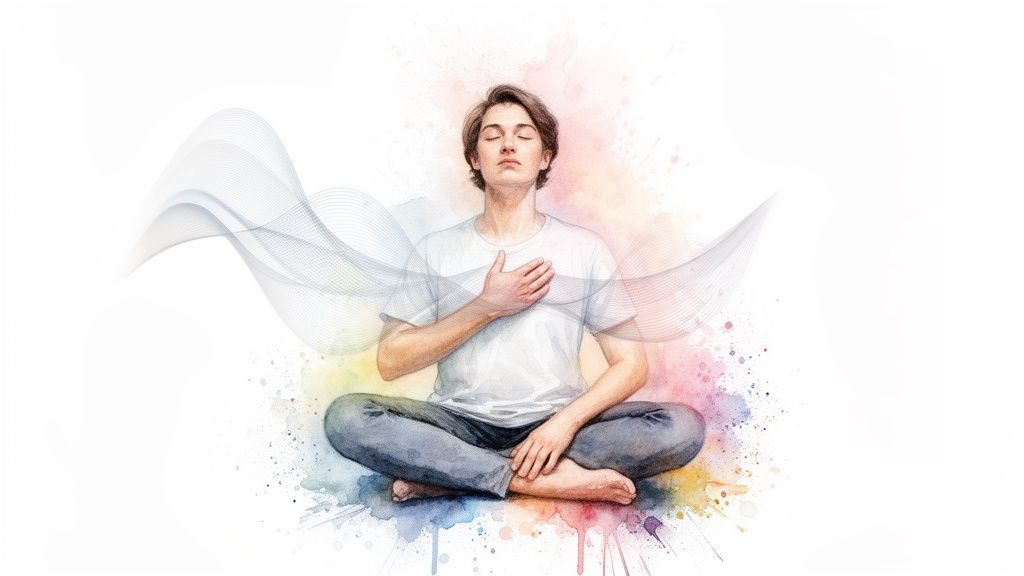
One of the most effective ways to signal safety to your brain is through intentional breathing. When you slow your breath, you directly counteract the physical symptoms of panic.
Research confirms that controlled breathing is a powerful tool for anxiety management. A landmark study found that in high-stress situations, cortisol levels—the body's main stress hormone—can drop by 25% after just 5 minutes of these exercises.
Here are two simple yet powerful techniques to try the next time you feel that wave of panic start to build:
The 4-7-8 Technique: Inhale quietly through your nose for a count of 4. Hold your breath for a count of 7. Exhale completely through your mouth, making a whoosh sound, for a count of 8. Repeat this cycle three more times.
Box Breathing: Imagine drawing a square with your breath. Inhale for 4 seconds, hold for 4 seconds, exhale for 4 seconds, and hold again for 4 seconds. This simple rhythm can quickly restore a sense of balance.
Grounding Yourself in the Present
When anxiety pulls you into a spiral of future worries or past regrets, grounding techniques anchor you firmly in the present moment. They use your senses to remind your body and mind that you are safe right here, right now.
A powerful first step is to practice mindfulness, which helps anchor you in the present and observe thoughts without getting swept away by them.
The goal of grounding is not to stop the anxious thoughts, but to shift your focus away from them. By engaging your senses, you create distance from the panic and reconnect with your immediate environment.
A widely used method is the 5-4-3-2-1 technique. Wherever you are, pause and identify:
- 5 things you can see: Notice small details—a crack in the ceiling, the color of a book, the light from a window.
- 4 things you can feel: The texture of your chair, the fabric of your clothes, the cool surface of a table, your feet on the floor.
- 3 things you can hear: The hum of a computer, birds chirping outside, the sound of your own breathing.
- 2 things you can smell: The scent of coffee, a nearby plant, or even the subtle smell of the room itself.
- 1 thing you can taste: Take a sip of water, notice the lingering taste of your last meal, or simply focus on the sensation inside your mouth.
These techniques are your go-to tools for managing anxiety in the moment. The table below gives you a quick reference for when and how to use them.
Immediate Anxiety Relief Techniques
| Technique | How It Works | When to Use |
|---|---|---|
| 4-7-8 Breathing | Activates the parasympathetic nervous system (your "rest and digest" response) to calm your body down quickly. | When you feel your heart racing or your breathing becoming shallow and fast. |
| Box Breathing | The rhythmic, predictable pattern provides a mental anchor, distracting your mind from anxious thoughts. | During moments of high stress or when you need to regain focus and composure. |
| 5-4-3-2-1 Grounding | Engages all five senses to pull your attention out of your head and into the physical world around you. | When you feel disconnected, dissociated, or caught in a spiral of "what if" thoughts. |
Think of these as your emergency first aid for anxiety. They are simple, discreet, and can be done anywhere, anytime you feel the panic start to rise.
These initial steps are fundamental in your journey. As you get comfortable with them, you can build on this foundation by exploring these comprehensive anxiety recovery steps.
Rewiring Your Brain by Rethinking Anxious Thoughts
Anxiety is more than just a fleeting feeling. It's a powerful cycle fueled by deeply ingrained thought patterns that can feel completely automatic. But here’s the most hopeful part of the journey: you can learn to step outside of this cycle. Living a life free from panic involves learning to become a curious observer of your own mind, not a victim of its frantic warnings.
First, you have to recognize that anxious thoughts are often not factual truths. They're distorted interpretations of reality—like looking in a funhouse mirror that reflects a twisted, exaggerated version of a situation. These mental shortcuts, often developed over years, can feel incredibly convincing in the moment.
For example, your brain might instantly jump to the worst possible conclusion (catastrophizing) or see a situation in purely black-or-white terms (all-or-nothing thinking). These aren't personal failings; they're common patterns that keep the anxiety engine running. Learning to spot them is the key to taking back control and healing the root cause.
Becoming a Thought Detective
A really practical way to start this work is by keeping a simple "thought record." This isn't about judging yourself; it's about gathering data. When you feel that familiar surge of anxiety, just grab a notebook or open a notes app and gently investigate what's happening in your mind.
This simple act shifts you from being caught in the emotional storm to being a calm investigator observing it from a safe distance. It's a fundamental skill for learning how to manage anxiety naturally.
Here’s a simple structure you can follow:
- The Situation: Briefly note what was happening when the anxiety spiked. (e.g., "Received an email from my boss.")
- The Thought: Write down the exact thought that flashed through your mind. (e.g., "I've made a huge mistake and I'm going to get fired.")
- The Feeling: Name the emotion and rate its intensity from 1-10. (e.g., "Anxiety, 9/10.")
Just noticing the thought separates it from you, creating the little bit of space needed to question whether it's actually true.
Questioning Your Anxious Mind
Once you’ve identified the thought, you can start to question it with gentle curiosity. This isn't about getting into an argument with yourself. It’s about exploring other possibilities and building a more compassionate, balanced inner dialogue.
You don't have to believe every single thought your anxious mind produces. By questioning your thoughts, you dismantle their power and teach your brain that there are other, more realistic ways to see the world.
Ask yourself these kinds of questions to challenge the anxious thought:
- Is there any hard evidence that this thought is 100% true?
- What is a more balanced or compassionate way to look at this situation?
- If a friend came to me with this exact worry, what would I tell them?
- What is the most likely outcome, not just the worst-case scenario my brain is screaming about?
By consistently practicing this, you start carving out new neural pathways. You're not just coping; you're actively rewiring your brain's default responses. This process takes practice, but it's one of the most empowering ways to build lasting resilience against anxiety. To dive deeper into these mental traps, you can learn more about the common cognitive distortions that fuel anxiety.
Building a Resilient Mind Through Your Lifestyle
You’d be surprised how much your daily habits shape your mental well-being. Getting a handle on anxiety naturally doesn’t start with some huge, dramatic change. It starts with the small, consistent things you do every day—the choices that build a powerful foundation for a calmer mind.
This is all about creating an internal environment where anxiety struggles to take root, giving you the strength and hope to move forward without panic holding you back.

Think of these shifts not as more rules to follow, but as acts of self-compassion. They are sustainable choices that nourish your body and mind, making you more resilient from the inside out and proving that healing is within your reach.
The Critical Role of Restorative Sleep
Let’s be clear: sleep isn’t a luxury. It’s a non-negotiable pillar of mental health. When you’re sleep-deprived, your brain’s emotional centers go into overdrive, making you far more vulnerable to anxiety and stress. The goal isn't just more sleep, but better quality sleep.
Simply cleaning up your sleep hygiene can make a world of difference. It's a cornerstone of a resilient lifestyle and one of the most powerful ways to manage anxiety naturally. For a deeper dive, check out these excellent tips on understanding and enhancing sleep quality.
Try making a few of these small adjustments:
- Create a Restful Environment: Turn your bedroom into a sanctuary for sleep. That means keeping it dark, cool, and quiet.
- Establish a Wind-Down Routine: About an hour before bed, ditch the screens. Instead, pick up a book, do some gentle stretching, or listen to quiet music.
- Maintain a Consistent Schedule: Try to go to bed and wake up around the same time every day—yes, even on weekends. This helps regulate your body’s internal clock.
Movement as a Natural Antidote to Stress
Physical activity is one of the most effective and immediate tools you have for fighting anxiety. When you get your body moving, it releases endorphins—your brain’s natural mood-lifters. You don’t need to run a marathon to get the benefits; even a brisk walk can completely shift your mental state.
Exercise truly is a powerhouse for natural anxiety management. Research shows that just 150 minutes weekly of moderate movement, like jogging or yoga, can cut the risk of an anxiety relapse by 50%.
Better yet, a study of 226 patients found that yoga—which combines physical postures with focused breathing—slashed anxiety symptoms by an incredible 43%.
The key is to find a form of movement you genuinely enjoy. When exercise feels like a joy rather than a chore, you're far more likely to stick with it, creating a lasting habit that supports your mental health.
Nourishing Your Mind with Mindful Nutrition
The connection between your gut and your brain is incredibly powerful. What you eat directly impacts your mood, your energy, and your ability to handle stress. This isn’t about some restrictive diet; it’s about making mindful choices that support your mental clarity.
Some foods can help keep your blood sugar and mood stable, while others might be triggers. Start paying attention to how you feel after you eat certain things.
Here are a few good places to start:
- Complex Carbohydrates: Foods like oats, quinoa, and whole-wheat bread deliver a steady stream of energy without the dreaded crash.
- Lean Proteins: Think turkey, chicken, eggs, and beans. They contain the amino acids needed to produce mood-regulating neurotransmitters.
- Omega-3 Fatty Acids: Found in fatty fish like salmon, walnuts, and flaxseeds, these healthy fats are fantastic for supporting brain health.
For a more comprehensive look, you can explore our in-depth guide to lifestyle and diet changes for anxiety management.
Making these small, intentional choices day after day builds a strong foundation, proving you have the power to create a more peaceful and panic-free life.
Finding Strength in Connection and Support
Anxiety has a clever way of making you feel utterly alone, convinced that no one could possibly get the storm raging inside your head. It loves isolation, building walls that cut you off from the very people who could offer some relief. But here's the truth: connection is a powerful antidote to anxiety's loneliness. Reaching out is one of the bravest, most hope-filled things you can do.
Breaking that cycle of isolation is a huge part of learning how to manage anxiety naturally. The path to a calmer, panic-free life isn't one you have to walk by yourself.
Starting Honest Conversations
The thought of opening up about your anxiety can be terrifying. You might worry about being judged, misunderstood, or feeling like a burden to the people you love. Those fears are completely normal, but they don't have to call the shots.
Starting the conversation can be much simpler than you think. You don’t need to prepare a big speech; all it takes is a moment of honesty with someone you trust.
You don't have to carry this weight by yourself. Sharing your experience, even in a small way, breaks the powerful grip of isolation and allows the healing light of connection to shine through.
Try using a gentle opener to ease into the topic. It could be as simple as:
- "I've been feeling really overwhelmed lately, and I was hoping I could talk to you about it."
- "You might have noticed I haven't been myself. I'm dealing with some anxiety, and it's been tough."
- "Could we find some time to talk? I'm going through something and could really use a friend."
These simple scripts can open the door to a deeper, more supportive conversation, making that first step feel much more doable.
Clearly Articulating Your Needs
Once you've opened up, it’s incredibly helpful to be clear about what kind of support you actually need. Your friends and family want to help, but they often just don't know how. Giving them specific, actionable ways to support you can make a world of difference for everyone involved.
Think about what would genuinely help you the most in that moment.
- A Listening Ear: "I don't need you to fix anything, but it would mean a lot if I could just vent for a few minutes without any judgment."
- Practical Help: "Sometimes my anxiety makes it hard to do errands. Would you be willing to help me with grocery shopping this week?"
- Simple Company: "I've been feeling pretty isolated. Could we just hang out and watch a movie? Having you here would really help."
This kind of clarity prevents misunderstandings and helps you get the support that truly helps. When anxiety starts to impact your closest bonds, it’s important to know how to navigate those challenges. You can learn more about managing anxiety within a loving relationship to help strengthen those vital connections.
Connecting with others who share your experience can also be incredibly validating. Peer support groups, whether you find them online or in person, create a space where you feel instantly understood. Hearing other people's stories and sharing your own is a powerful reminder that you are not the only one on this journey toward healing.
Creating Your Personalized Anxiety Management Plan
So far, we've talked about a lot of different tools and strategies. Now it's time to pull it all together and build a plan that's uniquely yours. This is where the real work begins—moving from just knowing what to do, to actually creating a practice that gives you hope for a panic-free life.
Think of it like this: having random coping skills is good, but having an actionable plan turns those skills into a reliable system you can count on. This is your personal roadmap to healing.
The first step is simply to become a curious observer of your own anxiety. Keeping a simple journal is an incredibly empowering way to do this. It helps you connect the dots between your daily experiences and your emotional state, revealing patterns you might have otherwise missed.
Identifying Your Triggers and What Works
Start by noticing when your anxiety spikes. What were you doing? Who were you with? What thoughts were running through your mind? Jotting this down helps you pinpoint your specific anxiety triggers—the first step to getting a handle on them.
Just as important, note which strategies actually bring you some relief. Did a quick walk outside help? Did that five-minute breathing exercise calm your racing heart? This feedback loop is golden because it shows you what works for you, allowing you to build a plan around your most effective tools.
This process is a simple, powerful way to build the support you need as part of your plan.
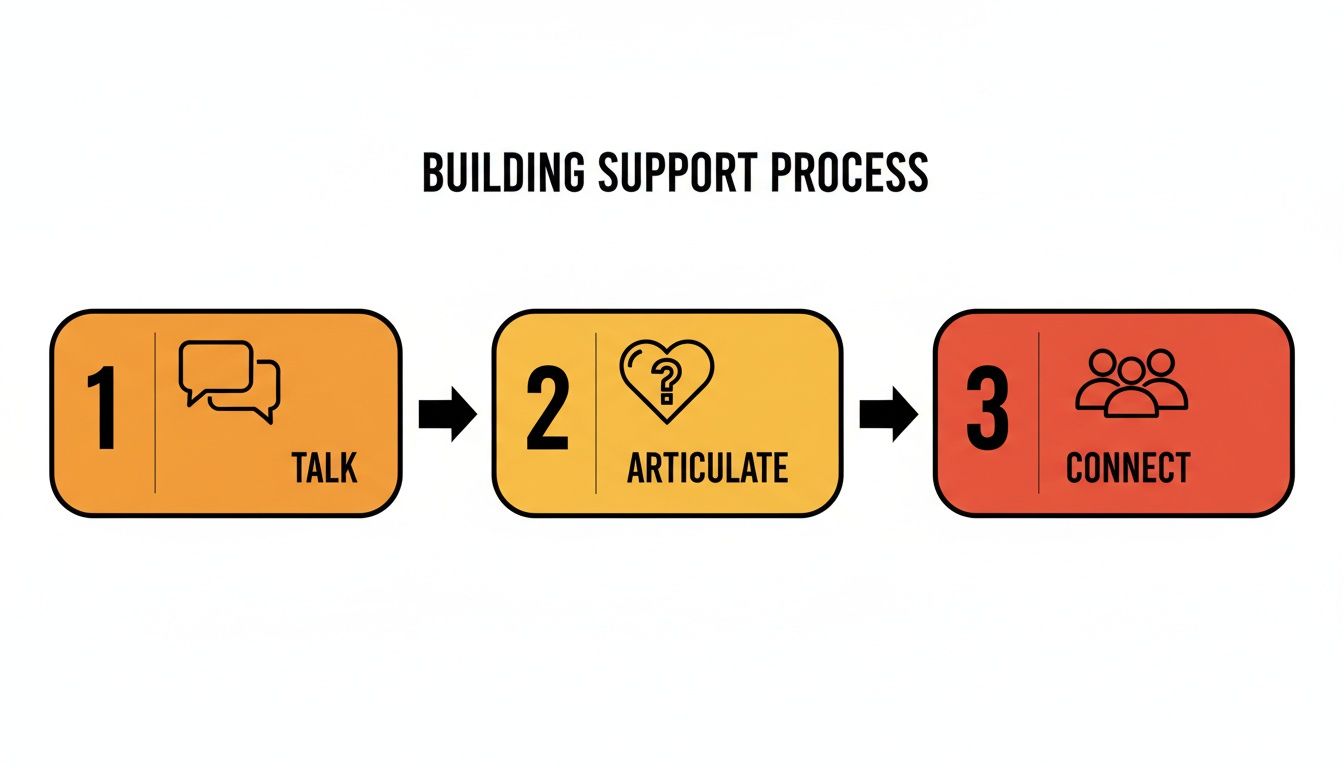
As you can see, effective support starts with talking, leads to articulating your specific needs, and results in a stronger, more genuine connection.
Building Consistent, Hope-Filled Habits
Lasting relief doesn’t come from grand, sweeping gestures. It’s all about the small, consistent habits that add up over time. Your plan should weave things like mindfulness, movement, and thought exercises into your daily and weekly routines in a way that feels manageable, not overwhelming.
For instance, you might commit to five minutes of box breathing every morning or a 15-minute walk after lunch. These small actions build momentum and prove to yourself, day by day, that you can influence how you feel. Setting clear, achievable goals is a key part of this. To get it right, you can learn more about setting specific SMART goals for anxiety to create a plan that's both structured and effective.
This kind of self-directed approach is more important than ever. Back in 1990, anxiety disorders affected about 3.7% of the global population. By 2021, that figure had climbed to 4.4%, impacting a staggering 359 million people. With only 27.6% of people receiving any formal treatment, self-help tools that empower the other 72.4% are absolutely vital.
The most important part of your plan is self-compassion. There will be good days and tough days. The goal isn't perfection; it's progress. Celebrate your small victories and be willing to adjust your plan as you learn and grow.
This personalized plan is your roadmap. It’s a testament to your commitment to yourself and a powerful reminder that there is a clear, actionable way to find peace and live a more hopeful, panic-free life.
Got Questions? Let's Talk Through Them
When you start taking control of your anxiety naturally, it’s completely normal for questions to pop up. Honestly, having clear answers can be the very thing that keeps you going, especially on the tougher days. Let's tackle some of the most common ones I hear.
How Long Does This Actually Take?
This is the big one, isn't it? The honest-to-goodness answer is that it's different for everyone. While you can get immediate relief from something like a grounding exercise in a high-anxiety moment, the deep, lasting change is more of a slow burn. It's built on consistency.
Some people feel a real shift in their day-to-day anxiety within a few weeks of sticking with new habits. For others, it might be a couple of months before they look back and realize, "Wow, I feel so much calmer now."
The trick is to focus on progress, not perfection. Every time you choose a new response, you’re literally rewiring your brain and building a more resilient you. Each step is a step toward healing.
What If I Have a Bad Day or a Setback?
First things first: setbacks are not failures. They are a totally normal, expected part of this process. A rough day or even a full-blown panic attack after a good stretch doesn't wipe out your progress. Think of it as your nervous system still learning the ropes.
When it happens, treat yourself like you would a good friend.
- Acknowledge it, don't judge it: "Okay, anxiety is here right now. This feels awful, but I know what to do."
- Go back to your toolkit: Use a grounding technique, do some box breathing, or just step outside for five minutes. Do what works for you.
- Reflect on it later (when you're calm): Gently ask yourself what might have contributed. Not enough sleep? A stressful conversation? This isn't about blaming yourself; it's about learning your triggers.
A setback is just a chance to practice your new skills in a real-world scenario. It proves you can handle these moments, and honestly, that’s what builds real, unshakable confidence.
When Is It Time to Call a Professional?
Using natural tools to manage anxiety is incredibly powerful, but sometimes, the kindest and strongest thing you can do for yourself is to ask for professional help. Think of it as adding an expert to your team.
It might be time to reach out if:
- Anxiety is consistently getting in the way of your life—your job, your relationships, or even just leaving the house.
- You feel like you're trying everything and still spinning your wheels.
- You’re dealing with heavy feelings of hopelessness or depression along with the anxiety.
A therapist can offer a clear diagnosis, structured support like Cognitive Behavioral Therapy (CBT), and help you build a plan that truly fits your needs. Reaching out isn’t giving up; it’s gearing up for the next stage of your healing journey.
Ready to put all of this into a simple, step-by-step plan? The Anxiety Checklist is designed to help you build that personalized toolkit for a calmer, more confident life. Check out our Fearless Living system and get started at https://anxietychecklist.com.