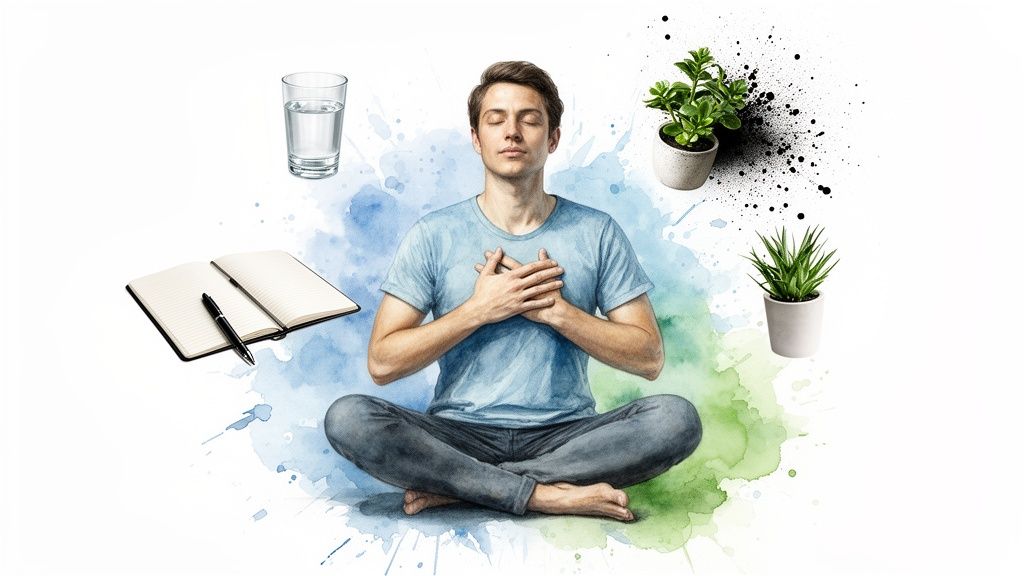
Dealing with the after-effects of a panic attack is all about giving your body and mind the space to come down from that massive adrenaline spike. Think of it as gentle self-care: rest, hydration, maybe a light snack, and using simple grounding techniques to tell your nervous system, "Hey, we're safe now." This is the first step on a hopeful path to reclaiming your peace and living a life free from fear.
Understanding the Aftermath and Your Path to Healing
The moments after a panic attack can feel desolate. Your body is completely drained from what feels like an internal marathon—a state some people call an “adrenaline hangover.” This profound exhaustion is often paired with a lingering dread and the nagging fear of it happening all over again.
It's so important to understand that this experience, while deeply unsettling, is your body's normal response to a perceived emergency. Your internal alarm system just went into overdrive, and these after-effects are just the comedown from that intense peak. You can learn more about this in our guide on the fight-or-flight response.
You are not broken, and you are not alone. The feelings of fragility and exhaustion are temporary signals that your nervous system needs gentle care to reset. This experience is not a sign of weakness but an opportunity to learn how to support your body and mind more effectively on your journey to a panic-free life.
The Hopeful Reality of Recovery
While recovery takes time, the outlook is incredibly hopeful. Research shows that while meaningful recovery can take 3-12 months, the outcomes are overwhelmingly positive for those who get support. A life free from the grip of panic is not just a dream; it's a very real and achievable goal.
A remarkable 60-80% of individuals who engage in targeted therapies achieve significant remission. They drastically reduce the frequency of attacks and get back to living their lives fully. This stands in stark contrast to the 20-40% spontaneous recovery rate for those who try to manage it all on their own, proving that seeking help is a powerful step toward healing.
It's also a common worry that these intense physical feelings might be a sign of a more serious condition. That's why understanding the nuances of differentiating panic attacks from heart issues can be incredibly reassuring.
The key takeaway is this: you hold the power to move forward. By learning structured, practical steps, you can transform this scary experience into a manageable journey toward a life free from fear.
Your First Steps in the Hours After an Attack
In the immediate aftermath of a panic attack, your mind and body feel fragile. The goal right now isn’t to dissect what just happened—it's to gently guide your nervous system back to a place of safety. Treating yourself with deliberate kindness is the very first step toward healing and showing yourself that recovery is possible.
Your body just ran a marathon it didn't sign up for, so physical self-care is a powerful way to signal that the threat is over. Start by sipping some cool water; dehydration can make the post-attack fatigue and brain fog even worse.
Next, find a small, protein-rich snack. A handful of nuts or a piece of cheese can help stabilize your blood sugar, which often takes a nosedive after a massive adrenaline surge.
Once you’ve handled those basics, find a quiet, comfortable space where you won't feel overstimulated. This simple act of creating a safe cocoon honors the massive amount of energy your body just spent and kicks off the recovery process.
Regulate Your Breathing and Ground Yourself
Controlling your breath is one of the fastest ways to tell your nervous system to stand down. Instead of just taking random deep breaths, try a specific technique like the 4-7-8 method, which is known for its ability to calm the vagus nerve.
If you want more structured guidance, our article on breathing exercises for anxiety is a great resource.
The technique itself is simple but incredibly effective:
- Inhale quietly through your nose for a count of four.
- Hold your breath gently for a count of seven.
- Exhale audibly through your mouth for a count of eight.
Repeat this cycle three or four times. That long exhale is a direct message to your brain that the danger has passed, helping to pull you out of fight-or-flight mode.
Next, it's time to reconnect with the world outside your head. The 5-4-3-2-1 method is a classic grounding exercise that yanks your focus away from the internal fear loop and plants it firmly in the present moment by engaging your senses.
- 5: Name five things you can see around you. (Your laptop, a green pen, a crack in the ceiling.)
- 4: Notice four things you can feel. (The soft fabric of your shirt, the cool surface of the table.)
- 3: Listen for three things you can hear. (The hum of the fridge, a car outside, your own breathing.)
- 2: Identify two things you can smell. (The faint scent of coffee, the soap on your hands.)
- 1: Name one thing you can taste. (Leftover toothpaste, the water you just drank.)
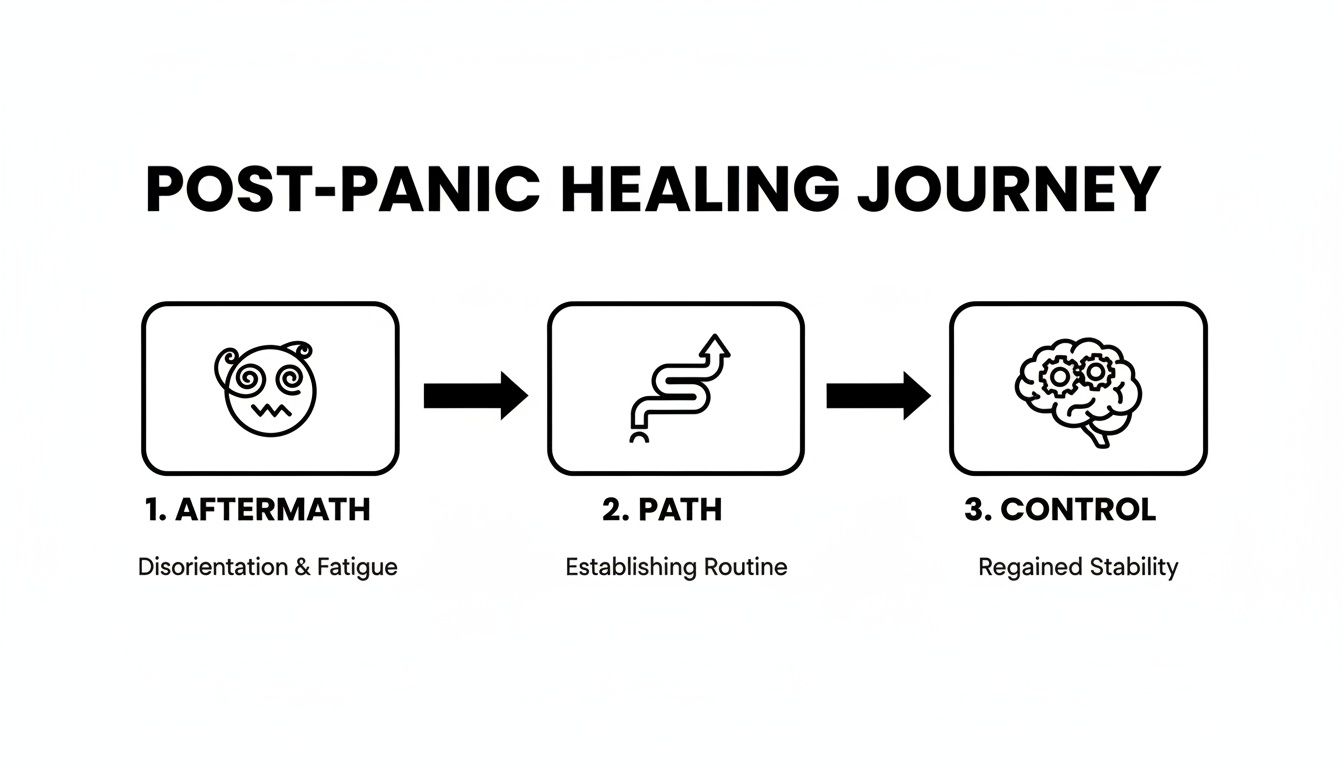
This journey from the dizzying aftermath to regaining control isn't complicated. By taking these gentle, intentional actions, you can steer your mind back to a state of calm. These first few steps are the foundation for deeper healing, proving that you have the power to navigate the after-effects and move toward a brighter, calmer future.
Navigating the Post-Panic Attack Hangover
If you've ever felt completely wiped out the day after a panic attack, you're not just imagining things. It’s often called a “panic hangover,” and it’s a state of profound exhaustion, sore muscles, and brain fog that can linger for hours or even days.
This isn’t just in your head. It's a very real physiological response to the intense stress your body just went through.
During a panic attack, your body floods with stress hormones like adrenaline and cortisol—your survival system kicking into high gear. Once the immediate threat passes and those hormones recede, your body is left to deal with the aftermath of that massive energy dump. The result? You feel depleted, drained, and emotionally raw.
Dealing with these after-effects is a crucial part of recovery, and it all starts with giving yourself permission to simply rest. This is not a setback; it's a necessary step on the path to healing.
Be Gentle with Your Body and Mind
The single most important thing you can do during a panic hangover is to practice genuine self-compassion. Fighting the exhaustion or feeling guilty about needing to slow down will only make the recovery process longer. Your body and mind desperately need time to recalibrate, and by giving them that gift, you are actively healing.
Think of it like recovering from the flu. You wouldn't push yourself to run a marathon or meet a tight deadline, would you? You’d prioritize rest, hydration, and gentle care. The same principle applies here.
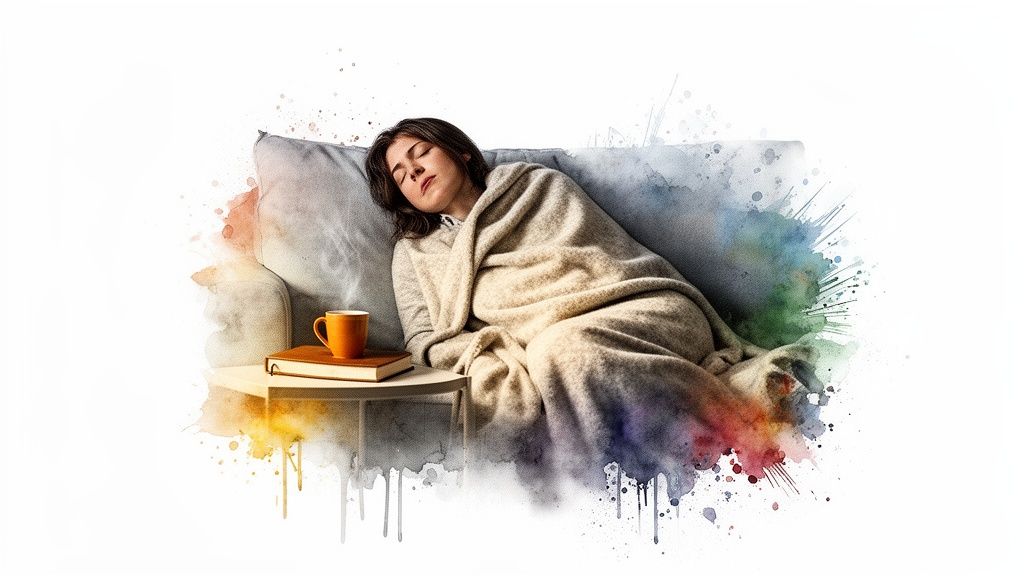
- Prioritize Rest Without Guilt: If you can, cancel non-essential plans. Give yourself permission to nap, lie on the couch with a cozy blanket, or just sit quietly. This isn't laziness; it's an active and necessary part of healing.
- Engage in Gentle Movement: While a strenuous workout is the last thing you need, a slow, gentle walk can be incredibly helpful. Light movement helps your body process and clear out leftover stress hormones, easing muscle tension and clearing some of that brain fog.
- Nourish Yourself: Focus on comforting, easy-to-digest foods. Think warm soups, oatmeal, or a simple protein smoothie. Try to avoid excessive caffeine and sugar, which can jolt your already sensitive nervous system.
The post-panic period is your opportunity to show yourself immense kindness. It's a time for quiet, for nourishment, and for acknowledging the incredible strength it took to get through the attack. This gentle aftercare is what builds the foundation for a panic-free life.
Understanding Your Symptoms and How to Respond
The feelings that come up during a panic hangover can be confusing and frustrating. You might feel irritable for no reason, emotionally fragile, or just plain angry with yourself. Recognizing these experiences as normal symptoms—not personal failings—is key to moving through them with grace.
Our guide on grounding techniques for anxiety can give you more tools for moments when you feel overwhelmed.
To help make sense of it all, I've put together a quick reference guide for common after-effects and how you can respond with care.
Your Post-Panic Recovery Checklist
This checklist is a guide to some of the most common after-effects of a panic attack and targeted strategies to help you recover both physically and emotionally.
| Common After-Effect | What It Feels Like | Actionable Recovery Tip |
|---|---|---|
| Profound Exhaustion | A deep, bone-weary fatigue that rest barely seems to touch. | Take a short 20-30 minute nap. This can restore alertness without messing up your nighttime sleep schedule. |
| Muscle Soreness | Aches and pains in your jaw, shoulders, neck, or back from being so tense. | Take a warm Epsom salt bath. The magnesium is fantastic for soothing sore muscles and calming your nervous system. |
| Brain Fog | Difficulty concentrating, remembering things, or making even simple decisions. | Simplify your to-do list to just one essential task. Postpone everything else. This reduces the mental load and lets your brain recover. |
| Emotional Sensitivity | Feeling weepy, irritable, or easily overwhelmed by small things. | Watch a comforting, familiar movie or listen to calming music. Engaging your senses with something predictable and soothing helps regulate your emotions. |
Remember, these symptoms are temporary. By responding to them with intention and kindness, you’re actively helping your nervous system return to a state of balance and teaching your body that it is safe, strong, and capable of healing.
Rewiring Your Thoughts and Reclaiming Your Mind
Once the physical storm of a panic attack passes, you're often left in a quiet, unnerving stillness. The exhaustion is real, but a new opportunity for healing is just beginning in your mind.
This is where the "fear of the fear" creeps in—that nagging dread that another attack is waiting around the corner, ready to strike. This is the part of panic that can shrink your world, but it's also where you can take your power back and begin to live freely again.
The first step is realizing that your mind’s immediate, panicked thoughts—like "I'm dying" or "I'm losing control"—are just well-worn neural pathways. They're predictable, but they aren't facts. The goal isn’t to silence these thoughts forever. It's to learn how to see them, acknowledge them without getting swept away, and then consciously choose a more grounded, hopeful perspective.
Challenging Catastrophic Thinking
Panic loves to tell dramatic, worst-case-scenario stories. A slight flutter in your chest? Your mind screams "heart attack!" instead of considering that you just had a strong coffee. This is classic catastrophic thinking, and it's a habit you can unlearn, opening the door to a calmer existence.
Cognitive Behavioral Therapy (CBT) offers a brilliant way to do this: become a gentle detective of your own thoughts. When a terrifying thought pops up, don't just accept it. Pause and ask it a few questions.
- "Is there a more realistic way to see this?" Instead of "I can't handle this," try reframing it to, "This feels terrible, but I've survived this feeling before, and I will again. Each time, I get stronger."
- "What's the evidence that this thought is 100% true?" Think about it. You've had these symptoms before, and the disaster you feared never actually happened. That's some powerful evidence right there that you are safe and resilient.
- "What would I tell a friend thinking this?" You’d probably offer a kind, balanced perspective full of hope. It's time to offer that same compassion to yourself.
Getting good at spotting these mental traps is a game-changer. If you want to go deeper, you can learn more about common cognitive distortions in our guide.
The journey to a panic-free life isn't about eliminating anxiety; it's about proving to yourself, through consistent practice, that you are more capable and resilient than your fear tells you. Every time you challenge a thought, you are paving a new path toward freedom.
Getting Comfortable with Your Body’s Sensations
A core part of long-term recovery is gently teaching your brain that physical sensations aren’t threats. This process, called interoceptive exposure, sounds intense, but it’s actually about proving to yourself that a racing heart is just… a racing heart. It is the key to breaking the cycle of fear.
You can practice this in small, manageable ways. For example, try running in place for 30 seconds to get your heart rate up on purpose. Then, just sit with that feeling. Breathe through it and tell yourself, "This is just my body responding to exercise. I am safe."
This simple exercise starts to build a new association in your brain, breaking the automatic link between a physical sensation and a full-blown panic response. Over time, a racing heart no longer signals doom. This process is incredibly empowering, and the data backs it up. A remarkable 70-90% of people who complete CBT for panic see major improvements, often becoming panic-free for the long haul. Many find relief starts in just a few sessions, with full recovery often happening within 8-12 sessions. There is so much hope for a future without panic.
Building a Proactive Anti-Anxiety Lifestyle

True freedom from panic isn't just about knowing how to handle an attack when it hits. It's about building a life where they're less likely to happen in the first place. Dealing with the aftermath is reactive; the real path to a panic-free life is proactive.
It's about creating such a strong foundation of well-being that your baseline anxiety drops, making you far less vulnerable to future episodes.
This shift from damage control to intentional self-care is where you truly reclaim your power. You start building a lifestyle where your nervous system isn’t constantly on high alert, creating a buffer that can absorb life's curveballs without tipping you over the edge into panic.
Hope is not a passive wish; it's an active practice. Building an anti-anxiety lifestyle is a profound act of hope, proving to yourself every day that a calm, confident, and panic-free life is not only possible but achievable.
This journey is all about making small, sustainable changes that add up over time. You’re not just recovering from past attacks; you are actively shaping a future where they no longer call the shots.
The Core Pillars of Resilience
This foundation rests on four core pillars. They all work together, creating a powerful synergy that strengthens your nervous system and builds lasting resilience against anxiety.
- Restorative Sleep: Let's be honest, poor sleep is a massive trigger for anxiety. When you're running on empty, your brain's emotional control center goes into overdrive. Prioritizing 7-9 hours of quality sleep every night isn't a luxury—it's non-negotiable for managing anxiety.
- Nourishing Diet: What you eat directly feeds your mood. A balanced diet full of whole foods, protein, and healthy fats helps stabilize your blood sugar and support your brain. Cutting back on excessive caffeine and sugar is also key to avoiding those energy spikes and crashes that feel dangerously similar to panic.
- Consistent Movement: Physical activity is one of the most effective tools we have. Exercise helps your body burn off stress hormones like cortisol and adrenaline, all while releasing endorphins—your body’s natural mood boosters. The trick is to find something you actually enjoy, whether it’s walking, dancing, or yoga, so it doesn't feel like a chore.
- Mindful Stress Reduction: You don't need to become a monk, but incorporating daily practices like mindfulness or journaling helps you process stress before it boils over. Even just 5-10 minutes a day can train your brain to respond more calmly to triggers instead of reacting with fear.
Getting your sleep habits in order is a great place to start. For a deep dive, check out these 10 refined sleep hygiene tips. By focusing on these pillars, you're not just coping—you're actively building a life of peace and freedom, one healthy choice at a time.
Knowing When to Seek Professional Support
While self-care strategies are powerful tools in your toolkit, reaching out for professional support is a sign of profound strength and a hopeful step toward lasting healing. It’s a brave move toward reclaiming your life, especially when the aftershocks of a panic attack feel like too much to handle alone.
You don’t have to wait for a full-blown crisis to get help. Consider seeking support if panic attacks are happening more often, or if you find yourself starting to avoid places or situations out of fear. When anxiety consistently gets in the way of your work, relationships, or your ability to simply enjoy your day, that’s a clear signal an expert guide can make a huge difference.
The Power of Guided Healing
Therapy offers a structured, supportive space to heal. A professional trained in methods like Cognitive Behavioral Therapy (CBT) can give you a clear roadmap to recovery. This isn’t a sign of failure—it's an act of hope. You're partnering with someone who has the tools to help you get there faster and live the life you deserve. For a deeper dive, check out our guide on psychotherapy for anxiety.
The data here is incredibly encouraging. Panic disorder is one of the most treatable anxiety conditions out there, with 70-90% of people seeing major improvements through therapy, often leading to a panic-free life.
Research shows that while 75% of people with panic disorder (without agoraphobia) recover, that number drops to just 22% for those who also struggle with avoidance behaviors. This really highlights how critical professional intervention is for breaking the cycle and truly healing. There is no shame in asking for help; it is the most courageous step you can take.
Ultimately, up to 96.1% of those with agoraphobia eventually seek treatment, which underscores the universal need for support on this journey. Discover more insights on anxiety recovery from the World Health Organization.
Still Have Questions About Panic Attack Recovery?
It's completely normal to have a ton of questions swirling around in your head after a panic attack. Making sense of what just happened to your body and mind is a huge step toward getting back in the driver's seat and believing in your ability to heal.
How Long Does This Exhaustion Last?
That bone-deep exhaustion you're feeling? It's often called a "panic hangover," and it's very real. It can stick around for a few hours or even a couple of days.
How long it lasts really depends on how intense the attack was and your overall physical health. Be kind to your nervous system. Give yourself permission to rest, sleep, stay hydrated, and maybe try some very gentle movement when you feel up to it. It will pass, and you will feel strong again.
Is It Normal to Feel So Detached and Unreal?
Yes, absolutely. What you're experiencing is likely derealization (where your surroundings feel strange or unreal) or depersonalization (that unnerving feeling of being detached from yourself).
Think of these as your brain's emergency brakes. It’s a protective mechanism it uses to cope with overwhelming fear. As your anxiety levels come back down, these feelings will fade. Grounding techniques are a game-changer for this, helping you reconnect to the present moment and feel safe.
The most important thing to remember is that you can heal. With the right tools and consistent practice, you can transform your relationship with fear and build a life that isn't defined by the threat of another attack. A calm and joyful life is within your reach.
Can I Stop Panic Attacks From Happening Ever Again?
While no one can promise you'll never feel a moment of panic again, you can absolutely get to a place where they don't control your life. This is the hopeful reality of recovery.
The goal isn't to eliminate all fear—it's to build resilience. By using the right cognitive strategies, making smart lifestyle adjustments, and having coping tools ready, you can dramatically reduce how often attacks happen and how intense they are when they do. This is how you build a full, confident, and panic-free life.
Ready to start building your toolkit? The Anxiety Checklist is a structured, no-fluff system designed to help you understand your triggers, challenge anxious thoughts, and get back in control. Check it out here and grab your copy.