
Feeling overwhelmed, on edge, or constantly worried can be incredibly confusing. You might wonder if what you're experiencing is just a normal reaction to life's pressures or something more. The good news is that getting clear on the difference is the first, most powerful step toward regaining control and realizing that a calm, panic-free life is entirely possible.
Untangling Stress from Anxiety: A Clear Path to Relief
Here’s the fundamental difference: stress is a reaction to a specific, external trigger, while anxiety is a persistent feeling of dread that can linger even when no clear threat is present. Recognizing this distinction is the key to finding lasting relief.
While stress and anxiety can feel similar, their roots and timelines are different. Stress is your body's response to an identifiable challenge, like a looming deadline at work or a difficult conversation. Once the challenge passes, the stress usually subsides.
Anxiety, on the other hand, often sticks around. It’s the worry that remains after the stressful event is over, or the apprehension that bubbles up for no apparent reason. Living a calmer, panic-free life is an achievable goal, and the journey begins with this understanding.
Quick Guide: Stress vs. Anxiety at a Glance
To give you an immediate framework, this table highlights the core differences between stress and anxiety. Think of it as a quick reference to help you start identifying what you're feeling in the moment.
| Characteristic | Stress | Anxiety |
|---|---|---|
| Primary Cause | Caused by a specific, external trigger (e.g., a big project, a difficult conversation). | Often internal; may persist without a clear, identifiable trigger. |
| Duration | Generally short-term; resolves once the stressor is gone. | Can be long-term and persistent, lasting for weeks, months, or longer. |
| Emotional Focus | Primarily involves worry, irritability, and frustration related to the present challenge. | Characterized by apprehension, dread, and worry about future, often hypothetical, events. |
| Scope | A normal, and sometimes even helpful, part of the human experience. | Can become a clinical condition when it is excessive and impairs daily functioning. |
This at-a-glance comparison helps illustrate how a temporary response to a threat (stress) differs from a more sustained state of apprehension (anxiety).
The following chart further visualizes the key distinctions between these two common experiences.
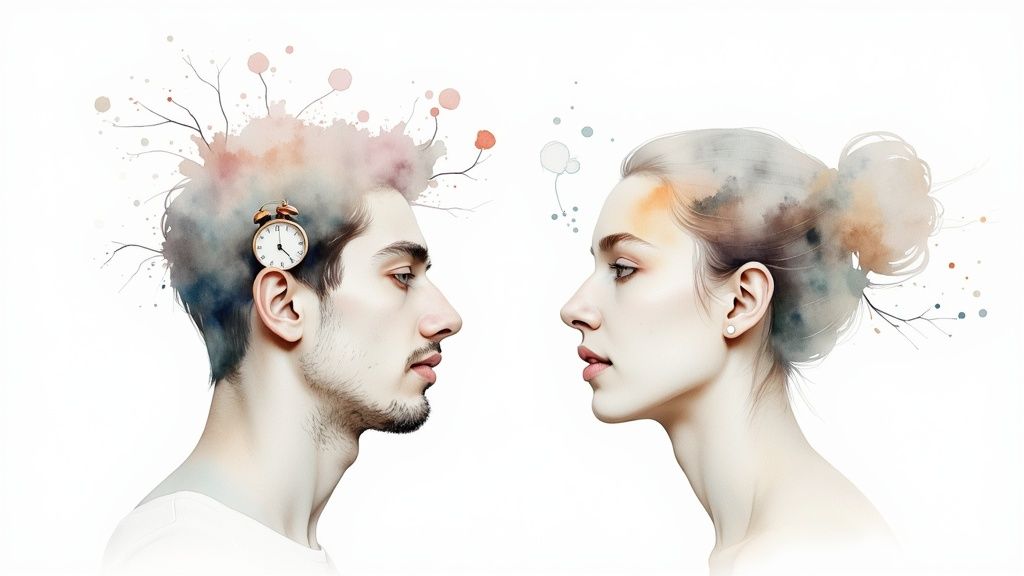
This visual reinforces a crucial insight: stress is a direct reaction to a known threat, whereas anxiety is more diffuse and can feel untethered from any specific situation. This helps explain why anxiety can feel so confusing and hard to control. While stress has a clear endpoint, anxiety can feel like a cycle that’s difficult to break—but it is a cycle that can be broken.
The most important thing to remember is that both are manageable. Understanding the differences is not just an academic exercise—it is the first step toward choosing the right strategies to find relief and heal.
These conditions have a significant global impact. Global data show that mental health disorders, including anxiety and depression, affect over 1 billion people, highlighting just how common these challenges are and that you are not alone.
For those whose feelings of unease persist and begin to interfere with daily life, it might be beneficial to explore the different types of anxiety disorders and understand their specific symptoms.
The Science Behind Your Body's Alarm System
When your heart suddenly pounds, your breathing goes shallow, or your muscles clench up, it's easy to think something is terribly wrong. It can feel terrifying and completely out of your control. The truth, though, is that these intense physical sensations are rooted in your body's brilliant, ancient survival mechanism—an alarm system designed to protect you, not harm you.
Understanding the science behind this system is a profound first step toward healing. It demystifies the scary physical symptoms, transforming them from a source of fear into a biological process you can actually learn to manage. This knowledge is empowering. It’s the starting point for feeling safe and in control again, reinforcing that a panic-free life is absolutely possible.
The Fight or Flight Response Explained
At the very core of both stress and anxiety is the fight-or-flight response. When your brain perceives a threat—whether it’s a real, immediate danger like a swerving car or a perceived one like an upcoming presentation—it triggers a powerful cascade of physiological changes. This whole operation is run by a part of your nervous system called the sympathetic nervous system.
In an instant, your adrenal glands release a cocktail of potent hormones, mainly adrenaline (epinephrine) and cortisol. Think of these as chemical messengers putting your entire body on high alert.
- Adrenaline jacks up your heart rate to pump more blood to your muscles and brain, sharpens your senses, and gives you a massive surge of energy.
- Cortisol, often called the "stress hormone," floods your bloodstream with sugar for quick fuel and shuts down non-essential functions like digestion.
These changes happen in a split second. Their one and only job is to prepare you to either confront the danger (fight) or get the heck out of there (flight).
How Stress and Anxiety Hijack the System
In the context of short-term stress, this alarm system works perfectly. You face a specific challenge, your body gears up to handle it, and once the threat is gone, your parasympathetic nervous system kicks in to calm everything back down. Problem solved.
The real issue arises when this system doesn't shut off.
Anxiety is what happens when this alarm system becomes overly sensitive—like a smoke detector that goes off every time you make toast. It activates without a real, present danger, leaving you stuck in a prolonged state of high alert.
When that happens, the physical sensations of fight-or-flight—the racing heart, dizziness, and muscle tension—don't fade away. You're not just "in your head"; your body is genuinely experiencing a biological state of emergency.
Recognizing that these symptoms are your body's protective response, albeit a misguided one, can dramatically reduce the fear that comes with them. You can start to see them not as a sign of impending doom, but as a signal that your internal alarm system just needs a bit of recalibration.
New research continues to explore the long-term effects of chronic anxiety on physical health, highlighting just how crucial it is to manage this response for your overall well-being.
This biological understanding is where hope truly begins. By learning techniques to soothe your nervous system, you can start to teach your body that it is safe. For a deeper dive into how this mechanism works and how to start managing it, our complete fight or flight response guide offers practical insights and strategies. Healing from anxiety isn't about eliminating this response—it's about learning to work with it, restoring balance, and reclaiming your sense of peace.
Comparing Symptoms: A Detailed Breakdown for Clarity
Trying to tell the difference between stress and anxiety can feel like untangling a knotted pair of headphones. Both can leave you feeling tense, wired, and completely worn out. But if you look closely at the physical, emotional, and cognitive signals, you can start to see the distinctions.
Getting this clarity isn't just about putting a label on what you're feeling. It’s about empowerment. When you know exactly what’s happening in your body and mind, you can start using the right strategies to calm your nervous system and get back in the driver's seat.
Emotional and Cognitive Symptoms
Emotionally, stress usually shows up as irritability, frustration, or feeling overwhelmed by something specific. You might find yourself with an incredibly short fuse while scrambling to meet a project deadline, but that tension usually melts away once you hit "send." The feeling is directly tied to that external pressure.
Anxiety, on the other hand, often feels different. It's more of a persistent, lingering sense of dread, apprehension, and excessive worry that isn't always connected to a clear trigger. You might catch yourself catastrophizing about the future or replaying old conversations, even when there’s no immediate threat. This state of mind can make it feel impossible to ever truly relax or feel safe.
The real emotional difference comes down to context. Stress is a reaction to something happening now. Anxiety is often an internal state of apprehension about what might happen, creating a cycle of worry that can feel endless—but is absolutely breakable.
Physical Manifestations in the Body
Both stress and anxiety fire up your body’s internal alarm system, which is why they share so many physical symptoms, like a racing heart, stomach issues, and trouble sleeping. The devil, however, is in the details.
Physical symptoms from stress are typically temporary. You might get a tension headache after a marathon of Zoom meetings or feel exhausted from juggling too many tasks. These are just signs that your body is working overtime to deal with what’s right in front of you.
The physical signs of anxiety can feel much more intense and often seem to come out of nowhere. They might include:
- Trembling or shaking that appears for no obvious reason.
- Shortness of breath or a choking sensation, even when you're just sitting still.
- Dizziness or lightheadedness that makes you feel disconnected from your body.
- Sudden sweating or chills that aren't related to the temperature.
These symptoms aren't just "in your head"; they are very real physiological responses. This diagram shows how the brain kicks off a hormonal cascade, releasing adrenaline and cortisol that drive these powerful reactions in the body.
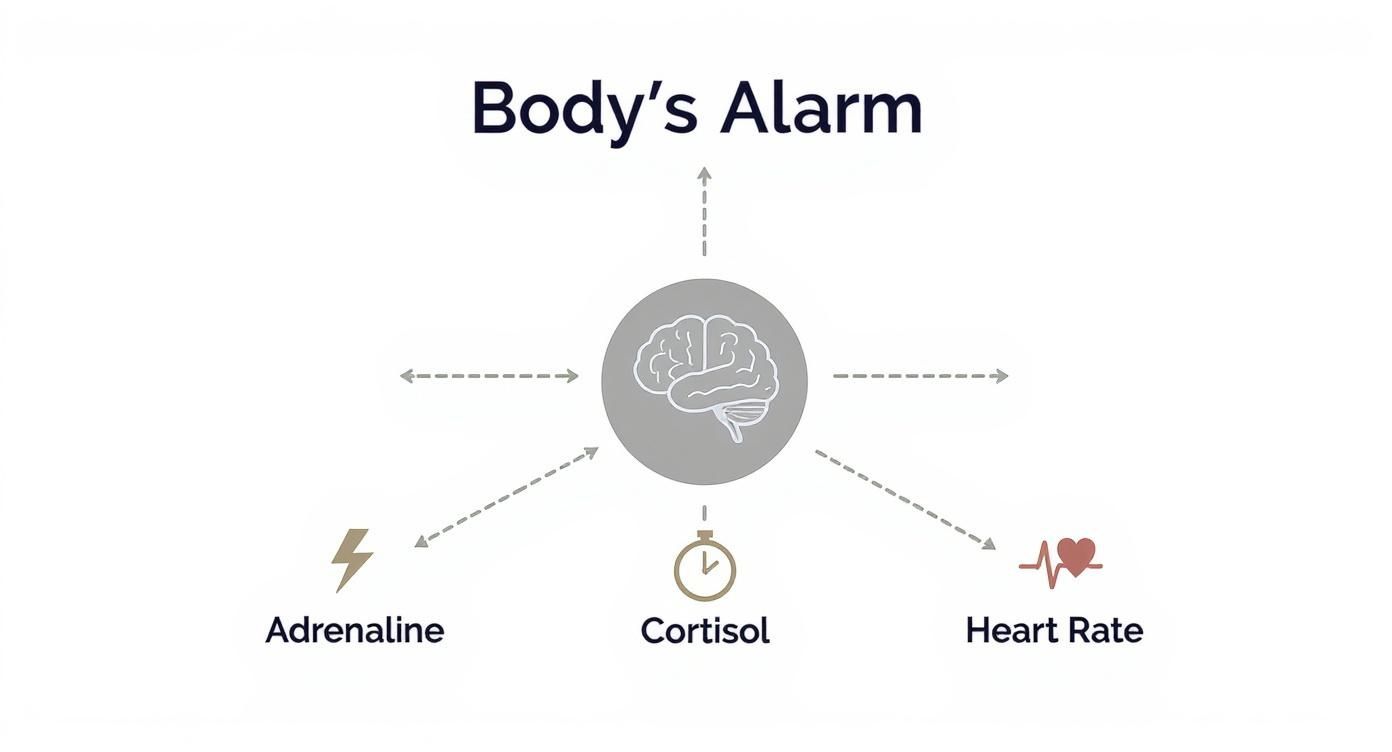
As you can see, it doesn’t matter if the trigger is a real threat or just a perceived one—the body’s response is identical. This is why the physical sensations of anxiety can feel just as intense and frightening as acute stress.
Symptom Comparison: Physical, Emotional, and Cognitive Signs
To give you a clearer picture, let's lay out the symptoms side-by-side. Use this table to help pinpoint what you're experiencing with a bit more accuracy.
| Symptom Category | Common in Stress | Common in Anxiety | Overlap Area |
|---|---|---|---|
| Physical | Headaches, muscle tension (especially neck and shoulders), fatigue, temporary digestive upset. | Trembling, sweating, shortness of breath, dizziness, persistent feelings of physical tension. | Rapid heartbeat, sleep problems (difficulty falling or staying asleep), changes in appetite. |
| Emotional | Irritability, frustration, mood swings directly related to the stressor, feeling overwhelmed. | Persistent worry or fear, a sense of dread, feeling constantly "on edge," panic. | Restlessness, difficulty relaxing, feeling emotional or tearful. |
| Cognitive | Difficulty concentrating on the current task, forgetfulness related to being preoccupied. | Catastrophizing (imagining the worst-case scenario), racing thoughts, inability to control worry. | Difficulty focusing, being easily distracted, negative thought patterns. |
Think of this breakdown as a tool for self-awareness. Recognizing these patterns is the very first step toward managing them. If your symptoms seem to lean more toward anxiety and feel tough to get a handle on, taking a structured assessment like this free GAD-7 anxiety test can give you a better understanding of their severity.
It’s crucial to remember that anxiety disorders are incredibly common, standing as the most prevalent mental health condition worldwide and affecting an estimated 4.4% of the global population. And while effective treatments exist, only about 27.6% of people ever get help. Learning about these global anxiety statistics can be a powerful reminder that you are not alone in this. Clarity is where the journey toward healing and a life free from constant worry begins.
Recognizing When to Seek Professional Support
While juggling day-to-day stress is a normal part of life, there comes a point when the weight feels too heavy to carry alone. The line between manageable stress and a more serious anxiety condition can feel blurry, but learning to spot the difference is a crucial—and hopeful—step toward feeling better.
Deciding to ask for help isn't a sign of weakness. It's a powerful act of self-care and courage.
Living with constant worry is exhausting, but it’s so important to remember that a life free from panic is entirely possible. Effective treatments are available, and compassionate professionals can guide you back to a place of balance. You don't have to walk this path by yourself.
Red Flags That Signal It's Time for Help
It's often hard to know if what you're feeling is "bad enough" to see a professional. If any of the following signs feel familiar, it’s a clear signal that reaching out could bring you significant relief.
These are the red flags that suggest stress might be crossing the line into an anxiety disorder:
- Disproportionate Reactions: Your emotional or physical response feels much bigger than the situation that caused it. A minor email at work, for example, sends you into a spiral of dread that lasts for hours.
- Persistent Worry After the Stressor Is Gone: The stressful event is over, but the feelings of tension, worry, and fear stick around. You feel stuck on high alert long after the "threat" has passed.
- Significant Interference with Daily Life: Your symptoms are making it hard to function at work, keep up with friends, or even manage basic household chores. You might start avoiding situations that could trigger these feelings.
If these experiences resonate with you, it’s a strong sign that professional support could make a profound difference. You don't have to wait until you hit rock bottom to ask for help.
Taking That First Brave Step
The idea of seeking professional help can feel intimidating, especially with the stigma that still surrounds mental health. But taking that first step is an investment in your own well-being and a testament to your strength. The journey to recovery is built on small, consistent, and compassionate actions.
Seeking support is a proactive and courageous move. It’s about equipping yourself with the right tools and guidance to heal, demonstrating a powerful commitment to your own health and happiness.
It's also helpful to see these struggles in a bigger context. Over the last three decades, anxiety disorders have been on the rise worldwide. Between 1990 and 2021, the prevalence among women of childbearing age alone jumped by 77%, from 78.1 million to 138.3 million cases globally. This isn't just a personal battle; it's a widespread and growing challenge.
There are many paths to support, from therapy and counseling to medical guidance. If you're considering specialized care, learning how to find a qualified psychiatrist for anxiety can be a great place to start. Remember, effective treatments exist, and a life free from the grip of constant panic is well within your reach.
Actionable Steps Toward a Panic-Free Life
Knowing the difference between stress and anxiety is a great first step, but that knowledge only becomes powerful when you put it into action. This is where the real work—and the real hope—begins.
The path to a calmer, more present life isn’t about discovering some magic cure. It’s about taking small, consistent steps that build resilience day by day. You have the capacity to heal and find your footing again. The strategies below aren’t just theories; they are practical, evidence-based tools you can start using today to build a more stable foundation, one compassionate action at a time.
Build Your Foundation with Lifestyle Adjustments
Your mental and physical health are deeply intertwined. Before jumping into targeted cognitive techniques, it’s crucial to give your body the resources it needs to manage the physiological side of stress and anxiety.
Think of these foundational habits as a buffer. Simple adjustments to your daily routine can have a profound impact on your nervous system, creating an internal balance that makes it much easier to cope when life throws challenges your way.
Start by focusing on these key areas:
- Targeted Nutrition: What you eat directly fuels your mood and energy. Focus on a balanced diet rich in whole foods, and be mindful of stimulants like caffeine and sugar, which can easily mimic or worsen anxiety symptoms.
- Sleep Hygiene: Quality sleep is non-negotiable for a healthy mind. Aim for 7-9 hours a night, create a calming bedtime routine, and try to limit screen time before bed to give your brain a chance to wind down.
- Regular Movement: Physical activity is one of the most powerful natural antidotes to both stress and anxiety. It helps your body metabolize stress hormones like cortisol and releases mood-lifting endorphins. Even a brisk 10-minute walk can make a real difference.
Master the Moment with Mindfulness Techniques
When your thoughts are racing and your body feels tense, mindfulness practices can pull you back into the present moment, effectively breaking the worry cycle. These techniques anchor you in the here and now, which sends a signal to your body’s alarm system that you are safe.
These are more than just relaxation exercises; they are skills that, with practice, retrain your brain to respond to stress differently. The more you use them, the more instinctual they become when you need them most.
The goal of mindfulness isn't to empty your mind—that’s impossible. It’s about learning to observe your thoughts without getting tangled up in them. This simple shift in perspective can release you from the grip of catastrophic thinking.
Here are two powerful techniques to get you started:
- Grounding Exercises: When you feel that sense of overwhelm creeping in, reconnect with your senses using the 5-4-3-2-1 method. Name five things you can see, four things you can touch, three things you can hear, two things you can smell, and one thing you can taste. This technique immediately pulls your attention out of your head and into your physical environment.
- Deep Breathing: Deliberate, slow breathing is one of the quickest ways to soothe your nervous system. Inhale slowly through your nose for a count of four, hold your breath for four, and then exhale slowly through your mouth for a count of six. To learn more powerful methods, check out these different breathing exercises for anxiety that can offer immediate relief.
Reframe Your Mind with Cognitive Tools
A huge part of the suffering that comes with anxiety stems from negative thought patterns that have become automatic. Cognitive tools, the heart of Cognitive Behavioral Therapy (CBT), empower you to catch, challenge, and reframe these unhelpful thoughts.
Start by becoming a detective of your own mind. When you feel a spike of anxiety, pause and ask yourself: What thought just went through my head? Once you’ve identified it, you can start to question whether it’s actually true.
For those whose anxiety centers on health-related worries, learning how to stop health anxiety can provide targeted strategies for that specific thought loop.
Remember, every small step you take to challenge a negative thought weakens its hold over you. Healing is a journey of consistent effort, and a full, panic-free life is absolutely an achievable reality.
Common Questions
Trying to figure out the line between stress and anxiety can bring up a lot of questions. Getting clear answers is a huge step toward feeling better—it reminds you that healing is absolutely possible and you can live a calmer, more fulfilling life.
Can Chronic Stress Turn into an Anxiety Disorder?
Yes, it can. In fact, long-term or chronic stress is one of the biggest risk factors for developing an anxiety disorder. When your body's stress response system is always firing without a chance to reset, it can get thrown out of whack.
Essentially, your internal alarm system can get stuck in the "on" position. This leads to persistent feelings of worry and dread, even when there’s no clear external threat. If you notice those feelings of fear sticking around long after a stressful period has ended, it might be a sign that stress has tipped over into an anxiety disorder. The hopeful news is that this is treatable, and you can learn to regulate your nervous system again.
Are Treatments for Stress and Anxiety the Same?
While a lot of powerful self-care strategies overlap, the core focus of treatment is often different. Stress management usually centers on tackling the external trigger—things like improving your work-life balance or learning better problem-solving skills to deal with a specific challenge.
Treatment for an anxiety disorder, on the other hand, might involve more targeted therapies like Cognitive Behavioral Therapy (CBT). The goal here is to identify and reframe the internal thought patterns that are fueling the anxiety cycle. But no matter the diagnosis, foundational habits like regular exercise, quality sleep, and mindfulness are incredibly effective for managing both and building resilience for a panic-free life.
How Can I Tell a Panic Attack from Extreme Stress?
The real difference comes down to intensity and sudden onset. Extreme stress is a heightened response to a trigger you know is there, but it doesn't usually have the abrupt, overwhelming terror of a panic attack.
A panic attack is a sudden surge of intense fear that peaks within minutes. It brings on severe physical symptoms like a pounding heart, shortness of breath, dizziness, and a profound feeling of losing control or impending doom.
While a highly stressful event can definitely trigger a panic attack, the attack itself is a distinct and much more intense physiological and psychological experience. Knowing the difference is crucial for getting the right kind of support and understanding that what you're going through is manageable. A life without panic is an achievable goal.
Feeling overwhelmed is tough, but you don’t have to figure this out alone. The Anxiety Checklist gives you a structured, step-by-step system to help you understand your anxiety, challenge those negative thought patterns, and build practical skills for a calmer life. Start your journey toward fearless living today by visiting https://anxietychecklist.com.