
Distress tolerance is your ability to get through an intensely painful moment without doing something to make it even worse. It’s not about pretending the pain isn’t there; it’s about learning how to navigate it so you can endure the storm and find calm on the other side. This is a skill you can absolutely learn, and it's a clear path toward healing from anxiety and living a life free from panic.
The Hopeful Path to Managing Intense Emotions
Imagine your emotions are like the ocean. Some days, the water is calm and serene. Other days, a storm rolls in, bringing towering waves of panic, anxiety, or despair.
When you’re caught in that storm, your first instinct is probably to fight the waves, try to escape the water, or just freeze and hope it all passes. But what if you could learn to surf?
That’s the essence of distress tolerance. Think of it as your personal "emotional surfboard"—a set of skills that helps you ride the waves of intense feelings without getting pulled under. It’s a powerful shift from feeling helpless to feeling capable, and it’s the foundation for healing.

Why This Skill Is Your First Step to Freedom
For anyone who’s felt trapped by anxiety or panic attacks, the cycle can feel endless. An intense feeling pops up, you react impulsively to make it go away, and in the process, the underlying fear just gets stronger. This is where hope begins.
Distress tolerance breaks this cycle. It creates a crucial pause between feeling an emotion and acting on it, giving you your power back.
This skill is about recognizing that while pain is a part of life, suffering doesn't have to be. By building your tolerance for discomfort, you can:
- Prevent impulsive reactions: Stop making decisions in moments of panic that you later regret.
- Increase emotional resilience: Bounce back from setbacks more quickly and with greater strength.
- Build self-trust: Prove to yourself that you can handle difficult emotions, which reduces the fear of the feelings themselves and opens the door to a panic-free life.
Understanding the Core Concept
Distress tolerance skills, which gained prominence in the early 2000s, are all about your capacity to withstand negative emotional and physical states. It covers both your perceived ability to handle stress and the actual behavioral skills you use to endure it.
Let's break down the core ideas behind this powerful, hopeful approach.
| Core Principles of Distress Tolerance |
|---|
| Principle |
| Pain is Unavoidable |
| Acceptance, Not Approval |
| Surviving the Moment |
| Radical Genuineness |
| Building Trust in Yourself |
These principles aren't about becoming emotionless. Far from it. They're about learning to sit with your feelings, honor them, and still make wise choices that align with the life you want.
The goal is to learn how to sit with your feelings, honor them, and still make wise choices that align with the life you want to live. This is the foundation for living panic-free.
Ultimately, learning distress tolerance is an act of profound self-care. It’s a message of hope that you are not broken; you simply need the right tools. With these skills, you can begin to see that even the biggest emotional waves eventually pass, leaving you stronger and more confident in your ability to handle whatever comes next. Understanding the role of psychotherapy for anxiety can also provide a structured path for building these life-changing skills.
Recognizing Your Current Coping Patterns
Before you can build a new set of emotional skills, you have to get honest about what you're already doing. Think of it like mapping a route—you can’t get where you want to go until you know exactly where you're starting from. This isn’t about judging yourself; it’s about getting curious and paying attention with a hopeful eye toward change.
Most of our reactions to stress are completely automatic, learned over years without us even realizing it. These knee-jerk responses are usually just our brain’s attempt to escape a painful feeling as fast as possible. By simply noticing these patterns, you create a tiny but powerful gap between the feeling and your reaction. In that gap, you find the freedom to choose a different, more healing path.
Common Signs of Low Distress Tolerance
When a sudden wave of anxiety, frustration, or sadness hits, do any of these reactions feel familiar? Seeing yourself here isn't a sign of weakness—it’s the first step toward taking your power back and creating a future free from panic.
- Avoidance: The second an uncomfortable feeling pops up, you grab your phone to scroll, flip on the TV, or find some random task to busy yourself with.
- Emotional Outbursts: You snap at a loved one over something small, and your angry reaction feels way out of proportion to what actually happened.
- Numbing Behaviors: You find yourself turning to food, alcohol, or other substances to just dull the emotional static in your head.
- Impulsive Decisions: You make rash choices—like sending a text you’ll regret or quitting a project midway through—just to make the discomfort stop.
- Mental Rumination: You get stuck in a worry loop, replaying conversations or imagining worst-case scenarios over and over again. Many of these thought patterns are actually cognitive distortions you can learn to challenge.
Spotting these automatic responses is huge. It allows you to see them not as personal failures, but as learned habits. And if they were learned, they can be unlearned. This awareness is where your power to heal begins.
The Science Behind Your Reactions
When you understand why your brain does what it does, it's a lot easier to change the script. Research has shown that distress tolerance isn't just one thing; it's made up of two distinct parts: your perceived ability to handle a feeling, and your actual behavioral response when you’re in it.
A landmark review from 2008 laid this out clearly. You can find more details on these psychological dimensions from the National Library of Medicine, but the takeaway is simple: there’s often a huge gap between thinking you can't handle something and your true capacity to get through it.
This is incredibly hopeful. It means that even if you feel like you can’t possibly tolerate a difficult emotion, you can learn behaviors that prove otherwise.
Every single time you choose a new coping skill over an old, reactive habit, you are actively strengthening both your real and perceived tolerance for distress. This is how you build unshakable trust in yourself and start paving the way to a life free from panic.
Your Practical Toolkit for Emotional Storms
When an emotional storm hits, having a practical toolkit can be the difference between being swept away and finding solid ground. These skills, drawn from Dialectical Behavior Therapy (DBT), aren't complex theories; they are simple, actionable tools designed to help you survive a crisis moment without making it worse.
Think of them as your emotional first-aid kit, filled with hope and practical help.
The goal isn't to solve the big problem right now. The only goal is to get through the next few minutes or hours with your well-being intact. Let's unpack the four core strategies that will become your go-to resources for navigating intense feelings and building a calmer life.
Distract with Purpose Using ACCEPTS
Distraction often gets a bad rap, but when used strategically, it’s a powerful tool to interrupt a spiral of panic. The key is to engage your mind and body so fully that there’s no room left for the distressing thought to dominate. The acronym ACCEPTS provides a menu of options.
- Activities: Immerse yourself in a task. This could be anything from solving a puzzle or playing a video game to cleaning out a closet. The focus required shifts your brain away from the emotional pain.
- Contributing: Do something for someone else. Call a friend to see how they're doing, do a favor for a neighbor, or volunteer. Shifting your focus to others can instantly change your perspective.
- Comparisons: Gently remind yourself of a time you handled a similar or even tougher situation. This isn't about invalidating your current pain but about remembering your own strength and resilience.
- Emotions: Create a different feeling. Watch a funny movie, listen to an uplifting playlist, or read a chapter from an exciting book to intentionally generate a competing emotion.
- Pushing Away: Temporarily shelve the problem. Visualize putting the distressing thoughts in a box and placing it on a high shelf. You can decide to come back to it later, when you feel calmer and more equipped to handle it.
- Thoughts: Occupy your mind with something neutral. Count backward from 100 by sevens, recite song lyrics, or try to name all the states in alphabetical order.
- Sensations: Use intense physical sensations to ground you in the present. Hold an ice cube in your hand, take a cold shower, or bite into a lemon.
Soothe Your Five Senses to Find Calm
When you’re overwhelmed, your senses can be a direct pathway to calm. The goal is to create a comforting, soothing experience that helps regulate your nervous system. Many people find it helpful to create a physical "sensory kit"—a box filled with items that engage each sense.
Think of self-soothing as a kind and gentle act of self-parenting. It’s about giving yourself the comfort you need in a moment of intense pain, just as you would for a loved one. This is an act of healing.
Here are some ideas to get you started:
- Sight: Look at beautiful photos of nature, watch a candle flicker, or organize a space so it looks clean and orderly.
- Hearing: Listen to calming music, nature sounds like rain or ocean waves, or a comforting podcast.
- Smell: Light a scented candle, use an essential oil diffuser with lavender or chamomile, or bake cookies to fill your home with a warm aroma.
- Taste: Sip a warm, non-caffeinated beverage. For a gentle approach to calming your system, consider incorporating specific teas that relax body and mind. Mindfully savor a piece of dark chocolate.
- Touch: Wrap yourself in a soft blanket, pet your dog or cat, take a warm bath, or apply a soothing lotion. For more direct physical calm, explore other grounding techniques for anxiety that use touch and sensation.
Improve the Moment with IMPROVE
Sometimes, you can’t change the overall situation, but you can make the current moment just a little bit better. The IMPROVE skills are small adjustments that can have a surprisingly large impact on your emotional state.
- Imagery: Close your eyes and visualize a safe, peaceful place in vivid detail. Imagine the sights, sounds, and smells.
- Meaning: Find a small bit of purpose or meaning in the pain. Maybe this experience will help you be more compassionate to others in the future.
- Prayer or Spirituality: Connect with a higher power or your own spiritual beliefs for strength and hope.
- Relaxation: Consciously relax your muscles, from your toes to your forehead. Breathe deeply and slowly.
- One Thing in the Moment: Bring your full attention to the present. Notice the feeling of your feet on the floor or the air on your skin.
- Vacation: Take a brief mental break. Give yourself permission to not think about the problem for a set period, like 15 minutes.
- Encouragement: Be your own cheerleader. Tell yourself, "I can handle this," "This feeling will pass," and "I am strong enough to get through this."
Weigh the Pros and Cons
This final skill is about staying committed to your long-term goals. When the urge to act on a destructive impulse is sky-high, quickly run through the pros and cons of both acting on the urge and resisting it.
This simple mental exercise creates just enough space to make a wiser choice—one that aligns with the calmer, more stable life you are building for yourself.
How To Stop a Panic Attack With TIPP Skills
When a panic attack hits, it feels like your body has been hijacked. Your heart pounds, your thoughts race, and every cell screams "DANGER!" In moments that intense, you don’t need a complicated mental exercise—you need an emergency brake. And there is hope: you can learn to use one.
That's exactly what TIPP skills are for.
TIPP is a powerhouse set of techniques designed to give you immediate relief by changing your body's chemistry on the spot. The acronym stands for Temperature, Intense Exercise, Paced Breathing, and Paired Muscle Relaxation. Think of it as a physical toolkit you can use to grab back the controls when you feel most out of control.
Tipping the Scales With Temperature
The "T" in TIPP stands for Temperature, and it’s one of the fastest ways to reset an overloaded nervous system. Using cold water triggers something called the "dive reflex," a fascinating physiological response that automatically slows your heart rate and redirects blood flow, calming your entire system almost instantly.
Here’s how to do it:
- Fill a bowl with cold water (adding ice cubes makes it even more effective).
- Hold your breath and dip your face into the water for 15-30 seconds.
- No bowl? No problem. Holding an ice pack or even a bag of frozen veggies over your eyes and cheeks works too.
This simple act sends a direct message to your body’s crisis response system, telling it to stand down. It’s a powerful, tangible reminder that you can influence your physical state, even at the peak of panic. This is a skill you can master.
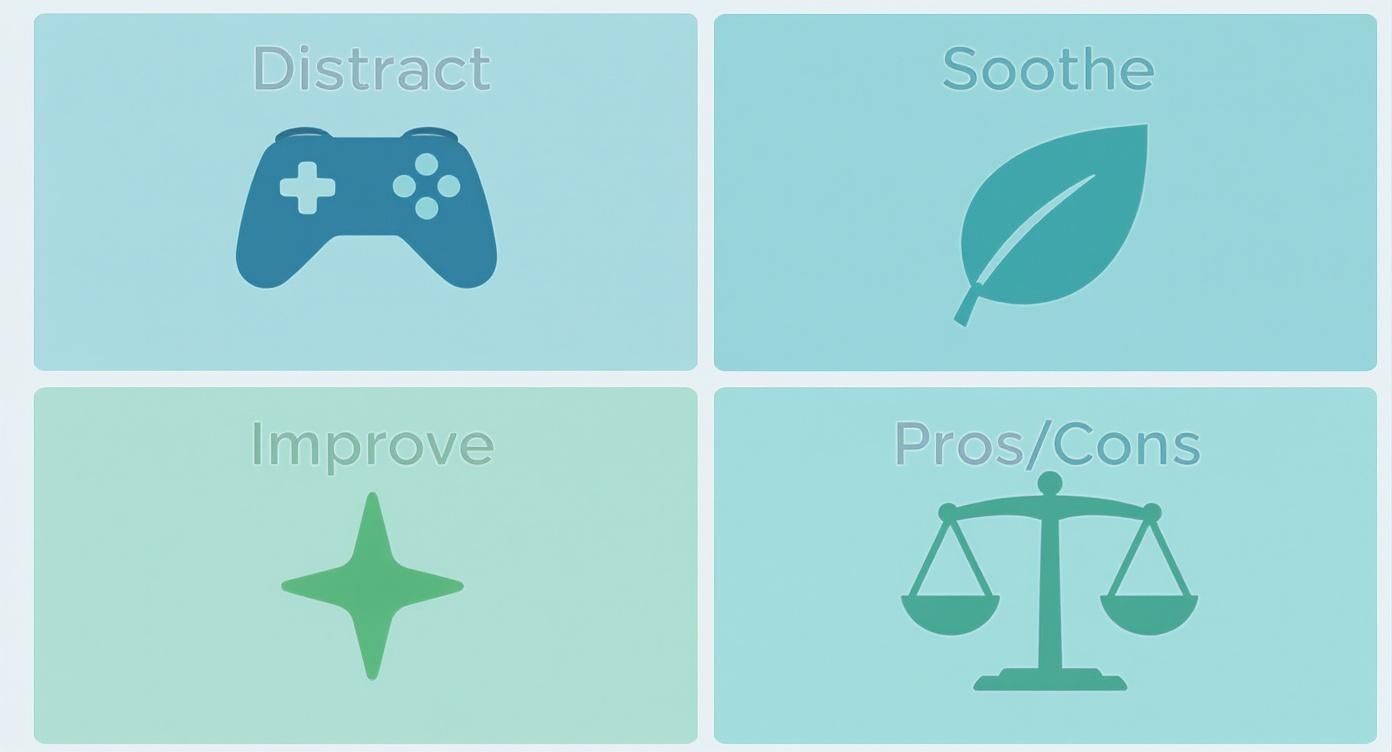
This visual shows how the skills we're talking about fit into a broader toolkit for building emotional resilience. Strategies like distraction and self-soothing are fundamental pieces of the puzzle for a more peaceful life.
Finding Calm With Movement and Breath
The rest of the TIPP skills leverage the power of movement and breath to burn off anxious energy and bring your body back into balance.
- Intense Exercise (I): This isn't about a full workout. Just a minute or two of vigorous activity will do the trick. Think running in place, doing jumping jacks, or even just dancing wildly around the room. The goal is to release endorphins and burn off the adrenaline that’s fueling the panic.
- Paced Breathing (P): Panic makes us take quick, shallow breaths, which only makes things worse. Paced breathing flips the script by focusing on a slow, controlled exhale. A good starting point is breathing in for a count of four and out for a count of six. To explore other powerful techniques, you can learn about different breathing exercises for anxiety that help regulate your nervous system.
- Paired Muscle Relaxation (P): This one is about releasing the physical tension that gets locked in your body during panic. Tense a group of muscles (like your hands) as you breathe in, hold it for a few seconds, and then let it all go as you breathe out. Work your way through different parts of your body—hands, arms, shoulders, feet—and feel the tension melt away.
To make these skills easy to remember when you need them most, here’s a quick reference guide.
TIPP Skills Quick Reference Guide
This table breaks down the TIPP skills into simple, actionable steps you can use in the middle of an intense emotional moment.
| Skill (TIPP) | Action | Why It Works |
|---|---|---|
| Temperature | Splash cold water on your face or hold an ice pack to your cheeks for 15-30 seconds. | Triggers the mammalian dive reflex, which automatically slows your heart rate and calms your nervous system. |
| Intense Exercise | Do 1-2 minutes of vigorous movement like jumping jacks, running in place, or dancing. | Burns off the rush of adrenaline and stress hormones that fuel panic, and releases natural mood-boosting endorphins. |
| Paced Breathing | Slow your breathing down, making your exhale longer than your inhale (e.g., inhale for 4, exhale for 6). | Reverses the hyperventilation common in panic attacks, signaling safety to your brain and body. |
| Paired Muscle Relaxation | Tense a muscle group as you inhale, then release the tension completely as you exhale. Repeat throughout your body. | Interrupts the body's stress response by physically releasing stored tension, which helps calm the mind. |
Keep this handy. When your thoughts are racing, you don't have to remember why it works, just what to do.
TIPP skills are your proof that you are not powerless against panic. By learning to work with your body instead of fighting against it, you can interrupt the cycle of fear and find a profound sense of hope. You can learn to navigate these moments and heal.
Finding Peace Through Radical Acceptance
What if the secret to ending the struggle wasn’t to fight harder, but to stop fighting altogether? This powerful idea, known as Radical Acceptance, is one of the most transformative distress tolerance skills you can learn. It’s a profound mental shift that offers a direct path to peace, especially when you feel trapped by painful circumstances you simply cannot change.
Imagine you're stuck in quicksand. Your first instinct is to thrash around and struggle to get out. But in quicksand, fighting only makes you sink faster. The only way to survive is to do the complete opposite of what your panic is screaming at you to do: relax, spread out your weight, and allow yourself to float.

Radical Acceptance is like learning to float on the surface of reality. It isn't about approving of the situation or giving up. It's the simple, non-judgmental acknowledgment that says, "this is what is happening right now." This is where healing begins.
What Radical Acceptance Is Not
It’s so important to get this part right: acceptance is not the same as approval. You can radically accept a situation without liking it one bit.
- It is not passivity or just rolling over.
- It is not condoning unfairness or mistreatment.
- It is not giving up on changing things for the future.
Instead, it's about acknowledging the hard facts of the present moment. This stops you from wasting precious energy fighting a battle against what already is, freeing you up to focus on what you can actually control moving forward.
Radical Acceptance is the practice of letting go of the illusion of control and allowing the space for genuine healing to begin. It's where you stop fighting the storm and start learning to navigate the waters toward a peaceful shore.
Gentle Steps to Start Practicing
Let's be honest, practicing acceptance can feel completely unnatural at first, especially when you’re in pain. The key is to start small, with gentle reminders and conscious choices.
- Notice When You're Fighting Reality: Pay attention to those thoughts screaming, "This shouldn't be happening!" or "It's not fair!" These are flares signaling you’re at war with what is.
- Acknowledge the Facts: State the reality of the situation to yourself, but strip out the judgment. For instance, instead of "I can't believe this happened," try a neutral, "This event has occurred."
- Remind Yourself of the 'Why': Gently tell yourself, "Fighting this is only making me suffer more. I am choosing to accept this moment to find some peace."
This skill takes time and a lot of repetition, but every small act of acceptance builds your emotional resilience. By letting go of the exhausting war against reality, you open the door to a calmer mind and a more hopeful path forward.
Building a More Resilient and Hopeful Future
Think of distress tolerance skills as more than just an emergency toolkit you pull out during a crisis. They are the foundational tools you use to build a life you actually want to live, free from the constant fear of anxiety.
Each time you use one of these strategies to sit with discomfort instead of running from it, you’re doing more than just surviving the moment. You are actively laying down new, hopeful tracks in your brain, proving to yourself that you are far more capable than anxiety has led you to believe.
This growing self-trust quietly rewires your relationship with anxiety itself. The fear of future panic starts to lose its grip because you know you have what it takes to weather emotional storms. This shift frees you up to chase meaningful goals, deepen your relationships, and tackle everyday challenges with a newfound confidence.
Creating a Life Filled with Purpose
The payoff here goes way beyond just managing anxiety. In fact, research shows a powerful link between a person's ability to tolerate distress and their overall satisfaction with life.
One study using the Satisfaction With Life Scale found that people with higher distress tolerance saw stressors as less threatening, which directly correlated with greater well-being. You can read the full research about these life satisfaction findings to learn more.
This is where the real hope is. By learning to navigate discomfort, you’re not just putting out fires. You are building the capacity to thrive and create a life filled with joy, free from the constant shadow of panic.
To keep building this more hopeful future, start weaving in activities that support your mental well-being. Exploring different DIY activities for mental health can be a great place to start. Pairing these new skills with a reflective practice like journaling can be incredibly powerful, too; you can learn more about what is journaling and its benefits to support your journey.
Still Have Questions About Distress Tolerance?
As you start using these skills, questions are bound to pop up. That’s a good sign—it means you’re really digging in and trying to make these tools your own. Let’s tackle some of the common things people wonder about, so you can move forward with clarity and hope.
Isn't This Just a Fancy Way of Avoiding My Problems?
Not at all. Think of distress tolerance as emotional first aid. These aren't long-term avoidance tactics; they’re crisis-survival strategies. You use them to keep from making a bad situation worse with an impulsive reaction you'll regret later.
Once the emotional storm settles and you can think clearly again, you're in a much better headspace to actually solve the problem. It’s about being strategic, not just pushing things away forever.
How Long Until I Get Good at This?
Building these skills is a practice, not a race to a finish line. Some tools, like the TIPP techniques, can give you immediate physical relief right in the middle of a panic attack. They just work.
Others, like Radical Acceptance, are more of a lifelong journey. The real secret is consistent effort mixed with a healthy dose of self-compassion. Celebrate the small wins, because progress, not perfection, is what we're aiming for here. Healing is a journey, and you're already on the path.
Can I Learn This on My Own, or Do I Need a Therapist?
You can absolutely start practicing these skills right now, using guides just like this one. Many people find them incredibly effective for managing the everyday ups and downs of anxiety on their own.
However, if your anxiety feels totally overwhelming, has deep roots in past trauma, or you just want that extra layer of structured support, working with a therapist can be a game-changer. A pro can help tailor these strategies to your specific situation, giving you a clear, supportive path toward healing and finally living panic-free.
At The Anxiety Checklist, we believe you deserve a life that isn’t dictated by anxiety. Our Fearless Living system, which combines a deep-dive eBook with an interactive checklist, gives you a structured, step-by-step path to building these skills and taking back your peace of mind.
Ready to start your journey toward a calmer, more confident you? Explore the Fearless Living system at anxietychecklist.com today.