Free CBT Journal App: Turn Anxious Thoughts Into Balanced Ones
Anxious thoughts can feel like facts. The Thought Journal walks you through 4 short steps to catch a thought, spot the thinking trap, and rewrite it in a kinder, more realistic way.
- Guided CBT in 4 simple steps
- 19 thinking traps explained, with examples
- Free forever. No sign-up.



A guided CBT journal in your pocket
The Thought Journal is built on a core CBT skill called cognitive restructuring. In plain words: learning to question an anxious thought instead of automatically believing it. Learn how CBT works for anxiety.
You don’t need to know any CBT to use it. Each screen tells you what to do, with examples.
Why questioning your thoughts matters
Anxious thoughts feel like facts
“I’ll mess this up.” “They’ll judge me.” In the moment, these don’t feel like guesses. They feel true, and your body reacts as if they are.
Naming the trap creates distance
When you can say “that’s Fortune Telling,” the thought stops being the truth. It becomes a pattern your brain falls into. That small step back takes away some of its power.
A balanced thought changes what happens next
A kinder, more realistic thought can change how you feel and what you do. With practice, balanced thoughts start to come more easily.
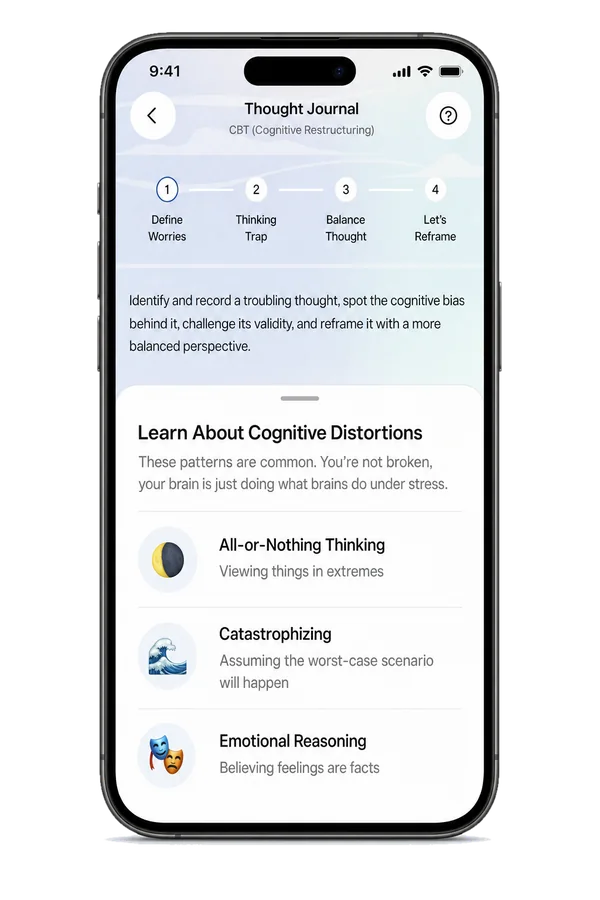
“These patterns are common. You’re not broken, your brain is just doing what brains do under stress.”
Read more: the benefits of journaling.
How it works, step by step
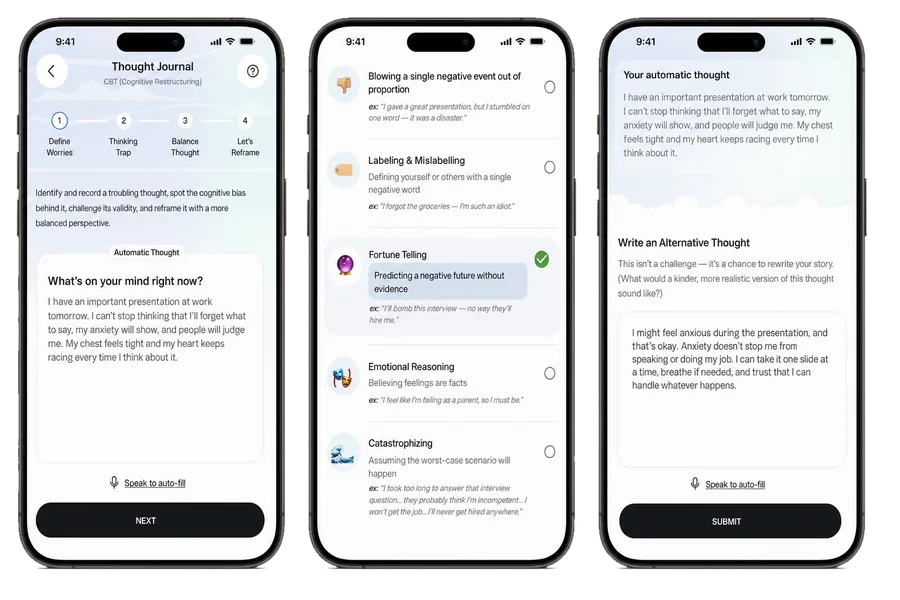
First, rate how you feel from 1 (Panic) to 10 (Calm). Then follow the 4 steps. Here’s a real example from the app: worrying about a work presentation, a classic case of anticipatory anxiety.

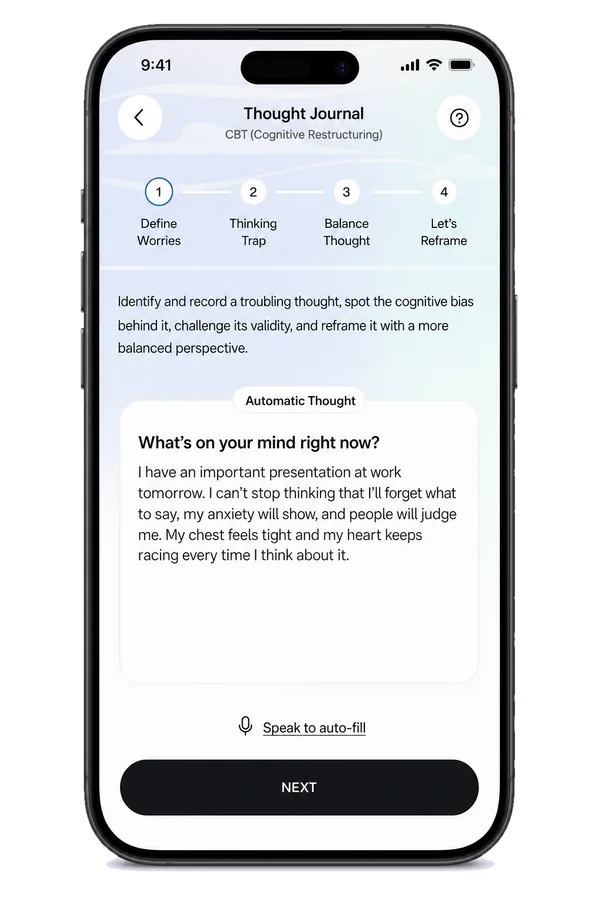
Step 1: Define Worries
Answer “What’s on your mind right now?” in the Automatic Thought box. The app’s tip: “Be specific — the more clearly you describe it, the easier it’ll be to challenge it later.” Not in the mood to type? Tap “Speak to auto-fill.”
Example automatic thought
“I have an important presentation at work tomorrow. I can’t stop thinking that I’ll forget what to say, my anxiety will show, and people will judge me. My chest feels tight and my heart keeps racing every time I think about it.”
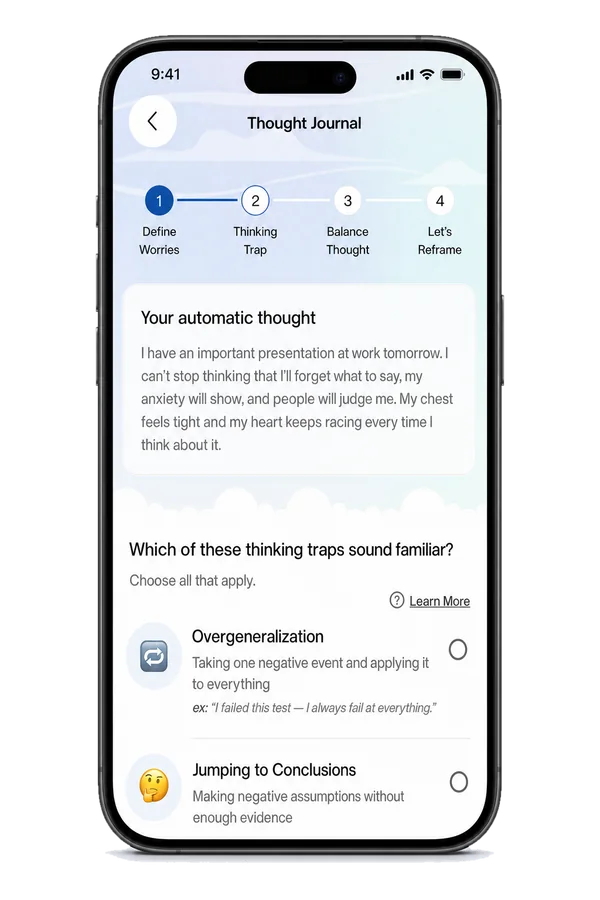
Step 2: Thinking Trap
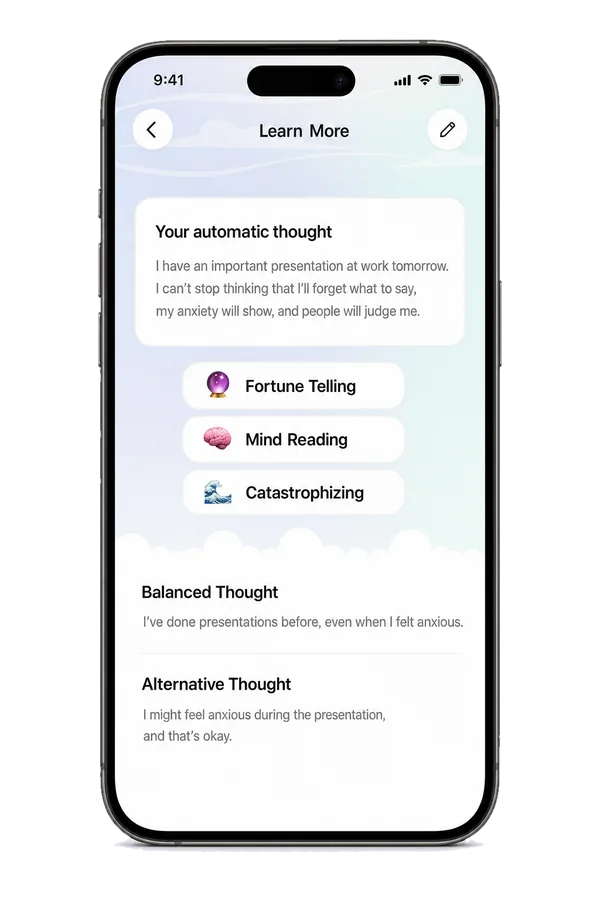
The app shows your thought and asks, “Which of these thinking traps sound familiar?” Choose all that apply. Each card has a short explanation and an example. Tap “Learn More” to go deeper.
Example trap
Fortune Telling: predicting a negative future without evidence. The thought predicts forgetting, visible anxiety and judgment, before anything has happened.
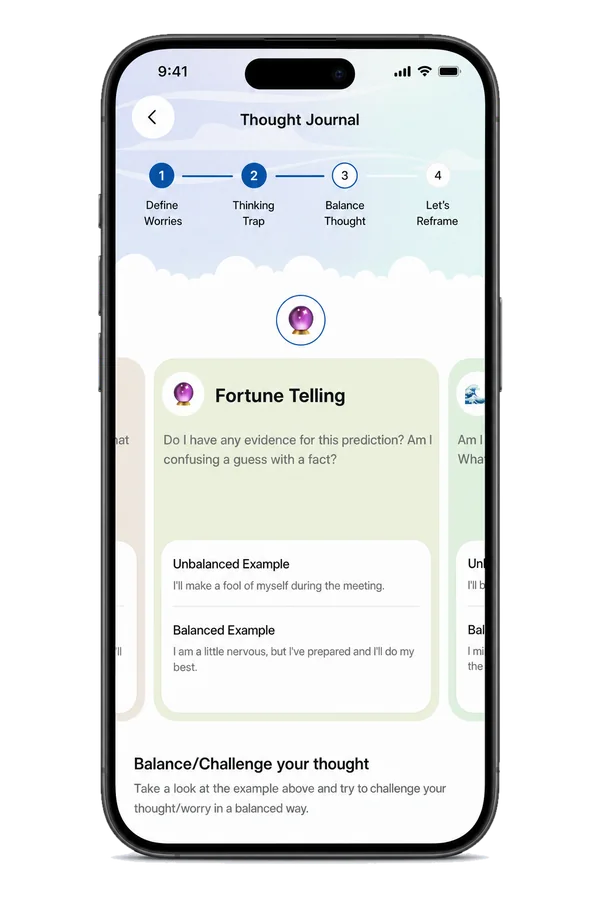
Step 3: Balance Thought
For each trap you chose, you see an “Unbalanced Example” and a “Balanced Example.” Then you “take a look at the example above and try to challenge your thought/worry in a balanced way.”
The app’s Fortune Telling example
- Unbalanced: “I’ll make a fool of myself during the meeting.”
- Balanced: “I am a little nervous, but I’ve prepared and I’ll do my best.”
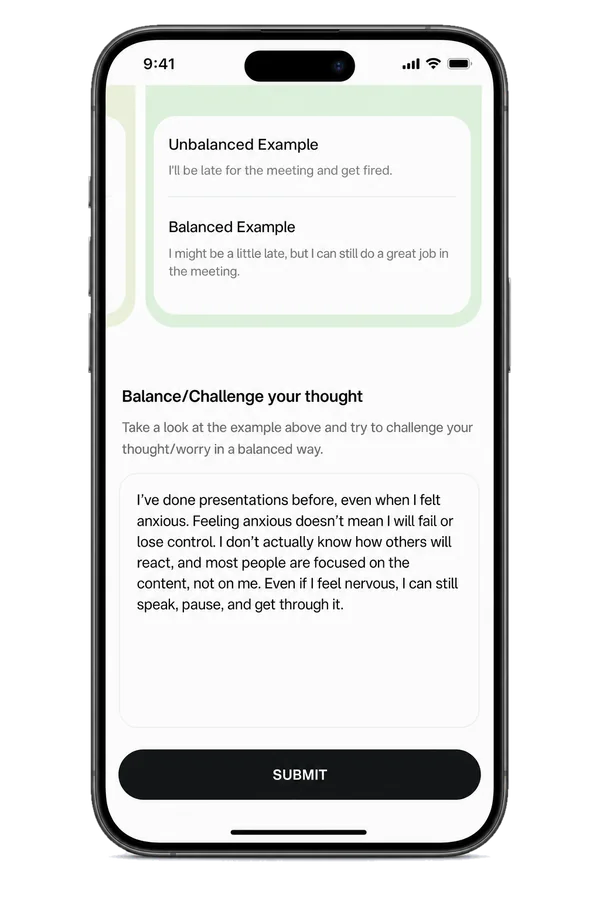
Step 4: Let’s Reframe
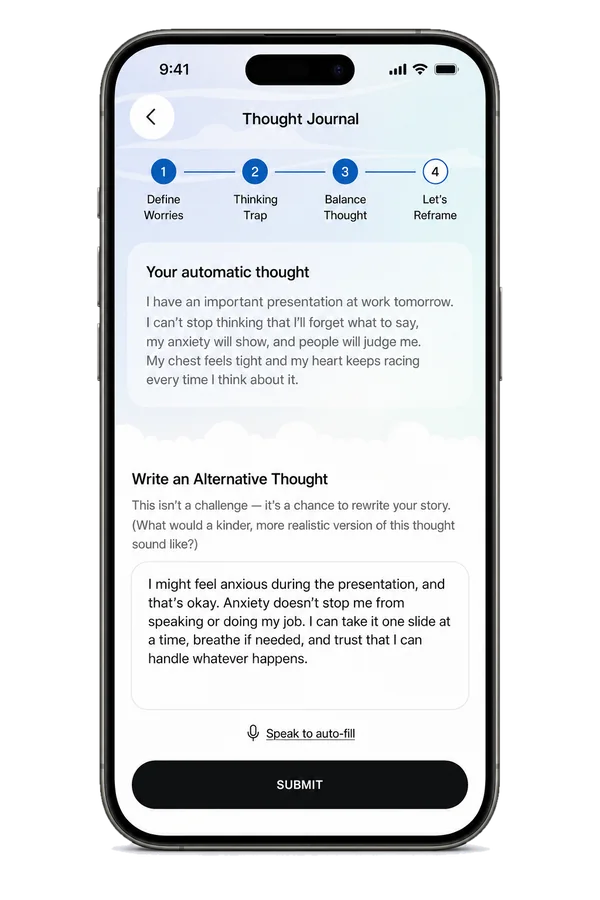
“Write an Alternative Thought.” As the app puts it: “This isn’t a challenge — it’s a chance to rewrite your story.” Ask yourself what a kinder, more realistic version of the thought would sound like. Tap SUBMIT, then check in again.
Example alternative thought
“I might feel anxious during the presentation, and that’s okay. Anxiety doesn’t stop me from speaking or doing my job. I can take it one slide at a time, breathe if needed, and trust that I can handle whatever happens.”
Automatic Thought
“I have an important presentation at work tomorrow. I can’t stop thinking that I’ll forget what to say, my anxiety will show, and people will judge me. My chest feels tight and my heart keeps racing every time I think about it.”
Alternative Thought
“I might feel anxious during the presentation, and that’s okay. Anxiety doesn’t stop me from speaking or doing my job. I can take it one slide at a time, breathe if needed, and trust that I can handle whatever happens.”

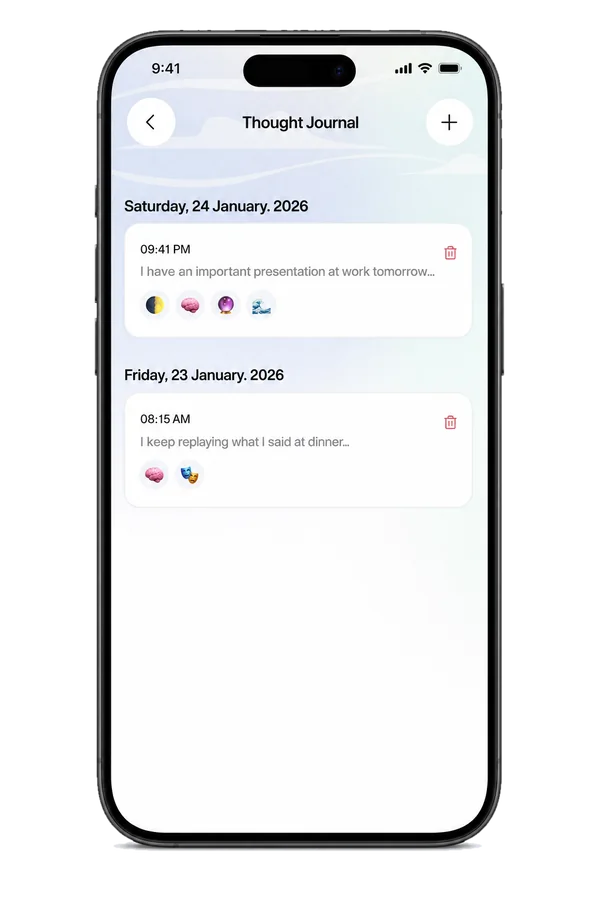
View History
Every entry is saved in View History by date. Open one to see your thought, the traps you spotted, your balanced thought and your alternative thought. You can edit it later.
The 19 thinking traps, in plain words
You don’t need to memorize these. The app explains each one, with examples, right when you need it. Want to go deeper? Read cognitive distortions that fuel anxiety.

Predicting danger
Your mind jumps ahead and expects the worst.
- Catastrophizing
- Assuming the worst-case scenario will happen.
- Fortune Telling
- Predicting a negative future without evidence.
- “What If?” Thinking
- Creating endless anxious scenarios about the future.
- Overestimating Danger
- Exaggerating the likelihood of a threat.
- Jumping to Conclusions
- Making negative assumptions without enough evidence.
Reading people and situations
You fill in the blanks about others, usually negatively.
- Mind Reading
- Assuming you know what others are thinking negatively about you.
- Personalizing
- Assuming everything is your fault.
- Other-Blaming
- Blaming others for your feelings or problems.
- Fallacy of Fairness
- Believing life should be fair and becoming upset when it isn’t.
Seeing in extremes
The picture gets distorted: too big, too small, all or nothing.
- All-or-Nothing Thinking
- Viewing things in extremes.
- Overgeneralization
- Taking one negative event and applying it to everything.
- Magnification of the Negative
- Blowing a single negative event out of proportion.
- Minimization of the Positive
- Downplaying your achievements or positive experiences.
Feelings, rules and self-judgment
You treat feelings as facts, or judge yourself by harsh rules.
- Emotional Reasoning
- Believing feelings are facts.
- Labeling & Mislabeling
- Defining yourself or others with a single negative word.
- Should / Must Statements
- Setting rigid rules for yourself or others.
- Ought Statements
- Imposing strict mental rules on yourself or others.
- Double Standard Thinking
- Holding yourself to a harsher standard than you hold others.
- Guilt / Regret
- Dwelling on past mistakes or perceived failures.
What’s inside
4-step guided journal
Define Worries, Thinking Trap, Balance Thought, Let’s Reframe.
19 thinking traps
Each with an explanation, examples and a balanced example.
Speak to auto-fill
Say your thought out loud instead of typing.
View History
Every entry by date, editable anytime.
Help when you need it
“How the Thought Journal Works” explains each step.
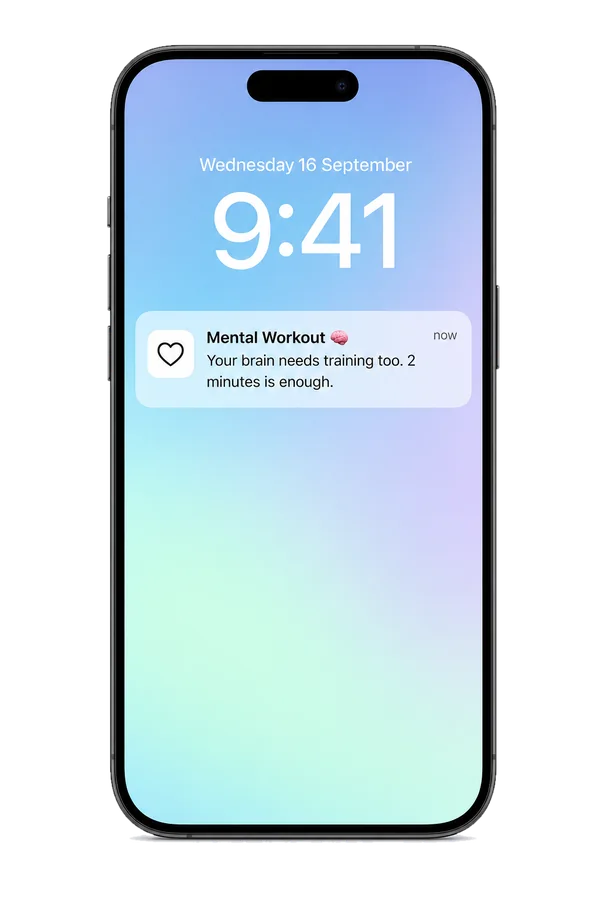
Daily “Mental Workout 🧠” reminder
“Your brain needs training too. 2 minutes is enough.” If you allow notifications.





Stuck on a step? Get help right where you are.
Every step of the Thought Journal now has a small help row, so a blank page never stops you.
- Speak: say it out loud instead of typing
- Stuck? Get an idea: examples for each step. Free
- Help me (Premium): AI suggests the thinking traps or a balanced thought, and you choose what to keep

What to expect over the weeks
“Turn racing thoughts into clarity one step at a time.”

Will I feel better right away?
Sometimes, yes. But not always. And that’s normal.
Think of it like physical rehab
The first entries can feel slow or awkward. With repetition, the steps get quicker and the balanced thought comes more naturally.
First, you notice
In your early entries, you start to recognize the traps you fall into most.
Then, you catch it sooner
With practice, many people spot a trap as it happens, before the spiral gets going.
Over time, thoughts can lose their grip
Anxious thoughts still show up. For many people, they start to feel less convincing and pass more quickly.
The goal is to reframe it “not with toxic positivity, but with compassion, logic, and realism.” Your before-and-after check-ins in My Stats help you see your progress.
Check in. See what works for you.
Rate how you feel from 1 (Panic) to 10 (Calm) before and after, and see what works for you.
Scale from 1, Panic, to 10, Calm. Higher is calmer.
Before we begin the exercise
How do you feel?
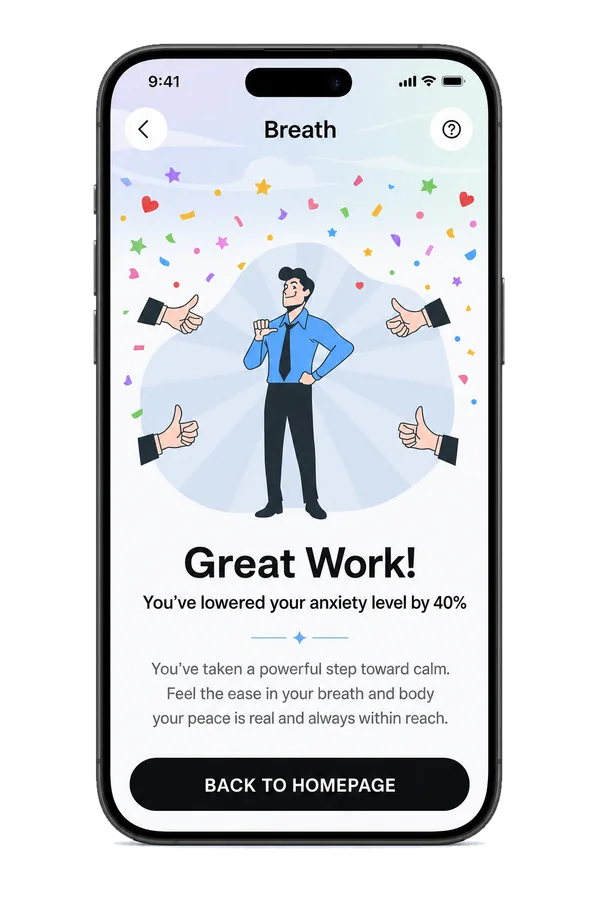
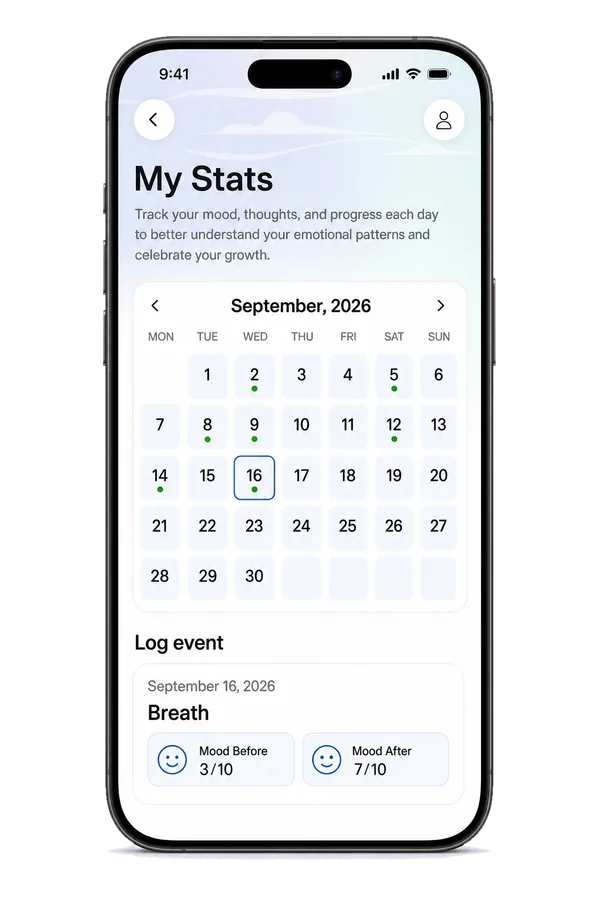
Your check-ins are saved in My Stats, which is free.
Use it with your therapist
Many CBT therapists ask clients to write down anxious thoughts between sessions. The Thought Journal gives that homework a simple structure.
- Open View History in your session to talk through recent entries.
- Notice which thinking traps keep showing up, and ask your therapist how to work on them.
- If your therapist uses a longer worksheet, add the extra details to your written thought.
- If a thought is about harming yourself or someone else, don’t journal it alone. Reach out now: Get Help Now.

Free forever. Really.
The CBT Thought Journal is free forever. No trial, no subscription, no sign-up. Everyone living with anxiety should be able to practice this core CBT skill.
More Feel more in Control tools



Questions about the CBT Thought Journal
Is the CBT Thought Journal really free?
Yes. It’s free forever, with no trial, subscription or account needed.
What is CBT journaling?
Writing down an anxious thought, then using CBT steps to question it and find a more balanced view. It’s based on a technique called cognitive restructuring.
What are thinking traps?
Common patterns that distort how you see things, like Catastrophizing or Mind Reading. They’re also called cognitive distortions. The app explains 19 of them.
How long does an entry take?
Usually a few minutes. As the daily reminder says, “2 minutes is enough.”
How often should I use it?
Whenever an anxious thought sticks. Regular practice helps the skill grow, but there’s no perfect schedule.
Will it make my anxiety go away?
It’s not a quick fix. Sometimes you’ll feel better right away, sometimes not. Like physical rehab, it builds a skill over time. Many people find anxious thoughts lose some of their grip with practice.
Can I speak instead of typing?
Yes. Tap “Speak to auto-fill” and say your thought out loud.
Can I use it with my therapist?
Yes. It works well as between-session practice. Open View History in your session to go through your entries together.
Catch the next anxious thought before it spirals.
The CBT Thought Journal is free forever. No sign-up needed.
Free forever: SOS panic relief, the CBT Thought Journal and Anxiety University.