

In short
A panic attack hangover is the lingering fatigue, brain fog, physical discomfort and unease after a panic attack, as the nervous system and stress hormones settle. Most last from a few hours to two days. Rest, hydration, balanced food, grounding, slow breathing and avoiding caffeine and alcohol can support recovery; frequent, worsening or disruptive episodes warrant professional help.
Key takeaways
- Symptoms can be physical, emotional or cognitive, including fatigue, muscle tension, anxiety and difficulty concentrating.
- Keep naps under 30 minutes to avoid grogginess while allowing the body to rest.
- Gentle walking or stretching may help, while intense workouts can stress an already-taxed system.
- Regular meals, consistent sleep, meditation and yoga may reduce future attacks and their after-effects.
- Seek professional support if hangovers are frequent, worsen, last over two days or disrupt daily life.
What Is a Panic Attack Hangover?
A panic attack hangover is the lingering set of symptoms that follow a panic attack or anxiety attack. It starts once the intense fear fades and the panic attack ends.
During a panic attack, your sympathetic nervous system activates your fight-or-flight response. This causes your adrenal glands to release a rush of stress hormones, such as adrenaline and cortisol.
Your heart races, breathing speeds up, and physical reactions like chest pain or dizziness can occur.
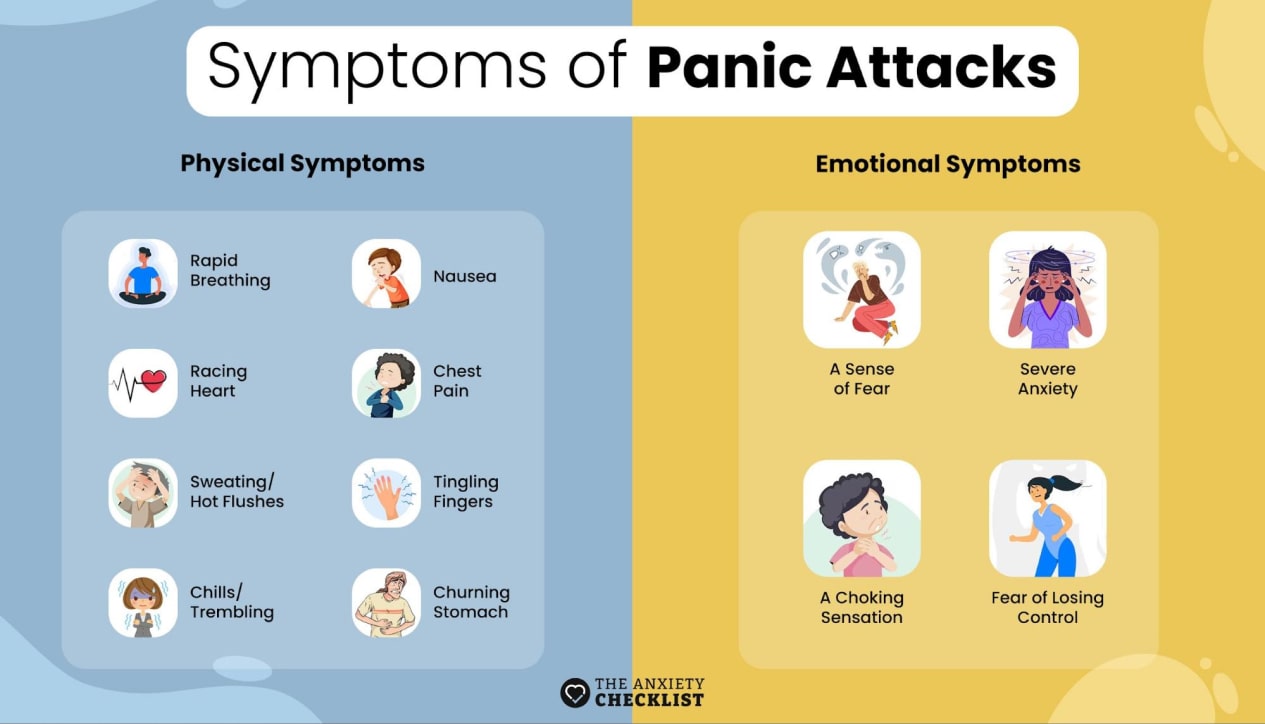
Once the attack ends, you don’t simply return to normal. Your nervous system needs time to recalibrate so the body’s stress hormones can stabilize. This recovery process creates what feels like a hangover.
Some people call it an “adrenaline hangover” or “post-panic attack syndrome.” This experience is entirely different from hangover anxiety (sometimes called “hangxiety”), which follows alcohol consumption.
A panic attack hangover involves a mix of physical, emotional, and psychological factors. You may feel physically exhausted, emotionally drained, and mentally foggy.
Hangover symptoms happen because your body is coming down from high stress hormone levels. It’s similar to how you feel after intense exercise, but it can be more overwhelming.
For people with panic disorder or frequent panic attacks, this hangover period may feel stronger or last longer. It can also affect those with other mental health conditions, like social anxiety disorder or generalized anxiety.
Common Symptoms of a Panic Attack Hangover
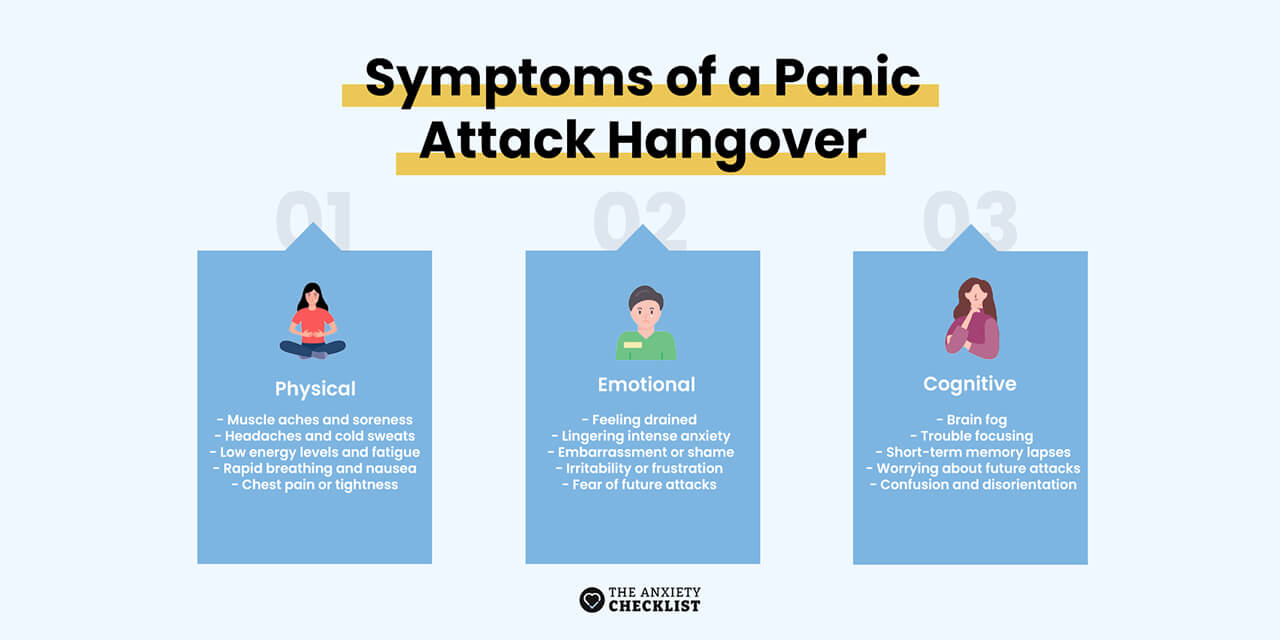
The after effects of a panic episode can last even after the attack is over. This hangover period can last anywhere from a few hours to a full day.
For those with frequent panic attacks or an underlying anxiety disorder, recovery time may stretch longer. Symptoms vary, but they often fall into three main categories: physical, emotional, and cognitive.
Physical Symptoms
When the sympathetic nervous system activates, your body releases adrenaline to prepare for fight or flight. Once stress hormone levels drop, the body feels depleted.
This sudden shift can trigger physical symptoms that leave you feeling exhausted and out of balance. This includes:
These physical symptoms are part of your body’s stress response winding down. Your nervous system is shifting out of fight or flight mode and trying to stabilize.
Emotional Symptoms
The emotional effects of a panic attack hangover can be just as challenging as the physical ones. You might feel emotionally drained and vulnerable. Small stressors might seem overwhelming as you recover.
Typical emotional symptoms include:
This happens because your mind is still processing the intense fear from the panic episode. The effects often fade within a day, but they can feel overwhelming while they last.
Cognitive Symptoms
Your thinking can also feel slower or less clear during a panic attack hangover. This is often described as brain fog or difficulty staying in the present moment.
Common cognitive symptoms include:
These cognitive effects are caused by temporary changes in stress hormone levels. As your system recovers, mental clarity usually returns within a few hours or, for some, the next day.
Causes and Common Triggers of Panic Attack Hangovers
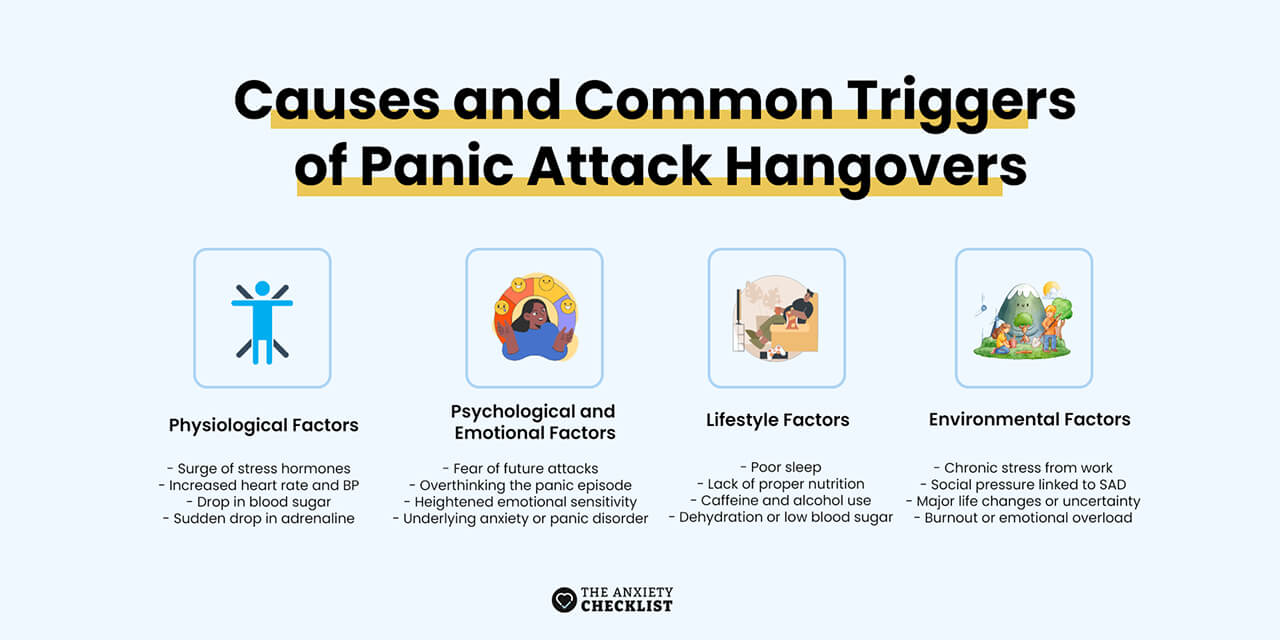
A panic attack hangover is the body’s way of recovering after an intense surge of stress hormones.
A combination of physical reactions, emotional effects, and lifestyle factors can make a hangover period feel more draining. Let’s break down the main causes and triggers.
Physiological Factors
Your body plays the biggest role in an attack hangover. During a panic attack, your nervous system activates a powerful stress response. This includes:
Panic attacks can trigger inflammation in your body. This inflammatory response can persist for hours, causing muscle aches and brain fog.
When your nervous system shifts from high alert back to baseline, it can leave you feeling weak, shaky, and physically exhausted. Your body then needs time and energy to recover and bring stress hormone levels back to normal.
Psychological and Emotional Factors
Your mental state before and after an attack also contributes to the severity of symptoms and how long they last. After a panic attack, your brain may stay on high alert. Common psychological factors include:
Frequent panic attacks or worrying about another panic episode makes hangovers worse.
Your body doesn’t fully recover between episodes, as stress hormone levels remain elevated. With your stress response partially activated, your nervous system stays sensitized.
Lifestyle Contributors
Daily habits can make a panic attack hangover feel stronger or last longer. Your body recovers faster with the right support. Key lifestyle contributors include:
Lack of post-attack self-care extends the hangover period. Without proper rest and nourishment, your body struggles to bounce back.
Stress and Environmental Triggers
Ongoing stress can intensify panic attacks and their aftereffects. It keeps your nervous system in a heightened state. Common triggers include:
Unresolved trauma and other mental health disorders, such as depression or eating disorders, can also contribute.
When stress builds up, your body has a harder time calming down. This can make the hangover period longer and more intense.
How to Manage a Panic Attack Hangover
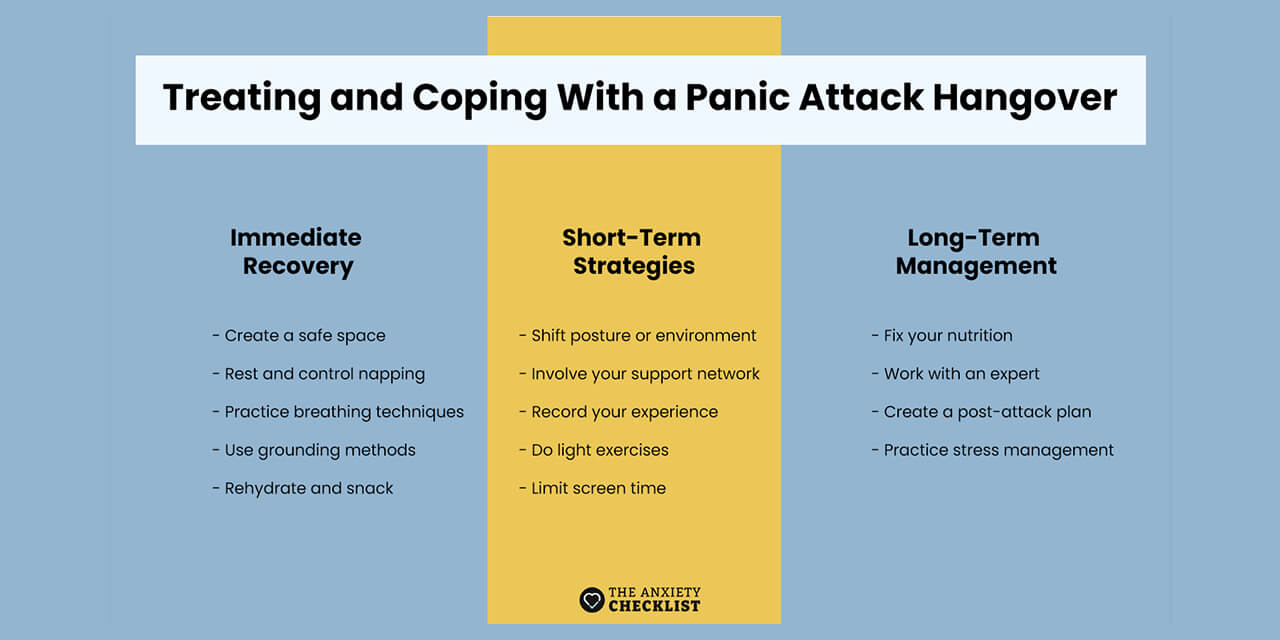
Recovering from a panic attack hangover takes patience and self-compassion. What helps most at this stage is focusing on small, steady actions that help your body feel safe again.
These steps can ease symptoms and support your well-being. Think of recovery in three stages: immediate, short-term, and long-term care.
Immediate Recovery (First Hours)
The moments right after your panic attack passes are crucial for minimizing the after-effects. Focus on safety, comfort, and gentle support. Some simple, restorative steps you could take include:
Short-Term Strategies (Same Day or Next Day)
Once the initial crash passes, focus on gentle activities that support recovery and overall well-being. Don’t immediately rush back into a busy routine. Instead, take the following measures:
Long-Term Management
Long-term strategies help reduce the frequency of panic attack hangovers, especially if they happen often. Building sustainable habits reduces both panic attacks and their aftereffects.
Frequently Asked Questions
Moving Forward
Anxiety University
Explore the Anxiety University
Free guides to help you understand anxiety, one topic at a time.
- Getting StartedThe basics of anxiety and how it works
- Self-Assessments & Anxiety TestsCheck in on your symptoms with free tests
- Cognitive Traps & Thought PatternsSpot the thinking habits that fuel anxiety
- Stress ReductionPractical ways to calm your body and mind
- Common Anxiety PhobiasUnderstand specific fears and how they are treated
- Inspiring StoriesReal stories and words that remind you you are not alone