


In short
DPDR is a dissociative disorder that can make people feel detached from their body, thoughts or identity, or make the world seem unreal and dreamlike. Despite how frightening it can feel, reality testing remains intact, so it is not psychosis or a sign of “going crazy”. Symptoms often arise with severe anxiety, panic, stress, trauma or substance use, and recovery is possible through therapy, lifestyle changes and coping tools.
Key takeaways
- Depersonalisation involves detachment from yourself; derealisation makes surroundings feel unreal, distorted or dreamlike.
- Symptoms may last hours, months or years, and can come and go.
- Focusing on symptoms can intensify them, while feeling calm or safe may help them ease.
- DPDR does not lead to psychosis or loss of control.
- Therapy is the most well-supported treatment, often combined with lifestyle changes and coping tools.
What Is DPDR (Depersonalization-Derealization Disorder)?
DPDR (depersonalization-derealization disorder) is a dissociative disorder listed in the DSM-5. It affects how you experience yourself and the world.
The disorder can make you feel disconnected from your body, thoughts, or surroundings. Many people describe it as feeling like they’re “watching life from the outside.”
DPDR falls under the broader category of dissociative disorders. However, it’s distinct from conditions like dissociative identity disorder (DID) or dissociative amnesia, (specifically when it includes dissociative fugue).
These other conditions involve identity changes or memory loss. Meanwhile, DPDR mainly affects reality testing and self‑perception.
Reality testing is the awareness that the feeling of detachment isn’t real, even if it feels strange. It’s what makes DPDR different from a psychotic disorder like schizophrenia.
While it can cause significant distress, DPDR isn’t dangerous. It’s your brain’s way of protecting you from becoming overwhelmed.
So, what exactly does it look like? DPDR comes in two main forms.
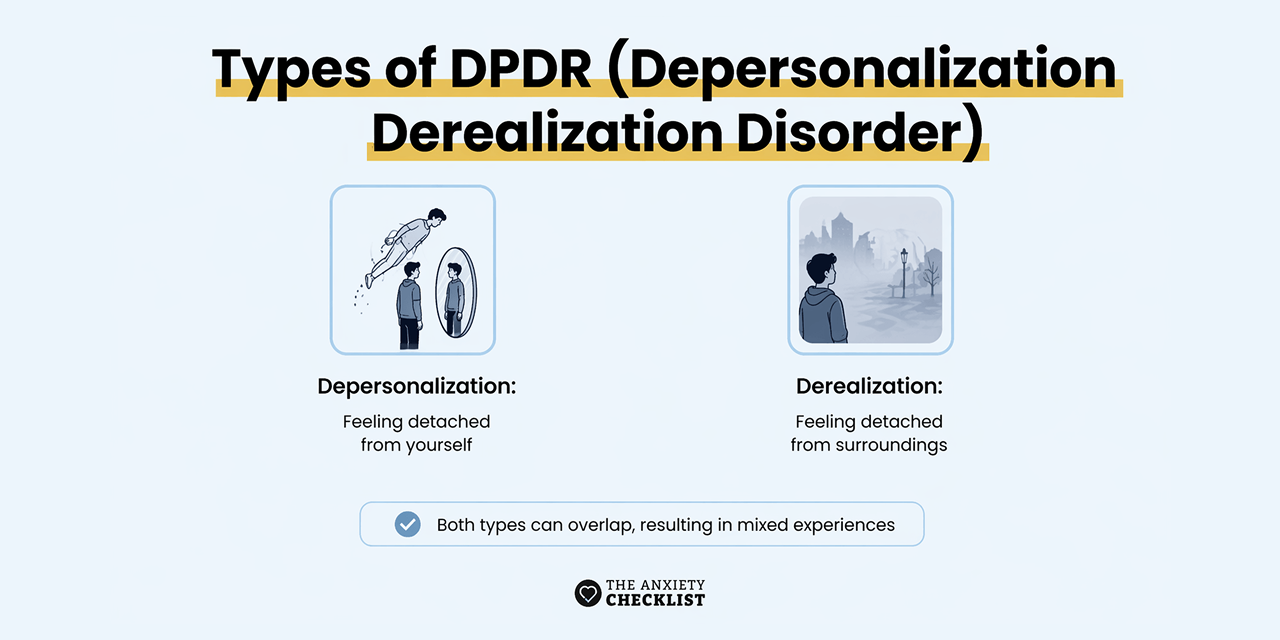
Depersonalization
Depersonalization is a dissociative state where you feel like an outside observer of your own life. It’s not psychosis. Rather, it’s a disruption in how the brain processes identity and awareness.
You experience a shift in perception that creates a sense of detachment from your body, thoughts, or identity. Depersonalization often acts as a biological “circuit breaker.” It’s your brain numbing emotions to protect itself from overwhelming stress.
While it can feel scary, depersonalization is a known, recognized experience. It doesn't mean that something is permanently broken. Your core identity and awareness remain intact.
Derealization
Derealization is a dissociative shift where the external world feels oddly unreal, distorted, or dreamlike. Familiar places, people, and events may seem strangely distant or artificial, as though viewed through a filter.
It can be unsettling, but derealization serves as a protective psychological mechanism. It works by temporarily distancing your mind from external aggressors. However, your connection to reality remains intact and fully functional.
Mixed Experiences
Many people with DPDR can also experience both types together.
You might feel disconnected from yourself and the world around you at the same time. This can feel more intense, especially during panic attacks or periods of extreme emotional distress.
However, clinical research recognizes this as a normal response of the nervous system to protect you. It’s a temporary state of "overdrive" rather than a permanent condition.
Symptoms of DPDR (Depersonalization-Derealization Disorder)
DPDR (depersonalization-derealization disorder) doesn’t look the same for everyone. Symptoms can shift, overlap, and differ in intensity. They often get worse during panic attacks, periods of extreme stress and anxiety, or other mental health disorders.
Some people have episodes that last a few hours. Others deal with symptoms for months or even years.
DPDR has two main symptom groups. You may experience one — either depersonalization or derealization — or both at the same time.
Depersonalization Symptoms
People with depersonalization disorder often describe feeling emotionally numb or disconnected from their own body and thoughts. However, it’s not a psychotic disorder because your reality testing stays intact.
You know what’s real, but it doesn’t feel real. Common depersonalization symptoms include:
These symptoms can cause you to feel emotionally disconnected from others. Still, your awareness remains intact, and your mental processes continue to function normally. That’s what separates it from mental disorders like DID and dissociative amnesia.
Derealization Symptoms
Derealization disorder affects how you see and experience the world around you. Everything, including familiar places, may look strange, distant, or dreamlike.
You might feel like you’re behind glass, watching life instead of living it. Common derealization symptoms include:
Even though things feel different, your reality testing remains intact. Normal activities feel strange, but they don’t mean something is permanently wrong.
How Symptoms Can Change
Symptoms of depersonalization-derealization can shift over time. They may:
DPDR can feel unpredictable. However, symptoms can also ease as your nervous system settles.
A Common Misconception
Many people with DPDR (depersonalization-derealization disorder) fear they’re losing their grip on reality. We must clear up this common misconception.
People with depersonalization-derealization disorder always know their feelings aren’t real. That awareness never disappears. This is what separates DPDR from psychotic mental disorders like schizophrenia.
DPDR is distressing, but it’s not a sign of losing your mind.
Major Causes and Triggers of DPDR
Depersonalization-derealization disorder often begins as a response to overwhelm. It’s a result of a person going through something very difficult or when the mind is pushed past its limits.
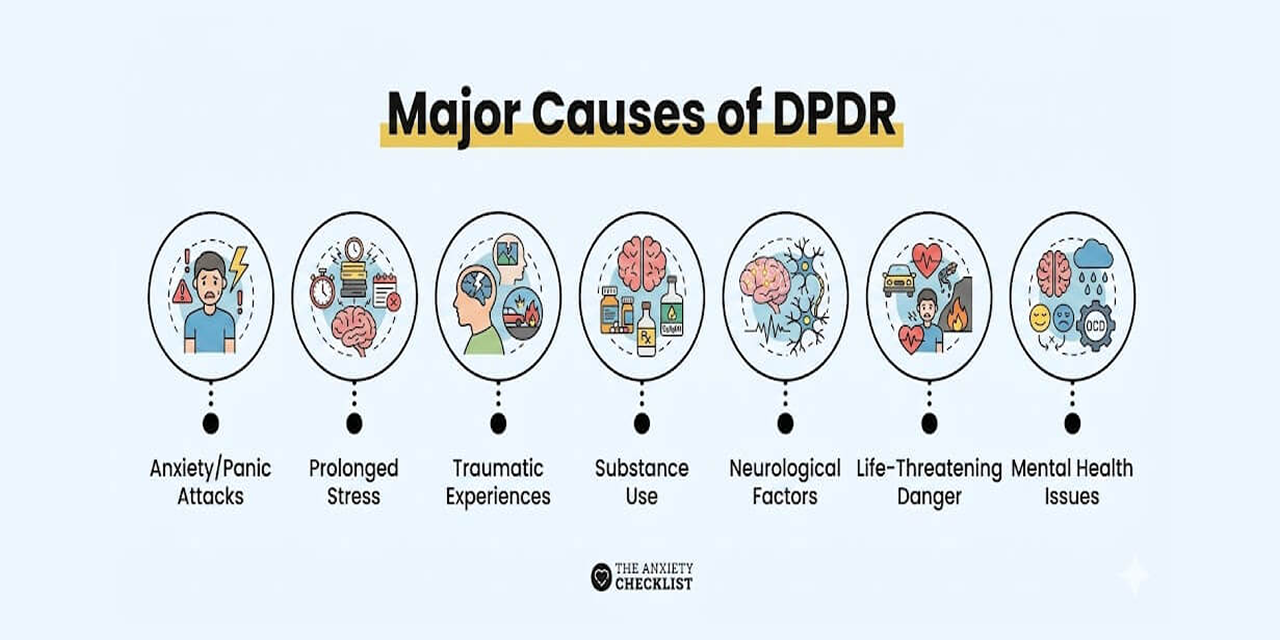
Common causes and triggers include:
That said, DPDR can develop even without a history of significant trauma. For some, the brain reaches a tipping point due to daily pressures rather than a single event. While it often follows intense stress, it can also appear suddenly with no obvious trigger.
DPDR (Depersonalization-Derealization Disorder) Risk Factors
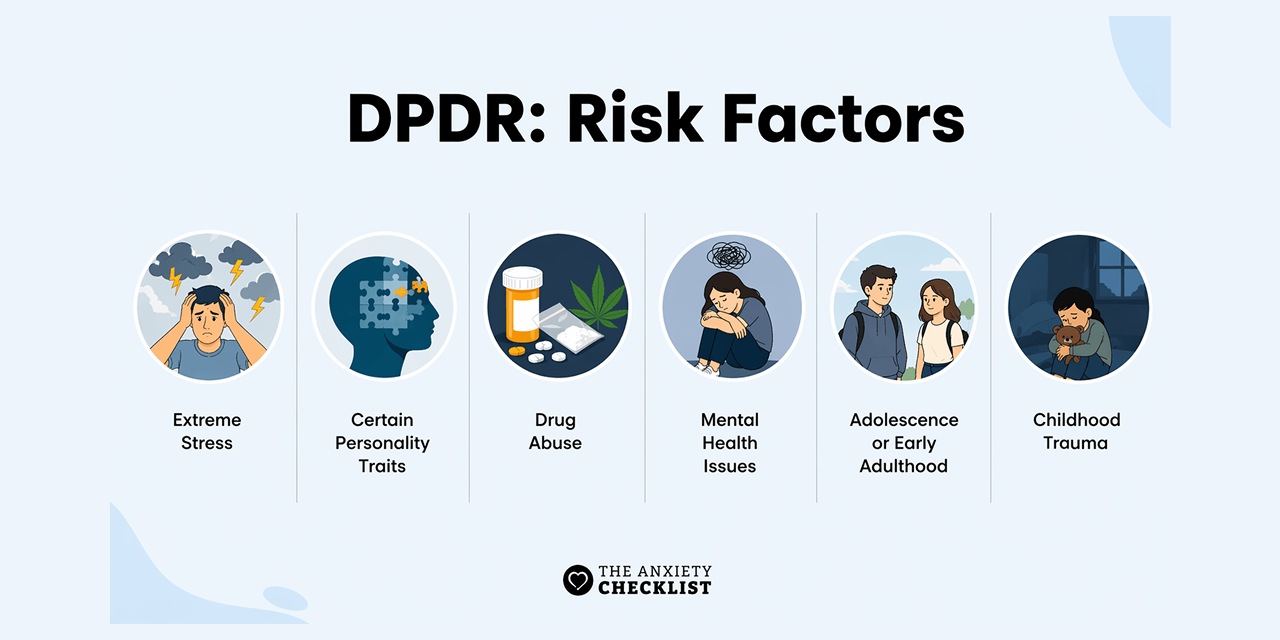
Causes and risk factors aren’t the same thing. A cause is what triggers DPDR. Meanwhile, risk factors are what make a person more vulnerable to developing it in the first place.
People have varying thresholds. Some go through the same stressful events and never develop DPDR. Others do. Here’s what increases risk:
Understanding the risk factors is less about blame and more about awareness. The more you understand what makes you vulnerable, the better equipped you are to protect your mental health.
Will DPDR Make Me “Go Crazy”?
The short answer is no.
Many people with depersonalization‑derealization disorder worry they’re “going crazy.” While that fear is common, it’s simply not true.
DPDR doesn’t lead to psychosis or loss of control. Sure, it can feel intense, strange, and even frightening. However, you must understand that it’s a protective response, not a breakdown. Your brain is trying to shield you from intense stress or overwhelming emotions by creating distance.
Think of it as the brain’s way of hitting an emergency brake.
In the middle of this, your awareness never disappears. You always know that something feels off. The fact that DPDR feels strange and alarming to you is actually proof that you still have a good grip on reality.
A person experiencing psychosis, on the other hand, can’t tell that their perception of reality is distorted.
Why DPDR Feels So Dangerous
If DPDR is protective, why does it feel so frightening? Here are a few reasons:
Here’s something worth sitting with: the fear of “going crazy” is itself a symptom of anxiety. It’s not a reflection of reality. It’s what anxiety does. It fuels overthinking and convinces you that the worst-case scenario is unfolding, even when it isn’t.
DPDR and Panic Attacks: More Similar Than You Think
DPDR has a lot in common with panic attacks.
Both feel overwhelming in the moment. Both can make you feel like something is seriously wrong. However, both are temporary — even when they don’t feel like it.
A panic attack brings intense physical fear. You can have a racing heart or shortness of breath. DPDR brings a sense of disconnection, like you’re not fully present.
Panic attacks don’t cause lasting damage, even though they feel catastrophic. DPDR works the same way. The intensity of the experience isn’t a measure of the danger. It’s simply a measure of how hard your nervous system is working to cope.
Potential Complications
DPDR isn’t dangerous on its own. However, when it goes unaddressed, it can significantly impact daily life. These complications tend to fall across three areas:
None of these complications is permanent. With proper support and treatment, most people recover fully and regain a sense of normalcy.
How to Treat and Cope with DPDR
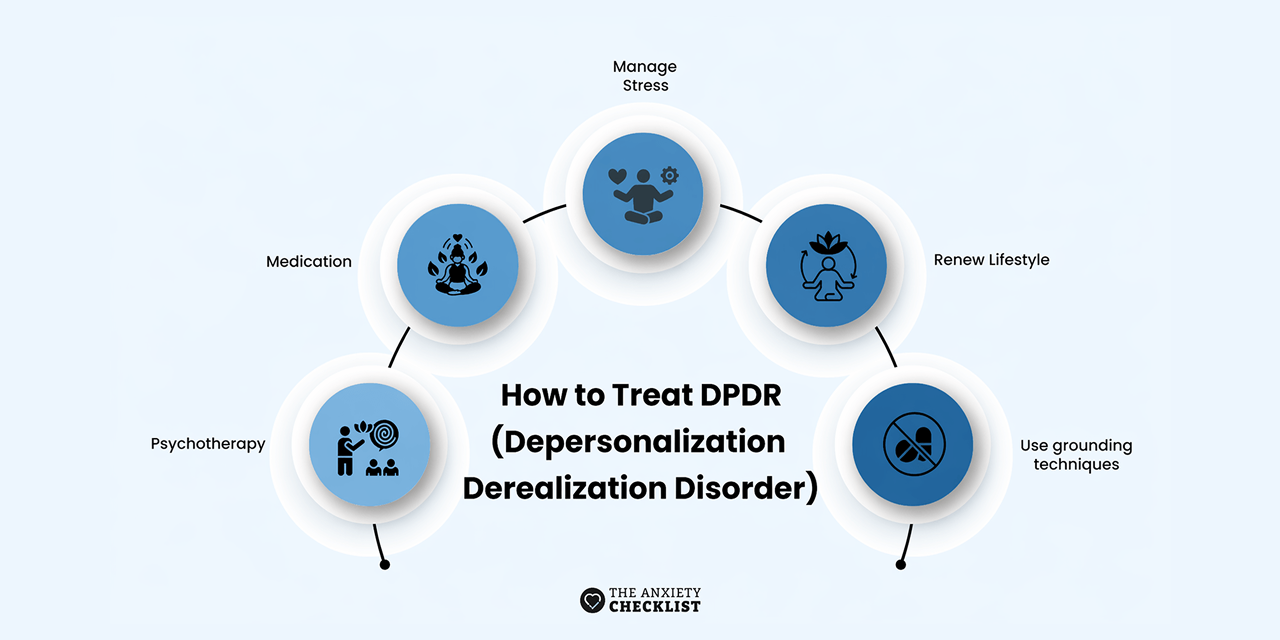
Recovery from depersonalization-derealization disorder is possible. The goal is to calm your nervous system and reduce fear around the symptoms.
Most people improve with a mix of therapy, lifestyle changes, and coping tools. Below are the most effective ways to treat and manage DPDR.
Psychotherapy
Therapy is the most well-supported treatment for depersonalization-derealization disorder. It focuses on changing how you respond to symptoms and stress.
Talking to a trained mental health professional helps you understand why DPDR is happening. It also equips you with tools to manage it. Common beneficial approaches include:
If DPDR is connected to trauma, a trauma-informed therapist is especially important. Working with mental health professionals can help determine a proper diagnosis and support a structured recovery plan.
Medication
There’s currently no medication specifically approved by the FDA to treat depersonalization-derealization disorder (DPDR).
Treatments are typically off-label, and medications are primarily used to target associated conditions. These include anxiety and depression, which often accompany or trigger DPDR. These may include:
The bottom line?
These medications aren’t a cure for DPDR. But when anxiety or depression is part of the picture, treating them can create enough relief for other management plans to take effect. Be sure to work with mental health experts to find the right approach for your situation.
Stress Management
Since DPDR is linked to intense stress and panic attacks, learning how to calm your nervous system can help.
The goal is to train your nervous system to feel safe again. Indeed, a calm nervous system is far less likely to default to dissociation. Here are the approaches that make the biggest difference:
Grounding Techniques
Grounding helps you reconnect with your body and surroundings in the moment. This can be especially useful during episodes, as it pulls you back into the present when you feel detached.
Grounding uses the five senses — hearing, touch, smell, taste, and sight — to help you feel more connected to yourself and the world. Practical grounding techniques include:
Grounding won’t cure DPDR. However, it can shorten the duration and intensity of episodes. Use these techniques to shift focus away from internal mental processes and back to reality.
Lifestyle Renewal
Your daily life directly impacts your mental health. Small, consistent changes build the kind of mental stability that makes it possible to recover from DPDR. You can:
Quitting substance use is also critical for long-term recovery. Cannabinoids, hallucinogens, and NMDA receptor antagonists (like ketamine) are known to disrupt perception and cause dissociative episodes.
Overall, embracing a balanced lifestyle can help you rebuild emotional resilience. It’ll help reduce symptom severity. You’re more likely to feel more “in sync” with yourself.
Frequently Asked Questions
Learn to Manage DPDR (Depersonalization-Derealization Disorder) Successfully
Anxiety University
Explore the Anxiety University
Free guides to help you understand anxiety, one topic at a time.
- Getting StartedThe basics of anxiety and how it works
- Self-Assessments & Anxiety TestsCheck in on your symptoms with free tests
- Cognitive Traps & Thought PatternsSpot the thinking habits that fuel anxiety
- Stress ReductionPractical ways to calm your body and mind
- Common Anxiety PhobiasUnderstand specific fears and how they are treated
- Inspiring StoriesReal stories and words that remind you you are not alone