

In short
Cold shower therapy uses brief exposure to cold water to trigger a controlled stress response, which can support mood, anxiety and depression symptoms, alertness, immune function and resilience to stress. It may also slightly increase metabolic activity and ease post-exercise soreness, but it is not a substitute for clinical treatment and should be started gradually.
Key takeaways
- Start with 30 seconds of cold water, gradually increasing to two or three minutes.
- Cold exposure briefly raises heart rate, speeds breathing and constricts blood vessels.
- Cold showers may temporarily interrupt repetitive thoughts by redirecting attention to physical sensations.
- People with cardiovascular conditions should consult a doctor before starting cold shower therapy.
- Stop immediately if you feel dizzy, weak or unusually uncomfortable.
What Is Cold Shower Therapy?
This practice involves intentionally exposing your body to cold water for a short period of time, usually at the end of a normal shower. Water temperatures are often around 15–20°C. Exposure times can range from 30 seconds to a few minutes.
Cold showers trigger a short, controlled stress response in the body. When cold water touches the skin, the nervous system reacts. Heart rate rises, breathing speeds up, and blood vessels constrict. This response is called “cold shock.”
Repeated exposure over time can help the body cope with anxiety and stress better.
Here are some common forms of cold shower therapy you can try:
These methods serve as natural ways to support mental health and reduce anxiety . In fact, even your first cold water immersion can significantly affect your mood and overall physical health.
In a 2026 study, 95 participants immersed themselves in cold water for 5–20 minutes. Positive feelings like vigour and esteem increased, while tension, fatigue, and confusion decreased.
Researchers measured physiological responses using Poincaré Plots — a way to visualize heart rhythm patterns. Before the bath, heartbeats were relaxed. During the bath, they became faster and tighter, showing a short-term stress response:
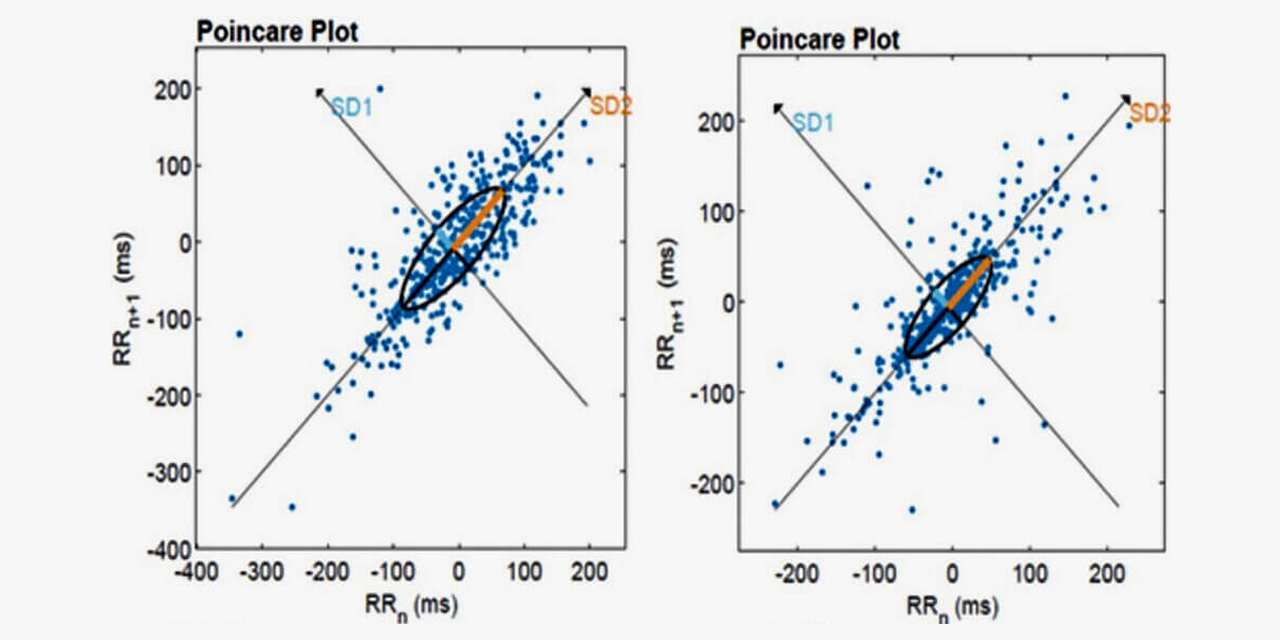
This shows how cold showers activate the nervous system, preparing the body to adapt to stress.
How Cold Shower Therapy Supports Mental and Physical Health
Taking cold showers isn’t a substitute for treating clinical conditions like anxiety disorders . However, it doesn’t mean it’s not beneficial.
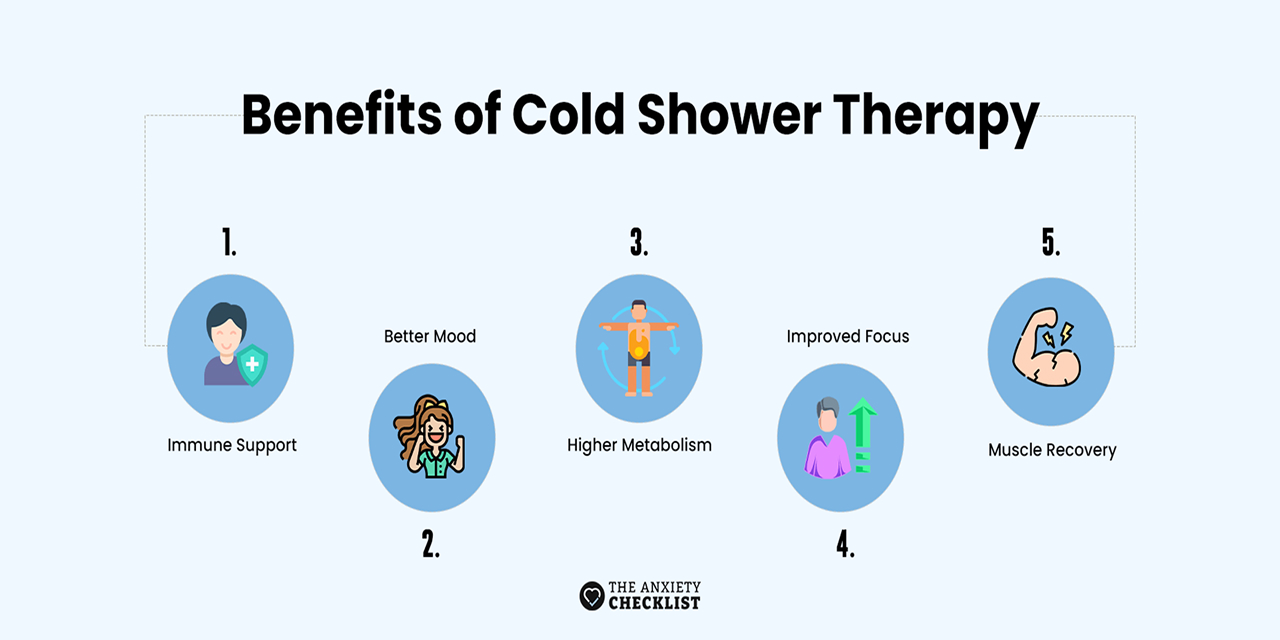
Improves Immune System Function
Your immune system protects you from viruses, bacteria, and other germs that can make you sick.
Doctors often measure how well your immune system works through blood tests. These tests look at markers such as:
When these markers are balanced and active, the immune system can respond more effectively to threats. Cold shower therapy can influence these immune markers.
In fact, in one study, 60 healthy adults were assigned to take either daily cold showers or hot showers for 90 days. The cold shower group showed increases in important immune proteins, including:
These changes suggest that repeated cold exposure helps the immune system respond better. Cold showers can also lower stress just 12 hours after, and people who take them regularly report 29% fewer sick days at work.
Reduces Depression and Anxiety Symptoms
Depression and anxiety are mental health conditions that affect thoughts , mood, and energy levels. For instance, the brain chemicals that help control mood are:
When these chemicals become unbalanced, you may feel sad, worried, or emotionally drained.
Another important factor is cortisol level. Cortisol rises when the body is under stress. If cortisol stays high for long periods, it can increase anxiety and disrupt sleep. It can also worsen symptoms of depression. Cold shower therapy helps reduce these symptoms.
This is because cold exposure triggers a short stress response in the body. This activates the sympathetic nervous system, which controls the fight-or-flight response . After the initial shock, the body begins to calm down and regulate stress signals.
In fact, a 2024 study examined men who practiced winter swimming to see how a single cold-water immersion at 4 °C affected mood. Feelings were measured before, immediately after, and 24 hours later. The study found that:
Even though showers are warmer than 4 °C, you can gradually lower the temperature over time. This can help reduce anxiety and stress in the long run.
Increases Metabolic Activity
Cold shower therapy may increase metabolic activity. This happens because cold exposure activates brown adipose tissue, often called brown fat.
Unlike regular body fat, brown fat burns calories to produce heat. This process is called thermogenesis. When brown fat becomes active, the body uses more energy to stay warm.
Research supports this effect. Seven studies involving 85 healthy adults were reviewed to see how cold exposure affects metabolism. They measured several markers in the blood, including:
Cold exposure did not significantly change blood sugar, insulin, or triglyceride levels. However, it increased free fatty acids, which the body uses as fuel for brown fat.
This suggests that cold exposure activates brown fat so the body can generate heat.
In simple terms, cold shower therapy may slightly increase calorie burn because the body is working harder to stay warm.
However, cold shower therapy is not a weight-loss method, but it helps support higher metabolic activity over time.
Improves Focus and Mental Alertness
If you want to stay alert and more focused, you can start with cold shower therapy. When your body is exposed to cold water, it triggers a rise in norepinephrine, a brain chemical that boosts attention, reaction speed, and alertness.
Here’s how cold shower therapy works for focus and alertness:
A study examined people who did short cold-water sessions at about 10 °C , three times a week, for three weeks. Researchers measured focus and thinking speed before and after the sessions. Results showed that:
Reduces Muscle Soreness After Exercise
After a hard workout, muscles can feel sore for a day or two. This is called delayed onset muscle soreness (DOMS). It happens because tiny tears form in muscle fibers, and the body needs time to repair them.
Cold temperatures can help with soreness. Cold water temperature of 14 °C for 14 minutes a day can help muscles feel less sore after tough exercise, according to PMC.
This study showed soreness dropped faster in the cold-water group than in people who didn’t use cold water. However, for this to work, you need colder temperatures and a longer time than those in beginner cold shower therapy.
Watch this short video to learn about the benefits of cold shower therapy:
Can Cold Shower Therapy Help Build Resilience to Panic Attack Symptoms?
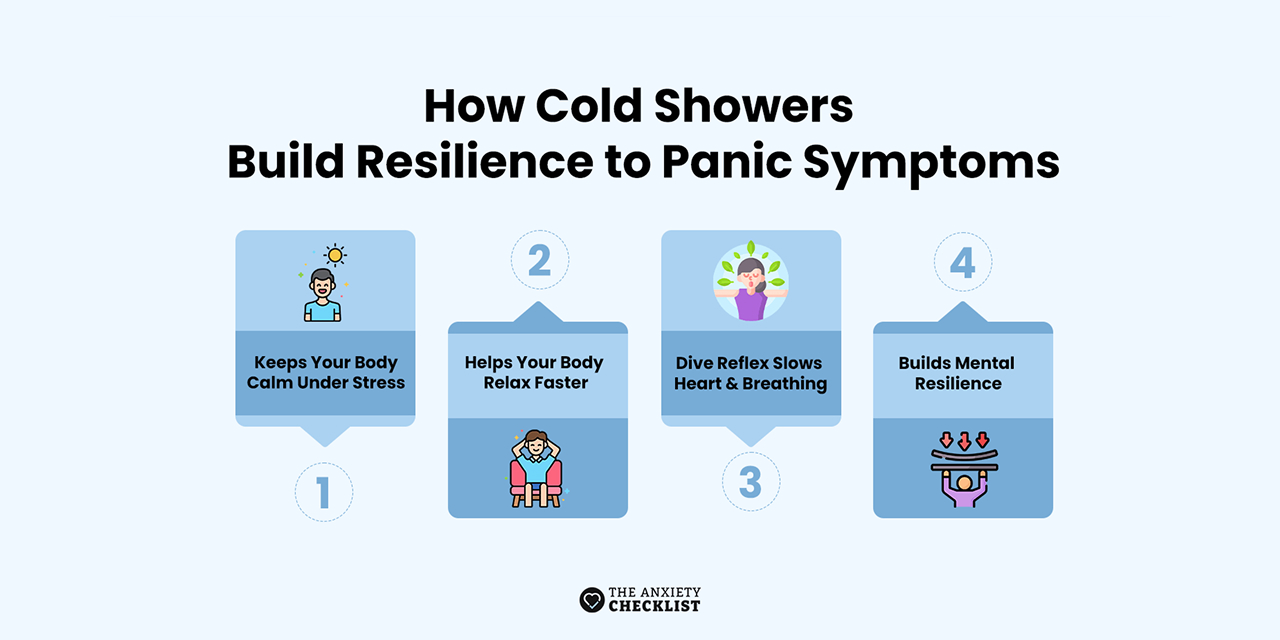
Yes. Cold shower therapy helps train your body and mind to stay calm during sudden stress. This can reduce panic symptoms over time. For example, you may feel less overwhelmed by dizziness, fast heartbeats, shortness of breath, or overthinking .
Here’s how cold shower therapy helps reduce panic symptoms:
Safety Considerations When Doing Cold Shower Therapy
Cold shower therapy can be powerful, but it isn’t for everyone. People with certain health conditions need to be careful.
For example, cold exposure can trigger a rapid heartbeat and put extra stress on the body.
If you have heart disease, high blood pressure, or other cardiovascular issues, talk to a doctor before starting cold shower therapy. If you have Raynaud’s syndrome, you should also be cautious. Your fingers and toes may go numb in cold water.
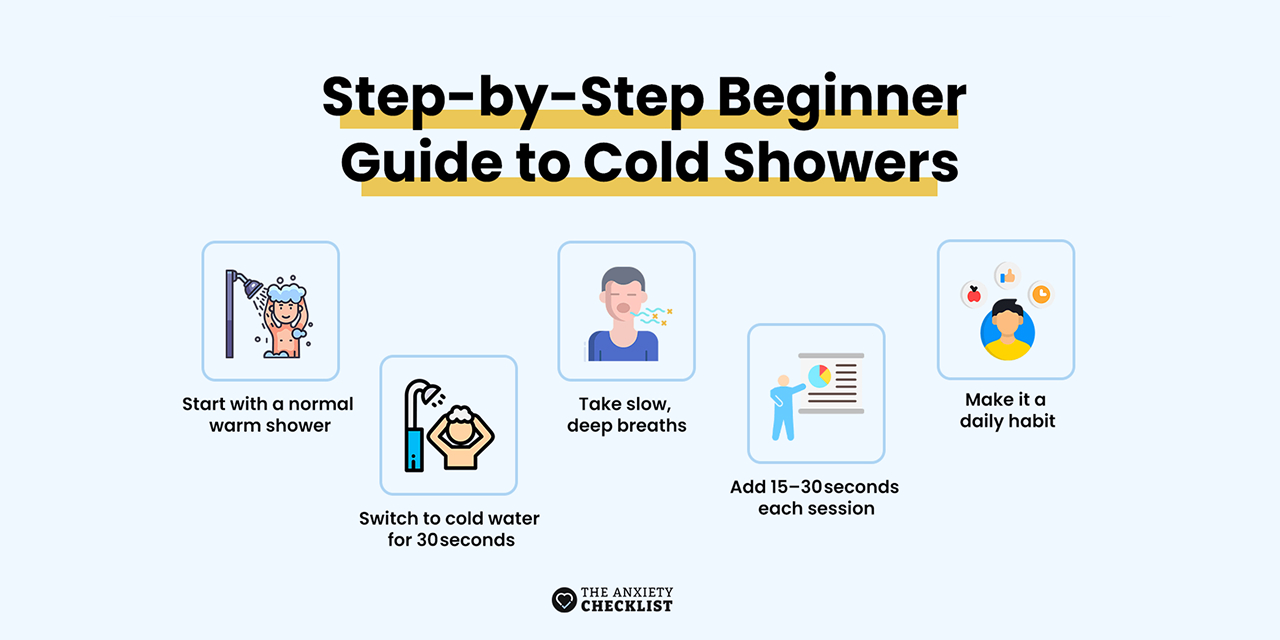
If you’re a beginner, don’t jump straight into freezing water. Start with short bursts at the end of a warm shower and increase gradually. For example, you can follow these steps to safely start cold shower therapy:
Even if you are healthy, pay attention to your body. Stop cold shower therapy immediately if you feel dizzy, weak, or unusually uncomfortable.
Frequently Asked Questions
Conclusion
Anxiety University
Explore the Anxiety University
Free guides to help you understand anxiety, one topic at a time.
- Getting StartedThe basics of anxiety and how it works
- Self-Assessments & Anxiety TestsCheck in on your symptoms with free tests
- Cognitive Traps & Thought PatternsSpot the thinking habits that fuel anxiety
- Stress ReductionPractical ways to calm your body and mind
- Common Anxiety PhobiasUnderstand specific fears and how they are treated
- Inspiring StoriesReal stories and words that remind you you are not alone