

In short
Build mental resilience by reframing unhelpful self-talk, creating a dependable routine, naming emotions, maintaining supportive relationships and breaking overwhelming moments into small actions. Grounding and breathing exercises can help during anxiety or panic, while a daily worry window can limit rumination; start with one or two practices and build through consistent practice.
Key takeaways
- Ask what you can control right now instead of dwelling on why something happened.
- Choose three anchor habits and practise them consistently for at least two weeks.
- When overwhelmed, focus on one manageable action you can complete in the next 20 minutes.
- Schedule a daily 15-minute worry window rather than trying to suppress anxious thoughts.
- For frequent anxiety or panic episodes, these practices complement but do not replace professional help.
What Is Mental Resilience?
Mental resilience is your ability to think, adapt, recover, and grow when life puts you through challenging situations.
These situations can range from career setbacks to personal losses. They might include relationship trauma, health scares, or other major stressors of modern life. It’s more about your ability to process reality and navigate life’s challenges.
Here is a visual illustration of what mental resilience means.
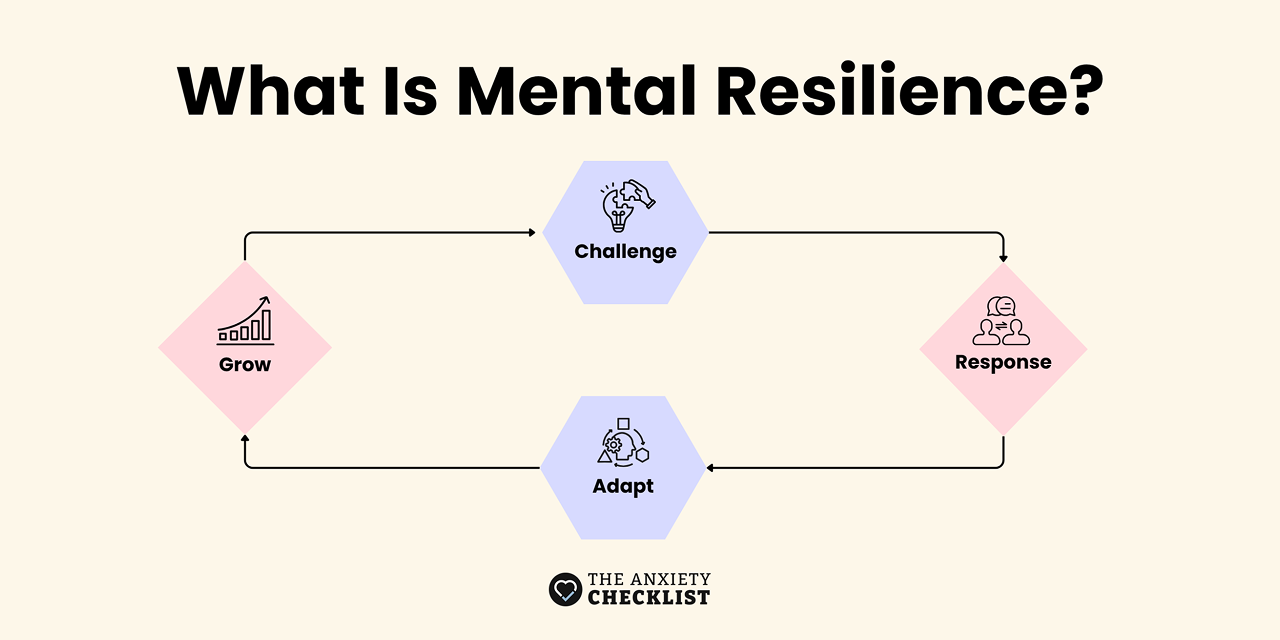
Resilience includes behaviors, thoughts, and actions. These skills can be learned and improved with practice.
However, mental resilience is often confused with mental toughness. The latter is associated with endurance, somewhat like a soldier. While mental resilience is a tree in a storm, it sways, but the roots hold because it’s flexible.
It’s a common notion that resilient people are built differently. But the truth is, they are heavily influenced by their habits, thoughts, and the support system they built over time.
Therefore, the mental resilience tips in this post are things you can use to rewire your brain and respond calmly to stress. Let’s actively reshape your life.
9 Mental Resilience Tips to Build Your Emotional Well-Being
These mental resilience tips focus on thought patterns, habits, and problem-solving skills. These are simple ways to reduce stress in difficult situations. You don’t need all nine, just start with one or two and build from there.
1. Reframe How You Talk to Yourself
Fixing your inner dialogue is one of the most underrated mental resilience tips.
When things go wrong, your brain defaults to tragic thoughts like, “I am not good enough” or “I can’t handle this.” This kind of negative thinking creates a spiral that impacts your problem-solving skills.
Simply put, the worse you talk to yourself, the harder it becomes to find solutions.
The solution isn’t pretending everything is fine. It’s asking better questions.
Instead of “Why does this keep happening to me?” try “What is the one thing I can control right now?” That shift is the actual differentiator separating a mind that reacts from one that responds.
Identifying cognitive distortions is a great place to start changing your inner dialogue and building resilience.
Here’s how you can reframe your thoughts.
Over time and with practice, your brain naturally inclines towards finding alternatives faster and seeing different perspectives. This mental resilience tip builds your ability to maintain a positive outlook, even when you’re naturally pessimistic.
2. Build a Routine You Can Rely On
When everything feels uncertain, a stable daily routine is your best psychological anchor. It grounds you and gives your day a sense of direction.
It’s the most natural yet underused mental resilience tip and a core self-care practice. In tough situations, sticking to a routine helps your nervous system feel calm. This reduces decision fatigue and gives you a quiet sense of control.
People with less daily structure often feel more anxious and depressed. A routine doesn’t have to follow the clock; even a loose structure is enough to make you feel in control.
Waking up at the same time and following a morning ritual helps your nervous system feel safe. Setting focused work time and enjoying hobbies can make a big difference.
Try this:
By the end of the second week, your body clock will start to align with your habits automatically. Even on the days you feel like doing nothing, the routine carries you through tough times. That’s what makes it one of the most reliable mental resilience tips on the list.
3. Take Cold Showers
This is one of the mental resilience tips that often gets dismissed because it works at a physiological level. Just 30-90 seconds of cold water exposure at the end of your shower triggers a spike in norepinephrine and dopamine.
Research shows that cold exposures can increase dopamine levels by up to 250%, with effects lasting for hours.
The image below explains how cold showers regulate stress and help build mental resilience.
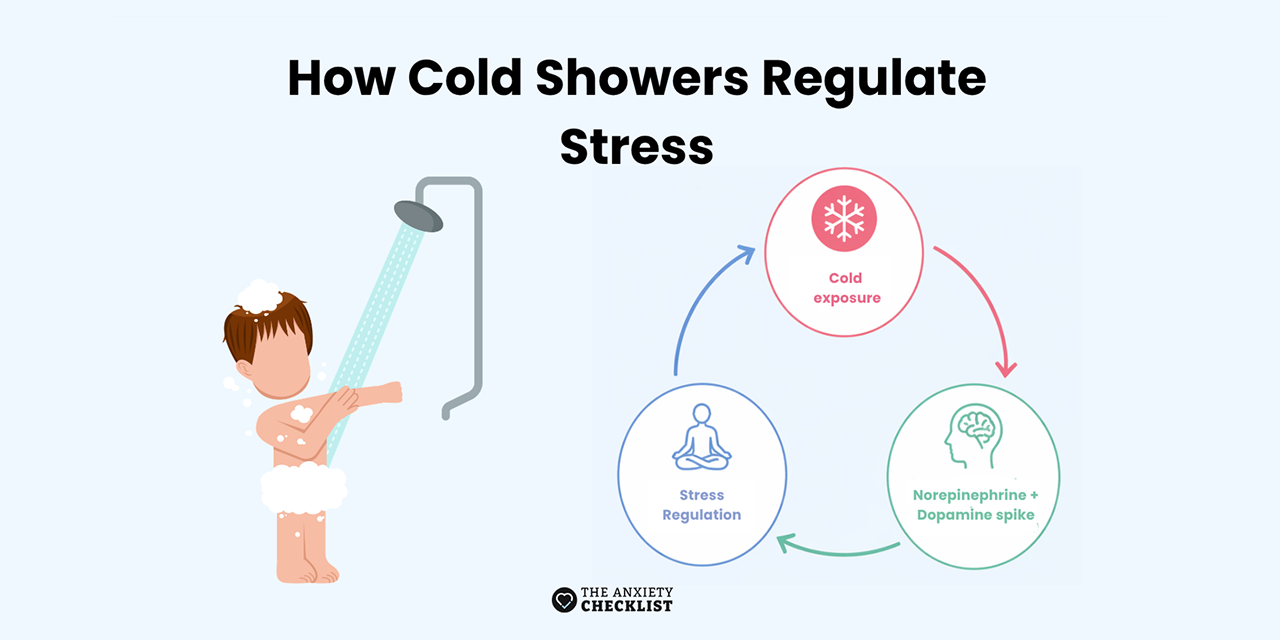
Repeated exposure trains your nervous system to remain calm in the face of involuntary stress. You learn to regulate your breathing instead of panicking. That’s how you practice the core skill behind all mental resilience tips — maintaining composure when your body wants you to react.
Here are some other benefits of cold showers.
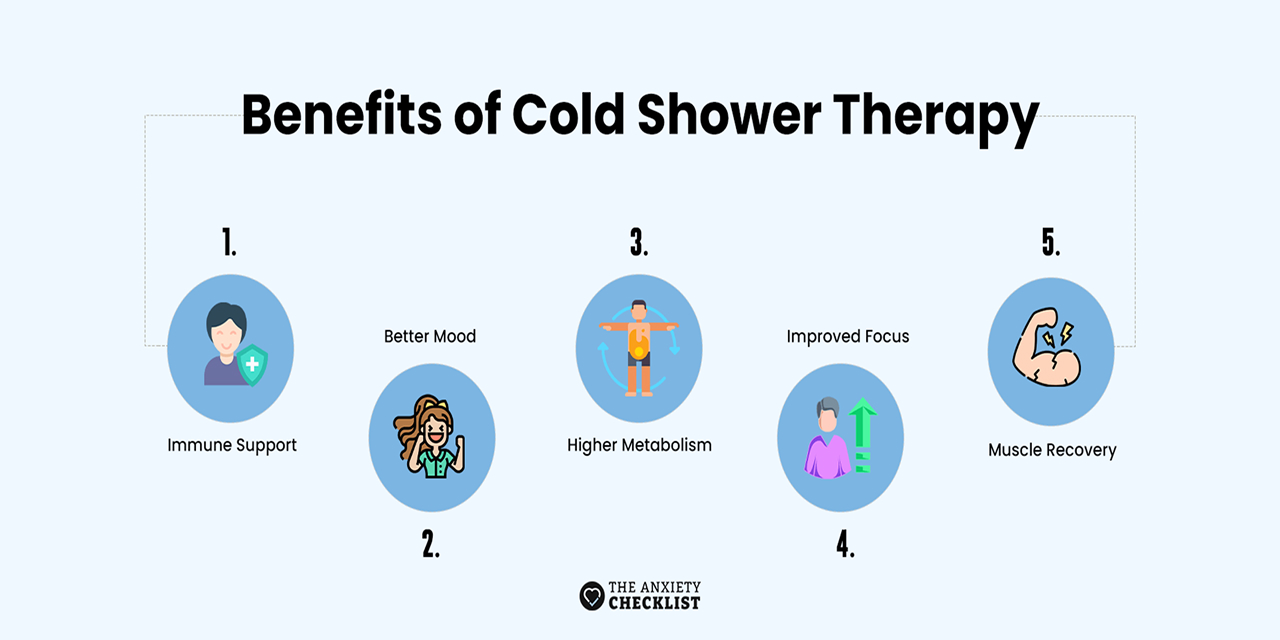
Managing anxiety while working on a resilience strategy can be tough. Learning about cold shower therapy for anxiety can help a lot.
Here are some tips to get started with cold shower therapy.
Don’t fight the discomfort, just breathe through it. With practice, your nervous system becomes calm and naturally overrides stress in real-life situations. Few mental resilience tips deliver results this quickly.
Watch how deliberate cold exposure works on your nervous system, making it an effective tool for building mental resilience.
4. Develop Emotional Awareness
Human emotions quickly take over, leading to impulsive decisions, snapping at others, or shutting down completely.
Developing emotional awareness is a key tip for mental resilience because it helps you understand your feelings. It helps you manage your emotions rather than just reacting to what's around you.
Research from the Yale Center for Emotional Intelligence shows that higher emotional awareness improves decision-making skills under pressure and boosts emotional resilience.
This doesn’t mean you suppress difficult feelings; instead, try to name them, which neurologically reduces their intensity.
In brain imaging studies, saying something like “I am feeling anxious” lowers activity in the amygdala - part of the brain that detects threats.
Here are some things you can try to build emotional awareness.
This practice builds significant emotional regulation and enhances emotional well-being. Of all the mental resilience tips on this list, this one has the most direct connection to how you feel day to day.
5. Strengthen Your Support Network Intentionally
It is a common myth that resilient people handle everything alone. In reality, strong social networks help people cope better and recover faster from tough situations. Social resilience strengthens your ability to work with others to endure stress and recover from it.
But what if social situations trigger your anxiety ?
It will help to understand how social anxiety disorder could be getting in the way of building social connections. Delve into their types, causes, and treatment to establish a dependable social network and boost your mental health.
However, building those connections requires intent.
Most adult friendships drift because of neglect. Which is why the best time to invest in them is before you need them. This mental resilience tip encourages investing in someone else's mental health.
Try this:
Unlike other mental resilience tips, this one focuses on who you’re connected to. Building your network is a mental resilience tip that pays forward. Moreover, having good social relationships helps create a supportive network you can rely on when things get tough.
6. Use The 5% Rule When You’re Overwhelmed
This is one of the most practical mental resilience tips to deal with real-time fatigue.
When anxiety peaks, the brain tends to project the entire future at once. The 5% rule disrupts that dramatic downward spiral by letting you focus on the next 5% of your day. It could be the next hour, the next 20 minutes, or even a single step forward.
This technique works because your nervous system pulls back from imagined futures and returns to the present. It helps you break complex issues into manageable steps. That’s how the 5% rule builds competence and confidence — two of the 7 Cs of Resilience.
This is among the best tips for building mental resilience amid overwhelm.
Here are some tips to use this rule.
You can use this anywhere, even at your desk or when commuting. It quickly moves you from anxiously overthinking to action. This is what makes it the most practical mental resilience tip for real-time stress.
7. Build Resilience Toward Anxiety and Panic Attacks
Stress and anxiety are where most people struggle, and also where most advice fails. While both are quite common, many people still don’t know how to cope, especially when a panic attack hits.
So what exactly goes on in your body during a panic attack? It follows a rapid chain:
a. Your amygdala fires a false alarm
b. Your nervous system releases adrenaline
c. Your heart rate spikes
d. Your chest tightens
e. You struggle to breathe
Recognizing these panic attack symptoms and triggers makes them easier to manage. Resisting a panic attack amplifies the trigger.
Awareness, acceptance, and active psychological regulation help you handle initial reactions effectively. These are the same foundations that underpin all effective mental resilience tips.
There are also several breathing exercises you can try to cope with panic and anxiety attacks, such as:
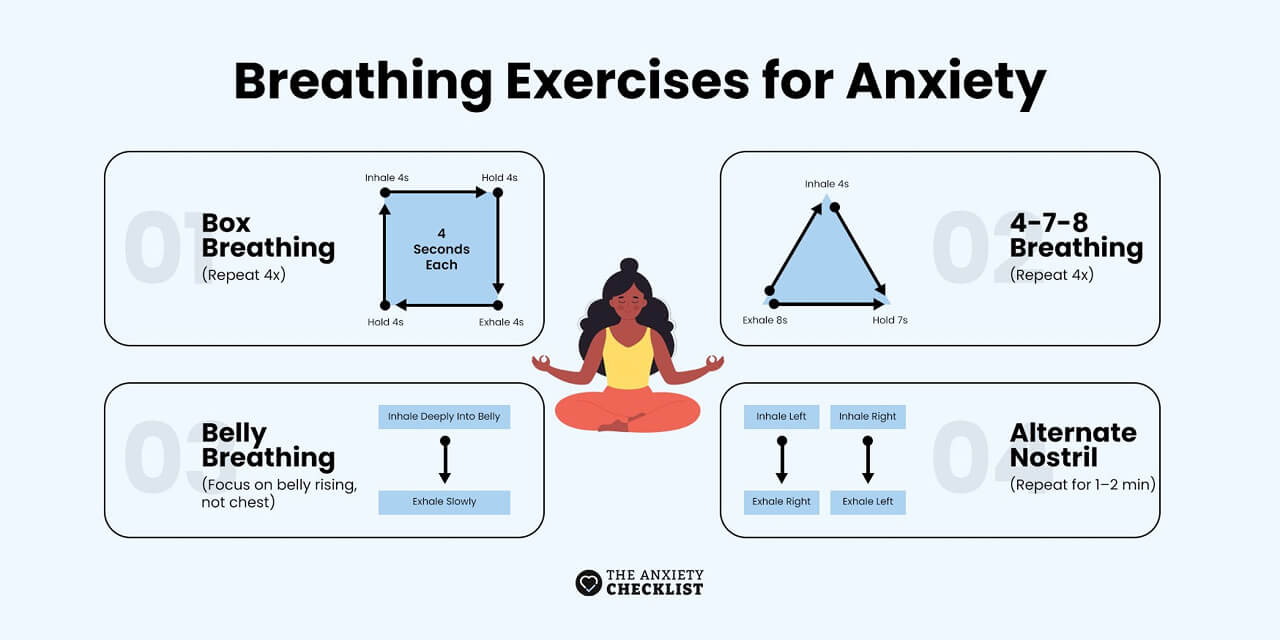
While the exact technique may differ, the goal is the same — to ground you in the moment and bring your mind back to the present. These also help calm your nerves and generally relax your body and mind.
Let’s discuss some of the popular techniques you can use to build mental resilience.
- Vagus Nerve Activation : Try a 4-count inhale, 7-count hold, and an 8-count exhale. Slow, long exhales directly stimulate the vagus nerve and slow your heart rate.
- The 5-4-3-2-1 Grounding Technique : Name 5 things you can see, 4 you can touch, 3 you can hear, 2 you can smell, and 1 you can taste. This activates your prefrontal cortex, which interrupts the panic loop.
- Acceptance, Not Suppression : Acceptance and Cognitive Behavioral Therapy (CBT) exercises can also help. Instead of fighting anxiety, observe it. Try deep breathing with self-assurance - I notice I am feeling anxious. That’s ok, it will pass.
- Box Breathing : Remember 4-4-4-4, inhale for 4 counts, hold for 4, then exhale for 4 counts, and hold for another 4. This slows your breathing and shifts your nervous system to rest mode. It’s a good way to regulate your breath and calm yourself when things get overwhelming.
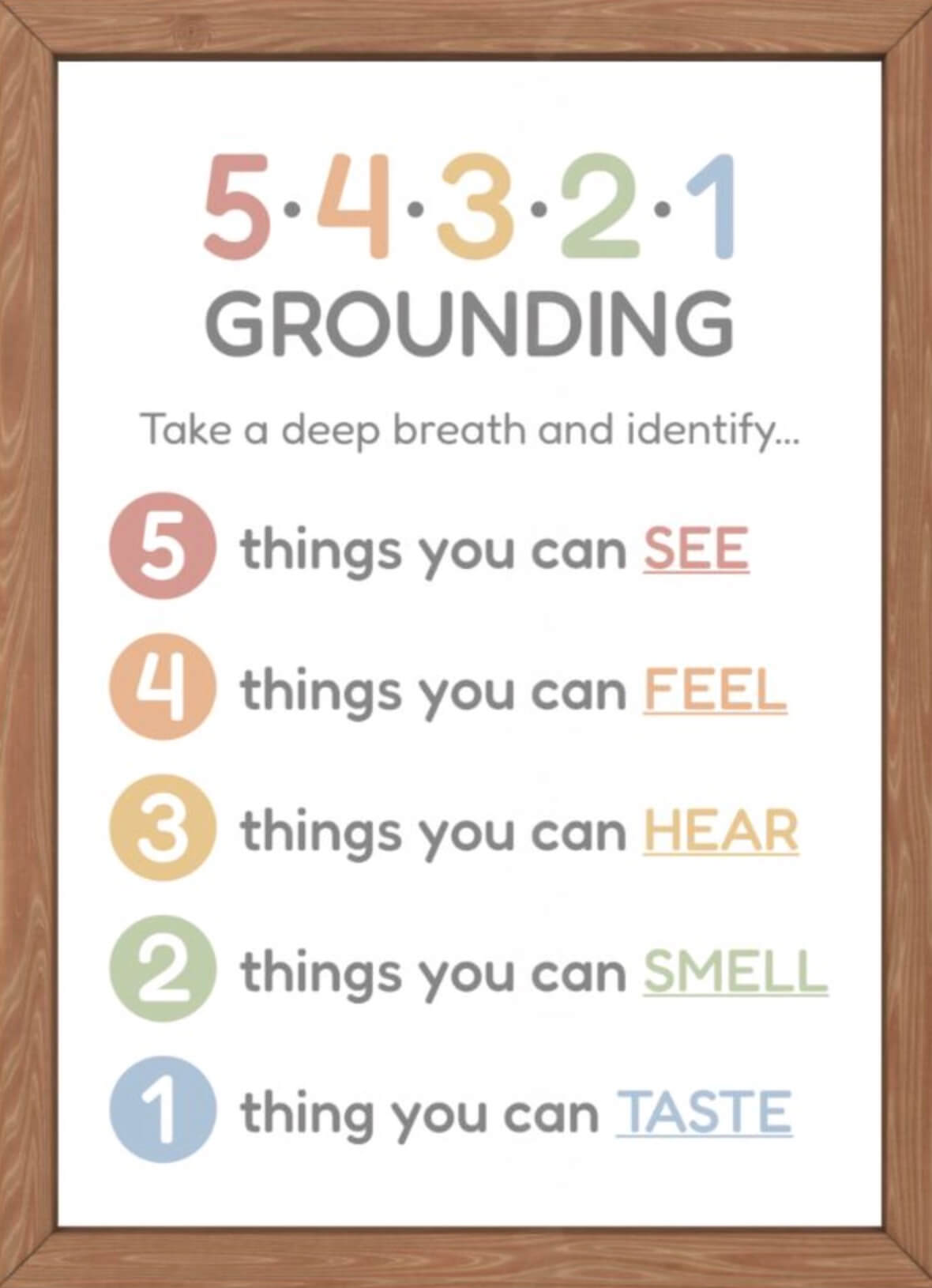
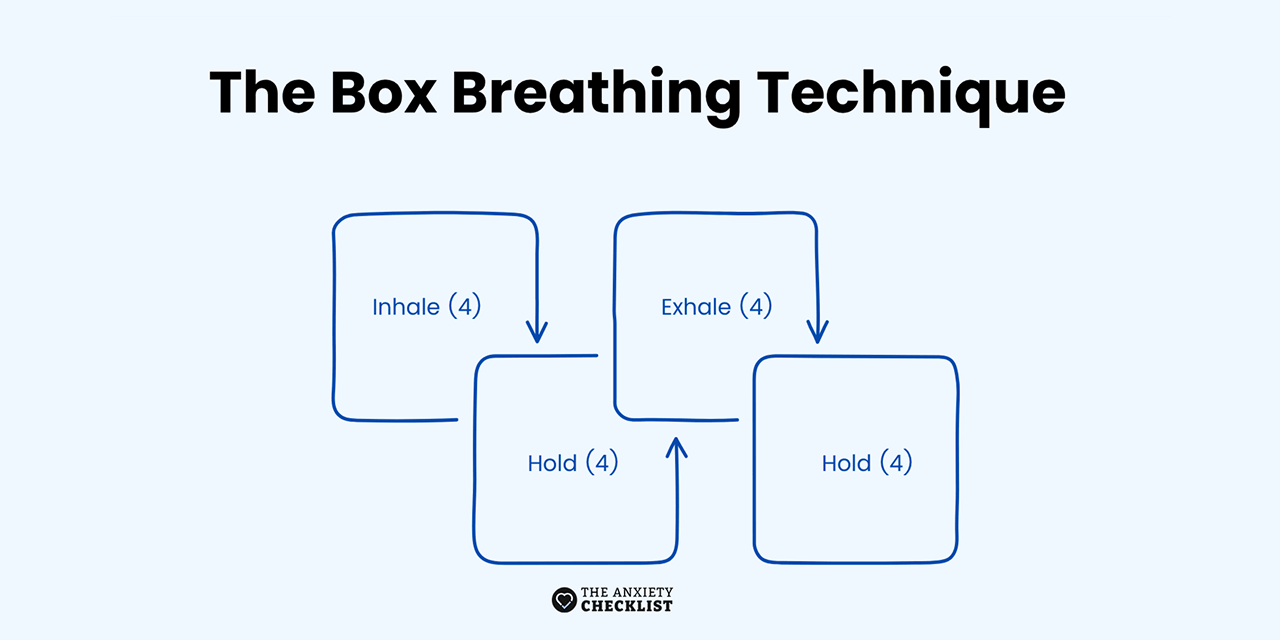
You can find more breathing exercises for anxiety, including mindfulness anchors, breathing protocols, and Progressive Muscle Relaxation (PMR).
For frequent episodes, these mental resilience tips complement but do not substitute for professional help. CBT with a qualified mental health professional is the most supported treatment for anxiety disorders.
It is also worth preparing yourself to manage the after-effects of a panic attack so you can handle the full cycle.
8. Limit Rumination With A Worry Window
Replaying stressful thoughts repeatedly is the main barrier to developing mental resilience.
While most mental resilience tips focus on what to do, this signals what to stop doing. Rumination and self-blame can often cause depression and anxiety.
The worry window is a practical CBT technique for limiting rumination without suppressing it. Instead of trying not to think about something (which usually makes you think about it more), you allot a specific time to worry.
Try this:
Now you’ll realize the otherwise poking thoughts feel less urgent than they felt in the moment. It will take about two weeks to feel the difference in your reaction.
This mental resilience tip works quietly but consistently. It will help you learn from past mistakes and feel good about every win. In the long term, it will help you become more resilient and ready to face life’s challenges.
9. Reflect on Past Setbacks
The last and one of the more overlooked mental resilience tips is to look back at what you’ve survived and learn from it.
Most people either avoid thinking about the hard times or replay them with self-criticism. The best way to reflect on your past struggles is to coach yourself through them.
Ask yourself these questions: What happened? What did I do well? How could I handle it differently? What did I learn?
An honest, growth-focused reflection is key to creating a strong base for lasting mental resilience. To better understand your anxiety patterns before reflecting, take this clinically validated GAD-7 anxiety test.
Here are some mental resilience tips you can try.
You can create a dedicated resilience journal to document your thoughts and experiences. Use it as often as you need to keep detailed records.
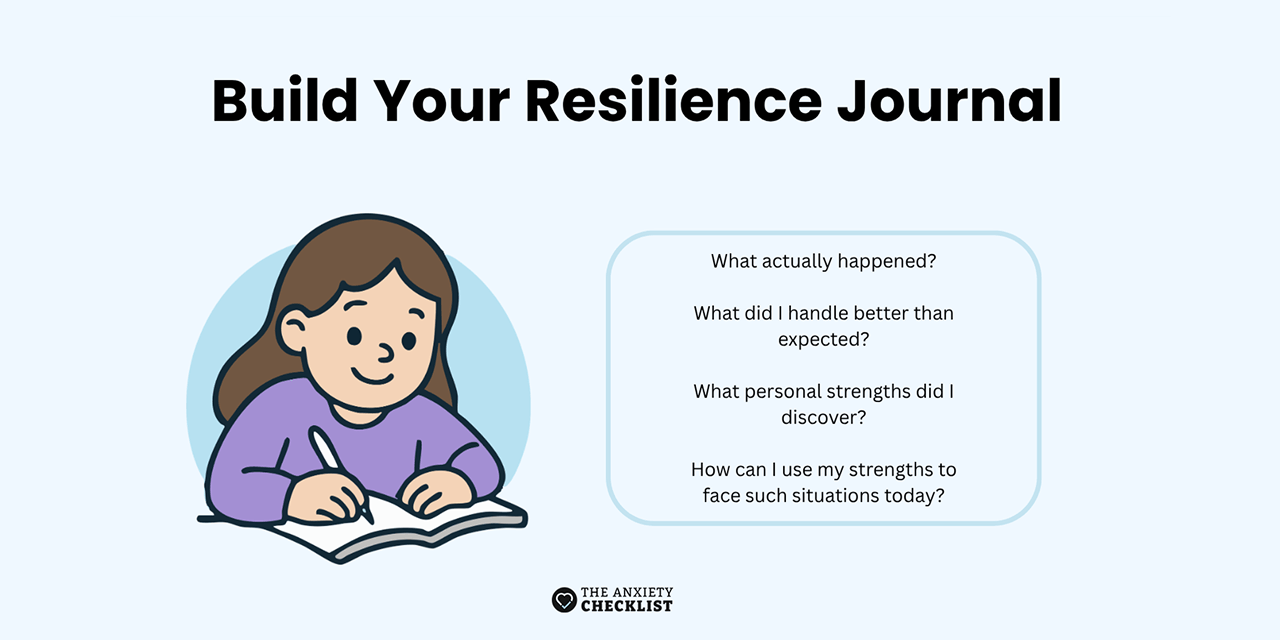
Of all the mental resilience tips, this is most likely to stick because it is rooted in your own story rather than in a designed self-care framework. So, if you want to start with just one, this could be a good option for you.
Frequently Asked Questions
The mental resilience tips in this post offer practical steps to enhance your mental health; they’re easy to follow and can be repeated. You can start with just one or two, and when you’ve mastered those, you can try more.
Mental resilience is more flexible and involves tackling challenges thoughtfully. Most mental resilience tips focus on building this flexibility. Resilience is a more sustainable and holistic skill than toughness. So, building resilience is important to cope with anything that life throws at you.
Building Mental Resilience Is Not a Destination, It’s a Journey
Anxiety University
Explore the Anxiety University
Free guides to help you understand anxiety, one topic at a time.
- Getting StartedThe basics of anxiety and how it works
- Self-Assessments & Anxiety TestsCheck in on your symptoms with free tests
- Cognitive Traps & Thought PatternsSpot the thinking habits that fuel anxiety
- Stress ReductionPractical ways to calm your body and mind
- Common Anxiety PhobiasUnderstand specific fears and how they are treated
- Inspiring StoriesReal stories and words that remind you you are not alone