


In short
Claustrophobia is an intense, irrational fear of confined spaces or situations where escape feels difficult, causing anxiety that can feel out of proportion to any actual danger. Symptoms may include rapid heartbeat, breathlessness, dizziness, panic, intrusive worries and avoidance of places such as elevators, aircraft or MRI machines. It is treatable, most often through therapies including CBT and gradual exposure, with medication sometimes used in severe cases.
Key takeaways
- Triggers vary, but often involve enclosed, crowded or difficult-to-exit places.
- Repeated avoidance can provide short-term relief but may worsen symptoms over time.
- Past confinement, learned behaviour, biology and other anxiety disorders may all contribute.
- Exposure therapy gradually introduces feared situations in a controlled, safe environment.
- Controlled breathing, grounding, visualisation and mindfulness can help manage anxiety alongside therapy.
Ever felt your chest tighten in a crowded elevator? Maybe your palms started sweating in a packed subway car.
For most people, these moments pass quickly. For those with claustrophobia, these situations trigger intense and overwhelming anxiety.
This fear of enclosed spaces affects millions of people worldwide. It can make everyday activities, from riding in elevators to sitting in crowded rooms, feel impossible.
Claustrophobia is manageable. However, you should understand its symptoms, triggers, and treatment options. In this guide, you’ll learn what causes this common phobia and discover practical strategies to manage it effectively.
What Is Claustrophobia?
Claustrophobia is an intense, irrational fear of confined spaces or situations where escape feels difficult. It’s more than just normal discomfort in tight spaces.
This common phobia can trigger panic attacks and overwhelming anxiety even when there’s no actual danger.
This fear of enclosed spaces often feels immediate and uncontrollable. Even thinking about a tight space can trigger claustrophobic symptoms.
The Diagnostic and Statistical Manual, Fifth Edition (DSM-5) recognizes claustrophobia as an anxiety disorder . It falls under the specific phobias category and is considered a “situational” phobia.
Studies suggest that it affects around 12.5% of the population. Claustrophobia often develops after a traumatic event involving confinement. Others seem to develop it without any obvious trigger.
The physical symptoms of claustrophobia can be debilitating, including rapid heartbeat, difficulty breathing, chest pain, and dizziness.
What makes this fear of enclosed spaces different from everyday unease? The intensity and persistence of the fear response.
Someone might avoid MRI machines, airplanes, or even small rooms entirely. Unlike a simple dislike of tight spaces, claustrophobia evokes anxiety that can feel out of proportion to the actual danger.
The fear isn’t just about the space itself. The individual is often scared of what could happen in the enclosed space, including losing control or being trapped.
This explains why some people feel claustrophobic in a crowded room but not in a small empty closet. The key issue is the feeling that there’s no way to escape.
Symptoms of Claustrophobia
Claustrophobia symptoms can vary with each individual. Some experience mild discomfort while others face debilitating panic attacks . You must recognize these symptoms so you can get the right help.
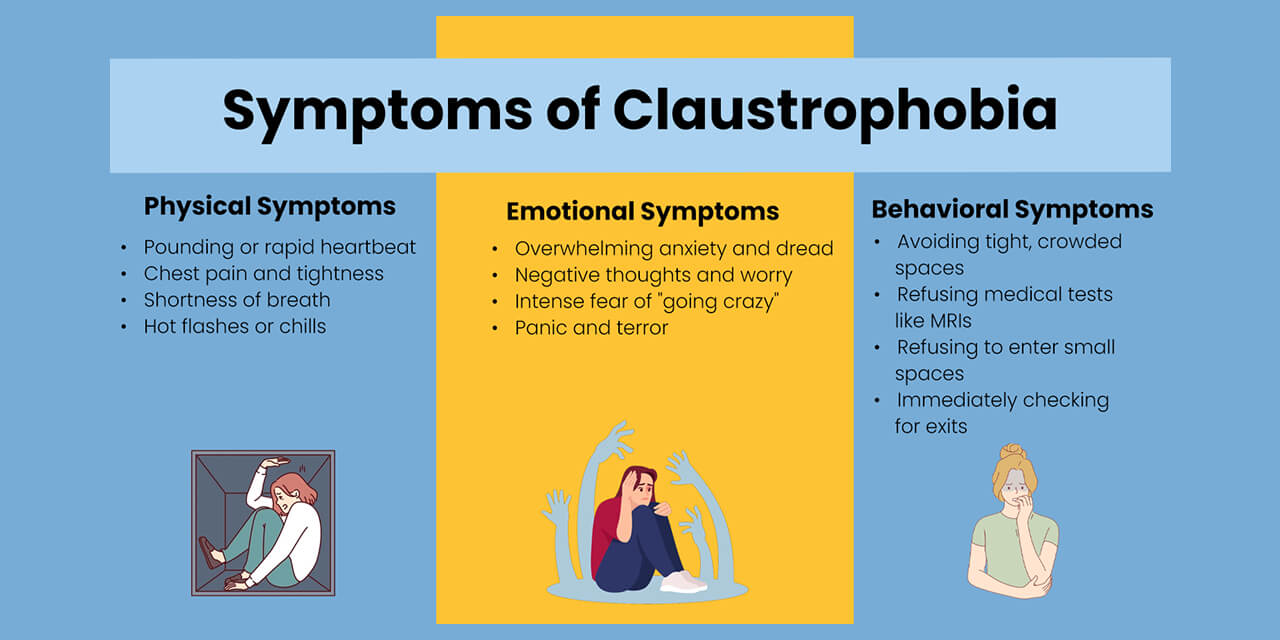
Physical Symptoms
When someone with claustrophobia enters a confined space, their body responds immediately. These physical symptoms often feel like a panic attack. Common signs include:
These reactions are caused by intense anxiety, not actual danger.
Emotional and Cognitive Symptoms
The mental and emotional impact of claustrophobia can be just as intense as physical symptoms. You could experience:
Over time, these thoughts can make anxiety attacks feel intense and difficult to manage.
Behavioral Symptoms
People with a fear of enclosed spaces often change their behavior to avoid triggering situations. Here are some of the actions they may take:
Avoidance can bring short-term relief, but it may worsen claustrophobia symptoms over time.
Causes and Risk Factors of Claustrophobia
Understanding the causes of claustrophobia can help you make sense of it. Like most anxiety disorders , the fear of enclosed spaces doesn’t have a single cause. It usually develops from a combination of experiences, biology, and environmental factors.
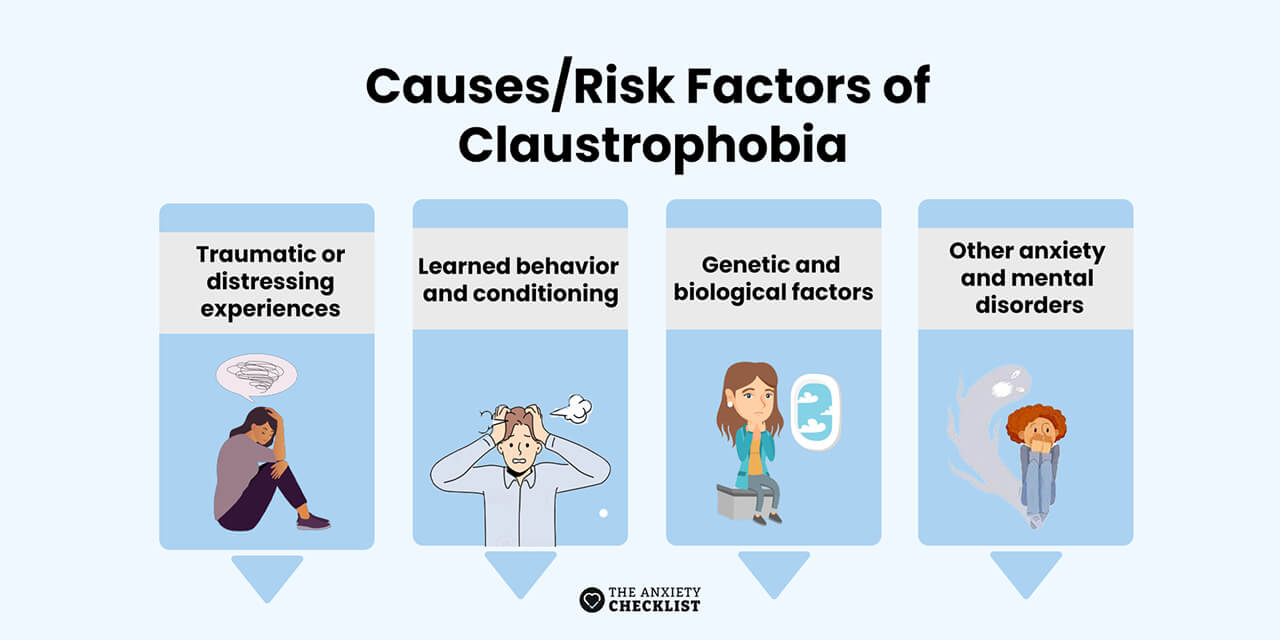
Traumatic or Distressing Experiences
A past traumatic event where a person was confined can cause them to develop claustrophobia. Such events might include being trapped, restrained, or stuck in a small space
These experiences create lasting associations between enclosed spaces and danger. In fact, even a single traumatic event can trigger claustrophobia that lasts for years. The brain remembers the fear and tries to protect you by avoiding similar situations.
Learned Behavior and Conditioning
The fear of enclosed spaces can also be learned without direct trauma. Children, in particular, can develop it by watching parents or caregivers react with intense fear in tight spaces. This happens naturally through observation and repetition.
Growing up in households where confinement was used as punishment also increases risk. Being locked in closets or small rooms as discipline creates negative associations. These early experiences shape your brain’s response to confined spaces later in life.
Genetic and Biological Factors
Research in clinical neurosciences shows that some people may be biologically predisposed to anxiety disorders. If close family members have claustrophobia or other phobias, your risk increases. It’s not inevitable, but genetics make you more vulnerable.
Brain chemistry also plays a role. Certain areas of the brain may respond more strongly to feared situations, making anxiety attacks more likely.
Other Anxiety Disorders and Mental Disorders
Claustrophobia often coexists with other mental health conditions. Having panic disorder increases your likelihood of developing specific phobias . Generalized anxiety disorder and social anxiety disorder also raise your risk.
People with one anxiety disorder are more susceptible to developing others. Being sensitive to anxiety can make feared situations feel more intense. Looking at personal or family health history may help explain related factors.
Common Triggers of Claustrophobia
Certain situations are more likely to trigger the fear of enclosed spaces than others. Identifying your specific triggers helps you prepare coping strategies. It can vary with each person, but here are some common triggers:
What causes severe anxiety for one person might not bother another. The key is recognizing your personal triggers so you can come up with personalized coping strategies.
Treatment Options for Claustrophobia
The fear of enclosed spaces is treatable, even when symptoms feel intense or long-standing. Most people see significant improvement through therapy, but some may need more interventions.
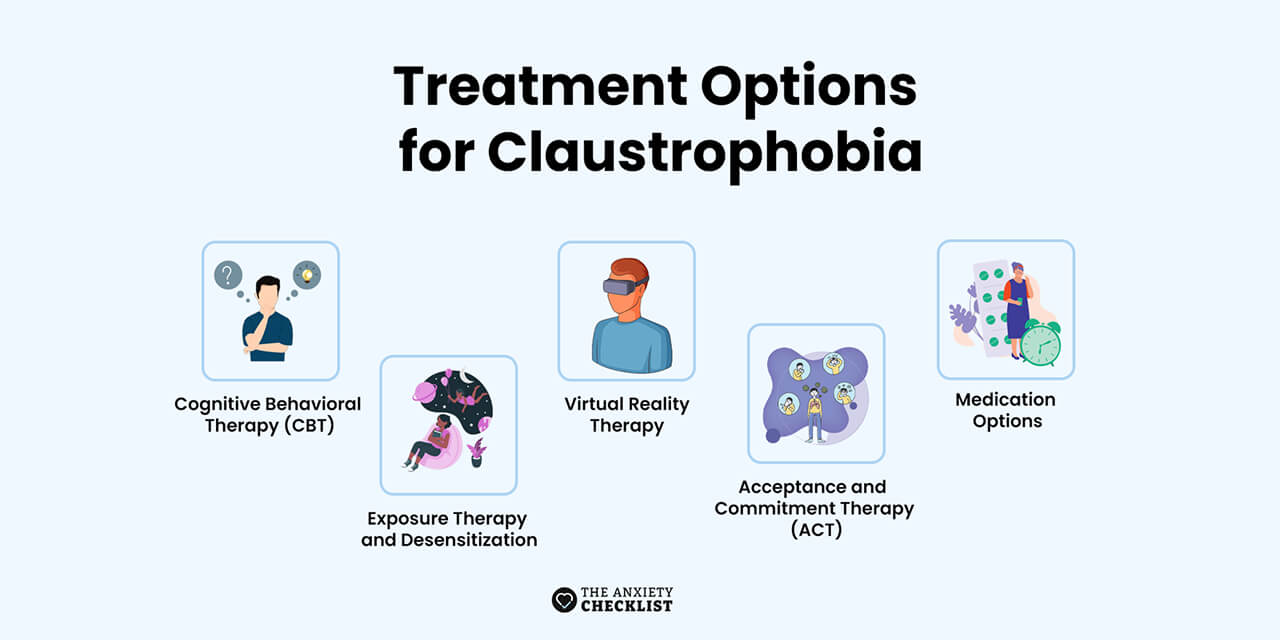
Cognitive Behavioral Therapy (CBT)
CBT is one of the most effective claustrophobia treatments. This talking therapy helps you identify and challenge negative thoughts about enclosed spaces.
A therapist teaches you to recognize irrational fear patterns and replace them with more balanced thinking. They help you focus on the connection between thoughts, feelings, and behaviors
This helps you learn that your thoughts about danger aren’t always accurate. Over time, you develop healthier responses to confined spaces.
Exposure Therapy and Desensitization
In exposure therapy , you’re gradually exposed to feared situations in a controlled, safe environment. The process starts small and builds slowly over time. It’s also often combined with CBT.
For example, your therapist might begin by having you look at pictures of elevators. Next, you might stand near an elevator without entering. Eventually, you’ll ride the elevator for short distances.
Systematic desensitization helps you relax while gradually confronting your fear of enclosed spaces. This approach helps your brain learn that enclosed spaces aren’t actually dangerous.
Virtual Reality Therapy
Virtual reality games are offering a new way to treat phobias. This type of therapy lets you practice facing feared situations without leaving the therapist’s office.
It provides realistic exposure in a safe environment, without real-world pressure. Essentially, you wear a headset that simulates elevators, airplanes, or other confined spaces. You can also repeat scenarios as often as necessary.
Virtual reality therapy can be as effective as traditional exposure. It’s particularly helpful for people with a severe fear of enclosed spaces who aren’t quite ready for actual exposure.
Acceptance and Commitment Therapy (ACT)
ACT takes a different approach than traditional CBT . Instead of fighting your fear of enclosed spaces, you learn to accept it without judgment.
This therapy teaches mindfulness and helps with accepting uncomfortable sensations. It doesn’t try to eliminate fear, but it helps you move forward despite your claustrophobia.
By focusing on values-based actions, ACT exercises reduce distress and avoidance behaviors when you face triggers.
Medication Options
While therapy is the primary treatment, medication can help in severe claustrophobia cases.
A psychiatrist may prescribe selective serotonin reuptake inhibitors (SSRIs) or short‑term anti‑anxiety drugs. These medications help regulate brain chemistry and reduce overall anxiety levels.
Medication is usually paired with talking therapy or CBT, since long‑term progress depends on addressing thought patterns and behavior.
Coping Strategies and Self‑Help Techniques for Claustrophobia
While professional treatment is often necessary for severe claustrophobia, many coping strategies can help reduce your fear of enclosed spaces and improve confidence in feared situations. These techniques are practical, easy to learn, and can be used alongside therapy.
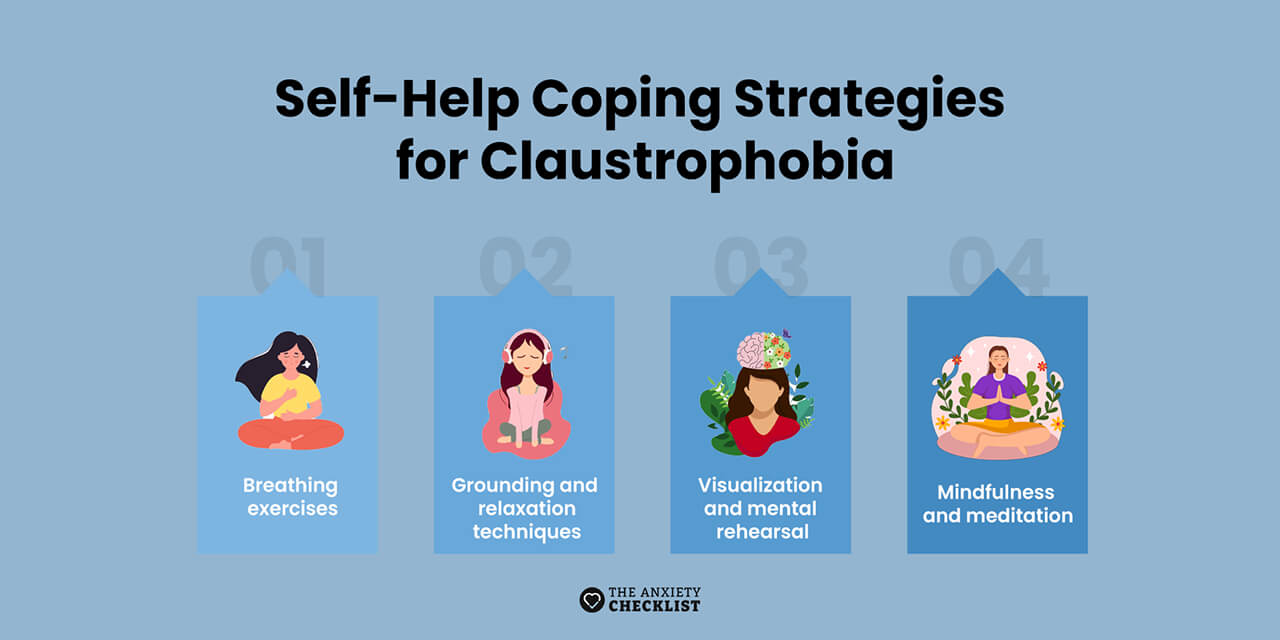
Breathing Exercises
Controlled breathing is one of the most powerful ways to calm the nervous system during intense anxiety.
When anxiety hits, your breathing becomes shallow and rapid. This triggers more physical symptoms and increases panic. Learning breathing exercises can help you interrupt this cycle. Helpful techniques include:
Grounding and Relaxation Techniques
Grounding techniques help you stay connected to the present moment. They prevent your mind from spiraling into “what if” scenarios that cause panic. Some handy techniques for handling your fear of enclosed spaces include:
Visualization and Mental Rehearsal
Your imagination can work in your favor when facing the fear of enclosed spaces. Visualizing creates mental safe spaces you can access anytime. Here are some ideas you can try:
Mindfulness and Meditation
Regular mindfulness practice helps you handle discomfort better. It teaches you to observe anxious thoughts without getting caught up in them.
Even a 15-minute daily meditation routine can help you build awareness and acceptance and enhance emotional control.
Frequently Asked Questions
Take Control of Your Fear of Enclosed Spaces
Anxiety University
Explore the Anxiety University
Free guides to help you understand anxiety, one topic at a time.
- Getting StartedThe basics of anxiety and how it works
- Self-Assessments & Anxiety TestsCheck in on your symptoms with free tests
- Cognitive Traps & Thought PatternsSpot the thinking habits that fuel anxiety
- Stress ReductionPractical ways to calm your body and mind
- Common Anxiety PhobiasUnderstand specific fears and how they are treated
- Inspiring StoriesReal stories and words that remind you you are not alone