

In short
Ergophobia is a persistent, overwhelming fear of work or working environments that can cause significant distress, avoidance and disruption to daily life, although it is not a standalone DSM-5 diagnosis. Possible contributors include traumatic work experiences, burnout, perfectionism, other mental health conditions, beliefs linking worth to productivity, and poor work-life balance. Treatment options include CBT, exposure therapy, EMDR, virtual reality therapy and, for some people, medication.
Key takeaways
- Triggers can include tasks, deadlines, authority figures, performance expectations or simply the idea of having a job.
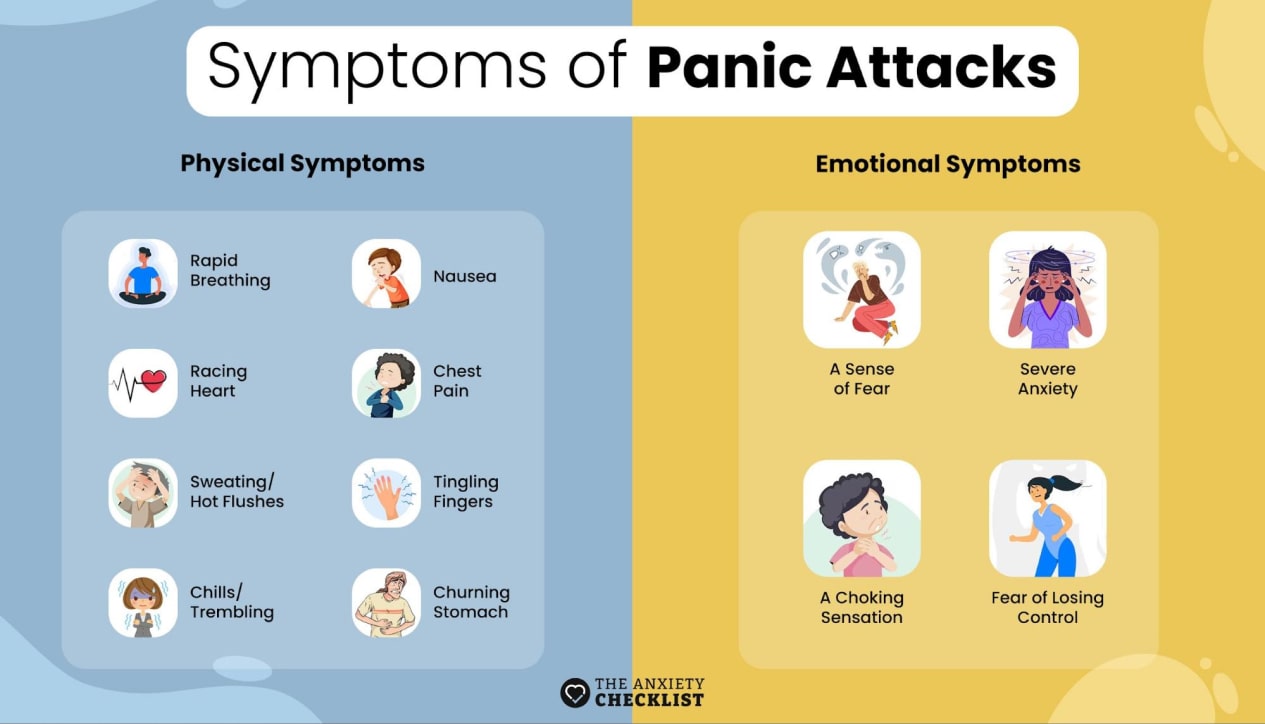
- Physical symptoms may include a racing heart, chest tightness, nausea, dizziness, sweating, trembling and fatigue.
- Avoidance may involve procrastination, sick days, lateness, declined opportunities or abruptly leaving jobs.
- A mental health professional must distinguish ergophobia from financial anxiety and other anxiety-related conditions.
- Everyday strategies include mindfulness, calming audio, progressive muscle relaxation, journalling and creating predictable routines.
What Is Ergophobia?
Ergophobia is a persistent and overwhelming fear of work or working environments.
This anxiety is usually triggered by specific tasks, performance expectations, authority figures, deadlines, or simply the idea of having a job.
The anxiety isn’t just mild stress or dislike for work. It can feel intense and uncontrollable. This fear of work can even disrupt your daily life.
We’d like to note that ergophobia isn’t listed as a standalone diagnosis in the Diagnostic and Statistical Manual of Mental Disorders (DSM-5).
However, it’s generally seen as a specific form of phobia, which means the fear is focused on a particular situation. In this case, the fear is triggered by work, which leads to avoidance or significant distress.
Professionals are also careful when diagnosing ergophobia because it can be related to other anxiety-related conditions.
For example, the fear of work may stem from:
What Causes Ergophobia?
Ergophobia develops as a response to stress, fear, or experiences that associate work with danger.
Though everyone’s experience is unique, and there may be more than one cause, below are some contributing factors to ergophobia.
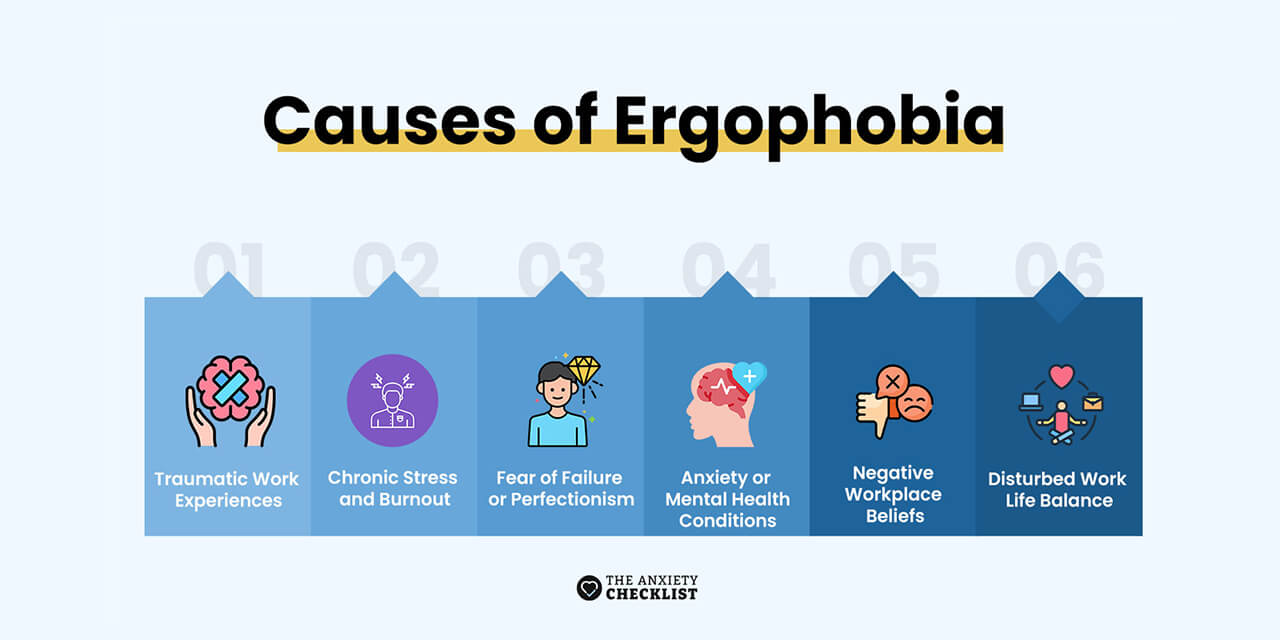
Past Traumatic Work Experiences
A toxic workplace, bullying, public criticism, sudden termination, or chronic pressure can leave lasting emotional scars .
If work once made you feel unsafe, powerless, or humiliated, your mind may try to protect you by avoiding anything related to it.
Chronic Stress and Burnout
Working long hours with little rest can cause your nervous system to go into survival mode.
With prolonged stress, even the thought of working again can trigger intense anxiety or cause you to shut down.
Fear of Failure or Perfectionism
If you feel intense pressure to perform flawlessly, make no mistakes, or meet impossible standards, fear of work can start to develop.
It’s not because you can’t do the job. It’s about what you believe will happen if you don’t meet or exceed your superiors’ expectations.
Anxiety Disorders and Mental Health Conditions
Ergophobia often overlaps with conditions like generalized anxiety disorder , social anxiety, OCD, or depression.
In these situations, work becomes a place that triggers fears like judgment, loss of control, or unwanted thoughts.
Negative Beliefs About Self-Worth and Productivity
Growing up in environments where worth was tied to achievement or productivity can make work feel emotionally risky.
If you’ve learned that rest equals failure, you may think any work-related activity is deeply threatening.
Disturbed Work Life Balance
Jobs with little flexibility, strict rules, or constant monitoring can throw off your work-life balance. This loop of constant working and no breaks can induce fear of work in people.
When you feel stuck or unable to meet your needs at the workplace or at home, it causes avoidance
Symptoms of Ergophobia
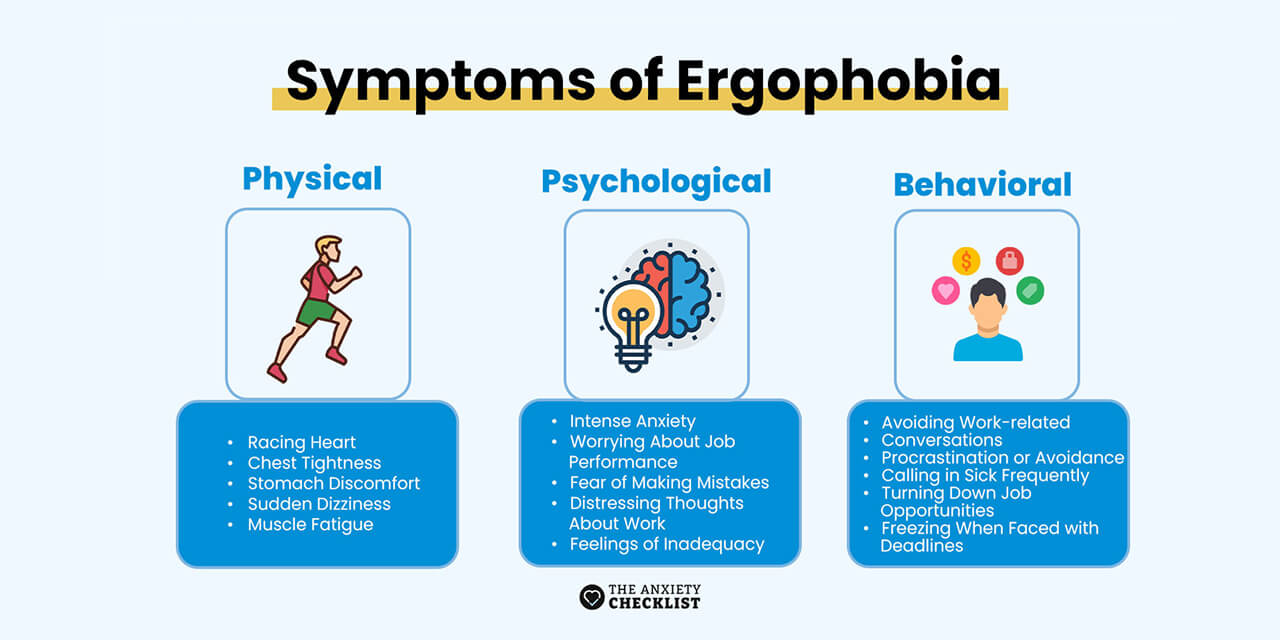
Ergophobia can show up in many ways that affect your body, mind, and behavior. These symptoms can feel overwhelming, but recognizing them is important for understanding and support.
Physical Symptoms
Your body may respond to work thoughts or situations as if they are dangerous. Common physical symptoms of Ergophobia include:
Psychological Symptoms
When you have Ergophobia, you may experience the following:
Behavioral Symptoms
People with Ergophobia may form certain habits to cope with the fear. They include:
Anxiety Symptoms That Often Accompany the Fear of Work
Ergophobia rarely exists on its own. It often comes with broader anxiety symptoms, such as:
How Is Ergophobia Diagnosed?
Mental health professionals look for patterns of fear, avoidance, and distress rather than a single label. Ergophobia isn’t a formal diagnosis in the DSM-5.
It’s important to separate the fear of work from other underlying concerns.
For example, some people feel anxious at work because they’re insecure about performance or afraid of losing their job. However, they may actually just have financial anxiety , not ergophobia. They’re just worried about their income, stability, or survival.
Professionals must also rule out other anxiety-related conditions that can look like ergophobia.
Taking a validated anxiety test can help identify if someone may have an anxiety disorder, though a formal diagnosis requires a mental health professional.
If anxiety goes untreated, fears can intensify and, in some cases, focus on work situations, potentially leading to ergophobia.
If work-related anxiety is hindering your daily activities, consulting a psychiatrist for anxiety can help.
Treatment Options for Ergophobia
If you’re struggling with ergophobia, you should know that effective, evidence-based treatments exist. You just need to work with a mental health professional to find a solution that best fits your situation.
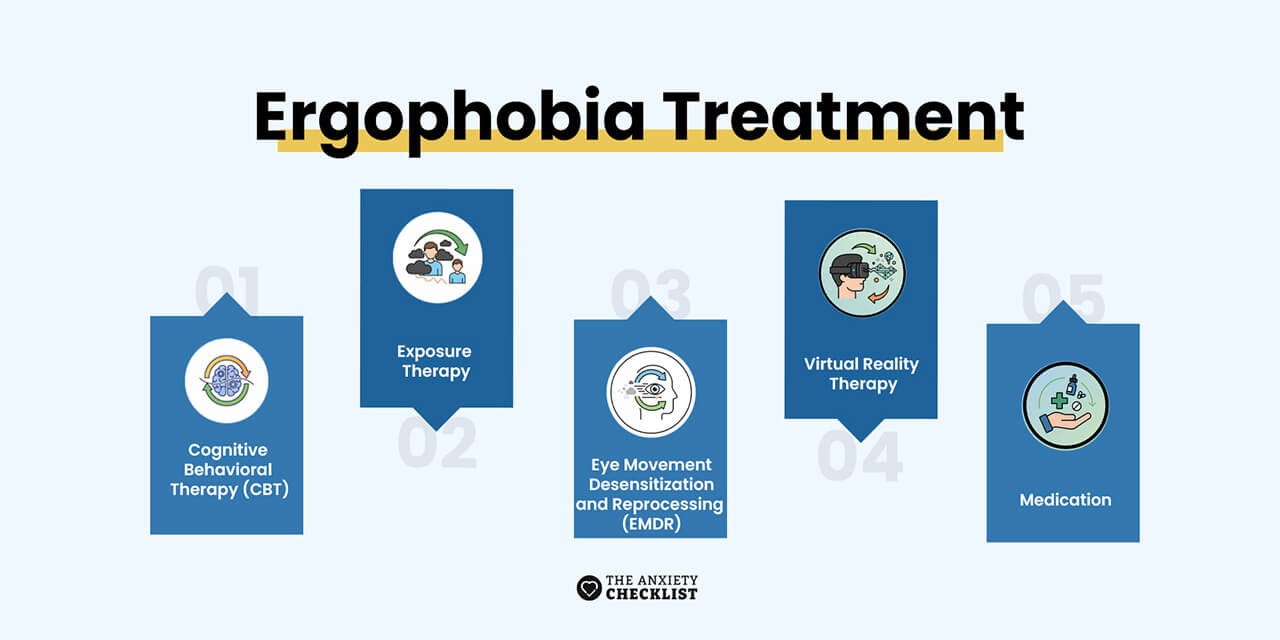
1. Cognitive Behavioral Therapy (CBT)
One of the most widely used and researched treatments for anxiety and phobias, CBT focuses on the connection between your thoughts, emotions, and behaviors.
Cognitive behavioral therapy helps you identify unhelpful thought patterns, such as catastrophizing or perfectionism, that make work feel threatening.
Then, you’re taught how to gently challenge and realistically reframe these thoughts. You often start with the least provoking thoughts, slowly moving towards those that cause more anxiety.
Let’s say you worry about making mistakes at work and getting fired. Your reframed thought might be: “Mistakes happen at work, and they’re usually opportunities to learn, not disasters.”
Over time, this can lessen your fear of work and make you more confident in handling work-related situations.
2. Exposure Therapy
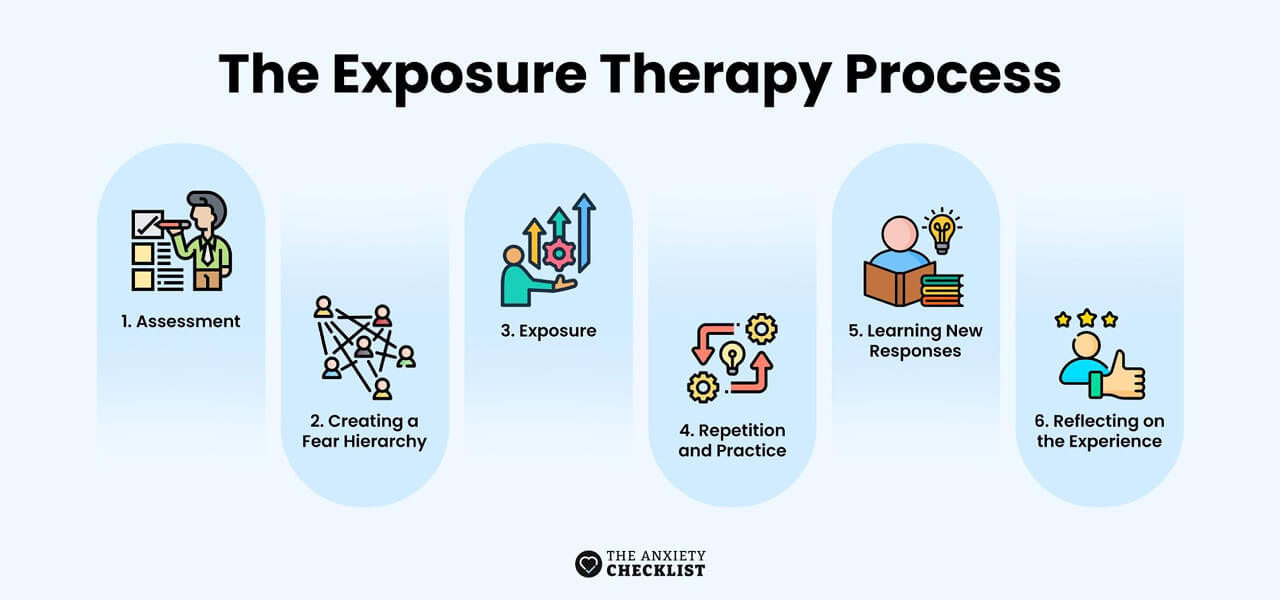
Exposure therapy simulates a work experience that causes anxiety, but in a controlled way that doesn’t feel overwhelming.
A licensed therapist handles the session. They’ll first assess your unique situation, create a roadmap to tackle the problem, and then gradually expose you to your fears.
You might start with tiny steps, such as thinking about work for a few minutes or opening a work-related email. A therapist may also ask you to imagine yourself in a work environment while practicing calming techniques to manage your anxiety .
As you repeat the sessions, your nervous system slowly learns that these situations aren’t dangerous. After each session, you’ll review your progress and determine new ways to manage your ergophobia.
3. Eye Movement Desensitization and Reprocessing (EMDR)
If your ergophobia is rooted in past traumatic or highly distressing work experiences, EMDR can help. This therapy helps the brain reprocess memories that continue to trigger anxiety in the present.
During EMDR sessions, you focus on distressing memories or beliefs while engaging in guided bilateral stimulation like eye movements or tapping. This process lowers the emotional impact of the memory and changes how your brain stores it.
If you’ve experienced workplace bullying or severe burnout, EMDR can help loosen the grip of those experiences on your nervous system. This way, you can stop feeling threatened by work situations.
4. Virtual Reality Therapy
Virtual reality (VR) therapy is an emerging treatment that allows you to face your fear of work in a controlled, simulated environment.
Using VR technology, you’re gradually exposed to work situations virtually, including meetings, offices, or task-based scenarios.
This approach is useful if real-world exposure feels too overwhelming at first. VR therapy immerses you in the experience while still providing safety, pauses, and adjustments.
Over time, repeated exposure within the virtual environment can help reduce anxiety responses and build tolerance for real-life situations.
5. Medication
For some people, ergophobia is accompanied by severe anxiety, panic, or depression. As a result, a professional may prescribe medication as a part of the treatment plan.
Medications don’t cure ergophobia, but they can reduce the intensity of your symptoms to help therapy become more effective.
A commonly prescribed medication is antidepressants like selective serotonin reuptake inhibitors (SSRIs). A psychiatrist for anxiety can determine whether medication is appropriate based on your symptoms, medical history, and overall mental health.
Deciding to take medication is highly personal. For some battling with fear of work, it provides meaningful relief; for others, therapy alone is enough.
What matters most is finding a balanced approach that supports your healing without pressure or judgment.
Everyday Strategies for Managing Ergophobia
Professional treatment targets the underlying causes of ergophobia. However, the following everyday coping strategies can help you feel more grounded and supported in the moment.
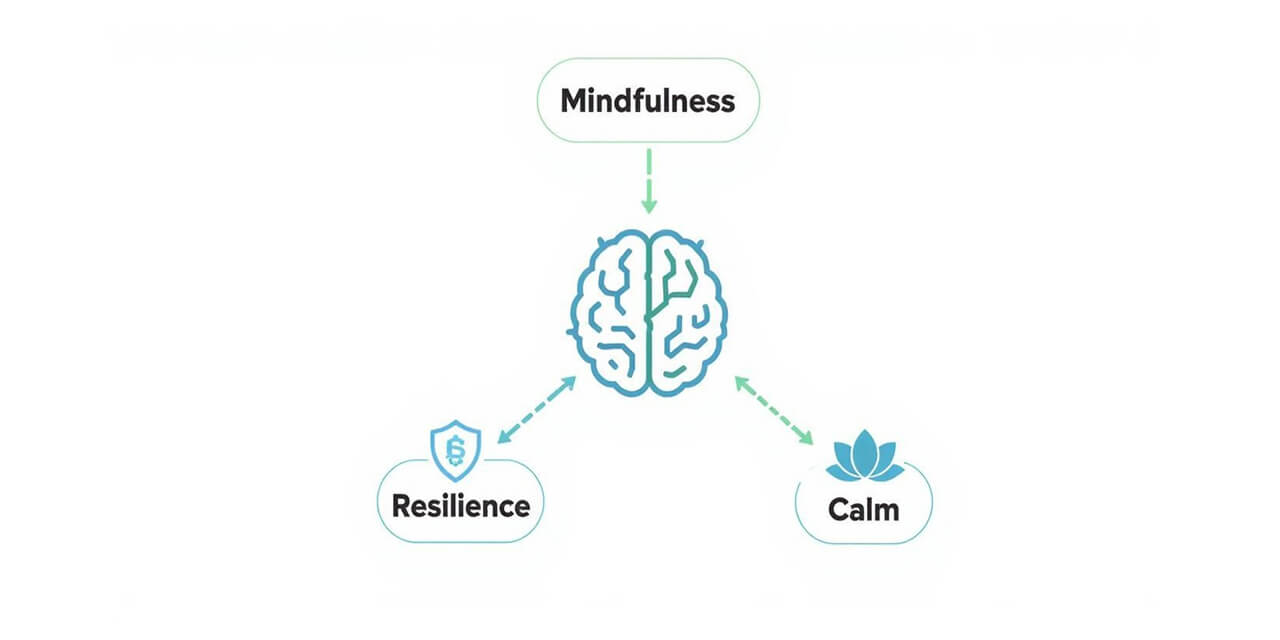
Mindfulness Meditation
Anxiety often pulls your attention into the future. It makes you overanalyze situations and worry about several things that might go wrong.
Mindfulness helps bring you back to the present, where you’re safer than your thoughts suggest. This can be as simple as taking deep breaths , feeling your feet on the ground, or paying attention to sounds around you.
Daily mindfulness practice trains your brain to build resilience and a sense of control. It helps you respond to work-related triggers with less panic.
Calming Audio
Listening to sounds like binaural beats can help you relax and ease anxiety that comes with ergophobia. These beats use slightly different sound frequencies in each ear, influencing brainwave activity.
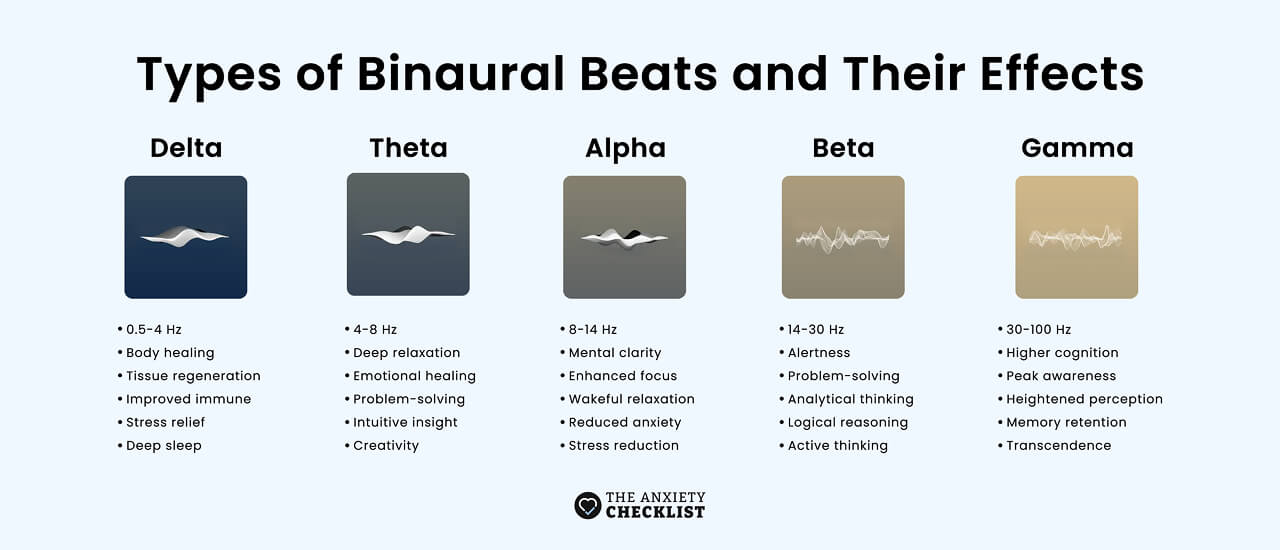
Calming audio can help when anxiety feels hard to manage.
Progressive Muscle Relaxation
This technique helps calm the fear of work by reducing physical tension stored in the body. You can start by squeezing your toes and focusing on the tightness. Then, release them completely and focus on how the tension goes away.
Try the same pattern for other muscles in your body, such as your arm, stomach, and shoulders. Progressive muscle relaxation helps you understand where you’ve built more tension, helping you gain more control over it.
Journaling
Simply writing down your thoughts, feelings, and experiences provides a private space to process them without judgment. There are different types of journaling , such as gratitude, reflective, and guided journaling.
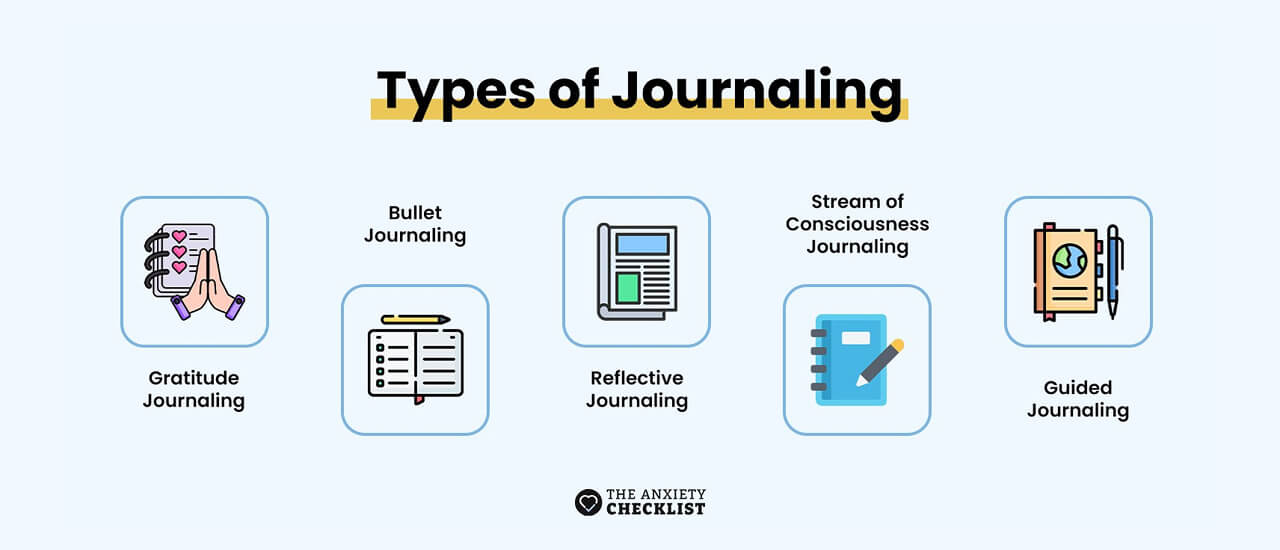
Some people benefit from structured prompts like gratitude journal prompts , while others prefer free writing. Over time, journaling can reveal patterns, reduce emotional intensity, and help you understand yourself better.
Creating Predictability
Uncertainty often fuels anxiety. However, creating small routines can help your nervous system feel more stable.
You can start a calming morning ritual, plan scheduled breaks, or have a consistent wind-down routine.
If work feels overwhelming, breaking tasks into smaller, manageable steps can help you tackle them. Progress doesn’t have to be fast to be meaningful. You can start slow and build from there.
Practicing Self-Compassion
Perhaps one of the most important coping strategies for ergophobia is how you speak to yourself. Fear of work often comes with harsh self-criticism, shame, or comparison to others.
Remind yourself that anxiety isn’t a choice, healing takes time, and your pace is valid. Doing this regularly can reduce emotional pain.
Self-compassion doesn’t worsen your fear of work. Rather, it creates the safety you need to make changes.
Coping strategies work best when used consistently and without pressure. You don’t need to try everything or do it perfectly.
Even one small practice can make a difference over time, especially when paired with professional support.
Frequently Asked Questions
- Therapy, such as CBT and exposure therapy
- Addressing the underlying anxiety
- Practicing coping strategies
- Medication
- Chronic stress
- Burnout
- Traumatic work experiences
- Anxiety disorders
- Perfectionism
- Fear of failure
- Financial insecurity
- Constant worrying about work
- Fatigue
- Irritability
- Difficulty concentrating
- Physical symptoms, such as headaches and sleep problems
Conclusion
Anxiety University
Explore the Anxiety University
Free guides to help you understand anxiety, one topic at a time.
- Getting StartedThe basics of anxiety and how it works
- Self-Assessments & Anxiety TestsCheck in on your symptoms with free tests
- Cognitive Traps & Thought PatternsSpot the thinking habits that fuel anxiety
- Stress ReductionPractical ways to calm your body and mind
- Common Anxiety PhobiasUnderstand specific fears and how they are treated
- Inspiring StoriesReal stories and words that remind you you are not alone