


In short
Treatment for anxiety during pregnancy usually starts with an assessment by a prenatal clinician and evidence-based psychotherapy, often cognitive behavioral therapy. Supportive self-help can complement care. Medication may also be appropriate after an individualized benefits-and-risks discussion. Severe symptoms, suicidal thoughts, or inability to stay safe require urgent professional help. (acog.org)
Key takeaways
- Anxiety that is persistent, difficult to control, or disrupting daily life deserves a clinical assessment. (acog.org)
- Cognitive behavioral therapy is commonly used, but treatment should match the type and severity of anxiety. (acog.org)
- Breathing, movement, sleep habits, and self-guided exercises can support care, but they do not replace professional treatment. (acog.org)
- Do not start, stop, taper, or switch medication, supplements, or herbal products without professional advice. (acog.org)
- Thoughts of self-harm, inability to remain safe, hallucinations, or delusions require urgent or emergency help. (nhs.uk)
Table of contents
- Where should treatment start?
- Which therapies are used for anxiety during pregnancy?
- What can you safely do between appointments?
- When might medication be part of the plan?
- When is anxiety during pregnancy urgent?
- What else do people ask about treatment for anxiety during pregnancy?
- What should you do next?
Anxiety during pregnancy is treatable, but the safest plan is rarely a single technique. As of November 2026, ACOG's 2023 clinical guidance and NICE guidance support psychological treatment, appropriate monitoring, and individualized medication decisions when clinically indicated. (acog.org)
This guide does not recommend a particular medication or diagnose the cause of symptoms. Pregnancy changes the context in which anxiety, physical symptoms, prescriptions, supplements, and existing mental health conditions must be assessed.
Where should treatment start?
Treatment should start with a prenatal clinician, primary care clinician, or qualified mental health professional, especially when worry is hard to control or is interfering with sleep, eating, work, relationships, or prenatal care. The first task is not choosing a coping technique; it is identifying the anxiety pattern, its severity, possible contributing conditions, and the support needed.
ACOG's 2023 screening guidance recommends screening for anxiety at the initial prenatal visit, later in pregnancy, and during postpartum care with a validated tool. A screening result can show that further assessment is needed, but it is not a diagnosis or a complete treatment plan. (acog.org)
What happens at the first appointment?
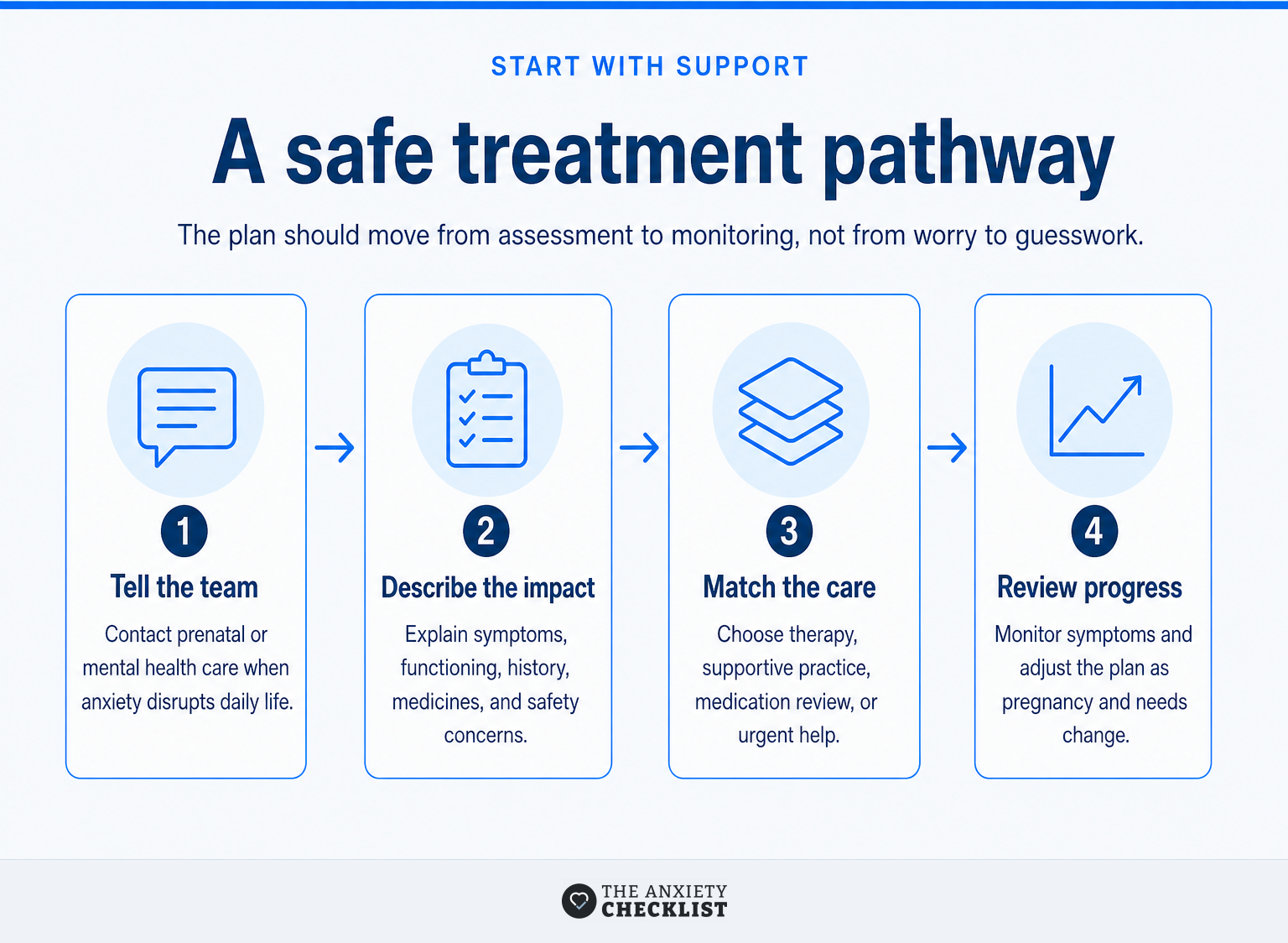
Prepare a short account of what has changed rather than trying to explain everything perfectly. Useful details include:
- when the anxiety began and whether it is constant or episodic;
- how it affects sleep, appetite, concentration, work, relationships, or prenatal appointments;
- panic attacks, intrusive thoughts, avoidance, repeated checking, or fears about birth;
- previous anxiety, depression, OCD, trauma, bipolar disorder, or other mental health care;
- every prescription, over-the-counter medicine, supplement, herbal product, and substance used; and
- what has helped, failed, or caused side effects in the past.
A clinician may use a questionnaire such as the GAD-7 to monitor symptoms, but treatment should also account for personal history, safety, physical health, pregnancy complications, and patient preferences. Physical symptoms such as dizziness, nausea, palpitations, or chest discomfort can occur with anxiety, but new or severe symptoms should still be medically assessed rather than automatically labeled as panic. (acog.org)
Start with assessment, because the safest treatment plan depends on the exact anxiety pattern and the whole pregnancy.
Which therapies are used for anxiety during pregnancy?
Psychotherapy, particularly cognitive behavioral therapy, is a common initial treatment for anxiety during pregnancy. The appropriate format and intensity depend on whether the main problem is generalized worry, panic, OCD, trauma, social anxiety, birth-related fear, or anxiety occurring alongside depression.
ACOG states that therapy is recommended for anxiety during pregnancy, while NICE recommends either a lower-intensity psychological intervention, such as facilitated self-help, or a higher-intensity intervention, such as CBT, as initial treatment for an anxiety disorder. NHS 2026 guidance notes that CBT may be delivered in person, online, or by phone. (acog.org)
What is the difference between treatment and practice?
CBT is more than positive thinking. A therapist may help identify anxiety predictions, understand the relationship between thoughts, physical sensations, checking, and avoidance, and practice new responses. Depending on the diagnosis, therapy may also address panic sensations, uncertainty, trauma, compulsions, or avoidance.
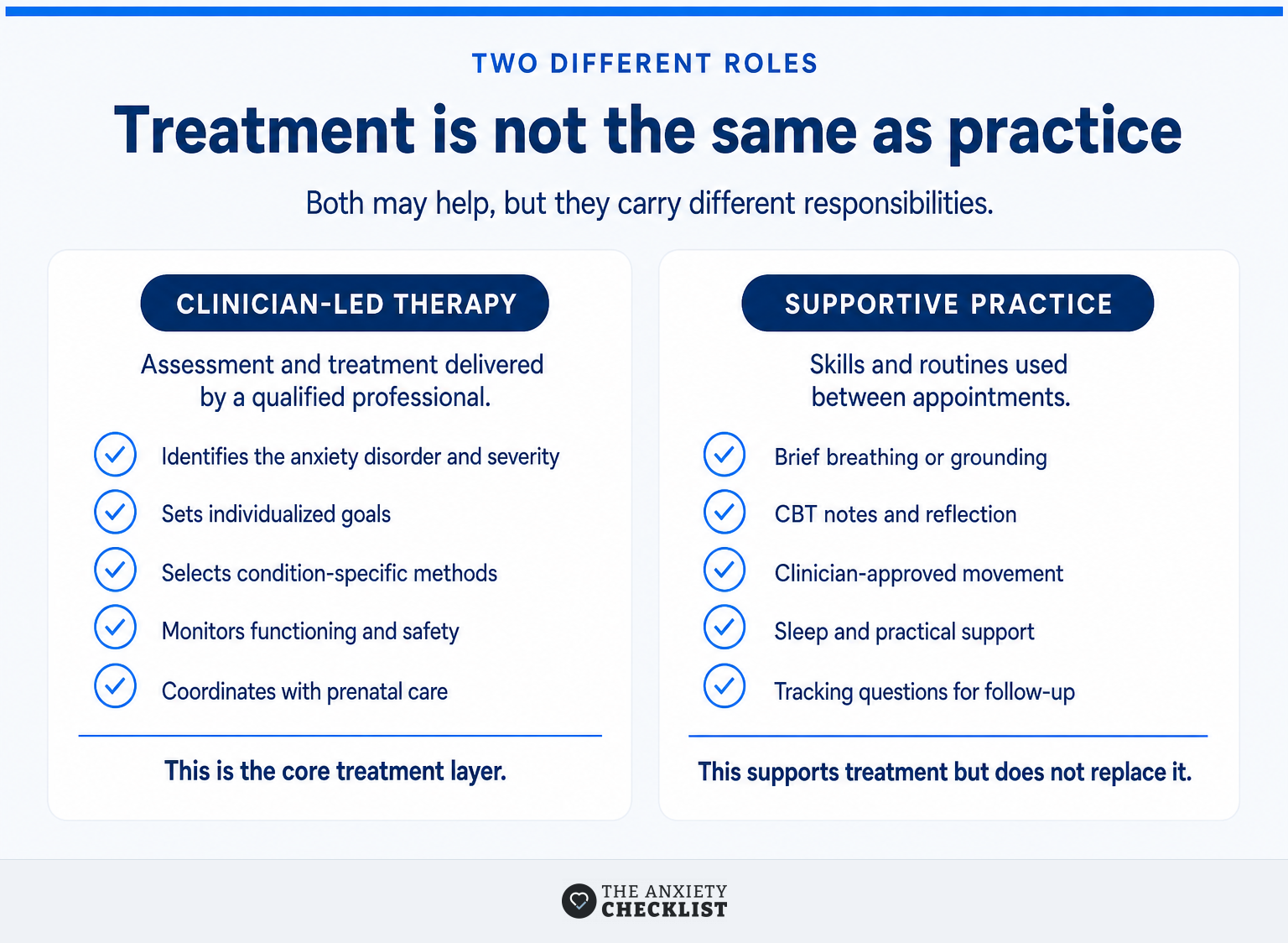
A sound therapy plan usually includes:
- specific goals linked to daily functioning;
- skills selected for the diagnosed problem rather than a generic calming list;
- manageable practice between sessions;
- regular review of symptoms, functioning, and safety; and
- coordination with prenatal care when symptoms or treatments change.
Self-guided material can help someone understand the process and remember skills between appointments. A broader guide to psychotherapy for anxiety can explain common therapy formats, but pregnancy-specific decisions should remain with the treating clinicians.
Psychotherapy is treatment; self-guided exercises are practice that supports treatment.
What can you safely do between appointments?
Supportive self-help can reduce stress and make professional treatment easier to use, but it should not be treated as a substitute when anxiety is persistent or disabling. Choose small practices that fit the pregnancy, existing medical advice, and current energy level.
Options to discuss with the prenatal care team include:
- Brief breathing practice: Use a comfortable, unforced rhythm for a minute or two. Stop if deliberate breathing causes dizziness, air hunger, or more panic.
- Less threat-focused input: Set boundaries around symptom searches, upsetting social media, and repeated requests for reassurance if they are feeding the anxiety cycle.
- Practical sleep support: Keep wake times as consistent as possible, reduce stimulating content before bed, and ask others for practical help when exhaustion is worsening symptoms.
- Regular food and fluids: Nausea and appetite changes can complicate this, so ask the prenatal team for guidance if anxiety is making it hard to eat or drink.
- Social support: Tell at least one trusted person what is happening and what kind of help would be useful, such as attending an appointment or helping with daily tasks.
- Structured CBT notes: Record the situation, the feared prediction, what happened, and what might be a more balanced response.
For an uncomplicated pregnancy, ACOG's pregnancy exercise guidance recommends working toward at least 150 minutes of moderate aerobic activity each week, with a gradual start for people who are new to exercise. A prenatal clinician should confirm what is appropriate when there are medical or obstetric complications. ACOG also advises keeping caffeine below 200 milligrams per day during pregnancy; someone who notices that caffeine worsens palpitations, sleep, or jitteriness can ask whether reducing it further makes sense. (acog.org)
Natural remedies for anxiety during pregnancy are not automatically harmless. The FDA pregnancy guidance advises speaking with a healthcare professional before taking medicines, vitamins, herbs, or dietary supplements, and the FDA does not approve dietary supplements for safety before they are marketed. (fda.gov)
Free anxiety education can help organize questions and introduce coping concepts. It should support, not delay, contact with a prenatal or mental health clinician when symptoms are affecting daily life.
Choose low-risk habits in small doses, and check every supplement or remedy before using it.
When might medication be part of the plan?
Medication may be part of treatment when symptoms are severe, disabling, recurring, or not adequately controlled by therapy alone. Medication may also be continued when it has kept someone well, but the decision requires an individualized review by the prescriber and prenatal clinician.
ACOG's 2023 guidance recommends against withholding or discontinuing mental health medication because of pregnancy or lactation status alone. NICE advises discussing several possibilities when someone taking medication for an anxiety disorder becomes pregnant, including gradual discontinuation with psychological treatment, continuation, switching, or combining medication with therapy, depending on previous response, preferences, symptoms, and the comparative risks. (acog.org)
Do not stop, taper, switch, or change a dose based on an article, forum post, or fear generated by a package insert. Abrupt changes can produce withdrawal effects or allow significant anxiety to return, so NHS pregnancy guidance advises speaking with the doctor or specialist before stopping prescribed medication. (nhs.uk)
Which questions belong in a medication review?
The medication discussion should compare more than the possibility of fetal exposure. It should also consider the risks of untreated or returning illness, what previously worked, gestational timing, other medicines and supplements, side effects, and how response will be monitored.
Bring the exact product names and doses of prescriptions, nonprescription medicines, sleep products, herbal remedies, vitamins, nicotine products, cannabis, CBD, and other substances. Product names matter because similar labels can contain different ingredients.
MotherToBaby's March 2026 fact sheet emphasizes planning treatment with healthcare providers and considers both treatment exposure and untreated anxiety. Available research may narrow uncertainty, but it cannot promise zero risk for every medicine, condition, dose, or pregnancy. (mothertobaby.org)
Medication decisions belong in a documented benefit-risk review, not in a sudden stop or an online recommendation.
When is anxiety during pregnancy urgent?
Get emergency help now if there are thoughts or plans to harm yourself or another person, an overdose, an inability to remain safe, hallucinations, delusions, severe confusion, or loss of contact with reality. Call the local emergency number or go to the nearest emergency department, and ask a trusted person to stay with you if that can be done safely.
The NHS advises immediate emergency help when a person's life is at risk or they cannot keep themselves or someone else safe. Hallucinations and delusions during pregnancy also require urgent clinical assessment rather than another self-help exercise. (nhs.uk)
How urgent is this right now?
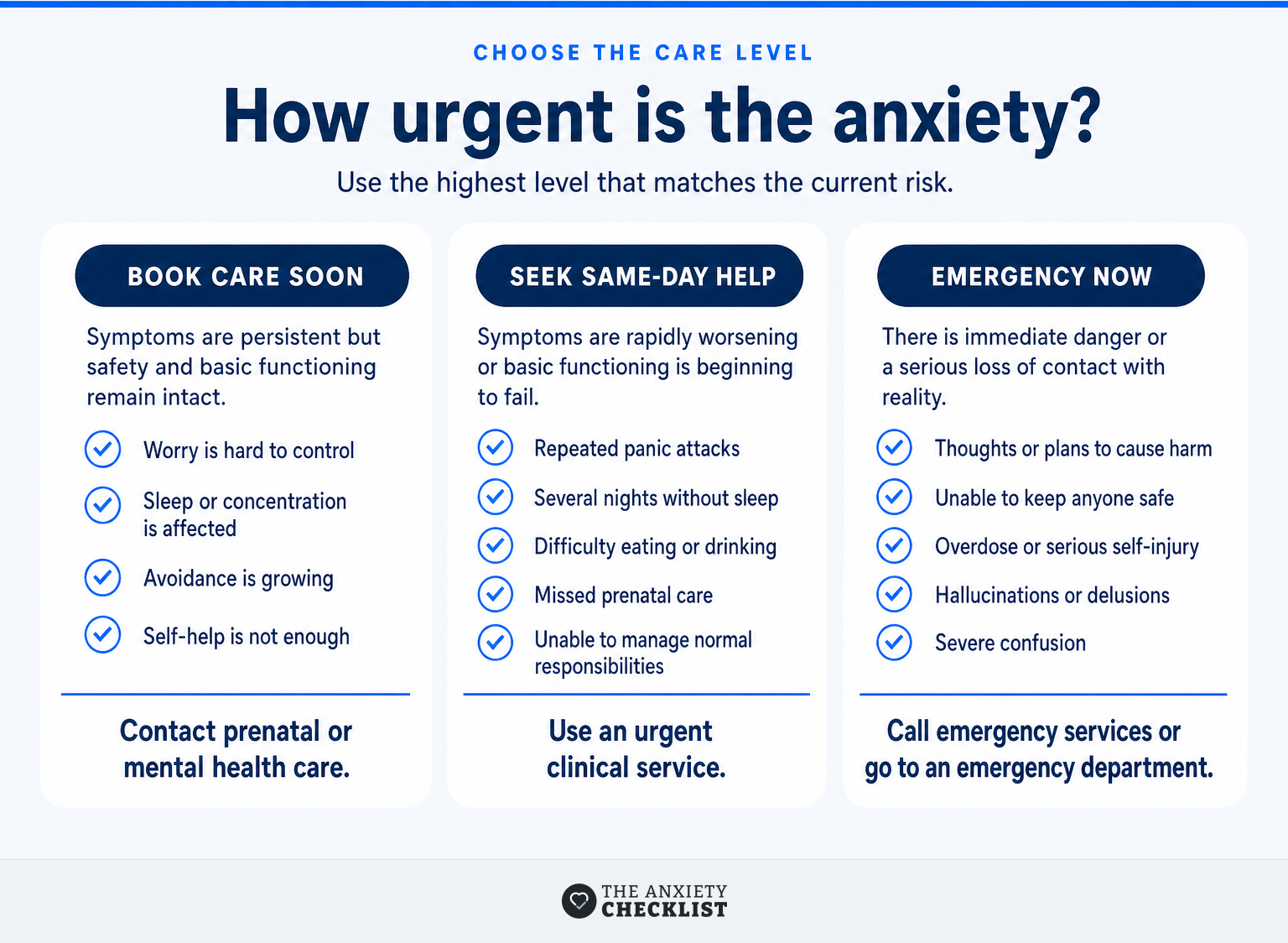
Seek same-day professional advice when symptoms are rapidly worsening, panic attacks are recurring, several nights of sleep have been lost, eating or drinking is becoming difficult, normal responsibilities cannot be managed, or anxiety is causing prenatal appointments to be missed. A prenatal unit, primary care service, urgent mental health service, or existing mental health clinician can advise on the appropriate local route. (nhs.uk)
The global urgent-support directory can help identify crisis resources by country, but verify local details and use local emergency services when danger is immediate. New or severe physical symptoms should also receive medical assessment rather than being assumed to be anxiety.
If safety, reality testing, or basic functioning is failing, urgent professional help matters more than another coping technique.
What else do people ask about treatment for anxiety during pregnancy?
People most often ask whether therapy should come first, whether natural remedies are safe, and whether medication must stop. The answers depend on severity and history, but the safety principles below remain consistent.
What is the first-line treatment for anxiety during pregnancy?
Evidence-based psychological treatment, often cognitive behavioral therapy, is commonly used first, particularly when symptoms are mild to moderate. The right starting point depends on the anxiety disorder, severity, treatment history, access, and personal preference. Medication may be added or continued when a clinician judges that its likely benefits outweigh its risks. (acog.org)
Are natural remedies for anxiety during pregnancy safe?
Some non-drug practices, such as clinician-approved movement, regular sleep routines, breathing practice, and social support, may help alongside treatment. Herbal products, CBD, essential oils, and supplements are not automatically safe in pregnancy. Ask a prenatal clinician or pharmacist before starting any product marketed as natural, calming, or sleep-supporting. (acog.org)
Can severe anxiety while pregnant affect pregnancy?
Severe or untreated anxiety has been associated with poorer pregnancy and postpartum outcomes, but an association cannot predict what will happen in one pregnancy. The immediate concern is the pregnant person's functioning and safety. Rapidly worsening symptoms, repeated panic, inability to eat or sleep, or missed prenatal care need prompt clinical assessment. (mothertobaby.org)
Should I stop anxiety medication when I become pregnant?
No. Do not stop, taper, switch, or change the dose of a prescribed anxiety medicine without speaking to the prescriber and prenatal clinician. Abrupt changes can cause withdrawal or relapse. A medication review should compare the medicine's potential risks with the risks of untreated or returning illness and consider what worked before pregnancy. (acog.org)
Can anxiety during pregnancy go away without treatment?
Some pregnancy-related worry settles with reassurance, practical support, or changing circumstances. Anxiety that is persistent, difficult to control, or disrupting daily life deserves assessment rather than watchful waiting alone. Early treatment can be adjusted as pregnancy changes, and follow-up should continue after birth because symptoms can persist or recur. (acog.org)
The recurring rule is simple: persistent anxiety deserves assessment, and pregnancy changes how every remedy or medicine should be checked.
What should you do next?
Choose one action today: message the prenatal clinician, request a therapy referral, or ask the medication prescriber for a pregnancy-specific review. If there is immediate danger or an inability to remain safe, skip routine scheduling and use emergency services now.
If the prenatal clinician agrees that self-guided CBT education belongs in the plan, the Anxiety Checklist app includes CBT journaling and the CBT Essentials Masterclass as supplementary education. Anxiety Checklist provides educational self-help rather than diagnosis, psychotherapy, or prenatal medical treatment. (anxietychecklist.com)
Before the next appointment, write four lines: what is happening, how often it happens, how it affects daily life, and what help is being requested. That is enough to start a useful conversation.
The next useful step is a coordinated plan, not a perfect coping routine.