


Feeling trapped by anxiety is a heavy burden, but what if the key to a calmer, more joyful life was already within your body’s reach? While there's no single magic pill, certain vitamins for anxiety are essential players in your brain's chemistry. This guide is built on a foundation of hope, grounded in science, to show you a tangible path toward a life with less panic and more peace. It's a journey of healing, and it's one you have the power to begin today.
Your Path to Hope and Healing Starts Here

Living with anxiety can feel like being stuck on high alert, where your own mind and body seem to be working against you. The racing thoughts, the physical tension, and the looming fear can make daily life feel like an uphill battle. But there is profound hope. What if you could support your system from the inside out, giving it the fundamental resources it needs to find its balance and heal?
This isn't just a wishful idea. It's a reality rooted in the powerful connection between what you nourish your body with and how you feel. Your journey to reclaiming a panic-free life starts with understanding that you are not broken. Instead, your body might simply be running low on the specific nutrients it needs to manage stress effectively and return to its natural state of calm.
The Science of Hope and Healing
Think of your nervous system as a complex electrical grid. For it to function smoothly, it needs a steady supply of specific materials—in this case, vitamins and minerals. When these resources run low, the system can short-circuit, leading to the very symptoms we recognize as anxiety.
For instance, certain B vitamins are critical for producing neurotransmitters like serotonin, the brain chemical that helps regulate your mood and creates feelings of well-being. Magnesium, on the other hand, acts as a natural "brake" for an over-excited nervous system, promoting a sense of peace. When these are in short supply, it’s like trying to run a high-performance engine on low-quality fuel. It just won't work properly.
The empowering truth is that by addressing these nutritional gaps, you are not just masking symptoms. You are actively rebuilding your body's innate capacity for resilience and calm. This is a message of profound hope: you have the power to influence how you feel and to heal from anxiety.
This guide is designed to move you from a place of uncertainty to one of empowerment. We will explore:
- The specific vitamins for anxiety that have been shown to support mental health and healing.
- How to identify potential deficiencies that might be contributing to your symptoms.
- Actionable, food-first strategies to bolster your nutritional foundation and reclaim your peace.
Key Nutrients That Support Anxiety Relief
Before we dive deep, here’s a quick-reference summary of some of the most effective vitamins for anxiety, their roles in brain health, and where to find them. This table gives you an at-a-glance look at the science-backed solutions that can guide your healing journey.
| Nutrient | How It Supports Calm | Common Food Sources |
|---|---|---|
| Vitamin D | Regulates mood and reduces inflammation in the brain. | Fatty fish (salmon, mackerel), fortified milk, sunlight. |
| B-Complex | Essential for producing calming neurotransmitters like serotonin and GABA. | Leafy greens, eggs, legumes, salmon, lean meats. |
| Magnesium | Acts as a natural relaxant, calming the nervous system. | Dark chocolate, avocados, nuts, seeds, whole grains. |
| Zinc | Helps regulate the body’s response to stress. | Oysters, beef, pumpkin seeds, lentils. |
| Omega-3s | Reduces brain inflammation and supports healthy brain function. | Fatty fish, walnuts, chia seeds, flaxseeds. |
This is just the beginning. Each of these nutrients plays a unique role, and understanding how they work together is the first step toward using them effectively to heal.
This approach is about more than just supplements; it's about a holistic view of healing. By combining targeted nutritional support with other proven strategies, you can build a comprehensive toolkit for lasting relief. If you're looking for a structured way to integrate these changes, our guide on anxiety recovery steps outlines a complete plan to help you get started.
Feeling better is possible. A life free from the grip of panic is achievable. It starts with understanding your body and giving it the support it needs to thrive and heal.
Is a Nutrient Gap Fueling Your Anxiety?
Think of your brain and nervous system like a high-performance car. To navigate the twists and turns of daily life smoothly, it needs premium fuel and high-quality oil. In the same way, your brain depends on specific nutrients—essential vitamins for anxiety—to manufacture the very chemicals that keep you calm, focused, and resilient.
When these crucial resources run low, the engine of your mind starts to sputter. This isn't just a convenient metaphor; it's biochemical reality. Chronic stress, in particular, acts like a grueling, cross-country road trip that burns through your body's fuel reserves at a shocking rate, leaving you depleted and far more vulnerable to the relentless hum of anxiety.
The Connection Between Depletion and Distress
When you're under constant pressure, your body goes into overdrive, torching through nutrients like magnesium and B vitamins to produce stress hormones like cortisol and adrenaline. While this system is designed for short-term survival—think running from a threat—modern life often keeps it switched on indefinitely. Over time, this chronic demand creates a significant nutrient gap.
This gap is the space between what your body needs to function at its best and what it’s actually getting. When your system is depleted, it simply can't produce enough calming neurotransmitters like serotonin and GABA. The result is a brain that’s stuck in "fight or flight," leading to symptoms you probably know all too well:
- Racing, intrusive thoughts
- A persistent feeling of dread or unease
- Physical tension, muscle tightness, and restlessness
- Difficulty relaxing or "switching off"
Viewing your anxiety through this nutritional lens offers a powerful and hopeful new perspective. Your symptoms may not be a sign that you are broken, but rather a clear signal that your body is calling out for the raw materials it needs to restore balance and begin to heal.
By understanding this link, you can start taking real, tangible steps to refuel your mind and body. This shifts the narrative from one of helplessness to one of empowerment. You have a direct way to support your own healing journey toward a panic-free life. Learn more about how to integrate these changes by exploring our comprehensive guide on lifestyle and diet changes for anxiety management.
Uncovering Your Personal Nutrient Needs
So, how do you figure out if a nutrient deficiency is contributing to your anxiety? While symptoms like fatigue and muscle cramps can offer clues, they are often too general to be reliable. The most accurate way to know for sure is through targeted testing.
Working with a healthcare professional to get a clear picture of your nutrient levels can be a game-changing move. To determine if nutrient gaps are fueling your anxiety, a dedicated approach to understanding your levels, such as a blood test for vitamin and mineral deficiency, can provide crucial insights. This "test, don't guess" philosophy removes the guesswork and allows you to create a personalized plan for healing.
This is where the real hope lies. Once you know your specific needs, you can begin to systematically replenish your body's stores. This isn't about finding a quick fix, but about laying a strong foundation for long-term mental wellness. By addressing the root biochemical imbalances, you're not just managing symptoms—you're actively building a more resilient, panic-free life from the inside out.
1. The Sunshine Vitamin's Role in a Calmer Mind

We all know Vitamin D as the “sunshine vitamin,” famous for building strong bones and a healthy immune system. But its influence doesn’t stop there. It reaches deep into our brains, impacting our mental and emotional well-being. A growing wave of research is highlighting Vitamin D’s powerful role as one of the key vitamins for anxiety, offering a real glimmer of hope for anyone feeling trapped by worry.
It helps to think of Vitamin D as more than just a vitamin. It’s actually a potent steroid hormone that acts like a master regulator in your brain. It has a direct line to the areas that manage mood and behavior, like the prefrontal cortex and hippocampus. When your levels are where they should be, it helps keep the systems that govern your mood running smoothly.
This vitamin also plays a huge role in taming inflammation throughout your body—including your brain. We’re learning more and more that chronic, low-grade inflammation is a major player in mood disorders like anxiety. By helping to quiet that inflammatory response, Vitamin D creates a more stable neurological environment, making it easier for your mind to find its calm and begin the healing process.
How Vitamin D Deficiency Impacts Anxiety
When your Vitamin D levels are low, it’s like trying to run your brain’s mood-control center on a low battery. This deficiency can throw your brain chemistry out of whack, leaving you more vulnerable to anxiety. And this isn't just a theory; a solid body of scientific evidence is backing it up.
Strikingly low Vitamin D levels are common in people struggling with anxiety. One systematic review of 14 studies found that 10 of them showed a direct link between Vitamin D levels and anxiety—as vitamin D went up, anxiety symptoms often went down. The clinical trials are even more promising. In one study, patients taking 1,600 IU of Vitamin D daily for six months reported a significant drop in their anxiety. Another trial with women who had both prediabetes and low vitamin D found that supplementation led to a 19% decrease in anxiety.
These numbers are more than just data; they represent a tangible path forward. For millions, simply identifying and correcting a Vitamin D deficiency could be a game-changing step toward a life with less panic and more peace.
For anyone struggling with anxiety, the link to Vitamin D represents a concrete and actionable path forward. It’s a reminder that your symptoms may have a physiological root that you can directly address, empowering you to become an active participant in your own healing. This is a message of true hope.
Taking Action with Vitamin D
The first step, as always, is getting clear on where you stand. The symptoms of a Vitamin D deficiency can be pretty vague, so the only way to know for sure is through a simple blood test called a 25-hydroxy vitamin D test. This gives you a clear baseline and allows a healthcare provider to create a targeted plan if your levels are low.
Here are a few ways to boost your Vitamin D levels:
- Safe Sun Exposure: Your body is a Vitamin D factory when your skin gets sunlight. Just 15-20 minutes of sun on your arms and legs a few times a week can make a real difference, though this can vary depending on your skin tone, where you live, and the time of year.
- Food Sources: While not many foods are naturally packed with Vitamin D, you can find it in fatty fish like salmon and mackerel, egg yolks, and fortified foods like milk, yogurt, and some cereals.
- Supplementation: For many of us, especially those living in northern climates, supplementing is the most reliable way to get enough. It’s critical to work with a doctor to figure out the right dose for your specific needs.
Tackling potential deficiencies like this is a cornerstone of a holistic approach to mental wellness. When we explore naturopathic treatments for anxiety, we’re often doing this kind of detective work to find and fix underlying imbalances. By combining smart nutritional strategies with other powerful tools, you build a stronger foundation for a calm, resilient mind. Your healing journey isn’t a mystery—it’s a process you can understand and actively influence.
The Brain's Stress Management Team: B Vitamins and Magnesium
If your nervous system is a high-performance vehicle, think of B vitamins and magnesium as its expert pit crew. This duo works tirelessly behind the scenes, making sure your brain has exactly what it needs to handle the stress of daily life and return to a state of calm.
When this team is well-supplied, your mind can navigate challenges with resilience. But when they're running on empty, the entire system can feel overwhelmed, leading to those all-too-familiar feelings of anxiety and panic.
Understanding the roles these nutrients play is a huge step toward feeling better. It’s a message of hope because it gives you a tangible way to support your body's own stress-management systems. You can actively help your internal crew perform at their best, building a sense of calm from the inside out and paving the way for a panic-free life.
B Vitamins: The Brain's Production Crew
The B-complex vitamins are a group of eight essential nutrients that act like the factory workers for your brain. They’re directly involved in producing energy and, most importantly, creating the neurotransmitters that regulate your mood. Without them, the assembly line for your "feel-good" chemicals grinds to a halt.
Think of Vitamin B6 (pyridoxine) as the lead architect for serotonin and GABA. Serotonin is your brain’s mood stabilizer, promoting feelings of well-being and happiness. GABA, on the other hand, is your primary calming neurotransmitter, acting like a natural brake pedal to slow down an overactive mind. It’s no surprise that studies have shown a clear link between low levels of B6 and increased anxiety and irritability.
Other key players on this team include:
- Vitamin B12 (Cobalamin): Crucial for maintaining the protective sheath around your nerve cells. When this sheath is compromised, it can lead to neurological issues that sometimes show up as anxiety and panic.
- Folate (Vitamin B9): Works in tandem with B12 to synthesize those vital neurotransmitters. Low folate levels are consistently linked to mood disturbances.
When your body is under chronic stress, it burns through B vitamins at a much faster rate. This makes it crucial to replenish your supply, ideally through what you eat. Excellent food sources include leafy greens, eggs, legumes, salmon, and lean meats. A balanced diet packed with these foods gives your brain's production crew the tools they need to keep you feeling stable and calm.
Magnesium: The Ultimate Relaxation Mineral
While B vitamins build your calming chemicals, magnesium helps them work effectively. It’s the ultimate relaxation mineral, acting on multiple pathways to soothe an anxious nervous system. Over 300 different chemical reactions in your body depend on magnesium, and many of them are directly tied to your stress response and mood.
Magnesium helps regulate cortisol—your primary stress hormone—preventing it from spiraling out of control. It also binds to and stimulates GABA receptors in the brain, which essentially amplifies the calming effects of this neurotransmitter.
When your magnesium levels are adequate, it’s like turning down the volume on your anxiety. Your thoughts may slow down, your muscles can relax, and a sense of peace becomes more accessible. This is the tangible hope that nutritional support offers—a way to calm the storm within and live panic-free.
Unfortunately, magnesium deficiency is surprisingly common, partly because stress itself depletes our stores of it. The symptoms can include muscle twitching, fatigue, and irritability—all of which overlap with the classic signs of anxiety. To boost your intake, focus on magnesium-rich foods like dark chocolate, avocados, nuts (especially almonds and cashews), seeds, and whole grains.
For more targeted support, certain forms of magnesium supplements are particularly effective. A magnesium glycinate supplement, for example, is well-known for its calming effects, helping with both sleep and anxiety. As a helpful guide on Magnesium Glycinate for Sleep Anxiety and Recovery explains, this form is highly absorbable and gentle on the stomach.
Replenishing these key nutrients is a powerful act of self-care. It sends a clear message to your body that you are supporting its efforts to find balance and heal. While supplements can be incredibly helpful—especially when guided by a professional—creating a nutrient-dense diet is the foundation for lasting wellness.
When seeking professional guidance, exploring options with a psychiatrist for anxiety can provide a comprehensive treatment plan that may include these kinds of nutritional strategies. This integrated approach offers the most promising path toward a life with less panic.
How to Safely Use Vitamins for Anxiety
Realizing that a nutrient gap might be at the root of your anxiety is a huge first step full of hope. The next is turning that knowledge into meaningful action. This is where you move from just knowing to doing—transforming information into a clear, practical roadmap for using vitamins for anxiety both safely and effectively on your path to healing.
The journey to feeling calm isn't about guesswork. It's about making smart, informed choices that give your brain and body exactly what they’re missing. The most empowering part? You can take control of this process. By working with a professional and truly understanding what your body needs, you can turn supplementation from a shot in the dark into a targeted, measurable part of your recovery.
The Power of a Personalized Plan
If there’s one non-negotiable rule on this journey, it’s this: test, not guess. It's incredibly tempting to read about a promising supplement online and immediately start taking it, but that approach can easily miss the mark. Your body has a unique story, and the only way to read it accurately is through targeted testing.
This is where a healthcare professional—like a functional medicine doctor or a knowledgeable GP—becomes your most important partner. They can order the right blood tests to check your levels of key nutrients like Vitamin D, magnesium, and various B vitamins. The results give you a clear, objective baseline, showing you exactly where your deficiencies lie. This moment isn't a verdict; it's a breakthrough. You finally have a concrete problem to solve on your way to a panic-free life.
Your test results are not a judgment; they are a map. They show you the most direct route to replenishing your body's resources, allowing you to move forward with confidence and clarity on your path to healing.
A personalized strategy ensures you’re taking the right nutrients, in the most effective forms, and at the correct dosages for your specific needs. It’s the difference between wandering in the dark and following a well-lit path toward lasting calm and recovery.
The infographic below offers a simple starting point for thinking about which nutrients might help when you're feeling overwhelmed.
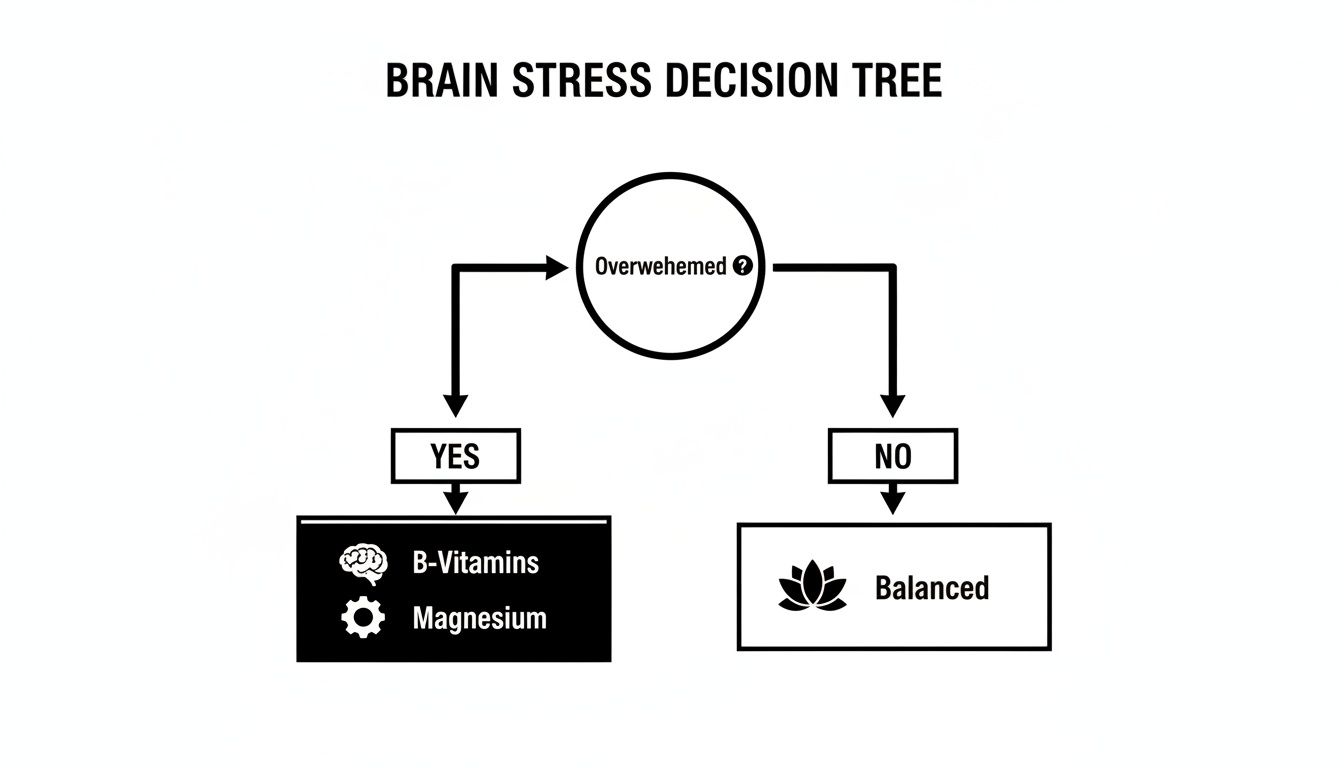
As you can see, essential nutrients like B-vitamins and magnesium are often the first line of nutritional defense when your brain is under stress, helping you shift back toward a more balanced state.
How to Read Labels Like a Pro
Even with a plan in hand, walking down the supplement aisle can feel like navigating a maze. Here's a secret: not all forms of a vitamin or mineral are created equal. Learning to read labels is your key to making sure you're investing in a product your body can actually absorb and use.
Here’s what to look for:
- Form Matters: The specific type of a nutrient dramatically affects how well your body absorbs it. For instance, magnesium glycinate is highly absorbable and known for its calming properties, whereas magnesium oxide is less bioavailable and often acts more as a laxative.
- Dosage and "Elemental" Value: A label will list a total dosage, but the "elemental" amount—the actual quantity of the pure nutrient—is what really counts. A professional can help you decipher this and guide you toward evidence-based dosage ranges for correcting a deficiency.
- Third-Party Testing: Look for seals from organizations like NSF International or USP. This seal means the product has been independently tested for purity and potency, giving you confidence that what's on the label is actually in the bottle.
This knowledge empowers you to make choices with confidence. Take Vitamin D, for example. It's not just for bones; its role in easing anxiety is supported by real clinical data. One small study in patients with generalized anxiety disorder and a vitamin D deficiency found that adding it to their treatment slashed anxiety levels by nearly one-third. Other human trials showed that a dose of 1,600 IU over 6 months significantly improved symptoms, underscoring the power of consistent, guided supplementation for long-term wins. You can learn more about these findings on vitamin D and psychiatric health.
By taking these measured, intentional steps, you are doing more than just taking supplements—you are actively participating in your own healing. You become the architect of your well-being, and every informed choice is a building block for the calm, fearless life you deserve.
Beyond Supplements: Building a Holistic Anti-Anxiety Life

Understanding which vitamins for anxiety might help is a powerful first step. But true, lasting freedom from panic comes from building a life that supports your well-being from every possible angle.
Think of it this way: supplements are a tool, not the entire toolkit. They work best when they’re part of a bigger, more complete strategy for healing. This is where real, sustainable hope begins to take root, reminding you that a panic-free life is not only possible, but achievable.
Imagine your body is a garden. Targeted supplements are like adding a specific fertilizer to fix a known soil deficiency. That’s crucial, of course. But the garden can't truly thrive without consistent sunlight, good soil, and plenty of water. In the same way, a nutrient-dense diet, restorative sleep, and mindful movement create the rich environment your brain needs to finally flourish.
The goal isn't just to arm you with knowledge about vitamins. It's to help you feel empowered, equipped, and renewed in your belief that you have the ability to heal and live a full, joyful life.
Amplifying Your Efforts for Lasting Calm
A holistic approach is all about synergy—where each positive choice you make amplifies the benefits of the others.
The magnesium that helps calm your nervous system works even better when you pair it with deep breathing exercises that activate your parasympathetic "rest and digest" state. The B vitamins fueling your neurotransmitter production are far more effective when your diet is free from inflammatory processed foods that can disrupt brain function.
This integration is where the magic happens. It’s the difference between patching a leak and actually rebuilding the foundation for a panic-free future.
You are the architect of your own well-being. Every positive choice—from the food on your plate to the thoughts you cultivate—is a deliberate step toward the calm, fearless life you deserve. This isn't about perfection; it's about progress and the deep, abiding hope that healing is within your grasp.
This approach combines nutritional wisdom with powerful cognitive and lifestyle shifts. It’s about creating a daily rhythm that sends a constant signal of safety and support to your nervous system. By weaving these practices together, you build a resilient foundation that can weather life's inevitable storms.
Your Toolkit for a Panic-Free Life
A life free from the grip of anxiety is built on small, consistent actions that nourish both your body and mind. Think about how these pillars work together to support you on your journey to healing:
- Nutrient-Dense Eating: A diet rich in whole foods—think leafy greens, healthy fats, and quality proteins—provides the foundational building blocks for brain health. This "food-first" approach ensures your body has a steady supply of the vitamins for anxiety it needs to function optimally.
- Mindful Movement: Gentle exercise like walking or yoga helps burn off excess cortisol and releases mood-boosting endorphins. It’s a wonderful way to connect with your body in a positive, empowering way.
- Restorative Sleep: Prioritizing 7-9 hours of quality sleep each night is non-negotiable for a healthy brain. Sleep is when your brain cleanses itself and consolidates memories, a process vital for emotional regulation and healing.
- Mindfulness and Meditation: These practices train your brain to step back from anxious thoughts instead of getting swept away by them. Learning to quiet your mind through focused breathing is a game-changing skill. You can learn more about how meditation can help reduce anxiety in our dedicated guide.
Each of these pillars reinforces the others. A healthy diet gives you the energy for exercise, which in turn helps you sleep better. And a well-rested mind is far more capable of practicing mindfulness. This interconnected system is your path to not just managing anxiety, but truly healing from it.
Your Questions About Vitamins and Anxiety, Answered
When you start exploring how supplements can help with anxiety, it’s only natural to have a lot of questions. Getting clear answers is one of the most powerful first steps you can take on your journey toward healing. Let's tackle some of the most common ones.
Can I Just Take a Multivitamin for My Anxiety?
While a high-quality multivitamin is a fantastic foundation for overall wellness, it rarely contains the therapeutic doses needed to correct a specific deficiency that might be driving your anxiety. Think of it like this: a multivitamin is like topping off the fluids in your car—it’s good general maintenance. But if your engine is misfiring, you need a targeted repair, not just more oil.
To get significant, lasting relief and truly heal, a personalized approach based on your unique needs—ideally informed by testing and professional guidance—is far more effective. This makes sure you’re giving your body exactly what it needs to rebuild its resilience from the ground up.
How Long Does It Take for Vitamins for Anxiety to Work?
This is where patience becomes your superpower. Some people notice the calming effects of nutrients like magnesium within just a few days. For others, correcting a deeper, long-standing deficiency in something like vitamin D or B12 can take several weeks to a few months of consistent, daily use.
The timeline really depends on the nutrient, how significant your deficiency is, and your own unique body chemistry. The real magic isn't in a quick fix, but in the power of consistent, daily action. Every dose is a small step toward building a strong, stable foundation for a life free from panic. Have hope in the process.
Are There Any Risks to Taking Vitamins for Anxiety?
Yes, and this is crucial to understand: more is not always better. It’s so important to work with a healthcare provider before starting any new supplement regimen. Going it alone and self-prescribing can lead to a few problems:
- Nutrient Imbalances: Taking too much of one vitamin can sometimes throw others out of balance or interfere with their absorption.
- Toxicity: Fat-soluble vitamins, especially Vitamin D, can build up in your body to unsafe levels if you take too much.
- Medication Interactions: Some supplements can interact in negative ways with prescription medications, including antidepressants and anti-anxiety drugs.
A professionally guided approach removes the guesswork. It turns supplementation from a risky shot in the dark into a safe, empowering step on your path toward a calmer, more fearless life. This is a journey of healing, and it's one you don't have to take alone.
Here at The Anxiety Checklist, we believe in arming you with the actionable tools and knowledge you need to move beyond anxiety and embrace a panic-free life. Our self-help system is designed to give you the cognitive strategies and lifestyle guidance that perfectly complement your nutritional journey, helping you build a truly resilient foundation for healing. You can explore the full toolkit and start your path to fearless living right here.