



Your heart is hammering. Your chest feels tight. You can’t get a full breath, and part of you is wondering whether this is anxiety or something far worse. In that moment, individuals aren’t looking for a philosophy of recovery. They want the terror to stop.
That’s where Ativan can enter the picture.
For some people, ativan for panic attacks can act like an emergency brake. It may quiet the spiral fast enough for you to regain your footing. But it helps to know what it is, what it isn’t, and where it fits. Ativan is not a cure for panic. It’s not proof that you’re weak. It’s not the only path forward either.
The more hopeful way to look at it is this: a panic attack can make you feel trapped, but treatment is rarely one thing. Medication may be one tool. Therapy may be another. Sleep, stress reduction, thought work, and gradual exposure often matter more over time than people realize. If you’re trying to sort through all of that, a practical framework like an anxiety checklist can help you organize what’s happening instead of reacting from fear alone.
Your Guide to Navigating Panic with Hope
A lot of people first hear about Ativan after a breaking point.
Maybe it was a panic attack in a grocery store line. Maybe you were driving and suddenly had to pull over because your hands went numb and your mind screamed that something was terribly wrong. Maybe you ended up in urgent care convinced you were having a heart problem, only to hear that your body was in panic mode.
That experience can shake your confidence. It can make the world feel smaller. You start scanning for exits, avoiding traffic, avoiding crowds, avoiding anything that reminds you of the last attack. Then a doctor mentions Ativan, and the question becomes immediate: will this help me, or will it create a new problem?
Both are fair questions.
Ativan can help some people during acute panic because it works quickly. That matters when your nervous system is flooded and logic alone can’t cut through the fear. But fast relief can also be misleading. If a medicine gives you immediate comfort, it’s easy to start seeing it as the only thing standing between you and disaster.
Panic recovery gets stronger when you aim for two goals at once: relief today and resilience tomorrow.
The hopeful truth is that many people do get better. Some use medication briefly while they learn other skills. Some use it sparingly for emergencies. Some decide it’s not the right fit and build recovery through therapy and behavior change. The path varies, but the destination can be the same: a life where panic no longer runs the show.
That’s the mindset worth carrying into this topic. Not, “How do I never feel anxious again?” but, “How do I get through this safely while building the ability to trust myself again?”
What Happens During a Panic Attack and How Ativan Works
A panic attack feels random and mysterious, but the body is doing something very old and very human. It’s setting off an alarm.
The brain’s alarm system
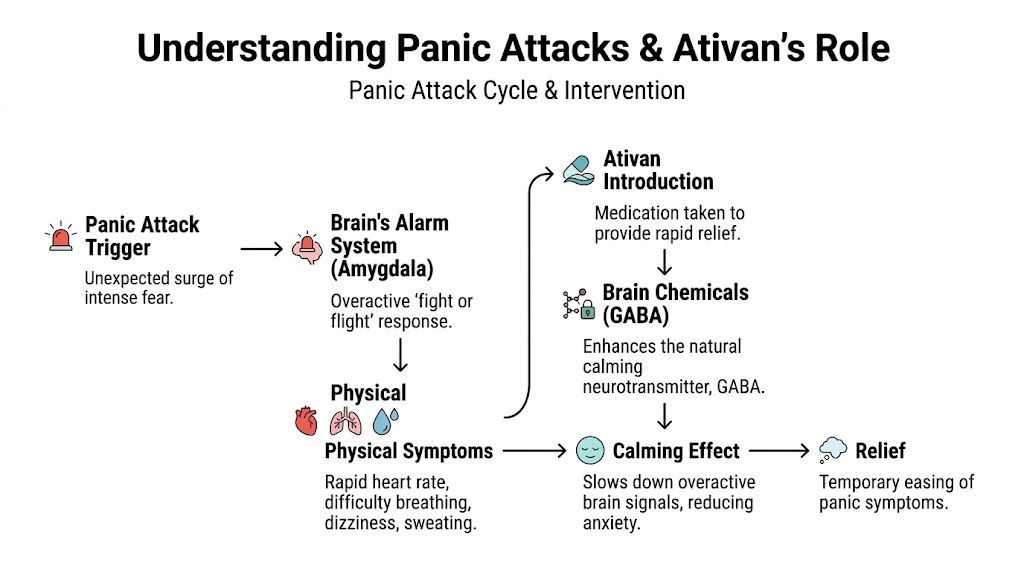
Think of a panic attack as a fire alarm that goes off when there’s burnt toast, not a house fire. Your brain’s threat system reacts as if danger is present, even when there isn’t a true emergency. That alarm can trigger a rush of physical changes: racing heart, shaky limbs, sweating, dizziness, chest tightness, nausea, and the intense urge to escape.
The problem is that those body sensations can become part of the panic itself. You notice your heartbeat. That scares you. Fear makes your heartbeat stronger. Then your brain treats the stronger heartbeat as more “evidence” that something is wrong.
That loop can escalate fast.
If you want a grounded explanation of why your body does this, this guide on the fight or flight response breaks down the stress reaction in simple terms.
Where Ativan fits
Ativan is the brand name for lorazepam, a benzodiazepine. It works by enhancing the activity of GABA, one of the brain’s main calming signals. GoodRx explains that lorazepam enhances GABA_A receptor activity, increases chloride ion influx, and helps suppress overactivity in areas such as the amygdala. The same source notes that lorazepam has a half-life of 10 to 20 hours, can be used as a short-term bridge to SSRIs, and that tolerance can develop within 2 to 4 weeks of use (GoodRx mechanism of action overview).
In plain language, Ativan doesn’t “erase” fear at its source. It turns up your brain’s braking system.
That’s why people often describe it as taking the edge off, softening the surge, or making it possible to think again. It may reduce the intensity of the body’s alarm enough that you stop spiraling.
Why that can feel confusing
People sometimes expect a panic medication to feel like flipping a switch. In reality, the experience can be subtler. You may still know you’re anxious, but the body may stop amplifying the message.
A simple way to picture it:
| Part of the panic cycle | What’s happening |
|---|---|
| Trigger | Your brain interprets something as danger |
| Alarm | Fight-or-flight surges through your body |
| Symptoms | Heart racing, breathlessness, shaking, dread |
| Ativan’s role | Strengthens the brain’s calming signal |
| Result | The alarm quiets enough for symptoms to ease |
That matters because understanding the mechanism can reduce fear. When you know your body is misfiring, and you know Ativan is aimed at calming that alarm, the experience starts to feel less supernatural and more manageable.
Using Ativan for Emergency Panic Relief
You are in the middle of a panic attack. Your chest is tight, your thoughts are racing, and every instinct says something is terribly wrong. In that moment, Ativan can serve a clear purpose. It can lower the intensity of the alarm fast enough for you to regain some footing.
That role matters. So does its limit.
Ativan works best as a short-term rescue medication within a larger recovery plan. A bridge is useful because it helps you cross something dangerous. It is not meant to become the place where you live.
How quickly it can help
One reason doctors use Ativan for panic is its relatively fast onset. People often notice relief soon after taking it, which is why it may be prescribed for acute episodes rather than for building long-term recovery.
Fast relief can feel lifesaving when panic is peaking. It can also shape learning in a way people do not expect. The brain pays close attention to whatever seems to stop danger quickly. If every spike of fear is answered with a pill, your brain may start linking safety only to the medication, instead of also learning, "This wave passes, and I can help my body through it."
What dosing usually looks like
Dose decisions need to stay between you and the prescriber who knows your health history. Age, other medications, alcohol use, sleep problems, breathing conditions, and past substance use can all change what is safe.
For panic, some clinicians prescribe Ativan to use only during severe episodes, while others avoid it or use a different plan entirely. The point is simple. This is not a medication to self-adjust based on fear alone.
If you are in acute distress and need support right now, get immediate anxiety crisis support options.
What taking it may feel like
The experience is often less dramatic than people expect. Some people feel their body loosen first. The pounding heart eases, the shaking settles, and their thoughts become less sticky. Others mainly feel drowsy, slowed down, or mentally foggy.
That difference can be confusing. A person may still know they are anxious, but the body is no longer pouring fuel on the fear. For many, that is enough to interrupt the spiral.
How to use it without letting it take over
A helpful rule is to treat Ativan like emergency equipment. You keep it available for intense moments, but you do not want your whole sense of safety to depend on it.
That means using the calmer window after panic on purpose. Once the wave drops, recovery work can begin. Good examples include:
- noticing patterns such as poor sleep, caffeine, conflict, or skipped meals
- practicing slow exhale breathing when you are calm, so it is easier to use under stress
- returning gradually to avoided places instead of letting panic shrink your life
- starting therapy or structured self-help so the attacks feel less mysterious and less powerful
This is the part many articles miss. Medication can reduce suffering in the moment. Lasting change usually comes from what you build around that relief.
Why short-term use matters
Ativan can be very helpful over a rough stretch, especially while you are starting therapy, testing lifestyle changes, or waiting for another treatment to begin working. But using it too often can shift the center of gravity. Confidence starts to move away from your own skills and toward the bottle.
That is why the "bridge" idea matters so much. The goal is not only fewer frightening moments today. The goal is teaching your nervous system, over time, that panic is survivable, understandable, and treatable from more than one direction.
Used carefully, Ativan can support that process. Used alone, it can stall it.
The Full Picture Benefits Versus Significant Risks
The biggest benefit of Ativan is simple. It can bring relief fast when panic is overwhelming.
That benefit is real. It shouldn’t be dismissed, especially by people who’ve never felt the intensity of a true panic attack. But the full picture matters just as much, because a medicine that helps in the short term can become costly when it subtly expands its role.

What the benefit actually is
Ativan’s strength is not long-term healing. Its strength is rapid symptom suppression.
In a severe panic episode, that can be enough to prevent escalation. It may help someone get through a flight, a medical appointment, a night of repeated panic surges, or the early phase of treatment while they wait for other strategies to take hold.
That’s why some psychiatrists use it as part of a broader plan. If you’re weighing whether medication belongs in your treatment, this guide on finding a psychiatrist for anxiety can help you think through the decision with more structure.
The risks people often expect
The obvious downsides of Ativan are widely acknowledged. It can cause sedation, slowed thinking, poor coordination, and next-day grogginess. It can also create physical dependence, especially when it shifts from occasional use to regular use.
Withdrawal is another major concern. Stopping abruptly can trigger rebound anxiety and, in some cases, much more serious problems. That’s one reason benzodiazepines need careful medical supervision rather than casual on-and-off use.
The risk people often miss
A more subtle problem is emotional blunting.
According to Doctronic’s discussion of Ativan and anxiety, an under-discussed side effect is emotional blunting and loss of motivation. The same source states that up to 40% of long-term users report amotivation. That matters because panic recovery doesn’t only require feeling less fear. It also requires engaging in life, practicing skills, showing up to therapy, tolerating discomfort, and rebuilding confidence.
When a medicine dulls panic, it may also dull initiative.
That can create a difficult trade-off. You feel less distressed, but you may also feel less driven to do the work that leads to durable change.
Here’s a useful visual explanation of the short-term relief versus long-term caution dynamic:
A clear way to weigh it
| Fast relief | Long-term cost |
|---|---|
| Can reduce acute panic intensity | Tolerance can develop |
| May help during a crisis | Dependence can form |
| Can provide temporary stability | Withdrawal can trigger rebound panic |
| May create space for therapy | Emotional blunting may interfere with therapy |
Relief isn’t the same as recovery. Sometimes it supports recovery. Sometimes it delays it. The difference is how it’s used.
This is why the most balanced view of ativan for panic attacks is neither “never take it” nor “it solves the problem.” It’s a powerful short-term option with real risks. For the right person, in the right context, it can help. But it works best when everyone involved stays honest about the limits.
Building Your Bridge to a Panic-Free Life
The most useful way to think about Ativan is as a bridge.
A bridge helps you cross dangerous ground. It is not the place you build your life.
If panic has been relentless, you may need something that brings quick relief while you regain stability. That doesn’t mean you’ve failed. It means your nervous system may need support while you build something sturdier underneath it.

What solid ground looks like
Long-term recovery usually comes from a combination of approaches that change your relationship with fear.
Therapy often sits at the center. Cognitive Behavioral Therapy, especially panic-focused CBT, helps people identify catastrophic thinking, reinterpret body sensations, and reduce the avoidance that keeps panic alive. Instead of treating every flutter in your chest like proof of disaster, you learn to respond differently.
Daily habits matter more than they get credit for. Panic thrives on sleep disruption, overstimulation, chronic stress, and inconsistent routines. A person who sleeps poorly, overuses caffeine, skips meals, and lives in constant hypervigilance will usually have a harder time calming an already sensitive nervous system.
Self-directed practice can be powerful. Some people need a therapist to guide every step. Others benefit from structured tools they can use on their own between appointments. The common thread is repetition. Calm is built through practice, not just insight.
The bridge model in real life
A healthier treatment arc often looks like this:
Stabilize the crisis
You and your clinician focus on safety. That might include occasional rescue medication, reducing obvious triggers, and ruling out medical issues.
Create predictability
You start logging when panic happens, what came before it, what your body felt, and how you responded. Patterns usually appear faster than people expect.
Train your response
Here, skills start to matter. Slow exhale breathing, reducing reassurance-seeking, limiting avoidance, and challenging “I’m dying” thoughts all become part of the plan.
- Re-enter life
The ultimate win isn’t having zero adrenaline forever. It’s being able to drive, shop, work, travel, sleep, and live without organizing your whole life around fear of the next attack.
Medication can be part of that bridge
Some people also use longer-term medications under medical guidance. Those can work differently from benzodiazepines and may be considered when panic is persistent. What matters most is not whether your plan includes medication. It’s whether the plan moves you toward independence rather than deeper fear.
That broader view matters because panic doesn’t always travel alone. Depression can overlap with anxiety and make motivation, sleep, and daily functioning much harder. If that sounds familiar, a practical resource on exploring treatment options for depression can help you understand how nearby support and treatment pathways are often connected.
Skills that build freedom
Below is a simple recovery framework many people can start using right away:
Challenge the first catastrophic thought
When your mind says, “This means something terrible is happening,” pause and ask, “Could this be adrenaline?” That question alone can interrupt escalation.Reduce the behaviors that teach fear
Leaving every situation immediately, checking your pulse repeatedly, or needing constant reassurance can strengthen panic over time.Practice calm before you need it
Breathing and grounding skills work better when rehearsed outside crisis mode.Track progress in writing
A notebook, worksheet, or structured program can help you notice gains your anxious brain ignores.
For readers who want a self-paced learning framework, Anxiety University offers educational support around anxiety recovery concepts.
Recovery often starts the moment you stop asking, “How do I make sure I never panic?” and start asking, “How do I become less afraid of the sensations themselves?”
That shift is where hope becomes practical. You don’t need to win every moment. You need a plan that makes you stronger over time.
How to Create a Safe Plan with Your Doctor
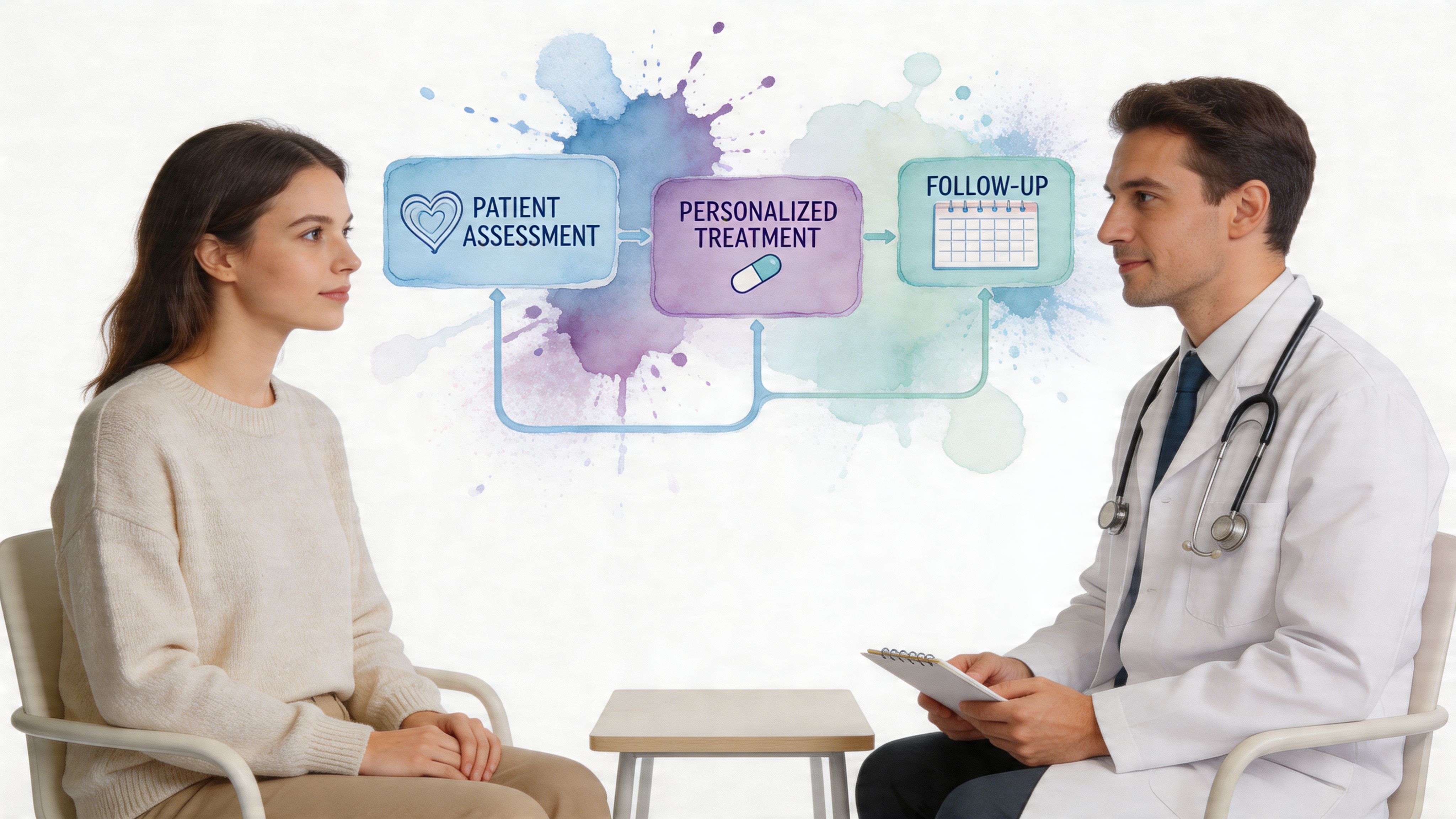
A good Ativan plan is specific. “Take it if needed” sounds simple, but vague instructions are where many people get into trouble.
The goal is to leave your appointment knowing exactly when to use it, when not to use it, what risks apply to you, and how the medication fits into a larger recovery plan.
Questions worth asking directly
According to Healthgrades’ Ativan overview, 0.5 to 2 mg PRN is typical for acute panic, there is a 10x increased risk of respiratory arrest with opioids, and guidance recommends limiting use to less than 4 months with tapering strategies such as 0.5 mg per week when discontinuing. Those are the kinds of details you want translated into a personal plan.
Bring questions like these:
What is my exact use case?
Ask whether your doctor wants this used for rare emergencies, a temporary bridge, or something else.What dose should I personally start with?
“Typical” and “safe for me” are not the same thing.What should I never combine it with?
This matters especially if you take pain medication, sleep medication, or drink alcohol.What signs mean I’m relying on it too much?
Ask what pattern would concern your doctor.What is our exit plan?
A medication with dependence potential should have a stopping strategy from the start.
Ask about the supply side too
Medication plans can get disrupted by access problems. If you’ve ever been told your pharmacy is out of stock, it helps to understand the bigger system behind that. This explainer on understanding why drug shortages occur gives helpful context for why availability can change and why having a backup plan matters.
What a safer plan usually includes
A strong doctor-guided plan often includes clear rules such as:
| Plan element | Why it matters |
|---|---|
| Defined trigger for use | Prevents taking it for every wave of stress |
| Lowest effective dose | Lowers sedation and dependence risk |
| No mixing with opioids or alcohol | Reduces overdose and breathing danger |
| Follow-up date | Keeps short-term use from drifting into long-term use |
| Taper plan if needed | Lowers withdrawal risk |
Safety reminder: If you’ve been using Ativan regularly, don’t stop suddenly on your own. Withdrawal can be serious.
Make the relationship collaborative
You don’t need to act like a passive recipient of instructions. You’re allowed to ask for clarity. You’re allowed to say you’re worried about dependence. You’re allowed to ask how this medication supports, rather than replaces, long-term healing.
A useful way to phrase it is: “I want relief, but I also want a plan that helps me need this less over time.”
That sentence changes the whole conversation. It tells your doctor that you’re not just seeking sedation. You’re seeking recovery.
Frequently Asked Questions About Ativan for Panic
How can my family or partner help me safely during a panic attack?
Family support matters more than many medical articles acknowledge. Medical News Today notes that 60% of panic disorder patients involve family in crises, and the same source says guidelines recommend limiting benzodiazepine use for panic to under 2 weeks, with long-term emphasis on CBT and family-involved tools (Medical News Today on Ativan use and family support).
The most helpful role for a partner or family member is calm support, not taking over your nervous system for you.
They can help by:
- Staying steady and speaking clearly
- Following the prescribed plan rather than improvising
- Watching for concerning sedation or breathing problems
- Helping you use non-drug tools too, such as breathing, grounding, or reducing stimulation
- Avoiding accidental reinforcement, like turning every anxious moment into a medication event
If a loved one asks, “Can I give them their Ativan during a panic attack?” the right answer is: only according to the prescribing clinician’s instructions.
What interactions are most dangerous?
The biggest issue is mixing Ativan with other substances that also slow the central nervous system. Opioids are especially dangerous. Alcohol also raises risk. If you take sleep aids, pain medication, or other sedating drugs, bring all of that to your prescriber and pharmacist.
Don’t guess. Don’t rely on memory from an old prescription. Ask specifically.
Can I become dependent even if I only use it as needed?
Yes, dependence can still become a concern, especially if “as needed” slowly turns into frequent use. Sometimes the shift is behavioral before it is physical. A person starts carrying the medication for reassurance, then taking it earlier in the panic cycle, then avoiding situations unless it’s available.
That pattern can teach your brain that panic is unmanageable without the drug.
Does taking Ativan mean I’m not really healing?
No. The problem isn’t using a tool. The problem is using one tool in a way that blocks the rest of recovery.
If Ativan helps you through a brutal stretch while you build skills, attend therapy, and re-enter life, it may support healing. If it becomes your only coping strategy, healing usually stalls.
What should I keep in mind most of all?
Keep the hierarchy clear.
Ativan can help with the moment. Recovery comes from changing the pattern.
If you hold onto that distinction, you’re far less likely to confuse temporary relief with lasting freedom.
If you want a structured, self-paced way to build real panic recovery skills beyond medication, The Anxiety Checklist offers practical tools for tracking triggers, challenging fear patterns, building better habits, and creating a plan you can realistically follow when anxiety tries to take over.