

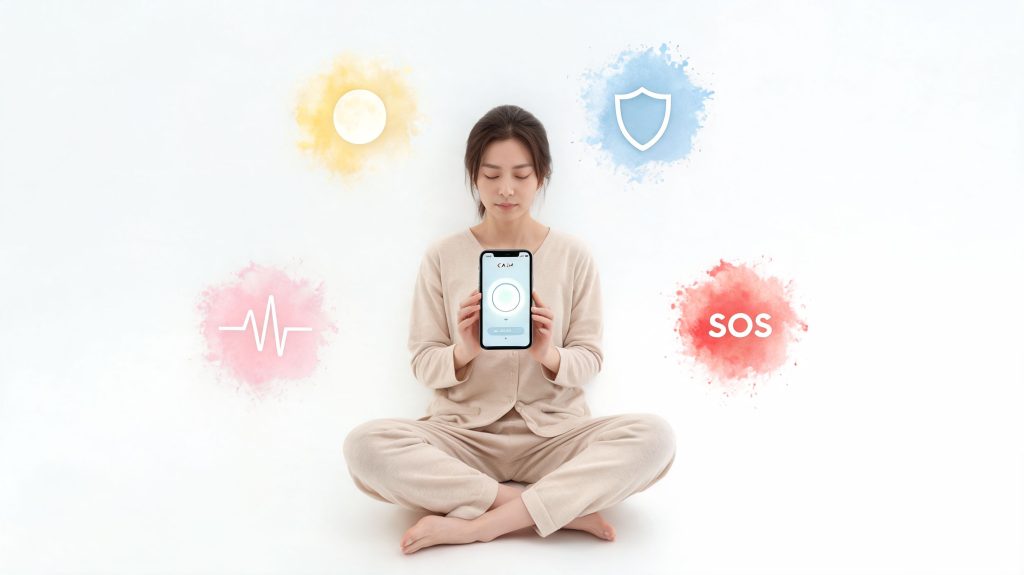
When your heart races, your thoughts spiral, and your body starts scanning for danger, your iPhone can feel like the last place you'd look for peace. But for many people, it becomes the first steady thing they reach for. A good meditation app doesn't fix everything. It does something more immediate and more useful. It gives you a next step when anxiety is loud and your mind is not cooperating.
That matters, especially if you're trying to build a life that feels bigger than panic. Healing usually isn't one dramatic breakthrough. It's a series of small moments where you interrupt the spiral, breathe on purpose, and teach your nervous system that you are safe enough to stay present. If meditation has ever felt too vague, too slow, or too polished to help with real anxiety, this guide is for you.
The meditation app category is not small. The top 10 meditation apps generated $195 million in 2019, with 52 million downloads that year, which tells you how many people are actively looking for this kind of support. If anxiety also shows up physically for you, this guide on reducing heart palpitations with meditation is worth reading alongside app-based support.
Table of Contents
- 1. The Anxiety Checklist
- 2. Calm
- 3. Headspace
- 4. Insight Timer
- 5. Waking Up by Sam Harris
- 6. Happier Meditation formerly Ten Percent Happier
- 7. Balance Meditation and Sleep
- 8. Aura Meditation and Sleep CBT
- 9. Medito nonprofit 100 free
- 10. Healthy Minds Program Humin Center for Healthy Minds
- Top 10 iPhone Meditation Apps Comparison
- Your Journey to Peace and Healing Begins Now
1. The Anxiety Checklist
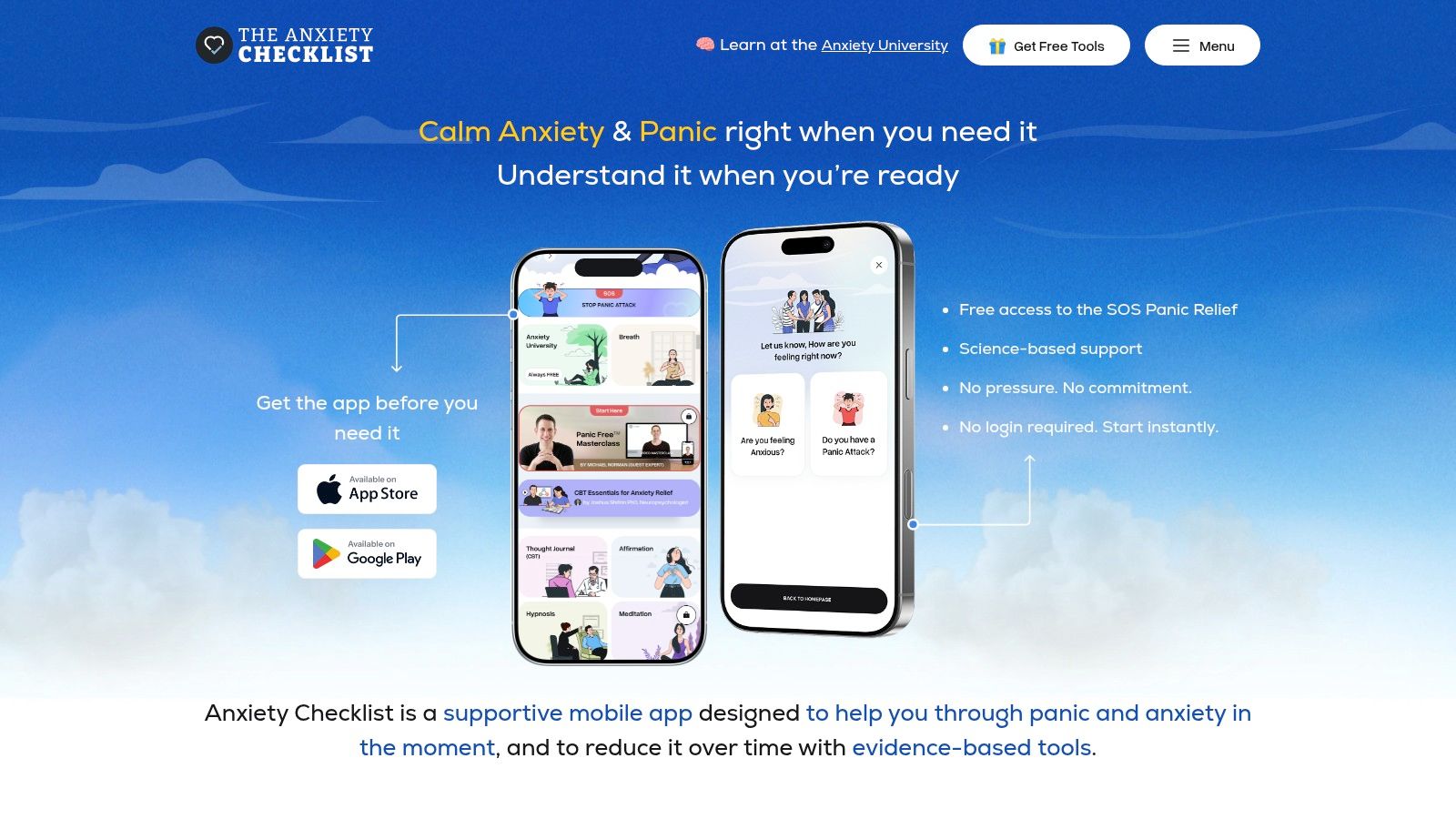
Your chest tightens in the grocery line. Your thoughts start racing. In that moment, the best meditation app on iPhone is the one that gives you something clear to do in the next 30 seconds.
That is why The Anxiety Checklist stands out. It is built for anxiety episodes first, with meditation as part of a larger support system. You get an always-free SOS mode for acute moments, then a wider set of tools for daily practice, sleep, walking sessions, journaling, exposure work, and guided reflection. For people trying to live with less fear and fewer panic spirals, that mix makes more sense than a giant library you have to sort through while distressed.
Why it stands out for panic
Panic changes what is usable. Long menus, vague labels, and too many choices can make a bad moment worse. This app keeps the first step simple, which matters more than polished branding when your brain is in alarm mode.
It also goes beyond basic calming audio. If you want meditation plus structured self-help, the app includes CBT tools for anxiety relief alongside the in-the-moment support. That gives it a different role from apps that are mainly for relaxation. It can help you settle down now, then come back later and work on the patterns that keep anxiety going.
Practical rule: For panic support, the best meditation app on iPhone is the one you can use fast, even when concentration disappears.
There is real depth here too. Premium content includes expert-led learning, hypnosis, sleep audio, affirmations, and classes aimed at helping users understand panic sensations instead of fearing them.
What works and what to watch
The strongest part is the low-friction design. You can get started without a login, which is a smart choice for anxious users who already feel overloaded. The free SOS access also means you can test whether the app helps in real life before deciding if the premium tier is worth it.
The trade-off is scope. This is an anxiety-focused app, not a broad meditation platform built around sleep stories, ambient soundscapes, or celebrity voices. That is a strength if your main goal is handling panic. It is less appealing if you only want passive relaxation at bedtime.
It also does not replace urgent care or one-to-one treatment. I view that clarity as a good sign. Anxiety apps are most helpful when they stay honest about what they can and cannot do.
A final consideration is pricing visibility. There is a 7-day free trial, but long-term premium cost is not clearly laid out on the site, so checking the App Store before subscribing is the safe move.
- Best for: Fast panic support and longer-term anxiety skills in one place
- Less ideal for: People who mainly want sleep entertainment or a general meditation catalog
- Website: The Anxiety Checklist
2. Calm
Calm is the app I'd point to first for people whose anxiety gets worst at night. If your mind speeds up when the lights go off, its sleep-first approach is hard to ignore. The app has guided meditations, breathwork, music, short sessions, and one of the better-known Sleep Stories libraries.
Its market position reflects that broad appeal. In January 2025, Calm generated about $8 million in global in-app revenue, ahead of Headspace at $4 million. That doesn't prove it will help your anxiety more than another app, but it does show how strong its adoption and monetization are.
Best fit
Calm works best when anxiety overlaps heavily with poor sleep, bedtime dread, or the need for soothing audio that doesn't ask much of you. The tone is polished and low-pressure. You don't need to be “good at meditation” to use it.
Where it falls short is acute panic. It can calm you down, but it isn't built specifically around crisis-mode guidance. Most of the strongest content also sits behind a subscription, so if budget is tight, you may feel the paywall quickly.
Calm is a strong comfort app. It isn't always the strongest intervention app.
- Best for: Sleep support and relaxing audio content
- Pros: Excellent sleep library, beginner-friendly feel, polished experience
- Cons: Most content is paywalled, offers and pricing can vary
- Website: Calm
3. Headspace
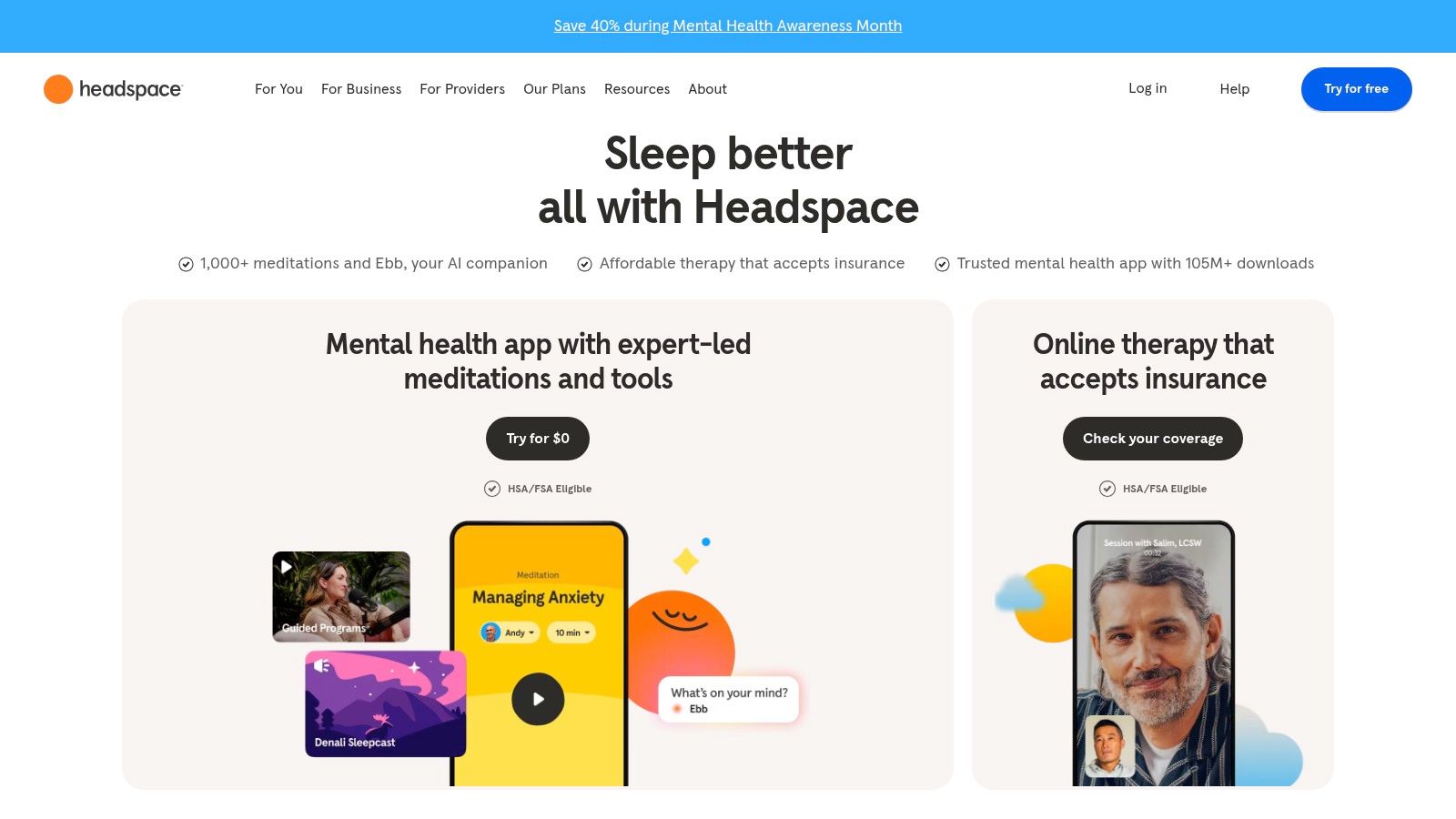
You open the app in the middle of an anxious day and don't want fifty choices. You want a clear next step. That is where Headspace tends to work well.
Headspace is built around guidance and routine. Instead of dropping you into a huge library and asking you to sort it out, it nudges you toward short sessions, themed courses, and simple daily use. For someone whose anxiety gets worse when decision fatigue kicks in, that structure can be a real relief.
This app fits people who want to build a steady practice, not just reach for a calming track once in a while. The teaching style is approachable, the sessions are usually easy to start, and the progression feels more like coaching than browsing. I often recommend it to beginners who say, “I know meditation could help, but I never know what to do when I sit down.”
It also handles a common anxiety problem well. Rumination feeds on empty space. A guided session with a clear beginning, middle, and end gives your attention something concrete to do. If you are still learning the basics of sitting with anxious thoughts without getting pulled under by them, The Anxiety Checklist meditation guide is a useful companion.
The trade-off is that structure can start to feel limiting or crowded, depending on what you need. Some people outgrow the beginner path and want more freedom, more depth, or less visual stimulation. Others will notice that the full value sits behind a subscription, so it is not always the best pick if you need strong free support first.
- Best for: Beginners who want step-by-step guidance and habit support
- Pros: Clear progression, friendly teaching style, helpful for rumination and daily consistency
- Cons: Full experience requires a subscription, interface can feel busy as you explore more
- Website: Headspace
4. Insight Timer
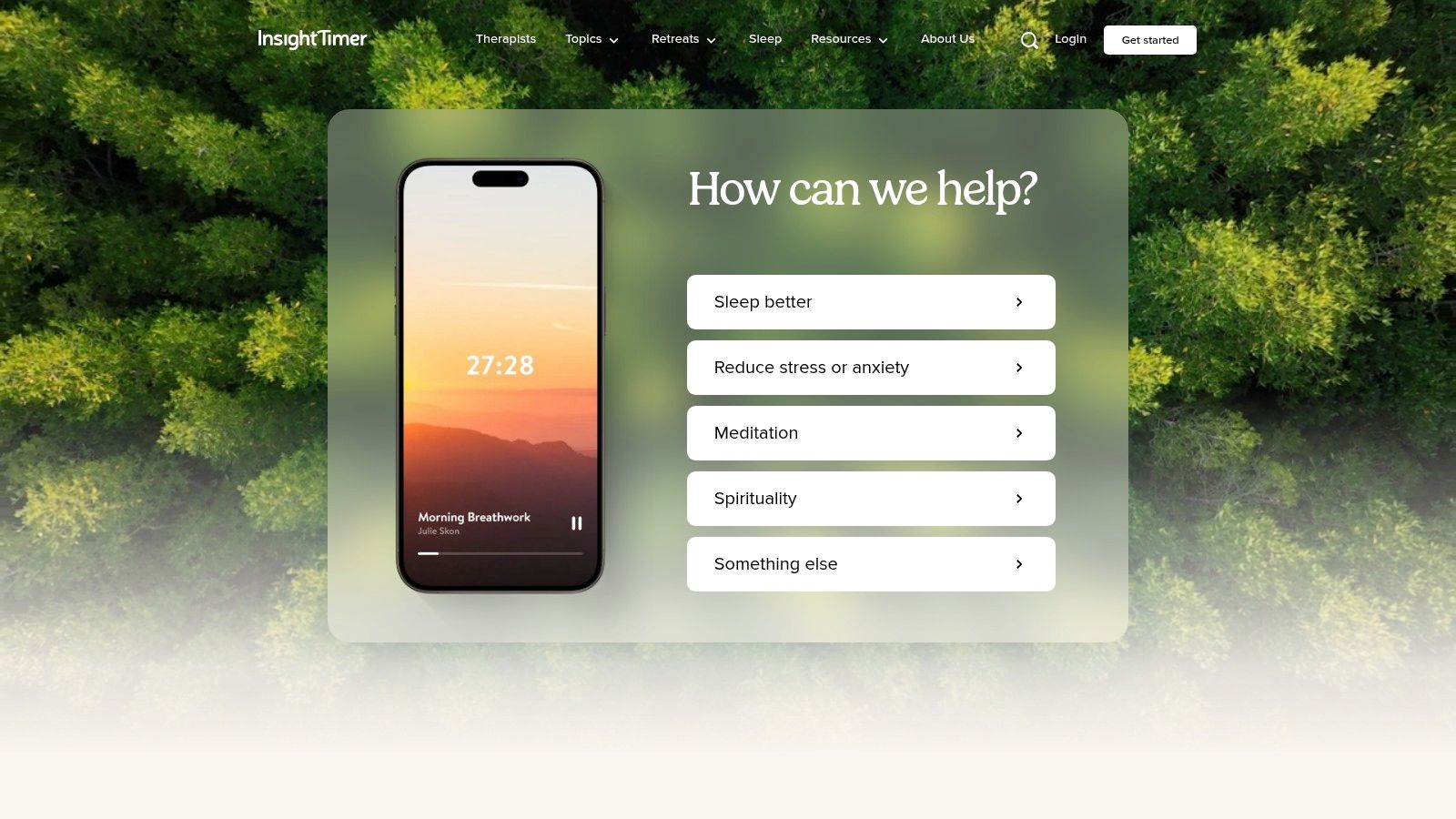
You wake up at 2 a.m., your chest is tight, and you do not want another monthly charge just to find one calming practice that helps. Insight Timer makes sense in that moment. It gives you a large free library, a reliable meditation timer, and access to many teaching styles without pushing you to commit right away.
That flexibility is the main reason people stay with it. Some users need a sleep meditation. Others want a 5-minute grounding practice before work, a live class in the evening, or a simple timer with a bell and no talking at all. Insight Timer handles all of those use cases well, which makes it one of the more practical options for anxiety support on iPhone.
Free matters here.
If anxiety already makes decisions feel heavy, cost can become one more point of pressure. A strong free tier lets you test what helps your nervous system before you spend money. That is a real advantage, especially for people who are still figuring out whether guided meditation, music, breathwork, or silent sits work best for them.
The trade-off is choice overload. Insight Timer can feel less like a path and more like a giant room full of voices. For some people, that variety is comforting. For others, it creates the exact problem they came in with: too many options, not enough clarity. I usually suggest starting small. Pick one teacher, save two or three sessions, and ignore the rest for a week. If you want a simple framework to build around that habit, The Anxiety Checklist meditation guide pairs well with this app.
Start with one practice you can repeat. Anxiety usually settles faster with familiarity than with endless browsing.
- Best for: People who want meaningful anxiety support without paying upfront
- Pros: Large free library, useful timer, many teachers and session types
- Cons: Too much choice can feel scattered, premium features still exist behind a subscription
- Website: Insight Timer
5. Waking Up by Sam Harris
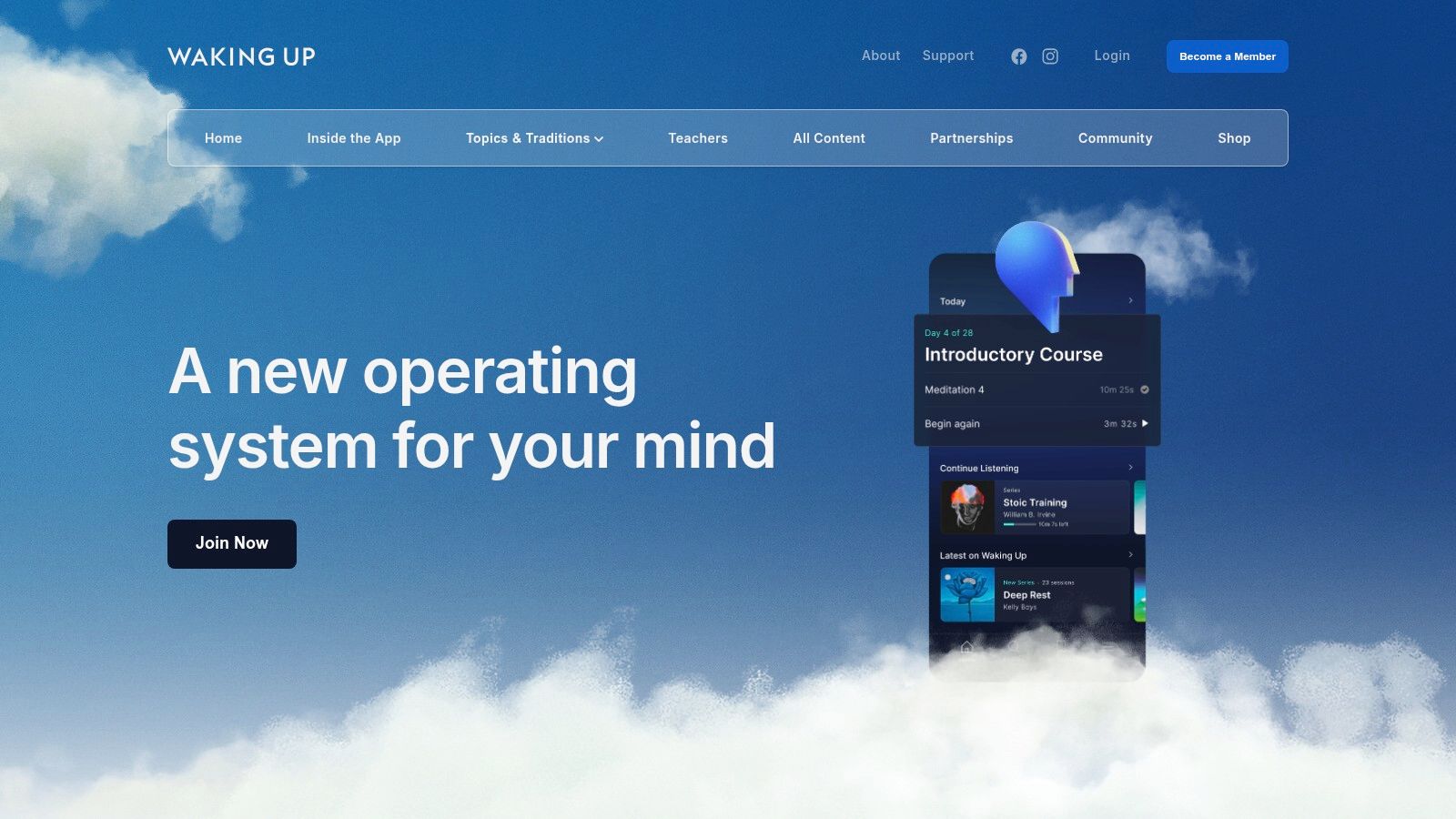
Some people calm down when they feel soothed. Others calm down when something finally makes sense. Waking Up is for the second group.
This app combines guided practice with theory, philosophy, and conversations about consciousness and attention. The well-known entry point is a 28-day introductory course, which gives the app a more intentional shape than open-ended libraries.
Who it clicks with
Waking Up often lands well with skeptical, analytical, or intellectually curious users who want more than “take a deep breath and relax.” If you've bounced off softer wellness apps because they felt vague or sentimental, this one may feel more grounded.
Its biggest strength is also its main limitation. The style is cerebral. When someone is in raw panic, abstract insight may not be what helps first. This is often better for building understanding over time than for immediate crisis relief.
- Best for: Intellectual users who want meditation plus deeper ideas
- Pros: Strong theory library, guided structure, scholarship access available
- Cons: More cerebral tone, higher price point than many alternatives
- Website: Waking Up
6. Happier Meditation formerly Ten Percent Happier
Happier is one of the better choices for people who dislike wellness language. It tends to feel practical, plainspoken, and less mystical than many competitors. For anxious users who resist anything that sounds airy or overpromising, that tone can make all the difference.
The app offers guided sessions, goal-based plans, short instructional videos, and challenges that help turn meditation into a repeatable practice instead of a vague intention.
When practical beats mystical
Many people with anxiety do not require more inspiration. They need instruction they will follow. Happier performs well in this regard because it explains concepts in a manner that feels ordinary and usable.
The downside is that some users may outgrow it if they want a giant content ecosystem or lots of advanced branching paths. It's focused, which is often good, but it isn't endless. If you're also doing reflective work alongside meditation, these shadow work prompts for anxiety may help deepen what comes up in practice.
- Best for: Skeptics who want direct, relatable instruction
- Pros: No-nonsense tone, approachable sessions, useful challenges
- Cons: Smaller library than the largest apps, advanced users may outgrow it
- Website: Happier Meditation
7. Balance Meditation and Sleep
You wake up tense, open a meditation app, and freeze at the number of choices. For many people with anxiety, that moment is enough to make them close the app and do nothing. Balance works well because it removes much of that friction and gives you a clearer next step.
Instead of dropping you into an oversized library, Balance builds around check-ins, guided progression, and daily structure. That approach can feel reassuring if your mind is already busy. You spend less time deciding and more time practicing, which is often the difference between using an app for two days and using it long enough to calm your nervous system.
Why structure matters for anxiety
Anxious users often do better with a plan than with endless options. Balance is especially useful for people who want the app to guide the session length, style, and pacing based on how they respond over time.
I'd point new meditators here if they want support without having to sort through dozens of teachers and categories. It also has solid sleep content, which matters because anxiety rarely stays confined to the daytime. The trade-off is straightforward. Balance is strongest when you participate in the check-ins and follow the path it sets. If you prefer to browse freely or build your own practice from a huge content pool, another app may fit better.
For readers who want to pair meditation with a clearer understanding of cognitive tools, these outpatient addiction treatment resources give a plain-language overview of CBT ideas that can complement mindfulness.
- Best for: People who want an adaptive daily plan
- Pros: Lower decision fatigue, clear progression, helpful sleep support
- Cons: Less appealing for users who want a massive library, works best with regular check-ins
- Website: Balance
8. Aura Meditation and Sleep CBT
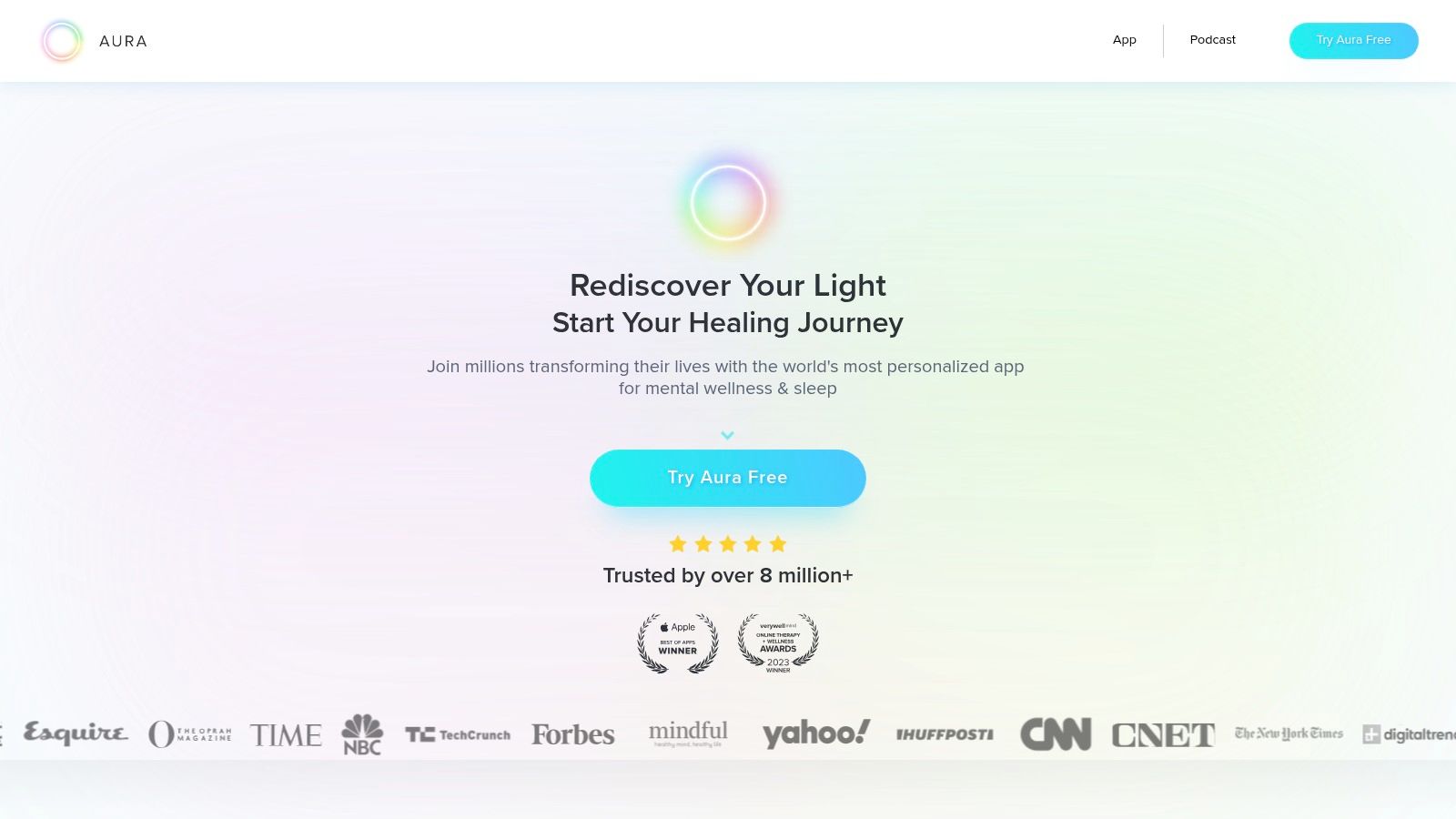
Aura makes the most sense for people who need very short interventions. If you're the kind of person who won't press play on a 20-minute session but might do 3 minutes between meetings, in the car, or after a stress spike, it fits that reality well.
The app mixes meditation with other formats, including CBT-style tracks, hypnosis, and coaching content. That broader menu can help users who don't connect with classic mindfulness alone.
Good for fast support
Aura's strength is speed. Short, personalized sessions are easier to use in real life than idealized meditation routines. That matters if your anxiety is situational, recurring, and tied to a busy schedule.
Its weakness is the same thing many broad wellness apps struggle with. Too many options can create clutter. If your nervous system is already overloaded, you may need to ignore most of the app and stick to one or two repeatable formats. For readers exploring cognitive approaches alongside meditation, these outpatient addiction treatment resources offer a plain-language look at CBT principles.
- Best for: Very short micro-sessions and mixed modalities
- Pros: Quick support, broad content types, useful for busy users
- Cons: Can feel cluttered, pricing and offers can vary
- Website: Aura
9. Medito nonprofit 100 free
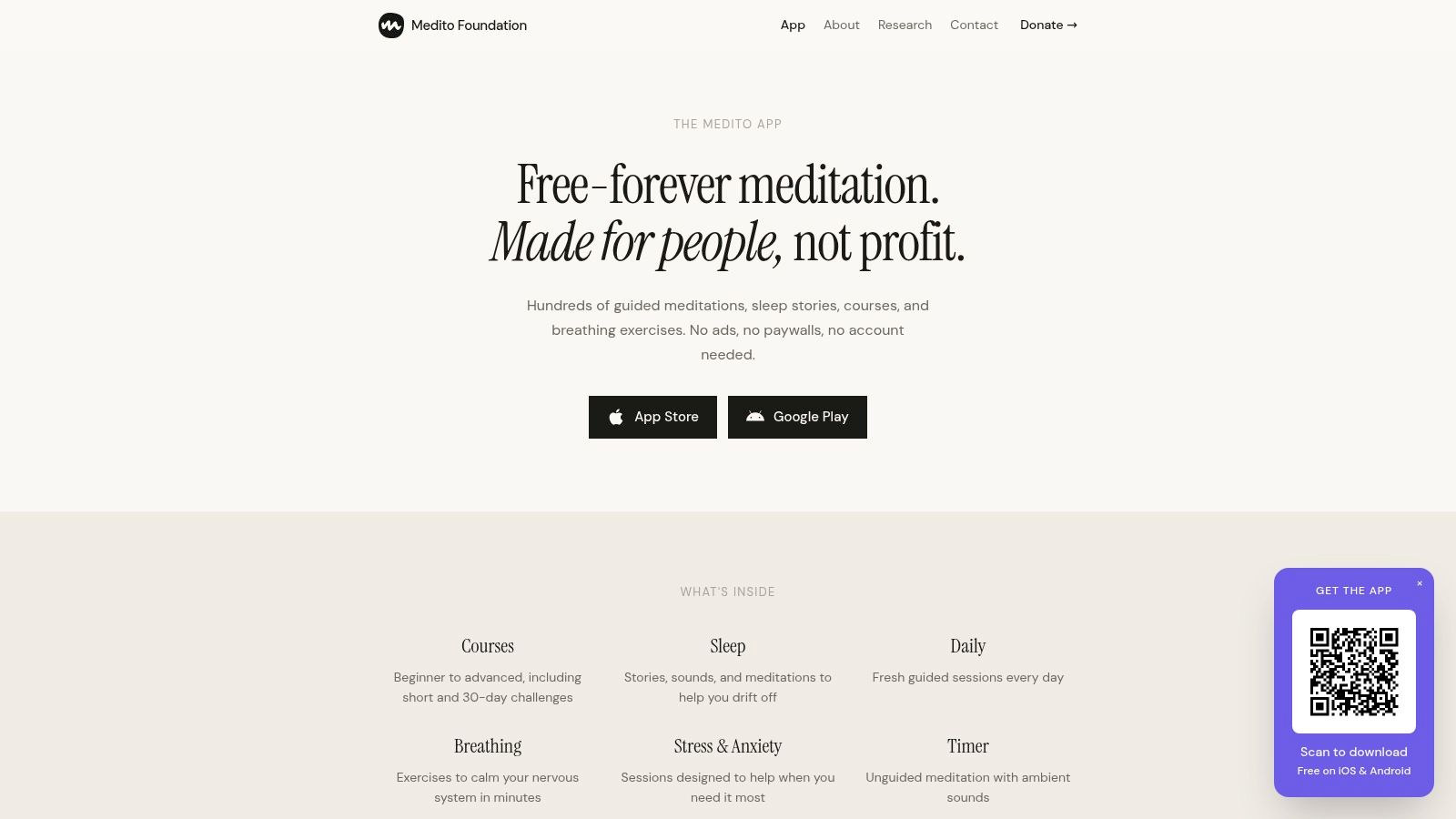
Medito is what I recommend to people who want zero friction and zero financial pressure. It's nonprofit, free, and focused enough that it doesn't feel like you need a strategy just to begin. That simplicity can be a relief.
The app includes beginner courses, stress and anxiety packs, breathwork, and sleep content. It also avoids a lot of the account and subscription friction that makes some people abandon a new habit before it starts.
The value of no friction
When someone is already overwhelmed, “free” is not just about money. It also means emotional ease. No trial clock. No pressure to decide quickly. No sense that calm is being dangled in front of you and then locked away.
The trade-off is a smaller catalog and fewer advanced features than premium leaders. But for many users, especially beginners, that's a fair trade. A focused free app often gets used more than a feature-rich app that feels exhausting.
- Best for: Anyone who wants a free place to start
- Pros: No ads, no paywall, beginner-friendly, uncluttered
- Cons: Smaller library, fewer premium-style extras
- Website: Medito
10. Healthy Minds Program Humin Center for Healthy Minds
A familiar anxiety moment. Your chest is tight, your thoughts are racing, and you want guidance that does more than tell you to breathe and hope for the best. Healthy Minds Program works well for that kind of user because it teaches meditation as a trainable set of skills with a clear framework: awareness, connection, insight, and purpose.
That structure is the main reason to choose it. If anxiety makes you ask, “Why am I doing this practice?” or “What is this supposed to help me change?”, the app gives enough context to make the habit stick. The guided sessions and short lessons support each other, so you are not left guessing how mindfulness connects to daily stress, reactivity, and recovery after a hard moment.
It is also one of the better free options on iPhone for people who want substance over polish. The trade-off is clear. You get thoughtful instruction and a more grounded learning experience, but you do not get the same sleep-heavy catalog, celebrity voices, or endless browsing found in more entertainment-driven apps.
For anxiety relief, that can be a strength. Too many choices can feel like one more decision when your nervous system is already overloaded. Healthy Minds keeps the focus on practice and understanding. If you want to pair that with broader anxiety learning resources, that combination can help you build both calm in the moment and better self-awareness over time.
The apps that help most over time teach a repeatable skill you can use when panic starts to rise.
- Best for: People who want a science-informed, skills-based free app
- Pros: Clear framework, free access, teaches the reasoning behind the practice
- Cons: Less sleep-focused, smaller sense of discovery, more course-like than browse-friendly
- Website: Healthy Minds Program
Top 10 iPhone Meditation Apps Comparison
| App | Core features ✨ | Quality & UX ★ | Price/value 💰 | Best for 👥 | Standout 🏆 |
|---|---|---|---|---|---|
| 🏆 The Anxiety Checklist | ✨ One‑tap SOS, hypnosis & sleep audios, CBT self‑therapy | ★ Evidence‑based, expert lessons; no‑login start | 💰 Free SOS; 7‑day premium trial; subscription for full access | 👥 Panic‑prone users & self‑help seekers | 🏆 Instant panic relief + long‑term CBT |
| Calm | ✨ Sleep Stories, Daily Calm, music, breathwork | ★ Polished UX; high editorial ratings | 💰 Mostly paywalled; premium subscription | 👥 Sleep‑focused users & beginners | 🏆 Sleep‑forward library; celebrity narrators |
| Headspace | ✨ Structured courses, 500+ meditations, Apple Watch tools | ★ Beginner‑friendly; progress tracking | 💰 Subscription for full curriculum | 👥 Beginners wanting habit‑building | 🏆 Clear, research‑backed curriculum |
| Insight Timer | ✨ Massive free library, timer, live events, many teachers | ★ Vast choice; UX can feel overwhelming | 💰 Best free value; optional Member Plus | 👥 Budget‑conscious explorers & variety seekers | 🏆 Largest free catalog & live sessions |
| Waking Up (Sam Harris) | ✨ Daily meditations + deep theory lessons, 28‑day course | ★ High ratings; editorial praise | 💰 Higher price; scholarships available | 👥 Intellectual users seeking theory + practice | 🏆 Practice paired with philosophy & neuroscience |
| Happier Meditation | ✨ Short practical sessions, goal plans, weekly challenges | ★ Approachable, minimal jargon | 💰 Subscription for full access | 👥 Skeptics & busy beginners | 🏆 No‑nonsense, practical instruction |
| Balance | ✨ Adaptive daily plan, singles for walking/eating/commute | ★ Personalized UX; reduces decision fatigue | 💰 Subscription; value if you follow plan | 👥 Users who want guided, adaptive routines | 🏆 Strong hands‑on personalization |
| Aura | ✨ 3‑min micro‑meditations, CBT & hypnosis tracks | ★ Quick just‑in‑time relief; interface can be busy | 💰 Free limited daily; premium unlocks | 👥 People needing ultra‑short relief moments | 🏆 Very short, personalized micro‑sessions |
| Medito (nonprofit) | ✨ Core courses, sleep, breathwork; no ads/paywall | ★ Clean, uncluttered; donation‑supported | 💰 100% free (no login/ads) | 👥 Cost‑sensitive users & newcomers | 🏆 Truly free nonprofit resource |
| Healthy Minds Program | ✨ Skills training: Awareness, Connection, Insight, Purpose | ★ Evidence‑informed; high user satisfaction | 💰 Free to use | 👥 Users interested in science of well‑being | 🏆 Research‑backed, skills‑based curriculum |
Your Journey to Peace and Healing Begins Now
It often starts in an ordinary moment. You are in bed, the lights are off, and your mind suddenly speeds up. Or you are in the grocery store, your chest tightens, and you reach for your phone because you need help now, not later. In those moments, the best meditation app on iPhone is the one you will open and trust under pressure.
That is the standard I would use.
Choose based on the hardest part of your day. If anxiety hits at night, pick the app that makes sleep support easy to access. If panic shows up fast, choose one with short grounding sessions or an SOS option. If too many choices make you shut down, pick a program with a clear daily path. If cost keeps you hesitating, start with a free app and build the habit first.
Consistency changes more than intensity. A five minute practice you return to during a rough week does more for anxiety than a polished app you avoid because it feels overwhelming.
That is also why the right choice can look different from person to person. Calm works well for people whose anxiety spikes around sleep. Headspace suits users who need structure and simple guidance. Insight Timer gives you range, but the size of the library can feel like too much on a hard day. Medito and Healthy Minds Program are strong options if you want real value without another monthly charge. The trade off is simple. More content is not always better. Faster access and a better fit usually matter more.
Give yourself room to test. One teacher's voice may settle you right away. Another may irritate you. That is normal. You are not failing at meditation. You are learning what helps your nervous system settle in real life, in the car, at bedtime, before a meeting, or halfway through a spiral.
Relief can start small. One steadier breath. One night with less dread. One interrupted panic loop before it takes over the next hour.
If you want an app built specifically for panic, spiraling thoughts, and long term anxiety recovery, try The Anxiety Checklist. It offers an always free SOS mode for immediate relief, along with guided meditations, sleep support, CBT tools, and expert led lessons. If your goal is to feel safer in your own body and live with more freedom over time, it is a practical place to begin.