



For anyone living with anxiety, the thought of putting yourself out there can feel overwhelming, even impossible. The very act of trying to find the best places to meet people might trigger the exact panic you’re trying to manage. But a fulfilling social life is not out of reach, and you can absolutely build genuine connections on your own terms, in environments that feel safe and supportive. This isn't about forcing yourself into loud bars or crowded parties; it's about finding spaces where the pressure is off and authentic interaction can blossom naturally.
This guide is designed to give you that power back, shining a light on the path to healing. We will explore a curated list of low-stress settings, both in-person and online, specifically chosen for individuals who experience anxiety. Instead of generic advice, you’ll find actionable strategies for each location, from structured support groups to quiet coffee shops and skill-based workshops. To truly thrive socially, it's crucial to go beyond casual encounters; start by understanding the true meaning of a 'meet up' as a strategic way to build relationships.
You will learn not just where to go, but how to engage in a way that respects your boundaries and builds your confidence. We will cover practical anxiety-management tips, simple conversation starters, and safe follow-up strategies. The goal is simple: to provide a roadmap that shows it's entirely possible to heal from anxiety, live panic-free, and create the meaningful human connections you deserve.
1. Support Groups and Anxiety Meetups
For those managing anxiety, the idea of meeting new people can feel overwhelming. Support groups and anxiety-focused meetups directly address this by creating a space where your experiences are not just accepted but deeply understood. These gatherings are one of the best places to meet people because the usual social pressure is removed; everyone arrives with a shared understanding of the challenges anxiety presents, creating a foundation of hope and solidarity.
These groups, whether in-person or virtual, offer a unique environment for connection. Unlike a typical social event, the primary goal is mutual support, not surface-level small talk. This shared purpose builds a foundation of trust and validation, making it easier to form genuine bonds. You can find hope and practical strategies from others who are successfully navigating their path to living panic-free, proving that healing is possible.
How to Get Started
Finding the right group is a personal journey. The dynamic, format, and members all contribute to the experience.
- Explore Your Options: Reputable organizations like the National Alliance on Mental Illness (NAMI) and the Anxiety and Depression Association of America (ADAA) offer directories of local and online groups. You can also find communities on platforms like Meetup.com or even through local hospital networks.
- Test the Waters: Plan to visit two or three different groups before settling on one. Each has its own personality. Pay attention to how you feel during and after the meeting. Do you feel heard? Is the environment respectful? Does it feel hopeful?
- Start by Listening: There is no pressure to share immediately. Attending a meeting and simply listening can be a powerful first step. It allows you to absorb the group's dynamic and build comfort at your own pace, witnessing others' healing journeys.
Key Insight: The most profound connections often start with shared vulnerability. In a support group, you don't have to pretend to be okay, which is a shortcut to authentic friendship and a powerful step toward healing.
Setting a small, achievable goal for each meeting can also reduce pressure. For instance, aim to ask one person a question or arrive a few minutes early to chat with one or two people before the session officially begins. As you build confidence, you might even consider co-facilitating, a role that can deepen your connections and build valuable leadership skills. Remember, understanding the mechanics of anxiety is also a key part of recovery. For structured lessons on this, our free anxiety education hub provides a solid foundation.
2. Fitness Classes and Exercise Groups
Engaging in physical activity is a well-known method for reducing anxiety, but structured exercise groups offer a dual benefit: stress relief and social connection. Environments like yoga studios, running clubs, and CrossFit gyms are some of the best places to meet people because the focus is on a shared activity, not forced conversation. The regular schedule of classes fosters a natural sense of community and camaraderie, showing you that positive, healthy routines can create a life with less panic.

This shared goal of self-improvement creates an encouraging and low-pressure social setting. The endorphins released during exercise naturally elevate your mood and lower anxiety, making it easier to interact. Whether you're mastering a yoga pose or completing a group workout, the sense of collective effort builds connections organically. Even digital communities like Peloton offer live classes that can make you feel part of a team, giving you a taste of connection from the safety of home.
How to Get Started
Choosing the right class depends on your fitness level and social comfort. The key is to find an environment that feels supportive, not competitive.
- Explore Your Options: Many studios and gyms, like CorePower Yoga or Orange Theory Fitness, offer a free trial class. This lets you assess the community vibe before committing. You can also look for local running clubs on apps like Strava or find groups via community centers.
- Start with Beginner Levels: Ease into the social and physical demands by choosing beginner or "all-levels" classes. This removes the pressure to perform and allows you to focus on the experience and the people around you, building confidence step by step.
- Make a Small Connection: Set a simple goal, like introducing yourself to one new person per class or arriving a few minutes early to chat with others. Focusing on one small interaction can make the process feel more manageable and hopeful.
Key Insight: In a fitness class, the activity itself is the icebreaker. A simple comment like, "That was a tough workout!" is an open door to a natural conversation.
Over time, you'll see familiar faces, which helps build comfort and recognition. Suggesting a post-workout smoothie or coffee is a great way to move a connection beyond the gym walls. Consistent attendance not only improves your physical health but also provides the repetition needed to form lasting friendships, a core part of moving past anxiety and the fear of a Panic Attack.
3. Book Clubs and Reading Circles
For those who value quiet introspection and meaningful dialogue, book clubs offer a perfect setting to connect with others. These groups bring people together over a shared love of reading, creating a structured and low-pressure environment. A book club is one of the best places to meet people because the conversation has a built-in topic, eliminating the anxiety of generating small talk from scratch and offering a gentle entry into social connection.
These gatherings, whether hosted at a local library, bookstore, or online, attract thoughtful individuals interested in exploring ideas and emotions. The focus is on the book’s characters, themes, and impact, which often leads to deeper, more personal conversations than you might find at a typical social event. This shared intellectual pursuit builds a natural camaraderie, providing a path to genuine friendships and the hope that connection is possible even with anxiety.
How to Get Started
Finding a book club that matches your interests and comfort level is the first step toward building these new connections.
- Explore Your Options: Check for clubs at local libraries or independent bookstores. Platforms like Goodreads and Meetup.com list countless groups, both in-person and virtual, spanning every genre. You can also explore communities built around popular picks like Reese's Book Club or find niche groups on Mighty Networks.
- Test the Waters: Before committing, try attending a single discussion. This allows you to gauge the group's dynamic without pressure. Consider if the conversation feels inclusive and respectful and if it leaves you feeling uplifted and connected.
- Start by Listening: You don’t need to be the most vocal participant. Simply showing up and listening is a valid and powerful way to engage. As you become more comfortable, you can contribute your thoughts on the reading. Reading a summary beforehand can also arm you with talking points if you feel overwhelmed by the full text.
Key Insight: A shared story provides a bridge between strangers. Discussing a book's characters and their struggles allows you to share your own perspective and values indirectly, fostering connection through a common reference point.
To ease into a more active role, you could volunteer for a simple task like bringing snacks or suggesting a future read, perhaps a book related to psychology or personal growth. This gives you a clear purpose and creates natural opportunities for one-on-one chats. From there, you might ask one or two members to grab coffee to discuss the book further, turning a shared interest into a real-world friendship and another step on your healing journey.
4. Coffee Shops and Casual Cafe Communities
Your local coffee shop can be more than just a place to get a caffeine fix; it can be a low-pressure social hub. These "third places," existing between home and work, offer a perfect environment for meeting people organically. Unlike structured events, cafes provide a setting where connections can happen naturally over time, without the expectation of immediate interaction, making them one of the best places to meet people if you're managing anxiety.

The beauty of a neighborhood cafe is its consistency. You see the same faces, from the baristas to the regulars working on laptops. This repeated, casual exposure builds familiarity, which reduces the anxiety of approaching someone new. The simple act of becoming a regular can be a powerful step, especially if you're dealing with a fear of leaving home (agoraphobia). It establishes a safe, predictable routine that gently expands your comfort zone, proving to yourself that you can reclaim your world.
How to Get Started
Turning a coffee shop into a community space is about building a routine and being open to small moments of connection.
- Become a Regular: Choose one or two local spots and visit them at consistent times. This predictability helps you become a familiar face to both staff and other patrons. A prime example of a community hub for coffee and connection is Jenks Coffee Co, where you can easily strike up conversations.
- Choose Your Spot Wisely: Sit at a communal table or near the counter rather than an isolated corner. This positioning makes you more approachable and part of the cafe's ambient social flow.
- Use Non-Verbal Cues: You don't have to start a full conversation on day one. Simply making eye contact and offering a small, genuine smile to other regulars is a great first step. This signals openness without any pressure.
- Offer a Small Gesture: If the cafe is busy and someone is looking for a seat, offering to share your table is a natural and kind icebreaker. It’s a simple act of generosity that can easily lead to a pleasant chat.
Key Insight: Consistency is the foundation of comfort. The more you frequent a place, the more it becomes your place, turning strangers into familiar faces and reducing the perceived social risk.
Start with a tiny goal, such as ordering your coffee and staying for just 15 minutes to read a book. The next time, you might aim to say hello to the barista. These small, successful steps build momentum, proving that you can navigate social settings comfortably and find hope in everyday connections on your path to a panic-free life.
5. Volunteer Organizations and Community Service Groups
Volunteering is one of the best places to meet people because it shifts the focus from social performance to shared action. When you join a community service group, the primary objective is accomplishing a task together, whether it’s cleaning a park, building a house, or caring for animals. This collective purpose naturally lowers social anxiety by providing a clear structure and a common goal.
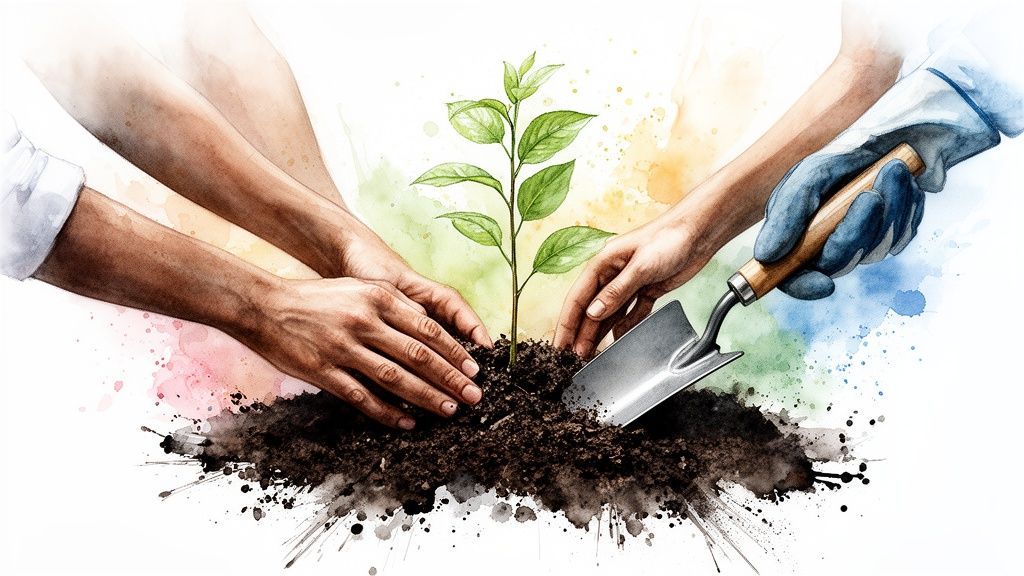
These environments foster connection through meaningful work. Instead of struggling for conversation topics, interactions arise organically around the task at hand. You bond over a shared passion for a cause, which builds a strong foundation for genuine friendship. Contributing to something larger than yourself provides a psychological boost, helping to build confidence and offering a path toward living a full life, even with anxiety. It's a hopeful reminder that you have value to offer the world.
How to Get Started
Choosing the right opportunity and easing into it are key to a positive experience. The goal is to find a role that feels purposeful, not overwhelming.
- Find Your Cause: Look for organizations that align with your values. Consider local food banks, animal shelters like the ASPCA, or environmental groups such as local park conservancies. Platforms like VolunteerMatch can help you find opportunities in your area.
- Start Small: Commit to just one or two shifts per month to begin. This prevents burnout and makes the commitment feel manageable. Scheduling your shifts at the same time each week or month helps you see familiar faces and build consistent relationships.
- Go with a Friend: If the first step feels too intimidating, ask a friend to volunteer with you initially. Having a familiar person by your side can significantly reduce the anxiety of a new social setting.
Key Insight: Purposeful activity is a powerful antidote to social anxiety. When your hands are busy and your mind is focused on a shared goal, there’s less room for self-consciousness.
To deepen connections, set a small goal for each session, such as learning one new person’s name or asking them about their interest in the cause. Many organizations also host social events for their volunteers, which are excellent, low-pressure opportunities to connect outside of the work itself. As you become more comfortable, you might even take on a small leadership role, further building your skills and your social circle, solidifying the hope that you can thrive.
6. Classes and Workshops (Creative, Professional, Personal Growth)
For anyone feeling stuck in a social rut, classes and workshops offer a built-in purpose for gathering. These educational settings, whether for learning pottery, coding, or a new language, are some of the best places to meet people because they attract individuals with a shared desire for growth. The focus is on a common activity, which naturally lowers the social stakes and provides an immediate topic for conversation, opening a door to connection.
This structured environment gives your interactions a clear direction. Instead of worrying about what to say, you can ask a question about the project, comment on the lecture, or team up for a practical exercise. This shared learning journey creates an easy on-ramp to connection. The process of mastering a new skill alongside others builds a sense of camaraderie and mutual respect, paving the way for friendships to form organically. It's a wonderful way to rebuild confidence and see that a fulfilling life is within reach.
How to Get Started
Choosing a class that genuinely excites you is the most important step. Your authentic enthusiasm will make connecting with others feel more natural.
- Align with Your Interests: Explore courses at local community centers, art studios, or culinary schools. Look for professional development seminars or personal growth workshops that spark your curiosity. Starting with a single-day workshop can be less intimidating than committing to a multi-week course.
- Arrive a Bit Early: Showing up a few minutes before the class starts provides a low-pressure window to chat with classmates. A simple "Is this your first time taking a class here?" can easily break the ice.
- Engage with the Material: Don't hesitate to partner up for activities or ask a classmate for help. Suggesting a practice group or study session outside of class is a great way to extend the connection. For instance, in a language class, you could say, "A few of us are grabbing coffee next week to practice our conversation skills, would you like to join?"
Key Insight: Shared learning creates an automatic bond. When you’re both novices working toward a common goal, vulnerability becomes a strength, not a weakness.
Set a small, manageable goal for each session, such as learning one new person's name or exchanging contact information with a classmate you connected with. As you attend more classes, you might find yourself becoming one of the more experienced students. Helping a newcomer is a fantastic way to build confidence and reinforce your own learning while making someone else feel welcome, reminding you of how far you've come.
7. Mental Health Conferences, Workshops, and Retreats
Attending events centered on mental health, such as conferences or wellness retreats, offers a unique opportunity for connection. These specialized gatherings are one of the best places to meet people because everyone present shares a common interest in personal growth and well-being. The stigma around discussing mental health is absent, creating an environment of immediate common ground, understanding, and immense hope.
Unlike standard social mixers, the purpose of these events is learning and healing. This shared objective fosters deep conversations and authentic bonds. Whether it’s an anxiety-focused workshop, a large conference like the one held by the Anxiety and Depression Association of America (ADAA), or a mindfulness retreat, you are surrounded by people who "get it." This setting provides both practical strategies for living panic-free and a community to share the journey with, showing you that you are not alone.
How to Get Started
Diving into these events can feel big, but a little planning makes it manageable. The goal is connection and learning, not social perfection.
- Choose an Event That Fits: Explore options ranging from large-scale events like the NAMI National Convention to smaller, intensive Mindfulness-Based Stress Reduction (MBSR) retreats. Online summits can also be a great, low-pressure starting point.
- Set a Small Daily Goal: Instead of trying to meet everyone, aim to introduce yourself to just three people each day. A simple "Hi, I'm [Your Name]. What session did you just come from?" works well.
- Volunteer for Organic Connections: Offering to help at the registration desk or guide attendees is a fantastic way to meet people naturally. This gives you a clear role, which can reduce social anxiety while putting you at the center of the action.
Key Insight: At a mental health event, your interest in well-being is a social asset, not something to hide. Leading with this shared value makes forming genuine connections much easier.
Before attending, arm yourself with some foundational knowledge. Understanding the principles behind the topics discussed can boost your confidence and help you engage more deeply in conversations. Exploring a collection of mental health tools for anxiety can provide you with practical frameworks and talking points. After the event, make a point to join the post-event online community or follow up with one or two people you connected with for a virtual coffee chat. This simple step can turn a conference acquaintance into a lasting friendship.
8. Interest-Based Clubs and Hobby Groups
Joining a group built around a shared passion is a powerful strategy for connection. Interest-based clubs, such as board game cafes, hiking groups, or book clubs, provide a natural and low-pressure setting to meet new people. The activity itself becomes the focal point, which significantly reduces the burden of making constant small talk and eases symptoms of Social Anxiety Disorder.
These gatherings are among the best places to meet people because the shared interest gives you an immediate, built-in conversation starter. Instead of worrying about what to say, you can simply talk about the game, the book, or the trail. This structure creates a comfortable environment where friendships can develop organically from a foundation of mutual enthusiasm, making it a hopeful step toward building a fulfilling social life free from the grip of anxiety.
How to Get Started
Finding a hobby group is easier than ever, and the key is to find a community where the activity you enjoy takes center stage.
- Explore Your Options: Use platforms like Meetup.com, Facebook Groups, or Eventbrite to search for local clubs. Look for groups that align with your interests, whether it's a Dungeons & Dragons campaign at a local game store, a photography club doing photo walks, or a weekly hiking group.
- Test the Waters: Plan to visit two or three different groups before committing. Each club has its own unique vibe and social dynamic. Pay attention to how you feel. Is the atmosphere welcoming? Do the conversations feel inclusive and easy to join?
- Start as an Observer: You don't have to be the most active participant on your first visit. Simply showing up, playing the game, or listening to the book discussion is a perfect first step. This allows you to get comfortable with the group's rhythm at your own pace.
Key Insight: When a shared activity is the main event, connection becomes a natural side effect, not a stressful objective. The pressure to perform socially dissolves into the fun of the hobby itself.
To make the process even smoother, try introducing yourself to the group organizer first; they can often introduce you to others. As you become more comfortable, you might offer to bring snacks or help set up, which are simple ways to become more involved. Exchanging contact information with just one person you connected with is a great goal for a meeting. These small, consistent steps can lead to lasting friendships and the confidence that you can live a full, connected life.
9. Coworking Spaces and Professional Communities
For remote workers or entrepreneurs, work-from-home life can breed isolation and amplify social anxiety. Coworking spaces offer a powerful antidote by creating a structured, professional environment that combines the independence of remote work with the social benefits of an office. These spaces are one of the best places to meet people because interactions are built around a shared professional purpose, which lowers the social stakes.
These shared offices are designed to foster connection naturally. You’re surrounded by other motivated individuals, and opportunities for conversation arise organically in common areas like kitchens, lounges, or during organized workshops. The environment is inherently low-pressure; since everyone is there to work, social interactions are a welcome break rather than a primary, anxiety-inducing goal. This setup can help you build confidence and form meaningful business relationships, proving that professional growth and social connection can go hand-in-hand, a key part of reclaiming your life from anxiety.
How to Get Started
Finding a coworking space that fits your professional needs and social comfort level is key to making it work for you.
- Explore Your Options: Start by searching for local independent coworking spaces, which often have unique communities. Larger chains like WeWork can also be great, offering a wide range of amenities and events. Look for industry-specific hubs if you want to connect with peers in your field.
- Test the Waters: Most spaces offer a trial day or a flexible weekly pass. Use this opportunity to gauge the atmosphere. Is the noise level comfortable? Do people seem open and friendly? Pay attention to how you feel working there for a full day before committing to a membership.
- Start with Structure: In your first month, make a point to attend the community events. These are designed for networking and are often facilitated, which removes the pressure of initiating conversations from scratch. Simply showing up is a successful first step.
Key Insight: Professional communities thrive on mutual value. By offering your skills or a listening ear, you create a natural pathway to connection that feels purposeful, not forced.
To ease into networking, set a small goal like introducing yourself to one new person in the kitchen each day or scheduling one coffee meeting per month with a fellow member. Participating in the community, whether by joining a special interest group or volunteering to help with an event, deepens your roots and makes you a familiar, friendly face. As you build these professional connections, you'll find your social confidence growing, which is a vital part of your journey to living panic-free.
10. Faith Communities and Spiritual Centers
For individuals seeking connection rooted in shared values, faith communities and spiritual centers offer a powerful sense of belonging. These places, from churches and synagogues to meditation centers and interfaith communities, are built around more than just spiritual practice; they are structured social networks. They are among the best places to meet people because attendance is regular, events are predictable, and the community's purpose is to support its members through life's challenges, including the journey of healing from anxiety.
The built-in structure of these groups naturally lowers social hurdles. Weekly services, community meals, and volunteer projects provide consistent, low-pressure opportunities to see the same faces and build familiarity over time. This environment can be especially comforting for those with anxiety, as the focus is on a shared belief system or spiritual journey, not on social performance. Many find that this shared purpose fosters deep, meaningful connections and a profound sense of hope.
How to Get Started
Finding a community where you feel spiritually and socially comfortable is key. The goal is to find a place that feels like a refuge, not an obligation.
- Explore Different Traditions: Visit two or three different communities before committing. Consider attending a service at a Christian church, a meditation session at a Buddhist temple, or a gathering at a Unitarian Universalist congregation. Notice the atmosphere and how welcome you feel.
- Join a Small Group: The fastest way to form bonds is in a more intimate setting. Ask about joining a study circle, a newcomer’s class, or a small group that meets regularly. This is where deeper conversations happen and friendships begin.
- Attend Social Events: Make a point to go to community potlucks, holiday celebrations, or social gatherings. These events are designed for casual mingling and provide a relaxed way to chat with people outside of a formal service.
Key Insight: Spiritual communities offer a unique form of connection where vulnerability is often seen as a strength. Sharing your journey, including your struggles with anxiety, can lead to profound support and acceptance from others who understand.
Start by volunteering for a simple, task-oriented role, like helping set up for an event or tending to a community garden. Working alongside others on a common goal removes the pressure of constant conversation and allows relationships to develop organically. As you become more comfortable, you may discover hope and healing not just from the spiritual teachings but from the genuine human connection you find there, realizing a life free from panic is truly possible.
Top 10 Places to Meet People: Quick Comparison
| Activity | Complexity 🔄 | Resources & Speed ⚡ | Expected Outcomes ⭐ | Impact & Use Cases 📊💡 |
|---|---|---|---|---|
| Support Groups and Anxiety Meetups | Low–Moderate (regular facilitation needed) | Low cost, moderate time; quick to join | Moderate–High: social support, reduced isolation, practice coping | Best for ongoing peer support and practicing social skills; tip: try multiple groups to find fit |
| Fitness Classes and Exercise Groups | Moderate (scheduling + instructor coordination) | Moderate cost (memberships/classes), regular time commitment | High: physiological anxiety reduction, improved mood and confidence | Ideal when combining physical health with social contact; tip: start with beginner classes |
| Book Clubs and Reading Circles | Low (monthly structure, a moderator) | Low cost/time (monthly reading) — slower cadence | Moderate: structured conversation, intellectual connection, low-pressure sharing | Good for reflective people seeking meaningful talk; tip: read summaries if short on time |
| Coffee Shops and Casual Cafe Communities | Low (informal, no setup) | Minimal cost per visit, flexible timing — quick interactions | Low–Moderate: casual social contact, practice small talk, build familiarity | Best for low-pressure, ad-hoc connection; tip: go at consistent times to become a regular |
| Volunteer Organizations and Community Service Groups | Moderate–High (training and coordination) | Low cost; higher time commitment; variable physical/ emotional effort | High: purpose-driven bonding, mood boost, meaningful connection | Ideal for those seeking purpose and team-based contact; tip: start small to avoid burnout |
| Classes and Workshops (Creative/Professional) | Moderate (curriculum and instructor) | Moderate cost and regular time; structured progression | High: skill-building, confidence, natural conversation starters | Great for learning while socializing; tip: choose classes aligned with genuine interests |
| Mental Health Conferences, Workshops, Retreats | High (planning, travel) | High cost and time; intensive short-term investment | High: expert strategies, rapid bonding, stigma reduction | Best for deep learning and networking; tip: join post-event communities to sustain connections |
| Interest-Based Clubs and Hobby Groups | Low–Moderate (activity-specific organization) | Low cost/time flexible; regular meetups | Moderate–High: shared-focus friendships, gradual trust-building | Ideal for naturally finding like-minded people; tip: try multiple groups to find the right culture |
| Coworking Spaces and Professional Communities | Moderate (membership + events) | Moderate–High cost; daily/weekly time; professional resources | Moderate–High: reduced work isolation, professional networking, routine | Best for work-focused socializing and mentorship; tip: attend events in first month to integrate |
| Faith Communities and Spiritual Centers | Moderate (regular services + programs) | Low cost; recurring time commitment; pastoral support available | High: strong belonging, multi-generational support, existential relief | Ideal for values-based belonging and long-term support; tip: join a small group early for faster connection |
Your First Step Towards a More Connected Life
We've explored a wide range of environments, from the shared focus of a creative workshop to the supportive atmosphere of an anxiety meetup. Each of these represents more than just a location; they are opportunities to find your footing and begin building the meaningful connections you deserve. The journey to find the best places to meet people is deeply personal, especially when you are also managing anxiety. The key is not to find a single perfect place, but to discover which environments feel most authentic and manageable for you.
Remember, every suggestion in this guide, from joining a fitness class to volunteering for a cause you believe in, is built on a foundation of low pressure and shared purpose. These settings naturally lower the social stakes. Instead of facing the direct challenge of making conversation from scratch, you have a built-in topic, a common activity, and a shared goal. This structure is your ally against anxiety.
Recalibrating Your Approach to Connection
It's essential to move away from the idea that meeting people has to be a grand, high-stakes event. The most lasting connections often start small, with a simple comment in a book club or a shared laugh over a spilled coffee. Your goal is not to become a social butterfly overnight. Your goal is to take one small, repeatable step towards healing.
Here’s a summary of the core principles we covered:
- Structure Eases Anxiety: Places with a built-in activity or purpose (like a class, volunteer project, or hobby group) provide a natural framework for interaction, reducing the pressure to perform.
- Shared Interests are the Bridge: Connecting over a mutual passion, whether it’s coding, hiking, or historical fiction, creates an instant bond and gives you an endless well of things to discuss.
- Low-Stakes Environments are Key: Coffee shops, coworking spaces, and even support groups offer a chance for casual, brief interactions that can build over time without the intensity of a formal social event.
- Your Pace is the Right Pace: Progress is not linear. Some days you might feel ready to start a conversation, and other days, just showing up is the victory. Honor your capacity and celebrate every step, no matter how small.
A critical takeaway: The purpose of seeking out these places is not just to meet others, but to reconnect with yourself. Engaging in activities you genuinely enjoy rebuilds confidence and reminds you of your own value, which is the most attractive quality you can possess. Living a life free from panic and chronic anxiety is not a distant dream; it's a future you build one small, brave choice at a time.
Your Actionable Next Step
Feeling inspired is wonderful, but taking action is what creates change. Your task now is not to join ten groups at once. It is to choose just one.
- Review the List: Look back through the options presented in this article. Which one sparked a genuine flicker of interest, not just a sense of obligation? Which one feels like a hopeful step forward?
- Do Five Minutes of Research: Find one specific group, class, or location near you that fits the description. Look up the time, the location, and the cost (if any).
- Put it On Your Calendar: Whether it’s attending a meetup next week or simply visiting a new coffee shop this weekend, schedule it. Treat it as a non-negotiable appointment with your future self.
This single action is your first step. It's a powerful declaration that you are ready to move from a life defined by anxiety to one defined by connection, purpose, and possibility. You have the map; now it's time to begin your journey.
Taking that first step is much easier when you have a clear, structured plan to manage anxiety in the moment. The Anxiety Checklist provides a step-by-step system to help you prepare for social situations and calm your nerves so you can focus on connecting. You can find the complete, actionable guide at The Anxiety Checklist to support you on your path to a more connected life.