



Your chest tightens. Your heart starts racing. You try to reason with yourself, but your body doesn’t seem interested in logic. It acts first and asks questions later.
That experience can feel terrifying, especially when you don’t know why it’s happening. Many people start to wonder if they’re broken, weak, or somehow doing anxiety wrong. They’re not. What they’re feeling is the biological basis of behavior in real time. The brain, nervous system, hormones, and learned survival patterns are all doing exactly what they were built to do, just too loudly and too often.
That’s the hopeful part. If anxiety is a biological process, it isn’t a moral failure. It’s not proof that you lack willpower. It means there’s a system underneath the symptoms, and systems can be understood. Once you understand the system, you can start influencing it.
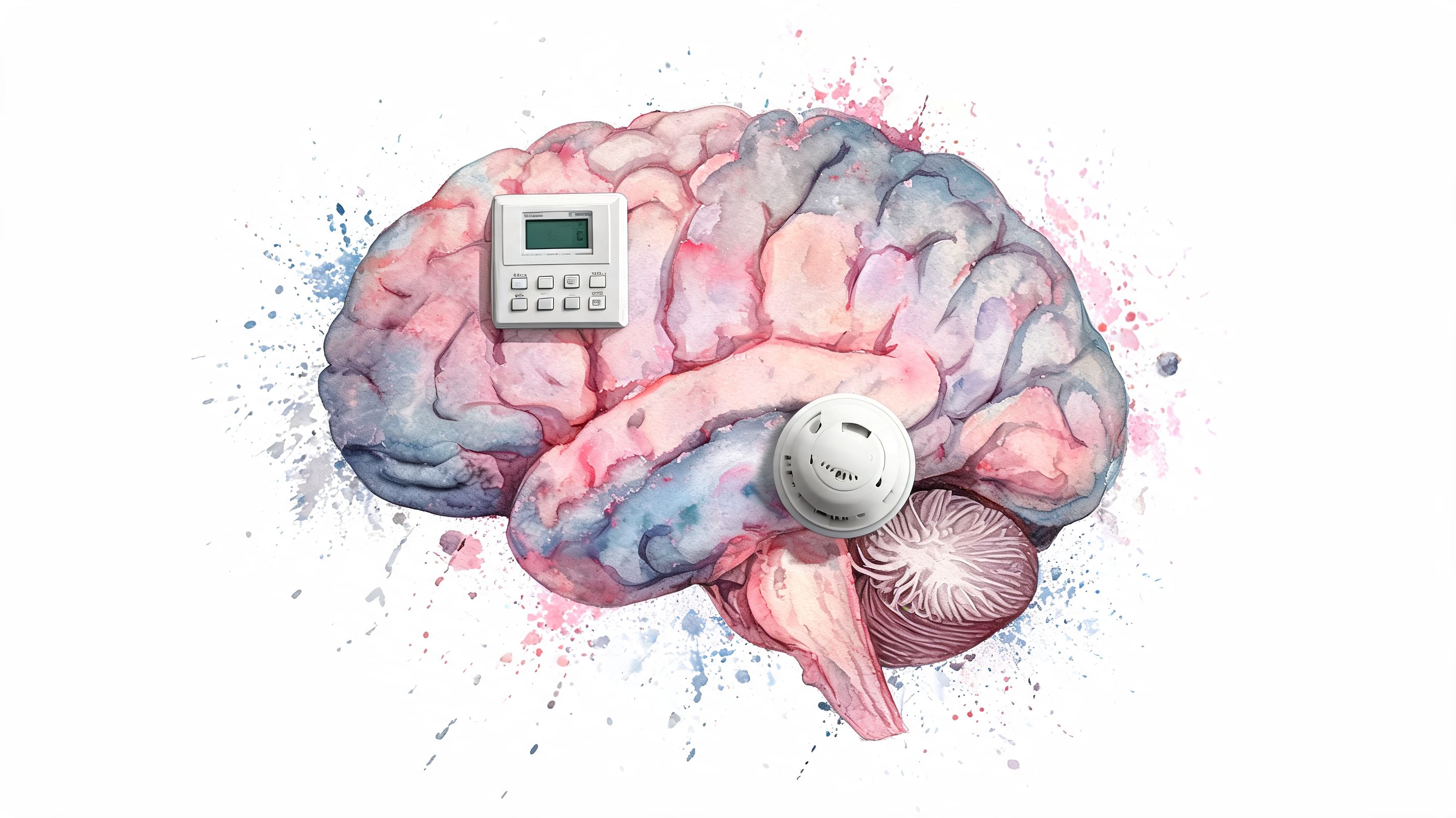
Think of anxiety less like personal weakness and more like a smoke detector that has become too sensitive. A smoke detector is useful when there’s a real fire. It becomes exhausting when it goes off because you made toast. In the brain, the amygdala acts a lot like that detector, while the prefrontal cortex helps you evaluate whether there’s actual danger. When anxiety surges, the detector often overrules the evaluator.
That’s why anxiety can also spill into habits like avoidance, perfectionism, procrastination, and harsh self-judgment. Those patterns can look psychological on the surface, but they often have a biological urgency under them. If that sounds familiar, this guide on how to stop self sabotage can help you connect those patterns to the fear system underneath them. If your mind gets stuck in loops after the body alarm goes off, these ideas on coping with overthinking and anxiety may help put words to what’s happening.
You don’t need a neuroscience degree to start healing. You need a map. That’s what this article offers.
Table of Contents
- Why Your Body Feels Out of Your Control
- Understanding Your Brain's Built-in Alarm System
- Your Body's Gas Pedal and Brake Pedal
- How Brain Chemistry Shapes Your Mood
- Your Genetic Blueprint Is Not Your Destiny
- How to Rewire Your Brain for Lasting Calm
- Your Path to Living Panic-Free Starts Now
Why Your Body Feels Out of Your Control
When panic hits, we often try to think our way out of it. That makes sense. The problem is that panic begins lower and faster than conscious reasoning. Your brain is trying to protect you before your thinking mind has time to weigh in.
The simplest way to understand this is the smoke detector analogy. Your amygdala scans for threat. Your prefrontal cortex helps judge context, compare possibilities, and say, “This feels scary, but I’m safe.” In an anxious state, the detector becomes extra sensitive and the thinking center has a harder time calming it down.
That can make your body feel out of your control even when nothing dangerous is happening. You’re not choosing the racing heart, shaky hands, or urgent need to escape. Your alarm circuitry is firing first.
Why anxiety feels so convincing
Anxiety doesn’t just create thoughts. It creates body sensations that make those thoughts feel true. If your heart pounds and your breathing changes, your brain may assume there must be a reason. Then it starts scanning for one.
This is why panic can feel so confusing. The body sends an alarm, the mind scrambles to explain it, and the explanation often becomes more fear.
Practical rule: When your body feels hijacked, treat the first wave as a nervous system event, not a verdict about your life.
A lot of readers get stuck here because they assume understanding the biology means accepting it forever. It doesn’t. Understanding gives you an advantage. Once you know which system is misfiring, you can choose tools that match the mechanism instead of fighting blindly.
What helps first
When your system is overwhelmed, the first goal isn’t perfect insight. It’s safety.
- Slow the body first: Gentle breathing, temperature changes, and grounding give your brain evidence that the emergency is passing.
- Use simple language: Short phrases like “This is anxiety, not danger” are easier for the brain to absorb than long pep talks.
- Reduce extra inputs: Noise, scrolling, bright screens, and rushing can keep the alarm system activated.
The biological basis of behavior matters because it turns a frightening mystery into something workable. Your body isn’t betraying you. It’s using a survival system that needs retraining.
Understanding Your Brain's Built-in Alarm System
Anxiety often feels irrational because the brain systems involved don’t wait for a full committee meeting. One part reacts quickly. Another part tries to interpret what happened afterward.
When the smoke detector gets too sensitive
The amygdala is built for speed. It notices possible threat and prepares the body to respond. The prefrontal cortex is slower and more deliberate. It helps with judgment, planning, and emotional regulation.
Brain imaging gives this idea real weight. fMRI data from over 1,200 subjects reveal the amygdala activates 20-30% more intensely in response to fear stimuli in high-anxiety individuals, while prefrontal cortex volume reductions of 5-10% can predict challenges in emotion regulation (biological basis of behavior research summary).
That helps explain a common panic experience. Part of you knows you’re in a grocery store, car, meeting, or bed. Another part of you acts like a tiger just entered the room. The mismatch is real, and it’s biological.
People often blame themselves for this. A kinder explanation is more accurate. Your alarm system is overprotective, not defective.
| Brain system | Everyday analogy | What it does during anxiety |
|---|---|---|
| Amygdala | Smoke detector | Flags possible danger fast |
| Prefrontal cortex | Wise evaluator | Checks context and calms false alarms |
Stress chemistry can also keep this system primed. If cortisol stays high, your body may stay on alert longer than it needs to. If you want a plain-language explanation of that broader stress picture, this article on how high cortisol impacts aging is a useful companion read.
Why grounding works in the moment
The body has two broad automatic modes. One mobilizes you for action. The other helps you settle. Panic pushes you toward the first one.
Controlled breathing and sensory grounding work because they send bottom-up signals of safety. They don’t erase fear by argument. They interrupt the threat cascade physically enough for the thinking brain to come back online. That’s especially important if you’re coping with fear of anxiety itself, where the sensations become the trigger.
A short visual explanation can make this click:
Anxiety often feels irrational because the part of the brain built for speed is louder than the part built for reflection.
Once you understand that, shame starts to loosen. You stop asking, “Why am I like this?” and start asking, “How do I help my brain feel safe enough to stand down?” That question leads to better answers.
Your Body's Gas Pedal and Brake Pedal
Your brain sounds the alarm, but your body carries it out. That’s why anxiety feels so physical. The shaking, nausea, dizziness, chest tightness, and urge to run aren’t random. They’re part of your autonomic nervous system doing its job too aggressively.
What the gas pedal feels like
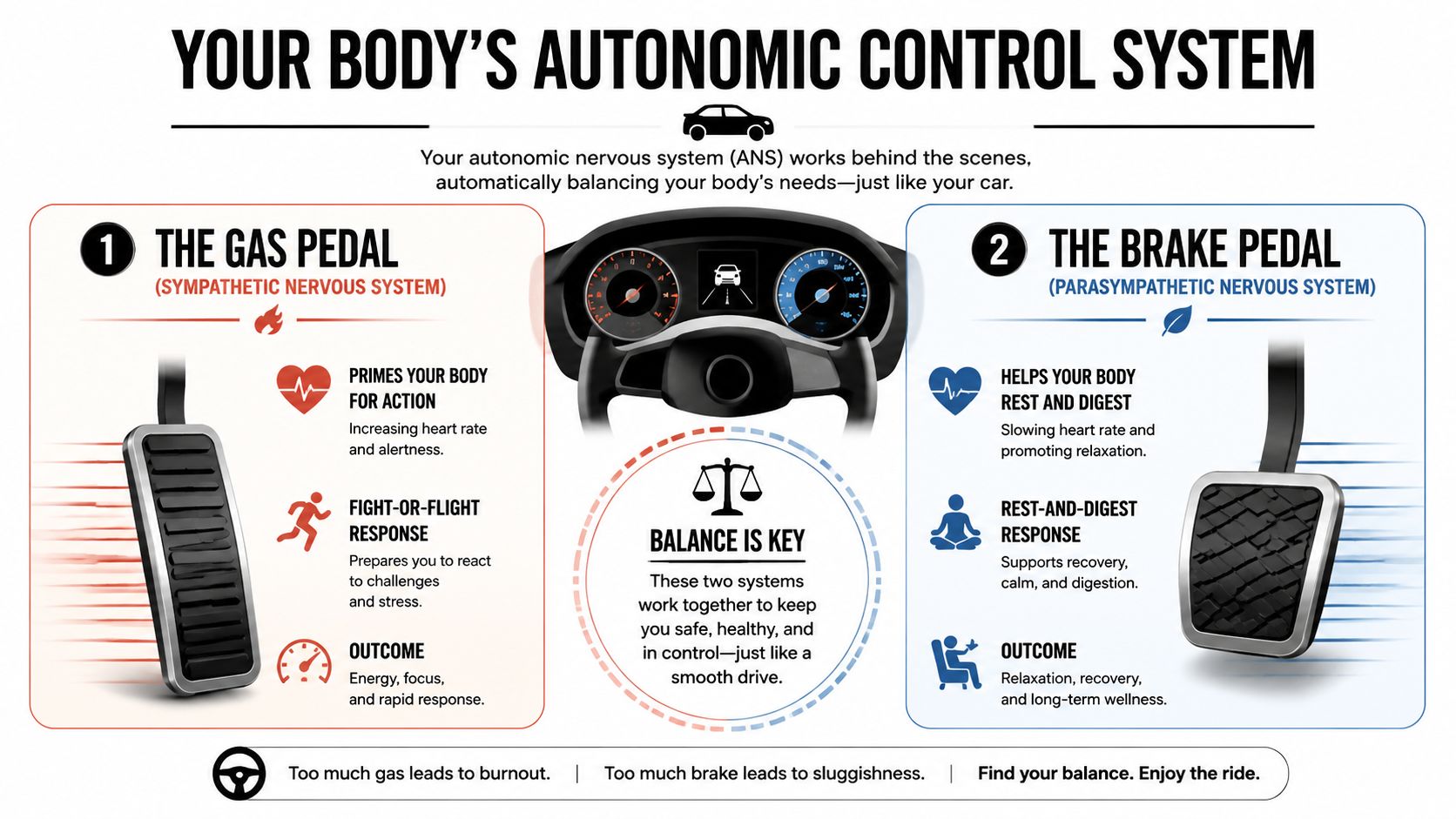
A useful analogy is a car. The sympathetic nervous system is the gas pedal. It prepares you for fight-or-flight. The parasympathetic nervous system is the brake pedal. It supports rest-and-digest.
According to these biological bases of behavior notes, the autonomic nervous system operates through these two opposing branches, and targeted interventions like controlled breathing activate the parasympathetic branch via the vagus nerve, directly counteracting panic hyperarousal by re-engaging the prefrontal cortex and calming the hyperactive amygdala.
When the gas pedal is stuck down, your body shifts resources toward survival. Blood flow, breathing patterns, muscle tension, and alertness all change. That’s useful during immediate danger. It feels awful during a false alarm.
Here’s how that can show up:
- Racing heart: Your body is preparing for action.
- Fast or shallow breathing: Your system is trying to fuel escape.
- Cold hands or tingling: Blood flow shifts when the body prioritizes survival.
- Tense shoulders or jaw: Muscles brace before conscious awareness catches up.
What the brake pedal needs from you
The brake pedal responds best to signals that are repetitive, boring, and safe. That’s why small techniques matter more than dramatic ones.
Try this pattern when anxiety surges:
- Lengthen the exhale: A slow exhale gives your nervous system a cue that immediate danger is less likely.
- Anchor in sensation: Name what you feel under your feet, in your hands, or against your back.
- Reduce urgency: Sit down, unclench your jaw, and loosen your shoulders before trying to solve anything.
Body cue: If a tool helps your muscles soften even a little, it’s probably speaking the right biological language.
This same nervous system logic is why people often find physical regulation tools interesting, even outside anxiety treatment. For example, discussions around electrical muscle stimulation devices can help readers think more concretely about how body-based inputs influence physiology, even though anxiety care still depends on broader nervous system regulation rather than one gadget.
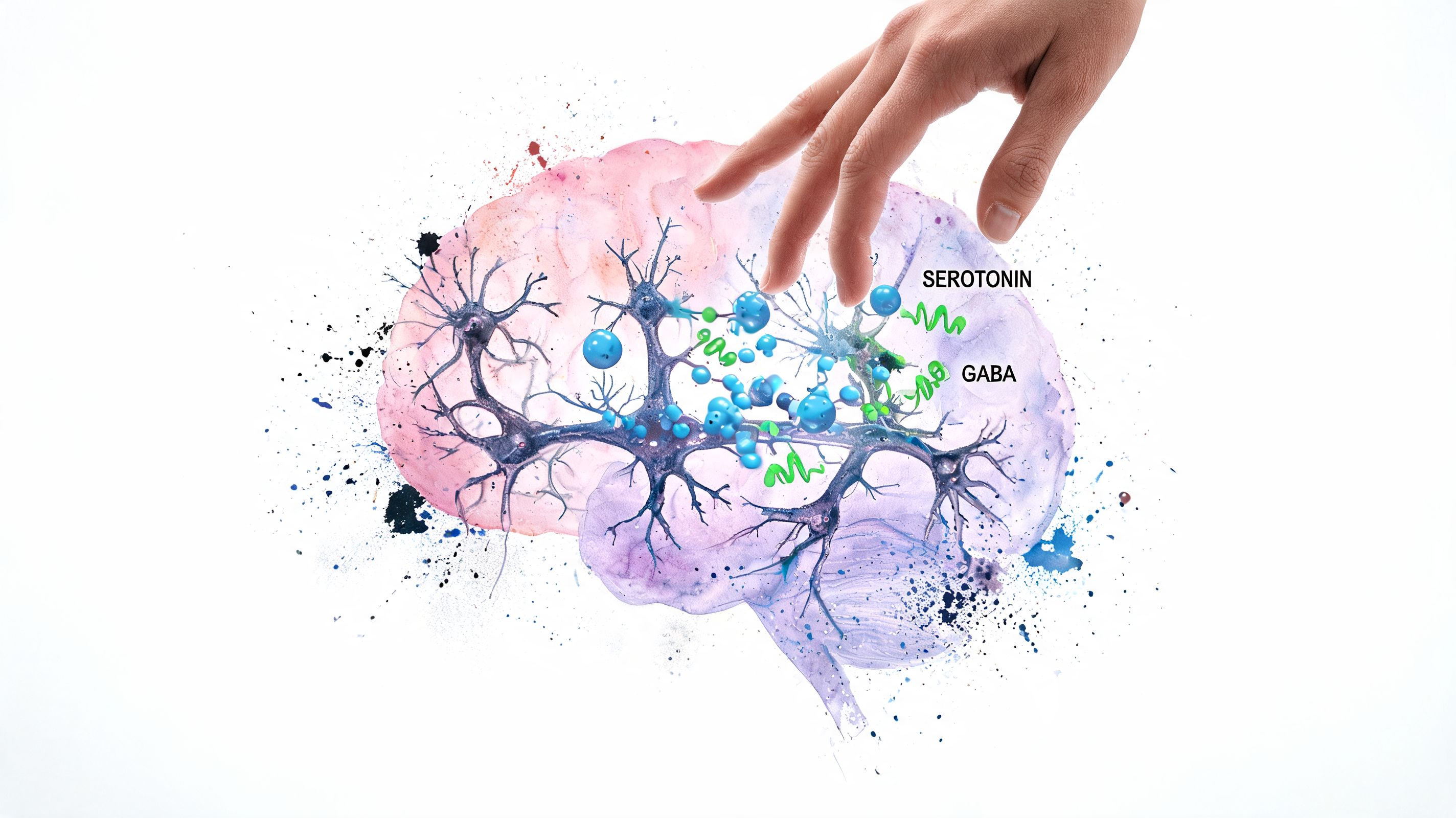
Chemical messengers also shape how easily your gas pedal gets pressed. Cortisol helps the body respond to stress. Serotonin supports mood regulation. GABA helps inhibit excessive neural firing. When these systems are strained or dysregulated, anxiety can feel louder and harder to interrupt. That’s one reason treatments like SSRIs can help some people. They’re not magic. They’re one way of making the alarm system less reactive.
If you’re building a practical routine, it helps to keep a short menu of tools to manage anxiety so you’re not trying to invent a plan in the middle of panic.
How Brain Chemistry Shapes Your Mood
Brain chemistry can sound abstract until you connect it to experience. The right idea isn’t “I have bad chemicals.” The better idea is that your brain is always sending signals through chemical messengers, and those signals influence how intensely you feel threat, calm, reward, motivation, and recovery.
Your chemical messengers are always talking
Three names come up often in anxiety conversations.
Serotonin is involved in mood regulation and worry.
GABA helps quiet excessive neural activity.
Dopamine is tied to motivation, reward, and resilience.
In educational material on the biological basis of behavior and personality, heritability estimates for personality traits account for 40-50% of variance, and Neuroticism, a trait closely tied to anxiety, is linked to serotonin pathways. Variations in the serotonin transporter gene 5-HTTLPR can explain up to 10% of its variance, which helps explain why treatments like SSRIs that modulate serotonin can be effective.
That doesn’t mean anxiety is “just a chemical imbalance.” It means chemistry is one part of a larger living system. Sleep, stress, safety, learning history, hormones, social context, and habits all affect how those signals play out.
A useful way to think about it is as a sound board, not a switch. Different chemicals turn emotional volume up or down. Healing often means adjusting multiple dials at once.
Genetics loads the blueprint, not the ending
Some readers hear “heritable” and immediately think “permanent.” That’s not what heritability means. It means biology contributes strongly to patterns. It doesn’t mean your future is locked.
If anxiety runs in your family, you may have inherited a more sensitive alarm style. You may notice stronger stress reactivity or more worry-prone thinking. But inheritance isn’t the same as inevitability. The brain changes with repeated experience, treatment, and practice.
- Medication can help tune the system: For some people, this lowers background reactivity enough to make therapy and daily coping easier.
- Behavior changes matter too: Sleep routines, movement, steady meals, and reduced overstimulation can support a more stable internal state.
- Learning reshapes response: Repeated experiences of safety teach the brain that not every alarm needs a full emergency response.
If you want to keep learning in a structured way, these anxiety self-help guides can help translate the science into everyday language.
Your Genetic Blueprint Is Not Your Destiny
A lot of people feel relief when they learn anxiety has a biological basis of behavior. Then a second fear appears. If it’s biological, does that mean I’m stuck with it?
No. Biology creates tendencies. It does not write a final script.
Genes set tendencies, practice shapes pathways
A blueprint tells builders where walls and wires might go. It doesn’t decide how the home will feel to live in. Genes work a bit like that. They can shape sensitivity, temperament, and stress response. Life then interacts with that blueprint constantly.
Your daily experiences tell the brain what to strengthen. If you repeatedly avoid every uncomfortable sensation, the brain learns that discomfort must be dangerous. If you repeatedly stay with manageable discomfort and come out safe, the brain learns something different.
That’s why healing is active. The nervous system updates from lived evidence.
The brain pays close attention to repetition. What you practice, it preserves.
Self-compassion proves practical, not sentimental. If your system is more reactive by nature, you may need more repetition, more structure, and more support. That doesn’t mean you’re failing. It means you’re training a sensitive system with care.
Small actions teach the brain safety
People often wait for a dramatic breakthrough. Most rewiring happens through ordinary moments.
Consider what these actions teach your brain:
- Staying with one anxious sensation for a little longer: “I can feel this without fleeing immediately.”
- Naming a fear instead of obeying it: “Thoughts are signals, not commands.”
- Returning to a routine after a hard day: “My system can recover and continue.”
Neuroplasticity is the hopeful center of this whole discussion. The brain changes in response to what you do repeatedly. That means your choices matter even when they feel small. Breathing slowly when you want to gasp, taking a short walk when you want to hide, or writing down a fear instead of spiraling with it all count as biological training.
You are not fighting your biology. You are teaching it.
How to Rewire Your Brain for Lasting Calm
Healing from anxiety usually becomes more consistent when people stop asking, “How do I make this disappear right now?” and start asking, “What does my brain need to learn over time?” That shift matters because lasting calm comes from retraining, not from winning one argument with fear.
The encouraging news is that the brain is built for change. Long-term cognitive behavioral therapy and consistent mindfulness practice create neuroplasticity, meaning measurable structural changes in the brain that optimize neurotransmitter signaling. Daily practice with tools like guided meditation can upregulate GABA receptor sensitivity and enhance serotonin synthesis, helping build long-term anxiety resilience, as described in this behavioral neuroscience learning resource.
A practical rewiring pattern
You don’t need to do everything at once. You do need consistency. A helpful pattern looks like this:
Interrupt the alarm
Use body-first tools when panic rises. Slow breathing, grounding, loosening muscle tension, and reducing stimulation all help lower the alarm enough for thinking to return.
Name the story
Anxiety often adds a prediction like “I’m trapped,” “I’m losing control,” or “This will never end.” Writing that story down creates distance. It helps move fear from a total-body event into something observable.
Test reality gently
CBT becomes powerful when, instead of debating every thought, you run small experiments. Stay in the checkout line a little longer. Ride the feeling without leaving immediately. Delay one reassurance behavior. Let your brain collect new evidence.
Repeat when calm
Rewiring doesn’t happen only during crises. Calm practice matters. Meditation, journaling, rest, sleep routines, and reflective exercises all strengthen the circuits you’ll need later. If you like deeper inner work, this approach to shadow work for anxiety may help you uncover the beliefs that keep the alarm system on standby.
What healing looks like biologically
Healing often starts subtly. You recover faster after a trigger. Your body still reacts, but it doesn’t stay activated as long. You notice a fearful thought without immediately believing it. That is progress.
A few signs your brain is learning safety:
- Shorter panic cycles: The surge passes with less secondary fear.
- More prefrontal access: You can think, choose, and respond sooner.
- Better body recovery: Sleep, appetite, and muscle tension become less chaotic.
- Less avoidance: Your world starts expanding again.
A steady truth: Repetition teaches the nervous system what is safe.
Professional support can strengthen this process. Therapy gives structure. Medication can lower the noise floor for some people. Mindfulness trains attention. Exposure work reduces false alarms. Sleep and nourishment support the machinery underneath all of it.
None of those tools mean you’re weak. They mean you’re working with the biology you have. That’s what effective anxiety treatment looks like. Not self-blame. Not endless forcing. Smart repetition in the direction of safety.
Your Path to Living Panic-Free Starts Now
You don’t need to solve your entire nervous system today. You only need one next step that tells your body, “We’re beginning.”
The biological basis of behavior shows that anxiety is not random and it’s not a character flaw. It involves real brain circuits, real body systems, and real patterns of chemistry and learning. That’s why it feels so powerful. It’s also why healing is possible. Anything that is shaped by a process can be reshaped by a process.
If your anxiety has made you feel trapped in your own body, start by dropping the idea that you need to overpower it. You don’t. Individuals heal by learning to relate to the alarm differently. They slow the body. They reduce avoidance. They practice calm when calm is available. They use therapy, medication, journaling, meditation, movement, and repetition to teach the brain a new pattern.
Start small enough that your system can succeed.
That might mean one longer exhale. One minute with your feet on the floor. One written thought instead of an hour of spiraling. One short walk after a difficult morning. One act of staying instead of escaping. Small actions count because the brain counts repetition.
There is a way forward, even if your anxiety has been loud for a long time. Your brain can learn. Your body can become less reactive. Panic can lose its authority. Hope is not wishful thinking here. It’s a biological possibility supported by what the brain does best, which is adapt.
If you want steady support while you practice these skills, The Anxiety Checklist offers help for both the intense moments and the long game. You can use its free SOS tools for grounding during panic, then explore guided meditations, sleep audios, hypnosis, walking sessions, CBT self-therapy tools, and educational resources when you’re ready to build lasting calm.