


Learning to handle disagreements isn't just about keeping the peace. It's one of the most powerful ways to heal your anxiety and live a panic-free life. When conflict is left to simmer, it builds an internal pressure that can easily boil over into panic or chronic stress. Finding a way to express yourself clearly and safely is the first step to turning down that heat and reclaiming your sense of calm for good.
The Anxiety-Conflict Cycle and Your Path to Calm
If you live with anxiety, you already know conflict feels different. It feels bigger. A minor disagreement can land like a personal attack, and the simple thought of a confrontation can be completely paralyzing. This isn't just in your head—there's a very real and powerful cycle at play between your anxiety and how you navigate conflict.
Think of it like this: Unresolved issues build tension silently, like a pressure cooker on low heat. Eventually, that pressure has to go somewhere.
This is what’s known as the Anxiety-Conflict Cycle. It usually starts with an anxious thought pattern, which can make you see threats that aren't there or turn small problems into catastrophes. Being in that heightened state of alert makes conflict not only more likely but also feel far more intense. The stress from that conflict then pours fuel back onto your anxiety, trapping you in a loop that feels impossible to escape.
This diagram shows you exactly how anxiety, conflict, and stress feed each other.
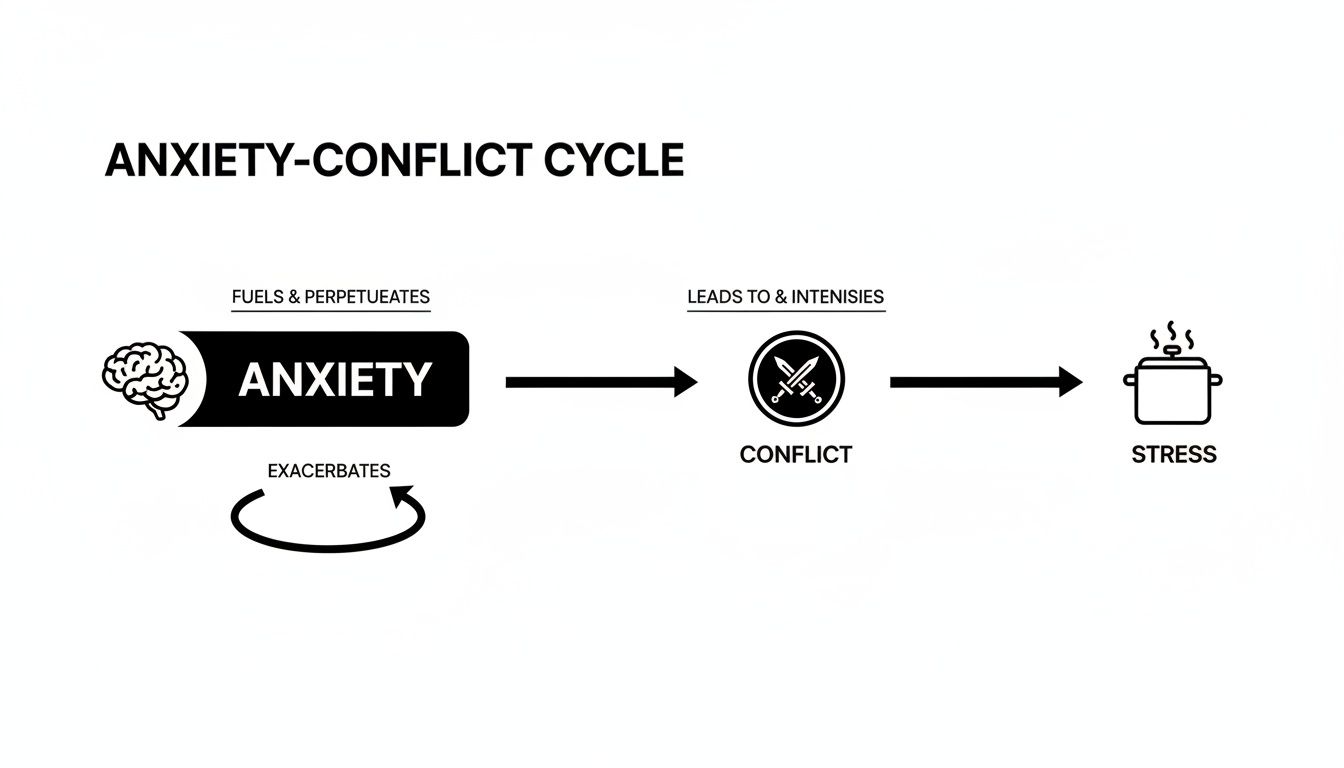
It’s a frustrating cycle, but seeing it laid out like this reveals something incredibly important. Each piece reinforces the others. And that gives us a profound message of hope: this cycle is breakable.
Breaking Free From the Cycle
The way out isn't to try and avoid conflict entirely. That’s not only impossible, but trying to dodge every disagreement often just makes anxiety worse in the long run. The real solution is to build new communication habits that disarm the cycle at its source. When you learn to express yourself constructively, you stop the pressure from ever reaching that explosive point, paving your way toward a panic-free existence.
The powerful truth is that you can heal your anxiety by changing how you handle conflict. This isn't about becoming a perfect debater; it's about learning to communicate your needs and feelings in a way that fosters understanding instead of fear, creating a life where you are in control.
So, where do you begin? With awareness. Just noticing how your anxiety shows up during a disagreement is a game-changing first step. You can use tools like the Anxiety Checklist to start pinpointing your specific symptoms and triggers.
Because conflict often brings up other intense feelings, learning to deal with emotions like anger is also crucial for breaking these patterns. Exploring some practical anger management techniques can give you even more tools for your toolbox.
This guide will walk you through the practical, real-world steps to change your relationship with conflict. You’ll learn that you aren’t powerless against this cycle. You have everything you need to build a new reality—one where disagreements lead not to panic, but to resolution and a deeper sense of peace.
The Hidden Link Between Global and Personal Conflict
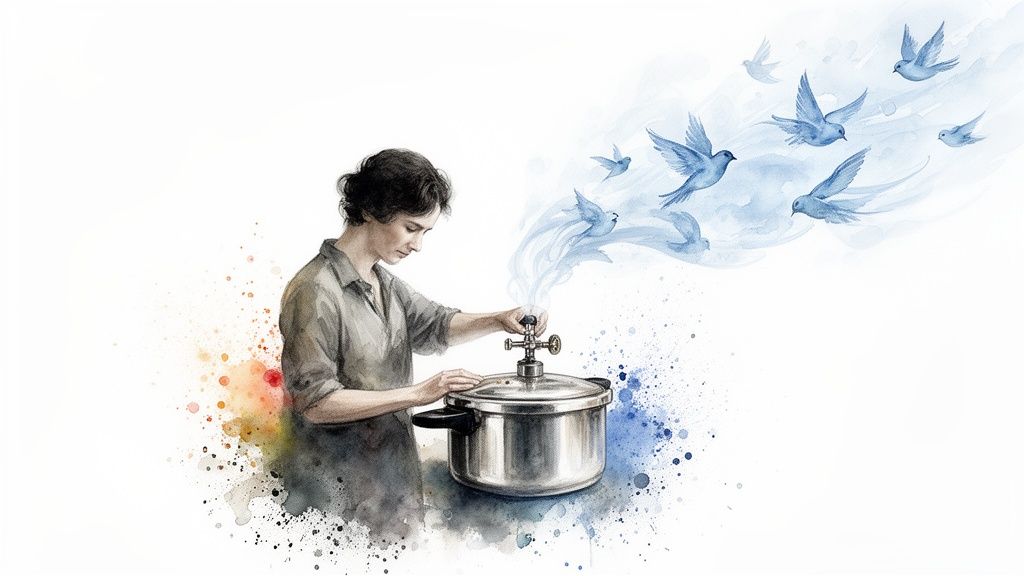
It might sound like a stretch to compare your internal struggle with anxiety to a full-blown global crisis. But the parallels are surprisingly powerful. The very same communication patterns that cause international disputes to spiral are often the ones running the show inside our own heads during moments of conflict and anxiety.
When diplomatic channels break down, tensions rise, and misunderstandings escalate. It's a story we see on the news all the time. In the same way, when you can’t communicate clearly—either with yourself or someone else—a manageable moment of stress can quickly intensify into overwhelming panic.
This isn’t meant to scare you. Far from it. This perspective actually carries a profound message of hope. If intentional, structured communication can pull nations back from the brink, imagine what it can do to bring lasting peace to your own life and finally break free from anxiety.
The Macro Mirror of Your Inner World
Think about the last time you saw a news report on an international standoff. Experts almost always point to a breakdown in dialogue as the core problem. One side makes an assumption, the other reacts defensively, and a destructive cycle is set in motion. This is poor communication and conflict creating instability on a massive scale.
Now, think about a time your anxiety spiked during a disagreement. Did you immediately assume the worst about what the other person was thinking? Did you feel a surge of defensiveness or maybe just shut down completely? That’s the same pattern, just playing out internally. Your mind becomes a conflict zone where anxious thoughts are amplified by a breakdown in healthy dialogue.
A recent report highlighted that the world is experiencing a staggering number of armed conflicts, many reaching levels not seen since World War II. This disturbing trend is tied directly to failures in communication—fractured diplomatic talks and silenced voices that allow small disputes to fester into war. This global parallel powerfully shows how unaddressed tension breeds fear, much like your own unchecked anxious thoughts can spiral out of control. You can explore these global trends in the full Conflict Trends report from PRIO.
From Global Diplomacy to Personal Peace
The good news is that the very same principles that guide nations out of conflict can guide you out of the cycle of anxiety. These aren’t complex, out-of-reach theories; they are fundamental, practical communication tools you can use to heal.
The core idea is simple: what works to build bridges between countries can also build a bridge between your anxious self and your calm, confident self. You have the power to become your own best diplomat and create a life free from panic.
By learning and practicing these proven communication strategies, you can start to de-escalate your own inner turmoil. Here’s a look at how that connection works:
-
Observing Without Judgment: Diplomats are trained to separate the hard facts from their own interpretations. For you, this looks like noticing "I feel my heart racing" instead of immediately jumping to the conclusion, "I'm about to have a panic attack."
-
Expressing Needs Clearly: Successful negotiations depend on each side clearly stating what they need. In your own life, this could mean learning to say, "I need a moment to think before I respond," instead of lashing out in the heat of the moment or going silent.
-
Active Listening: The key to resolving any conflict is truly hearing the other side. This applies to your internal world, too. It means listening to your anxious thoughts without automatically believing them, which gives you the space to challenge and reframe them.
Your Path to a Panic-Free Life
Understanding this link drives home a life-changing truth: you are not helpless. The anxiety and panic you feel aren't permanent parts of who you are. They are the result of learned patterns of thinking and communicating—and anything that has been learned can be unlearned and healed.
This is where the real hope lies. You don’t need to be a world leader to master these skills. You just need the willingness to see your internal conflicts in a new light and the right tools to start changing the conversation.
By focusing on better communication and conflict resolution skills, you are actively dismantling the machinery that fuels your anxiety. Each time you choose to express yourself clearly, calmly set a boundary, or listen with empathy, you are signing a peace treaty with your own mind. This is your path to healing and living a truly panic-free life.
How to Identify Your Anxiety-Driven Conflict Style
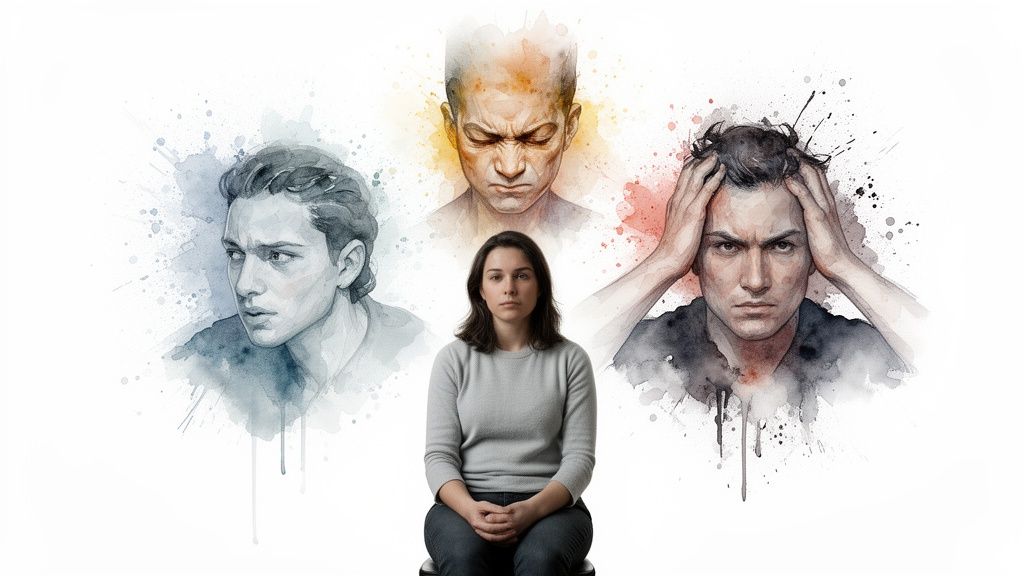
To find your way out of anxiety, you first need to become a detective in your own mind. This means looking inward to spot the specific conflict habits your anxiety is fueling. Think of self-awareness as the flashlight that reveals these patterns—not to show you what’s wrong, but to simply show you what is. And once you see it, you can begin to heal it.
When we don't understand our own reactions, every disagreement feels chaotic and threatening. We might lash out in fear, shut down entirely, or bend over backward trying to please everyone but ourselves. Seeing these behaviors for what they are—anxiety-driven reactions—is the first real step toward finding calm and living panic-free.
The Four Common Anxiety-Driven Styles
When a disagreement pops up, anxiety often shoves us into one of a few predictable roles. While everyone’s experience is unique, most of us fall into one of these patterns when we’re feeling threatened. See if you recognize yourself here.
-
The Fighter (Defensive Lashing Out): This style sees conflict as a threat and responds with aggression. Afraid of being criticized or rejected, the Fighter goes on the attack with sharp words, blame, or a long list of justifications. It’s a preemptive strike born from fear, meant to push the other person away before they can get close enough to hurt you.
-
The Flighter (Conflict Avoidance): This style treats conflict like a fire to be escaped at all costs. The Flighter will do just about anything to keep the peace, whether that means people-pleasing, downplaying their own needs, or quickly changing the subject. It brings relief in the short term, but lets resentment and anxiety quietly build up inside.
-
The Freezer (Complete Shutdown): When a conflict feels too overwhelming, anxiety can hit the emergency brake. This person goes silent, withdraws emotionally, and seems to shut down completely. It’s not a calculated silent treatment; it's an involuntary system overload where the mind and body feel paralyzed by stress.
-
The Fixer (Over-Apologizing): The Fixer feels a crushing, urgent need to resolve tension, usually by taking on all the blame—even when it's not theirs to carry. They apologize over and over to smooth things over, driven by a deep-seated fear that the conflict could destroy the relationship. This pattern chips away at self-worth and teaches others that your needs don't matter.
Recognizing your dominant style isn’t about sticking a label on yourself. It’s about gaining the self-awareness you need to choose a different response. This understanding is a crucial step in your journey toward healthier communication and conflict resolution, offering incredible hope that you can break free from these automatic reactions and heal.
Connecting Your Style to Your Thoughts
These conflict styles don’t just pop up out of thin air. They’re the direct result of anxious thoughts humming away in the background. These mental shortcuts, often called cognitive distortions, twist our perception of reality and make conflict feel way more dangerous than it actually is.
For example, a thought pattern like catastrophizing can turn a minor disagreement into a sign of impending relationship doom. It’s no wonder this might trigger a Fighter or Flighter response. You can explore our detailed guide on how to identify and challenge these cognitive distortions to start untangling these thought patterns.
On a larger scale, the same dynamic plays out globally. Recent data reveals that communication failures have made internal conflicts the most dominant form of violence worldwide. When communication between groups breaks down, grievances fester without resolution and eventually escalate. For someone with anxiety, this is a powerful mirror for how internal mental conflicts—like rumination without expression—can intensify panic. Learn more about how these communication patterns impact global stability and find hope in the fact that building awareness is the first step toward de-escalation, both personally and globally.
Guided Questions for Self-Discovery
To start pinpointing your own anxiety-driven style, take a moment for some honest self-reflection. There are no right or wrong answers here. The only goal is to observe your patterns with curiosity, not judgment, because awareness is the first step to healing.
Ask yourself:
- During a recent disagreement, what was my very first impulse? Was it to defend myself, run away, shut down, or immediately make amends?
- What physical sensations do I notice in my body when I anticipate a difficult conversation? (e.g., racing heart, tight chest, churning stomach)
- What is the worst-case scenario I imagine when a conflict arises? Does it involve rejection, abandonment, or being seen as a "bad" person?
- After a conflict, do I spend a lot of time replaying it in my head? What am I telling myself during these moments?
Answering these questions is the start of building a new relationship with conflict—one grounded in awareness, not fear. This knowledge empowers you to stop reacting on autopilot and start responding with intention, paving the way for a calmer, more confident, and panic-free you.
Practical Communication Skills for Anxious Moments
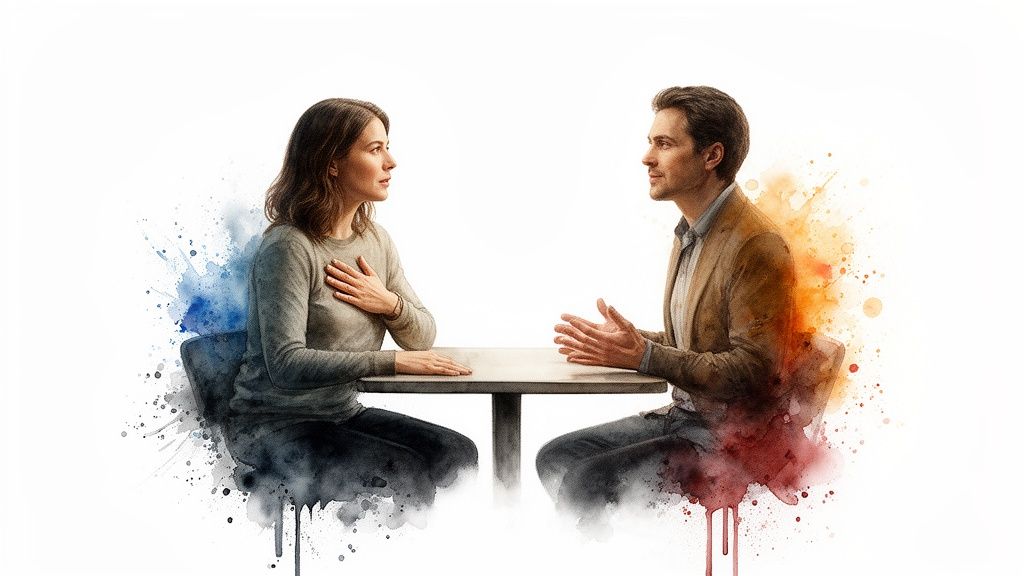
Navigating conflict when you’re wired for anxiety can feel like trying to defuse a bomb with shaky hands. The fear of saying the wrong thing is often so paralyzing that silence feels like the only safe option. But what if you had a toolkit that could empower you to heal?
This is that toolkit. Forget abstract theories—these are concrete, anxiety-friendly skills you can start using today. They’re designed to give you a sense of control when everything feels chaotic, turning that feeling of helplessness into one of empowerment and hope.
Master the "I" Statement
When we feel misunderstood or attacked, our first instinct is often to point a finger. "You never listen to me." "You always make me feel this way." That kind of language is like throwing fuel on a fire; it instantly puts the other person on the defensive and slams the door on any real resolution.
"I" statements completely flip the script. They shift the focus from what the other person did to you, to how their actions impacted you. It’s an incredibly powerful change because, at the end of the day, no one can argue with how you feel.
A solid "I" statement follows a simple, clear structure:
- Your feeling: "I feel…" (e.g., hurt, frustrated, overwhelmed)
- The specific behavior: "…when…" (e.g., I'm interrupted while I’m speaking)
- The impact on you: "…because…" (e.g., it makes me feel like my opinion isn’t valued)
- Your need or request: "I would like…" (e.g., for us to let each other finish before responding)
This isn't about sounding like a robot. It’s about being so clear that there's no room for misinterpretation. You're building a bridge for understanding, not a wall of blame.
Practice Active Listening Even When Your Mind Races
Let’s be honest: anxiety makes it almost impossible to listen. While someone is talking, your mind is already jumping ahead, rehearsing defenses, and bracing for the worst-case scenario. You’re not truly hearing them; you’re just waiting for your turn to talk.
Active listening is the conscious choice to quiet that inner chaos and tune in completely. It’s about listening to understand, not just to reply. When you do this, you validate the other person's feelings, which can de-escalate the entire conversation almost instantly.
One of the most hopeful truths about managing conflict is that making someone else feel heard is often the fastest way to feel calm yourself. It turns an adversary into a partner in problem-solving and shows you that peace is possible.
Here are a few ways to put active listening into practice:
- Paraphrase and Reflect: When they’re done speaking, try saying, "So if I’m hearing you correctly, you’re feeling frustrated because you think the chores are unbalanced. Is that right?" This proves you were paying attention and clears up misunderstandings before they can fester.
- Ask Open-Ended Questions: Instead of questions that get a simple "yes" or "no," ask things that invite more detail. "Can you tell me more about why that was so upsetting for you?" shows you genuinely want to understand their perspective.
- Use Non-Verbal Cues: Simple things like nodding, making eye contact, and leaning in slightly can make a huge difference. These small physical gestures signal that you're present and engaged.
Set Firm but Kind Boundaries
For many of us with anxiety, the word "no" is one of the hardest words to say. It’s tangled up in fears of letting people down or accidentally starting a fight. But boundaries aren't an attack. They're an act of self-respect and a vital tool for protecting your mental energy and paving the way to a panic-free life.
Setting a boundary is about communicating your limits clearly, firmly, and kindly. It's not about controlling someone else's behavior; it’s about taking care of your own well-being. This is a huge step toward healing because it stops you from taking on more emotional weight than you can carry.
Here are a few scripts you can adapt:
- To say "no" to a request: "I appreciate you thinking of me for this, but I don't have the capacity to take that on right now."
- To pause a heated conversation: "I really want to resolve this with you, but I'm feeling overwhelmed. Can we take 10 minutes to cool down and then come back to it?"
- To address disrespectful behavior: "It hurts my feelings when you use that tone. I need us to speak to each other respectfully if we’re going to solve this."
When you’re in the middle of an anxious spiral, these skills can feel a million miles away. That's why pairing them with in-the-moment calming strategies is so crucial. To learn more about how to stay centered during a tough discussion, check out these grounding techniques for anxiety. With time and practice, these skills will help retrain your brain to see conflict not as a threat, but as a solvable problem on your path to healing.
Building Your Personal Plan for Lasting Calm
Learning new communication skills is a huge win. But let’s be honest—knowing what to do and actually doing it are two different things. The real work begins now: turning those good intentions into reflexes you can count on. This is where you transform hope into your new reality.
This is where we bridge the gap between knowing the theory and living the change. We’re moving from ideas to a concrete, personalized plan. Think of this as turning hope into a strategy for a panic-free life.
From Theory to Tangible Practice
The number one reason new habits don't stick? Consistency. You can absorb every tip on communication and anxiety, but if you don't put those skills into practice, they won’t be there for you when a conflict flares up. This is why tracking your progress is a game-changer for your healing journey.
It’s like training for a marathon. You wouldn’t just read about running and then show up on race day. You’d follow a training schedule, log your miles, and watch your stamina build over time. The same logic applies to your mental well-being.
The journey to a panic-free life is built on small, consistent actions. By tracking your efforts, you give yourself proof that you're moving forward, turning the abstract hope of healing into concrete, daily achievements.
Using simple tools makes this whole process feel less overwhelming and way more rewarding. A habit tracker can nudge you to practice setting a boundary, while a symptom log gives you direct feedback on how these new skills are actually dialing down your anxiety.
Creating Your Actionable Steps
A goal without a plan is just a wish. Vague ambitions like “I’ll get better at communication” are too fuzzy to act on and can even feed your anxiety. Instead, let's break it down into small, manageable steps you can take right now toward a panic-free future.
- Schedule a Low-Stakes Practice: You know how to set a boundary in theory. Now, find a safe opportunity to do it for real. Use your planner to schedule a small, low-pressure conversation, like telling a friend you need to reschedule your coffee date.
- Use Symptom Logs: Right after a tough conversation, take 30 seconds to jot down your anxiety level on a scale of 1-10. Over time, a pattern will emerge: as your communication gets stronger, you’ll see undeniable proof that your anxiety is healing.
- Set SMART Goals: Vague goals are anxiety’s playground. You can shut that down by setting goals that are specific, measurable, achievable, relevant, and time-bound. Our guide on using SMART goals for anxiety will show you exactly how to structure your plan for success.
Expanding Your Wellness Toolkit
Mastering communication is a powerful piece of the puzzle, but it’s not the whole picture. A truly panic-free life comes from a holistic approach that supports both your mind and body. Your personal plan for calm should be as unique as you are.
As you build new communication habits, think about layering in other evidence-based practices. For many, incorporating natural remedies for anxiety—like mindfulness, specific dietary choices, or a consistent exercise routine—can make a huge difference in regulating your nervous system.
When you combine better communication with other wellness strategies, you’re not just managing conflict. You’re building a powerful, multi-layered foundation of resilience that shores you up, day in and day out. This is how you stop reacting to anxiety and start building a life defined by peace, not panic.
Your Questions on Communication and Anxiety Answered
Taking the first steps to rewire your lifelong communication habits can feel both exciting and absolutely terrifying. It’s completely normal for a flood of questions and fears to bubble up. That’s just your brain trying to protect you from stepping into the unknown.
But here’s the powerful truth: you are not your fears. You have everything you need to build a calmer, more confident life, one conversation at a time. The answers below are designed to be practical and reassuring, reminding you that a life free from panic isn't just a fantasy—it's completely within your grasp.
What if the Other Person Reacts with Aggression?
This is one of the most common and understandable fears, especially when anxiety already has your nervous system on high alert. The secret here isn’t to control their reaction—you can’t. It's to master what you can control: your own response.
Instead of meeting aggression with more aggression, which just pours fuel on the fire, your goal is to de-escalate. You can start by validating their emotion without having to agree with their point. A simple, "I can see you're really upset about this," shows you’re listening and can immediately lower the emotional temperature.
Next, use a firm but calm "I" statement to set a boundary. For example: "I feel overwhelmed by the shouting, and I need us to speak more calmly if we're going to solve this." If the aggression continues, your most powerful move is strategic removal.
This isn't about running away from the conflict; it's about protecting your well-being. You can say, "I want to solve this with you, but I can't continue this conversation right now. Let's talk again in an hour when we're both calmer." This is not avoidance; it's a powerful act of self-regulation that stops the anxiety-conflict cycle in its tracks and shows you that you are in control.
How Can I Start When Conflict Triggers My Panic?
This is the classic anxiety trap: the very thing you need to do to feel better is the thing that sends you into a panic. The answer isn't to force yourself into a massive confrontation. It’s to build your "conflict muscle" slowly and safely, starting with low-stakes situations. This is how healing begins.
Think of it like going to the gym. You wouldn't try to bench press 300 pounds on your first day. You’d start with a much lighter weight. The same principle applies here.
- Start Small: Begin by stating a simple preference at a restaurant instead of just going along with what everyone else wants.
- Rehearse: Practice a tough conversation out loud, using some of the scripts from this guide. Hearing yourself say the words builds confidence.
- Celebrate Progress: Acknowledge every small win. Each time you state a need or set a tiny boundary, you're retraining your brain and proving that disagreement doesn’t equal disaster. This is tangible evidence of your healing.
The journey from chronic avoidance to healthy communication and conflict resolution is a gradual one. Be patient with yourself. The goal is progress, not perfection.
Can Better Communication Really Stop My Panic Attacks?
Yes, it's an absolutely vital piece of the puzzle for a panic-free life. Panic attacks are often the explosive result of built-up stress, unexpressed feelings, and simmering, unresolved conflicts. When you learn to address disagreements constructively, you start to defuse these triggers at the source.
Think of it as preventative maintenance for your mental health. Every time you use an "I" statement to voice a need or calmly navigate a dispute, you're releasing a little bit of that internal pressure. You stop it from building up to an unbearable level, which dramatically lowers the odds of ever reaching the boiling point where a panic attack feels inevitable.
Of course, a truly panic-free life is built on a few key pillars. Besides communication, it involves challenging your anxious thought patterns and having a reliable set of coping tools. But make no mistake: effective communication is a cornerstone of anxiety recovery that gives you a profound sense of control and hope for a peaceful future.
How Do I Explain My Anxious Reactions to Loved Ones?
This is a fantastic question because it shows you’re aiming for deeper connection and understanding. The key is to frame the conversation around teamwork, not excuses. Instead of saying, "I get defensive because of my anxiety," which can sound like you're sidestepping responsibility, try a more collaborative approach.
You could say something like this: "I'm learning more about how my anxiety shows up during disagreements. Sometimes, when I feel overwhelmed, I might shut down or get defensive. It’s not about you, and it's something I am actively working on to heal."
Then, invite them to be part of the solution. "It would mean a lot if we could tackle this together. For example, if you notice me getting quiet, maybe we could agree to take a five-minute pause?" This approach does two powerful things:
- It Fosters Empathy: It helps them understand the why behind your reaction, not just the what.
- It Focuses on Solutions: It shifts the dynamic from "you vs. me" to "us vs. the problem."
This kind of open, honest communication strengthens your relationships and reinforces your own commitment to change. For those looking for structured, in-depth guidance on these topics and more, the resources at Anxiety University offer a complete path toward mastering these skills. This is how you build a support system that truly supports you on your path to healing.
The journey to overcome anxiety is a marathon, not a sprint, and the tools and strategies in this guide are your training plan. With The Anxiety Checklist, you get a complete system to turn these insights into lasting habits. Regain control, challenge the cognitive traps that fuel panic, and start building the fearless, panic-free life you deserve.
Ready to take the next step? Get your copy of The Anxiety Checklist today and start your journey toward lasting calm.