


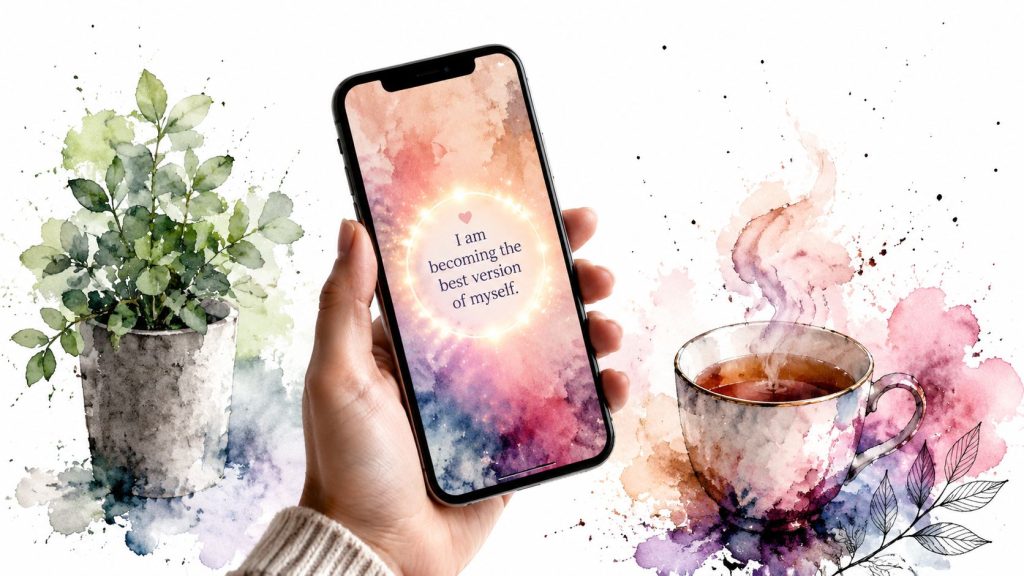
It is 2 a.m. Your chest feels tight, your thoughts are sprinting ahead, and even choosing what to do next feels strangely hard. In moments like that, a free affirmations app can serve as a small anchor. You open your phone, read or hear a calming phrase, and give your mind one clear sentence to hold onto instead of ten fearful ones.
Affirmations help most when they are part of a larger recovery practice. They support healing from anxiety and panic by interrupting spiraling thought loops, building a steadier inner voice, and creating repetition your nervous system can learn from over time. Charlie Health on affirmations for anxiety explains this well. The goal is not to force yourself to “feel positive.” The goal is to practice thoughts that feel safe, believable, and grounding enough to return to when anxiety gets loud.
Apps make that practice easier because they put support within reach during real-life stress. A good app can remind you to pause in the morning, guide you through a rough afternoon, or offer a quick SOS-style prompt when panic starts to build. That matters. Anxiety often shrinks your ability to think clearly in the moment, so it helps to have a tool that does some of the organizing for you.
This list focuses on free affirmation apps that do more than deliver nice quotes. We looked for tools that can fit into anxiety recovery: gentle reminders, audio support, customizable phrases, calming routines, and features that help you return to the present. If anxiety also shows up in your sleep, patterns like stress dreams can be part of the picture too, and Dreamscape's chase dream guide offers a helpful example of how anxiety can spill into the night.
Healing usually looks less like one big breakthrough and more like repeated moments of reassurance. The right app can support those moments, one breath and one sentence at a time.
Table of Contents
- 1. The Anxiety Checklist
- 2. ThinkUp – Positive Affirmations
- 3. I Am – Daily Affirmations (Monkey Taps)
- 4. Mantra – Daily Affirmations
- 5. Selfpause – Daily Affirmations
- 6. Gratitude Self-Care Journal (includes Affirmations)
- 7. Unique Daily Affirmations
- 8. Today I Am – Daily Affirmations & Mindfulness
- 9. You are – Daily Affirmations
- 10. AffirmQuest
- Top 10 Free Affirmations Apps Comparison
- Your Next Step Towards a Calmer Mind
1. The Anxiety Checklist
You feel the surge coming on in the grocery store line. Your chest tightens, your thoughts speed up, and even simple choices start to feel hard. In that moment, a free affirmations app helps most when it does more than show encouraging phrases. It should give you a clear handhold and walk you back to the present.
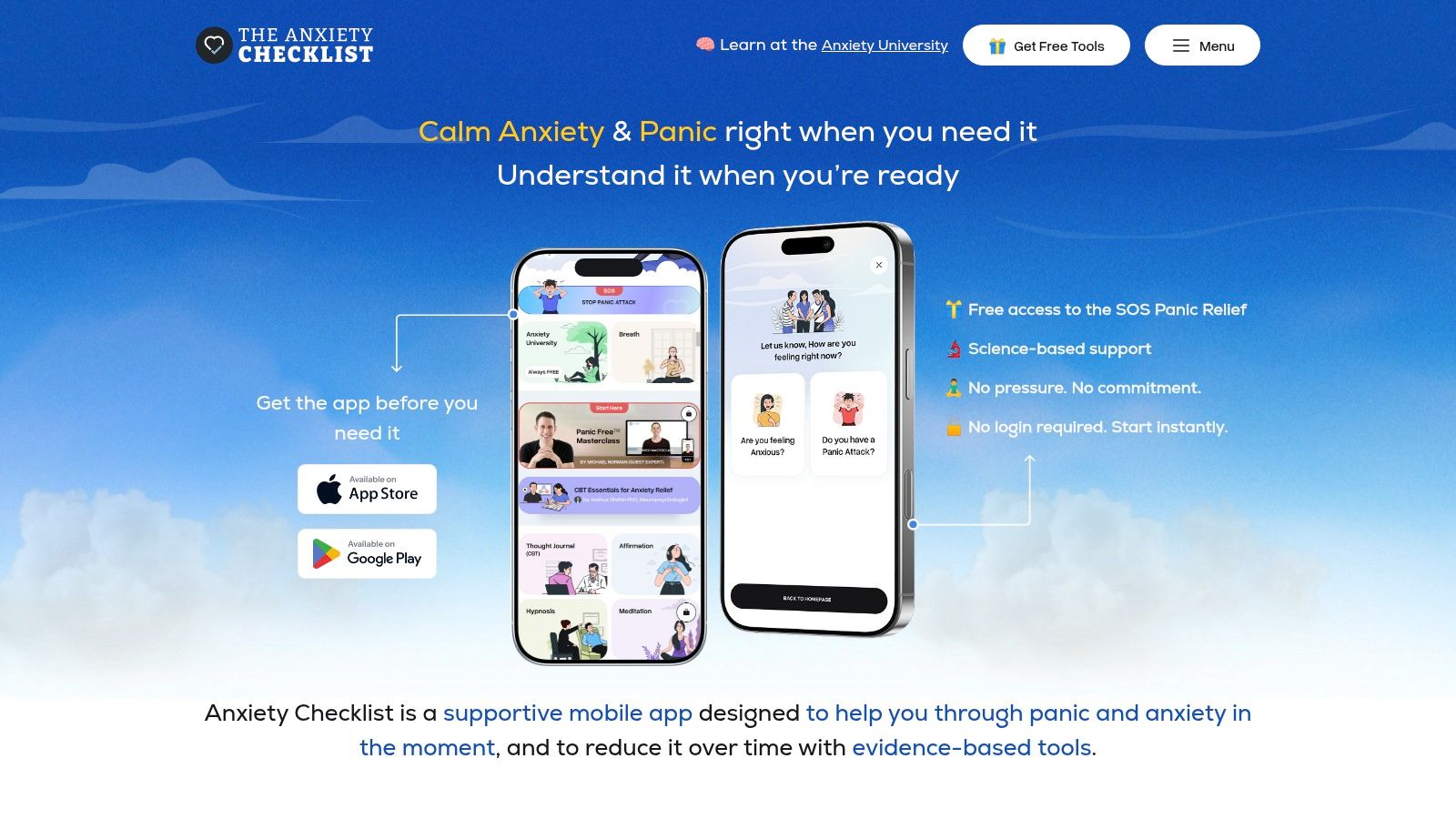
The Anxiety Checklist stands out because it treats affirmations as one piece of anxiety recovery, not the whole plan. Its always-free SOS mode is the feature that makes that difference easiest to see. You do not need to create an account first. You open the app, tap for support, and get grounding prompts, calming steps, and reassuring statements right away.
That design matters during panic. Anxiety narrows attention, almost like a fire alarm going off in your nervous system. If an app asks you to sort through too many options, it can add strain instead of relief.
Why it stands out for anxiety
Many affirmation apps focus on daily encouragement. The Anxiety Checklist also helps during high-distress moments, when your mind is racing and you need one next action more than a long library of content.
Practical rule: During acute anxiety, fewer decisions usually help. One clear prompt can be more useful than a screen full of choices.
It also supports the longer side of healing. Along with affirmations, the app includes hypnosis sessions, sleep audio, guided meditations, and walking sessions that can help settle the nervous system over time. For people working on the roots of anxiety, it includes CBT-based tools such as thought journals, belief experiments, and exposure ladders, plus educational material from Dr. Joshua Shifrin, PhD, and Michael Norman.
That broader mix gives the app a different role from a simple motivation tool. It works more like a small recovery kit you can carry in your pocket. If fear is also showing up in sleep, this can pair well with Dreamscape's chase dream guide, since nighttime anxiety and daytime panic often feed each other.
Best fit
This app makes sense for people dealing with recurring anxiety or panic attacks, family members who want a supportive tool to share, clinicians looking for structured self-help resources, and budget-conscious users who want meaningful free support before deciding on a paid option. The SOS tools stay free. There is also a 7-day free trial for premium content, though the ongoing subscription price is not clearly listed on the site.
- Best strength: Always-free SOS support with no login required.
- Helpful extra: It combines in-the-moment grounding with daily practice and CBT-based self-help tools.
- Main drawback: Some advanced content requires a premium plan, and the app does not replace emergency care or therapy when those are needed.
2. ThinkUp – Positive Affirmations
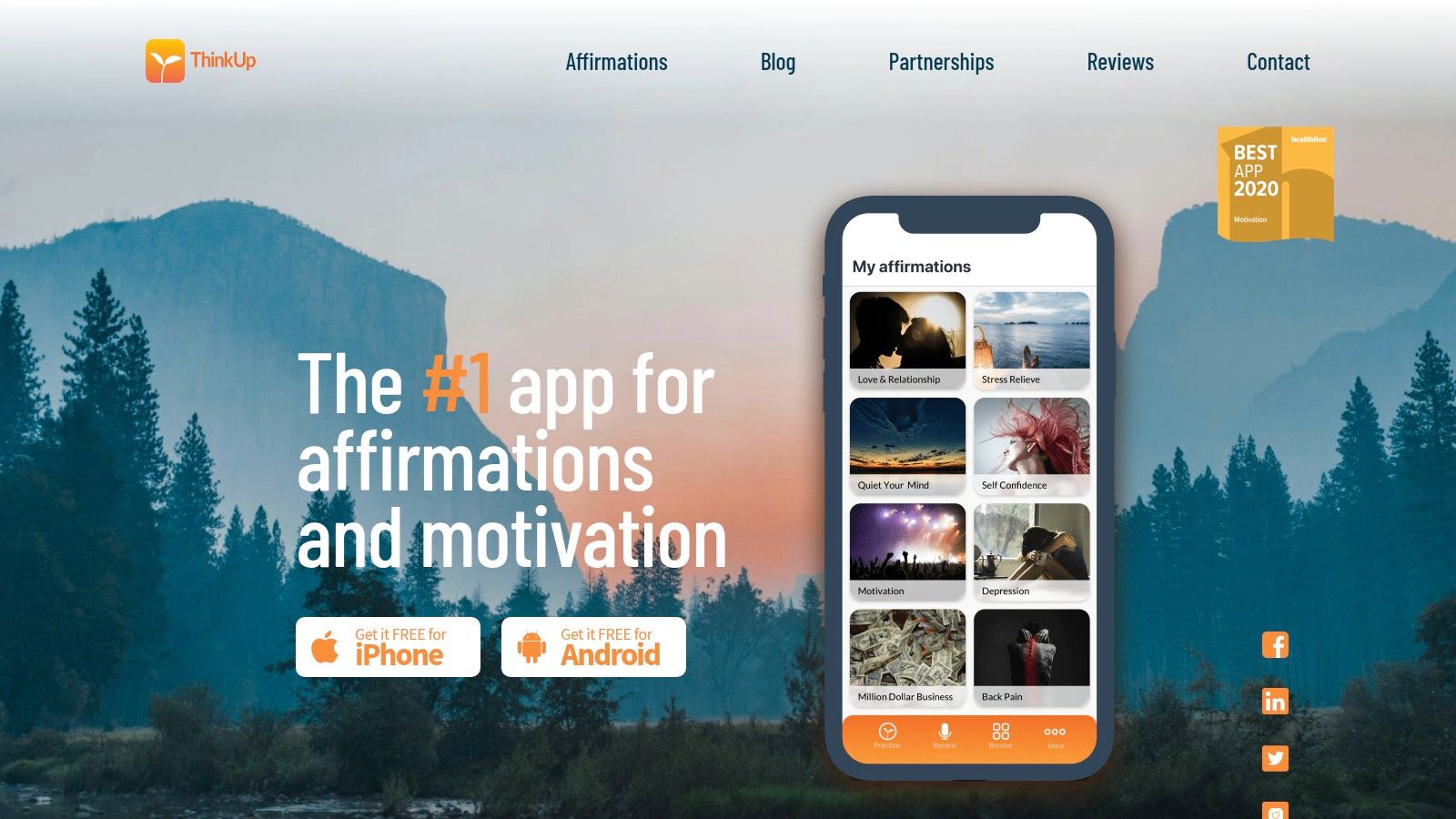
ThinkUp has been around long enough to earn trust from people who want repetition more than novelty. Its core idea is simple and powerful. You record affirmations in your own voice, loop them, add music, and listen regularly.
That matters for anxiety because familiar voice cues can feel grounding. Some people find it easier to believe “I am safe right now” when they hear themselves say it rather than reading it on a screen.
Why your own voice matters
ThinkUp is especially useful if you want to build a habit around a small set of phrases. You can keep your affirmations short and specific, such as “This feeling will pass,” “My body is trying to protect me,” or “I can breathe through this wave.”
The app also includes themed categories, reminder tools, and a practical loop-based listening style that suits bedtime, morning routines, and walks. Its free tier is usable, while Premium opens more of the library and advanced options.
Hearing your own calm voice repeat a steady message can help you respond to anxiety with familiarity instead of fear.
ThinkUp isn't the flashiest app here, and the interface can feel more functional than modern. Still, if you want an audio-centered free affirmations app that supports repetition and personalization, it remains a strong choice.
- Best strength: Personal voice recording and loop playback.
- Helpful extra: Background music and reminders support habit-building.
- Main drawback: Some of the most appealing features are reserved for Pro.
Visit ThinkUp.
3. I Am – Daily Affirmations (Monkey Taps)
I Am is one of the most polished apps in this space. If you want affirmations to appear throughout the day with almost no setup, this is one of the easiest ways to start.
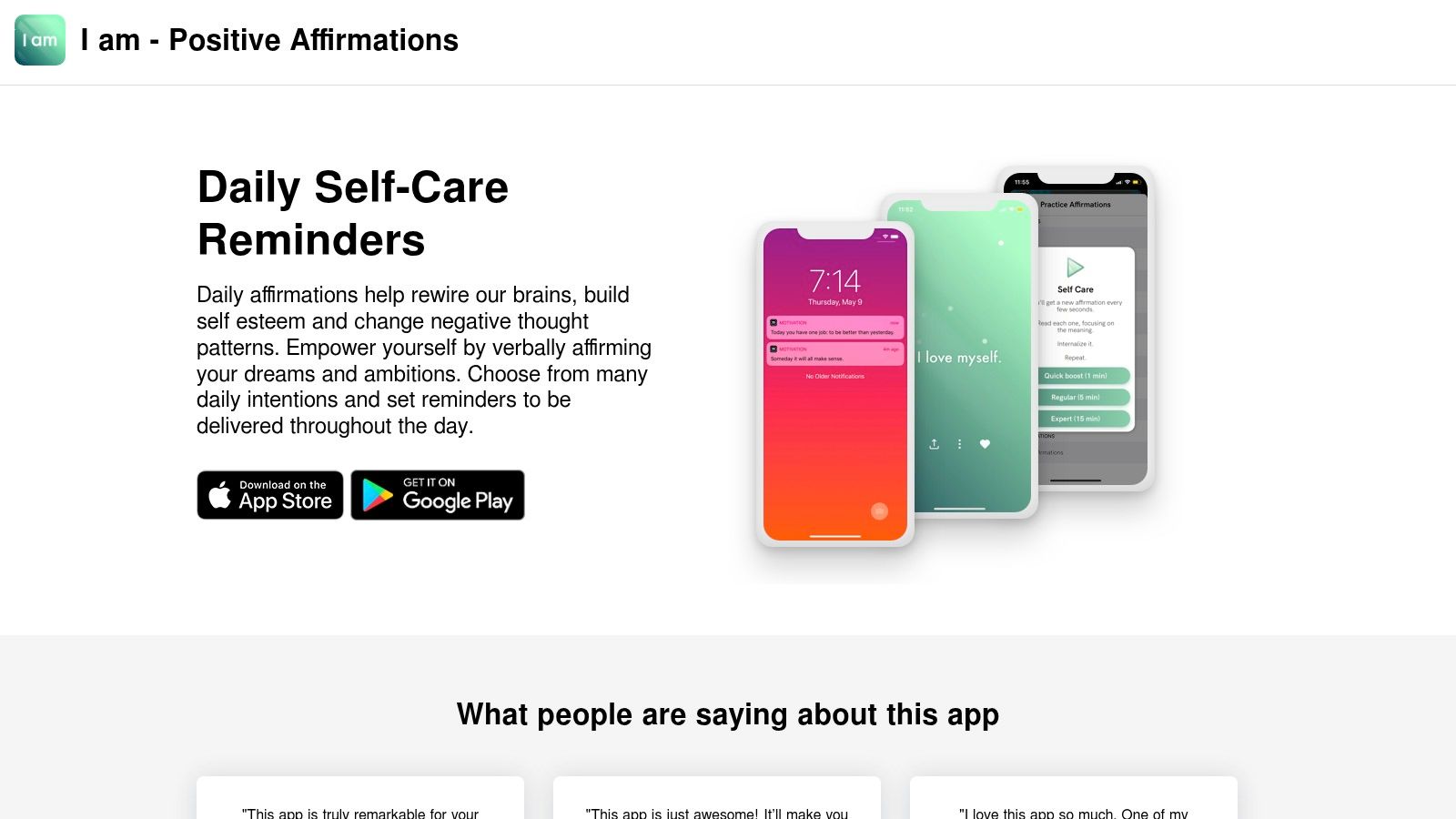
Its design leans into visibility. Lock-screen widgets, home-screen widgets, Apple Watch support, and gentle push notifications make it easy to encounter calming language without having to remember to open the app.
Best for gentle daily nudges
For anxiety recovery, that kind of passive support can be useful. You're not relying on motivation alone. The app brings short reminders into your day, which can help interrupt spiraling thought patterns before they build momentum.
A market roundup reported that I Am holds a 4.9-star rating on iPhone, and its free version includes core functionality, while the ad-free premium tier “I am +” allows three AI-generated affirmations in various languages for free before requiring a subscription priced at $1/month or $4/year The Vision Board app roundup of top affirmation apps for iPhone.
If you prefer text-based encouragement over voice loops, I Am feels smooth and accessible. The tradeoff is that deeper customization, themes, and sound options push you toward premium features.
- Best strength: Fast setup with widgets and timely prompts.
- Helpful extra: Broad category coverage and a polished experience.
- Main drawback: It's more text-focused than audio-focused.
Visit I Am by Monkey Taps.
4. Mantra – Daily Affirmations
Some people calm down through language. Others need atmosphere too. Mantra is built for the second group.
This app wraps affirmations in ambient sounds, visual themes, and repetition tools. If anxious thinking makes it hard to focus on plain text, that richer sensory approach can help you stay with the practice longer.
Best for a sensory calming routine
Mantra supports voice recording, calming soundscapes, widgets, and visually pleasing formats that feel more like a guided ritual than a simple notification. That's useful if your nervous system settles when your environment feels softer and more contained.
There's also a broader brain-based reason affirmations can matter. A summary of neuroimaging findings explains that positive self-affirmations activate brain regions linked to positive emotion regulation and reward processing, supporting the formation of new neural pathways that make it easier to return to healthier thought patterns MentalHealth.com on the science of affirmations.
Mantra's weakness is the same thing some users will like about it. It's more aesthetic and immersive than plain. If you want a minimalist utility app, look elsewhere. If you want an app that helps you slow down through sound and visuals, it's compelling.
- Best strength: A calming sensory experience.
- Helpful extra: Voice recording and repeatable sessions.
- Main drawback: More advanced personalization sits behind Pro.
Visit Mantra.
5. Selfpause – Daily Affirmations
Selfpause is a good fit if you prefer listening over reading and want your affirmation practice to feel more like audio coaching. Its design puts strong emphasis on recordings, loops, and category-based tracks.
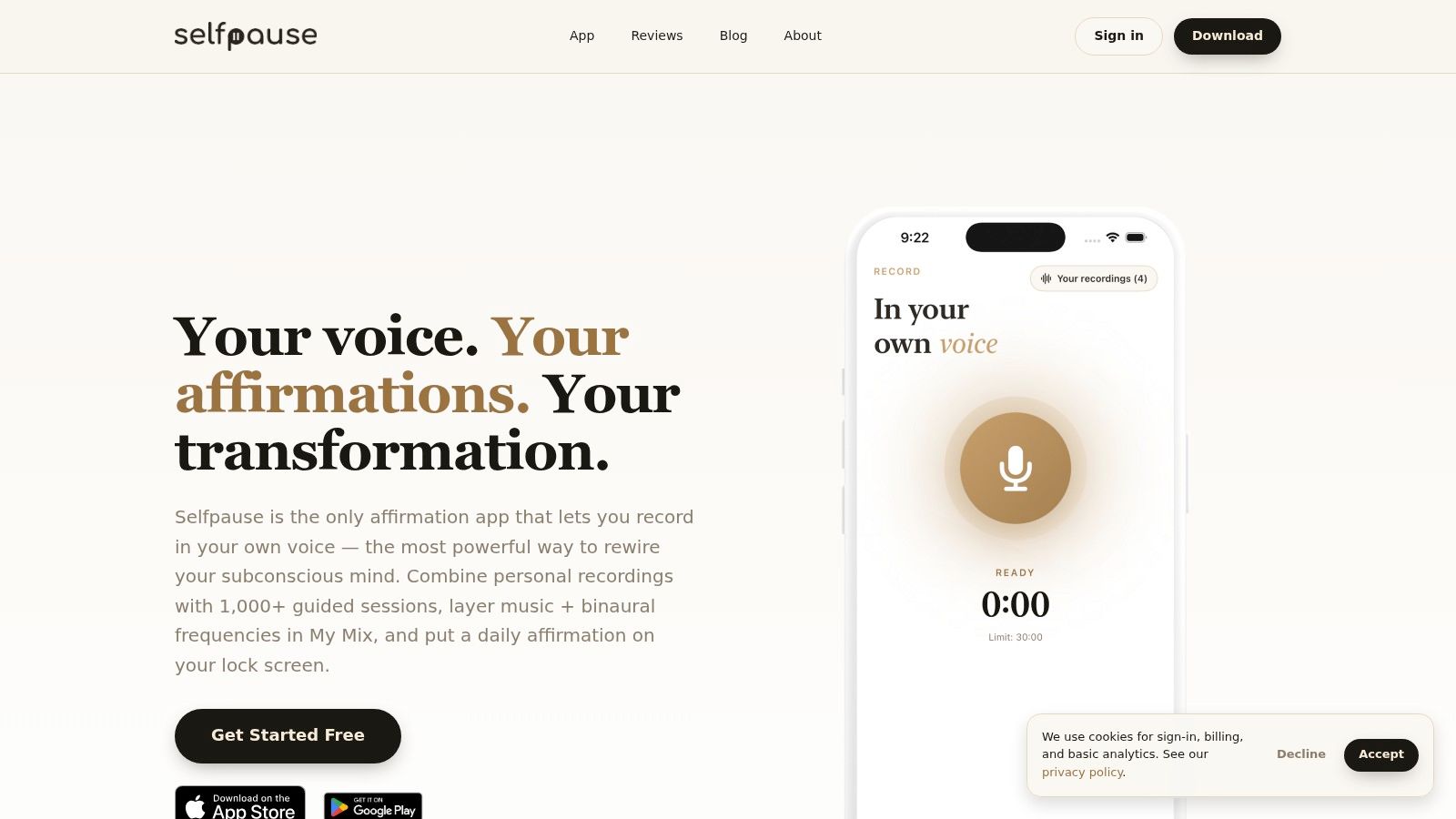
For people with anxiety, that matters because listening can be easier than concentrating on a screen when your thoughts are racing. Audio also fits naturally into walks, commutes, and wind-down routines.
Best for audio-first users
Selfpause lets you record and loop your own voice while also offering a wider affirmation library. Recent versions also lean into AI-assisted and coaching-style features, which some users will enjoy and others may find unnecessary.
This is the kind of app that works best when you know your preference. If hearing repeated statements helps you regulate, Selfpause offers enough depth to build a routine. If you only want a clean daily card with no extras, it may feel busy.
A useful affirmation app doesn't need to impress you. It needs to be easy to return to on a hard day.
- Best strength: Strong focus on audio delivery and personal voice use.
- Helpful extra: Broad category coverage across iOS and Android.
- Main drawback: Some content and downloads are paywalled.
Visit Selfpause.
6. Gratitude Self-Care Journal (includes Affirmations)
Not everyone wants a standalone free affirmations app. Some people do better when affirmations sit beside journaling, reflection, and small daily rituals. That's where Gratitude can work well.
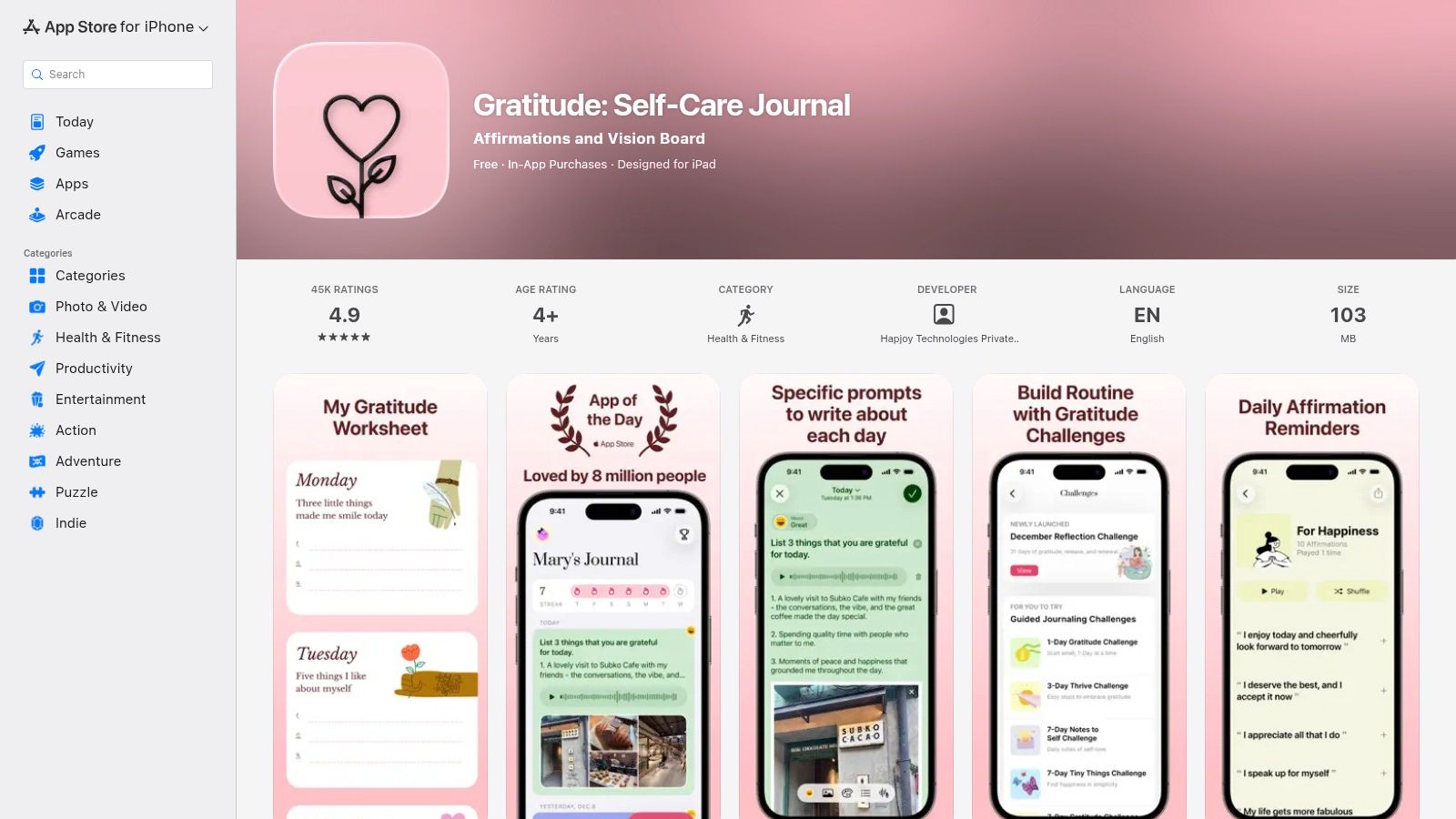
This app combines affirmations with journaling prompts, a vision board, reminders, streaks, and privacy controls. You can also write your own affirmations and pair them with music or voice, which gives you more emotional ownership over the practice.
Best for pairing affirmations with reflection
Anxiety often isn't only about thoughts. It's also about patterns, triggers, and the stories you tell yourself in response. A journaling-based app can help you notice those loops more clearly.
That's one reason a mixed format can be helpful. You might read an affirmation like “I can handle uncertainty,” then write a few lines about what uncertainty looked like today and what helped. That pairing can make the words feel less abstract.
The tradeoff is focus. Gratitude covers several self-care tools, so it won't feel as specialized for affirmations as an affirmations-only app. If you like having your mindset work and reflection in one place, though, it's a thoughtful option.
- Best strength: Combines affirmations with journaling and reflection.
- Helpful extra: Supports custom affirmations with music or voice.
- Main drawback: Some advanced customization is reserved for Pro.
Visit Gratitude Self-Care Journal on the App Store.
7. Unique Daily Affirmations
Some anxiety gets worse when you have too many choices. Unique Daily Affirmations takes the opposite approach from feature-heavy apps. It gives you one affirmation a day and keeps the practice light.
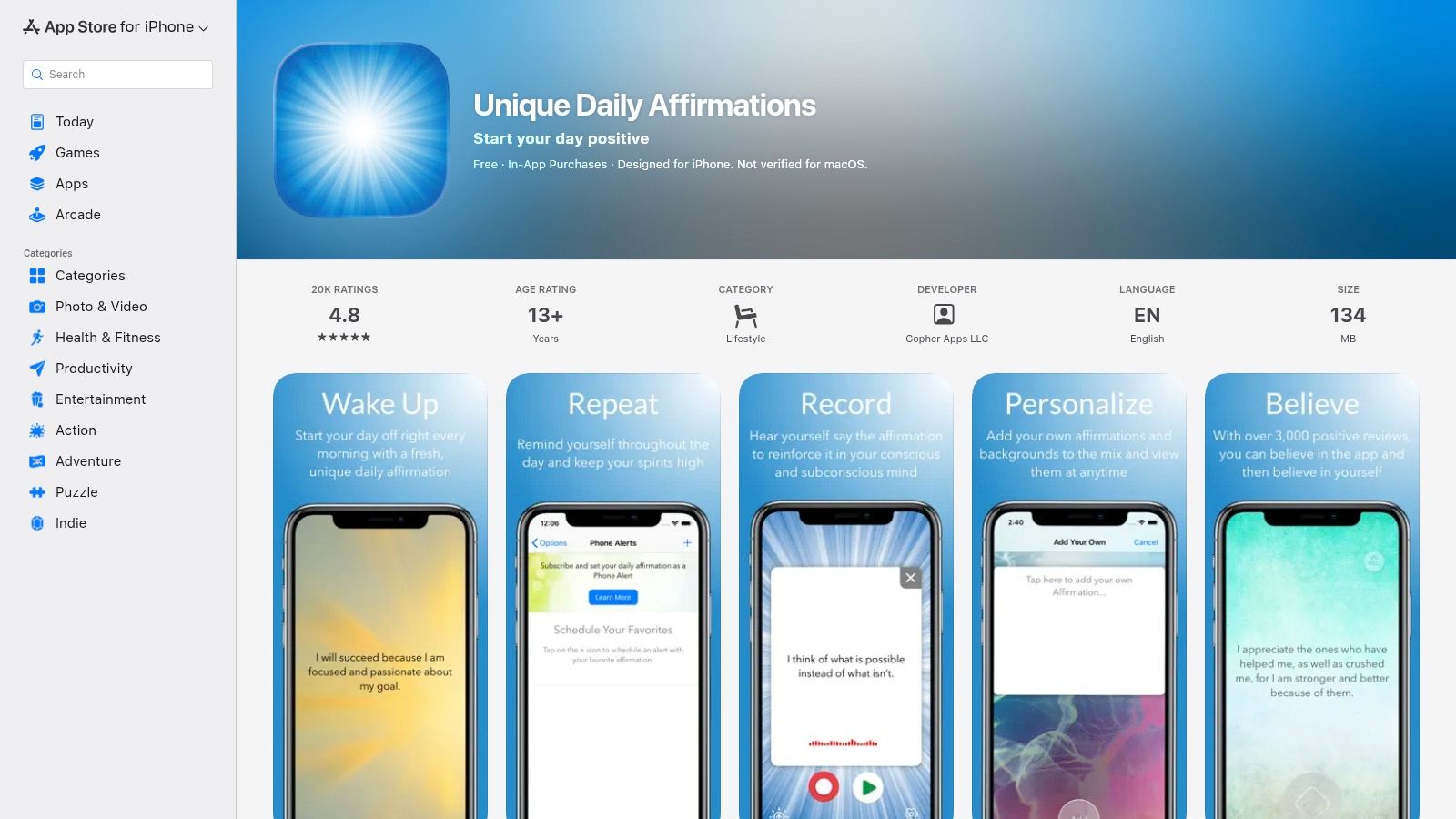
That simplicity is a real strength for people who don't want to build playlists, browse huge libraries, or customize every detail. Open the app, receive the day's phrase, favorite it if it helps, and move on.
Best for keeping things simple
You can still personalize the experience through background choices, alerts, and per-affirmation voice recording. But the overall feeling is intentionally low-pressure. That makes it a smart entry point if you're just beginning.
This app also matches a useful truth about anxiety healing. Small, repeatable actions tend to matter more than intense effort you can't sustain. A one-a-day structure supports consistency without demanding much energy.
- Best strength: Low-friction daily practice.
- Helpful extra: Voice recording without complex setup.
- Main drawback: Ads remain in the free tier until you buy All Access.
Visit Unique Daily Affirmations on the App Store.
8. Today I Am – Daily Affirmations & Mindfulness
Today I Am feels lighter and more playful than many established apps. Its signature idea is a daily persona paired with an affirmation, presented in a widget-friendly format.
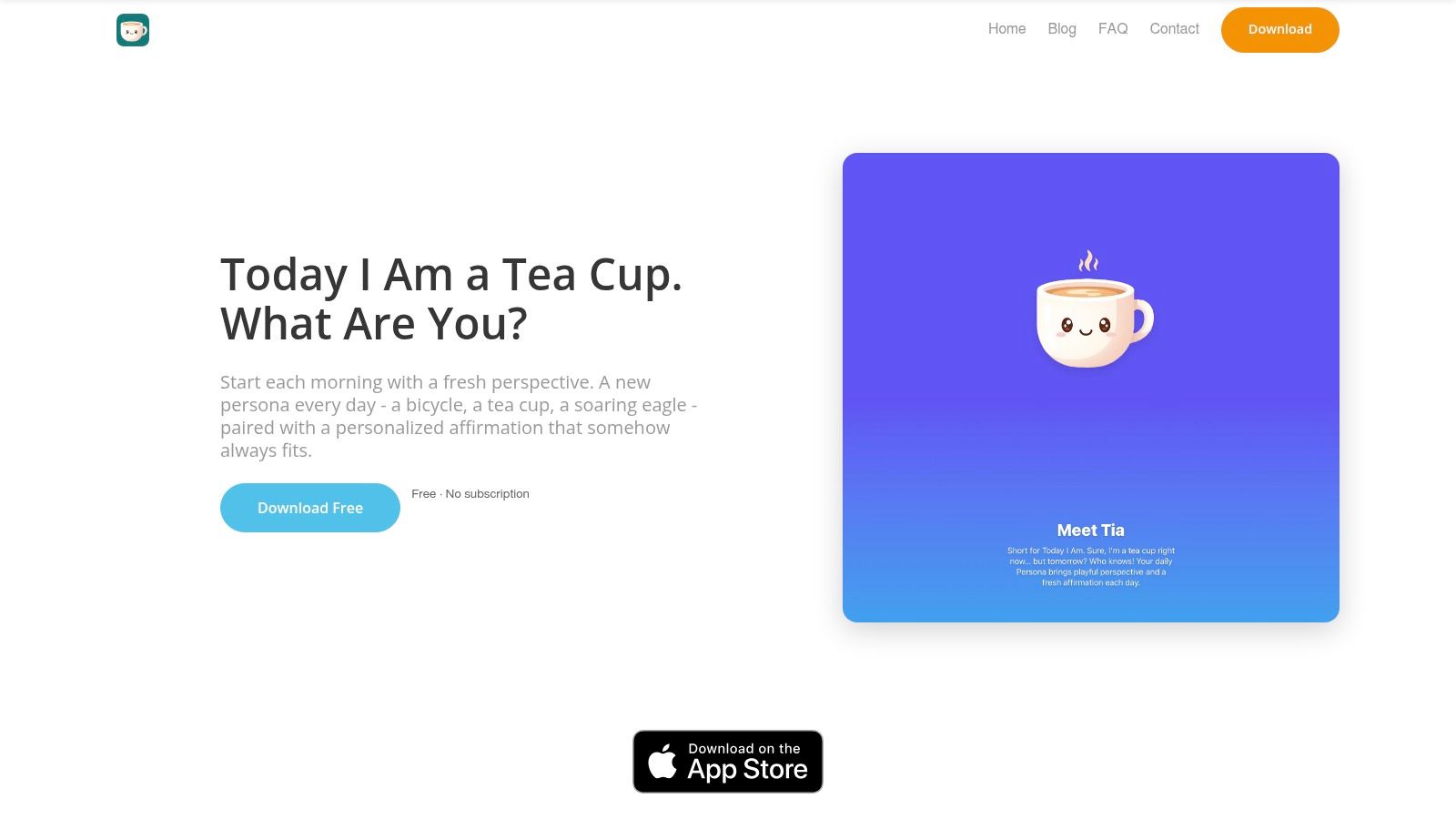
That playful structure can help if anxiety has made self-help feel heavy. Sometimes a habit sticks because it feels welcoming, not because it feels intense.
Best for genuinely free daily practice
At the time of the product listing referenced in market coverage, Today I Am was presented as free with no subscription or paywall. That's refreshing in a category where “free” often means limited access followed by constant upgrade pressure.
A privacy-focused review trend piece also argues that people looking for free wellness tools often aren't shown much about data-sharing practices, and that privacy-conscious, ad-free options can be underrepresented in mainstream roundups Mindful Suite on best affirmations apps and privacy concerns. That doesn't automatically make one app better than another, but it's a useful reminder to check what “free” means for you.
- Best strength: Simple, cheerful daily engagement.
- Helpful extra: Widgets and multilingual support.
- Main drawback: Smaller library and a future pricing model that could change.
Visit Today I Am.
9. You are – Daily Affirmations
You are is a good pick for people who want order. It's text-first, clean, and straightforward, with affirmations grouped into life categories rather than wrapped in lots of visual extras.
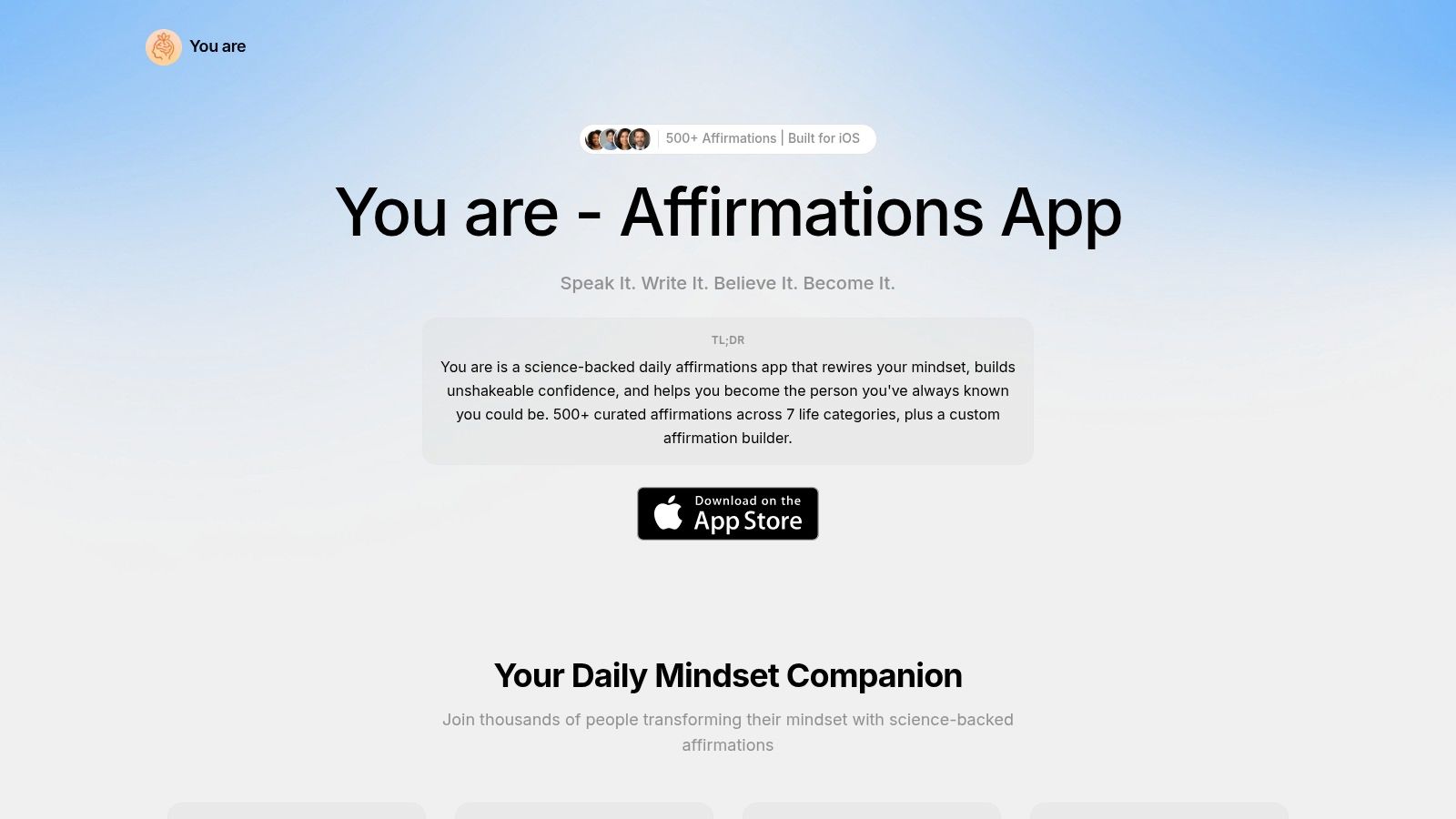
The app says it offers 500+ affirmations across 7 categories, plus a custom builder and offline access. That makes it easy to create a focused routine around themes like stress, confidence, or relationships, depending on what tends to trigger your anxiety.
Best for structured text-based practice
If you don't want audio, gamification, or heavy visuals, You are keeps things uncluttered. You can read, save, and build custom lines that feel true enough to use repeatedly.
That “true enough” part matters. For many people with anxiety, affirmations work better when they feel grounded, not exaggerated. “I can handle this moment” often lands better than a phrase that feels too far from your current experience.
- Best strength: Clean organization and simple workflow.
- Helpful extra: Custom affirmations and offline use.
- Main drawback: It appears more iOS-focused than cross-platform rivals.
Visit You are.
10. AffirmQuest
You miss a few days, your anxiety spikes, and the app you meant to use starts to feel like another task on a crowded list. AffirmQuest is built for that kind of drop-off. It uses streaks, points, and repeated prompts to make it easier to return before the habit disappears.
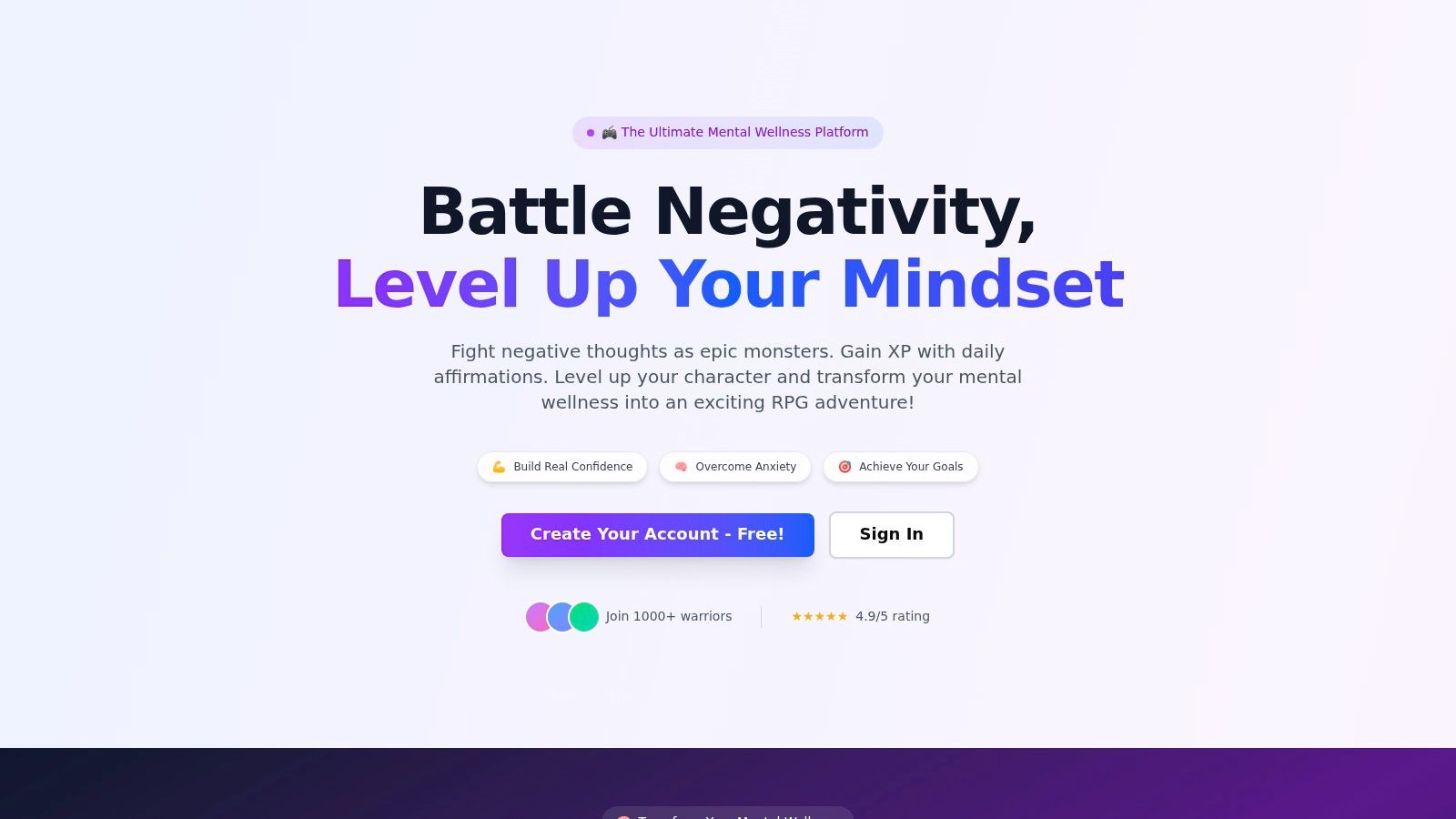
For anxiety recovery, that matters more than it may seem at first. An affirmation app is rarely the whole solution. It works better as a small support tool inside a larger plan that may also include therapy, exposure work, breathing skills, journaling, or an SOS app for high-panic moments. AffirmQuest's strength is simple. It gives you more chances to reconnect with a calming message during an ordinary day.
Best for motivation through habit streaks
On the free plan, AffirmQuest sends daily affirmations in the app and by email. Paid plans add SMS and voice call delivery. That delivery mix is useful for people who stop opening wellness apps when stress is high, because the reminder can reach them where they already are instead of asking for extra effort.
The format also helps solve a common anxiety problem. When your mind is noisy, remembering coping tools can feel like trying to find one note in a loud room. Repetition helps the message become more familiar, and familiar thoughts are often easier to reach when your nerves are activated.
If an app helps you return to a steadier thought before panic builds, it is doing real practical work.
- Best strength: Strong habit reinforcement through streaks, points, and multi-channel reminders.
- Helpful extra: Email delivery can support people who ignore app notifications.
- Main drawback: SMS and voice call features sit behind paid tiers.
Visit AffirmQuest.
Top 10 Free Affirmations Apps Comparison
| App | Core Features ✨ | Quality ★ | Pricing/Value 💰 | Target 👥 | USP / Why Choose 🏆 |
|---|---|---|---|---|---|
| The Anxiety Checklist 🏆 | SOS mode (no login), CBT self‑therapy, hypnosis & sleep audios, guided meditations, 65+ articles | ★★★★☆ (expert‑led) | 💰 SOS always free; 7‑day premium trial; subscription after trial (price TBA) | 👥 People with panic/chronic anxiety, supporters, clinicians | 🏆 Immediate, no‑thinking SOS + layered long‑term CBT & expert courses |
| ThinkUp – Positive Affirmations | Record & loop your voice, curated categories, background music, reminders | ★★★★☆ (longstanding) | 💰 Free tier; Pro unlocks larger libraries | 👥 Personalization & habit builders | ✨ Voice‑loop personalization for deeper habit formation |
| I Am – Daily Affirmations | Widgets & Apple Watch, large categories, gentle push notifications | ★★★★★ (polished) | 💰 Free with Premium upsell | 👥 Community seekers & quick daily nudges | ✨ Extremely polished UX + widespread community support |
| Mantra – Daily Affirmations | Voice recording, ambient soundscapes, visual themes, widgets | ★★★★☆ (sensory) | 💰 Free + Pro for full libraries/themes | 👥 Sensory‑focused users who want ambience | ✨ Aesthetic, sensory‑rich sessions to aid focus |
| Selfpause – Daily Affirmations | Record/loop personal voice, large audio library, AI features | ★★★★☆ (audio‑forward) | 💰 Free with in‑app purchases/subscription | 👥 Audio‑first users & those liking coaching features | ✨ Strong personal‑voice emphasis + AI‑assisted tools |
| Gratitude: Self‑Care Journal | Affirmations + journaling, vision board, streaks & privacy controls | ★★★★☆ (reflective) | 💰 Free + Pro for advanced features | 👥 Journalers & those who pair reflection with practice | ✨ Combines journaling + affirmations for deeper impact |
| Unique Daily Affirmations | One affirmation/day, favorites, voice recording, simple alerts | ★★★★☆ (low‑friction) | 💰 Free; All Access removes ads/lifts limits | 👥 Users wanting minimal, daily check‑ins | ✨ Very low‑friction one‑a‑day practice |
| Today I Am – Daily Affirmations | Daily persona + affirmation, widgets, multilingual support | ★★★☆☆ (indie) | 💰 Advertised genuinely free (no paywall at listing) | 👥 Budget users & playful habit builders | ✨ Fresh, playful design; free model (may change) |
| You are – Daily Affirmations | 500+ curated affirmations, custom builder, offline access | ★★★★☆ (structured) | 💰 Free start; optional in‑app purchases | 👥 Text‑first users wanting structure | ✨ Large categorized library with offline use |
| AffirmQuest | Gamified XP/streaks, daily in‑app/email delivery, SMS/voice on paid tiers | ★★★★☆ (engaging) | 💰 Free basic; Pro/Lifetime for SMS & voice delivery | 👥 Gamification fans & multi‑channel users | ✨ Adventure/gamified approach + multi‑channel delivery |
Your Next Step Towards a Calmer Mind
Choosing a free affirmations app can feel small compared with the size of anxiety. But small steps count. Opening an app, reading one steady sentence, listening to your own voice say “I am safe right now,” or tapping an SOS button instead of spiraling alone. Those are real actions, and real actions can begin to change how you move through hard moments.
If anxiety has made you feel trapped in survival mode, there is still a path forward. One NIH study found that self-affirmation improved problem-solving performance in chronically stressed people who had been underperforming under stress NIH study on self-affirmation and stress buffering. That matters because anxiety often narrows your thinking. Supportive tools can help you get some of that mental space back.
Not every app on this list serves the same purpose. The Anxiety Checklist is the strongest option if you need panic support in the moment and want affirmations inside a broader recovery plan. ThinkUp and Selfpause are better if your own voice helps you feel grounded. I Am and Today I Am work well if you want gentle reminders throughout the day. Gratitude is a better fit if writing helps you process what's happening. AffirmQuest suits people who stay consistent when a habit feels interactive.
There's no perfect choice. There's only the next useful one. Pick the app that feels easiest to return to when your energy is low, because that's the version of you this tool needs to support.
One more note matters here. Healing from anxiety usually happens through repetition, not intensity. A short practice you truly use is better than a complex one you avoid. You don't need to force belief into every affirmation on day one. You only need words that feel steady enough to borrow until your nervous system starts to trust them.
If panic has been part of your life, don't read that as a permanent identity. People do heal. People do learn how to respond differently to the first signs of fear. People do build lives that feel wider, calmer, and less ruled by alarm. An app alone isn't the whole answer, but the right one can become a reliable companion while you practice safety, consistency, and hope.
Download one. Try it today. Keep the practice simple. Let healing be gradual and real.
If you want a practical place to start, The Anxiety Checklist is an especially strong choice for anxiety relief because it offers always-free SOS support, guided affirmations, grounding tools, and longer-term CBT-based help in one app. If you're dealing with panic, overthinking, or chronic anxiety, it gives you something useful to do right away and something steady to build on over time.