Feel Overwhelmed at Work? There Is a Path Back to Calm
The deadline is looming, your inbox is overflowing, and your heart starts to race before a big meeting. You reread the same message three times, your shoulders creep toward your ears, and even small requests start to feel heavy. Workplace stress can feel like a constant weight, especially when you're expected to stay polished and productive while your nervous system is doing the opposite.
It's easy to assume this is just life at work now. But it doesn't have to stay this way. Many people are actively looking for relief. In the last month, 77% of Americans reported being stressed out by work, according to SelectSoftware Reviews' 2026 workplace stress statistics roundup. That number is sobering, but it also tells you something important. If you're struggling, you're not weak, and you're not alone.
There is a path back to calm. Small moments of regulation can become steady habits. Steady habits can become resilience. The right stress relief tools at work won't erase every deadline or difficult conversation, but they can help you feel safer in your body, clearer in your mind, and more in control of how you respond.
If you also want your workspace to feel softer and more restorative, Houseplants for stress relief can complement the tools below beautifully.
Table of Contents
- 1. The Anxiety Checklist
- 2. Calm
- 3. Headspace
- 4. Insight Timer
- 5. Breathwrk
- 6. Brain.fm
- 7. Wysa
- 8. Focus@Will
- 9. Stretchly
- 10. CalmiGo
- Top 10 Workplace Stress-Relief Tools Comparison
- Your Next Step Toward a Panic-Free Workday
1. The Anxiety Checklist
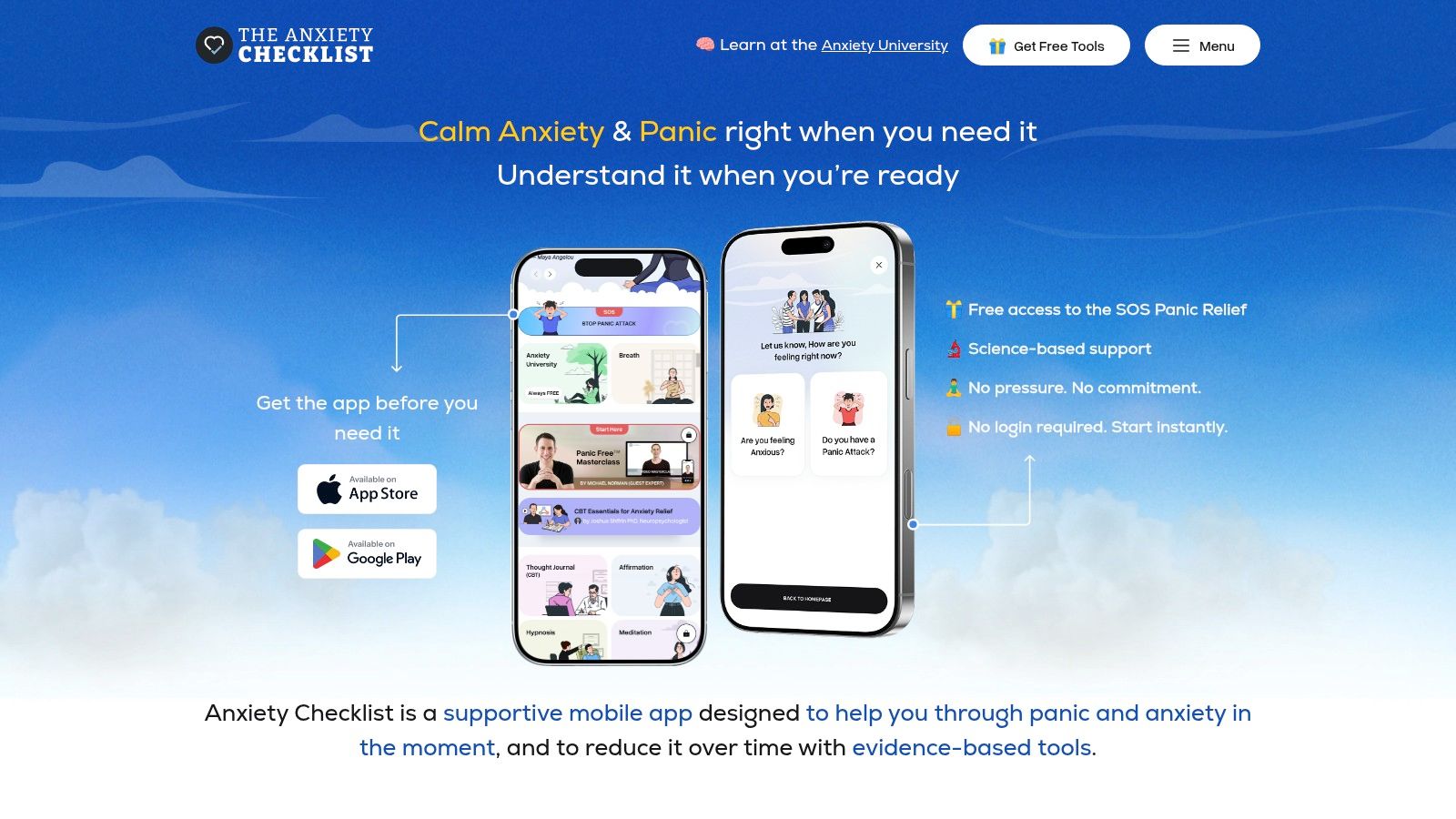
Your inbox is full, a meeting starts in two minutes, and your body reacts before your mind can catch up. Your chest tightens, your thoughts scatter, and even simple decisions feel far away. In that kind of moment, a stress tool needs to do one thing first. It needs to help you regain enough control to steady yourself.
The Anxiety Checklist is useful because it supports both parts of recovery at work. It gives immediate help when panic starts rising, and it also offers structured practice for lowering anxiety over time. That combination matters. Short-term relief can calm the alarm, but long-term healing usually comes from repeated, guided steps that teach your nervous system a safer pattern.
At work, that step-by-step approach can make the difference between barely surviving the day and slowly building resilience. The app includes an always-free SOS Panic Relief mode with no login required, so a user can open it quickly for grounding, guided affirmations, and short prompts. When your brain feels flooded, fewer steps often means a better chance you will indeed use the tool.
Why it stands out
The strongest part of The Anxiety Checklist is its range of support across different stress states. During an acute spike, it offers fast grounding. During calmer periods, it gives you practices such as hypnosis sessions, sleep audios, guided meditations, walking sessions, and affirmations. Used consistently, those tools can help shift anxiety care from crisis response into daily repair.
That is what makes it feel more like a recovery kit than a single feature app. A fire extinguisher helps in an emergency. A better building plan lowers the chance of the fire starting again. The Anxiety Checklist tries to do both.
For people who want more than soothing content, it also includes CBT self-therapy tools such as thought journaling, belief experiments, and exposure ladders, along with educational material from Dr. Joshua Shifrin, PhD, Michael Norman, and articles in Anxiety University. That mix helps users understand what is happening in their mind and body, then practice a response that is calmer, more deliberate, and less driven by fear.
Practical rule: If your stress tends to escalate into panic, choose a tool you can open in under ten seconds. Friction matters when you're flooded.
There is also solid support for digital stress tools in the workplace. A systematic review of studies on worker-focused digital interventions found consistent reductions in occupational stress across smartphone-based and web-based programs, including meditation, coping skills, and health behavior support, as reported in this systematic review on digital stress interventions for workers. This is significant because it suggests people are not just imagining relief. The body and stress response can shift with repeated practice.
Best fit and tradeoffs
This app is a strong fit for several groups:
- People with chronic anxiety or panic attacks: The SOS mode gives immediate support without setup.
- Supportive family and friends: The educational content can help loved ones understand anxiety and recovery more clearly.
- Therapists and self-help users: The CBT tools add structure between sessions or during independent practice.
- Budget-conscious users: The free SOS tools let you start before deciding whether premium content is worth it.
The tradeoffs are fairly straightforward. Some features require a paid upgrade, and the pricing details are not clearly listed in the planning information available here. It is also a self-help and educational tool, not emergency care. If someone is in immediate danger or crisis, they should seek urgent professional support.
One thoughtful place to start is the support for individuals experiencing anxiety resource, especially if you are weighing how self-help tools and counseling can work together.
2. Calm
Calm works well when your workday stress shows up as mental noise. If your brain won't stop scanning tomorrow's tasks while you're trying to finish today's, short guided sessions can help you slow the loop.
Its appeal is simplicity. You can open Calm on mobile or web, choose a brief meditation or breathing exercise, and take a reset between meetings without much setup. The larger sleep and relaxation library also makes it useful after work, when your body is home but your mind still feels stuck at the office.
When Calm works best
Calm is especially practical for people who want polish and consistency. The interface is straightforward, reminders are easy to use, and the platform is familiar enough that some employers choose Calm Business or Calm Health as part of broader wellbeing programs.
A good use case is the employee who needs a short transition ritual. Two minutes before a difficult call, they do a breathing exercise. After lunch, they use a short meditation to reduce that jittery restart feeling. At night, they use sleep content to help their body stop carrying the day.
A stress tool doesn't need to be dramatic to be effective. Sometimes the win is simply interrupting the spiral before it gathers speed.
The tradeoff is access. Full use requires a paid plan, and pricing can vary by region and storefront. If you want to browse the platform directly, visit Calm.
3. Headspace
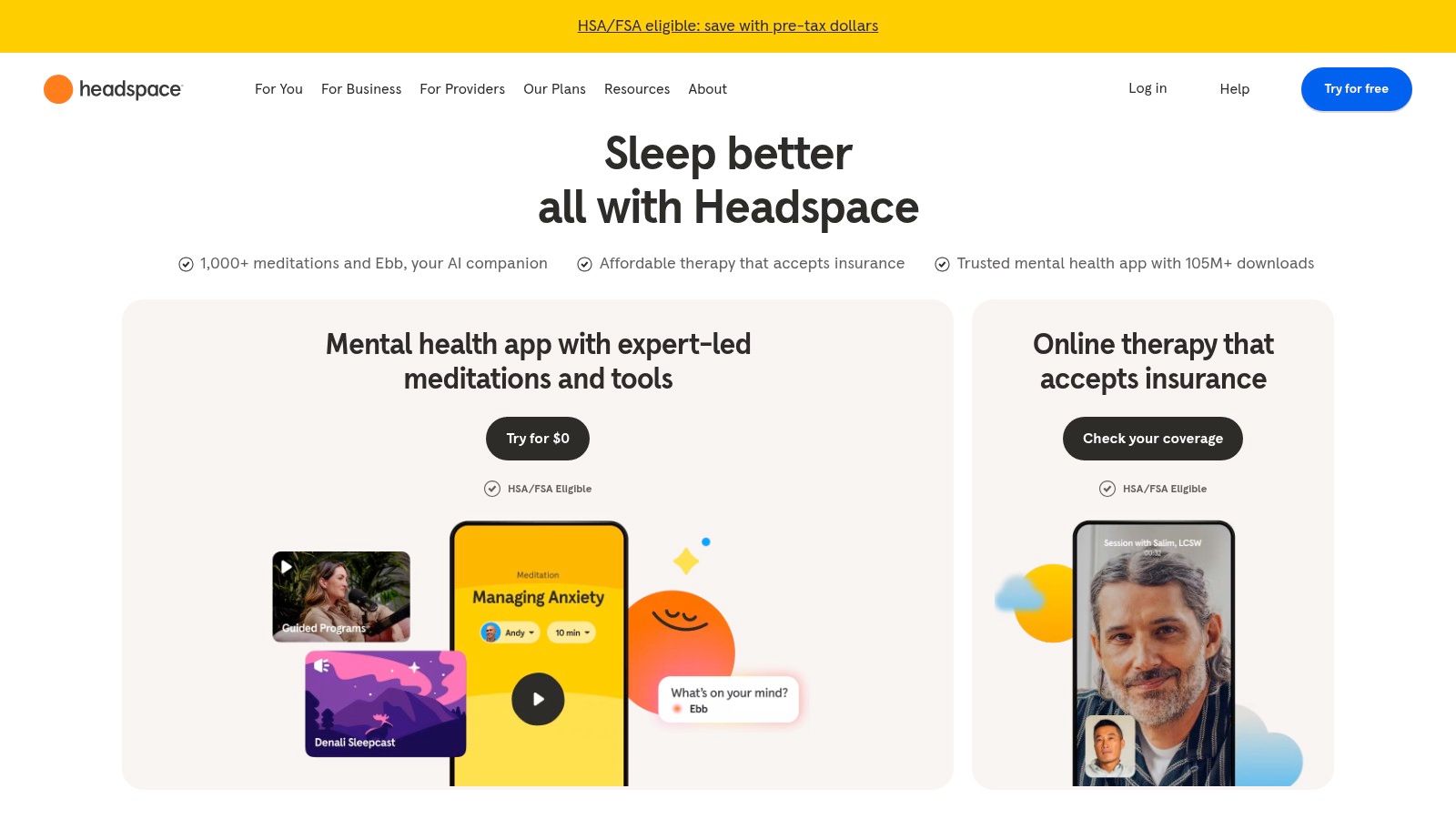
Headspace is often a good match for people who feel intimidated by meditation. Its guidance tends to be approachable, clear, and easy to follow, which matters when you're already stressed and don't want another thing to figure out.
At work, the short session lengths are a major advantage. You can use a 3 to 10 minute practice for focus, stress relief, or a mental reset before presenting. It also includes themed courses around stress, burnout, and resilience, plus breathing exercises, gentle movement, Sleepcasts, and wind-down content.
Why many workers stick with it
Headspace supports habit-building well. For some users, that's what turns occasional relief into real progress. Instead of waiting until stress becomes unbearable, they start using a short session daily, and that repetition makes regulation feel more natural over time.
That pattern lines up with what researchers have found in a randomized controlled trial of employees with high stress. A web-based stress management intervention led to significantly greater stress reduction than a waitlist control, with strong effects at follow-up and reliable improvement in perceived stress for half of the intervention group, according to the JMIR trial on a web-based stress management intervention for employees. Structured tools can do more than distract you. They can help you recover.
Headspace isn't fully open once the trial ends, so ongoing full access requires a subscription. Still, for people who want guided instruction that feels friendly rather than clinical, it's easy to see why many teams adopt it. You can explore it at Headspace.
4. Insight Timer
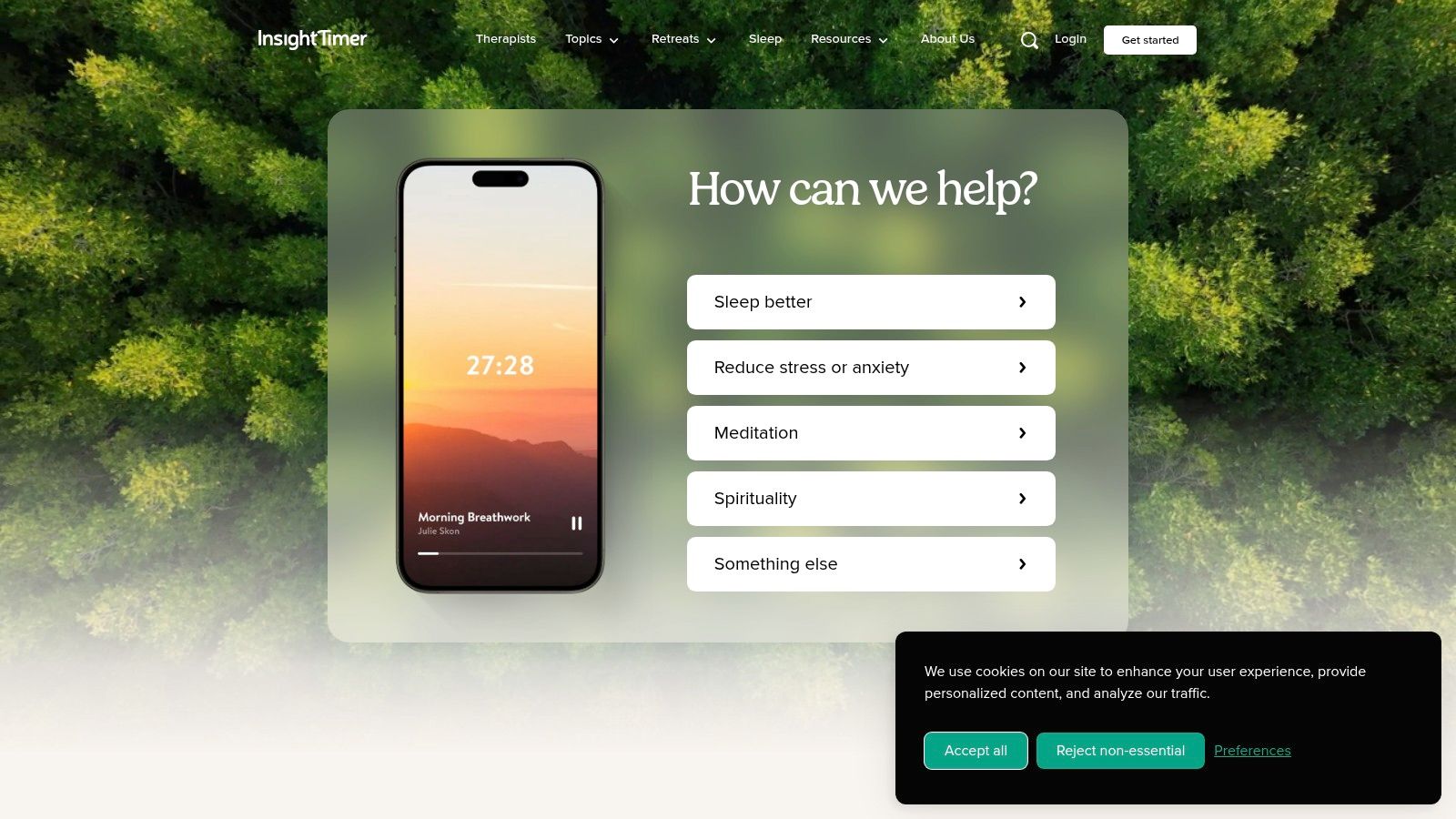
Insight Timer is useful when you want options, especially free ones. It offers a large meditation library for stress, focus, and anxiety, plus a timer with ambient sounds and bells for people who prefer unguided sessions.
This matters if your work stress changes shape throughout the week. One day you may need a grounding track before a hard conversation. Another day you may want a silent five-minute timer, soft rain sounds, and no voice at all.
A good option if you want free variety
Insight Timer can help you build a desk routine without locking you into one teacher or one style. That flexibility is helpful if you're still learning what calms you. Some people respond best to body scans. Others settle faster with visualizations, soft music, or a simple breathing bell.
The downside is that abundance can feel noisy. Content discovery may seem busy, and premium upsells exist for extra courses and features. But if you're experimenting with stress relief tools at work and want broad free access before committing to a subscription elsewhere, this is one of the easier places to start.
One simple rhythm works well with this app:
- Before opening email: Use a short timer to settle your breathing.
- Midafternoon slump: Choose a focus or calm track instead of doom-scrolling.
- After a tense meeting: Use ambient sounds for a silent reset before returning to tasks.
You can browse its library at Insight Timer.
5. Breathwrk
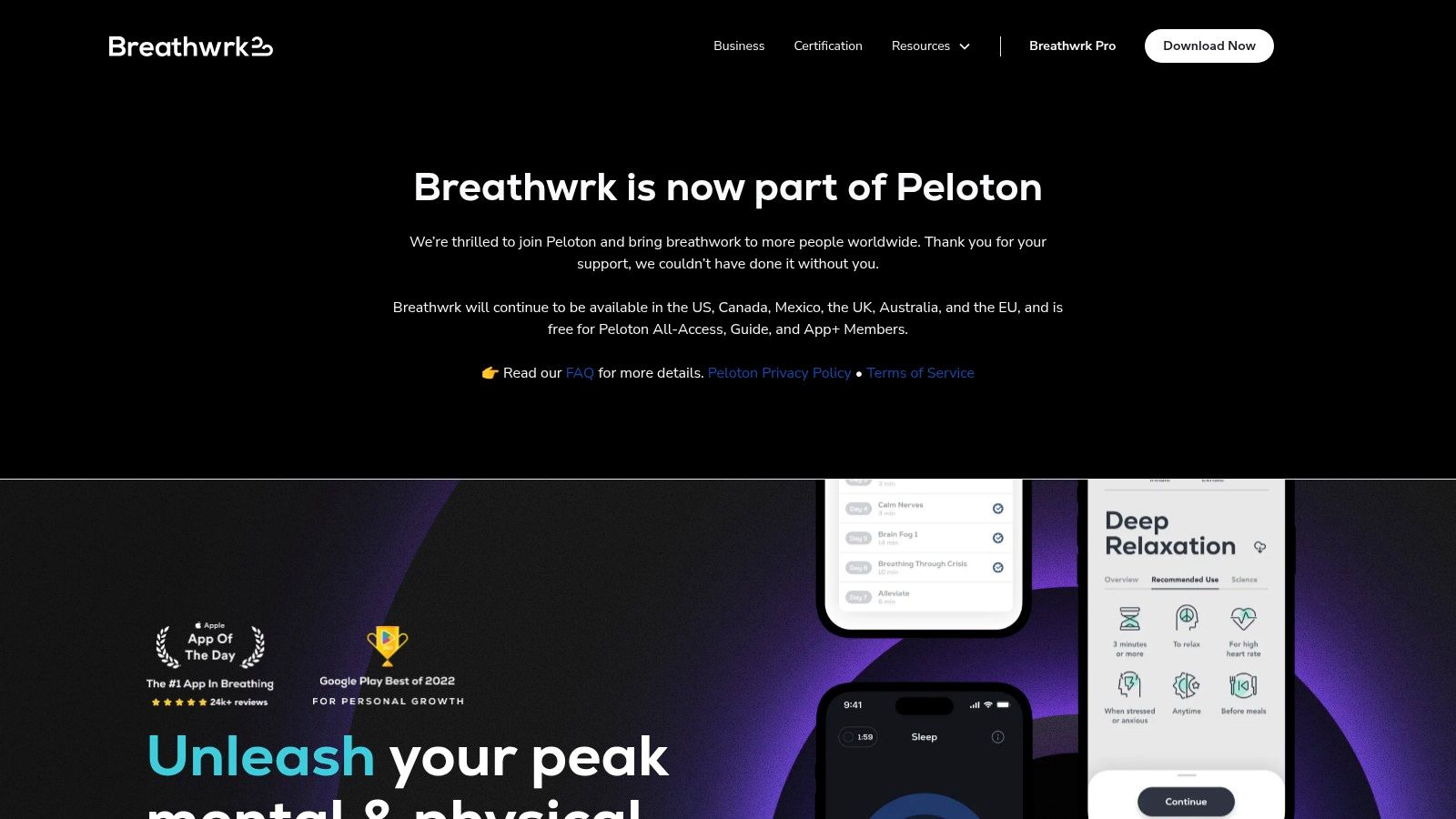
Breathwrk is one of the most practical choices for fast regulation. If your stress rises sharply before presentations, performance reviews, or conflict-heavy conversations, short guided breathing drills can help bring your nervous system down quickly.
The app focuses on speed and usability. You choose a goal such as calm, energy, or focus, then follow visual, audio, or haptic pacing cues. That makes it easier to stay with the breath when your mind is scattered.
Where Breathwrk shines
Breathwork is especially useful for stress that feels physical first. Tight chest. Shallow breathing. Dry mouth. Racing thoughts that follow the body instead of leading it. In those moments, a one to three minute protocol is often more realistic than a longer meditation.
There's also encouraging evidence behind structured stress interventions that target both mind and body. Meta-analytic evidence shows that stress management interventions significantly alter cortisol levels in healthy adults, as discussed in the meta-analysis on stress management interventions and cortisol. That matters because it suggests people aren't just imagining relief. The body can shift too.
When your body is alarmed, start with the body. Calm thinking often comes after calmer breathing, not before it.
Most advanced sessions require a subscription, and exact pricing can vary by app store checkout. But if you need a tap-and-go tool for those urgent moments between tasks, Breathwrk is a strong option.
6. Brain.fm
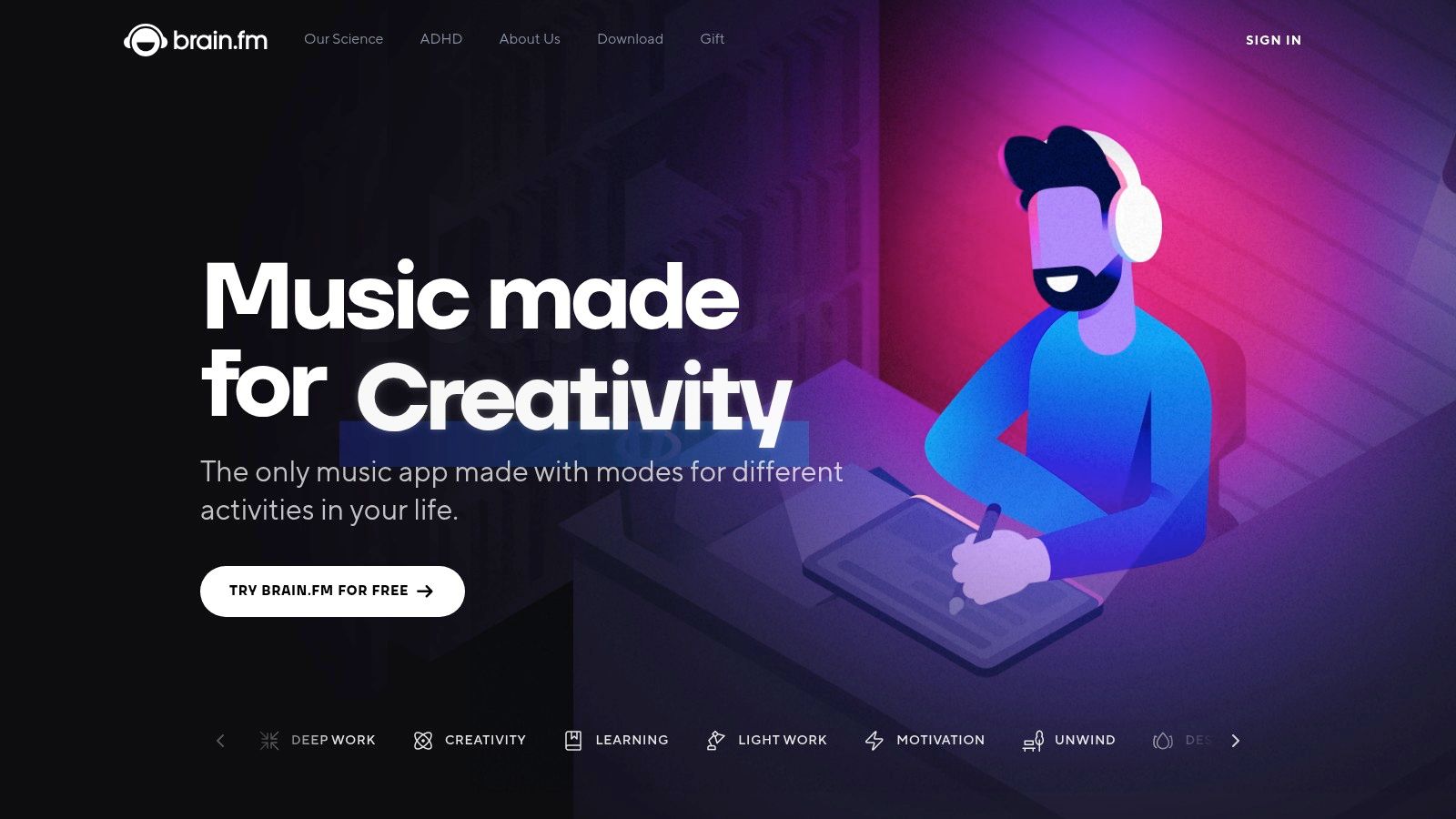
Not everyone wants a voice in their ear. Brain.fm works best for people who find spoken guidance distracting or who need audio support they can leave on in the background while working.
Its setup is very simple. You choose a mode such as Relax, Meditation, Focus, or Sleep, press play, and let the session run. That one-click approach can be comforting on days when decision fatigue is already high.
Best for low-talk relief
This kind of tool can be helpful if your stress comes from fragmentation. Notifications, chatter, task switching, and open tabs all pull attention in different directions. Nonverbal audio can create a steadier backdrop for work without demanding active participation.
Brain.fm also has an emotional advantage. It doesn't ask you to perform wellness. You don't need to close your eyes, sit perfectly still, or look like you're doing stress management. You put on headphones and work.
That subtlety matters because many workers worry about appearing distracted or unprofessional when they use stress relief tools at work. Existing advice often overlooks that social barrier, even though visible tools can feel hard to use in front of managers or coworkers, as noted in the discussion of workplace stigma around stress reduction tools.
The tradeoff is personal taste. It works best with headphones, and the music style won't fit everyone. Full access also requires a paid subscription. You can test whether its approach suits you at Brain.fm.
7. Wysa
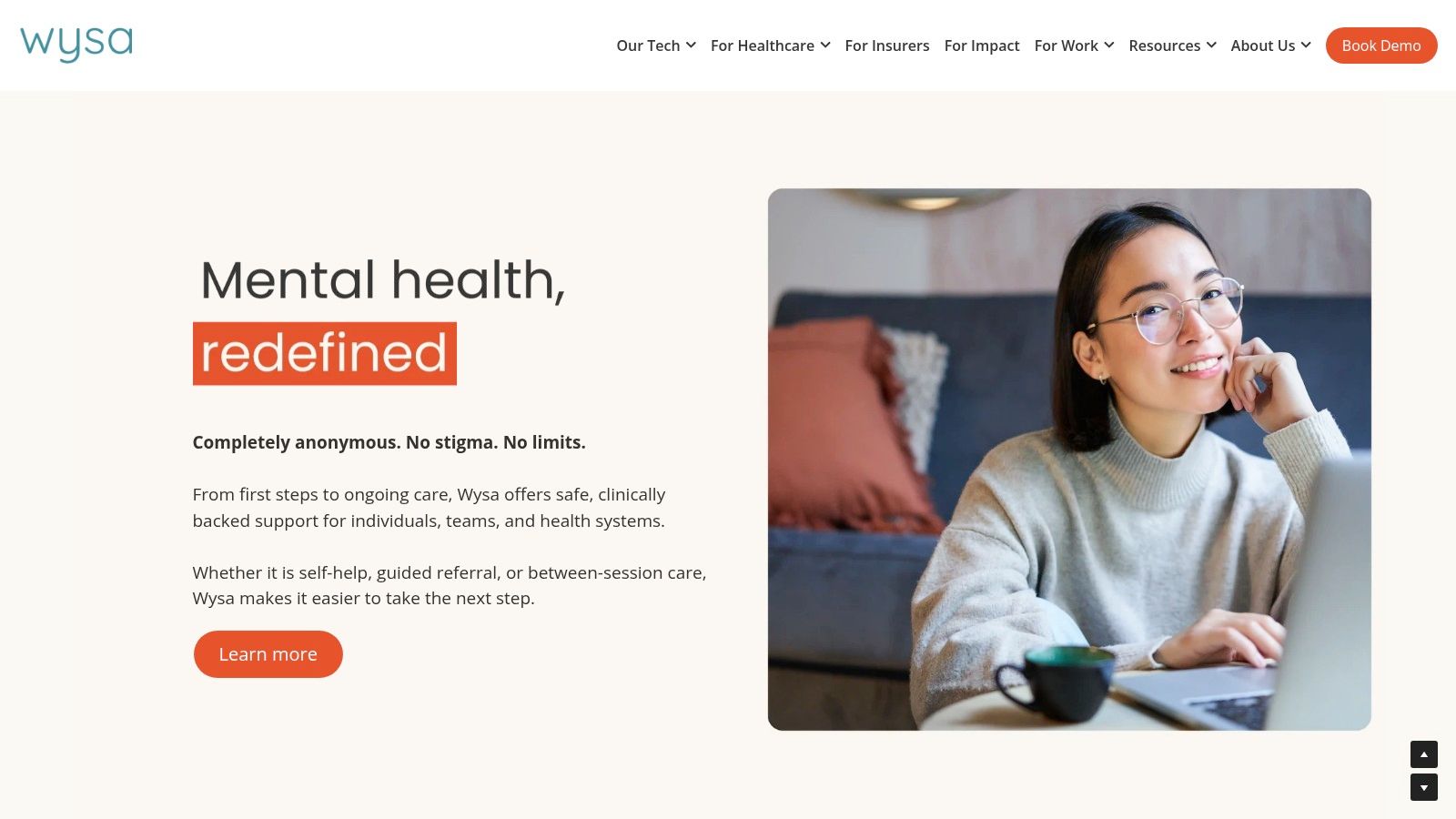
Wysa fits a very specific workday problem. You're stressed, but you can't exactly leave your desk, call a friend, or explain to a coworker that your thoughts are spiraling. You need something private, immediate, and discreet.
That's where a text-based format helps. Wysa offers AI-guided support for grounding, journaling, and CBT-style reframes. For some people, typing a fear and seeing it reflected back in calmer language creates enough distance to stop the escalation.
Private support in the middle of the day
The app can be useful when stress is tangled up with self-talk. Maybe you made one mistake and immediately jumped to, “I'm failing.” Maybe a Slack message with no punctuation made you assume the worst. Text-based support can slow that chain reaction and help you challenge the thought before it becomes panic.
Wysa also offers self-care tools for anxiety, sleep, and stress, plus employer-facing options and, in some plans, human coaching. That makes it flexible for both individuals and workplaces exploring scalable support.
A practical way to use it is to create a tiny pause between trigger and reaction:
- Trigger: A tense email lands in your inbox.
- Pause: Open Wysa instead of replying instantly.
- Reframe: Write what you're assuming and test whether it's true.
- Return: Respond when your body is less activated.
Some features require a premium upgrade or employer plan, and individual pricing varies by storefront. If private check-ins feel easier than guided audio, Wysa may fit your work style well.
8. Focus@Will
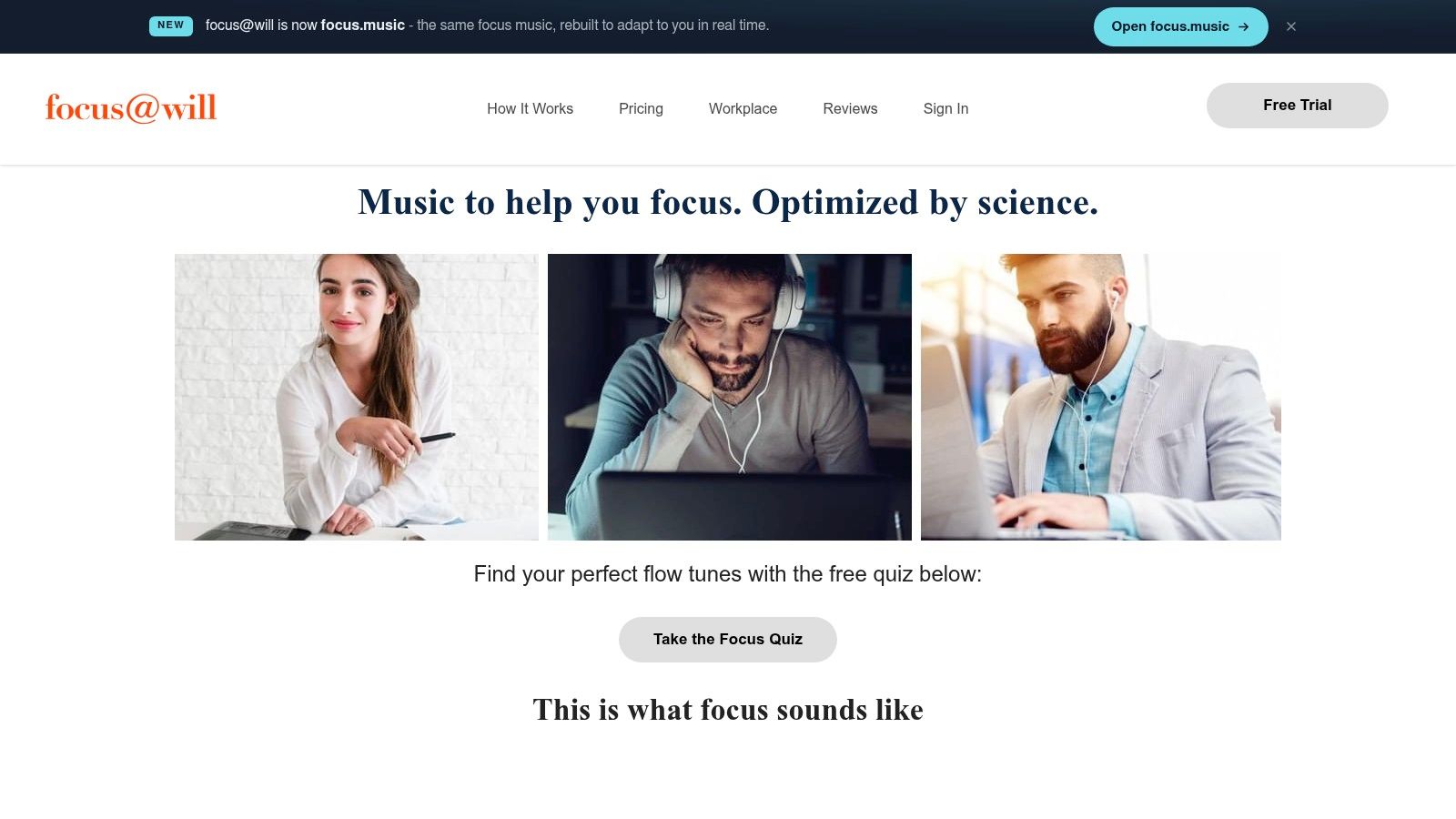
Sometimes stress rises not because a task is impossible, but because your attention keeps splintering. You start one document, check messages, jump to email, and end the hour feeling both busy and behind. Focus@Will is designed for that kind of stress.
It provides music channels tuned to different personalities and task types, along with timers and productivity-oriented workflows. The benefit isn't only better concentration. It's also the emotional relief that comes from staying with one thing long enough to finish it.
Helpful for stress that spikes with distraction
For workers who feel calmer when they can create a contained sprint, this tool can be a quiet support system. Put on a channel, set a timer, and work until the session ends. That structure reduces the constant need to decide what to do next.
There's a broader workplace trend behind tools like this. The U.S. workplace stress management market is projected to grow from USD 2.96 billion in 2025 to USD 5.02 billion by 2035, with digital platforms holding 34.87% market share in 2025, according to the SNS Insider workplace stress management market projection. That projection doesn't prove one app is better than another, but it does show how strongly employers and workers are moving toward flexible digital support.
Focus@Will is still an audio-first tool. If you need therapy-style guidance, journaling prompts, or panic-specific coaching, you'll want something that offers more. But if focused work itself is one of your best forms of regulation, Focus@Will is worth a look.
9. Stretchly
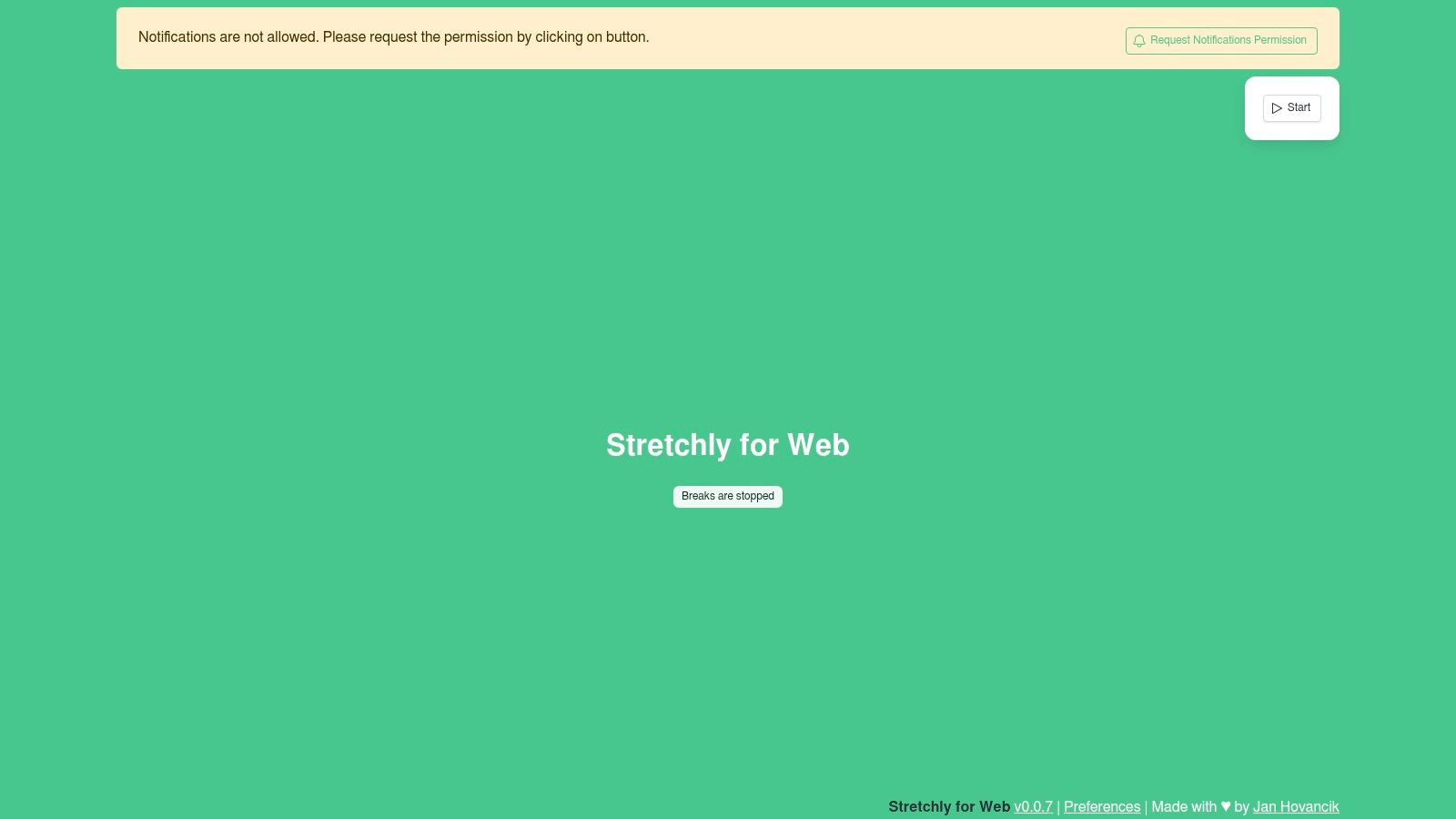
Stretchly is refreshingly plain. It doesn't try to be your therapist, coach, or meditation teacher. It reminds you to stop, stretch, rest your eyes, and reset.
That sounds small until you notice how often stress builds through uninterrupted sitting. Long screen sessions can leave you tight, tired, irritable, and weirdly disconnected from your body. A break reminder interrupts that drift.
Small breaks can interrupt big spirals
Stretchly is open-source, cross-platform, and privacy-friendly. You can customize micro-break and macro-break schedules, and the prompts suggest stretches you can do without much fuss. It pairs well with other tools because it addresses a different part of the stress cycle. Physical accumulation.
This is also where hopeful evidence from mind-body practice becomes relevant. In a workplace study comparing control, mindfulness-based yoga, and therapeutic yoga groups, the mind-body interventions produced significantly greater improvements in perceived stress and sleep quality than the control group, as shown in the Aetna workplace yoga and mindfulness study summary. Stretchly isn't yoga, but it supports the same important idea. Your body can be part of your recovery, not just the place where stress lands.
Small shift: If formal stress management feels too visible, a stretch break can be your socially easy reset. It looks like normal self-care because it is.
Stretchly won't give you guided mindfulness or rich audio content. It's intentionally limited. But for many workers, that's the point. You can download it from Stretchly.
10. CalmiGo
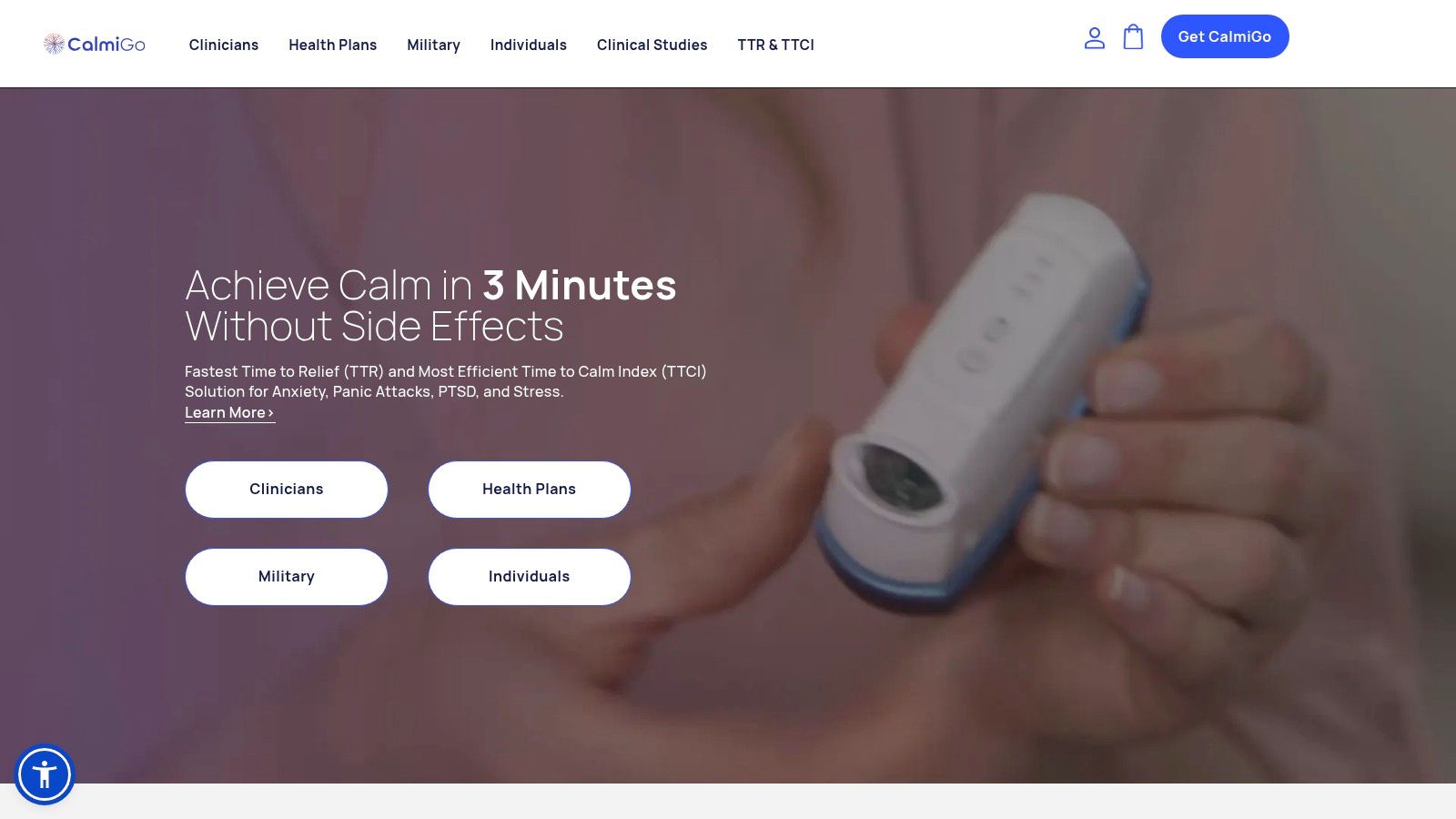
CalmiGo is the most distinct tool on this list because it isn't primarily screen-based. It's a handheld device that guides exhalation and uses sensory cues such as gentle vibration, light, and optional scent. For workers who are already exhausted by screens, that can be a real advantage.
The core use case is simple. You feel yourself escalating. You don't want to wake your phone, search for an app, or stare at another display. You pick up the device and follow the routine for a few minutes.
A sensory tool for fast grounding
Sensory regulation is still under-discussed in workplace wellness, even though some people respond better to tactile or physical cues than to audio coaching. That gap shows up in broader stress-relief coverage too. A 2026 Zenify guide identified desktop Zen gardens as having the highest effectiveness rating among desk tools, while also noting the lack of longitudinal studies or corporate implementation data in this category, as described in the Zenify guide to desk stress relief tools. The takeaway is not that one desk object is proven superior. It's that non-digital, sensory-based tools deserve more serious attention.
CalmiGo taps into that same idea. A physical object can help anchor attention in the present moment without requiring much cognitive effort. That can feel especially helpful before meetings, during travel, or in workplaces that discourage frequent phone use.
There are tradeoffs. You need to buy and carry hardware, and current pricing appears through the store at checkout rather than in the planning notes here. Still, if your stress relief works better through touch, breath, and sensory feedback than through apps alone, CalmiGo offers a different path.
Top 10 Workplace Stress-Relief Tools Comparison
A hard workday rarely falls apart all at once. It usually happens in stages. Your shoulders tighten, your thoughts speed up, your inbox keeps growing, and you start losing the sense that you can steady yourself. A comparison table helps here because it turns a vague search for relief into a clearer choice. Instead of asking, "What might help someday?" you can ask, "What kind of support helps me regain control in the moment, and what can I keep using to build resilience over time?"
That difference matters. Some tools calm your nervous system fast. Others teach skills you can return to every day, the way repeated physical therapy helps a strained muscle recover strength instead of only masking pain for an hour. The strongest fit is often the one that matches both your stress pattern and your work setting.
| Product | Key features ✨ | Immediate relief & UX ★ | Price & value 💰 | Target audience 👥 | Unique selling point 🏆 |
|---|---|---|---|---|---|
| The Anxiety Checklist 🏆 | SOS Panic Relief (no login), daily hypnosis/sleep/meditations, CBT self‑therapy, expert courses | ★★★★★, instant SOS tap; layered in‑app path from crisis to recovery | 💰 SOS always free; premium with 7‑day trial, budget‑friendly | 👥 People with panic/chronic anxiety, supporters, therapists, self‑helpers | ✨ Layered instant to daily to CBT approach; expert‑led courses; truly no‑friction SOS |
| Calm | Short meditations, breathing, large sleep library, enterprise integrations | ★★★★, polished cross‑platform, reminders | 💰 Subscription (varies by region); enterprise plans | 👥 General users, employers, teams | ✨ Highly polished UX plus Calm Health for workplace rollout |
| Headspace | Short guided meditations, themed courses, movement tracks, sleepcasts | ★★★★, approachable instruction, streaks for habit building | 💰 Clear subscription pricing plus trial | 👥 Consumers and workplaces seeking approachable training | ✨ Strong course structure and workplace deployment |
| Insight Timer | Thousands of free tracks, meditation timer, courses & challenges | ★★★, huge free library; discovery can feel busy | 💰 Generous free tier; Member Plus for courses | 👥 Free‑seekers, varied teachers, self‑directed users | ✨ Largest free teacher‑driven content library |
| Breathwrk | Tap‑to‑go breathing drills, visual/audio/haptic pacing, SOS protocols | ★★★★, 1 to 3 minute fast regulation ideal between meetings | 💰 Free base; premium sessions via subscription | 👥 Busy professionals, pre‑presentation nerves, quick‑regulation users | ✨ Ultra‑fast, easy breathing protocols for immediate down‑regulation |
| Brain.fm | Purpose‑built music modes (Relax/Focus/Sleep), patented audio tech | ★★★★, one‑click background audio; low distraction | 💰 Subscription for full access | 👥 Users preferring nonverbal support, headphone users | ✨ Engineered functional music to shift brain states quickly |
| Wysa | AI chat for CBT reframes, self‑care toolkits, optional human coaching | ★★★★, discreet text‑based support; scalable employer options | 💰 Free basics; premium/employer plans available | 👥 Employees, private users, teams needing scalable support | ✨ AI‑guided CBT plus optional live coaching and anonymized employer insights |
| Focus@Will | Music channels tuned to task/personality, Pomodoro timers, metrics | ★★★, minimal distraction for focused sprints | 💰 Subscription; team trials available | 👥 Productivity seekers, teams using audio for focus | ✨ Music optimized for productivity and Pomodoro workflows |
| Stretchly | Customizable break schedules, on‑screen stretch prompts, open‑source | ★★★, simple, privacy‑friendly reminders | 💰 Free (open‑source) | 👥 Desk workers, ergonomic‑aware teams | ✨ Lightweight, free break reminder that complements other tools |
| CalmiGo | Handheld guided breathing device, vibration/LED/scent, companion app | ★★★★, phone‑free, discreet 3 minute downshift | 💰 Hardware purchase (store pricing at checkout); FSA/HSA eligible | 👥 Users needing phone‑free regulation, workplace use | ✨ Multi‑sensory hardware for discreet in‑moment grounding |
If you feel overwhelmed by the options, start by sorting them into three practical groups. Fast-reset tools include Breathwrk and CalmiGo. Daily nervous-system support includes Calm, Headspace, and Insight Timer. Skill-building tools that help you change your response to stress over time include The Anxiety Checklist and Wysa. Brain.fm, Focus@Will, and Stretchly sit in a useful middle lane by improving the work conditions that often keep stress switched on.
That makes the choice less abstract.
If your stress spikes before calls, presentations, or tense conversations, pick something that works within minutes. If your stress builds gradually across the week, a habit-based app may give you better results because repetition teaches your body and mind what safety feels like again. If your main problem is fractured attention, music and break tools can lower background strain enough to prevent escalation. Relief often begins with one tool, then grows into a small system that helps you stay steady under pressure.
Your Next Step Toward a Panic-Free Workday
Relief at work often starts with one honest observation. Something feels off, and you don't want to keep white-knuckling your way through the day. That awareness matters. It's the beginning of self-advocacy, and it's often the first real step toward healing.
The best stress relief tools at work do more than help you survive a rough afternoon. They help you build a relationship with safety again. A breathing app can teach your body that a racing heart can settle. A meditation tool can show your mind that thoughts don't have to control the room. A CBT-based app can help you question the catastrophic story before it becomes panic.
There's solid reason to hold onto hope here. A systematic review of ten quantitative studies found that Mindfulness-Based Stress Reduction consistently reduced anxiety, emotional exhaustion, and stress while increasing positive affect, mindfulness, and self-compassion in healthcare professionals, according to the systematic review on MBSR for healthcare professionals. That doesn't mean everyone heals in the same way or on the same timeline. It does mean anxiety isn't always a fixed state. With practice, support, and the right tools, people can change how they experience stress.
That's an important reframe. Panic-free living doesn't mean you never feel pressure again. It means pressure no longer owns your body, your choices, or your sense of safety. You start recognizing early signs sooner. You recover faster after hard moments. You build trust in your ability to come back to yourself.
If you're deciding where to begin, keep it simple:
- Need immediate help during spirals: Start with a fast-response tool like The Anxiety Checklist, Breathwrk, or CalmiGo.
- Want a steady daily routine: Calm, Headspace, or Insight Timer can support regular practice.
- Prefer private, text-based reflection: Wysa may feel safer and easier to use during the workday.
- Get stressed when attention keeps breaking: Brain.fm or Focus@Will can support calmer concentration.
- Hold tension in your body: Stretchly can help you interrupt long periods of strain.
You do not have to fix everything this week. Pick one tool. Use it in one predictable moment each day. Before email. After lunch. Right before a meeting that usually spikes your stress. Let that small act become familiar.
Healing from anxiety is rarely one dramatic breakthrough. More often, it's a series of small experiences that teach your brain and body, again and again, that you are safe, capable, and not trapped in this feeling forever. A calmer workday is possible. A panic-free life is not out of reach. You can move toward it one steady step at a time.
If you want a tool that supports both immediate calm and long-term recovery, The Anxiety Checklist is a strong place to start. Its free SOS mode helps in the moment when panic hits, and its deeper CBT tools, meditations, sleep audios, and expert-led lessons can support lasting healing over time.