

Find Calm and Hope: Your Guide to a Panic-Free Life
When your heart pounds, your chest tightens, and your thoughts start racing in circles, it can feel like your whole world has narrowed to one urgent question: how do I make this stop? In that state, even simple decisions feel hard. Opening an app store and trying to choose the best free guided meditation app can feel like one more overwhelming task.
But this is the part I want to make clear from the start. Feeling trapped by anxiety doesn't mean you're broken, and it doesn't mean this is how life will always feel. People do heal. Panic can become less frightening, less frequent, and far less powerful when you have the right tools and use them consistently.
A good meditation app isn't magic, and it isn't a substitute for therapy or emergency care when those are needed. What it can do is give you something immediate and usable when your brain goes offline, something steady for daily nervous-system care, and something structured enough to help you build real long-term change. Used well, technology can become a lifeline instead of just another distraction.
If you're looking for practical ways to support your recovery, this guide is built to help you choose an app that fits the stage you're in right now. Some are better for panic moments. Some are better for sleep. Some are better for building a habit that helps you feel safe in your own body again. You can also pair these tools with offline skills like mindfulness techniques for mental wellness.
Table of Contents
- 1. The Anxiety Checklist
- 2. Insight Timer
- 3. Medito
- 4. Smiling Mind
- 5. Healthy Minds Program
- 6. UCLA Mindful
- 7. Oak
- 8. Mindfulness Coach (U.S. Department of Veterans Affairs)
- 9. Plum Village App
- 10. 1 Giant Mind
- Top 10 Free Guided Meditation Apps Comparison
- Your First Step Towards Lasting Calm
1. The Anxiety Checklist
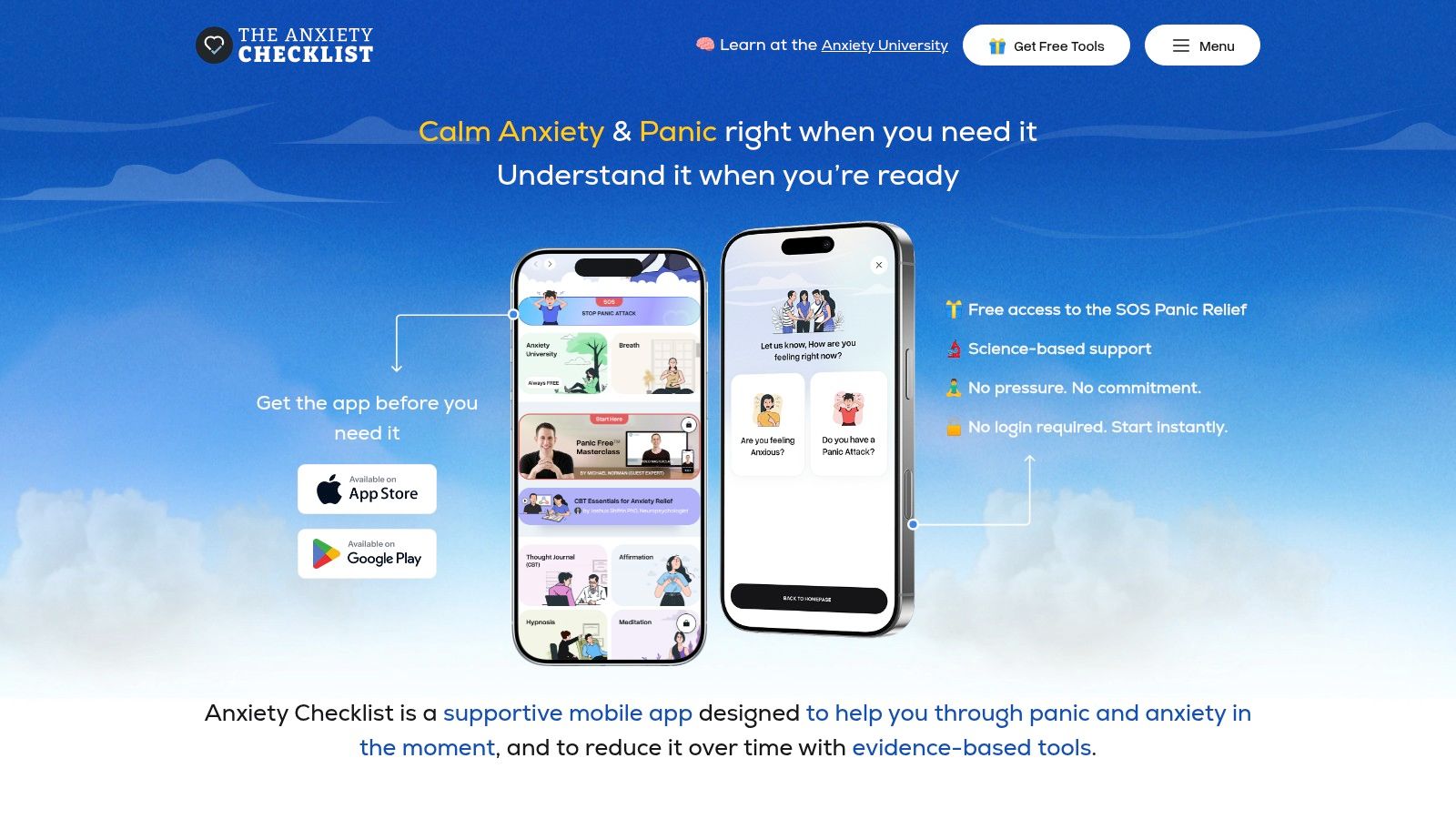
You wake at 2 a.m. with a racing heart, tight chest, and the familiar fear that something is wrong. In that state, a huge meditation library can feel useless. The Anxiety Checklist is built for the first stage of recovery, when you need relief before reflection.
Its value is the way it separates support into clear jobs. One part helps during acute panic. Another helps you settle your system during the day. Another starts the slower work of changing anxious thought patterns with CBT-based tools. For someone looking for a free guided meditation app, that structure matters because anxiety rarely shows up in only one form.
Why it works when panic makes decisions hard
The always-free SOS Panic Relief mode is the clearest reason to start here. During a spike, too many choices can make symptoms worse. A tool that opens fast, gives direct guidance, and works without an account has a real advantage.
That kind of low friction is not a small detail. It is often the difference between using support and abandoning it.
Beyond the SOS feature, the app includes guided meditations, hypnosis sessions, sleep audio, walking practices, grounding exercises, and affirmations. Used well, those tools do more than calm one hard moment. They help teach the body that safety is still available. For people stuck in loops of rumination, that can pair well with learning how to stop overthinking outside the app too.
Where it fits in recovery
The Anxiety Checklist stands out because it does not stop at meditation. It also includes CBT tools such as thought journaling, belief experiments, exposure ladders, education, and training from Dr. Joshua Shifrin, PhD, and Michael Norman. That makes it more useful in the healing phase, when a person needs both short-term calming tools and a plan for working with the patterns that keep anxiety going.
I also see a practical use case here for people waiting for therapy, family members trying to understand panic better, and clinicians who want a simple recommendation clients can start using right away. The trade-off is clear. Some of the deeper tools and course material require an upgrade, and no app should be treated as a substitute for therapy, crisis support, or medical care when symptoms are severe.
- Best strength: Free SOS support is available during acute anxiety, without setup getting in the way.
- Best fit in recovery: Early stabilization and the transition into longer-term skill building.
- Main limitation: Full access requires payment, so the free version works best as a starting point rather than the whole plan.
This works better as a recovery toolkit than a meditation catalog. That difference gives it a clear place on this list.
2. Insight Timer
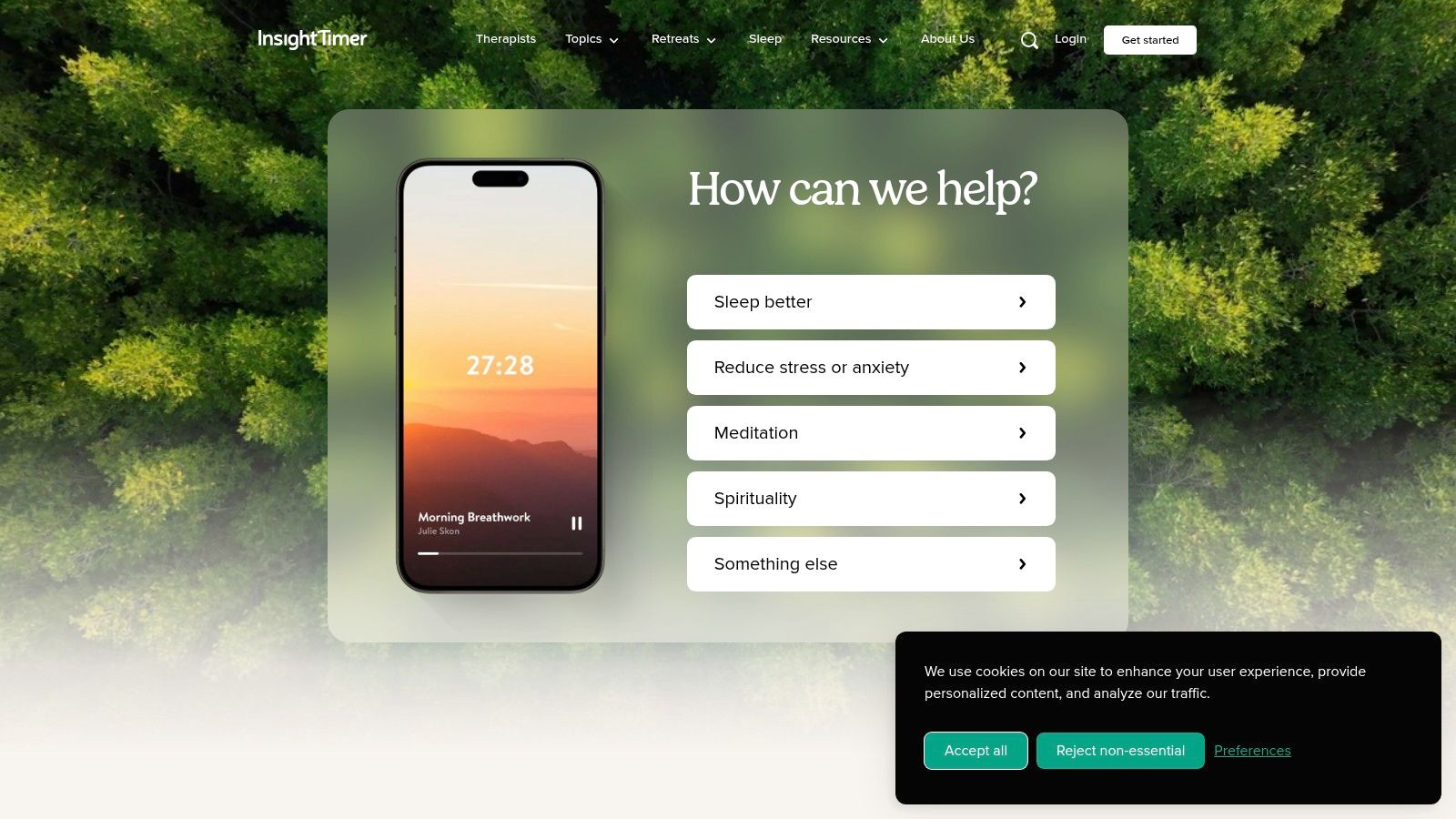
If your anxiety changes shape from day to day, Insight Timer has one major advantage. It gives you range.
This app is often the easiest recommendation for people who don't yet know what style of meditation helps them. You can search across teachers, topics, session lengths, sleep tracks, music, and short guided sessions without feeling locked into a single voice or philosophy. For someone trying to build a practice while also managing stress, insomnia, or rumination, that variety can be a gift.
Best for variety and exploration
Insight Timer works best in the exploration stage of recovery. If you're learning whether body scans, breath-based practices, sleep meditations, or gentle talks help you settle, you'll have room to experiment. The timer is also strong, which matters once you outgrow guided sessions and want more independence.
The downside is obvious. A huge library can become its own form of overwhelm. When your nervous system is already on edge, endless choice can pull you into more searching and less practicing. Some people also report occasional friction with navigation, which matters more in a mental health app than in a casual entertainment app.
- Good fit: People who want a broad free library and like trying different teachers.
- Less ideal: People who freeze when faced with too many options.
- Smart use: Save a small set of go-to sessions so you don't have to search when anxious.
If meditation sometimes makes you feel more activated instead of calmer, it's worth learning when meditation causes anxiety before you assume you're doing something wrong. You can explore the app itself at Insight Timer.
3. Medito
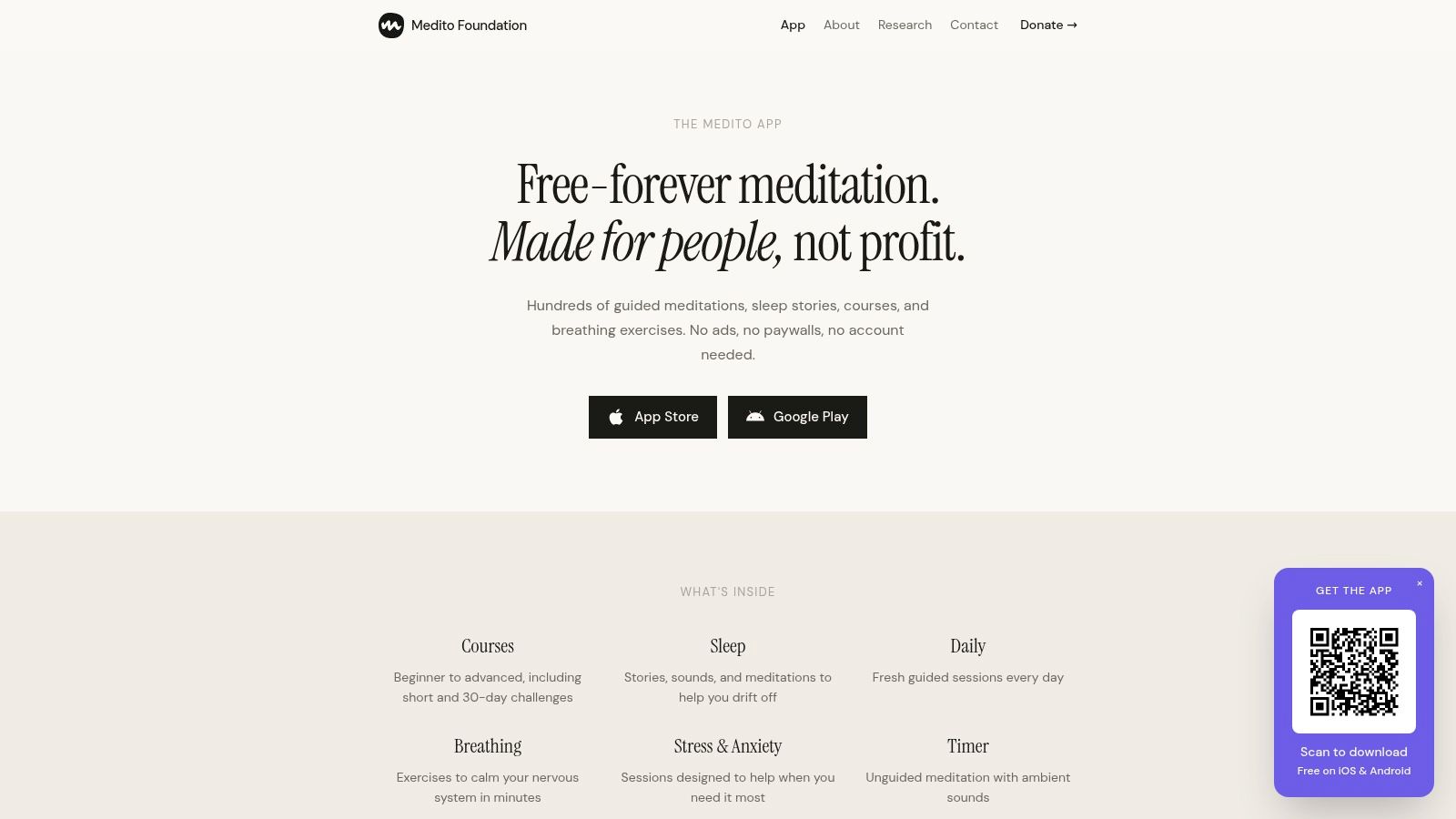
Medito is the app I point people toward when they say, "I just want something free, clean, and not pushy." It has a straightforward feel that lowers resistance, and that's not a small thing when anxiety already makes starting hard.
Because it's donation-supported and designed to be free to use, Medito avoids the common pattern where you finally relax into an app and then hit a paywall. That makes it one of the strongest options for someone who wants an accessible free guided meditation app without ads, pressure, or gimmicks.
Best fully free option for beginners
The structure is beginner-friendly. You get guided courses, themed packs around stress or focus, sleep meditations, stories, breathing exercises, an SOS section, and an unguided timer. The design stays uncluttered, which helps if your brain is already overloaded.
That simplicity is both the win and the limit. You won't get the same breadth of teachers or the same depth of specialty content you'd find on a massive platform. If you care a lot about recognizable names or a highly polished lifestyle feel, Medito may seem plain.
Start simple if you're overwhelmed. A smaller app you actually use beats a bigger one you keep avoiding.
For people who loop in mental chatter at night, pairing meditation with skills for how to stop overthinking can make the app more effective. If you want a calm, fully free starting point, try Medito.
4. Smiling Mind
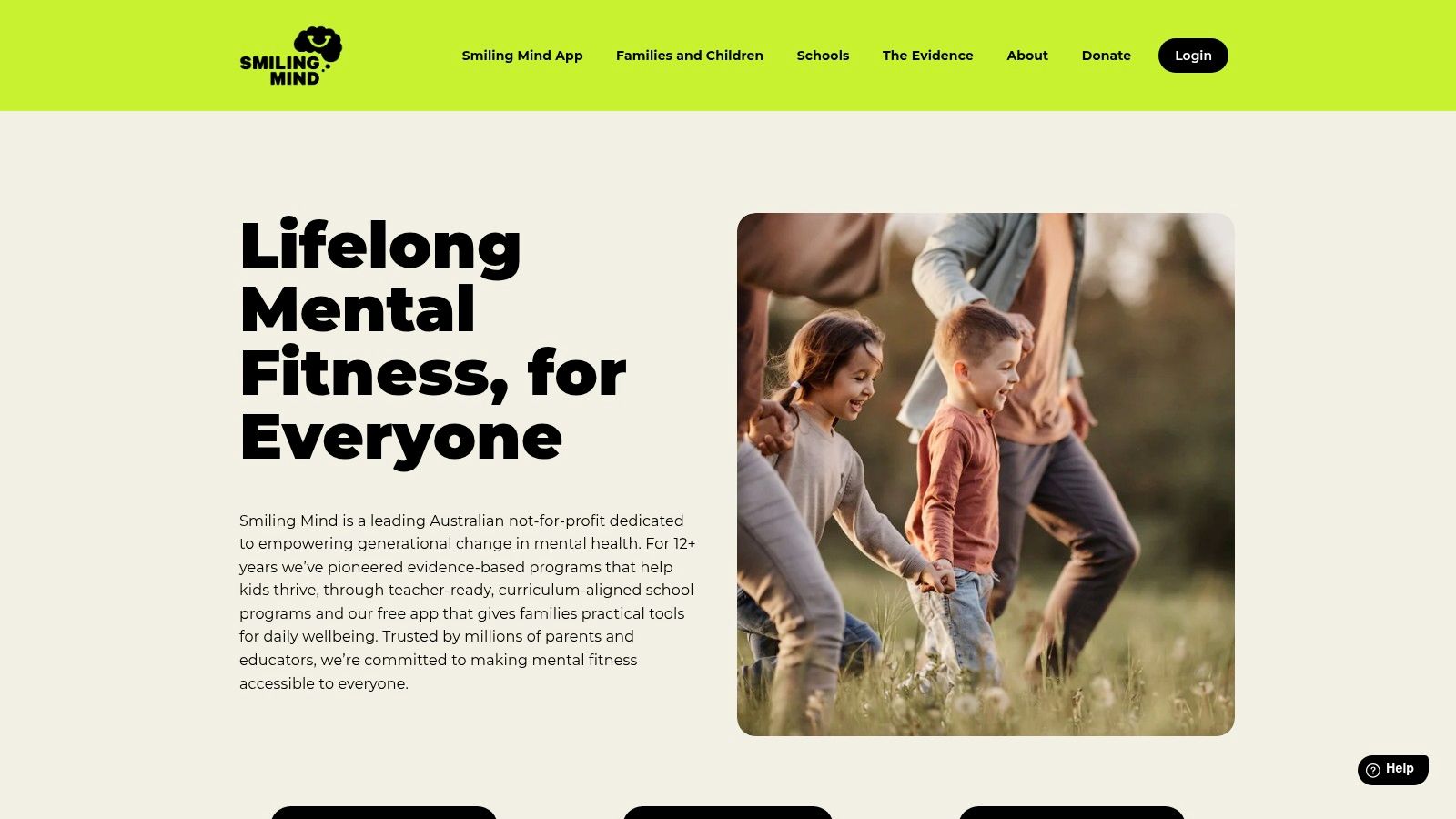
Smiling Mind feels different from most meditation apps because it doesn't just target the stressed adult trying to sleep better. It also supports children, teens, families, and schools. That makes it especially useful when anxiety is affecting a household, not just one person.
Its tone leans more toward mental fitness and emotional education than spa-style calm. For some people, that's exactly what makes it work. It feels grounded, practical, and suitable for shared use.
Best for families and age specific support
The app includes age-specific programs, mood check-ins, sleep content, and themed collections around stress, relationships, study, and sport. That range gives parents and educators something many other apps don't. They can match support to the person's developmental stage instead of handing everyone the same generic meditation.
The trade-off is style. If you want a highly personalized meditation experience or a more traditional mindfulness atmosphere, Smiling Mind may feel a bit structured and educational. Some adults will love that. Others will prefer an app with a softer emotional tone.
A few people benefit from using this app as a family habit rather than a solo rescue tool.
- Best use case: Families, teens, schools, and adults who like structured guidance.
- Why it helps anxiety: It makes emotional regulation feel teachable instead of mysterious.
- Possible mismatch: People who want a highly immersive or luxury-style meditation experience.
If anxiety at home has made everyone reactive, Smiling Mind can help create a shared language for calming down. You can explore it at Smiling Mind.
5. Healthy Minds Program
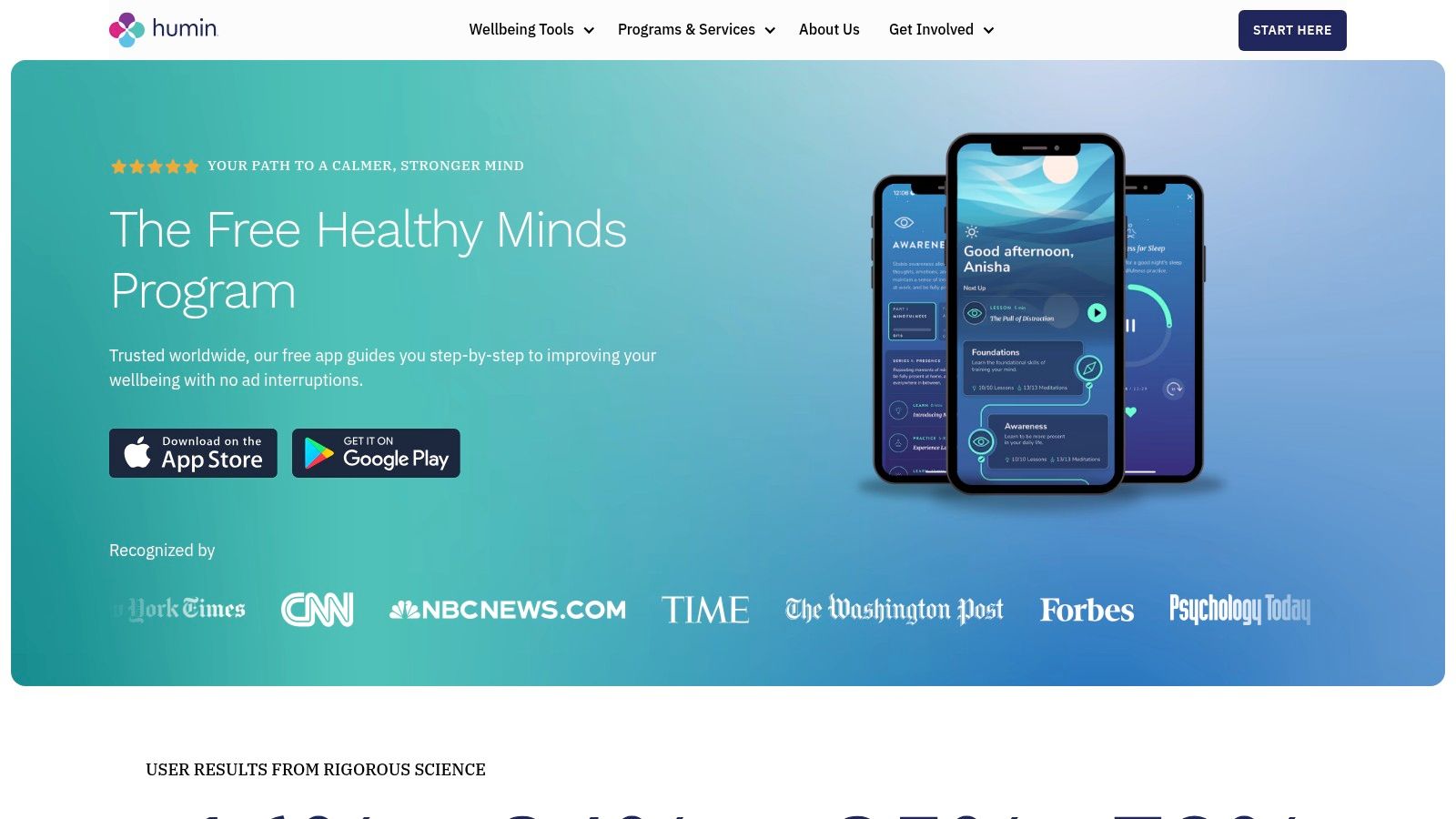
Healthy Minds Program is for the person who wants more than a soothing voice. It's for the person who wants a framework.
The app combines guided meditations with short lesson-style audio around awareness, connection, insight, and purpose. That makes it more curriculum-like than many consumer meditation apps. If your anxiety improves when you understand why a practice matters, this style can be especially effective.
Best for a structured science informed path
What I like here is the balance between teaching and doing. You're not just told to breathe and hope for the best. You're guided through skills that connect mindfulness to broader well-being. For some users, that creates more buy-in and better consistency over time.
The main drawback is that it can feel more like a course than a comfort app. If you open meditation apps mainly to decompress quickly before bed, Healthy Minds Program may feel a little utilitarian. But if you want a steady path and a science-informed tone, it's one of the best free options available.
Some people calm down by relaxing. Others calm down by understanding. This app is built for the second group.
If you like pairing practice with education, the broader learning library at Anxiety University can complement this kind of approach well. To try the app itself, visit Healthy Minds Program.
6. UCLA Mindful
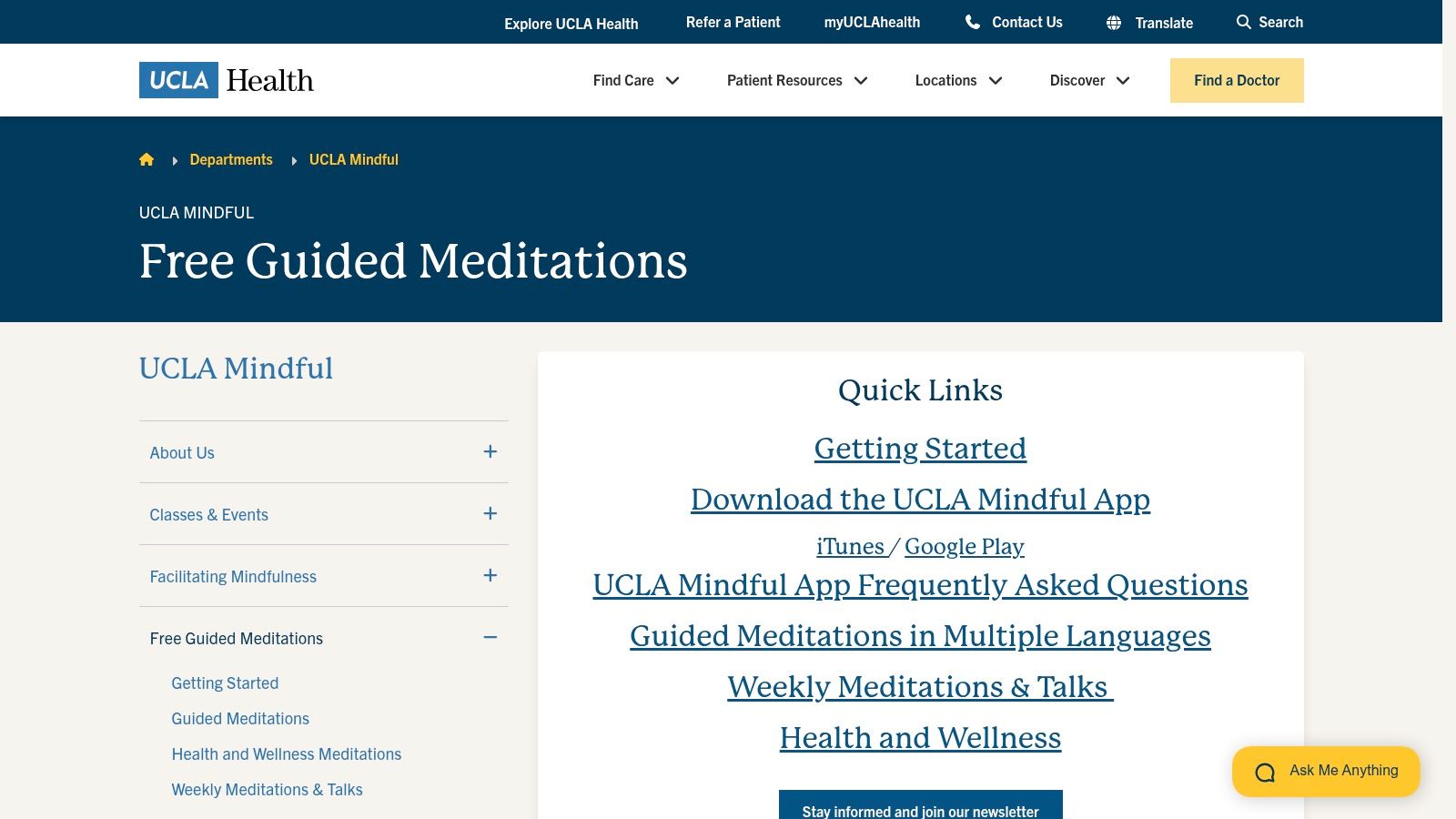
UCLA Mindful is one of the strongest choices for people who want guided meditation without any lifestyle branding wrapped around it. The app feels clean, direct, and rooted in teaching rather than selling calm as an aesthetic.
That clinical clarity can be reassuring when you're anxious. Some people don't want celebrity narrators, social feeds, or endless recommendations. They want simple instruction and a credible source. UCLA Mindful gives them that.
Best for clinical clarity and simple guidance
The content is focused. You get guided practices, beginner support, educational videos on posture and mindfulness, weekly meditation audio, and multilingual basics. For a beginner, that's often enough. In fact, it can be better than having too much.
Its limitation is the same thing that makes it appealing. This isn't a giant content universe. It's a compact tool. If you need lots of topic-specific sessions or strong community features, you'll probably outgrow it. If you want trustworthy basics that don't overcomplicate things, it works well.
People with high self-consciousness often do better with clear, neutral guidance because they spend less time wondering whether they're "doing meditation right." That can matter if anxiety shows up socially as well, especially for people dealing with social anxiety disorder. You can find the app through UCLA Mindful.
7. Oak
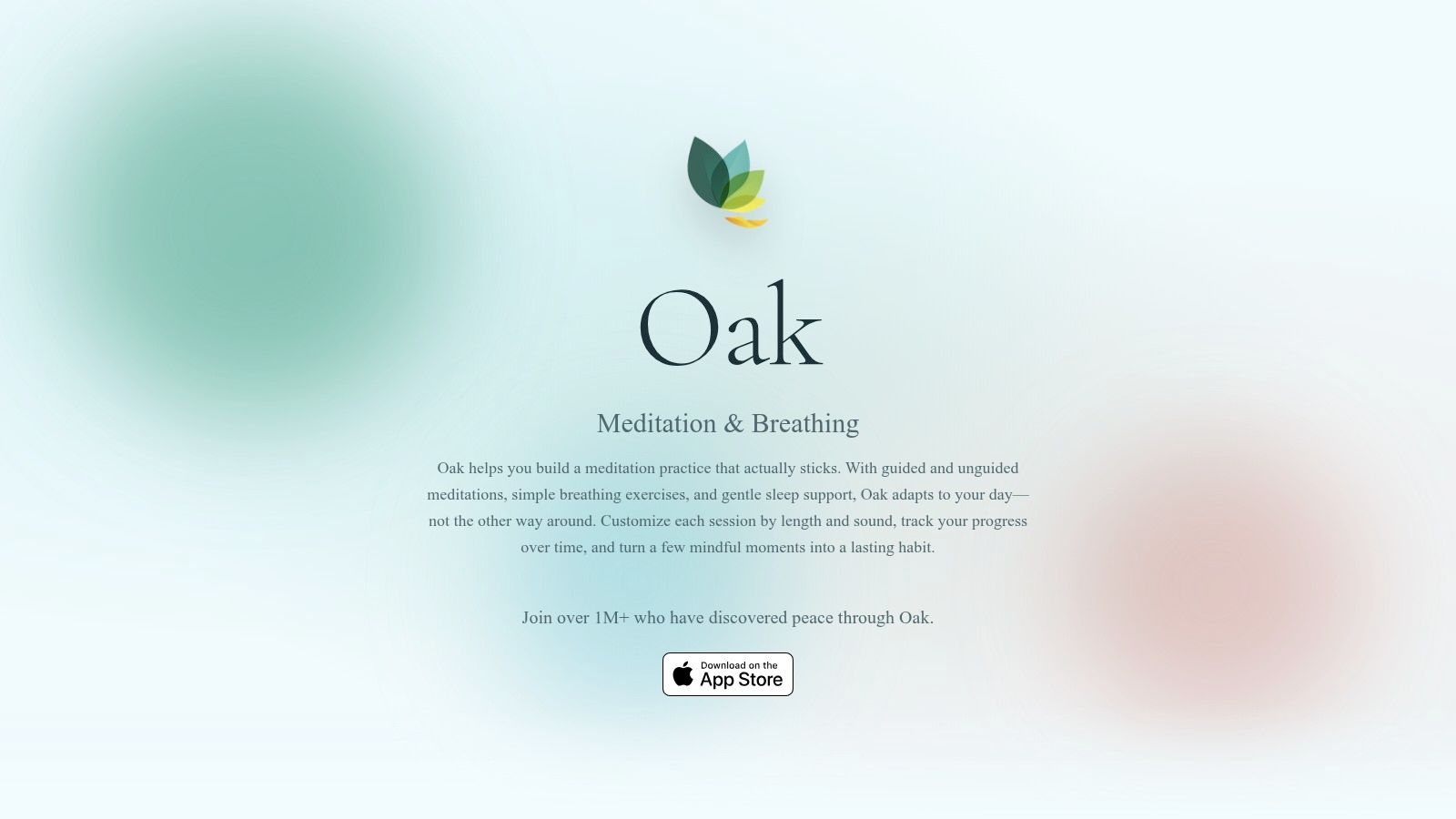
Oak has a very different personality from the other apps on this list. It stays out of your way.
For some anxious users, that's the whole appeal. You open it, choose guided meditation, breathwork, a timed session, or sleep sounds, and you begin. There isn't much clutter, and there aren't many upsells competing for your attention.
Best minimalist option for quick calm
Oak is especially good for people who already know that simple breath-based grounding helps them. Its breathing exercises and interval bells make it useful for quick resets during work breaks, after a stressful conversation, or before trying to sleep. This kind of stripped-down design can support consistency because it removes unnecessary friction.
The trade-off is breadth. You won't find a huge catalog of specialized anxiety programs, deep educational courses, or broad teacher variety. Availability can also vary depending on device and region, which is worth checking before you get attached to it.
- Best for: People who want less browsing and more practicing.
- What it does well: Breathwork, minimalist guided sessions, and distraction-free timing tools.
- Where it falls short: Limited depth compared with larger apps.
If body-based regulation is your anchor, Oak pairs naturally with grounding techniques for anxiety attacks. You can learn more at Oak.
8. Mindfulness Coach (U.S. Department of Veterans Affairs)
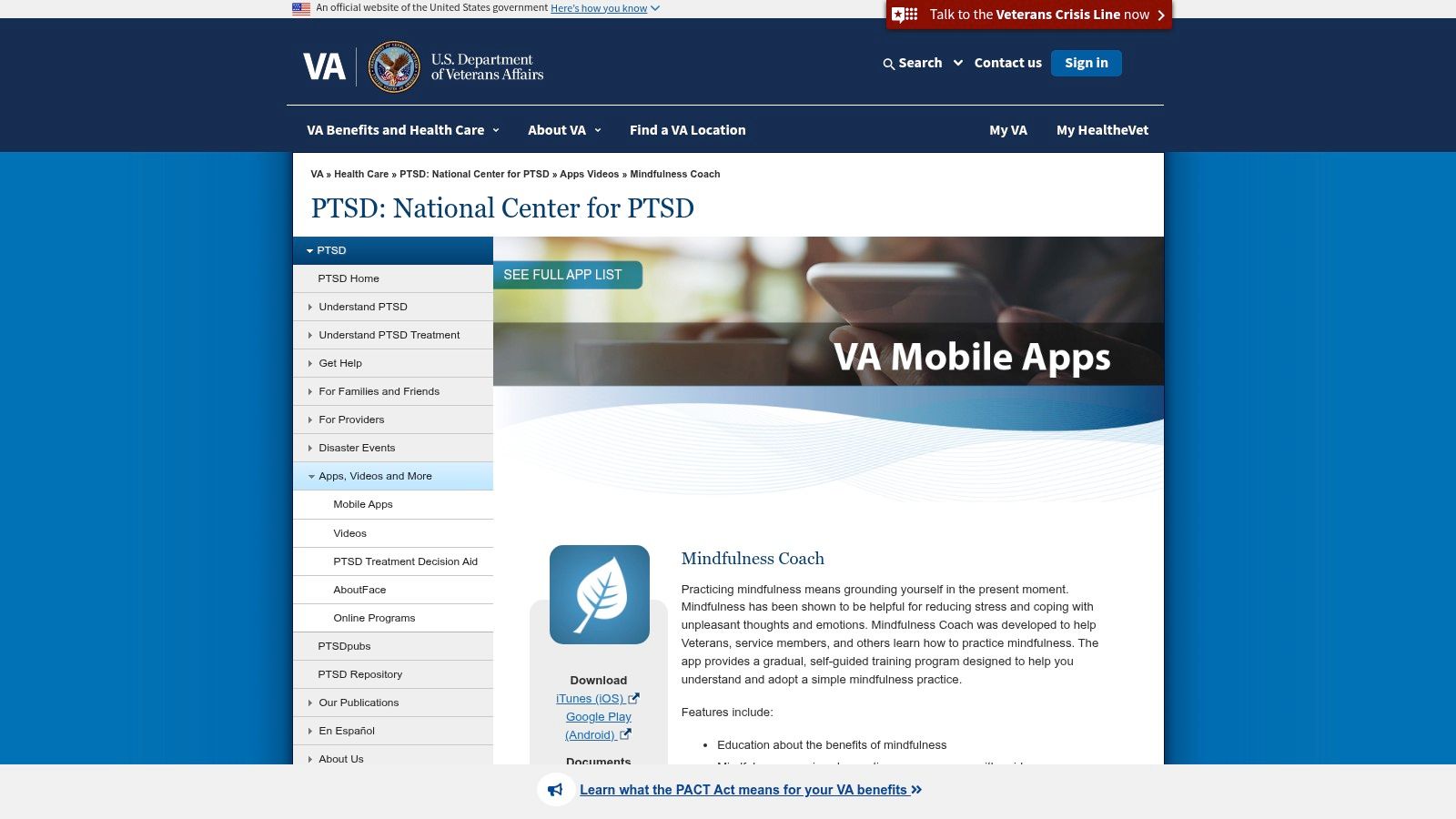
Mindfulness Coach doesn't try to charm you. It tries to help you practice.
Developed by the U.S. Department of Veterans Affairs for mindfulness training, it has a practical, utility-first feel. That won't appeal to everyone, but it can be a very good fit for users who want a free guided meditation app with a straightforward, clinical tone and offline usefulness.
Best utility first app for building consistency
This app is better for building a practice than for browsing inspiration. You get guided exercises, a training plan, progress support, reminders, and access to support resources. It works well for people who benefit from structure and don't need a large rotating library of voices and themes.
The downside is emotional texture. Compared with more polished consumer apps, Mindfulness Coach can feel plain. But plain isn't always bad. If your anxiety spikes when apps feel noisy, overly branded, or manipulative, this one may be easier to trust.
A good match for this app is someone who says, "I don't need motivation. I need a system." If that's you, take a look at Mindfulness Coach from the U.S. Department of Veterans Affairs.
9. Plum Village App
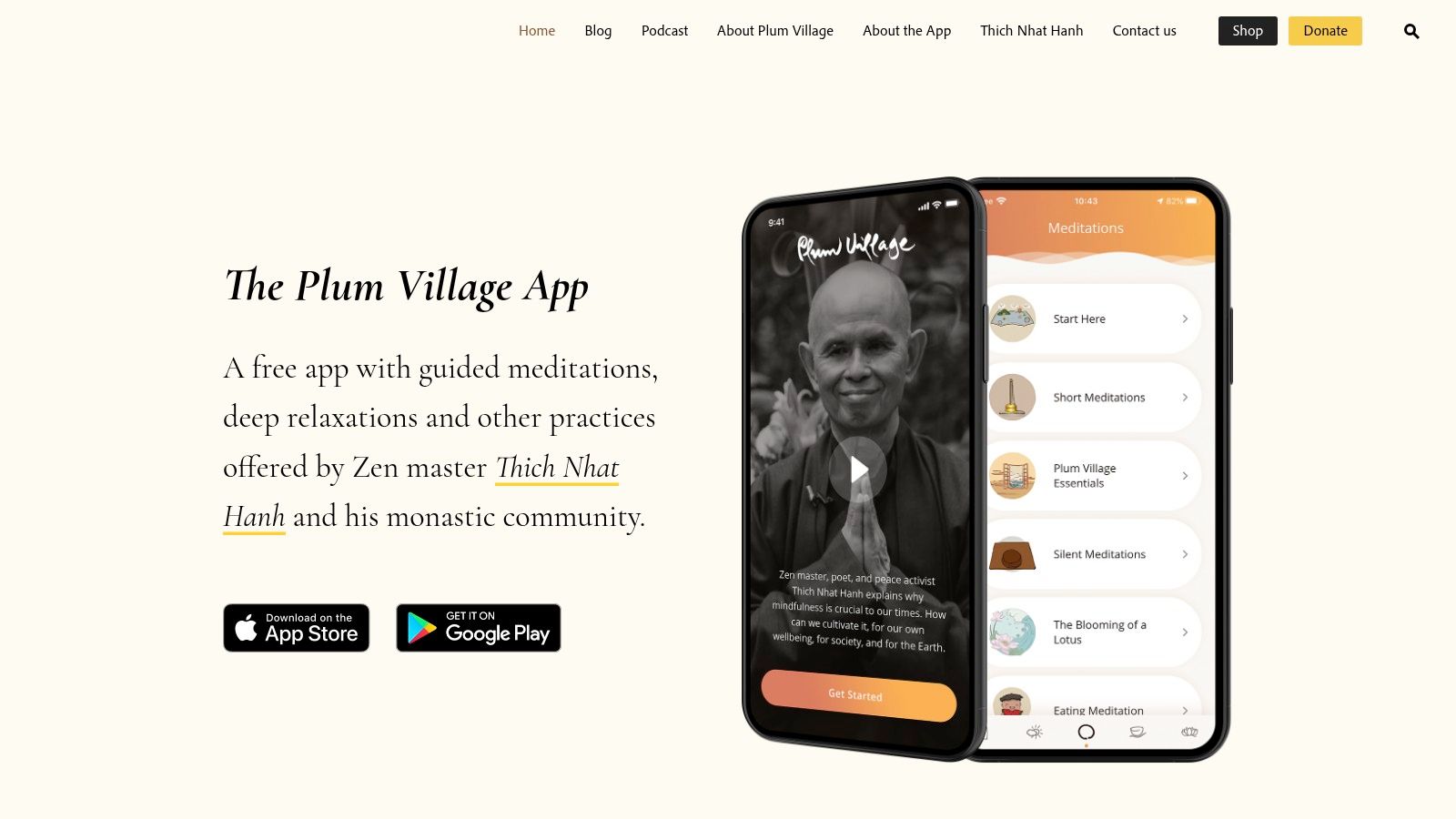
Plum Village is the gentlest app on this list. If your anxiety responds best to warmth, compassion, and a slower rhythm, that gentleness may be exactly what helps you stay with practice.
The app comes from the Plum Village monastic community in the tradition of Thich Nhat Hanh. That means the experience isn't just about stress reduction. It carries a deeper philosophical and spiritual tone centered on presence, kindness, and embodied awareness.
Best for compassionate tradition based practice
What works well here is the emotional atmosphere. The guided sittings, walking meditations, deep relaxations, talks, chants, and reminders can feel less like performance and more like being accompanied. For some people recovering from panic, that matters a lot. Safety isn't only built through technique. It's also built through tone.
The trade-off is fit. If you want a strictly secular app or highly personalized recommendations, Plum Village may not match your style. But if you've tried more clinical tools and they felt dry, this one can open a different door.
Healing from anxiety isn't only about control. Sometimes it's also about learning a gentler way to relate to your own mind.
You can explore the app at Plum Village.
10. 1 Giant Mind
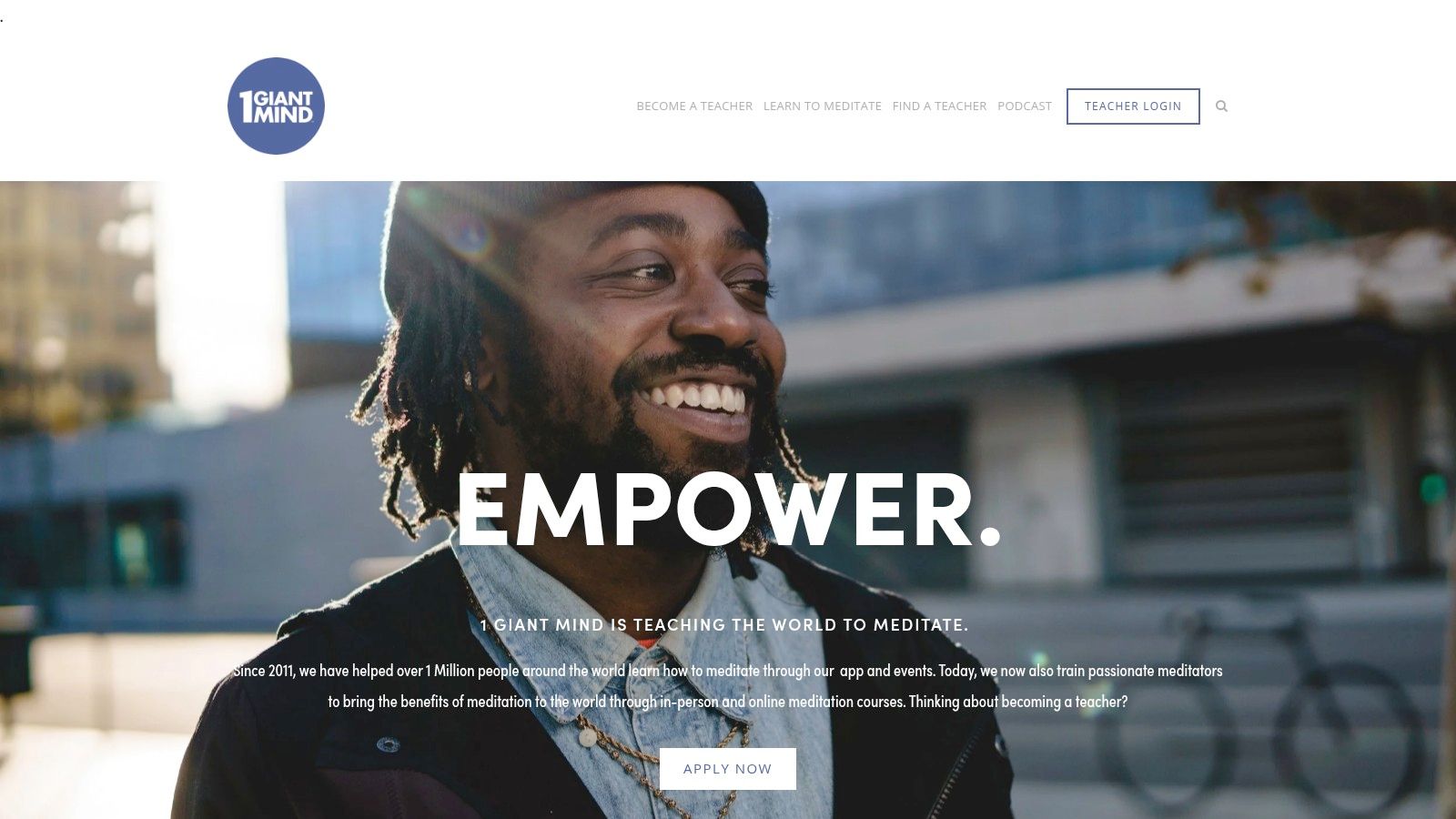
1 Giant Mind is less of a content platform and more of a focused training path. That's why it works well for beginners who don't want to sort through dozens of meditation styles. They want one method, explained clearly, in a sequence they can follow.
Its approach is built around a structured course that teaches an effortless, mantra-like style of meditation. For users who get decision fatigue, that narrow focus can be a relief.
Best for a simple step by step meditation method
This app shines when your real obstacle is consistency, not curiosity. The step-by-step format helps you learn one approach and stick with it long enough to see whether it suits your nervous system. The app also includes timers and ongoing support for habit-building.
The limitation is obvious. If you want sleep stories, wide topical coverage, anxiety-specific rescue content, or a broad menu of voices, this app won't deliver that. It does one main thing, and whether that's a strength depends on what you need.
- Choose this if: You want a guided course instead of a large library.
- Skip this if: You need targeted panic tools or lots of session variety.
- Best mindset: Treat it like learning a method, not shopping for content.
For users who benefit from simplicity and repetition, 1 Giant Mind can be a solid foundation. You can find it at 1 Giant Mind.
Top 10 Free Guided Meditation Apps Comparison
| App | Key features | UX / Quality | Price & Value | Target audience | Unique selling points |
|---|---|---|---|---|---|
| 🏆 The Anxiety Checklist | SOS panic relief, hypnosis, sleep audios, CBT tools, 65+ articles | ★★★★☆, instant, low‑friction, privacy‑friendly | 💰 Free SOS; premium subscription (7‑day trial) | 👥 People with panic/anxiety, busy users, therapists | ✨ Always‑free SOS, clinician‑led CBT courses, no login |
| Insight Timer | 300k+ tracks, teacher follows, timer, groups | ★★★☆☆, huge variety; can overwhelm | 💰 Generous free tier; optional membership | 👥 Variety seekers, learners, community users | ✨ Massive library + active community |
| Medito | Structured beginner courses, SOS, sleep, offline downloads | ★★★★☆, simple, uncluttered | 💰 Free forever; donation‑supported | 👥 Budget‑conscious beginners | ✨ Nonprofit, no ads or paywalls |
| Smiling Mind | 700+ practices, age‑specific programs, mood check‑ins | ★★★★☆, family‑friendly, research‑informed | 💰 Free | 👥 Families, educators, children/teens | ✨ Psychologist‑designed child & teen curricula |
| Healthy Minds Program | Course paths on Awareness/Connection/Insight/Purpose + guided sessions | ★★★★☆, research‑driven, course style | 💰 Free | 👥 Evidence‑seeking learners, academic users | ✨ University‑backed curriculum and lessons |
| UCLA Mindful | Studio‑recorded guides, multilingual basics, weekly podcasts | ★★★★☆, clinical, beginner‑friendly | 💰 Free | 👥 Beginners, clinical credibility seekers | ✨ UCLA Health credibility; multilingual content |
| Oak | Guided + unguided sessions, breathwork, interval bells, sleep sounds | ★★★★☆, minimalist, distraction‑free | 💰 Free; no upsells | 👥 Minimalists, quick‑session users | ✨ Clean UI with no ads or purchases |
| Mindfulness Coach (VA) | 12+ exercises, training plan, offline downloads, crisis links | ★★★☆☆, utility‑first, clinical | 💰 Free | 👥 Veterans, users needing offline/crisis resources | ✨ VA‑developed with crisis/support links |
| Plum Village App | Guided sitting, walking meditations, chants, talks | ★★★★☆, gentle, tradition‑based | 💰 Free | 👥 Those preferring Buddhist/compassionate practice | ✨ Teachings from Thich Nhat Hanh monastics |
| 1 Giant Mind | 12‑step learn‑to‑meditate course, timers, challenges | ★★★☆☆, focused, sequential | 💰 Free | 👥 Beginners wanting structured habit formation | ✨ Clear, sequential mantra‑style curriculum |
Your First Step Towards Lasting Calm
Choosing a meditation app can seem small compared with what anxiety feels like. But small actions matter. In recovery, they matter a lot.
When you choose a tool and use it consistently, you're doing more than trying to relax for a few minutes. You're teaching your body that you can respond differently to fear. You're building a pause between sensation and panic. You're creating a repeatable path back to safety. That is how healing often looks in real life. Not dramatic. Not instant. Steady.
The best free guided meditation app for you depends on what kind of support you need right now. If panic hits fast and you need immediate grounding with as little friction as possible, The Anxiety Checklist is the strongest fit in this list. If you want a huge range of teachers and styles, Insight Timer gives you space to explore. If staying fully free matters most, Medito and several of the nonprofit options stand out. If you want a more educational or clinical tone, Healthy Minds Program, UCLA Mindful, and Mindfulness Coach are all credible choices.
It also helps to be honest about what doesn't work for you. If too many options make you spiral, don't choose the biggest library. If a spiritual tone turns you off, skip tradition-based apps. If you keep avoiding meditation because it feels intimidating, start with the simplest interface you can find. The right app isn't the one with the most features. It's the one you'll open when your nervous system needs support.
There is real hope here. Anxiety can convince you that every surge of fear means danger and every setback means failure. That isn't true. You can learn to ride out a panic wave without feeding it. You can build a bedtime routine that doesn't revolve around dread. You can notice an anxious thought without obeying it. These changes often begin in very ordinary ways, with a short breathing exercise, a guided body scan, or a simple voice reminding you that you're safe enough to stay present for one more minute.
Start small. Pick one app. Save one session that feels grounding. Use it before you feel desperate, not only when you're already overwhelmed. Let repetition do the work. A free app won't solve everything, but it can become part of a larger healing system that includes sleep, movement, support, therapy when needed, and self-compassion.
You are not behind. You are not weak because your body learned fear. And you are not stuck with this forever. A calmer, steadier life is possible, even if today all you can manage is one breath, one tap, and one short practice. That still counts. In fact, that's often where the path out begins.
If you want one tool that can help in both the worst moments and the rebuilding phase after them, try The Anxiety Checklist. Its always-free SOS mode gives you immediate support during panic, and its guided meditations, calming audio, and CBT-based tools can help you build lasting relief over time.