



When that dizzy, off-balance feeling hits, one question screams louder than any other: "How long is this going to last?" It’s a terrifying thought, but the answer is often shorter than you think, and more importantly, it's a symptom you can learn to overcome completely.
Knowing what to expect is the first step toward taking back control and finding hope. When you can anticipate the timeline, the fear of the symptom itself starts to lose its power. Let's break down the two main ways anxiety dizziness shows up, because understanding the difference can bring a massive sense of relief and put you on the path to healing.
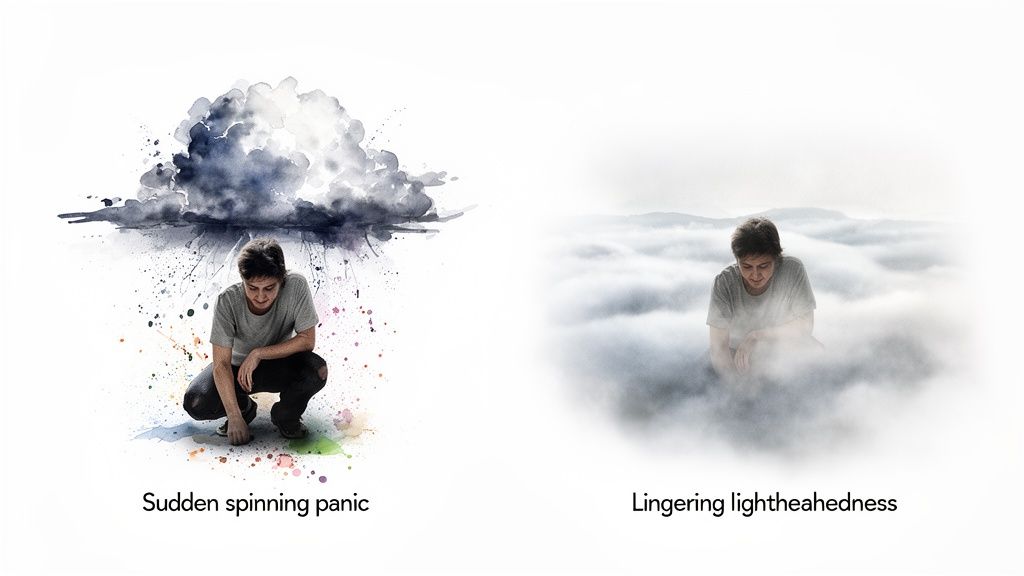
The Sudden Thunderstorm: Acute Panic Dizziness
Think of the dizziness during a panic attack as a sudden, intense thunderstorm. It rolls in fast, feels completely overwhelming, and then, just as quickly, it passes.
This is the classic fight-or-flight response in action. Your body floods with adrenaline, causing a sharp, spinning sensation known as vertigo. It often comes with a racing heart, shortness of breath, or that pins-and-needles feeling. It’s scary, but it's temporary, and you are more than capable of weathering it.
Most episodes of intense, panic-induced dizziness peak and fade within 5 to 15 minutes. In fact, a significant 2023 finding showed that 98% of panic-linked vertigo episodes resolved in under 15 minutes when people used slow breathing techniques. You can find more detailed insights on anxiety dizziness duration from TherapyDen.com.
The key thing to hold onto is this: The intense feeling has a predictable, short lifespan. You can survive it. Once you understand that, you can learn to ride the wave instead of letting it pull you under. This is a skill, and it's one you can master.
The Rolling Fog: Lingering Anxiety Dizziness
Chronic anxiety, on the other hand, can create a totally different kind of dizziness—more like a persistent, rolling fog that comes and goes. It's less of a dramatic spin and more of a constant, nagging lightheadedness or a feeling of being unsteady on your feet.
These sensations can pop up in waves throughout the day, each one lasting for a few minutes at a time. This lingering feeling is incredibly unsettling, but it’s so important to remember that each individual wave is still brief. This pattern is common in conditions like Generalized Anxiety Disorder (GAD).
Recognizing that this fog always lifts provides a powerful anchor. The goal isn't to pretend it doesn't happen, but to build the confidence that you can navigate these moments, knowing they are temporary and manageable. This builds the resilience needed for lasting recovery.
A Quick Look at Anxiety Dizziness
To make it clearer, here’s a simple breakdown of the two types of dizziness you might experience with anxiety.
| Symptom Type | Typical Duration | Common Sensation | Primary Trigger |
|---|---|---|---|
| Acute Panic Dizziness | 5 to 15 minutes | Intense spinning (vertigo) | Sudden fight-or-flight response |
| Chronic Anxiety Dizziness | Comes in brief, recurring waves | Lingering lightheadedness, unsteadiness | Persistent, underlying anxiety |
Understanding whether you’re facing a sudden storm or a rolling fog can make all the difference. It helps you label the experience, predict its course, and remind yourself that no matter how it feels, it will pass. This knowledge is your first step toward freedom.
Why Your Anxious Mind Makes You Feel Dizzy
Ever wonder why a feeling like anxiety can cause such a physical reaction as dizziness? The answer is buried deep in your body’s ancient, built-in alarm system. It’s a brilliant mechanism designed to protect you from real danger, but when anxiety is in the driver's seat, that alarm can get a little trigger-happy.
Think of your nervous system as having an incredibly advanced "smoke detector"—what scientists call the fight-or-flight response. When you face a genuine threat, like a car swerving into your lane, this alarm sounds off. Your body is instantly flooded with adrenaline and cortisol, prepping you to either confront the danger or run for your life. It’s a biological masterpiece.
But when you live with anxiety, that same smoke detector can be set off by perceived threats, not just real ones. Anxious thoughts about work, your health, or an upcoming social event can trick your brain into believing you're in immediate danger, even when you’re just sitting safely on your couch. This flips the same physical switches as a true emergency.
The Physical Chain Reaction
When the fight-or-flight alarm blares, your body kicks off a series of changes that can lead directly to that disorienting, dizzy feeling. This isn't a sign that something is medically wrong with you; it’s just the predictable, physical fallout of your body’s powerful stress response.
Two key things happen that create the perfect storm for dizziness:
- Hyperventilation: Your breathing automatically becomes quick and shallow. This is your body trying to suck in more oxygen for your muscles, but it usually makes you blow off too much carbon dioxide. This change in your blood gases is a classic trigger for feeling lightheaded, tingly, and dizzy.
- Muscle Tension: Adrenaline makes your muscles tighten up, getting them ready for action. The muscles in your neck, shoulders, and jaw are particularly good at tensing up. This tension can restrict blood flow to your brain and mess with the signals coming from your vestibular system—the intricate network in your inner ear that manages your sense of balance.
This mix of weird breathing and tight muscles is a recipe for anxiety-induced dizziness. Your brain starts getting conflicting messages: your inner ear feels off-kilter, your vision might seem a little strange, and your blood chemistry is slightly out of whack. The result is that unsteady, woozy, or spinning sensation. You can learn more about how this system works in our complete fight-or-flight response guide.
The most crucial thing to understand is this: The dizziness is a normal, physical reaction to a state of alarm. It is not dangerous, and it is not a sign that you are losing control or have a serious undiagnosed illness.
Understanding this mind-body connection is the first real step toward taking your power back. When you can label the dizziness for what it is—a harmless byproduct of anxiety—it starts to lose its terrifying grip on you. That knowledge alone can break the cycle of panic and open the door to a calmer, more grounded life.
When Dizziness Lingers: The Chronic Anxiety Cycle
While many dizzy spells from anxiety are quick to pass, what happens when the feeling just won’t go away? For some, dizziness becomes a constant, nagging companion that can stick around for days, weeks, or even longer. It can be deeply frightening, making you feel like you're broken or that something is seriously wrong.
Please hear this: you are not alone, this experience is real, and most importantly, it is treatable. This persistent state often has a name, and giving it one is the first step toward finding a solution and getting your hope back.
The Super-Sensitive Balance System
This lingering dizziness is often tied to a condition called Persistent Postural-Perceptual Dizziness (PPPD). This isn't something that comes out of nowhere; it frequently develops after an initial dizzy spell, which might have been triggered by a panic attack, a minor illness, or even just a period of high stress.
Think of it like this: your brain's balance system gets "super-sensitive" after that first scare. It becomes stuck on high alert, constantly scanning your body for any tiny hint of unsteadiness. This hyper-vigilance actually creates the very feeling it fears—a sensation of rocking, swaying, or lightheadedness, even when you are perfectly still.
The anxious brain triggers a body alarm, which then creates the sensation of dizziness, trapping you in a loop.
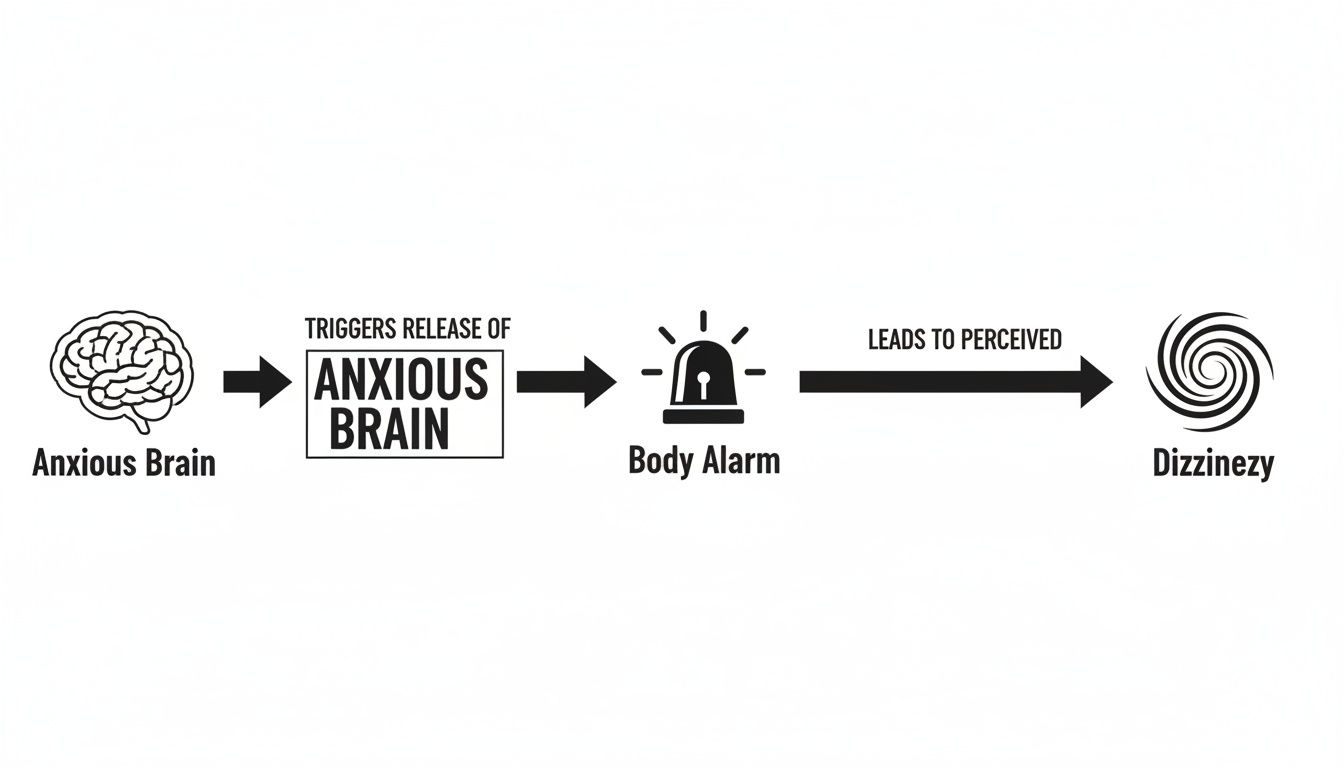
This shows how a mental state—anxiety—can directly produce a very real and disorienting physical symptom.
Breaking the Vicious Cycle
This creates a terrifying and exhausting cycle. The constant dizziness fuels more anxiety, which in turn makes your brain even more sensitive and keeps the dizziness going. Before you know it, the fear of getting dizzy becomes the main trigger for the dizziness itself.
It’s a recognized medical condition, not something you are "just imagining." Understanding this validates your struggle and, more importantly, illuminates a clear path forward. Because it is a recognized pattern, there are proven strategies to break the cycle.
The connection between anxiety and chronic dizziness is well-documented. Research shows that among people with persistent dizziness lasting three months or longer, a huge percentage also have an anxiety disorder. In cases of chronic subjective dizziness, anxiety is present in approximately 79% of patients, highlighting just how intertwined these two issues are. You can read the full research about these findings on persistent dizziness.
The journey to healing from this chronic cycle is absolutely possible. It involves learning to calm your over-sensitized nervous system and retraining your brain to trust your body's natural balance again. Knowing that a clear path to recovery exists is your first step toward a life free from constant dizziness and fear. You can also explore our guide on anxiety recovery steps to see what that journey looks like.
How to Stop Dizziness in the Moment

When the world suddenly feels like it’s tilting, your first instinct is just to survive the feeling. But what if you could do more? What if you could actively pull yourself out of the spin and prove to your brain that you are in control?
That’s what these in-the-moment techniques are for. They aren't just about waiting for the dizziness to pass; they’re about interrupting the panic cycle before it can fully take hold. By calming your overstimulated nervous system and redirecting your focus, you turn a moment of fear into a moment of empowerment. Every time you use them, you are retraining your brain and taking a step toward a panic-free life.
If you're looking for immediate relief, understanding science-backed methods to calm down quickly can be an absolute game-changer.
Use the 5-4-3-2-1 Grounding Method
When dizziness hits, it’s easy to get trapped inside your own head, focusing only on the terrifying sensation. The 5-4-3-2-1 method is a powerful technique because it yanks your attention back to the outside world, anchoring you in the present moment and breaking that loop of fear.
The best part? You can do it anywhere, anytime, without anyone even knowing.
- Acknowledge 5 things you can see. Look around and name five distinct objects. Don’t just list them; notice them. "I see the grain of the wood on this desk. I see the blue ink in my pen. I see a scuff mark on my shoe."
- Acknowledge 4 things you can touch. Focus on the physical sensations. Feel the texture of your jeans under your fingertips, the cool smoothness of your phone screen, the warmth of the coffee mug, or the solid ground beneath your feet.
- Acknowledge 3 things you can hear. Listen past the noise in your head. Tune into the soft hum of your computer, the birds outside the window, or even just the sound of your own quiet breathing.
- Acknowledge 2 things you can smell. Take a slow breath in. Can you smell the lingering scent of your morning coffee? The soap on your hands? The faint smell of rain in the air?
- Acknowledge 1 thing you can taste. This one pulls you right back into your body. Maybe it’s the mint from your gum, a sip of water, or simply the neutral taste in your mouth. Focus on it for just a second.
Regulate Your Breathing with Box Breathing
One of the biggest culprits behind anxiety-related dizziness is hyperventilation. When we panic, our breathing gets fast and shallow, throwing off the oxygen and carbon dioxide balance in our bodies. Box breathing is a simple, direct fix for this.
Our guide on breathing exercises for anxiety offers even more powerful techniques to have in your back pocket.
Box breathing slows your nervous system and restores the balance of oxygen and carbon dioxide in your body, directly addressing the physiological cause of the dizziness. It's a way to signal to your body that you are safe.
It’s easy to remember. Just picture a square and trace it with your breath:
- Breathe in slowly through your nose for a count of 4.
- Gently hold that breath for a count of 4.
- Breathe out slowly through your mouth for a count of 4.
- Hold the empty breath for a count of 4.
Repeat this cycle for a few minutes. You’ll feel your heart rate begin to slow down, the dizziness start to fade, and a sense of calm return. This is you taking back control.
Your Path to a Panic-Free Life

Getting through the next dizzy spell isn't the end goal. True recovery is about building a life where you feel grounded and in control, knowing you have what it takes to stop anxiety from spiraling. This isn't a quick fix, but a hopeful path made of small, consistent steps that lead to lasting freedom.
It’s about more than just managing symptoms—it's about fundamentally changing how your brain responds to stress and fear. You can build a strong internal foundation that makes you less vulnerable to anxiety in the first place, putting you back in the driver’s seat. That panic-free future is not just possible; it's waiting for you.
Challenge the Fearful Thoughts
First things first, let’s tackle the source: the anxious thoughts that kick off the entire dizzying cycle. Your mind has learned to connect certain feelings or situations with danger, and now it’s time to teach it a new, more accurate story. This is the heart of what we do in Cognitive Behavioral Therapy (CBT), a proven method for taking back control from anxiety.
Start by becoming a detective of your own thoughts. The next time a wave of dizziness hits, pause and ask yourself: “What was I just thinking?” More often than not, you'll find a fearful "what if" thought lurking just beneath the surface.
Once you spot these automatic negative thoughts, you can start to question them. Remind yourself that the dizziness is a harmless, temporary symptom of anxiety, not a sign of a looming catastrophe. This simple act of defiance starts to weaken the link between the fear and the physical feeling. With practice, you can rewire this response entirely.
If you’re looking for a structured way to learn these skills, our Anxiety University program walks you through these exact cognitive techniques step by step.
Build a Foundation of Resilience
Just like a house needs a solid foundation to withstand a storm, your mind and body need a stable base to handle stress. Simple, consistent lifestyle choices can dramatically lower your baseline anxiety, making dizzy spells far less likely to happen.
Try to see these habits not as chores, but as daily investments in your own well-being. Each small action builds on the last, creating a powerful buffer against anxiety.
- Mindful Movement: You don't need grueling workouts. Gentle activities like walking, yoga, or simple stretching are fantastic for releasing physical tension and calming your nervous system.
- Balanced Nutrition: Wild swings in blood sugar can be a major trigger for both anxiety and dizziness. Aim for balanced, whole-food meals to keep your body and mind on an even keel.
- Prioritize Sleep: A well-rested brain is a less anxious brain. Aiming for 7-9 hours of quality sleep each night gives your nervous system the time it needs to reset and repair itself.
For those interested in exploring a wider range of strategies that have been proven to work, you can find more information on Therapeutic Interventions for Anxiety.
True freedom from anxiety and dizziness isn't some far-off destination you arrive at overnight; it's the path you walk every single day. By consistently using these tools and habits, you are actively retraining your brain and building a future where you’re no longer a passenger to your anxiety, but the captain of your own ship.
When to Talk to a Professional About Dizziness
Even when you know dizziness is a classic anxiety symptom, it’s still terrifying. While most of the time it’s harmless, knowing when to raise your hand and ask for help is one of the most powerful and hopeful things you can do for yourself.
Deciding to reach out isn’t a sign of weakness—it’s an act of taking back control. It’s the first real step toward a life where anxiety isn’t calling the shots. And just as importantly, it helps you get peace of mind by ruling out other medical issues first.
Red Flag Symptoms That Need a Doctor’s Visit
If your dizziness shows up with any of the following symptoms, it’s time to see a doctor right away. This isn't about feeding your anxiety; it’s about responsibly closing the door on the "what ifs" so you can focus on what really matters—healing.
- A new, severe, or unusual headache that feels completely different from anything you've had before.
- Numbness, tingling, or weakness that’s noticeable on just one side of your body.
- Difficulty speaking, slurring your words, or finding it hard to understand what others are saying.
- Loss of consciousness or seizures.
- Any sudden changes in your vision or hearing.
Getting these checked out is a crucial step. Once a doctor gives you the all-clear, you can stop the endless cycle of health anxiety and focus your energy on tackling the real source of the problem, opening the door to true recovery.
Building Your Healthcare Team
Once other medical causes have been ruled out, you can start building a team to help you manage the anxiety itself. Think of it as assembling your own personal support crew, where each person plays a unique role in your recovery.
Seeking help is the most proactive and hopeful step you can take. It’s how you go from simply surviving the dizziness to building a life where anxiety no longer calls the shots.
Your team might look something like this:
- Your Primary Doctor: This is your home base. They’ll do the initial check-ups, run tests to rule out other conditions, and can give you referrals to specialists.
- An ENT (Otolaryngologist): If there’s any suspicion that your dizziness is linked to your inner ear, an ENT is the specialist who can assess your vestibular system.
- A Neurologist: If your doctor has any concerns about your nervous system, a neurologist can provide more specialized testing and insight.
- A Mental Health Therapist: This is your most important ally in the journey to a panic-free life. A good therapist will give you the tools to understand your anxiety, manage your symptoms, and stop the dizziness at its source.
Of course. Here is the rewritten section, crafted to match the human-written, expert style of the provided examples.
Common Questions About Anxiety Dizziness
As you start to get a handle on your anxiety, a few stubborn questions might still be bouncing around in your head. Getting clear, honest answers is a huge part of building the confidence you need to keep moving forward. It reinforces the truth that you can—and will—get better.
Let's tackle some of the most common worries people have about anxiety-related dizziness.
Can I Feel Dizzy Even When I Don't Feel Anxious?
Yes, absolutely. This is an incredibly common—and confusing—part of the experience. When you've been living with chronic anxiety, your nervous system can become so sensitized that it stays on high alert, even when you're not consciously worried about anything.
This means dizziness can feel like it’s coming "out of nowhere," even when your mind feels relatively calm.
Think of it like a smoke detector that’s become way too sensitive and now goes off from a piece of toast. The key is not to panic when the alarm sounds. Acknowledge the feeling, remind yourself it’s just a harmless false alarm from a tired nervous system, and trust that it will pass. Every time you respond this way, you're helping to recalibrate your brain and heal your nervous system.
Will My Anxiety Dizziness Ever Go Away Completely?
For the vast majority of people, the answer is a resounding yes. Full recovery isn't just a hopeful wish; it's a very real, achievable goal. But healing isn't about making sure you never feel a single twinge of dizziness again for the rest of your life. It's about getting so good at managing anxiety that the physical symptoms lose their power and stop running the show.
The goal is to build such deep resilience and confidence that, even if a rare dizzy spell pops up, you have the tools to navigate it calmly without a second thought. True recovery is building a life where you are firmly in control.
Do Certain Foods or Drinks Make Anxiety Dizziness Worse?
They sure can. What you put into your body has a huge impact on your internal chemistry, and that chemistry directly affects your anxiety levels. Some of the most common culprits that can stir up dizziness include:
- Stimulants like caffeine.
- Sugary foods and drinks that send your blood sugar on a roller coaster.
- Alcohol, which can throw your nervous system and sleep patterns out of whack.
- Dehydration, which is a massive but often overlooked trigger.
A simple but powerful place to start is just drinking more water throughout the day. Then, start paying attention. Notice how you feel an hour after that morning coffee or a sugary snack. Making small, mindful tweaks to your diet can make a surprisingly big difference on your path to feeling better.
If you're ready to move from just managing symptoms to truly building a life free from panic, The Anxiety Checklist provides a structured, actionable system to guide you. Our program combines a detailed eBook with a 93-point interactive checklist to help you challenge fearful thoughts, build resilient habits, and regain control. Start your journey to fearless living today at https://anxietychecklist.com.