

If the idea of a “morning routine” makes you think of complicated, hour-long rituals, let’s clear the air. We’re not talking about that.
A morning routine for anxiety is simply about choosing one or two small, intentional actions to start your day. Think drinking a glass of water before touching your phone, or stretching for just three minutes. That’s it. This small bit of structure creates a predictable, calming start that can make a world of difference for morning anxiety, putting you on a hopeful path toward healing.
Your First Step Toward a Panic-Free Morning

Waking up with a wave of dread is exhausting. That immediate rush of cortisol, the racing thoughts, the tension in your shoulders—it feels like you’ve already lost the battle before the day has even begun.
But what if you could change that? Imagine waking up feeling calm instead of crushed by anxiety. Grounded instead of chaotic. This isn't just wishful thinking. It’s a reality you can build for yourself, one small, hopeful step at a time.
This guide is built on a simple, powerful truth: healing from anxiety and living a life without panic is absolutely possible. It’s a journey of consistent, gentle actions, and it all starts with the first hour of your day.
The Power of a Predictable Start
Anxiety loves chaos and uncertainty. A therapeutic morning routine is your secret weapon against it. By creating just a few simple, grounding rituals, you introduce predictability right when you feel most vulnerable.
This sends a powerful signal to your nervous system: you are safe, you are in a controlled environment. It helps dial down that frantic fight-or-flight response that anxiety triggers.
The goal isn’t to have a "perfect" morning you can post on social media. It's about giving yourself a structured, compassionate start. That first hour is your chance to put your own well-being first, before the world’s demands come rushing in.
This shift in perspective is key. Instead of dreading the morning alarm, you can begin to see it as an opportunity for your first victory of the day—a small but meaningful step toward reclaiming your peace and proving that healing is achievable.
From Dread to Empowerment
So many people who have learned to live panic-free point to their morning routine as a game-changer. It’s more than just a to-do list; it’s an act of self-respect. It’s a daily declaration that your mental health is a priority and that you believe in your own recovery.
Of course, it helps to start the day feeling rested in the first place. Understanding how to wake up feeling refreshed is a huge piece of the puzzle, ensuring you’re starting with a full tank instead of an empty one.
This practical, step-by-step approach is a core part of what we teach in our Anxiety University program. You start with tiny, manageable changes that build on each other. You learn that you have the power to influence how you feel, one small choice at a time. This guide will show you exactly how to build a routine that leaves you feeling capable and calm.
Crafting Your Own Anti-Anxiety Morning Routine
A morning routine should feel like a lifeline, not another source of pressure. For those of us who know the crushing weight of anxiety, the last thing we need is one more thing to feel like we’re failing at.
This isn’t about copying someone else’s picture-perfect morning. It's about discovering what actually brings you a sense of calm and control. Think of this as your personal workshop for building a morning that serves you, not the other way around. And the good news? There's a clear path forward, and it’s built on hope. You can learn to manage morning anxiety and find peace, one small step at a time.
The Three Ingredients for a Calmer Morning
To build a powerful anti-anxiety routine, we'll focus on three core ingredients. Don't think of these as strict rules, but as a menu of options you can pull from each day, depending on how you feel.
- Mindfulness: This is all about gently pulling your attention into the present moment. It’s the perfect antidote to the anxious "what-if" thoughts that love to spin out of control. We're not talking about an hour of silent meditation—it can be as simple as a two-minute breathing exercise before your feet even hit the floor.
- Movement: Anxiety often traps nervous energy in the body, showing up as tight shoulders, a clenched jaw, or a pit in your stomach. Gentle movement helps release that physical tension and shifts your body out of a state of stress.
- Mindset: This piece is about intentionally pointing your thoughts toward something positive, like gratitude or a small goal for the day. It’s a way to counteract the brain’s natural negativity bias, which anxiety tends to put on full blast.
The goal is to pick one tiny activity from each category. This simple act of choosing puts you back in the driver's seat, reinforcing the hope that you can guide your own recovery.
Building Your Routine from the Ground Up
The only way to create a morning routine that actually sticks is to start ridiculously small. Aim for the easiest possible win to build momentum. This isn't just about managing anxiety in the moment; it's about proving to yourself that you are capable of creating positive change. That's a huge step toward living a life free from panic.
Don't underestimate the power of these small, consistent actions. A 2025 survey by Naturepedic revealed that about one in three Americans feel their morning routine strongly predicts how the rest of their day will go. Simple starting points like brushing teeth (65%), drinking water (60%), and making coffee (51%) create a sense of predictability. For an anxious mind, that predictability is gold. It cuts through the overwhelming feeling of "Where do I even begin?" and gives you a solid foothold. You can see more on how people structure their mornings in the full survey findings.
Begin by choosing just one activity. Don't worry about creating the "perfect" sequence yet. Just pick the single easiest, most appealing option from the menu below and commit to doing it tomorrow. The goal is to make it so easy you can't say no.
Your Menu of Anti-Anxiety Activities
Here’s a list of low-effort options to get you started. Remember to be kind to yourself. If you wake up with high anxiety, always choose the path of least resistance. Each small action is a step on your healing journey.
Mindfulness (2–5 Minutes)
- Box Breathing: While still in bed, inhale for a count of 4, hold for 4, exhale for 4, and hold for 4. Repeat for 2 minutes.
- Sensory Grounding: Name 3 things you can see, 2 things you can feel (like the texture of your blanket), and 1 thing you can hear. This yanks your mind out of anxious thoughts and into your immediate surroundings.
- Mindful Sip: Drink your first glass of water or tea slowly. Pay full attention to its temperature and the sensation of drinking.
Movement (3–10 Minutes)
- Bed Stretches: While lying down, gently stretch your arms over your head and point your toes. Then, pull your knees to your chest for a gentle hug.
- A Single Yoga Pose: Try a simple Child's Pose for 3 minutes. It’s incredible for releasing tension in your back and shoulders.
- Gentle Neck Rolls: Slowly roll your neck from side to side. You’d be surprised how much tension you store there overnight.
Mindset (1–5 Minutes)
- One-Sentence Journal: Write down one thing you are grateful for or one small thing you look forward to today. That's it.
- Intention Setting: As you sit on the edge of your bed, think to yourself: "My only intention today is to be kind to myself."
- Positive Affirmation: Say a simple, believable affirmation out loud, like "I can handle today" or "I am safe right now."
Putting these tiny habits into a sequence is how you start to build a real routine. For example, your morning could look like this: Mindful Sip -> Bed Stretches -> One-Sentence Journal. This entire flow can take less than 10 minutes, but it can completely change the trajectory of your day toward one of calm and hope.
As you get comfortable, you can refine these choices by setting clear, achievable goals. For more help turning these ideas into a concrete plan, check out our guide on setting SMART goals for anxiety. It will give you the framework to start tomorrow with confidence.
Practical Morning Routines for High-Anxiety Days
Knowing you should have a morning routine is one thing. Actually doing it when you wake up with a racing heart and a knot in your stomach is a different battle entirely. On those high-anxiety days, even the smallest decision—like what to do first—can feel crushing.
That's why these templates exist. They’re here to remove the guesswork on your toughest mornings. Think of them as pre-made plans, ready to go when your brain is already overloaded. The goal isn't complexity; it’s having a gentle, structured path to follow when you need it most, reminding you that there is always a way forward.
The 5-Minute Lifeline
This one is for the mornings when just getting out of bed feels like climbing a mountain. Your anxiety is at a 10/10, and your only job is to get grounded. You can do all of this right by your bed.
- Sit & Sip: Before anything else, just sit up. Swing your legs over the side of the bed. Keep a glass of water on your nightstand from the night before, and take a few small, deliberate sips. This tiny act of sitting up is a victory, and the water starts to gently wake up your body.
- Grip & Breathe: Now, place your hands on your knees or grip the edge of your mattress. Really focus on the physical sensation of your hands pressing down. Take three slow, deep breaths. This sensory anchor pulls you into the present moment, while the breathing starts to tell your nervous system it’s safe to power down the panic.
This simple, five-minute sequence gives you an immediate win. It proves you can take action even when anxiety feels overwhelming, which is a powerful step toward a panic-free life.
The 15-Minute Stabilizer
Use this routine on mornings with moderate anxiety. You feel on-edge and shaky, but you have a little more energy to move and engage.
- Start with the Lifeline (5 mins): Begin with the 5-Minute Lifeline (Sit & Sip, Grip & Breathe). Starting with a familiar anchor builds a sense of safety and consistency.
- Listen to One Song (5 mins): Put on a pre-selected calming song. Something instrumental or with positive lyrics works well. As it plays, do a few gentle neck rolls or shoulder shrugs to release physical tension.
- Write One Sentence (5 mins): Grab a notebook and write just one sentence. It could be something you’re grateful for ("I'm thankful for my warm bed") or a simple intention ("Today, I will be gentle with myself"). This small action starts to shift your focus away from threat and toward something neutral or positive.
This 15-minute routine builds on that initial grounding, adding gentle movement and a mindset shift to help stabilize your mood. If you find breathing techniques particularly grounding, our guide on breathing exercises for anxiety offers more powerful techniques to support your healing.
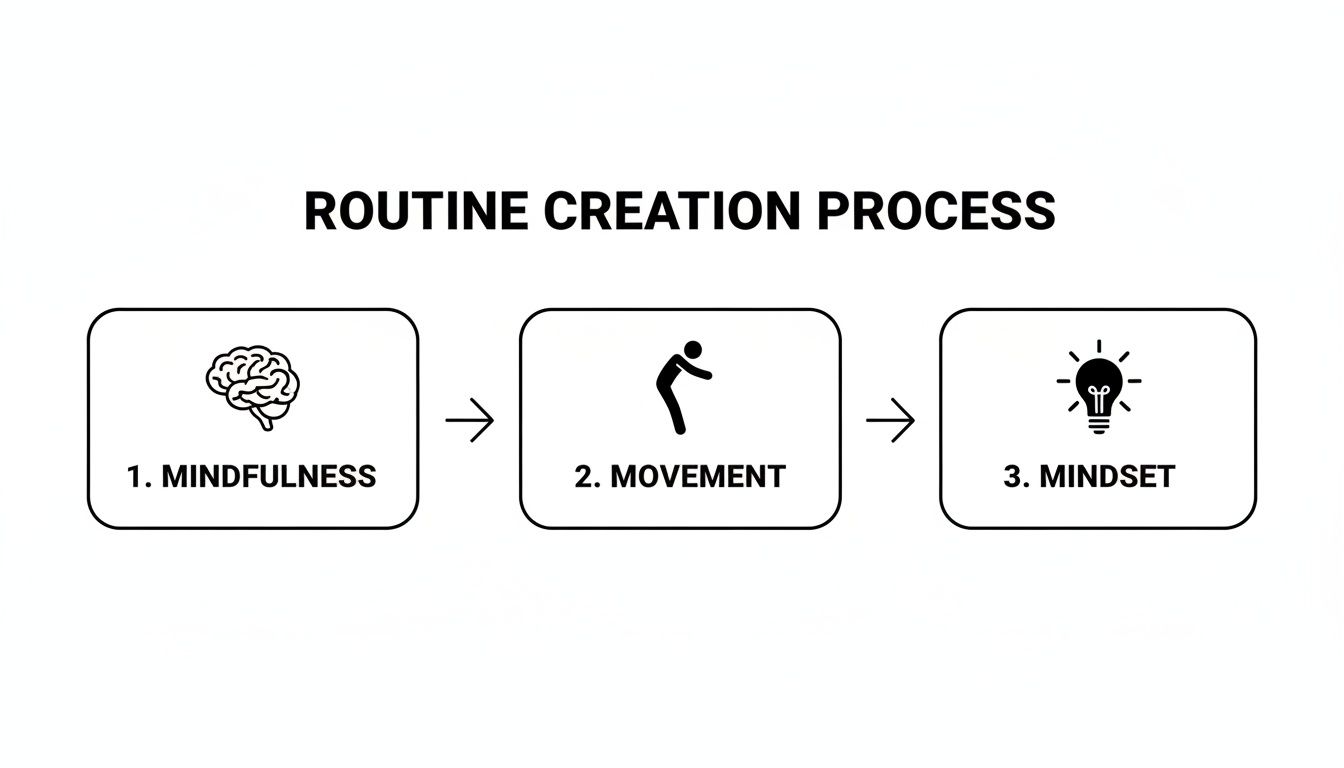
The core idea is simple: start with mindfulness to calm your mind, add gentle movement to ground your body, and finish with a positive mindset shift.
The 30-Minute Foundation
This routine is for days when your anxiety is more of a low hum in the background. You have enough energy to build a more solid foundation for a resilient day.
- Hydrate & Stretch (5 mins): Start with a full glass of water. Then, spend a few minutes doing simple stretches, like a forward fold to touch your toes or a cat-cow stretch on the floor. This wakes up your muscles and releases any stiffness from the night.
- Mindful Movement (10 mins): Choose one small activity to get your body moving. This could be a 10-minute walk around the block, a short yoga video, or even just dancing to a couple of your favorite songs. The goal is to get your heart rate up a bit and connect with your body.
- Quiet Reflection (10 mins): Take 10 minutes for a quiet, screen-free activity. You could meditate, journal about whatever is on your mind, or read a few pages from an inspiring book. This quiet space gives your nervous system a chance to settle.
- Plan One Thing (5 mins): Look at your to-do list and pick your single most important task for the day. Just one. This creates clarity and helps prevent that familiar feeling of overwhelm.
Having these routines ready to go removes the pressure to "figure it out" when you're already struggling. You don't have to think—you just follow the steps you already laid out for yourself.
Three Tiers of Anti-Anxiety Morning Routines
Choose a routine based on your anxiety level this morning. The goal is consistency, not complexity.
| Routine Type (Time) | Core Activities | Best For |
|---|---|---|
| The Lifeline (5 mins) | Sitting up, sipping water, sensory grounding, deep breathing. | High-anxiety days when getting out of bed feels impossible. |
| The Stabilizer (15 mins) | Lifeline routine + listening to one song + writing one sentence. | Moderate-anxiety days when you feel shaky but can engage a little more. |
| The Foundation (30 mins) | Hydration, stretching, mindful movement, quiet reflection, planning one task. | Low-anxiety days when you have the energy to build a resilient start. |
Remember, any effort, no matter how small, is a step in the right direction. This is how you build trust in yourself and prove, day by day, that you have the tools to heal and handle whatever anxiety throws at you.
The Role of Sleep in Preventing Morning Panic
A calm morning doesn't start when your alarm goes off. It actually begins the night before. If you're trying to build a routine to get a handle on morning anxiety, one of the most powerful things you can do is get serious about your sleep.
That link between a bad night's sleep and a morning filled with dread isn't just in your head—it’s biological.
When you're sleep-deprived, the fear center of your brain, the amygdala, goes into overdrive. Meanwhile, the prefrontal cortex, which handles rational thinking and keeps your emotions in check, gets sluggish. It’s a perfect storm that leaves you more vulnerable to anxiety and less able to cope with it.
This is why you might wake up with a jolt of panic after a restless night. Your brain is already on high alert, scanning for threats before you’ve even had a chance to open your eyes. But here's the good news: getting better sleep is a real, tangible strategy that can help you heal and feel more in control.
The Science of Sleep and Mental Health
Recent research from Cambridge University drives this point home. Studies involving nearly 500,000 adults found that consistently getting 7-8 hours of quality sleep is directly linked to better mental health. Paired with other lifestyle changes, it can even slash the risk of depression by 57%.
For anyone wrestling with anxiety, this isn't just an interesting statistic—it's a lifeline. It shows that simple, foundational habits can make a profound difference in your ability to heal. A good night's sleep isn't a luxury; it's a non-negotiable part of your toolkit for building a panic-free life.
Actionable Strategies for Better Sleep Hygiene
Knowing sleep is important is one thing. Actually getting it when your mind won't shut off is another challenge entirely. Here are a few practical strategies to create a sleep environment that helps quiet an anxious brain.
- Create a Wind-Down Routine: About an hour before you plan to sleep, start sending signals to your body that it’s time to rest. Dim the lights, put away your phone and other screens, and do something calming. Try reading a physical book, listening to soft music, or doing some gentle stretches.
- Optimize Your Bedroom: Your bedroom should be a sanctuary dedicated to sleep. Keep it cool, dark, and quiet. Things like blackout curtains, a white noise machine, or even a simple eye mask can make a world of difference.
- Manage Bedtime Anxious Thoughts: Does your mind start racing the second your head hits the pillow? Keep a "worry journal" next to your bed. Before trying to sleep, take ten minutes to write down everything that's on your mind. The simple act of getting it out of your head and onto paper can help you let it go for the night. You can find more ideas in our guide on lifestyle and diet changes for anxiety management.
A Hopeful Strategy for Tough Nights
Even with the best routine, bad nights are going to happen. But one rough night of sleep doesn't have to ruin your next day or completely derail your progress. There’s a powerful, proactive strategy you can use to fight back.
Research shows that getting some outdoor exercise the day after a poor night's sleep can help offset the negative effects. A simple walk in the fresh air and sunlight can boost your mood, give you an energy lift, and help reset your internal clock for better sleep the next night.
This gives you a tool to reclaim a sense of control. It turns a moment of discouragement into an opportunity for empowerment, proving once again that small, consistent actions are what lead to the biggest wins in managing anxiety and finding lasting peace.
Troubleshooting When Your Routine Feels Impossible

Let's be real: building a new habit is tough, even on a good day. But when you’re living with anxiety—a master saboteur that loves all-or-nothing thinking—it’s not a question of if you’ll have a bad morning, but when.
This isn't a sign you're failing. It’s a normal, critical part of the process of healing. Every single person who has learned to live panic-free has hit these walls. The goal isn’t perfection; it’s learning how to pick yourself back up with kindness. That’s how you build real, unshakable trust in your ability to cope.
Think of this as your compassionate game plan for when things feel like they're falling apart. It’s a reminder that you have what it takes to navigate setbacks and that you are absolutely on the right path toward a calmer life.
When You Wake Up in a Panic Attack
There’s almost nothing more disorienting than waking up with your heart already pounding, caught in a panic attack before you’re even fully awake. In these moments, forcing your routine will only make things worse. Your only job is to feel safe again.
- Stay in Bed: Don't even think about getting up. The pressure to "start your day" will just add fuel to the fire.
- Find a Sensory Anchor: Grab your blanket and really feel its texture. Notice the weight of it on your body. Feel the cool air on your skin. This simple act pulls your brain out of the what-ifs and into the physical present.
- One-Minute Grounding: Right from the safety of your bed, try this. Just notice your breath coming in and out. Then, mentally name one thing you can feel (your pillow), one thing you can hear (a bird outside), and one thing you can see (the light through the blinds).
Once the intensity starts to dial down, you can try the smallest possible piece of your routine—maybe just a single sip of water. This isn't about ticking a box. It's about gently reclaiming your sense of control and showing yourself you can survive even this.
When Exhaustion Overrules Motivation
Anxiety is physically and mentally exhausting. Some mornings, you'll wake up with a bone-deep weariness that makes even the tiniest task feel like climbing a mountain. This isn't laziness; it's your nervous system telling you it’s overworked.
On days like these, the only rule is to drastically lower the bar.
Your mission isn't to complete your routine. It's to do something. Your "5-Minute Lifeline" just became a "One-Minute Lifeline." Your only goal is to perform one intentional act before the day runs away from you.
This could look like:
- Stretching your arms over your head for ten seconds.
- Taking three slow, deliberate breaths.
- Thinking of one single, tiny thing you feel grateful for.
Doing just one small thing stops your mind from writing the day off as a total loss. It keeps the habit alive, even if it's just hanging by a thread. This is how you build a practice that can actually survive the realities of living with anxiety and lead to real healing. For those struggling to figure out what sets off these feelings, you may find it helpful to learn more about common anxiety triggers in our dedicated guide.
When Your Routine Becomes Another Pressure
Sometimes, the very thing that was supposed to bring you peace starts to feel like just another chore—one more thing on your to-do list to fail at. If this happens, it’s a clear signal that your routine needs a tweak, not that you need to ditch it.
This is an incredibly common experience. The trick is to reconnect with your "why." Remind yourself that the goal was never a perfect checklist; it was to find a sense of calm and control on your path to a life without panic.
To break the pressure, try injecting a little novelty. Swap out one of your usual habits for something different but just as simple.
- If you usually journal, maybe listen to a new calming song instead.
- If you normally stretch, try a one-minute self-massage on your hands or neck.
- If you meditate, just step outside for 60 seconds to feel the fresh air.
Your routine is a flexible support system, not a rigid cage. Giving yourself permission to adapt keeps it feeling helpful and inspiring. It reaffirms the most hopeful truth of all: you are in charge of your own healing, and setbacks are just opportunities to learn what you need and respond with compassion.
Your Top Questions About Morning Routines and Anxiety, Answered
Starting to build a new routine can feel like a mix of excitement and "what if"s. If you're already asking questions and poking holes in the plan, that's a good thing. It means you're taking this seriously.
Let's get into those common worries. Finding your way to a calmer, panic-free life isn't about having all the answers at once. It's about knowing where to turn when you feel stuck, and always holding onto hope.
What If I Wake Up Already in a Panic Attack?
This is a deeply frightening experience, and it's more common than you might think. When you wake up with your body already hijacked by panic, your routine goes out the window. Your only priority is safety. Don't even try to force your planned activities.
Instead, switch to your "emergency" protocol. Stay in bed. Your single goal is to bring your body and mind back to the present moment.
- Start with Touch: Grip your blanket and really feel the texture. Press your feet flat against the mattress. Notice the temperature of the air on your skin. These sensory details force your brain out of abstract fear and back into the physical world.
- Just Observe Your Breath: Don't try to change your breathing right away. That can feel impossible during a panic state. Simply notice the air moving in and out of your body. This passive observation is far less intimidating than forced deep breathing.
- Use a Grounding Technique: From the safety of your bed, try the "5-4-3-2-1" method. Silently name five things you can see, four things you can feel, three things you can hear, two things you can smell, and one thing you can taste.
Once the initial wave of panic starts to fade, then you can try one tiny piece of your routine, like taking a single sip of water. In these moments, you have to respond with compassion and grounding tools, not with rigid rules. You're learning to weather the storm, which is essential for healing.
How Long Until a Morning Routine Actually Reduces My Anxiety?
While everyone's timeline is different, you can feel small but powerful wins almost immediately. The real, more significant changes tend to build over several weeks as you walk the path to recovery.
Your first win is the sense of control you get from completing even one tiny, planned action. That feeling is the direct opposite of the helplessness that anxiety thrives on.
You might feel a real drop in that familiar morning chaos within the first week. After 2-4 weeks of sticking with it, your brain starts forming new neural pathways. The routine's predictability can genuinely lower your morning cortisol levels—your body's primary stress hormone.
By the 6-8 week mark, the habits often feel more automatic. They become a stable launchpad for your day, requiring less conscious effort. The best way to see this for yourself is to track your daily anxiety levels in a journal. That data will be your proof that the small, consistent steps are adding up to create lasting change and real hope for a panic-free life.
How Can I Stick to a Routine When My Schedule Is Always Changing?
This is a huge hurdle for anyone with shift work, unpredictable family needs, or just a chaotic life. The secret is to stop thinking about your routine in terms of the clock. Instead, think of it in blocks of time.
Instead of tying your habits to a specific time (like "stretch at 7:00 AM"), anchor them to an event: "the first 15 minutes after I wake up." This makes your routine flexible, whether you're up at 6 AM or 9 AM.
Create a "minimum viable routine"—a non-negotiable, 5-minute version you can do absolutely anywhere.
- Drink a glass of water.
- Take ten deep, intentional breaths.
- Stretch your arms overhead for 30 seconds.
This flexible approach is your best defense against the all-or-nothing thinking that so often kills progress when life gets messy. Real consistency is about the sequence of your actions, not the time on the clock. It proves that a path to healing can fit into any lifestyle.
What if My Routine Starts to Feel Like a Chore?
This is a critical signal that your routine needs a refresh, not that you've failed. It’s completely normal for your motivation to dip. When this happens, your first move is to reconnect with your "why."
Ask yourself: was the goal to check boxes, or was it to feel calmer and more in control? Remind yourself of the peaceful, panic-free life you're working toward.
Next, it's time to inject some novelty. Swap one of your current activities for something new from the list of options we talked about earlier.
- If you've been journaling, try listening to a new calming playlist instead.
- If you've been doing the same old stretches, look up a different 2-minute yoga pose on YouTube.
- Instead of meditating inside, just step outside and listen to the birds for three minutes.
Your routine is a tool, and it's supposed to serve you. Give yourself permission to adjust it so it feels supportive and inspiring again, not like another draining obligation. This kind of self-compassion is the very heart of healing.
The journey to managing anxiety is built on small, consistent actions and the belief that you can get better. The The Anxiety Checklist system was designed to give you that structure, providing a clear, actionable framework for building a life where you are in control. It's time to take your next step toward fearless living. Discover the complete toolkit on anxietychecklist.com and start building your calmer tomorrow, today.